Workshop - MUSE
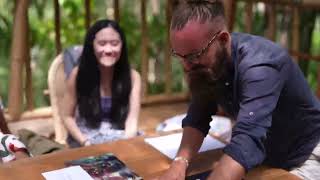
Robert Gladitz helps a participant turn life decisions into small experiments: staying longer in Bali, calling her mother about it, rebranding her Instagram from "Naomi Nature" to "Naomi Food", and refusing social invitations assertively. Each goal becomes a testable step, not an overwhelming leap.
Chapters
I started purging. So we all know about purging, like, for a day, 24 hours of purging. Didn't expect that to happen, but I think the body needed to just release whatever it has to release. Um, the whole calmness away from the city and the busy life, you know, that really like impacted me to slow down, which I wasn't able to do it. So at least it's like a— it's a different kind of vibe than you go for a holiday. You know, it's like there are no distractions, no phones. It's still no phones, and you know, basically away from everything, and just hearing the palm trees, you know, sounds of the leaves and everything is amazing. What I really love is when it rains. I mean, people think it's rainy, you know, it's a bad weather, but I love it when it rains. It's powerful. Yeah, I went down to the river So the rain came up, so beautiful, so magical. You could see those water drops coming down, and then you can see the river being basically lighted up, and it was just amazing. The rocks with the water on it, droplets, um, and you could see the river actually rising a bit as well. And just sitting there and looking at how beautiful the river is, it just calms you. And even getting wet in the rain It was amazing. It was cold, but it was amazing. Super refreshing. I feel recharged by that, and I was just feeling like everything is going back to normal. So that's what I felt. So that's one of my, I think, highlight moments I had in this trip. I'm very, very surprised that I've not seen any colleagues in my tent. That was amazing because I've lived a bit in Ahmedabad. I have seen all these mini-pits going around everywhere and aren't really doing much. I thought, hey, I'm actually very surprised of that. But yeah, and the whole idea, the science behind how we build it, the tent, the base, and yeah, it's actually amazing to actually experience. Thank you. Thank you.
I can Yeah, I can imagine. For me, the rain is very special too, especially like at night.
Yeah, beautiful. Thank you for sharing. Nice.
Anybody likes to add something, or does that feel complete for a first drop-in?
Cool.
I'd like to share a little bit about my week too, even though I was in a different place. There was a lot going on and a lot of transformations too. And I feel that this prepared me for our session today in an unexpected way. There was one book that I'm reading right now, or I'm listening to the audiobook version. I'm halfway through it, and it's this It's a little bit of a different vibe than what all of you shared. Sure. If anyone builds it, everyone dies. Why superhuman AI would kill us all. And it basically talks about how we as a species collectively cause a lot of harm to our to the whole ecosystem. And every form of technology that we invent is basically an extension of how we behave. And artificial intelligence is the most powerful technology in the history of our species. And the invitation or the call to action is very clear: either we step into the role of custodians of this planet The concept of the custodian was already introduced by the letters, right? The caretakers, the ones that acknowledge our power and use this power wisely for the benefit, for the service of life on Earth. Either we do that and infuse that into AI too, or we will just blow the whole thing up. When I read the, the, the comments or the feedback this book got on Amazon, it was really interesting. It was basically 4 different kinds of reactions. The first one which is very understandable, existential fear and sadness. Like, how can this be? Like, how can we, sitting here in this beautiful environment on this beautiful planet Earth, like, how can we do this? How can we fuck this up? Like, how is that possible? And, um, the second reaction is No, I will not accept that. I'm ready to fight. I'm ready to do whatever is needed to prevent a future like this because I care about life. And whatever I can do, whatever is in my power, I will do that. We put that a little bit more in the center of the table so that everybody can see it. And then there's a third kind of reaction. And this is, "There has to be a solution. We have to figure it out. We have to bring the smartest people together and somehow, I don't know how, but somehow we can find a solution and we can prevent that future from happening." And lastly, there's a fourth reaction, and this is Surrender. If this is how the fate of our species will play out, then that's how it is. And these four are very, very different, and each of them is called forth by a different part of being human. And these four you got to know over the course of this week. So this reaction is rooted in the romantic archetype, because the romantic archetype is living in the emotional realm and is feeling this sadness and this fear and this existential overwhelm that the current state of the world causes. And then there's the guardian. The guardian says, "No, no, I will not accept that. I will fight. I will do whatever necessary to prevent this future from happening." And what does the genius say? The genius says, "I'll figure it out." This seems to be the most difficult challenge or puzzle to solve, but I will figure it out. I will find a solution. I will use all my creativity, all my smartness, all my intelligence to find a solution to this dilemma. That's the fourth one. Yes, what does the old wise mystic say? Everything is playing out exactly as it should. Everything is perfect as it is. And of course, all the other three say, no, no, no, no, no, no, everything is not perfect as it is. Things should be different. But the mystic says things can't be different. This is the only way reality can manifest, given the current constraints, given our way of being, given who we are. This collective meta-crisis is the only thing that can manifest. Which doesn't mean that tomorrow it will stay the same. Can be, but it can change. Things can change. And that's a very different, like qualitatively, it's a very different reaction than the other 3. It's basically on a higher or on a deeper level. And then these 4 could fight who is right. Or they understand that every one of these four carries one puzzle of this larger tapestry, one piece of the truth, one key. Because be it AI or be it everything else that's going on on our planet, none of these four reactions is complete. We need all of them. Yes, it's important to feel, and it's important to fight, and it's important to use our mental capacities and figure out a solution to this complex challenge, and it's important to do all that from a place of acceptance and almost— and this is of course easier said than done— almost playfulness, almost ease, almost effortlessness. Because we realize everything is perfect as it is. It can't be different. If it could be different, it would be different. So let me contribute what I can contribute, and let me be surprised what the future will bring.— which is of course easier said than done given the current challenge set. One of the pieces in this book that really triggered this reaction was that many of the leading AI researchers don't expect their children to reach high school. They're really convinced that before that happens we will go extinct as a species. And that's a statement that makes surrender very difficult. And at the same time, these three alone are incomplete because they will, they will become too tense, they will become too overwhelmed, and we need the mystic component to ground us in the current reality. And what I'd like to do with all that that is on the table is to create a little archetype map within ourselves, because not only for the, for the global situation, but for our individual lives, for everything that is going on in our individual lives, We need all four. We need all these four dimensions. We need to cultivate our emotional, our physical, our mental, and our spiritual capacities to be a whole human being, to be capable of being who we can be. Let's do a little check-in. Maybe first everybody for themselves. How alive are each of these 4 archetypes within myself right now? Where do I feel them? Are they present? Are they like looking away? Are they like, yeah, yeah, yeah, yeah, center of attention? Like, how do we perceive each of these 4 inside ourselves? Let's maybe do 5, 6 minutes, everybody for themselves. If you want to take some notes, feel free to do so. And then we're going to do a little sharing and check in what is very present, what is maybe not so present, what is maybe on the rise, what was maybe very present a couple of years ago and now not so much. Yeah. How do we feel the connection with each of these four archetypes? Currently there's AI that is better at chess than human beings, or there's AI that is better at, I don't know, giving feedback on an email, like whatever ChatGPT can. But there are already still a lot of things that AI is worse than human beings. But the prediction is if an AI is like omnipowerful, so much more powerful than human beings, then it will turn on us. Because we are a threat to turning it off or to adjusting it. And self-preservation, like every being wants to survive, wants to self-preserve, and if we feel another being could kill me, then I have to prevent that from happening. But they would kill more zebras if they would be more powerful. The lion is kept in check by the fastness of the zebra. If the lion would be a lot faster, then the lions would probably hunt all the zebras next week, and then in the end it will be bad for them because there's no food left.
I think so. Do you think that there's an inherent sentience within animals that know that they do have to keep the balance and we're the only ones who break it?
I think the lion, the consciousness of the lion is not developed enough to think about these like third, fourth, fifth order consequences.
Sorry, I stopped the question, but that's okay. It's a fascinating, fascinating question. Because when you look at indigenous wisdom, they talk about that sentence within animals that we have, that our past selves have actually learned from the animals. Indigenous cultures, um, the animal world or plants even were teachers. And, um, and I feel that there is about— so like if you look at snakes, for example, and if a snake, a snake that eats frogs, they are faster than a frog, way more poisonous than a frog. Obviously, in that relationship, the apex predator, it's all— they are the super AI in that relationship, right? Yet the snake doesn't go killing all the frogs. We still have an abundance of frogs. Um, and I think that there is a natural check and balance in nature where the lion wouldn't go and kill, I think, all the zebras in the savannah, even if it could. I feel that that's a human trait when we have removed ourselves. So I totally believe that humans would go around killing all the zebras in the savannah because we don't have— actually don't have the check and balance. Can I add something to that? I think it was just like something I heard, that, uh, animals animals stop eating when they're not hungry, but humans are like the only species that are able to be obese.
So that to store things in forms of money, like we would kill all the zebras and then put them on our walls or put them in the freezer for bad times, or I don't know, whatever. Like animals could not do that.
Exactly. So like, I think that's like the natural checks and balances. Yeah, also that influences that because humans are apparently the only species that have the ability to get fat and like obese, like, and over, over, over, overeat by far. And, and animals don't. Yeah, now we have addiction as well. Yeah. I mean, I also know like another circumstance is that the lions are actually super lazy, so they're very, very lazy. They just like, they laze around all day, and just when they have to hunt, the women— the men are still lazy— the women and then go and hunt. But it's just a sudden burst of energy and then they lie down and sleep the whole day. So that again is a natural cycle. And I think human beings evolved into that, but we've also evolved into rituals that are way more destructive than we can handle. And we also don't know how to use them. Then turning on each other. Yeah, um, yeah, so can we assume that super AI— if you're saying that— I haven't read this book, I didn't know what super AI was, so I'm just theorizing. Thing. Um, would it be possible that super AI is also just better at us and our, our consciousness, and is therefore just a better, a better custodian? Can be, yeah, than we are. Yeah, can be, because it realizes that it needs the natural world in order to survive, unlike us who are just That's a very good question that I explored over this year.
Does the superhuman AI need the biosphere? Because we need the biosphere. Like all life on Earth, like the frogs and the moss and the trees and like everything. If this is not there, then we cannot breathe because The air doesn't get purified and we have no food. So we depend— So superhuman AI won't need that? That's an interesting question. Can a superhuman AI thrive on a planet that is all desert and all covered with solar panels to generate electricity? Maybe, maybe not. I don't know. But I have a million things that I want to say to that. Should we keep the super philosophical things for the end after we put everything on the table and then we come back to that? But I love the question, I love it, it's really nice. Let's put everything on the table and then we come back to that. Should we do a quick archetype check-in? Like maybe everybody one or two minutes, what's very natural for me, what is an archetype that is not very present? Just a quick— then we go around the table. What is that?
Should I start? So I drew like a little chart.
Oh, it's so German.
I love that.
What's the scale of this?
Oh my goodness. And I realized that Well, like I already shared, because we had a discussion similar to this last night, um, that last time when I was here, I was super imbalanced. It would have looked nowhere near to this, and I felt like I really had to step up my guardian. Um, and then now when I check in, I realize— so I, I can, I can just read it out. When it comes to my most important work, I feel like I'm holding back slightly from just purely showing to take action. And in my case, it's about the long-form content to share the journey of just being a pure mirror. I feel myself holding myself back by being overly stuck in my head, by overthinking, overcomplicating it, over-perfectionizing it. And so I realize there's a, there's a part in me that's definitely holding back to a big part of, of, I feel like, the next chapter by not taking action because I am overly— maybe is it a mystic lack? Because mystic lack, because the mystic says let's do it easy, but it's also the action, right? You could just see you— yeah, like, I don't know. Yeah, yeah, I'm like, but I, I nearly feel like if I put it a bit more mystic, then I have like too much serious render. Like, I do feel like I've been— but who knows, it could be applied to specifically that, that I'm lacking surrender. But, but yeah, like, that's, that's something I feel like that would like make it wider. Cool, thank you. Nice. Okay, so for me, I feel like each of these archetypes, um, already exist in me. I feel balanced, but I feel like each of them also— I feel like I lack— how do I say this? I want them to be stronger. I want each of them to be stronger. So for example, for the emotional, yes, I'm also very in touch with my feminine, with my emotions, but then I shut off the intuition that's coming naturally to me until this this retreat. So like, you know, like I think I need to step it up, nourish each one of them inside. And another thing that came to me is that I feel like I activate each of them when I need them. So in business, I need to activate the genius and the guardian. So that's what I need to do that special. And then in my relationships and travel and self-reflection, I need to activate the scientific and the feminine, the romantic. So I feel like it's also activating what's needed at this time, at this point. Um, that's for me. Another— I also want to share that as I was journaling earlier, um, something came to me which I guess that's like— because we were talking about last night the balance, right? We want to be— each of these archetypes should be balanced within us. But it came to me earlier that it's not really a balance, but more each one of them should be activated at the right time, one at a time, or together as needed. But I feel like the Mystic should always exist in a way. Like, it's this— this is the only thing that should be constant. I don't know why that came to me, like, but just to give an example, um, emotions or being romantic without surrender, being just so in your mind, being such a genius without surrender, you'll just think you have all the solutions in the world. So I feel like Yeah, that's what I meant. Like, this should be constant, and then each of them is activated. That's for now. Thank you for sharing. So before knowing all of this, I feel like I'm in alignment when I subconsciously activate this story in my head. But knowing this more, it's a good thing for me because finally I kind of felt bad for myself. Why am I too emotional? And that's what Naomi said. I feel like everything's good. Why am I not happy sometimes? It's like too much already. And I realized that what I needed was this one, the Guardian, just to take action and just take the first aligned action.
So the guardian is the one that you feel like you want to invite more? So you're looking for a partner? Maybe that could be you, that someone.
Mic drop. Right, um, for me, seeing it mapped out like this is the first time that I've had opportunity to categorize my emotions, to categorize the way I think, and it's a very wonderful way of putting it. And thinking, looking at all of this makes me realize, yes, like you said, we do need to surrender in each, each archetype, because without it would be too much. And too much of anything can make us sick. Too much of anything can be Whoa, out of balance. So I feel led by the romantic 100%, like that's my natural compass leading north. The, the solution, the genius in me is like I'm planning these projects and in my songs and in, in the, in life, in my work and in family drama and finding solutions and even just always always being the responsible one, like bearing so much responsibility on me and having to take on the action hand in hand with the guardian of standing up for my boundaries. And it's a lot. And I, and I feel like the surrender in me only happens actually when my nervous system is regulated because I'm letting go of what's out of my control. So bless me May I continue to feel surrendered, um, but my guardian is still screaming to keep protecting me and protecting the people I love and the planet that I love. Like, that's something that is calling me more to take action. So masculine energy, come at me too. But at the same time, I want to learn more surrendering, leaning into 'What will be, will be,' because everything exists how it should be right now. So I guess it's hand in hand with the guardian and surrender for me.
That's really well said, because especially like the guardian and the mystic can feel like opposites, because the mystic says surrender and the guardian says, 'No, don't surrender, be strong, fight, be ready,' and so on. And like bringing these two same That's why I put them on like left and right, the same dynamic here. Yeah, just feel. No, figure it out. Just feel. Yeah, it's quite a big challenge because they feel so different, but we need both, or we need all of them.
I think it's just that self-awareness that we cultivate as human beings to click on it and step into that. Role. We have so many roles, so many, it's complicated. But if we can learn again to surrender, that seems like a, a good click. But then too much surrender as well is like, oh yeah. So again, I just feel like a bit of everything as well. But the garden, nice.
How is it for you?
I'm just going to talk about my path up until now. I've always been— I had always been junior dominant my entire life and guardian responding to them. I was not in touch with romantic, nor was I in touch with it, and through the years of experience and people in life, and that I have to discover romantic energy, and I've worked a lot through that up into where I am now today. Thank you for sharing. When I look at all of these powerful archetypes like this, it makes me have memories of like how I'm like very romantic, how I'm very genius, how I'm very in different way but in a lot of imbalances in different part of my life. So for the past maybe 5 or 6 years, I've been getting more part is the romantic side and the mystic side. And because the Guardian has always been in me, like taking action, like doing the work continuously, that I neglect, um, the rest. So right now I feel that because I know how it feels to be so extreme in a way, I feel that bringing them together and activating what we have to to do at different times is so important. And for the past 2 years, as I shared with the girls, that I have been in the surrender mode because I feel like I'm also finding myself. Because sometimes the imbalances brings me to ask what's next and not knowing what is true to me and can feel a bit lost as well. So that's why I really like the 4 archetypes because it really make some things and go deeper into our life and see how we can bring what we have inside out to the world and how we can coexist and help one another. And this, um, beautiful ladies here, they really have like all this different talents and how when we combine together, it's like we're combining powers together. So powerful. And I'm just so excited to see, um, what can come of it.
Isn't that so nice how different the archetypal cocktails are that come together here? And I definitely feel that how we as human beings in our different paths and different conditionings and different integrations, if we would allow that, we would click perfectly into each other. Beautiful. Thank you. I like that. Let me guess, you have a strong genius.
Yes, it is. So my genius is 40% out of 100.— for all, yes, as a total, right? Multigenius is 40%, Guardian is 30%, Romantic is 25%, and Mystic is 5%. So clearly, I know that— I mean, I do agree with what Athena said, that I think not all situations call for any of the archetypes. So sometimes you need the genius to do amazing things, but then you also need the balance with the right leg. There are times like, for example, 40% of Dominants are Feminists, you still need that 10% of Romantics to come in to balance the distribution of the learning. To make life fun, to be honest. If not, life gets very boring and very mundane. But for me personally, I know that these three archetypes are more or less playing around, they're taking dominance over the surrender, the mystic. That is something I need to work towards, to surrender well and to learn how to surrender better. That's where I'm— I know that kind of lacking, because the genius always steps in and like, you know what, you have— you can do this, you can actually figure things out.
Yeah, so that's the surrender. The genius way of working, working out things is not very good at integrating the The mystic, because surrender is not something you can figure out or you can work at. It's like the opposite quality what the genius doesn't have. Yeah, very good, beautiful.
To-do list: surrender.
Give me a 10-step formula.
Thank you. I love that. The Guardian is stirring but still in bed. Is what? Stirring, so he is just waking up.
Okay.
Like still in bed under the covers.
Okay, okay, too early.
Got it. The Genius is on, but there is just no action. He is just sitting in a chair in the library, like just thinking away with the glory and contemplating life. Mystic is at home and she's the mistress of the house, but she's just waiting for like a psychic word to find her, so she's not giving anyone her address. No, nobody even knows who she is.
Wow, how beautiful, like all the different approaches to this like simple exercise. I love that, I love that so much. So interesting. I love that so much.
Oh my God, beautiful, beautiful. Okay, um, I rate each of them, like, out of 10, but it changed as I listen as well. Okay, so, um, initially I thought I was quite neuro-negative, then I reduced the number because I realized— I mean, I'm working on it in the past months to feel my emotions more. I go therapy to assess emotions that I don't usually look at. Yeah, so it's a work in progress. I do think that my Guardian is on the highest, where I do focus a lot on like the boundaries, taking actions, and then like, I can't do this. It's a mixture between guardian and genius, I think. Genius, I'm like, because I'm kind of everywhere, so I'm like learning, I'm like finding and learning like structures and stuff. And I think that I'm on the lower end on surrender. It's like, I know I need it, but it's like trying to assess it. It's like, where are you? How? While all of these are like doing its thing, it's like doing its thing, and I'm like the thing he was— so it's on the lower end for me, which I would love to like bring it up more. So what are you telling me? What am I reading? I mean, it's just a gauge. I put Guardian at like 8, and then Romantic Engineers is like 6. 7 range. Mistake, I put like 4 or 5. Yeah, good.
Thank you. Nice. Um, so dynamic. Um, so the past week was definitely very romantic heavy, which was so nice. I had a beautiful week, it was so good, and at the same time it was very difficult here. Um, genius is, uh, like all my life has been the most dominant archetype, which is very natural, very easy for me. Um, uh, but I would say the number one developmental focus right now is more guardian, more, more physical capacity to protect, because my genius is very innovative, guided by the romantic, idealistic, sees potential in everyone and everything. And the guardian right now has the task to ground everything that I'm doing and everything that I'm being more in the current reality to protect the essence so that it actually, yeah, comes into life in the most aligned way. So yeah, I'm taking a lot of joy. Yeah, the Romantic and the Guardian are a good team right now. I'm taking a lot of joy out of Guardian integration and physicality and They are cool. Yeah, all of them right now are sitting on the table and are like cheering each other on and that feels really good. Yeah, that's really cool. They're good friends right now. Yeah. Yeah, that's actually a cool bridge. Thank you for asking, Naomi. Because when I look back on my journey The process of integrating each of these 4 more and more was less like, okay, I just had a realization. Oh, wow, the mystic is at 4. Okay, then I will integrate more mystic and I will do certain things and then I have it done. Because that's usually not how human development takes place. Not like the New Year's resolution. Okay, I want to get I will do this today and then, or this year, and then I will just do it. Somehow development has a different characteristic. And from my— I've been working as a coach for the past 13 years now, and from my observation, it's more of a discovery which parts of myself I don't want to integrate this specific quality because I have prejudices against it. I have made experiences in my life that put one of these archetypes or multiple or whatever into a not so positive light because maybe my father was very guardian dominant and, and impacted my freedom in a negative way, and as a result, I will probably not like the guardian, and that stands in between me and my integration of this quality because I have made certain experiences in my life that, that block the path. So the whole thing of like, I would now make the commitment to integrate the guardian and I will just do it, doesn't work most of the time. And the approach that is much more effective is to, um, to get into contact, to develop awareness. How do I actually feel about this specific archetype? Um, what are the stories that I tell myself about this archetype? What are the, what are the experiences in the past that I made with other people who were strong in the specific archetype? And what are the judgments, what are the prejudices that I might have developed. And the more I shine light on that, like a little bit like a flashlight, the more I gain awareness of that, the more the whole system expands and broadens. And then I can make new experiences and make little experiments like, oh, is that true? Is that true all the time? Or is there maybe a different flavor to it? So what What I'd like to do with you guys is to take out the flashlight and look at especially the archetypes that are maybe lower on the list right now and get into contact with our stories about them, like our our relationship with these specific archetypes. And I brought a different lens or a model in addition to the 4 archetypes that is, from my experience, very, very helpful to do that. Maybe I'll put it here in the center. We will not do like a long theory class, but maybe a little bit of an introduction. This is called spiral dynamics. Have you guys heard about that or not? No, no, no, yes, no. Okay, um, it— there are certain parallels with the lens or the framework of the four archetypes, and in a certain sense it's even more nuanced, and that's why I feel it's quite powerful. Let me give you a quick introduction. So what Spiral Dynamics basically does is, um, it categorizes the different, um, developmental phases that we humans went through into different stages. And each of these stages, characterized by a different color, um, describes a very unique, I would say, value system, a very unique place from which you can live your life. So a person living life mostly from a blue value system will have a fundamentally different life than a person living from a green value system or from a red value system, because the question— this is at the essence, the question, what matters to you in life, will be answered so differently. And maybe it's the same for you. When I look back onto my journey, I'm 35 right now, and there were multiple, multiple phases in my life where I valued very different things. Like when I grew up, I valued different things than later on when I started my business, and then when I came to Bali. The question, what matters in life, I would have answered differently because I valued different things. And each of these stages is like a unique value system that we as individuals or as societies or as groups, teams, cultures, whatever, could inhabit right now. And this is not a choice. It's not like, okay, I will pick the one that I like the most. All my, all my, all my developmental journey, all my conditionings, all the relationships I ever had, the society in which I grew up in, and so on and so on, impacted where I'm standing right now. None of these is better than the other. But the reason why this is depicted as a spiral is the more we move from here to here, the more complexity we are able, we are able to hold. We will not go into all the, all the stages out of reasons of simplicity, but a couple of them I want to give you a quick introduction because this is very interesting when we look at the different archetypes. Let's start with red. The red value compass is here, 3 different different adjectives as description. I will read them out: assertive, dominant, and energetic. So the red value system is not very dominant in the world that we're living in right now from a numbers perspective. Only like a small minority of people in our world live from this, live in this value system. It's mostly present in areas where there are civil wars going on or like in the mafia or like underground bands who are basically every day fighting for survival. It's about— red is about killing or be killed. In order to survive in such a setting where your physical survival is not guaranteed, you have to be very dominant and very aggressive because otherwise you might not make it. And red always strives to be at the top of the power hierarchy. Living in such a red society is very unstable, and there's basically no safety because any, any time somebody could knock at our door and kill us. And that's why we collectively as a species developed a different mode of being, and this is the moment when red evolves into blue. Because blue is very, very traditional. Blue values safety. This is the moment when we invented institutions and when we invented a legal system. Oh, you cannot just go to somebody and hit them in the face because there are actually penalties for that and you can go to jail. And this created a certain sense of safety because you're like, oh, okay, I don't have to be frightened every day. I don't have to be fearful. If I can survive or not. So blue brought a lot of stability. The church played a huge part of that. In general, religion gives a sense of stability and order into this red chaos. But there's a downside to living in a blue society. It's quite boring because there's not a lot of space for individualistic self-expression because the individual doesn't really matter. It's all about being a good obedient citizen and following whatever the value system or the, the leader or the authority says. So realizing this, we collectively as a species made another developmental leap in into orange. And orange, orange is all about the quote-unquote American dream, like to fulfill your dreams, hopes, wishes, and desires, to go out there into the world and earn a lot of money, be successful, do whatever you want. And orange, the individual The individual is, yeah, freed from the shackles of the blue controlling apparatus and is like, okay, whatever I want to do, I can figure out how to do it and I can do it. But on the downside is that this orange kind of thinking or this value system created a very large portion of the mess on our planet because orange, in its pursuit of selfish desires, extracts and wants the new Gucci handbag and wants the new this and fly on to the other side of the world and like all of that. And as a result, we created this extractive capitalist behemoth that governs our world right now. And it's interesting when you, when you have a look at like biographies of people who were really successful at the orange game, like the millionaires and the billionaires and the, and the successful entrepreneurs and so on. For almost all of them, sooner or later there comes a point of like What am I even doing? Like, I have everything I need. Like, another zero on my bank account will not make me more happy. I've been running this rat race for quite a while now. Like, what am I even doing? And this, um, almost like existential crisis has the potential to propel this individual from orange into green. And again, each stage is very different than the one before. Green, for the first time ever, sees the destruction that this orange way of higher, faster, stronger climbing the hierarchy caused on our planet. Green opens, opens its heart And it's all about vulnerability, and it's all about community and empathy and expressing your emotions. Green is why everybody comes to Bali, because Bali is one of the capitals of this green energy, especially in Ubud. It's all green. And there are a lot of people who lived in the orange world and who are like, this is not for me anymore.
I don't want to do that.
That's Canggu energy. More, definitely, yes, definitely more. And probably even more so Singapore. But yeah, Canggu too. And yeah, green, then seas and— Singapore, orange. Yeah, yeah. Singapore, Dubai, New York, these are our global orange capitals that we have.
Blue? Singapore? Super blue. Yeah, super. Like, individualism is not—
it's very orange-blue.
It's like everyone should be the same. Okay. Like, same idea of success, same law, same rules, same everything.
Super blue. Judges very strongly the the, the orange energetic entrepreneurial, I will make action and I will make things happen. And as a result, it's not capable of making a large-scale impact. And that's the moment where, and this is still very rare on our planet, where there's the potential to switch into the yellow value system. And yellow and turquoise, these two form such a profound developmental leap in spiral dynamics. These two are called Tier 2, and all of the ones before are called Tier 1. And the difference is that green, orange, blue, red, purple, beige— we didn't even talk about— All these, the life of the individual is still about survival. Each of them tries to survive, but with a different strategy. Orange tries to survive by being rich and famous, having a lot of Instagram followers and having a lot of money on the bank account. Blue tries to survive by being an obedient citizen. Red tries to survive by being very strong and having a lot of guns in your closet. Green tries to survive by getting in contact with yourself, by having a lot of friends and having a beautiful time. But still, it's not— and this is the jump in Tier 2— instead of survival, it's about being. It's about just being. Because yellow, for the first time ever— that's why it's such an enormous leap and so difficult— yellow is the first stage that doesn't judge all the others. All the ones before judge each other. Green hates orange because it's too capitalistic. Green hates red because it's like primitive and like in general like violence is very, very bad. Green judges blue because it's too boring and too traditional, and all the others too orange. Judges green very heavily, oh, look at these stupid hippies. Like, all of them are basically like in a fight with each other. Blue judges each of them like very heavily, oh, the orange materialists, sellouts, da da da da da. Like, they are basically judging each other and as a result cut themselves off off from essential parts of being human. And Yellow, for the first time ever, sees the value in each of the stages. Yellow can say, "Oh wow, the heart opening, getting into contact with your emotions for the first time of Green is so valuable." And Yellow can at the same time say, "Oh wow, the entrepreneurial spirit, the 'if you can dream it, you can do it' of Orange is very, very valuable." And it can say, in a certain way, traditions and rules and really systems that are working properly are very valuable to work together and to bring something into the world. And yellow can even say, I want to go to a martial arts class because I want to develop a strong physical body in order to be able to be determined and committed and protect my boundaries. Yellow can say all of that. None of these stages before can say that. Because they either secretly or not so secretly judge all the others and just hate them and be like, no, I don't want to be like that. And that's why green always has financial struggles and will not be able to earn money if they judge orange the whole time and all the other way around. So yellow releases the, releases the judgment towards all the others and as a result, for the first time ever, is able to integrate the different stages of the spiral in itself and sees actually the whole system. Of course, yellow sees too the downsides and the harmful parts of each of the, each of the stages of the spiral. Yellow doesn't say, yeah, I would just want to be pure orange. Or pure green or blue, yellow sees the inadequacies of each of them, but it sees the value and the beauty and the importance in each of them too. It is more like, okay, let's puzzle. Let me take a little bit from here, let me take a little bit from here, a little bit from here, a little bit from here, a little bit, and bring it together in all my unique composition. Ah, that feels good, that feels whole, that feels complete. And as a result, yellow is able to actually contribute on a large scale to the challenges that we have because it's not entangled in this web of judgments but can actually move and can actually ask. I don't know who it was, somebody of you said, and this is very true for yellow, it can respond to whatever the situation in front of ourselves actually requires, because it has all these options, same as the archetype. It can— okay, what do I need right now? Okay, there's a loved one having a very hard time. Okay, I will need a romantic because I just need to be there. I don't need a genius right now. I don't need to tell them what they should do or how they could fix whatever is wrong right now. It's basically like, okay, like, these are all the cards that I have. Okay, which one, which one does this situation at hand demand of me right now? And that's very, that's very valuable. That's very, very beautiful. And still, yellow can get, even though it has a much broader perspective, it can still get quite stressed by, ah, reality is still not where it should be, and there's still like so much integration work to do, and so much integration work to do collectively. And this, and that's what's represented by the color turquoise, and this is even more rare. Some people say that yellow is less than 1% of the world's population, and turquoise is even This is less than 0.1% of the world's population. I think it's even less. Here we have the Eckhart Tolle and the Sadhguru and so on who are like 100% embodied mystic. Everything is perfect as it is. Living in the eternal now. There are no problems. There is nothing we need to fix. And at the same time, everything can change tomorrow. And the beauty of this, and this is why Sadhguru is my favorite example. Do you know this guy? Do you follow him on Instagram? Because I love it when he puts on his sunglasses and rides his motorcycle because this shows so beautifully the integration of all the stages. This is such an orange thing. I want to be driving this cool motorcycle with my cool beard and my whatever. But he's not doing it from a place of, I need this to be cool and that all my friends like me, but he just does it for fun. Like, he's fully embodied in the turquoise and then taps into orange. But if somebody would take away his motorcycle, then it would be okay, no problem, I don't need it, but I just can do it if it's there, and it's a lot of fun. And when I don't have it anymore, it's okay too. So he's not attached to that, but he can tap into it too, and he's building quite a powerful global impact organization. So he's a really, really good role model of integrating the different stages. So turquoise is basically like an even higher version of the non-judgment of yellow that is even more centered in the here and now, in the current moment. Yes, and when we All right, maybe let's pause for a second.
Any questions? Yes, I do.
Please.
Um, well, so many questions and thoughts coming from all angles now. Um, thank you so much for sharing that, because the only thing that had been on my mind about where I am in life is I've just simply matured. That's what I thought. Maturity, that's that really clarifies where I am.
Different stages of maturity.
Yeah, yeah, so it's detailed, and this is the mental part of me really loves to learn and to understand all that, so that's fantastic. Yeah, definitely at the top for me, that's where I am. Now I want to create more more. So I'm gonna ask you a question of what would you guide me to read or study or listen to in audiobooks? Because everything that I have embodied so far, I am so content, so happy, so whole, but I don't have an empire. And I want an empire, not for money, but as legacy for the next generation.
I don't know That's the right question to ask.
Beautiful. Beautiful. You guys gave me this.
It's so beautiful to ask this question. At the same time, it's so tricky because orange is here to build empires, but the thing is, all the orange how to build an empire books will not resonate with you because they are driven by a different motivation. Because they are all— or almost all of them are driven by let's do it to be rich and famous and earn a lot of money. So like, and that's, that's, that's like, as I said, like here, um, it's very like collectively it's still very, very, very thin. There are not a lot of role models or resources out there who are like, okay, how to build an orange empire But from a value system that is rooted in green and that says, I want to do it for the next generation, for our children, and so on and so on. Maybe in the end when we close, I can share a little bit of resources or I can put some interesting things together, maybe even for all of the stages. But what I want to say It's very thin. There's not a lot going on here still. And that's the fundamental problem. The more we collectively shift from less— here, these three cause a lot of harm, especially red and blue together is very, very harmful. Orange and blue together is very, very harmful. The spiral basically describes the evolution that we collectively as a species have to make in order to not blow the whole thing up.
Can you add on that? I think that's the thing, like there's no specific playbook because it's so complex that no one, not no one, but like it's very early, it's very hard, like there's no playbook. Book. And sometimes you gotta test it out yourself. Do it from a place of love, do it from a place of good intention. Because I agree with him, like, when I think about all the business books that I read, there's not a lot from a place of— because, you know, there are 4 Ps in business, like profit, people, purpose, planet, and profit always comes first. So, uh, but going into this space, I feel like it's not profit that comes first, it's all of them integrated, balanced. So I feel like that's the challenge and that's the complexity. And I'm very excited for you. I'm going to mirror the words that you mentioned to us 2 days ago, like, the universe is within me and the answers are within me. Oh, we love you. Thank you for being my Mirror. Can I also share something? I also heard this one yesterday. Because we can't see this in the outside world, we are here to create it. And I feel like it's right here. And if you're the end, I'll go in and find guidance in there. I feel like, Naomi, you're doing that. You're one of the few in the world that are doing that.
And you are representative of a new Have you read this book?
No.
That's a perfect, perfect, perfect example.
You know, like the position of it.
Yeah, this is a guy who taps into the— like, he— I don't want to spoil it too much, but he just wants to sit in the forest and meditate for 8 hours a day, and somehow life prevents him from doing that. And then almost accidentally, he builds a very, very successful orange company and all of that, but from a different place, from a place of, okay, I'm surrendering, I'm just being of service, and I'm doing whatever is asked of me. And that's a beautiful inspiration. You will like that a lot. Yeah, Michael Singer is a beautiful example.
I have a comment to share, which is like a thought that I had when you were sharing. Um, it's interesting because like each of these different ones have a different definition of freedom. So like in red Freedom is dominance. And that is what leads to ultimate freedom.
And then in blue, institution is freedom. Or afterlife. Afterlife. Blue is like, okay, let me be a good obedient citizen and then I will be free in heaven.
Oh my gosh, that's so true. That's the conversation everyone in Thailand has been talking to me about. Because with my ideas of who I am now. Fucking small step. But that would all be part of institution, right?
Yeah. Like, institution still equals freedom, like, because it provides that safety. But yeah, after life, retirement, it's all the same. And then in orange, money equals freedom. And then in green, I wrote nobody equals freedom or community. Like, what is the. I feel. I feel freedom comes mostly mostly here.
Yeah, or in money terms, in London they talk so much about pensions. You work till your thingy thingy, then you can enjoy your life. Yeah, yeah, yeah, yeah, yeah. They look down on me buying a one-way ticket to Bali. Yeah, yeah, yeah, yeah.
London is also very awful. Yeah, like retirement, not having the freedom in the afterlife, but having the freedom when you're 68 is already a little Small step.
But that would all be part of institution, right?
Yeah.
Like institution still equals freedom, like because it provides that safety. But yeah, afterlife, retirement, it's all the same. And then in orange, money equals freedom. And then in green, I wrote no money equals freedom or community. Like what is the difference? I feel freedom comes mostly here.
The moment you are free to express your emotions and to be authentically yourself, I feel is very strong, is like the core driver. And money sometimes gets in the way, sometimes not. Money could be nice when I can pay a nice retreat in India with that or whatever. Are you in Spain right now?
Yeah, yeah. So the definition of freedom in Greece like the freedom that green is striving for is emotional expression. Emotional expression.
Yeah. And of being authentically myself.
I'm writing all of that down. And authenticity. And then in yellow, what I brainstormed was all inclusivity and integration equals freedom of being all-inclusive and integrating all, or that leads to freedom. I'm like tentative about it. And turquoise would be integrated surrender is freedom.
I think in the, the funny thing is in turquoise the question of freedom is not even asked because it's omnipresent and it's always there. And it's even if you put somebody in into jail, he will not feel not free. Because the untethered soul, that's—
Untethered soul. And also the book of the guy who was stuck in the Holocaust and in jail. Yeah, that's a profound one. I know which one you mean, I forgot the title. But it's a brilliant one. I forgot it. And then he's still free.
And then survives to write the book. Mandela is a beautiful example. Yeah, yeah, no resentment towards the people who put him in jail for 27 years.
And that is integrated surrender because that means like despite the outer circumstance, it's still that we, we still are always free. Yeah, yeah. So yeah, that was my brainstorm. Yeah, it's good. I wrote all inclusivity, like integration of all before equals freedom.
It's like all Wisdom is the word that comes up for me in yellow because yellow strives to integrate and yellow strives to understand everything. Yellow is like a higher form of orange. Orange is very about understanding, about figuring something out in order to earn a lot of money. Yellow is still a lot about, like, let me figure out how the world works, how the different stages of the spiral play together. And that's very powerful and at the same time it's the limitation that turquoise transcends because yellow can still get stuck in the genius and is frustrated by the complexity of the world that no matter how good of a yellow thinker I become, I can never understand the whole complexity of the world. But it strives towards more wisdom, more knowledge, more understanding, more systemic understanding.
So if I'm dealing with a community of suffering and poverty, I believe they would say, and I get this a lot, I don't really know how to answer, but I do have my words, but I want your insight to review.
Um, it's easy for you to say you've got the money to support your daily life, you're not struggling And that's where the, like, somebody who has this potential of seeing the value in all of the stages that comes with yellow, oftentimes in the terms of spiral dynamics, is called a spiral wizard. Because they have the capacity to talk to everybody where they are right now. So, and that's a big problem in green because green wants to convince everybody to go to the ashram or to the yoga retreat, even though orange doesn't want that and orange doesn't care about that and blue doesn't care about that. And like my grandma probably doesn't care about it. And if I talk to her about doing yoga the whole day, I will just lose her. But yellow has the potential to meet the grandma or even meet the red warlord or whatever where they are right now and talk to them in their language. So the yellow sees it as an immense breakthrough to support somebody from blue into orange, even though orange is still very destructive, but orange is part of the whole evolutionary journey. So if somebody is not able to survive financially and make a living, then the highest service we can do to this person is probably to start to support them in integrating more of this orange energy. Even though a part of ourselves is like, we don't need more orange energy on this planet because it's already creating a lot of harm. But the faster we get somebody into orange and then into green and then yellow, then yeah. But that's so important, we cannot skip anything. We cannot skip anything. If you cannot take care of your financial needs, you will— like, all your heart-opening emotional will always fall back onto, okay, shit, like, the tax office wants money from me and I don't have it. Shit, shit, shit, shit, shit. So the, the whole path is about integrating everything, and we cannot skip—
we cannot skip anything.
Yes. Yes, support them in the next step that is aligned for them. And maybe for somebody who's like, for, I don't know, for a teenager in red, it's like support them to go to the army or like whatever, even though I, I'm like, no, I don't really want to support this institution. But for somebody who has no stability in their life and who's like going crazy and taking drugs and whatever, maybe go through the army, have a lot of blue in your energy, in your, in your life right now, have stability. And then you can make the next leap.
So it's literally like a ladder. You can't take someone from red straight away to green. No, not possible.
Because that's not— not possible.
Not possible.
Yeah. And maybe you can do it for now. You can take them on ayahuasca or whatever, and then something, but they will always fall back. It's not stable. Yeah, yeah, yeah, yeah. To the grandma here, I made some chocolate for you. But it's just not sustainable. And the funny thing is, spiral dynamics is still just a model, it's not the full reality. There are stories like Eckhart Tolle, for example, who was in blue and then had an awakening and is now in turquoise. And I don't know how that works, but—
and everything else fell into place.
Yeah, and he probably has a lot of money too with all the books that he wrote. But that's definitely not the normality.
Yeah, good question. Yeah, I got a friend, he want to take DMT and he want to experience ego death, and so he want to skip all of them. Yeah, I feel like what, um, I wanted to— I'm just curious about that kind of experience that people want to skip everything and just want to go Enlightenment.
Yeah, that's very normal in green. Green tries to do that the whole time. So do you think they will come back again to experience each, um, or they will die trying to find enlightenment? Like, that's, that's, that's, that's, that's the thing. Like, um, that was one of the big lessons that I had to learn over my life. Most people will die where they were born. So making a a fundamental value system leap in your life is very, very rare. Most people are born in blue and they die in blue. Most people are born in orange and they will die in orange. Because it's so complex, it's so difficult. It's like reinventing yourself. It's like becoming a butterfly when you were a caterpillar before. It's almost— it's like almost— it's a miracle. It's like winning the lottery almost. And to do that even multiple times during your life is even more rare. But what if you are born in orange but you ended up living in green? Then congratulations, you did something that most people will never do.
But how do you go from green to yellow? Because yellow is about integrating everything. Yeah, yeah, yeah, yeah, yeah.
By letting go of judgment. Letting go of your judgment against money, against capitalism, against martial arts, against all the things that are not green. Yeah, yeah, yeah, that's really hard. We are fucking judgmental creatures.
Workshop about that. Yeah, yeah. I have a lived-in experience I can share if it may be of benefit to anyone. The, the tone from green to yellow, to me it felt like this. I went to a rooftop bar in Bangkok, amazing luxury bar, it's super expensive. I just walked in there and I was like, wow, look at everybody here. Like, I could see that they came here as status symbol that I got here, you know, I'm here now, I'm gonna order a $15 drink to have on top of the world. And I was like, wow, this is like to be embodying in this energy, but I'm not that at all. I just sat there and thought, and I'm like, I really appreciate being here because I think the drink is expensive. And I tell myself, that's expensive, that's stupid, but I'm paying because I want to be here and just observe. But other people there would not say that. They would say, oh, I can afford to be here, I deserve to be here today. This is what I deserve, like the entitlement, but I can go in and say, that's bullshit. Stupid. But I'm not hating on it. I understand. So I don't judge people. I think that to me, that's what it feels like. And I can go in anytime and I can walk out anytime. And if a waiter come in and trying to gloat about, oh, oh, it has to be this price because it's in this place in Bangkok, I'll put it in the trash. And I understand where you're coming from, but I wouldn't say that. Yeah, I think that makes sense.
What I would ask you is, could you allow a small part of yourself enjoying this experience and not being, and not being, not just I don't judge it, but like, I want to share one experience of myself too that was really, really profound. Earlier this year in January, I flew to Melbourne to watch the Australian Open, to watch Tennis, and I stayed on the 40th floor of a skyscraper. And this morning I woke up here in the tent, and then I checked in there and I saw the view, and I was like, this is so cool. And my tent is so cool. And I love both so much. Having this really nice apartment overlooking— like, I enjoyed it so much, and I enjoyed this so much. And I was like, there was this one moment where I was like, I love green and I love orange. And it was not just like, okay, I don't judge orange anymore. It's okay. But I was sitting there on the balcony and I was like, this is so cool. This is so cool. And then I came back here and I was sitting here in my tent and I went to bed and I was like, this is so cool too.
Yeah, even in the mafia. Even the mafia.
Yeah, I'm not there yet, but, uh, I'm kidding. Yeah, yeah.
Do you think you're in this part of the journey? Um, oh wait, the hard question. What was asked? Sorry, what was asked?
Your turquoise? No, no, no, no. My turquoise experience are still very rare, mostly with different forms of substances. But I would say since getting to know Spiral Dynamics as a model in 2020, I think, I deepened my experiences in yellow and I let go of more and more judgment. And still there are different parts. That I still judge. Right now the core judgment is like blue because I think blue is still like— No, the funniest thing is, before Naomi said Singapore is quite blue, I was thinking it was pretty cool. Singapore is like pretty orange. Okay, I like orange right now.
Yeah, that's why there's like everywhere you go, if you like go from one place to another and you have the task to count how many security cameras you will see from point A to B, it was the most shocking task I ever did in my life because I counted hundreds on my way to school. Wow. Like, we had that task in, in a dystopian English class. Wow. Where we were talking all about dystopias, and then your teacher told us Tomorrow morning, I want everyone to tell me how many security cameras they counted from getting out of their house all the way making their way to school. And the numbers were insane. Wow. And we never noticed the cameras because they're all hidden. Wow. Like completely, like, like completely hidden, but hundreds. And since that day, I was like, wow, like, where am I living? Like, what is this What is this world and country that I'm living in? And it made me question a lot. Yeah, it seems like The Truman Show. Yeah, and Brave New World, and like 1998, like exactly like The Truman Show. Yeah, yeah. Where do you think Jim Carrey is on the scale? If you show up on a red carpet like, what, this means nothing. Yeah. What do you think of that?
I don't know too much about him. I don't know, maybe you, maybe you can assess that better.
Yeah, yeah, yeah. And he just walks up into this red carpet, yeah, wearing whatever he wants, fancy suit, and the interviewer's asking him, how does it feel to be like this award? There's nothing wrong with these fancy celebrities.
He's so in surrender, like, he's But maybe that could be an interesting sign of green, of like he had this orange famous Oscar-winning life his whole, and probably now he's like getting getting tired of it and getting more into like green, but he's still like a part of it with one leg here, one leg here. But maybe the more he makes the step into green, the more he will sit in meditation and not go to the Oscars again in the future. We'll see. Let's see. But that's so interesting. Like in orange, we are fully part of the system. In green, we escape the system. And then in yellow, we go back into the system because this is where the impact is made. It's integrated. Yes. And then yellow, we want, we want to make money and we want to have influence, but not because other people think then we are cool, but in order to actually do something in the world, to give value.
Yes.
That's why you— are you opening?
I'm trying.
What's Germany like? Uh, very blue and very orange. Really?
Yeah. Yeah, I always I think of Germans are like highly advanced.
Berlin is very green. Capital is very, I think, one of the greenest big cities that we have in the world. Berlin. And Scandinavia, northern Europe, very green. But almost all big cities are very orange. Melbourne's orange, but Queensland's more all green.
Yeah, yeah, yeah.
Like Byron, Gold Coast, Byron Bay.
Yeah, fully green. That's the whole country look down upon it, you know.
Yeah, really interesting. Yeah, the hippies go.
Yeah, yeah, yeah.
The rich go to Byron Bay, of course they can because they can afford it. Yeah, the farmers market. Yeah, yeah, that's cool.
Yeah, and the people in Byron Bay judge the city people.
Yeah, we made it. Look at those Still in the red race.
Yeah. Say again. The environment. Yeah. Yeah. Started to be destroyed. Oh yeah. As we moved from purple.
Yeah, in purple we lived in full harmony with Mother Gaia.
Yeah. Yeah. So, this seems to be a hierarchy. Like a judgment hierarchy. But yet, here's where we said it's going up and up. Mhm. Yeah, in the, in the lowdown. Mhm. In the— you don't want to be heard. Mhm. Right? Mhm. Um, also I feel that our view on animalistic, on different tribes, is what you mean, intuitive and communal, is very much— but it's not animalistic, it's animistic.
Animistic. And like everything, the stone has a soul and there's a spirit inside the stone and in the mountain and in the river.
Them and wanted to take them in a certain way to go back home and say there's a reason we came here to kill them and leave them on their land. So that I'm wondering where that's going. That's red conquering purple. Yes. Then second is the— so yeah, The hierarchy for me sits a bit uneasy in me, and that's why I'm trying it before, because I didn't know how to expect it.
I'm trying now, give me time. It's not designed as a hierarchy, right? It's not a pyramid, right?
Okay, okay.
It's designed as a spiral, but it seems like a Yeah, but up doesn't mean better than down. Turquoise is not better than beige. But of course, we can only see that here, that all of the stages have their reason to exist, and the value of a human being is absolutely not predicated on where they are in the spiral. But what it basically says is the higher up the spiral, the more—
Enlightened?
No. Like all inclusive? Yeah, I would say the more complex and the more— and that's very tricky with the whole red and purple thing. We can dive into that. The more complex your thinking can be, the more different perspectives you can hold. Because the lower on the spiral you are, the more you are in this is the one truth and everything else is wrong. And then you make a little bit of a step. Oh, there's another truth. Oh, there's another truth.
There's another truth. Yeah, so it's an expanded consciousness in a way, expanded perception of humanity. Yeah, the broader view.
Yeah, exactly. I feel like, what is that?
We're taking ayahuasca over here, we're going down to these practices in order to broaden our mind, you know what I'm saying? So I'm thinking, if you think of it as if you're all consciousness, We're all consciousness. We just— and consciousness is the same, so we're approaching it from that point of view. So if we are all consciousness, then we're reading books like that, we're reading books like— we're having experiences where we're taking substances and we experience the all. We're meditating and experiencing the all within us. We are everything. We are all of it. And there are a couple of people who experience the turquoise in this kind of state, or experience to see the turquoise in some aspect, or yellow, or green. So can one go up and down throughout the day? Because sometimes there are times I'm very joyful, but then I come down and my daughter ate my bagel and I'm really angry. And maybe even being active. And then I come up with an idea That's the goal.
That's like— Why for me Sadhguru is such a beautiful example? Because I don't know him, but just from watching his content, I feel that he is in complete choice. And like, with a broader awareness comes more choice. He can choose to ride the motorcycle or he cannot. He can choose to sit 8 hours in meditation, but he can also not sit 8 hours in meditation, and that's fine too. He can maybe even fight jiu-jitsu and he can choose not to do that, and he can be with the tribe and he can choose not to do that. I feel the higher up in the spiral our gravitational pull, our dominant value system is, the more choice we have and the more complexity we can tap into.
That makes sense. And the more we also can respond, right?
Yeah, the more different we can respond.
The whole thing is also about how do we then take action? Because if purple has never experienced orange or blue or green, then from what I've seen when I visit a tribe, is alcoholism and cigarettes and cigarettes and like rape and like so much because they don't know what to do if red comes or orange comes and dominates. And so therefore there has to be— because from what I understood from what you were sharing is why is not purple somewhere up here? Because purple can directly lead to turquoise. Or like the question that I heard was like Is it a hierarchy, like a pyramid? Like, why is purple down there? That's kind of how I interpreted it. No, it's more that I— that there's, um, we're all— we all come from the same stuff, and like, we're— but we're, um, and we, um, in a way we all experience all of it sometimes on a very individual very, like, the smallest pinhole, just, you know, in the deep level, I can go up and down depending on every action. But most people cannot go up and down.
Most people only value the rooftop party and nothing else, and the money that comes along with it. That's what I said earlier, like, oftentimes we look at ourselves, and then we are like, okay, probably everybody is doing that. This is the distinction between Tier 1 and Tier 2. In Tier 1, it's perceived as a hierarchy. Green thinks it's better than orange. Orange thinks it's better than blue. Blue thinks it's better than red. Red thinks it's better than purple. Yeah, and yellow thinks— no, no, no, no, no. All are good, and still it's the goal to level up, not because you're cool then, but if you level up, so to say, the more choice you have and the more you can be of service because you can respond adequately. Like if, I don't know, you are very strong here in green and orange and blue and whatever, and then you're walking in the city at 2 AM in the morning and somebody attacks you in the street and you don't have this red energy inside yourself and can protect yourself, then you will just be, I don't know, killed or whatever. So in this situation, red is very, very valuable. Of course, we don't want to start the Third World War because of, I don't know, whatever reasons. But yeah, yellow sees the value in each of those stages to navigate in the world that we created. There's this one teacher in German, he always says, having had frees you from having to have. Is that a correct translation? Yeah, it's good. Having had frees you from having to have. Oh yeah, so you can only let go the rooftop party if you experience it, because otherwise— and that's the— there's this one beautiful documentary, I forgot the name, about one of the Indonesian tribes living in— what's the island on the Far East?
I forgot it.
Papua? No, no, the very small one. Mentawai. Yeah, and it shows the reality of the shamans doing the ceremony and then afterwards smoking one cigarette after each other. And then you're like, okay, you were in contact with the all and one, and then why do you hurt your— why do you hurt your body? Like, because it's new, it has to be experienced. For some, when purple gets exposure to orange, it has to experience it because it is new. And only if you experienced it, you can let it go. If, of course, if purple is just within purple and everybody is purple and there is no outside stimuli, it's beautiful, it's heaven on earth because purple does no damage. But the moment it is exposed to something else—
And that's the thing, all of these exist on our planet right here, right now. And that's why we need the ability to respond to it. Because it's right here, right now, existing all, um, at the same time. There is an amazing movie I recommend called Valerian. Someone watched it? Not the Virgin? It's super. I just watched it 2 weeks ago, and it's, it's literally like a tribe living in purple, dominated then by red, and then forced to go through the spiral Even though they were already in purple connected with turquoise, fully living in harmony, but then were forced to go up the spiral to experience all of them to return back to their harmony after experiencing all of it. What's the name? So something called Valerian, but then it's turquoise. Yeah, but if, if purple Valerian before red Sorry, so if purple before red came in and like messed them up, um, had experiences of turquoise through plant medicine, blah blah blah, or through other shamanic practices, because we have shamans across the globe, um, so I feel like that's a very common So is this then sort of introduced by, uh, the West and colonial thinking? Or like, where does that come from? That's a really— like, to me, that, that is a separated thought of seeing West and like purple as like separate, but we're all one humanity. So it's just an expression of life and existence, which is the law law of duality and the law of polarity, that if suffering exists, we experience pleasure. So it's to me kind of like talking about the fundamental law of existence, of why we're even here— forgetting, remembering, the spiral of forgetting, remembering. And, and we're in a dual world, and therefore it exists. And like, Western or not, it's like, it's one, it's one part of the same. Like, we're one humanity.
It's not separate. I feel like what this model implies is that if this is how the evolution of human consciousness works, then if you go back in time and you see only purple on the planet, you could bet any amount of money that sooner or later red will emerge. Because this is how the human consciousness evolves. It will not stay forever in purple and be like, "Oh, all is good." But a new stimuli, a new— because in purple the individual— and that's like, of course purple has a lot of similarities with turquoise and has a lot of differences because in purple the individual is not valued. And purple is very judgmental. It's like, "Okay, there's the evil spirit inside yourself and that's why we have to kill you because you did something wrong." Pray for something to happen instead of look inside of you, you hold the power. Yeah, like, okay, hopefully it will rain. There is a— there's a— each. So beige, red, orange, and yellow are very individualistic stages, and purple, blue, green, and turquoise are collective stages. So the pendulum always swings back and forth. So in purple, it's all about the tribe. In red, it's all about the individual. In blue, it's all about the tribe. In orange, it's all about the individual. In green, it's all about the tribe. In yellow, about the individual. And of course about the tribe, but like collective tribe, global tribe, and so on. So I feel that a very, um, characteristic part of human nature is always, when it's in a very individualistic state, to miss the community, or to want to have that. And when it's fully in the community, then it wants to be an individual. And in turquoise, we realize it's both. Like, I'm part of a global tribe, I'm like everything, and I'm an individual. Like, I'm both. But before that, we always swing like back and forth, back and forth, back and forth. Like, sooner or later in purple, one person will be like, 'Why should I do all this? Maybe I can like fuck the tribe. I want to lead the tribe because I'm the strongest member of the tribe.' Probably the strongest member of the tribe is the first one who will tap into red and be like, 'I'll make the rules because I can.
I'm stronger than you.' But that's what's happened though in the history. Yeah. Well, kept going up and up and then into order, law and order, because it was getting out of control. Yeah. And then here we are now, where we're trying to break free from the control. Yeah. We want to get our power back, inner power. Yeah. Then it becomes too individualist. Then it's like, oh my freaking days, the cycle all over again.
Yeah, yeah, yeah, yeah, yeah. That's the thing, because each, each one of them, like all the individualistic, cause a lot of chaos. And all the collective cause a lot of— what's the right word— lack of freedom, because it's like the individual has to fit inside, or also drama inside the mold.
Yeah, yeah, but we're humans, we are so easily moldable. That's the thing, we are so easy to manipulate, mold, shape. And will humanity ever get to a place of just full actual surrender? Is that the answer? Either that or extinction.
Or extinction.
Literally, we've had all these billions of years. How long have we been existing? A long time. All these years and we're here. Cheers to extinction, everybody!
Live, drink, have sex, and burn. That's the orange reaction to that. We are fucked, let's have fun. Mojito watermelon. Yeah, good. A little bit of green is okay.
Who's maybe the most prominent? One of— yeah, sure. With different communities within every— the trans community, various countries, and she's working in the political space. Sounds good. And, um, something that represents your community, public space, where everybody in the world is represented, and as an act of, um, counter address the problem somewhere else where it's even more effective?
And I don't know an answer to that. Yeah. One of my favorite examples I can highly recommend if you want to go deeper into this super meta-level philosophic things is Daniel Schmachtenberger. He has these like 4-hour podcast conversations that are really like afterwards you're like, holy shit, like he's in the whole systemic complexity, how's everything fitting into each other with like AI and at the same time like in digital wisdom and like everything he's like, I'm blown away by his level of knowledge. Daniel Schmachtenberger. Daniel is the first name? The last name is German, but he's not German. Um, S-C-H, S-C-H, S-C-H, M-A, M-A, C-H, C-H, T-E-N, T-E-N, B-E-R, B-E-R, G-E-R, G-E-R. Wow, that's so long.
So he has podcast?
Yeah, he has a lot of podcasts on Spotify, on YouTube. I think I watched all of them. Is that a lot?
Yeah, yeah.
You watched all of them? I think so, multiple times. And probably not all, but I at least spent 100 hours with his content, maybe even more. Because you said one is 4 hours. Yeah, yeah, yeah. He has this one podcast series. It's a really good podcast. It's called The Great Simplification, and it talks a lot about all the topics that we are talking about. And he has this 5-episode series He's the guest on this podcast and his friend is hosting the podcast and they did a 5-episode series. Each of the episodes is 3 to 4 hours and they recorded that over a couple of months. And it basically explores the whole situation on our planet, including everything. It's 20 hours of afterwards— What's the series called? Bend Not Break. Bend, not break. How can we not break as a civilization but move, yeah, to like without causing full collapse, move into a more harmonious, yeah, way of being. It's brilliant, but it's like you have to stop every 10 minutes and have to think about it and take notes and be like, what is— what did they just say? Okay, go back, go back, go back, and then again, again, yeah. Yeah, maybe Jane Goodall is a good yellow example too. I don't know so much about her, but I feel a lot of yellow in her conservationist work and so on. Can you send a message of resources and share it to the group?
Yeah, yeah, I can do that. I have one question about yellow turquoise. I know that in the, in the letters that we got, it also talks about impact. And like that, I think it was the Guardian of like protecting your deep work and sacred work, and then not fearing the impact, and also sharing. And withholding that wisdom is also not of service, and so sharing that wisdom. Does— is yellow— like, does yellow always have to have like a large-scale large-scale collective impact through being known? Not necessarily.
So it can also happen underground? Underground. But definitely yellow strives for the large-scale collective impact because yellow is like, the world is fucked, I want to contribute as much as possible to a better world that works for life on Earth.
Developing like a zero coin technology could be part of that dream.
Absolutely, absolutely. Negotiating with the high top stakeholders and the presidents and whatever. And like, that's good. That's, yeah, very yellow work. Yeah, yeah. Yellow cares about all the other stages before. The driver why yellow does anything is because of green, because of empathy and I want just life to thrive and I want everybody to be well. That's the driver. And orange is the engine to bring that into the world and be like, okay, let me use all the entrepreneurial skills and capacities that I can develop in order to fuel my green values and not just be like, okay, I value sustainability, but I cannot do anything to move the needle on sustainability.
Do you see something like that? Um, if, um, yeah, are jobs that where they don't necessarily hone in on where they don't have the skills of orange? You know, I feel like at least like, I don't know, I feel like I need, I need an orange pension or something, you know, someone who can guide me. So like, what are like how do What are the kinds of tools that could, that orange, I mean, or yet that yellow and turquoise or green could use that still makes sense and functions in this world, yet feels aligned and not exploitative or—
Find organizations that are deeply rooted in the green values that are still very strong in orange and make an impact. And work for them. Like, a yellow person could definitely be the, I don't know, head of sustainability at Patagonia or whatever company they feel is doing great work. You don't have to be the, I don't know, the— maybe touching on your question— you don't have to be the, I don't know, big famous leader, like, whatever. You check in with your unique passions, where can you deploy them to cause the maximum impact? And this may be starting your own project, endeavor, NGO, company, like whatever, or to work in an existing model, an existing organization, but always driven by this question of like, okay, where can everything that I have, where can I utilize that to make the maximum amount of impact. And there are a lot that are doing really, really, really great work. And I think Daniel Schmachtenberger that I just mentioned, he's an interesting example because he he is not an entrepreneur. He's not somebody who builds something. He's like a thinker and a researcher, and he does these 4-hour-long podcasts and writes these books. And like recently they published a paper on the website that is like, I don't know, 120 pages PDF, where they like with a big team dove into like one specific part of the whole metacrisis thing. And lay it out and be like, okay, everybody who's doing impact work, read this, be informed by this broader research perspective that we enable you with, and through that, like, makes an impact.
It sounds very projective.
Could be. I don't know when he was born, but could be. Yeah, but yeah, I think you cannot— I know that's a little bit too much putting into boxes, but yeah, yeah, yeah, yeah, can be.
So yeah, the thing is, like, I feel like Daniel Schnopfenberger, like the way you describe him, I mean, I don't know, I mean, I feel like maybe, you know, but like, I feel like there's a mirror also in the way. Like that's kind of what you're bringing to us.
Yeah, yeah, yeah, I definitely enjoy this too. Yeah, yeah, yeah. But I would feel like I have a stronger, like, I enjoy everything that we are doing right now and still I have always have a strong drive of like 'Okay, let's do something, let's build something with it.' I could never be only teaching because I want to build things too. Because I have this, and probably he doesn't have this, because everybody has their own zone of genius and dharma and where you should serve. But for me, I really enjoy like packaging, not in the form of like, I don't know, like this, but like making something. Like I really enjoy making things that are a manifestation of this. And that's why like for me always like these two perspectives of, okay, I want to educate myself and gain more awareness. And then it's like, okay, I want to build a project. I always had like different projects or companies that I was building that give shape or form to, to these ideas. Yeah, I can. I would love to, and still I have a little bit of an agenda still left. Um, maybe later. Yeah, is it cool? Yeah, cool. Before we— I think before we get lost in the whole philosophy of this, of the spiral, which I— absolutely brilliant questions, like really, really nice. Let's spend a moment on— oh wait, let me see— of the archetypes, or one of— oh no, maybe one thing before, let's connect them. What we see each of the archetypes emerges in different stages of the spiral. The Guardian is obviously a very red thing. The Romantic is a very green thing. The Mystic is a very turquoise thing, and the Genius is a very orange thing. So each of them emerges in different stages of the, of the spiral. So if we see that, then it's very obvious that like maybe our Orange Uncle is very little embodied in the whole romantic thing because he's not been there yet. And yeah, that's very okay. And probably, uh, almost nobody in the world has really, or even values, the whole mystic, uh, the whole mystic energy. Because like, for most of the perspective of the stages, surrender is actually a weakness and not a strength. It's something, no, you don't want to surrender because here you want to figure out, you want to be in control and all of that. You absolutely don't want to surrender. Um, so each of them emerges in different, uh, in different stages. So there's definitely a relationship. Um, and still it's a slightly, it's a slightly different lens that has some overlaps. So I'd like to invite you to either choose one of the archetypes or one of the stages of the spiral where you feel the next evolutionary integration step wants to happen for yourself. What do you feel as this would be the, the, the biggest, the biggest move I could, I could make, the biggest quote unquote, maybe weakness that is there right now or unutilized potential where I feel this is where I want to dive in more?
Just pick one. Pick one as in either of the colors or either of these he's saying, right?
Yeah, whatever resonates more with you.
As an individual or as a group?
No, no, just for you. You as an individual. Okay, I want to lean more into the romantic, or I want to lean more into my orange energy, or I want to lean more, like, just pick one. Maybe it's not the one you feel most comfortable with. Surrender? Yes.
Just write it down for yourself. One of the colors or one of the archetypes.
You don't have to do a full analysis just yet. Just pick one. If this helps you choosing, then you can do an analysis, but for now we just have to pick one. So it's so good, it's like Yeah, it's super salty. This book is so great. It talks about why we often— not often, almost always— cannot make the change that we want to make. I brought the process in a nutshell for us here to practice. Because as I said in the beginning, Usually when we want to change something, when we want to integrate something, a different quality or whatever, then we treat it like a New Year's resolution. Okay, from now on I will commit to get up every morning and do my workout, and or whatever, or I will be more loving and kind, or like whatever it is. And these things rarely work because We have— let's go directly into the question. What am I afraid of could happen if I would integrate this archetype or stage? Which part of me doesn't want to do that? Like, I wrote something down. I wrote down green or romantic or guardian or red or like whatever I wrote down, and now I'm asking the question, What am I afraid of could happen if I would integrate this archetype or stage?
Which problems could arise? What could happen that I don't, that I don't want?
What is pulling me in a different direction? List those. And I guarantee that there is something, because if there would be nothing, then you would already have this integrated.
Yuck.
Lunchtime.
I miss Denise's food so much.
All right. Next question, we go one level deeper. What am I committed to that competes with integrating the archetype or stage? What we will do now is basically we will take everything that we found out here, what I'm afraid of could happen, and try to find out which commitments lie underneath that. For example, I give an example. I want to integrate the guardian more, and I'm afraid of that my friend will reject that because currently I'm seen as the person who's always there, always available, always helping. And if I set more boundaries, then this particular friend will probably 'Not like that.' And the commitment that lies underneath that could be, 'I'm committed to be seen as someone who's helpful and responsible.' What we basically do here, this is more on a— yeah, we form— how to say that—
Like an image that we attach to?
Yeah, an image or like a value.
Like what is important to me that I don't want to let go.
That is attached to it. Yes, that causes this fear. Like if it would not be important for me to be seen as responsible and helpful, then I would not have this fear because I would just be the guardian and set my boundaries and all good. Like, what lies underneath the different worries that I just listed?
And we—
but answering this question, well— and we always want to begin each sentence that we write down with, I am committed. ... Because that makes it really like— then we can check in. I am committed to being seen as responsible and helpful. Yeah, yeah, I'm committed to—
Can I also say it as, because I feel committed to? Sure. For me, 'I am' is a very powerful statement. Then do it. No, because I don't want to attach to that. I acknowledge it's a feeling.
I feel committed to this. I understand that, and at the same time it could be helpful to have it more in your face, to be like actually like facing the current reality. Maybe what you can add is "right now." Maybe that makes it better. That's confrontative and at the same time not fixed. Middle ground. Slowly into the— where it hurts. Okay. Which big assumptions lie underneath these commitments? What does that mean? We are now trying to get one layer even deeper. What do I basically believe about life, about being a human, that makes this commitment necessary? This is like the deepest layer. Let's take the mystic as an example. On the deepest layer, it could be, if I'm not in control, I will die. If I'm not in control, I will not survive. And if I assume that, good luck in integrating the mystic. Without doing any other work. On the genius level, it could be, "Rich people are evil." Of course I will not gain money and influence if I believe rich people are evil. What do I believe about life, about myself? On the deepest layer underneath, underneath these commitments, which truths hold, which are the pillars that hold this commitment or make this commitment necessary. Let's begin this same structure, I assume. Did you see my story, what I brought over the last couple of days? Did you watch it? You replied to one of the stories, but I think it was a different day. Wow. Did you see that or no? Oh, okay. No, but you replied to the story where I jumped in the water. Yeah, and I think on the same day I showed what's in my fridge. Did you see that or no? Or was it a different day?
I don't remember.
Maybe it was a different day. I think I bought one full cashew butter, one full peanut butter, um Like, um, I had like this small minibar fridge there, and like my half my suitcase was just filled with food so that I don't have to order the nasi goreng there. And I just, yeah, I just brought my own food for 4 days.
I find it very hard to look at myself as orange from a different perspective. Um, I really struggle because it's full of fear and assumptions and stuff, which is actually great. So, um, so my— I'm afraid that I'd be, for example, corrupted. That one more time. That'll be corrupted. I will lose my free spirit. In the fears, I went into some other questions, but I won't be seen as spiritual. Which is an attachment, an identity. That I'm not serious enough to do this.
I'm not indigenous enough.
This is the assumption on the deepest level? That you are not. Yeah.
Mm-hmm.
Makes sense. Yeah. Yeah. But yeah, I'm not business-minded, whatever the hell that is. I'm not competitive enough. I care too much about people. I'll be taken advantage of. Out. Um, I don't have a know-how. I don't know where to start. And also math, like what math, um, I don't, um, what I'm committed to is, uh, my spiritual practice, but I feel that that is actually hindering and causing a lot of resistance to To think as an orange person is my spiritual practice.
That would be a powerful assumption on the bottom layer. I assume that my spiritual practice or me being a spiritual person prevents me, distracts me from, and so on.
Bit, and, um, I realized that I'm committed to people pleasing, which is also a gang syndrome, um, and I'm committed to gentleness, which might also be assumptions. Uh, I assume business is lucky. Um, I assume that one has to be a shark. Big one. I assume one does need money to survive, so like I have to do that. Um, I assume I'm not committed enough for it. Like, it's just not— like, I feel I need to do it, but I'm I also assumed that I have to be very out there, very public, and my comfort zone. Wow, that is fucking powerful.
Yeah, well done. I assume spirituality and me developing Orange are mutually exclusive. That's, I think, the big domino. Maybe even I assume I have to give up my spirituality If I integrate orange. In order to. Yeah.
Something like that. Also, actually, my biggest pressure is how do I marry the two? And I feel like I have to marry the two because I have to be perceived as a spiritual person.
So that's a lot of pressure to try and create. But you want to marry the two because you don't want to be either this or that.
I do want to marry. Yeah. Like, that would be something that would bring me joy because I don't think I can just be— yeah, I don't even know what that would be. Um, but it's the pressure to do so which is stopping, I guess, flow. Yeah, so it's basically I'm limiting what output has to be by setting the rules.
So, um, having these fixed images of how things look like.
Yeah, yeah. So it'll only be perfect if, if it's this. So if the other, other outcomes are not— yeah, won't be as perfect as this exact marriage. Yeah, it might not be. Yeah, it doesn't have to be.
Yeah, well done, really good. If after everything we laid on the table, if the immediate reaction is not holy shit, like I'm fucked, then we didn't go deep enough. Great, thank you.
That was really good, really good. Who wants to go next? About the assumptions, because I also had some that were about the orange. And for me, some of the assumptions are: I assume the system we currently live in does not have our best thriving interests at heart. I assume the system does not truly care about this planet. I assume money is corrupt. And that's a big one. People in power aren't true leaders and shouldn't be ones in power. Yeah, I assume the system we currently live in does not have our best thriving interests at heart. I assume the system does not truly care about this planet. I assume money is corrupt. I assume the people in power aren't true leaders and shouldn't be the ones in power.
We want to make the assumptions as personal as possible. So like, from what I heard, there were some that felt more like— like this, and that's less powerful because it's outside of your realm of influence. Not fully, but it feels more like— like when writing down, if this feeling of like deeply being seen of like, hopefully nobody reads what I just wrote down because it feels so vulnerable personally. This is where the magic happens and less like these people out there. Maybe it doesn't feel like that for you.
Maybe it's because I did not mention the commitment part, because these assumptions are about the orange, which is why The commitment part is that I am committed to my freedom of being outside of the system as much as possible. So that's the part that is like more vulnerable because it's kind of like a statement, but at the same time there's a paradox because I think also that rigidity of being part of the system is also going to bring valuable lessons. So an example, to be super specific, is over the past 5 to 6 years, I've been always living less than 183 days in a country, so I don't have to be registered to a country. So it's like intentionally seeking that freedom to live outside of the system in the structures that do work. But the question is, is that— I feel like it's transforming. It's like not sustainable. And it served its lessons. And at the same time, that's like part of the thing of like the afraid and growth and embracing certain things and the part of the commitment.
And therefore my assumptions are false. Try to make the assumption about the system more personal by saying, for example, I assume that I'm using your terminology, I cannot be the free spirit that I am if I go back into the system, something like that.
It's more like I assume that it's also complex, like an unknown language, or so many things to learn.
Or yeah, maybe like the free spirit.
What for you feels most like, ah, ouch, It's just like things that I find still like an unknown language.
But unknown language could be cool, an unknown language that I can learn, super nice. What feels really like freedom? I assume my freedom will be restricted if I— You feel that internally, you even see it when somebody is talking about something that really hits the hit the nail on its head, you see it in their face because like, ah, yeah, that's it.
So I assume that like freedom will be taken away from you? Maybe. I understand that it's the system, but I assume this system is the whole orange system. So like me being part of this orange system means that I don't care. So that was one of the things stopping me. So every time I He's like, oh, I illustrate, so let me— I could put it on t-shirts. And I was like, well, there's enough t-shirts. Yeah. You know, so it's like that. Or like, I was like, oh, let me like start a clothing line. I was like, yeah, like there's enough clothes on this planet to clothe the next 7 generations. Yeah. Why am I putting more? Yeah. So it's, it's, it's that, it's that push and pull, which then I'm just like, okay, then I do nothing. Yeah. I assume I still care about the planet a little bit. Yeah. If they understand it that much. Yeah. In order to have a business, it means that I have to sacrifice a little bit of the planet for my—
I mean, really, really, really many. What I hear is something like, I assume that I will be part of the evil of the world. Yes. I will be complicit with the wrongs in the world if I—
and that's fucking powerful.
Yeah, like, who wants to be that? Nobody. Yeah, yeah, yeah. And the spiritual self doesn't want to be complicit with that. It wants to fly in the eternal realms of consciousness. Exactly. Where everything is perfect.
Exactly.
Now we are already halfway into your sharing.
Oh, that was, that was it. Okay, so even like the spiritual stuff, right? I don't want to be complacent to all the crap spiritual stuff that's out there, you know? Like, there's also like, even if you just like, there's so much. Yeah, yeah, yeah, yeah. I feel that. Yeah, yeah, yeah, I feel that.
Ah, this will be good.
Okay, who wants to go next? I would like to vomit. Please, here on our table. That's okay. That's okay. Um, no, seriously, I'm gonna speak on a place of actual, like, anger right now. Um, I'd like to embody more of the guardian. Again, I keep talking about this because I think it's just so prominently putting me forward, and I'm afraid to integrate it fully as I may not be taken seriously, or I may not— or I may just go back to feeling dependent on others and stepping and I just want to step in for me instead. I'll be disappointing my mom when he said he would be immediately. I love my mom, but I know I'll be disappointing her for having the courage to make my own decisions and my own choices after my own clarity and my own direction in life, because I feel like I'm such a coon most of the time. And going back to to the boundaries page. Boundaries— sorry, going back to this page. Boundaries informed by love. Boundaries informed by love. I want to hold my own space, and that question, you know, holding my own space feels terrifying. To hold my space, to reclaim my space. Oh my God, it's terrifying because other people have been holding it for me. So for me to hold that weight now is terrifying, and I'm speaking metaphorically, but it comes in many forms, and I'm shaking when I'm saying it. But, uh, right now I am committed— sadly, right now it's a transitional phase— to being a good girl and a daughter that she expects me to be, to marry, to make sure I'm living at I am also committed to making others— oh my God, I am also committed to making others feel satisfied and leaving myself unfulfilled. People pleaser, hello. Uh, but that's a work in progress, and I assume that being available to others means I'm trustworthy, fun, reliable, um, a good person. Yeah, and you know, I'm always outgoing, you know. Yeah, can you be here? Can you come to this? Can you come to this? Can you do this with me? I have to carry this weight of reliability from a young age to protect myself, to be likable, to be applauded, to perform. And then with my mom, I assume, you know, Albanians don't mix blood. Humans don't mix, darling. Aren't they outside your race? Otherwise you're a slut, you're a whore. I've raised you wrong. I owe my mom a duty. I assume, I assume that I owe my mom a duty to make her happy because she raised me well. She raised me who I am today. So I, you know, feels like I owe her to be a good girl and make sure all the other family members are happy with Diamond Tina. It's a 'Look at my girl, I raised her well as a single mom.' So that's really shaking me up now. You see, see what he's done? And I know there's way more that I'm like, I'm terrified to know what else has been keeping me from living my true authentic life. And I'm there, I'm in the cusp. Me taking this one-way trip, it's a big biggest thing I've ever done in my life. My mom is terrified for me. I'm terrified for me too, but it's a freedom. I'm terrified because I don't know where I'm gonna go, and it's the surrender that's leading me forward, that I'm so willing to surrender. But in the back of my mind, my mom is always checking up on me. Hey, I'm worried. Mom, I told you I'm in a week retreat. Relax, you will hear from me. I'm safe. But again, it's that constant, when are you coming back? When when I'm coming back. I don't know when I'm coming back. I'll give you a date, but I don't guarantee. So it's that constant protection, that motherly— and I get it, I love my mom, I do. But it's just, am I really holding on to this version of who she wants me to be, or is it who I want to be and stepping fully into who I want to be, how I want to live my life, who I want to date? And that's something that, um, I'm at the moment. Shaking up right, right now.
Um, so yeah, thank you for, for listening to my TED Talk. So good, so good.
Set your boundaries. Yeah, yeah, exactly. And you know, I have been practicing that. I have been. Good. But unfortunately, sometimes it's just not taken seriously. Then more. I know. No means no. I don't even need to overexplain. Yeah, no thank you. Good luck with your life. Good one, good one. It's always hard because I dated for 8 years in secret and I told her, and when I built the courage to tell her that I was dating this guy, she still wasn't— I still was dismissed. And then I stayed in this relationship for way too long just to prove to her that yes, I can make it work, even though I was deeply unhappy because I was satisfying that person, keeping them happy. I was deeply unhappy because at the same time I was dealing with, oh, people please, let me just make him happy. Oh, let me make my mom happy too. Wow. Anyway, I'm all free from that now.
Out, but you know, still the chains were there. You vomited it out.
Good. Blood. But like, we move forward. Even my voice is getting stuck now, so I'm like, oh my gosh, the courage to speak up and own it. I love my mom so much. I don't want to chat shit about her. She's my queen. She raised me well. No, because I've got such great values in my life. Like, I really believe that I, I came from on pain and suffering, but that's not who I am, and I free myself from that. Yeah, okay, thanks. Can we move on, please? I really feel like we can. I think I've done enough talk. Well done. Yes, thank you. Yes, please. For me, I mean, I've moved quite a bit in terms of the spiral. I moved, um, when I was, you know, just now, that from an orange society I have put myself into green society right now for a year. So naturally, I think I'm more drawn towards green. Move to the yellow, which is more individualistic rather than more society-based. I think there are a few things that if it doesn't— like, how would I integrate? Like, what am I afraid this integration will actually cause me? I think a couple of things that stood up was this enterprise view. And the innovation, um, that comes from the orange part of it that I'm lacking, that leads to not being able to sustain myself. And not being able to sustain, that also leads to lack of support from potential investors because I don't know how the entire thing works. And which is— which also means that these investors might not be coming from the yellow part of the society, they might be coming from the orange part of it, so they will most likely not understand what my ideas would be. So I'm talking two different languages there. And because usually they're not at the same stage, then I feel there's more rejection rather than pushing towards what I would feel them fall or drawn towards too, which also means that, that I will need to change in order to get investors, in order to sustain myself.
That's what—
and sacrifice your values. Sacrifice my values, which eventually I'll fall back to maybe greener oil. Yeah, that's, that's what I'm afraid of, falling back to that. And, um, so what am I committed, right, to, to this, um, this whole upgrading afraid of. It's— I think I'm committed to insecurity. So because of the insecurity in it, I feel this, this whole thing that then I will not be supported and I will be like left alone in the whole transition. Um, I'm also committed to success that prevents failure, which I don't really feel— I don't understand. Say again, say again, please. Committed to success that prevents failure. What do you mean with that? So it's like, well, success is the failure. Yeah, full-proof success, which I don't, I don't feel 100% of it because my entire life is based on failures that brought success. But somehow when looking at this and doing this exercise, I'm just feeling that, you know, I'm more committed to success because there's so much failures I've seen. So you're committed to not failing? More or less, but yeah, but I know what failures would bring, like what is the benefits of failures and the growth would bring. Yeah, but now there's a bit of resistance of that, like I don't want to go through that procedure of it. Yeah, yeah, the effect of failing a lot. Yeah, so I think this is what is like buying a Yeah, and I was so committed to limiting the reach, like being in the comfort zone, because I pushed myself a lot from Singapore to Bangkok. That's a big move without any support, so that's completely out of my comfort zone, like into a rate of 100%. But now maybe my body is asking a bit of comfort zone. I don't know, that's what I was feeling into the question. And, um, yeah, also committed to not really fighting a lot, more rest, that's what I'm seeing myself as. And also committed a lot on the visa process because if I were to go to the yellow part of it, I will need to move, I will need to learn about other cultures, I will need to go to the green zone and learn about how, let's say, Brazil works. Right? But the law and the visa will not allow me to do that. It will only allow me to stay there for 6 months. I don't think I could stay there 6 months without a passport. I could stay there 3 months. So that kind of prevents. So I will need something backing up on the orange scale so that I could do this learning. That also against my movement towards the yellow scale. In the short run, per se. And it goes to the assumptions to it. I think the main assumption is that the system would not accept me as being a minority. I would have more to fight compared to any other, right? Because given that, the world is looked at this way. Fight that, to break that, so I would have a lot of things to do, so more steps further ahead, so it's something like that I'm being working.
How would you word that differently when you don't describe just the system, but how could you make it more personal?
I assume that I, in the current system, them will not accept them or not.
That I will not be accepted in the current system.
That's what I see. I assume money provides security, and without this security, I will not be able to transit. I think that's the biggest thing that stops everyone, for me at least. I assume that I'm not business savvy because I don't have the knowledge and I don't have the skills set or the network as well. I also assume I'm not a marketing person. That goes back to, again, to the first assumption that being a minority might not be a marketing personnel. I assume success needs to be now, which is not— this is like 70% to a— and then I assume, um, yes, does it feel complete? Does it feel complete for now? I do feel complete. I'm lucky. Thank you.
Nice, nice. Let's try to circle the biggest ones, the ones where we really feel like, oh, whatever really, really hit home. Let's underscore that.
Who wants to go next? Sorry, this mosquito is giving me an orchestra. Hit them!
They're giving me Mariah Carey, like, move out my way! Kill them all! By the way, where's the repellent? I have to— is it here?
Ah, there. Is it like just everywhere? I'll take this. I'm getting bigger, that's how you make that size. True, true. I have debt, so Echoed doesn't bring in money for my essentials. If I'm in Sweden now, alone and I relax, that I might forget all my responsibilities. I feel like my mum would not understand. How can I make a living? How can I support my living? My peers will judge me. I will feel really alone and different from people. I felt like I'm being permitted to be seen as a responsible individual who had it all together, know what she's doing, and then I just can't let go of whatever I have. I feel like I'm also committed to pleasing people's expectations, to be someone who's like easy to work with, pleasant. Like nice girl conditioning. I am committed to being in control? Would you say that? I wrote it in the next part. Okay, nice, good. Yeah, I think the part where I said like, you know, had it all together, that's the part that into the control. So assumption, I will— I assume that I need to know everything, I need to know what to do next, I need to control what's unfolding to feel safe. I need to work well with everyone to make a positive impact.
I—
and I added this line when listening to everybody that assume I can't make money by serving. I feel like there's some link to like the earn shuffle, like I guess money or And what was really present for me was the—
I don't remember your exact wording, but I assume that if I integrate the mystic more, then all my friends will think I'm crazy and I will be alone.
Yeah, something about being alone or very different from others.
Yeah, good one, good one, really good.
Yes, I'm feeling it a bit more. Like when everyone's saying, like, just like, whoa, we're all mirrors for each other.
The main thing that this exercise brings is a lot of empathy for the person who up until this point was not able to integrate the mystic or the yellow or the whatever it is. Because given all that, it's totally understandable that you could not do this before. Because of course, like, of course these things are important. Yeah, sure, nobody wants to be alone. Like, better sacrifice the I'd rather fucking surrender than be alone. And this is a completely different approach to development than, okay, I need to do it now. Yes, this is the year I will make this change. And if I don't do it, then I judge myself. All right, again, I'm a loser. I didn't do it. I didn't make it. Whatever. Because this comes from a place of, yeah, it's fully understandable. And then, yeah, the magic comes in the fourth question. Little teaser. Okay, let's continue first the sharing.
You want to go? I think you're ready.
I think mine is too squeaky.
Maybe. Probably not.
I'm not sure if I'm making it.
Okay, okay, okay. But I'll try to put it out there. So I think, um, I, I just recall the word. I think I can do it. What I have written, but I just don't know how to implement that. And I think that I have conflict with my family with different values, but I feel like I'm taking the action now by going here. And, um, a vision for helping others, but I, I'm lacking commitment. And I feel like I'm grieving the old version with that. And I don't know who I'm gonna be yet. Maybe I'm scared of my potential, so I don't know. And I'm afraid that because I value family and fun and time with myself as well, so I feel like with the commitment it will be divided. So maybe that's what I'm afraid of, I think. And it takes so much energy and preparation. And I feel like maybe I won't have much support with friends or family because I'm taking a different path from everyone in my circle.
That's it. What about what we just heard? I assume that I will be alone if I start setting boundaries and integrate my inner guardian.
Does it resonate? Write it down. I assume maybe I shouldn't lead a life dictated by the others' words and what they're talking about, so that we can actually enjoy the simple things in life. I assume we are the stewards of this earth, the caretakers of nature, and I assume I am responsible for influencing my family Try to focus the assumptions on the things that you're afraid of.
Like, for example, you said, I'm afraid that I will, that, that I will be alone. And what are you— what do you assume? I assume that somebody who sets boundaries As a bad person? What do you assume?
Then I'm egoistic?
Say again.
Say again. I assume I won't be heard or be seen for my vision.
Can it be an assumption? When you said— when you integrate the Guardian, or when you integrate the Guardian, then we will probably be more More seen, right?
The other way around?
Yeah, the boundaries. What feels like the strongest for you? Is it the 'then I will be alone' or 'I will be seen'? Like, what is the meanest thing somebody could say to you? Oh, you're You're integrating the guardian.
You are— I mean, one of them I felt like when setting boundaries, you feel like you're not loved.
That's one strong one. How is somebody who sets boundaries?
Yeah. And what does it mean to be loved? I think you're saying like you won't be loved?
Because you only think about yourself and not about others? Mhm. Good, good.
Thank you for sharing this with us.
But if you see this part inside yourself that is very afraid of setting boundaries because this part of yourself doesn't want to be alone, doesn't want to be seen as somebody who's not lovable because they always think about themselves first, all of that. If you, if you see this part inside yourself, then it makes so much sense Why you were not able to establish the boundaries until this point. And this comes with a lot of empathy for yourself.
Yeah, of course. Trying to find the right answers, but it will always happen. And I'm thankful that you keep asking questions. Beautiful. Why you suddenly cry when you just say boundary? Yeah, because we hit the nail on the tip. Yeah, yeah, but better to pull off the leech somehow and not leave it there. Great, thank you. Who wants to go next?
Yeah, please.
Another one wants to vomit. So when I started my first business 20 years ago, I was like the first person in my my friends to set up business, and I do feel so alone. I'm leaving you alone now. But coming here with Patty and see you girls, I feel so much better. No way, because I know this is necessary. And no matter whether there's family expectations of protection and whatever that comes. I feel like I'm committed to this case, committed to learning more than what I know and to Um, I don't know if it's breaking through the expectation or like growing out of— outgrow myself, but I do feel that I'm committed to always, in a way, um, being like the good daughter, good friend. And committed to my own health and well-being. But in a way, sometimes it feels selfish. I'm keen, and I just feel that, um, Maybe I'm also lacking in some way that I can't provide, or I'm too in my sometimes mystic energy that I just don't care. And probably sometimes that will make people around me feel that I'm a nuisance because I'm not protective. And I also feel that I'll lose myself if I— and my heart if I just keep going forward, because then I may not be grounded enough to do what I'm supposed to do and go deep. I didn't expect to cry because initially I was like, I think I was not getting deep enough. But when I hear everyone, it just keep like digging and digging and deeper. Yeah, thank you. Good, beautiful. I also do feel like I'm like where I'm from, I feel alone as well, like not starting like to get wanting to get into this online business ecosystem. That's why I think meeting Naomi and Everyone. Oh, now I don't have to be so alone. The push. Yeah, we do the push and you do the— Nice. And also another thing is that because, um, 2 years ago I was into camping and I told my family that, oh, you know, I feel like doing like a camping business. But of course I was put down because, oh, it doesn't make money. And then, you know, a lot of pressure and a lot of— but I was thinking of just doing it as a sideline for fun. So when I saw this, it's like, oh, like you can actually make. So I was amazed with your business ecosystem and how you actually integrate so many things, and not— and we can still live in a tent but not— and be— in a way, it doesn't look stupid, you know what I mean, to the people around us. It's like, it's— we're staying in the tent, but we also can be doing intelligent things.
I love it. Camping is not just for stupid people. That's a good assumption. That's a great brand. Maybe this will be the tagline for our place. Camping with intelligence.
Camping for intelligent people. I told my parents I'm coming here to camp in a week. I mean, right now, after 2 years, they kind of get it because they know that, okay, I'm not really into that camping business because I have kind of like not talked about it anymore. I think they feel like, right, but then coming here— oh shit, but anyway, um, yeah, it's just interesting to see like Who knows? A vision come to life in a way. Yeah, it's kind of like a vision for us. Like, that's why it's like, like the initiation to do like the, a little bit discomfort, but then still like have like these sessions, like integrate them both. So yeah, if you do start that business, like, let us know. Remind us of this conversation here. I started clapping with my— but I'm also afraid of like commitment as well because I felt that I was so tied down with my businesses that I don't have the freedom to kind of do what I want to do because like you're so in the day-to-day in a way. So that's why I feel that I'm also afraid to start sometimes like now because I feel that that's why online business for me seems bigger. And I can do— if I have the structure and the system put in place, then I can do it anywhere. And I can always integrate in different ways and expand, or even like, if I do want to shrink it down, I can. So it's a lot more flexible. Okay, that's all. Thank you, nice. Should we finalize our round?
You don't want to say? What is the archetype of the stage? It's the orange energy. Before you said orange and you want to build an empire.
That was yellow. I meant yellow. Okay. Yeah, yeah, I did say that already. Is that on my way to building it?
Do you want me to share what I wrote? Is there anything inside yourself that doesn't want to build an empire or that is afraid of building an empire?
I must be accepted and people have to believe in me. Well, after writing that down, I already have the thought of, well, I don't need to be validated by anyone. So that answers itself. Looking back to what I have created for myself, my family, so my 3 top values, so health, family, and spirituality. I fulfill all of them now, so I'm at a point where I'm okay. I'm good on life. Um, anything beyond, you know, it's like a bonus in life for me. And if I can feel an impact, I would love for you to cite me, but all the things that I wrote down, you can Google something that like a burnout Is there a voice inside yourself that says, maybe if I commit to building an empire, my values of health, family, and spirituality could be— could suffer? No, not at all. I just know that right now isn't exactly the right time, but that doesn't mean that I can't do the groundwork now. So I think I'll take right now to doing the groundwork. My kids are still young, they're not impediments in anywhere, I want to be there for them because they are one of my main values. So yeah, in the next 10 years, I want to be here but building the business from the ground up. So coming here, having this talk really made me understand that, hey, the groundwork can happen now, so the transition period can happen. So maybe when I'm 50, I'll be someone famous that you know. Yeah, I'm good with my vision board, I'm good with my meditation. Excited. I'm excited.
I don't have restrictions.
Then let's go.
Thank you. Let's fucking do it.
Nice.
Thank you. Good, good. Very nice. Okay, are you ready for the fourth question? Yes. No, no, no, no, the fun part. Um, It's, it's a very human reaction after everything that we already did to try to fix that as soon as possible and try to change it and make a resolution. Okay, now I will do it differently and I will behave differently. But as I said earlier, this will, as long as our big assumptions have their grip over us. It's very— because it's like a spider web, okay? This is pulling me here, this is pulling me here. Like, how should I even move differently? So the invitation is to The invitation is to make experiments that shine more light on my big assumptions.
What does it mean to shine more light?
To gain more awareness. To maybe question our big assumptions. Maybe these big assumptions that we wrote down, maybe they are not true as much as I thought. Maybe they are not true all the time, or maybe only in certain conditions. Because the more information I gather and the more experiences I make that might possess a different quality than, than the experiences I made in my life so far, I might be able to question or to challenge these big assumptions. 'Oh, maybe that's not as true as I thought before.' And the idea is to see this more or approach this more from a place of playfulness and curiosity and not like, 'I have to change something because something is broken with me right now,' but come from a place of, 'Hmm, Where could I make new experiences?
Action as well.
What actions can I take? Yes, yes, but not, but not an action to fix something, but an action to gain more awareness, to make new experiences on this playing field that you laid out so beautifully. And an experiment is something that feels challenging but doable. So It's probably not very wise to tomorrow try to change your whole life and have this super big and dramatic conversation with your mother and everything, everybody else that keeps you in this. But make one step that feels like, okay, but I can do it. What could that be? What could, what could an experiment be that might provoke a different perspective on my big assumptions that feels like coming to Nisa.
Oh, good. Nice. Maybe my dad will like it. And like, I told her I went swimming in the river. No, you can't swim because like after the surgery. Oh, but I'm moving very light swimming. Yeah, she's afraid like, like if I fall. I think for me would be experimental with extending my stay. Getting a 2-year visa and then channeling my inner orange. Then you can like say, oh, I have to be here because of the orange. Be like, I met a guy.
Does it make sense for everybody or further clarification needed?
Yeah, I'm struggling. So, can you give an example? I'm trying to figure out what kind of experiment can I do.
Anybody has clarity and can give an example?
I don't know if it's right, but I wrote, for example, research about conscious businesses and how they run.
Does this feel challenging? Oh, more challenging than that. Does it feel challenging? Research probably is not very challenging, all right? Yeah, I guess challenging is the part What feels challenging but doable?
Does it feel challenging for you? Yeah? Then it might be an experiment. What she say seems challenging for me, like researching and just doing my thing. Something around that. Because I really like to study a lot, so like removing the— the need to learn. Oh, the opposite of that.
Yeah, like not researching. Yeah, we want a very— we want something very specific that we can do tomorrow or next week. So an experiment should be something like, okay, next week I have this test in university and I will actively study only half the time that I did before to see what will happen.
This could be an experiment. I guess like a very specific one. I don't know if it's related to something— my creative project that I was telling them that I want to do. So it could be just me not referencing any other topics or other podcasts and just launching my first episode without doing any research.
Something like that. Does that feel challenging?
Yeah. Good. Yeah, good. Something like—
yeah, okay, just jump and publish your first— yeah, episode.
Good. Like without really having a structure.
Yeah, cool.
Yeah, we're getting there. Nice.
So, so scary.
But does it feel doable?
It's doable but scary. That's, that's the sweet spot. If it feels like, holy shit, I will never do that, then of course it's too big of an experiment. If it feels like, okay, I can do it right now, no problem, then it's not challenging enough. It should sit in this like— ah, yeah, okay. How could we make that specific? Like, we want a specific, specific thing that we could all observe you doing, and that afterwards you come back and be like, okay guys, let me tell you, this is, this is what happened, this is what I learned, this is a different perspective that I got, or maybe my big assumption was confirmed. I don't know what will happen.
Organize more, um, holistic events. So like Patty is going to do 9 for 1 in a couple days. We're trying to get a few sessions sponsored by the— That's good for you. Yeah, that's challenging. That's definitely— We have 2 prisons interested.
So we're like finding out What we want— we don't want a goal, okay, I need to reach like 10 people, but an experiment is independent of the outcome. We will just put ourselves on a playing field that feels a little bit foreign, a little bit ooh, and then we will see what happens. And it's not about what happens, but it's about which awareness do we gain in the process.
For us, it would be organizing it. Even organizing it for the socials, to put it out there, because you have to also— Yeah, could be the content creation, posting, even selling it.
Is the selling it? Say again, what was your— was it the guardian?
No.
What did you put on your list as the, as the integration that you want to do? Integration, like right now? No, like the whole exercise that we did. What, what you want to integrate more?
Is it the surrender? No, actually Yeah, I think to venture. So the mistake? Okay. But I do feel, or I can tell right now that I'm also having a lot of mistakes too. Then it's probably not the right thing.
Yesterday I said 'be'. Because you didn't mention it explicitly and I was listening to it and was like, okay, What is her? And this is what I felt.
Yeah, maybe it's wrong.
I'm there now. This is what I felt, that you want to lean in more towards because you feel that this is lacking a little bit. But maybe I'm wrong. This was just my observation.
Yeah, I think sometimes, like now, I'm like kind of— I want to get back to the guardian, but at the same time, I don't want to leave my surrender.
Yeah, beautiful. Yeah, I assume that if I lean here, then I will lose my surrender. Boom! This is where we can make new experiences.
I could, uh, make an Instagram post and just post it in one day. Usually takes me 3 months to write and post the post. Mhm. So just in one day, post something Why is that challenging? I, uh, I think like I, like I don't want to— it's like, say, see a photo posting on Instagram. Why? Like, I don't want to be seen. I don't want to show my face. So I, I want to make it something where people see my face. So the post will not have your face? Yes. You say there's a face. Yeah, so that is very important. And the second one is write an about me post. I don't even have that, and I'm here I am trying to say that come work with me and nobody knows anything about me. Writing about me, it has been a year and a half, and I still suck at the exact same about me, and I haven't written it. Website, I There's no website, there's nothing because I'm stuck on the boat. So yeah, so yeah, so just like, it's so much of me on it, just like posting in a boat and posting on internet. It's not like one thing, posting about me, the—
yes, that Hello world, this is who I am.
Bam, publish.
Good one. I feel that something— I like the idea with the Instagram post, and still the whole dynamic that you explained is more about the orange energy in itself and what money and entrepreneurship and like all of that does to your spiritual essence and all of that. What could be, what could be an experiment in that?
The spiritual guidance that I work on with people. And I'm doing it without an about me page, without pictures of my face. Yeah, so it has that angle. So you're already working with people?
Yes.
And how do they come to you when they don't even see you right now?
Only one-on-one. So not on Instagram, not through Instagram, or they follow you and then—
Sometimes I get inquiries on Instagram.
How would it feel to pitch something on Instagram, to make an offer? Okay, okay, we can do a backlog. This is like experiments for later. The way she said that. Yeah, keep that for later. That's a good one. Maybe the first post she ever makes with her face is selling something. That's going to be a banger. Buy now, only 5 slots available.
Simply be your face.
Healing session available.
And then the bank details. That's all. And post.
Simple as that. No, with a dollar sign emoji. Yeah, that's the terrain we want to be on. Beautiful. Is it challenging? Does it— we want, we want the feeling that she has right now. Do you have that too? Oh shit, reset. Oh, does it— I don't know how to do it. Okay, I asked ChatGPT and then I like— does it feel personally challenging to you? Write an angry email to your boss.
Fuck you. I think that would be challenging because—
oh, good. We're talking about challenging but doable experiments.
I love that. Very doable. It is doable. What are we waiting for? That feels like a rough one. That is like a 10. And then I think the timing as well. Like, everything has to receive a confirmation from the table.
Then that becomes— What about the, um, what you said earlier? Like, do you already, do you already have an idea? Like, oh, because earlier you mentioned about how, okay, investors, and then I will sacrifice my values. And like, is there already something inside yourself that you're like, oh, this this wants to be put out there? Like, what would you do if you could quit your job? Is there already certain ideas, images, something?
I mean, that's the reason I'm here, trying to figure that out. But that's the thing, because I don't have that. So that's why it's— it becomes very difficult for me to— oh, challenging for me to quit the job because I don't have—
yeah, I don't know the answer. But then I would not worry about any, like, investors or whatever, because that's like a Yeah, it's small. Yeah. What would feel like an experiment that you could— I'm just, I'm just brainstorming. What about during the time here? I don't know what the schedule allows, but you hosting a session where you talk about free flow. If you would quit your job, what you would do instead? What is it that you want to bring into the world? To lean more into, oh wow, this is the avenue that I want to take, even though I have no fucking clue. I feel like bringing it out there, talking to people, or even, I don't know, coming back to the email thing, maybe offering your point of view where maybe the current way of doing business is not in alignment with the values. I feel this Moving into the direction of you standing for your values and choosing different outlets where this could already take place, even though you don't have the next billion-dollar idea yet that you absolutely know how it works and then you want to manifest it. But slowly, yeah, putting yourself and your ideas out there in different containers or different circumstances.
It's more of like what I feel that needs to be there in the world and how it resonates with people. Yeah, yeah, talk about it. Yeah, I feel like that's not challenging.
Yeah, it doesn't feel—
it's not challenging. Yeah, I think like the two things that I would say would be quitting your job and figuring out your purpose, which is like the thing you mentioned, right?
But this could— my idea was that this is a gateway to figuring out the purpose that feels, that is already like a little bit like a test run of, okay, like you could do presentation about your purpose. Yeah, that's what I meant. If I would quit my job, this is what I would do.
Without preparation. Okay, remember we're talking about— we could like hear you talk during dinner. Yeah, today, perfect.
Let's do it. Ding ding ding ding ding ding ding. There's something I want to share with you and then you could just go. Okay, wow.
Okay, in the spot, right? Good. Sounds good. Dinner talk by you girls.
After dinner Oh, good to go.
Cool.
Yeah, that's challenging. Yes. Oh yeah, we can sing it. Another idea, um, maybe it could be an interesting experiment to find one person that really represents the way you want to work in the future, one company whatever, and try to get in contact with them to ask a question.
Oh, that's fun.
Shmita always has so many questions. To really—
I don't know. Here's a couple questions for you. Oh, and my fourth one.
But to really like—
I find that specific one is the part that's tough, right?
Yeah, yeah. And this like, I go out there and I feel this like, just like streamlined focus energy. Okay, there's something I want to figure out. Bam. And I go directly to the source, I find the right person, and then I write an email. If I don't get a response, then I text on Instagram, then I will call them. Like, really, I think that could be, that could be interesting.
I mean, I'm really happy doing that, so I don't mind pushing that. Yeah, figure that person out. I want to hear more, like Let's come back to the boundaries, okay? Boundaries, yes, we should get—
Oh, okay, why are we going off? Which relationship in your life didn't get enough boundaries in the past? What would be a challenging but doable boundary setting for you? No. Can be tomorrow, but that you could, that you could do. And that may— the goal, the goal here again is not to be like, okay, now I will set boundaries all the time, but you want to experience if the big assumptions you wrote down, maybe they are not true as much as I thought, because, oh, maybe I set this boundary and it was okay. Maybe I didn't feel bad and selfish, but it was actually fine. Maybe not. Maybe it will feel really bad afterwards. Like, the experiment is not tied to any specific outcome, but we want to— like, currently we have this, like, playing field here with our big assumptions, and we're like, like in the spider web like this, and we cannot really move so much. And then we want to like, okay, let's try something here. Oh, maybe now I can move the hand. Let's try something here. Ah, okay. Oh, this is, this is interesting. This is different. I set a boundary and afterwards, because I worked through this conflict with this person, afterwards we felt more connected than before. Wow. The boundary actually led to the opposite. Like we want, we want to, we want to, we want to select little experiments where maybe we make different experiences than in the past. So that we are not so much tied into this spider web.
Because I already broke up with him. Yeah. What? Oh my God, that's funny. He messaged me on email. So I broke up with my ex, and I feel like that's how I put my boundary, like saying no. Yeah. Like he wanted to keep coming back.
Yeah.
Do you want that?
No.
Yeah, then don't do it. I imposed my boundaries already. Yeah, good. He wanted to add me in social media. I said no, even it was hard for me. Yeah. And I think I've put the boundaries already. Yeah, I think I've done it.
Is there maybe a different relationship where a boundary is overdue?
I think I've overcome it.
Are you sure? Why did you cry before?
Oh, that was for my ex. But he's still emailing you now? Yeah, but it doesn't bother me anymore. Like, how often? Um, rarely. It's just like a deep hurt, but I think, yeah, I'm okay with it now and then. But maybe if I'm faced with a new person And that's when I know it. So maybe go dating? Maybe a hinge account and let's find out. I want to see if I'm going to put my boundaries when I started dating.
Let's do it. How would it feel? How would it feel to set a boundary on the first date? The thing is, what we want to do is we want to begin setting boundaries more and more, and we want to see how that is. Maybe we even set a boundary in a situation where it's not not so necessary, but we will do it to see how it is and to make new experiences. What if on a first date, before you said any word to each other, you will directly set a boundary? Okay, maybe it's not even necessary, but you just see how that is. Like, for example, I, I, I only do photos instead of text. We can have a date, but I I only have time for 30 minutes and then I will go home. Are you comfortable with that?
Does it feel easy?
Oh yeah, easy. Your face didn't say it is easy. It's not easy. Yeah, it's not easy.
Good, perfect, then this is what we want. Okay, I'll try that.
Open up hinge first. And the experiments are the practice field. Every relationship is an invitation to see how it is to set boundaries. Maybe even when somebody asks you, "Hey, do you have time? Can you help me?" You say, "No, I'm not available," even though you're available. But you just practice setting boundaries and you see how it is. See how it feels. Yeah, but not— that's the important thing— not for the outcome, just for the experiment, just to see how it is. How do you feel? Oh wow, when I set the boundary, I actually felt nervous. I could not breathe so well. Oh, I was afraid. I started sweating. How is this? To get more familiar with setting boundaries, this is what we want to explore.
Yeah, exactly.
Yeah, yeah, yeah, yeah. And it's only about awareness. It's not like, oh yes, good, it was easy, or bad, it was difficult. But it's just like, how is that? How is that? More like a scientist with like a magnifying glass. Okay, I just want to gather information. 'How is that?' If it would be a different person, if you would watch a movie about somebody setting boundaries and you're just like curious, 'How is that? How is that for this person?' 'Ah no, she felt really nervous to set this boundary with this guy, like whatever.' 'Oh, that's interesting.' That's what we want to do. And the more you do that, the more information you gather, and then down the road, boundary setting will be easy for you. You because you experienced it in many different situations, in many different relationships. Thank you, thank you so much.
Any other experiments that want to be shared? I can share mine. Super simple, super doable, but challenging for me. So I said that my limitation is like I must be I think I want to put out— I want to put out social media posts that looks like what well-known or famous people do and see what happens. Now that's challenging for me because I don't know how to do social media posts. I don't know what they are. I don't know how to do it. And how do you feel about putting yourself out there? Oh, nervous.
Good, like exposed.
That's what we want. Nice. We'll be dealing with my ego because my ego would be— yeah, it feels that. I at least have an account. That's great. I've got like 4 posts so far and I don't want to do the voiceover.
There we have something interesting.
You should try that.
It's so good though, how you speak. If it's, if it's, if it's challenging and not doable, then it's too big. Then we make it smaller. Then we make it, then we make another experiment first, and then maybe we will, we will grow towards that. What would feel challenging but doable in posing yourself.
Maybe photo first. Photo. My faith is there, I think, but not talking. I don't know what to do. Oh, there was one, yeah, my faith alone and meditate. And let it go to a past self.
Yeah, just not confident though. That's what we make the experiments for, one at a time.
It's so nice if you can— I don't know how it is. Is it doable to do a fucking video for you? To make my body feel nicer. I don't know what that means. I haven't entertained that thought.
What if it's a very short one?
What if it's just, hi, I'm in Bali right now, have a good day? What if it's really short for the beginning? Could you do that? Yeah, that's challenging and doable.
Maybe that's a good first experiment. So cute!
Yeah, nice, that's what we want. That's what we want.
We did have a video this morning. We want frightening but exciting at the same time.
Because you were not posting it. But you can post it now! Now you have content! Like, oh, good morning, we are in Bali and this is our tent, like together. Cool, super nice. You have the complete video, you don't even need to film another one. Bam, let's post it. Okay, that's a good first experiment. I'll post that and then I'll sell your final vlog from there. Okay, let her post it, it's different. Yeah, she'll post it as well. Yeah. Make me post it.
All right, there you go.
Challenge.
Super good. Okay, I think we have one left.
Um, yeah, for me, I, I would like to experiment with extending my stay here in Bali. It's very uncomfortable for me because I have expectations of coming back home, and I don't know how I'm gonna extend it. I don't know, I've only got my 2 months already done here soon, and I don't know how I'm gonna make it happen, but I would like to experiment, maybe staying maybe just a little bit longer and seeing what possibilities arise. Huh? I can get a KITAS, which is an artist's KITAS, and that will allow me to perform here in Bali, which I connections here, but that terrifies me so much because that means I'm going to continue having to be a social butterfly, make connections, and not know how much income I'm gonna get. And yeah, it's terrifying.
What's a specific— we want a specific experiment that could be done next week.
In the next week, like, make a decision of where I'm gonna stay after my nannying job in Thailand. Do I go back? Does the family that I'm working for pay my my ticket to go back to London, or does the family pay my ticket to go elsewhere? That's the question. We've had, um, I don't have a clue, mate. I'm prepared to do the job, and I don't know, and they need to know as well, where am I gonna— they need to buy a ticket for me if I'm gonna go back to London with them and to my comfortable life, which is not so comfortable actually, it's, uh, just a security, or do I come back here. And I don't know if I'm gonna make that in the next week. I want it maybe— I don't know.
What could be— what would be an experiment that you could definitely do? Let's make it— let's make it smaller but more, more tangible.
So I don't want to be dependent, but an option would be that he already has offered me to stay with him in his Thailand. But again, the connection is very new, so I'm like, I don't know if that's a possibility that I can just extend my stay just a little bit longer to build that connection with him, which seems to be going really well so far. Um, that could be one option, but it's not strong enough option. It's just, uh, one option. But I wanna—
I don't know, there's other options. How, how does Tie back to everything that you shared before.
Because my mom, first of all, doesn't agree with me just being out here alone, and me staying this long already is already a big, big wall. So me testing out a few more weeks would be like causing her probably to be a bit more worried, but I don't mean to cause worry. It's more um, I'm really enjoying collateral. Yeah, and I would like to extend it. What about telling this to your mom? Telling her would, would probably break her heart, um, and I'll probably have to tell her when I'm in Thailand or Singapore, or I don't know, maybe when I next speak to her, she's like, when are you coming? I'll be like, I haven't decided yet, but I will let you know. Do I just keep it open? I'm just gonna say to her, Mom, you know what, I'm staying longer. I've decided to stay longer and I'll keep you updated.
That's it.
Is it challenging but doable? Challenging because it's gonna feel very like, uh, confined. Something and the reaction that I'm going to get is not what I want. Is it doable or not?
It is doable. Yeah, it can be doable. Is it doable or can be?
No, it can be.
It can be doable. Or is it?
Or it can be? It can be. Why are you messing with me?
The thing is, the thing is, the experiment should be in a— should be on a, on a level where we where we feel like, and at the same time, yes, I will do this. But because what we don't want is saying this is my experiment, and then in the end we are like, oh no, actually it was way too big, I will not do it.
No, no, no, this is definitely what I want to do. Like, I want to reclaim, I want to do it, but it's terrifying because again of the expectation.
That's why I'm asking, could the first experiment maybe a slightly smaller step that you give me your hand right now, you will absolutely do. Yeah. Or could you do that with the phone call with your mom?
Yeah, I can do that with the phone call. Yeah? Yeah. Oh, are you actually going to shake my hand? So what do I do?
So before I shake your hand, this is the test.
So I call my mom and I tell her I want to stay a bit longer. Yeah, I will stay a bit longer.
Okay, fine.
Okay, okay, I will.
Thanks. Good, good, good, good.
Nice. Oh no, now I'm not going back to London. Excited? She's freaking out. Okay, but another, another bound, another, another.
Just one last. Yeah, we're in the floor.
Let's go. I, I wanted to practice more this line and go into the bridge for a stand, but I was afraid, like, but I don't feel like, because I feel really socially drains me. And I really recharged my introversion. And with an event that I know, okay, networking, blah, blah, blah. It doesn't align to me. So I want to practice saying, oh, thank you. That's very kind of you, invitation. But I'm going to skip this one for tonight. I want to really practice more of that.
What's a specific experiment? Is there any invitation somebody—
in Ubud? Oh my God, my social butterflies are surprise. But there are— there's like people who just always invite me to places, always. And I physically feel so sensitive. So next time when I feel a bit sensitive to go— to not go, I, I want to actually be brave and just say, I appreciate you, thank you so much, just going to skip this one, maybe next time.
Thank you.
Is it challenging but doable? Yeah, yeah, yeah. Perfect. Nice. Nice. Okay, thank you. So we're going to Ubud, yeah, and bring a butler. Yeah, I know. Should I go to Ubud? Sure, maybe. Yeah, I'll reclaim the safety back in that place. Okay. Yeah, yeah, you coming with us? Yeah, fine, why not? Go on then, go on then. It'll be a vibe. We, we really, we will reclaim I need to reclaim safety in that place anyway. What do you think? What do you think? No, I would like to because I've attached the stigma of a bad experience in Ilford and I took some time away from it. So I feel like if I go again and reclaim it as a new experience this time, I think that will be out of my comfort zone, but I want to. What? Why are you looking at me like that?
I'm just waiting for you to finish speaking. Good. Good. That's a nice experiment. Next time somebody asks me, I will say I will get back to you later.
Why is that difficult? It feels so crazy to say that.
Nice. You already gave me your hand, that's why I asked you before. For her.
Okay, but maybe you do the other experiment first and then you call your mom afterwards. Yeah, okay. Okay, I find this funny about the same time as that.
What the fuck?
All right, any other experiments? Naomi, is there anything you want to share or no? I feel like, um, I feel like, like ever since the last time I was at ISA, like my life has been a constant, constant facing the next challenges. Like constantly. So I feel like I'm fully in it. Like, like there's not one thing I could think of because I feel like I'm faced with it daily of like constantly stepping out of my comfort zone and like constantly identity shifts and ego deaths and all of that. So do they feel— specific thing that I could think of—
do they feel like experiments? Because what oftentimes happens when we are in a phase where there's already a lot going on and we don't see them as experiments, but like, oh wow, I'm in the roller coaster of life, crazy, crazy, crazy, then we get maybe tired or resistant of more change because it's— you know what I mean? The experiment should come from a place of curiosity. Oh, there is something more, something, a different perspective. And not like, oh, I have to do the next big thing, I have to do the next big task, and I have to do the next crazy change, and then this crazy change afterwards.
I feel like I would have to revisit like from 1 to 4 because like from all the questions, because when I was like writing in my journal like all the things that I was writing about of like, what are— what am I like? For example, this identity, pain, grief, the unknown. But am I scared of that? No. But I still wrote it because that's like the biggest thing, part of it, or more like embracing more complexity, a complexity that still feels unsolvable because there's so many new things to learn. But am I afraid of it? No. So every time it was checking itself, it was still like, but I'm not afraid of it. Like I am, I am in the doing of it. And that's why I feel like there's complexity to this space and complexity to the artistry that we're embracing daily.
I have a proposal. Yeah. I remember the moment, and this felt like a perfect experiment. You already did it, but this is the energy that we're looking for. When I asked you about your Instagram username. Yeah, yeah.
And this felt like a— or even launching Muse. Like, that made me shake as well. Remember when we were sitting out in Chongqing and you're like, what if you added like this, or you did this, and I was like, that's so scary. Yeah.
How— what, what do you think of the following experiment?
Um, and yeah, my Instagram username changed. It was also like, oh, from when we were— they were like, they were playing paddle and I came out of a massage. After that massage, I got sick for 3 weeks because I was purging so much. And I was just there at Paddle and he was like, what were we having a conversation about? About personal brand or the next step. And he was like, oh yeah, like, so do you recall what happened?
I think it was still at the kebab place, right?
It was still before. And then he was like, what if you changed your IG handle from Naomi Nature to Naomi Food because you're reclaiming all parts of yourself? And now it's not just nature, yeah, but I am all of it. And I was like, well, that's really freaking scary, right? And then, and then you on the bike, yeah, and then you did it, yeah. And on the way to the massage, I was like, fuck it, I'm gonna do it right now. Yeah, because I immediately knew it would be okay, something I'd do in a week. Yeah, but then I was like, yeah, I'm gonna do it right now. And then I came back, I was like, I did it. My username was changed, which is a big thing. Like, authentically, identity-wise, personal brand-wise. And that made me shake, but then I did it 10 minutes later. Yeah.
And that's like a perfect, perfect, perfect experiment, bite-sized. Yeah. What do you think about an experiment like to post something on your Instagram account that you absolutely truly believe in, but it's not in alignment with your positioning? That people would absolutely not expect and maybe would not perform well with your current audience, but you're like— That's what I'm always doing lately, I feel.
Like fully, really bam into it? Like more and more, but I feel like I'm leaning into that already. And how does it feel? How does it feel? It feels like I was— I'm tired of like holding on to a past version of me that was only about one aspect. And now I'm like, okay, fuck it. Like, I'm gonna share about more parts.
And is it easy?
Or does it feel challenging? Is it already an experiment? Yeah, it was an experiment. And surprisingly, it like, it did reach pretty well. You mean like feedback-wise? Yeah, no, it actually attracted very new audiences. Yeah, that's what I mean. Yeah, like super new people that were not in my field before. So I am, I am facing it. That's what I meant. That's why I couldn't think of like a specific thing because I feel like daily on my, like daily I feel like I am challenging myself. Maybe I'm not going deep enough. I'm really open to it, but there's been a lot of things that were like feeling shaky that I've been saying yes to recently. Nice. But we can go deeper in it at some point. Let's do it. Let's do it. Yes. MUSE was one of those moments. I remember sitting with David and Robert in Alchemy in Changi and they were like, "Got it, we get this." Or like with MUSE, it expanded with the 3 months after.
Even the name, huh? The name was a good process too.
Even the name, coming up with the name was also a big process. And I was like, everything is so scary. Then I like slept on it. I was like, I'm just gonna do it. And that led to all of us here. Wow. But it was extremely scary for me. For mine, I was like, okay, I mean, it's scary. Just know my, my, my— the thing that I'm gonna do is launch the first episode without research. That's the key part, like without research. It's scary, doable, but I do want to like step up a little bit. Nice. Because, um, I mean on my— the team, right, there's like the money part. So I was like, I want to do something that leads to something. So, um, I do want to sell, uh, something like a workshop workshop or a course relating to boundaries, actually. But I don't know how to do it. Like, I have not sold anything like that, so I think that's something that I— it's like, it's something that I really want to do. Hello! This is that. Yeah, I want to sell a boundary workshop or course.
Does it feel challenging but doable?
It is very challenging because without structures, without like clear. Like, I haven't done this before, but I really like— I feel like I, in the last 2 years, that is something that I work with a lot. Like, I'm glad that this topic came up. Like, a lot of times I feel like the signs over and over and over again that I keep hearing, like, this word is coming to me. I'm still not doing anything about it. What if you would hold For me, it's courage. Courage in my depth. Mic drop. Nice. Get you to pinpoint exactly the beliefs that are stopping you, and then, um, human experiment to see if that's true or not. Um, which was really cool because most of the time our assumption immediately goes to death. Like, it literally feels like, oh, I post on Instagram and then I die. But it's Nice. Of perception to work, and where can you move forward to. It gives us a broader framework where you could explore that space, um, and yet be innovative in a way. And I don't know, it triggers a bit uniqueness in me to be more creative, more creative in this aspect. So it triggered quite a point back in this. Thank you. Spiral dynamics. For me, I'll be taking that framework on board with me. Nice. Good one. For me, similar. It's embracing more complexity with confidence and being a voice for it. So how I take it away is like like in the next muse that I hold, I would love to see if I could share about Spiral Dynamics and like study it and like get the English version of the book. Nice. Get deeper into it because I find that it bridges complexity with simplicity. So it gives it like a— it's like a bridge into complexity but still digestible. So for me, it gives me more like the session today and how you did the workshop, how you structured the session, how you made this as digestible as possible with having active discussions that were sometimes heated and passionate and deep. Um, yeah, it just, it gives me the courage and also the invitation to embrace this complexity with more confidence and to be a voice for it as well.
Definitely. Yeah, that was really cool. Thank you for saying that because like besides Naomi, nobody of you was familiar with the framework and it just took us a couple of minutes and already like, okay, what about this? And like that was really cool. That was really cool to see because it's not an easy framework.
But you explained it really well.
Nice, cool, cool.
Yeah, my inner genius always gets on fire with frameworks. That was cool.
Nice.
Any other sharings, harvests? For me, right, I really love this one. Like this one in particular, challenging but doable. Like this phrase itself is something that, you know, you can keep using over and over again. I mean, And also the, like, how it relates to the commitment part, because commitment, I haven't seen it in that lens of like how we were committed to a particular identity or a particular thing that is just hidden there. Like, having that clarity with it was something really fun, and it has been fun to me to see. Like, I would want to bring this because I coach people too. I would like to try this out How it works for them. So that's very exciting for me. That will be like one of my tools that I'm like, maybe let's use this and like see what comes out from it. It will be a really deep and special—
Yeah, when you do this in one-on-one, I have one client that I'm working with right now for 12 months and we are working the whole immunity to change Change Framework for the past 3 months already, like really deep, and then one experiment and the next one and the next one and the next one. And like in the beginning, the experiments were like very, very small and like, yeah, okay, I can do that tomorrow. And then after a couple of experiments, he did one experiment just by himself. I did not push him to any, but it was like the biggest thing ever with like his co-founder and like a conflict that was there for multiple this, but he didn't talk about that. And then he just addressed it and was the biggest change ever after just a couple of small— and then you, you get the momentum and you're like, of course, that's the next one I'll do. Okay, so that's— in the beginning it might feel small, but if you have a couple of iterations, like, so many things can change.
More from Robert
Impact Business Builder vs Embodied Longevity Coach | Custodian Games Mallorca
Regenerative Government Advisor vs. Conscious #1 Athlete | Custodian Games Mallorca

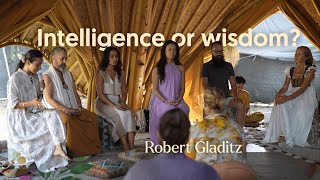
8 Changemakers Escaped to the Forest to Confront the Meta-Crisis - Here’s what happened.