Expanding consciousness, materialistic shamans, urgency & Spiral Dynamics | Gaia’s Custodians 01
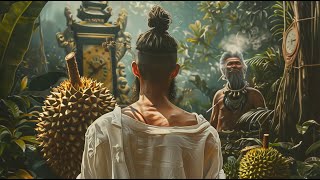
In the inaugural episode of the Gaia's Custodians podcast, host Robert Gladitz introduces a free‑flowing dialogue that weaves together personal well‑being and planetary stewardship. He uses five symbolic items—a durian fruit, an alarm clock, the book Spiral Dynamics, a video of his friend Joshua’s question about raising global consciousness, and a trailer for the documentary Newtopia about Indonesian shaman Aman Paksa—to explore how human consciousness evolves. Gladitz explains the Spiral Dynamics model (beige, purple, orange, green, yellow), illustrating each stage with Aman Paksa’s transition from tribal life to materialism and back, and reflects on the urgency felt in the climate crisis versus the need for calm, citing Charles Eisenstein. He shares his own practices of daily meditation and a 20‑hour intermittent fasting regimen that support personal expansion. The episode then proposes redesigning systems—social media platforms, tax structures, product design (e.g., Fairphone)—to facilitate the collective shift from orange materialism to green and yellow values. Gladitz calls on listeners, especially those already resonating with green or yellow worldviews, to design such systems, emphasizing the role of “custodians” in aligning personal actions with the health of Gaia. He concludes with gratitude to contributors and an invitation to explore his forthcoming book and future episodes.
Chapters
Foreign. Welcome to the first Gaia's Custodians podcast. Experience how I'm envisioning these episodes as a beautiful free flow of ideas, of thoughts, of questions that are important for the current state of this planet and for our individual lives, too. And I'm trying to create a blend between these two dimensions so that each of the episodes is valuable in regards to where you are right now in your personal life, with your relationships, with your business, with your health, with everything that's going on on your microcosm. And at the same time, I always want to provide a perspective for the macrocosm, how we might collectively build the more beautiful world our hearts know as possible. And I see these two dimensions as being closely interrelated, interlinked, interconnected. We cannot achieve one without the other. We need to think them simultaneously. And everything falls into place with us becoming who we are meant to be, with us, embracing the unique role Mama Gaia has gave us. And this is to be the custodians of the whole. The caretakers, the stewards, the protectors of the whole biosphere. And while this may seem a really daunting role and evoke all sorts of feelings of overwhelm and feeling not adequate for something like this, that's something that I perceive oftentimes. And at the same time, I feel that it's important to lean towards who we are really meant to be. The custodians. The custodians of the. Of the whole ecosystem without. Without meaning that we need to save the whole planet. I think it's not about saving anything or anyone. This is one of the notions that we will get into the first. Get deeper into in the first episode. But it's embracing. Embracing our true destiny. And how I want to move forward in these episodes is that for each of the episodes, I will be bringing a couple of items, a couple of things, a couple of ideas, something physical or something immaterial. Maybe it be a question or just a thought or a quote or something different. And these items will serve as our guideposts for the shared exploration in upcoming minutes. And I'm trying to weave them more and more into our conversation. And yeah, let's see where this might lead us. I'm curious, I'm excited. I'm looking forward to all the truth that will emerge. And I thank you for your time and for your openness and for being here with me today. All right, the first thing that I brought is maybe something unusual. That's a fruit. It's a durian. A durian. Is home in the tropical climates. If you are listening to this episode or watching this episode from a more temperate region, maybe from Europe or the United States, you will probably not be familiar with this fruit. But the durian is the queen of the fruit kingdom. Why that is the case we will explore later in more depth. Then, the next thing I brought is an alarm clock. Because when we look into this world, it's easy to feel a sense of urgency, a sense of we need to do something fast. We need to do a lot of things really, really quickly. And this urge is playing out on our individual levels. Okay, we need to earn money, and we need to create a nice setting for our children, and we need to get into shape. And we feel that all the things are essential and necessary right now. And the same thing on our collective level with everyday species that inhabited this beautiful planet for millions of years are going extinct. And more and more extreme weather events are taking place. Climate change is on the forefront. And that's why I brought this alarm clock. The next thing I brought is a book. This is the Spiral Dynamics, I would say masterpiece by Don Beck and Christopher Cohen. Spoiler Dynamics, if you're not familiar with it, is a model that describes how the human consciousness evolves. And it's a model. It's not reality. And at the same time, it's for me personally and for many others, quite useful in understanding what is going on and what are the different phases we individually and we collectively as humanity are going through. And this will guide our exploration today, too. The next thing I brought is a video, a short video of my dear friend Joshua. He's a very bright, smart young guy in his early 20s. And I recently had a had a conversation with him where we talked about something that for the both of us is feeling very meaningful right now. And I want to share with you a quick video of Joshua where he introduces a question that we were pondering and that maybe you are pondering too. Let's watch the video together.
So something that really fascinates me at the moment is the question, how can we raise the worldwide consciousness? If we agree that consciousness is what the world needs right now, then how do we actually do it? What are the actual actions we can take to raise the consciousness of the collective and of the individual person, especially on a big scale? What systems can we install? How do these systems have to look, who is even able to design systems like this? For me, this is. These are some of the most profound questions that we can ask right now.
And then the fifth thing that I brought is another video. It's a trailer of a documentary I watched last night. It's a video that stirred all sorts of emotions and myself and that touched me deeply. The documentary is called Newtopia. It's by a Norwegian filmmaker. And this Norwegian guy, he spent 15 years here in the Indonesian jungle with the Mentawai tribe. This is a tribe that still, like to this day, lives quite remotely. And one of the islands on the far west of Indonesia, some of them even without electricity, without phones, without all the things that we know in our modern civilization. And he documented over 15 years the journey of one of the shamans. And what took place over these 15 years was incredible. Let's watch the trailer together.
Sister Sharmampaksa. I met him in the deepest jungle of Indonesia. I was an adventurous and naive backpacker with a one way ticket to document the pristine life in the jungle. But reality was far from the paradise I had envisioned. I have followed my friend aman Paksa for 15 years. His search for a better life has led him to the advantages and pitfalls of modernization.
All right, now that we have all our pieces on the table, we have the durian, we have the alarm clock, we have our spiral dynamics book. And we watched Joshua's exploration, or his big question that he's currently pondering, how we might support the raising of the consciousness of the collective. And we watched the trailer of Newtopia, the documentary about Aman Paksa, the Indonesian shaman that embarked on a journey to explore a completely different lifestyle than what he was growing up with. And these five pieces may guide our shared exploration today. And I want to begin where we just ended at the. At the documentary trailer. Because I watched this video yesterday in the evening before I went to bed. And I think on a much deeper level than before, where most of my understanding was like, on a cognitive level, I really like, felt in every single cell of my body how what Don Beck and Christopher Cohen are describing in their model of spiral dynamics, how this really plays out in a lifetime of a human being. As not myself, of course, I know my own evolution through the different phases, through the different stages. I'm very familiar with that. But seeing another human being move on a relatively short time frame through those completely different worlds stirred up something really powerful in myself. And it showed me how malleable we are, how we as human beings are a product of our environment. This is what the whole idea of ontological design describes as the circular feedback loops between the world that we design and how we are designed by the world that we design in return. Like we build the houses, we build the schools, we built the cathedrals, we built the companies, we built the technology. And all these things in return design us back. I get influenced by the smartphone in my pocket. I get influenced by something like money. We saw that and Aman Paksa's story quite vividly. We get influenced by the kind of buildings we inhabit. And this circular feedback loop is, in my opinion, one of the most powerful forces there, there is on this, on this planet. And for all those who are not familiar with this model of spiral dynamics, I want to give a quick introduction because it's the first thing, the first time I stumbled over it, it was really eye opening for me because it describes over eight stages, how our psyche evolves. Everything began a couple of hundred thousand to millions of years ago when we were roaming around in the African savannah, like just by ourselves or in little small groups of people trying to hunt mammoths and trying to survive and not being eaten by lions and tigers. And this is what spiral dynamics describes as stage beige. Beige is just all about survival. Like there's no civilization, there are no groups. There's nothing that we know in our today's life is like a very primitive existence. And when human beings around 50,000 years ago realized that it's much easier to survive in tribes than to survive like just by yourself or with your own family, the next step in human evolution took place. And this is what spiral dynamics describes as stage purple. Stage purple is the tribal stage. And stage purple is exactly what we witnessed when we watched the story of Amanpaksa, like deep in the Indonesian jungle, just the tribe with no outside interference, without any technology, whatever. They're just doing their rituals, they are doing their shamanic practices. They're living in close alignment with the land. He knows every tree, he knows, he knows every, every animal, every bird sound. He can imitate. We saw that in the trailer. He can imitate the, he can imitate the mating signs of a monkey in order to attract him. And then he uses his bow and arrows in order to kill the monkey and to provide food for his family. And this is really characteristic for this stage purple. I don't want to dive into all the stages for, for the sake of briefness. But what we really saw in the trailer, and this is taking place all over the world right now, what we saw in the trailer is that this purple consciousness that is really, I would say, like pure, that is really connected with the land, connected with themselves, connected with the, with the higher dimensions, with the spirits that is slowly dying out and there's nothing we can do against it. And all the places in the world, be it in Indonesia, be it in South America, be it in African tribes, be it in small islands in the Pacific and so on, like this is. This chapter of humanity is more and more coming to an end. And that's incredibly sad because this purple consciousness carries so many treasures that we desperately need in our modern, hyper, hyper connected, fast technological world. But as we see in Amanpaksa's story, people living in this kind of setting can only live like that when they have no contact with the outside world. As soon as. And I can highly encourage you to watch the whole documentary. It tremendously shows like, as soon as Aman Paksa and his tribe members, like, get in their wooden canoe and paddle to the next bigger city and trade some of their cocoa beans that they, that they harvested on the cocoa from the, from the cocoa trees on their land, as soon as they bring them to the city in order to get a little bit of money, in order to buy some cigarettes or to buy a motor, a motor for their, for the canoe, in order to be able to drive faster, as soon as this takes place, they are pulled into Orange consciousness. Stage Orange is the, is not the stage following immediately after purple, but I will, for briefness of this video, I will skip the stages in between and move directly into orange. Because the orange consciousness is what we see as most prevailing on our planet right now. And orange is characterized by materialism. Orange is characterized by a personal urge to fulfill all your dreams, wishes, hopes and desires. Stage Orange is like the American dream. I want to make it, I want to get rich. I want to see the world. I want to have nice things, I want to have a nice partner. I want to have like just a nice life with everything that I can envision. And money is the driving force behind stage Orange. And as soon as people living from a center of gravity, that is, that is below Orange, like above and below does not mean better or worse. It's just characterized like this in the spiral. But it's just different forms of being. There's nothing better or worse. And as soon as people who are not in contact yet with this orange energy, as soon as they get into contact with it somehow it's, it's, it's. There's a pull. And like, this is something that truly fascinates me. Why can, like shamans who are living in deep alignment with the land, who are maybe, who are maybe performing rituals and working with the plant medicine and who are like deeply connected to everything. How can they be so stupid to start smoking cigarettes and drinking Coca Cola? That's something that always puzzled me. And I was like, like this doesn't make any sense. This doesn't make any sense. How can they not realize that the life they were living or they are living is so much more in alignment with themselves and with the whole than like all this Western influence? But as the model of spiral dynamics describes, consciousness can only expand, can only grow in one direction. And this is the, this is the direction of becoming broader. And while this purple tribal setting worked beautifully for thousands of years, it was still very narrow minded. It was only like my tribe, the neighboring tribe was probably seen as evil and we needed to fight against them. And there was a lot of superstition and there was this like small, narrow, focused. And in orange, the focus goes much broader. Oh, there's a television. And what are the people on the other side of the planet in the United States are doing? And what are the Kardashians doing? And what is going on on social media and what is there and there? And of course, like our hearts tells us. Yeah, but the tribal, the purple setting was much more beautiful, much more aligned. But what the spiral just describes is an expansion. It goes broader, your perspective goes broader. And this is what, what, what takes place in orange. And that's why it's inevitable that we collectively as a species and the single individual slowly moves through this, through the spiral. So no matter how hard you try, you cannot prevent the super spiritual deeply connected with the land shaman to start experimenting with, with cigarettes and with Coca Cola. It's not possible. It's not possible. And what Amon Paxa is a, is an example of is what is, I believe, one of the central questions that we are faced with as humanity nowadays. And this is the, the rush like, like the. I would, I would almost call it a landslide. A landslide of billions of people, mostly in the, in the region where I'm at right now in Indonesia and India and China, billions of people moving from the, from the lower stages into orange. Like Indonesia, China and India together possess more than 3 billion people. That's almost half of the world's population in these three countries. And they are collectively making the move from a lifestyle like Amantaxa or like the rice field farmers here in Bali living a pretty, a pretty, pretty simple life, eating their rice, eating their veggies and being on the fields the whole day. And then they follow the same fate as Aman Paksa. They get a phone and they get a bank account and they get, they discover material needs that were not there before. And they want to send their kids to a nice, to a nice school and they want to have a motorbike and they want to have a nicer house. I don't want just like a little bamboo shack. They want a nice proper house. All sorts of personal, like, individualistic needs come up. It's inevitable. It's inevitable. And the result is that, and this is taking place all over the Bali and I believe in many other places too, that the older generation who still possesses like vast swathes of beautiful land, like here, the rice fields and the forest and so on, they want to get money in order to support their kids and their grandkids, to go to school, to move to the cities, to have a nice life. They are selling their land. They are selling like their family heritage. And that makes me really, really sad because probably this, all this money gets invested into the education of the, of the kids. And maybe in five years, 10 years, whatever, this money will be gone. And like the, the safety, like the, like the property that this, this family possessed over generations of generations is gone. But this pool of this, of this orange energy is so strong that they cannot resist it. I had a conversation with a really old Balinese man, amazing, like, amazing guy. Like, he was living on his land every day. I had fortune to stay there for a couple of days to sleep under the open sky. And yeah, it was, it was a marvelous experience. And this land was like 2 hectares with a waterfall. And it was just like heaven, like pure, pure heaven. And since I don't have the means to buy this land from him, I proposed to lease it. And I said, hey, like, I don't want you to sell your beautiful piece of land like it's, that belongs to your family. Preserve it for your family, preserve it for your kids, preserve it for your grandchildren. I just want to live there and maybe want to bring a couple of other peoples and want to be there with my son and other children and we will like, take care of the land, but you will still possess it. And if in five years, 10 years, 20 years, you say like you want to, you want to move to the land by yourself again, of course we're happy to give it back to you and we will just pay you, pay you a yearly rate so that you have some money now, you can give this to your, to your kids and you can pay for their, for their school, but you don't need to sell like your, your property, which for me was Like a beautiful win win experience. But he was not interested. He was not interested because he was only interested in getting as much money now as possible. Because the more money you have now, like you have it. And this smaller rate, like every year and preserving the heritage of your family was way less worth than getting like a nice six figure check right now. Although he didn't need like all the money right now. There was no, like, I want to do this with it, but it's just like, okay, if I have the chance to get like 300 grands, like I want to have it. And I was not able to convince him that getting a couple of thousand every year and preserving his family heritage is maybe a wiser decision in the long run than selling it right now for a larger portion. But I was not successful in persuading him. And this showed me on a deeper level how strong the pull of this orange, of this materialistic gravitational pull is. And one of the central questions that we as humanity are faced with right now is given the planetary boundaries that Earth has, it's not an infinite planet. It's a finite planet with finite resources. Even like calling them resources, calling the wood and the fishes in the ocean calling them resources, part of the problem. Because they are not resources, they are living beings. We humans just treat them as resources. But let's say resources for the sake of simplicity. Even the resources are finite. And imagine like 3 billion people leaving behind their past lives, like on a really low scale, working on their rice fields every day, eating their rice, eating their veggies that they were growing, maybe the occasional banana from their own tree, and living a small life and family compounds the whole family together, raising their chickens and so on. Like if they leave this behind and all 3 billions of them move to the cities, wanting to have a nice job, wanting to eat meat every day, wanting the smartphone, wanting the McDonald's, the Coca Cola, the cigarettes and so on. This puts a tremendous burden on this planet. And I don't know. I don't know if the planet has the capacity to provide that. We are right now, given our global ecological footprint, we are already way past overshoot. Like all 8 billions of us combined have an ecological footprint of 1.75. That means you would need 1.75 earths to sustain how we are living collectively right now. That means somewhere around August, we consumed all the resources for the whole year. And the past five months of the year. We are just living on credit. And the credit are the fossil hydrocarbons that were stored in the Earth for millions of years, the oil, the coal, the natural gas, all the forests, like the Amazon rainforest, is declining at an alarming rate. But when we consumed all of that, there's nothing left. Maybe Elon Musk will be successful to fly us all to Mars and then we can live in beauty and harmony there. But I'm not convinced that this will take place. If we embark on the journey to another planet with the same mindset that killed this planet, we will kill the other planet too. So that won't be the solution. So this is the central question of our times. I believe, like the 3 billion people of China, India, Indonesia, there are a lot of other countries that, that are following a similar trajectory. Countries in Africa like Nigeria, countries in South America, where many, many, many, many people are living, Brazil and so on. They are all collectively moving into this orange materialistic game. And as much as this may seem like a bad thing, because it puts a tremendous burden on the planet. And as we saw in the story of Amon Paxa, it probably won't cause happiness. It's like a. It's an illusion. It's an illusion. Aman Paksa was intrigued by all the nice things that he saw in the city and so on, but in the end, he realized this is not what makes me happy. And he made the journey back into the forest, which I find tremendously beautiful. And it's a. It's an amazing ending for this documentary. Sorry to have spoiled it, but you need to watch the documentary. But I believe it will not work because the only way through is through. You need to go through this orange materialism in order to transcend it and to reach the next stage. And the next stage, this, this, the spiral describes as green. And green has a lot of similarities with the tribal purple stage. But green is characterized by a strong connection to ourselves, to other people, to the land. Green is characterized by harmony, by expressing our emotions. So there's a lot of similarities to purple, but it has integrated like the individualistic paradigm of orange and transcended it. So while in purple there's no real individual, it's just a tribe, in green, there's an individual. It's like my feelings, it's my emotions, it's my dreams, wishes, desires, and at the same time, it's your dreams, wishes and desires, and I don't want to fulfill mine at the expense of yours. It should be harmony, it should be peace, love and abundance. And all of us should be. Should be living together beautifully in community. And kids running around all the time, and they are Being free. And this is the dream of green. And with green, for the first time, comes a deep empathy for other people, even for people who don't share the same values, even for people who are in completely different circumstances. Like, Green can see all of that. And the green gravitational pole is very present in our whole spiritual consciousness personal development bubble. And this leads to all sorts of nice activities and settings that you probably know, like all the cacao ceremonies and all the kirtans and all the. All the deep healing emotional release sessions. This is all like, deeply grounded in the. In the green value meme. And in green, we realized the damage we caused. In orange, like, right now, our heart feels, what have we done collectively? What did we do to this beautiful planet? We exploited so many species. We exploited like the whole biosphere. What have we done? And then in green, there comes a huge resentment and a deep existential sadness and a kind of anger against those who caused all of that shit. And who are they? The evil businessmen, the corrupt politicians, the greedy billionaires, and the. The evil Illuminati. Like, green is very good at projecting the cause of what is going on to somebody on the outside. But what green is not realizing is that we are all part of this system, that we all caused it. That the moment we use a smartphone, we are perpetuating the extraction of rare earth minerals in Congo or in Brazil under inhumane conditions where maybe children are working like 16 hours a day under the glazing sun to extract, like this, these rare earth minerals that are used to build the chips on our smartphones. And that's why I switched from. After many years of loving my iPhones, I switched to the fairphone, which I believe is not perfect, of course, perfect for the planet. Would it be probably to use no phone at all. But the fairphone is doing many things a lot better than Apple and Samsung and all the other tech giants out there. This is not a fairphone commercial, but I love it so much. You can easily disassemble the phone and you can change all the components. If your screen breaks, then you can just get a new screen for not a lot of money. They're really selling these spare products only for what they really need to make in order to sustain the company. There's no huge profits that they are taking. You can replace the battery, you can replace the camera, and yeah, it's beautiful. I'm a dear fan Fair. You're doing a great job. Looking for the. Looking forward to the moment when I can change my MacBook to a fair book too. Quick side story, of course, fairphone is a beautiful example of stage green values that of course need to compete in an orange setting. And that's the difficulty. Like, the Fairphone costs €700, which is a little bit less than an iPhone, but just for the. For the value you get, just for the value you get, it's an overpriced phone. You can maybe get a better phone, like, if you just look at the specs for half the price. But it's not that the fairphone is too expensive, it's that all the other phones are too cheap because they all, they all give the receipt to Mother Nature. They. They don't pay fair wages, they don't dispose of their waste properly, just lands on some landfill or plastic in the oceans and so on. And this is something that fairphone is very, very careful about. All right, quick X course into the fairphone can highly recommend it to you to buy one. So this. I see two tendencies right now in the world. The first one is this huge rush of countries here in Asia and the Middle east and South America, in parts of Africa, this huge rush into stage orange. Like half of the world's population, maybe even more, is rushing into this materialistic paradigm. And the second trend that I see right now is the emergence of more and more green and even beyond. Let's complete the journey through the spiral. If we even transcend green, we arrive at yellow. And yellow is something that I'm exploring deeply right now. Yellow is really complex. Yellow is the beginning of what Don Beck and Chris Cohen calls Tier 2, before it's Tier 1. All the other stages, be it purple, be it orange, be it green and so on, are all Tier one. Your life is all predicated on survival. Like you're trying to survive with a strategy to please the gods, or you're trying to survive with your strategy to earn a lot of money or by having a lot of friends. Like, your strategies are different, but the whole driver is the same. It's all about survival. And if we transcend green and move into yellow, this is the first level of being. From yellow on, it's not about survival, it's just about being. Will you realize we like, we can just be. We can just be. We are not easily offended. We are not easily triggered by a client not booking our service or a friend texting something mean, or by the polar bears going extinct or whatever. Of course it touches our heart, but we are not identified with the feelings. We can see much more clearly. We can be a much more effective agent of change. Because we don't use all of our capacities and all of our potential to be right and to argument with other people and to, to earn something for us and to acquire things. Because we don't need all of that anymore. We can just focus on the task at hand and make a contribution. And this is what fulfills us the most. Like a nice car or whatever. It's. Yeah, it doesn't give us any, anything anymore. I'm living here in my tent, like my, I don't know, 10, 10 square meters of 10 for a couple of hundred bucks a month. And I'm eating my durian that I'm harvesting like from the, from the, from the land next door right by the waterfall. And that's it. I don't, I don't need anything for me. I just want to contribute everything I have and everything I am to, to this world in whichever way shape or form will arise. And this is how we can, how we can see stage yellow. It's characterized by systemic thinking. Before everything is still very like narrow, focused. Okay. In orange it's about money. In green it's about friends and relationships. And yellow can see the whole complexity. And yellow for the first time can see the value of the whole spiral before yellow, my stage, my tribe, my people are good and the other ones are either evil or stupid or corrupt or just somehow inferior. And in yellow we can see the value of the whole spiral in yellow for the first time. And this is something that green is not capable of. We see the emergence of this orange materialistic paradigm in the life of Aman Paksa as something great. If we see the documentary about Amanpaksa through the lens of green consciousness and we suffer the whole time and we think why, why did this beautiful shaman move into this orange materialistic paradigm and basically kills himself and as a side effect kills the earth. He looks like when you see him like working in the city and consuming all that, like he looks so unhealthy compared to in the beginning of the, of the documentary where he's like the, the, the personification of, of vibrancy, of, of like thriving human being. He's strong, his muscles is like complexion, like he's ah, just like an inspiration to watch. And later he's just like I'm doing my job and like all this life force energy went away. And if you watch this documentary through this green lens and this is what will happen for most of the people who watch the documentary, they will just like suffer and like, oh no, he's making a mistake. But from this yellow perspective, yellow for the first time can see the value of the whole spiral and how everything is interconnected. In yellow. We see this as something beautiful because we know that in order to transcend this orange materialistic paradigm, we need to go through like the same. The same was true for me. Like in my early 20s, I had this orange face and I wanted to travel the world. I wanted to be a digital nomad. I want to earn my, my, my passive income. I want to check my PayPal account. Oh, another thousand. Oh, another 3,000. Okay, nice. Something. Some, someone again booked my book, my course, and I wanted to be free. I wanted to see the world, I wanted to be financially independent and I want to do the things that I love. This was my orange face. And as soon as I fulfilled it, because my business was, was working, I was earning enough money and I was living in Barcelona and then and in Australia and in Bali and in New Zealand and so many different in the Canary Islands and so many different beautiful places. And then afterwards I was like, okay, there's no meaning anymore in me. I want to contribute. And then I transcended orange and slowly moved into the green paradigm. And that's something that you cannot skip. You cannot skip this development. It's not possible. You can skip it. So the only way through is through. The only question is, will this planet be able to sustain 3, 4, 5 billion human beings rushing into orange almost at the same time? That's the big question. And now I want to touch base on what Joshua said. Joshua was asking the question, how can we support the evolution of consciousness of this whole planet, of humanity? I think we don't need anything, we don't need to do anything in order to make that happen. Because the spiral is doing the magic by itself. Like consciousness is expanding. There's no other way. We cannot even stop it. No matter how hard we try, we cannot stop it. So we don't need to do anything to cause it. But the one thing that we can do if we, and chances are high, if you're interested in this kind of content that I'm putting out there, that you are rooted either in the green value meme or in the yellow value meme. Of course, probably with one leg, maybe in the orange materialistic paradigm, but either in your heart or in your head, you feel a resonance with this post modern way of looking at the world that is not only focused on maximizing your own personal self interest, but you want to contribute. You want to make an, make an impact on a broader scale. You want to contribute to the creation of the more beautiful world. All this is rooted in green and then maybe slowly, gradually moving into yellow. And our task, the big task in our lifetimes, is to design systems for the majority of human beings on this planet that are not there yet, that are not in the green or in the yellow worldview, that are still caught in the orange materialism rat race. We need to design systems for them in order to support their quick transition through orange and then into green and above, and to design these systems in a way that causes as little harm as possible to the whole planet. Let me give you an example. If I would be Mark Zuckerberg or if I would be the CEO of YouTube, it would be my number one goal to change the whole setup of the platform. Because everybody is blaming Facebook, Everybody's blaming Instagram, TikTok and so on for putting us into this orange materialism. And there's like fast consumption, like, tick tock, three seconds. Like, this is what we see in the documentary the Social Dilemma. If you haven't watched it, I highly recommend you to watch it. It's very insightful. And if I would be Mark Zuckerberg, I would try. Of course, it's a daunting task because he has shareholders and all sorts of other people who are involved and board of directors, and it's. It's a daunting task. I don't know if he has the power to even do that, but I would dedicate all that I have to the restructuring of the platform. Imagine. Imagine Instagram would not be dedicated because of its business model to make you as addicted as possible so that you stay as long as humanly possible on the platform and consume as many content and consume as many ads and buy all the products from the advertisers that pay Instagram money. This is the current business model. You are not the. You are not the. Their target group. You are the product being sold. The target group are the advertisers. They will pay money to the platform. You and your data are the product being sold. Imagine this would be restructured in a way that when you go onto Instagram or onto YouTube, you get asked, what is your personal goal? What do you want to, like, really Take a moment, take a deep breath, sit and close your eyes. Sit in a meditation. What is something like? If you connect to your highest version, what is something that you want to grow into? What is something that you want to achieve? Like, really on the most pure, most aligned way. If you would ask these people, if you would ask this Question to people, of course, many would say, ah, I want to learn to meditate or I want to be a little bit more loving in my relationships, or I want to, I want to be a better boss at work, or I want to be more nice with my children, or I want to work out more, whatever it is. And people would set their goals and then this platform would not be dedicated to make you addicted and to make you spend as much time as possible on the platform, but this algorithm would be dedicated to you achieving your goal. If you say you want to be more mindful, more peaceful, more calm, then it would show you content in this direction. And after you watched a couple of videos, the platform would ask you, hey, do you want to take a little break? Do you want to break? Do you want to take a break for half an hour? Maybe you go outside and take a walk, go to the park, go to the forest, or just sit in your balcony, close your eyes and enjoy the sun. I will be back here for you in half an hour. Imagine the platform. It's totally possible. Like from a technical standpoint, that's totally doable. That's no rocket science. Like, you could, you could just do that. Putting these platforms in service of our individual growth is totally doable. You just need to have the willingness and the power to do that. So the problem is not Facebook. The problem is not Instagram. The problem is not Tik Tok. The problem is not YouTube. It's how these platforms are structured. And this is where we connect back to the spiral. Like, for the people who already transcended this orange materialism and who have a grasp of this green humanitarian or this yellow systemic approach, it's our task to design systems in a way that supports the 8 billion people on this planet to rise as smoothly and as effortlessly and as as quickly through the spiral into green and yellow too. And this would be totally doable. In designing a social media platform like this, even the person who was running like super on autopilot, unconscious through their life and consuming all sorts of shit and eating cheeseburgers for lunch every day and being in their office, and even this person, if you would, as a platform, say, take it, take a deep breath, take a moment, connect to your highest version. What do you really, what is, what is truly meaningful for you right now, please tell me. And of course, even this person would say, yeah, my kids, I love my kids more than everything. I want to be a better father. And then the platform could be, could cater to you becoming a better father, show you content in the way that's, that's aligned with this, with this goal. If you're, if you're trying to watch a video of some, some person playing a video game where people get shot and so on the platform could say, hey, do you take a moment? Do you really want to watch this video? Last time you told me you want to become a better father. And I see in this video there's a lot of violence going on. Maybe that's not an alignment. What about you watching this video instead about non violent communication or whatever. And then of course it's not false, false. This content is not blocked. If this person says, no, I want to watch this video. Now of course you can watch the video, but we, we all get nudged in the direction of what we sense is the most meaningful for us. And I think this would be a great contribution of green and yellow leaders designing structures, designing systems, designing like social media platforms or the same could be true to companies or for politics or whatever. But if we have orange and if we have green and yellow like again, Spirodynamics is just a model. There's not a green person or a yellow or an orange or a purple person. It's just a center of gravity. It's an energy. It's a kind of world view that we subscribe to. But it's not here to put people in boxes or something like that. But of course I'm, if I'm speaking about them, sometimes I make the mistakes of talking about green people, but there are no green people. I want to emphasize that again. But for us as people who maybe partially or fully transcended the postmodern green orange materialistic paradigm, it's our task to design systems in a way that supports all the other people who not out of themselves would eat the vegan pokeball for lunch. But if we can design systems that incentivize these people or to make it easier to make the right decision, imagine a government which says, okay, we will no longer subsidize meat from factory farms. We will subsidize the new hemp protein or the new fake meat made out of tofu or whatever. We will subsidize that. And then the vegan burger will be half the price compared to, to a traditional cheeseburger. Of course it wakes. It would make it much easier. Right now it's the opposite. Like a couple of days ago I switched my, I switched the scooter, the motorbike I'm renting here right now from a traditional petrol powered to an electric one. And the Electric one costs double the price and brings with it some challenges because of the limited range. And I'm living here in the mountains and sometimes when the battery is quite low, I cannot climb the mountain with it. Then I'm like at 3km per, like with all my, with all my durians and all my coconuts that I bought from the shop. Like I'm trying to climb the mountain with this electric spooler. Of course, with a petrol scooter I'm like, I'm just climbing the mountain easily. So there are a couple of drawbacks. So I pay double the price for a. If you just look at the product for an inferior product. But imagine this would be different because governments would no longer subsidize the detrimental thing and they would subsidize the, the beautiful thing. Or another idea that I'm a big proponent of is to change the tax system. Right now we pay taxes for money we earn. But would it be a much better idea to not let people pay taxes for how much they earn and instead let them pay taxes for how much they take from, from the biosphere, from nature? Like imagine a company would, had an, would have an intent, incentive not to create toxic waste products but, but design a circular, circular economy like a Z zero waste with a zero waste approach so that everything they use gets recycled and they take as little as possible so that people who live on a small ecological footprint pay less taxes than people who live in four bedroom apartments and who drive two cars and fly around the world the whole year. I think this would incentivize us, incentivize companies in a way to produce their products and to treat their, their employees in a way and to design systems in a way because of their own personal self interest. Because we don't want to pay as much taxes as many taxes. Of course it makes sense to recycle. It makes sense to use this building material and not that building material and not to build my house out of like concrete, which is a tremendous, tremendous waste product for the environment, but to maybe build my house out of wood or whatever. And this is, this is something that a small group of really powerful green and yellow leaders, be it in politics, be it in the. Be it in the traditional economy, can really do, can really do. And this would incentivize the masses to act in a way that is in more alignment with the whole. Not because they are there yet, because they wouldn't do it for the polar bears, they wouldn't do it for the next seven generations. They wouldn't do it, for the, for the, for the nice forest here in Bali, but they would do it for themselves. And if their personal self interest is in alignment with doing the right thing for the whole, things will be much easier. So Joshua, in order to not ask, answer your question. I'm not capable of answering your question. But in order to provide a, a direction of thought, we could explore more. I want to offer this. If you already partially or fully transcended the orange materialistic paradigm, try to develop systems for your customers, for your family, for your employees, for your taxpayers, wherever you are right now, in whichever situation you are right now, trying to build systems. And of course that's a very, very, very complex task. It begins with connecting deeply with all the other stages of the spiral and getting to know purple and getting to know orange and getting to know blue and everything in between really getting to know people and then putting in the mental, the cognitive and at the same time the emotional work necessary to try. And I can only say try because there is no like cookie cutter. Just do this, like, do this quick fix and then it will all be done. No, all this short, all these short sighted responses to our problems that we, the past came up with, okay, my stomach hurts, okay, I just throw a pill, I don't have enough money, I work more, whatever. All these like short sighted, super pinpointed interventions, they don't work. They don't work when we look into the world through this yellow systemic, interconnected lens. So this task is quite challenging and at the same time I feel that it's so necessary and this is what I dedicate my life to, to design those systems and at the same time to embody, embody the more beautiful world, embody the archetype of a custodian of Gaia, embody like really with how I'm living, how I'm treating my fellow human beings, how I'm treating the nature, like the houses I'm inhabiting, the way I'm working, like with everything I'm doing, with everything I'm being, try to more and more lean towards this custodianship and to try to make all the decisions in my life in a way that is in alignment with the whole. And I don't, and I don't see that I'm anywhere close to perfect. There, there's so much work to do, there's so many changes yet to be made. And here I want to connect to the little alarm clock I brought because it's very easy if we see all that that's going on in our Personal lives and in our collective lives and the planet and so on, it's very easy to fall into this habit of urgency. Charles Eisenstein talks in his amazing book, the More Beautiful World Our Hearts Know as Possible about it. This chapter is one of my favorite ones about urgency. And he says, like, if we, if we look out into the world and we really, from this green or from this yellow perspective, see everything that's going on and we pull away the curtain of the orange materialism and the destruction it caused, it's so easy to fall into urgency and to say like, quick, quick, we need to hurry on. If we don't act now, like all of us, then maybe everything is too late and the whole planet and we will all go extinct. But as Charles points out in his book, this habit of urgency may be what put us into this whole mess we are in right now in the first place. And maybe counterintuitively, what is necessary right now is to feel this rush of urgency and not to act on it. And to develop the calmness and the centeredness and the clarity to really check what is going on and to have a laser focused clarity on what is to do right now. Because if we do the wrong thing, maybe we will even perpetuate the problems that are there. So out of our urgency of, oh, we need to do anything, okay, we need to protest, we need to, we need to fight against the big oil, Big Pharma, Big Ag, whatever. We need to do this, we need to do that, we need to start a company and we need to rally people and maybe we will even perpetuate the problems. So the wiser thing probably may be to not do anything in the first place, which is so counterintuitively because it feels like the whole world is burning. And to not do anything while the world is burning. This is hard. This is very, very hard. But I sense that it may be important. And of course people say, oh, yeah, if your children in your own backyard are kidnapped by a stranger, yeah, good luck with just meditating and doing nothing. No, of course if your children get kidnapped in your own backyard, you will go there and you will maybe, you will maybe take your weapon of choice, and of course you will protect your children. But this is a simple situation. We totally know what is the appropriate reaction. It's simple. Just go there, protect your children and defend them against the intruder. But what is going on on our planet is infinitely more complex. There are no obvious solutions. We don't know what's really going on. There are a million things going on at the same time. So before we do, out of our own sense of urgency, maybe out of our own sense of oh, I don't want to be the one when everybody is rallying and doing things and hustling all day. I don't want to be the one who's just like sitting and meditating and thinking about everything because I don't want to be perceived as lazy or as not putting in the work or, or whatever by the other people. Like, this is hard. This is hard. In times where everybody is out on the streets and doing and to take a step back and to really think about and to really reflect on what is necessary, this is hard. But that's important. That's really, really important because otherwise we will probably perpetuate the problems that are there right now and not contribute to solutions, but contribute to the cementing of these problems. So one thing, one habit that for me personally is so crucial in doing that in times of individually perceived and collectively perceived rush to develop the clarity to see what is really necessary. My habit of choice is my morning meditation. Like every morning started almost three weeks. I think today is day 17 or day 18 of me meditating again, finally, again every morning for an hour, one hour. And now it sounds a lot and it is a lot. And still it's one of the most powerful things we can do to have the clarity for our day. Begin with sitting an hour in silence, maybe begin with 20 minutes. But I want to encourage you to expand this time you're sitting on your meditation cushion and not doing anything because it aids your clarity tremendously. And every time I get up after this hour, of course my, my, my legs hurt like they are doing right now because my body is not used to sitting in our sitting, sitting for an hour cross legged. And that's a beautiful invitation for, for me to, to align my body more and more with these essential needs. And at the same time, when I'm getting up, I feel that, yeah, I feel, I feel clear, I feel calm, I feel powerful. I feel really powerful. I feel there's a, there's a grounded, a grounded power that I can access. It's not like this, like, oh, here and there. And that is really like coming from, from here. And I feel that this is necessary in order to do the right things. So I highly want to invite you to, if this is not a practice that you are doing right now, I want to highly invite you to do that. Last year I had a phase of almost three months, I think 85 days where I was sitting in silence for an hour or an hour and a half every day. And it tremendously aided my personal transitioning process that I was going through at the time. It would have not been possible without these moments of just me, me in silence and stillness without any. And I think that's a good moment to introduce our little friend that we brought here too. Maybe through this whole episode you ask yourself, why the fuck did Robert bring this crazy, crazy looking fruit? People call it the. Yeah, it has an intense smell. Some people call it. They find it really disgusting. They say, like it tastes or it smells like onions, onions mixed with stinky feet. And I believe it's incredibly delicious. But yeah, it's polarizing. Why did I bring this fruit? Because in order to. And now I want to transition to talking more about how can we, how can we embody everything that we today talked about. Because it's super easy to just be lost in this big, big picture thoughts on the meta level and watch a documentary about Aman Paka and like be lost in philosophical thoughts about the world. And it's a completely different step too ground down. And to embody that and to ask ourselves the question, how can I, like every day, lean a little bit more into this role of being a custodian, into who I am truly here for, Embrace a little bit more my true destiny. And I feel that meditation is a like, no matter who you are and no matter what you want to do in life and no matter what you are here for, if you are an artist or if you're an entrepreneur, or if you're a thing thinker or if you are a musician, or if you are everything at the same time, whatever you are expanding our own container, developing the capacity to hold more of this complexity is of utmost importance. And that's why this daily morning meditation for me is like pure gold. But when I look back into my past years and check in, during which times I was able to practice that and during which times I was not able to practice that, I see a clear pattern. When I'm going to bed late with a full stomach, then it is very hard to do the morning meditation because I won't be as well rested. And at the same time I will feel, I will feel sluggish, I will feel tired and I will probably skip it in the morning and say like, I will do it in a quiet moment in the evening or in the afternoon or whatever. And then life takes place as we all know it and I won't do it. So for me, setting up the scene for My one hour morning meditation, ideally before sunrise, ideally before my son wakes up. He wakes up at 5:36. So my ideal setting and of, of course I'm not there every day yet, is to wake up naturally, beautifully, without any fucking alarm clock at 4 or at 4:30 when it's still dark and I can sit for an hour in meditation. And then he wakes up and I'm sitting outside on, on a little poich in front of our tent and he comes and we had this beautiful moment a couple of times where he just wakes up, he's still a little bit like tired and he sits in my lap and we sit there together for five minutes, maybe even 10 minutes. And then the day can start. My meditation is finished and he slowly transitioned into this state of being awake. Then we can open our first coconut of the day and hydrate ourselves. And I feel that this is something that is much easier when. And now we can talk about the durian. When I go to bed really early. Over the past week I made it a habit to sleep between 8 and 9 because I know if I'm in bed at 8:30 it will be easy to wake up at 4 and be well rested at 4 and not go to bed at midnight and try to wake up at 4 which will maybe work for a day or two, but afterwards you will crash or maybe you will fall asleep in your meditation, which happened, which happened for me many times. So going to bed early and even before that, if I want to go to bed early and want to be well rested the next morning, I need to rethink my eating patterns. I shifted my diet to Vegan in 2010, 14 years ago. So for me it's totally normal. We have a little ant, little friend. For me it's totally normal to feed my body in a way that really nourishes me and every, every cell, every part. But there was one thing, one habit that was present like the whole time until a couple of, couple of months ago. And this was this habit of. Even though I was mostly, mostly eating fruits and veggies and all the healthy stuff, no sugar, no, no, no wheat, no animal products, no nothing. Like really pure all the time. Not all the time. The occasional, the occasional vegan croissant was, was nice. Um, but like the majority of my of my diet was really, really clean, really pure. But still there was this one habit of always overeating late in the evening because when I was working a lot, when things are going on, when life was messy with my son, with my business, with everything, what I really enjoyed as a habit for myself was in the evening at 8, at 9, at 10, I have a nice rich dinner with a nice dessert, just like for myself or with a friend or with my partner, and light on a candle or watch a movie and really have a nice chilled evening. This was something that I truly treasured like all the years. And of course, if I eat a full meal at 9pm and go to bed an hour later, my sleep quality is shitty. And I wake up the next morning not feeling totally refreshed. My meditation routine suffered, and so on and so on. And then there was this moment a couple of weeks ago where I changed all of that and it turned it really on its on its head, like drastically, slowly, but gradually, I extended the amount of hours between my last meal and me going to bed. At first, the first couple of weeks were like no food after sunset here. The sun is setting in Bali at around 6, 6:30. And I had dinner with my son afterwards. He was going to bed and then I was awake for another four hours until like 10. And my body had like four hours of not eating and just digestion time before I went to bed. And this was a nice step in the right direction. This really felt good, felt really, really good. In the beginning it was a little, a little tricky, a little difficult because, yeah, my body was used to like craving something nice and sweet in the evening. But I stick to this habit and I sense that, yeah, it aided my sleep process in a tremendous way. And I woke up a lot more refreshed. And then slowly but surely, my dinner got earlier and earlier. Then I changed to eating the last meal at around three or four in the afternoon, like a really early dinner, no food after three or four. And then in the evening, just like a coconut, some, some, some water. And this was the next bold step into this direction. I did this again for a couple of weeks and it felt really good. So I expanded my intermittent fasting window even further. And then the next step came a couple of weeks ago when I did the next bold step to have my dinner, the last meal of the day at lunch. So at around 11 or 12 or 1pm, I eat a nice meal and then the whole afternoon evening, no food. And this was like, this really changed things because if I eat my last meal at noon and I have eight, nine, maybe even 10 hours of digestion time before I go to bed, my digestion is finished. The time I go to bed that my stomach is empty and my sleep process is so much deeper because my body has all the energy to rest, to recharge, to rejuvenate. The majority of the energy from our food goes straight into digestion. And if we digest the whole night, our sleep quality is of course a lot poorer than when this process is already finished by the time we go to bed. So my eating regimen right now looks like a very early breakfast. When I get up at 4, 5, latest 6, I'm immediately hungry because I fasted like the whole afternoon and evening before. So my fruit breakfast, like only fruits will be around 7, 8, lot like big fruit meal, mostly mono, either papaya or watermelon or mangosteen or dragon fruit. But like a lot like my belly like afterwards like really full, a lot of volume, a lot of water. Like imagine two full papayas or something like that. And then a lunch or a dinner, no matter how you, how you call it at around 11 or 12. And this is where this little friend comes in. Durian is my, is my favorite, is my favorite dinner. I can eat like easily three or four, maybe sometimes even five of these ones. They're like super soft and creamy. Like ah, I could do a whole video just about the durian. Every, everyone is different. Everyone is different. Some taste like white chocolate, some taste more like lemon, lemon custard. Of course, if it's not ripe then it tastes like onions. It's really bad. But if it's a ripe durian, it's just incredible. Some are like really savory, really like ah, juicy, meaty. Like all of them are different. I really like to eat a lot of durians. I eat coconut meat. I have, I eat all sorts of nuts. I eat avocado. So for dinner I have something more dense. These two meals like one big fruit meal and one more dense, more rich meal and that's it. And then I fast for another eight, nine hours until I go to bed and fast for another eight hours in bed. So my, my whole eating time is around four or five hours and around 20 hours of intermittent fasting. And this is something that wow, feels so powerful, I can tell you. Like the feeling with which I'm getting up in the morning, being fully rested without, without this shit is and without all this digestion energy because there was, there was done the day before. It's incredible. It's really, really incredible. So sharp, so powerful. And then I sit on the meditation cushion and I expand my container and I then I'm ready for the day. And it's a complete contrast to having a full rich meal at 9pm and then waking up sluggish and so what I want to say is that I'm always trying to push the envelope further and further and explore. Like how can we really, how can we really fulfill our full potential on every different level? Because nothing less than our full potential is needed in the world with all these things that are going on right now. And no, I'm not saying that you need to save. I need to like, we don't need to save anything. The planet will, will thrive and exist into the indefinite future until some asteroid is hitting it or whatever. Like this planet will way, way, way surpass us. Human beings will exist for way longer. We cannot ruin the planet no matter what we do, no matter if we cut like all the trees, whatever, we human beings go extinct because we, we cut off the, we cut off the, the, the branch on which we are sitting. We debase our own habitat. And if we do that for long enough, we will go extinct or we will find a way to leap to another planet. But I'm not optimistic that this is doable and I'm not optimistic that this is the right thing to do because then we will screw up another planet, which we shouldn't. So it's our task to figure out how to life, how to do life in alignment with the whole on Earth first. And this is not for the planet. This is for the whole of Gaia. And the whole of Gaia is like all the plants, all the animals, all the fungi, all the birds, all the human beings, like everything, all the children of this beautiful planet. We can all thrive together. But the one thing that decides upon paradise or hell is whether we as humans, we as the most powerful species on this planet, step into our proper role. Because we developed all this power through the use of our technology. In the beginning it were bows and arrows, as we saw with Aman Paxa. And now it's these cameras and smartphones and AI and all the craziness that will take place over the upcoming decades. With our use of technologies, we became so incredibly powerful, more powerful than all the other species. But with the power of gods needs to come the wisdom of gods, or we will blow up the whole thing. And with wisdom, I mean the. What we talked about today, developing the capacity to expand our container, to hold more of this complexity and to design solutions with all its implications in mind, not just focus on our narrow goals. I want to earn more money, I want to lose weight, I want to have a nice partner. I want to travel the world, whatever, but to have all its implications in mind. Okay, what happens on the other side of the planet in some far away supply chains, when I'm buying the new iPhone, or when I'm buying the banana from Costa Rica or the chia seeds from Brazil that make my nice morning smoothie bowl. Like the future is local. The future is regional. Grounding down, living in community, growing your own fruit, having your own water sources. Like all this is so essential because this can lead to a life that doesn't feel like lack. I'm not here with the. I'm not here trying to convince anybody to leave out all the things they like and to just chew on their carrot and live a miserable life and hate everything. No, that's not, that's not what I'm advocating for. I'm advocating for a whole system's redesign of our living circumstances so that we wake up with this feeling of pure abundance while knowing that we are living in alignment with the whole and we are living a life. We are living a life that would technically work for everybody without taking more than we give. Because I think that it's, it's absolutely appropriate and absolutely mandatory for an adult to give more than he takes. But so far the majority of humanity is taking much more than it gives. And that creates an imbalance. That's why we are at an ecological footprint of collectively 1.75. That's why in August we consumed all the resources that we have at our disposal and then we go into, into overdraft. And this trend is just accelerating with like the billions of people, Indonesia, China, India, going into stage orange, going into this materialistic paradigm and taking more and more and more and more and wanting all these things and wanting the Coke and wanting the tobacco and yeah, look at Aman Paksa. But that's a necessary part of the journey. We can only transcend these modern ideals, this materialistic paradigm, if we go through it. And it's our task as lightworkers, as agents of change to design systems for other people to live in a way that aligns their personal self interest with, with the thriving of the whole. I see that as our, as our, as the absolute necessity for us as people who already partially or fully transcended this orange materialistic paradigm and who have the capacity for this whole systems, bird's eye view, who have the capacity to hold these multiple perspectives simultaneously. If we are able to do that, then it's our task to put that to work and to stop chasing like a similar metric, a singular metric, just earn more money, just have this, have that, whatever, no, how can I build a business while Creating a nice place for my employees to work at, while providing tremendous value for. For my customers, while creating revenue for my investors, while having a positive impact on the environment, while not debasing the future and sawing off the branch that we are sitting on. And that's a Herculean task to build a business like this. And at the same time, for me, it's the only way, the only sensible way to build a business. And you can. You can look through the same lens on everything that we're doing, on our relationships, on our diets, on the houses we live in, on our consumption, and so on and so on and so on. All right, that's it for today. This concludes our first podcast episode of Gaia's Custodians. And I want to say a deep thank you to Joshua for inspiring today's episode. I want to give a huge thanks to Don Beck and Chris Cohen for creating this model that obviously, it's not reality, it's not perfect. The Tao Te Ching says the dao that can be told is not the eternal dao. It's a model. It's not reality. And at the same time, it's helpful to explain things and to get clarity. I want to give thanks to Aman Pagsa and to this amazing Norwegian filmmaker for 15 years documented this journey. I can highly recommend you to watch it. Newtopia. It's a documentary. Documentary well worth watching. And I want to. I want to give thanks to my grandma for borrowing me this alarm clock. I don't own any alarm clock. I want to give thanks to my grandma. She's living here with us since three months now. With 82 years old, she moved to Bali. And of course, every day is very blissful for her to be with her grandson, with Leo, and for him, it's amazing. At the same time, for her, it's deeply challenging because of the culture, because of, like, so many things going on in her. She wants to be. She doesn't want to be a burden, but she speaks no Indonesian and no English, and of course, she needs me to take care of her for, like, basic things, shopping, communication, whatever. And this creates a challenge in her. And, yeah, I'm grateful for her that she has the courage and the openness to embark on this journey. And most of all, I want to give thanks to Mama Gaia for providing me and everybody with these beautiful fruits that nourish us, that nourish us in a way that equips us with the power to do the work that we are here for, not because we need to. Not because we must to. Not because I want to convince you of anything, but because it's a natural expression of who I am. I cannot not do this work. Yeah. And I want to invite you to look deeper. What is the work that you cannot not do? What is something that inspires you and draws you in on such a deep level that you cannot resist it? Like Aman Paxa could not resist the pull of the orange materialistic paradigm? What is something that you cannot resist to do? And then do that? If you feel a desire to dive deeper into the topics that we explored today, I can recommend you to, of course, read Spiral Dynamics. But read the book that I'm writing right now. It's almost finished, of course. It's called Gaia's Custodians Embracing who We Are Meant to Be. And it explores in way more depth how we arrived at the place where we are right now, this whole human predicament where we are right now, how all this fell into place, and how we might design viable responses to create the more beautiful world or as normal as possible. That's the shared quest on an individual level as well as on a collective level. If that fascinates you, I'm grateful for everybody who gets the book. An ebook version or in print version. It's an honor and a joy to write this. Looking forward to write the next one slowly and like honing or leaning into this identity of an author. It's so good. Feels so good. I'm looking forward to the next one, even though the first one is not finished yet. So many things that want to go out. And in the meantime, you can read the first book and enjoy the podcast episodes I'm putting out. All right, let's conclude the first episode of Gaia's Custodians. A huge thank you to you, the listener, the viewer, for letting you be touched, maybe inspired, maybe shocked, but most of all touched by what we explored today. Because if we let this touch our hearts and maybe touch our heads too, then things will emerge out of that, I'm pretty sure. And I'm curious what will emerge for you. Thank you for our shared time today. Looking forward to the next one. Bye. Bye.
More from Robert
Impact Business Builder vs Embodied Longevity Coach | Custodian Games Mallorca
Regenerative Government Advisor vs. Conscious #1 Athlete | Custodian Games Mallorca