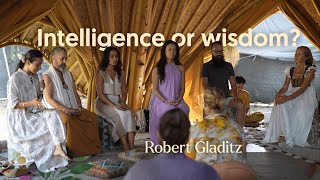
FULL AUDIOBOOK | Gaia's Custodians - The emergence of a novel kind of human | Robert Gladitz

The second half of Robert Gladitz’s audiobook expands on his vision of humanity’s evolutionary leap through the lens of Spiral Dynamics, focusing on the Yellow and emerging Turquoise stages. Yellow thinking is described as an integrative, systems‑oriented worldview that transcends friend‑enemy binaries, seeks upstream solutions, and optimises for truth and collective thriving. Turquoise is presented as a nascent stage of interbeing, where individuals experience the planet as a holistic organism, surrendering dualistic thinking. Through the fictional story of Emma, Gladitz illustrates how personal integration of earlier stages (Beige, Purple, Red, Blue, Orange, Green) can lead to Yellow consciousness. He then articulates a philosophy of Gaia custodianship: love for the Earth, biophilia, and the conviction that a meaningful life is measured by the beauty and thriving one brings to the whole biosphere. The "meta‑crisis" is diagnosed as the result of fragmented, single‑solution thinking, unsustainable education, and an economic system that rewards narrow intelligence over wisdom. Gladitz calls for a new class of polymaths—modern Renaissance people—who can bridge disciplines to devise systemic responses. He critiques modern schooling for eroding innate genius and proposes nurturing children’s creativity through holistic, community‑based environments. Ontological design is introduced as the feedback loop between what we build and who we become, leading to a detailed set of design criteria for alternative living systems: location in tropical mountain regions, balance of physical and spiritual life, multigenerational structures, equilibrium of masculine/feminine energies, and a give‑receive economy. The audiobook outlines a concrete model of small, globally‑connected community villages (≈150 people) that integrate these criteria, emphasizing self‑sufficiency, barefoot living, raw vegan diets, meditation, and shared governance. Throughout, Gladitz interweaves personal anecdotes, references to thinkers such as Ken Wilber, Charles Eisenstein, Yuval Harari, and E.O. Wilson, and provides statistical estimates of the rarity of Yellow (1 %) and Turquoise (0.1 %) thinkers. The work ends with a call to join a Telegram community, offering resources, gratitude, and an invitation to co‑create the next stage of human evolution as custodians of Gaia.
Chapters
Welcome to the audiobook of Gaia's Custodians. The Emergence of a Novel Kind of Human as we dive into this new world, you may find it valuable to follow along in the ebook version. You find the link down there in the show notes. With that being said, I'm very grateful to have you here for today's exploration of the novel kind of human that's emerging right now and the current situations in our collective and individual lives that make this a necessity. I tremendously appreciate you walking this path, this path that is so important in these unprecedented times we're living in right now. And I'm looking forward what might emerge for you during our shared journey. Feel invited to pause and reflect anytime and to take notes and to really let everything that we are going to dive in. Stir something up inside yourself and if you feel the urge to share feedback to get into contact, I'm always looking forward to hear from you. You find my contact details in the description below too. All right, this book is a gift. I've been an entrepreneur for the past 10 years now, building all sorts of impactful businesses with the intention of serving the emergence of the more beautiful world our hearts knows possible. But at one point I realized that by doing business, albeit much more hard driven than most companies out there, I was still perpetuating the old paradigm. Creating products and services for customers who buy them at the price we ask for is still a manifestation of the control based story of separation that humanity as a species has been telling itself for a long time now that we are separate individuals in a world of others. That life is a struggle to survive and that more for you means less for me. This story is deeply ingrained in our civilization. Our institutions, our systems, the way we live, work, consume and relate to each other are built upon this illusion. I call it an illusion, an incorrect perception of reality. Because in truth, everything on this planet is interconnected. We all together form one giant organism. Gaia Just take a walk in the forest and you will be able to feel this. All the trees, all the mushrooms, all the birds and all the insects co create this unique orchestra of life. None of the components would be able to thrive, let alone survive by itself. Everything and everyone is interconnected. If we choose to step into the story, suddenly more for you is more for me. Because we are one. I want you to succeed. Your success is my success. This perspective has the power to evoke a profound shift in our world, especially in our economic system where cold, anonymous transactions reign, where products are created by people. I as a Customer don't even know and they don't know me. Everybody just cares about their own self interest. I want a product that is as cheap as possible. The manufacturer wants to have a huge margin while the employees are trying to get the highest possible salary. Everyone is at war with everyone. My decision to break this vicious cycle that in the end will not only consume all of us, but the planet as a whole, led me to stop participating in this kind of behavior. It led me to stop doing business altogether and instead step into the realm of the gift. This might be the medicine for our collective separation. Creating products and services that are an expression of what I call sacred work. The kind of work that is so meaningful, so important for you that you cannot not do it. And then gifting the fruits of your labor away without a price tag, without a barrier that says only if you pay X, you are allowed to benefit from what I created. To people who, out of gratitude for the gift received, feel the urge to give a gift in return. Maybe now, maybe next week, maybe in five years. Gifts that I in return receive with tremendous appreciation. The result is gratitude on both sides and a reminder of the innate goodness of humanity that the fabric of reality is woven out of beauty and love. And yes, to be honest, as beautiful as it sounds to live in the gift, it is quite a stretch. Every day, all the skeletons are invited to come out of the closet. Each and every situation of my past 33 years in this incarnation where I felt not seen, not heard, not valued arises to the surface. And simultaneously all the outside pressures of the old world where we still have bills to pay and money is an important resource for navigating life as it is right now. No, I didn't put aside a nice sum of money for myself while conducting business. Everything always went back into serving the mission. But besides these challenges, I know there is no other path. The only way forward is through. I sense that stepping into the realm of the gift brings profound healing for myself and for the world as a whole. So here is my gift for you. I put all my love and creativity into it. May it serve you in whichever way that is most aligned with tremendous appreciation for you. Listening to these lines, I'm sending a big hug from the mountains of central Bali, Indonesia to wherever you are on this beautiful earth. P.S. if you now feel an urge to contribute to my work, you can find my contact details and my bank account in the show notes below. Know that I will receive each and every single contribution with tremendous appreciation. Thank you for walking this path with me. The book Gaia's custodians. The emergence of a novel kind of human is not copyright protected. Feel free to engage with it in any way you choose. Love it, hate it, or share it. Repurpose it, or take it as an inspiration for your own book. This message is important and I thank you for your contribution to its spread. Prologue we are living in unprecedented times. Never before in the history of our planet has there been so much transformation in such a short period of time. While past generations lived relatively similar lives to their parents and grandparents, we are today faced with a sheer, incomprehensible pace of change. We are witnessing the culmination of a story 100 millennia in the making. Around 100,000 years ago, the first Homo sapiens learned how to use spears and stone axes to enhance their chances of survival. But nobody would have thought back in the day that these simple stone tools would ultimately lead to putting the whole ecosystem on Earth on the brink of collapse. Through our use of technology, human beings have become an unstoppable force, quickly ascending to the top of the food chain. We are now more powerful than all other species combined. Geologists named the era we are living in the Anthropocene, with anthropo meaning human. This is the first geological epoch in the 4.5 billion years our planet has existed for that is driven by the activity of a single species. But with the power of gods needs to come the wisdom of gods, or we will blow the whole thing up. The ladder is currently playing out on multiple levels simultaneously by extracting oil and coal from the Earth and burning them as fuel to power our cars and factories. In conjunction with the destruction of natural ecosystems that give way to huge mega cities and the detrimental effects of conventional agriculture needed to feed 8 billion mouths with highly processed food, we are extinguishing other species at a rapid pace and accelerating the climate catastrophe. All of this is driven by our economic system that by design, must grow at all costs. So we are debasing the substrate on which we depend upon. We are sawing off the branch on which we are sitting, a phenomenon that we will call the meta crisis, a convergence of crises that are all interrelated and enhance each other. And no, the meta crisis isn't just something out there. We can feel it every single day in our individual lives. The rapid urbanization leads to a loss of community and the loss of contact with wild nature. As a result, we lose touch with our own nature. We become puppets, blindly chasing after the latest shiny objects. We feel more and more lonely, and as a coping Mechanism revert to all sorts of addictions. Food, porn, social media, work and various other drugs. But the most addictive drug of them all. Consumption. The shopping centers and online stores of the world promise us temporary relief of our perceived emptiness. But soon after, we need to come back for an even greater dose, with the Earth receiving the invoice for that. This tragically continues until there is no nature left to consume. No wonder we become more and more depressed. We feel the destruction of the sacred and are unable to stop it. The shackles of our modern society bind us. But a change will inevitably happen. There can't be infinite consumption on a finite planet. We are reaching planetary boundaries. The Earth's carrying capacity is almost exhausted. Many of Mama Gaia's children have already gone extinct. Will Homo sapiens be the next one? If our current trajectory continues unchanged? There is no doubt that the days of humanity on this planet are numbered. But what if it's the darkest, right before dawn? What if the change that's necessary is already unfolding? What if these turbulent times call forth a novel kind of human? A wiser and more loving version. Physically strong and spiritually connected, Deeply caring about each and every living being walking the surface of the Earth with an open heart and a sharp mind capable of holding the complexity of issues. Educating themselves in many different areas in order to develop the synergistic wisdom that is necessary for redesigning the whole fabric of what we call life. Nothing less than turning the entire arc of human history around is what these times ask for. I call them custodians, caretakers, stewards, protectors of Gaia, the whole ecosystem on this beautiful planet. Making decisions with its further implications in mind. Instead of blindly following their own short sighted desires and ego games. Diligently working on responses to the meta crisis on the macro level as well as on the micro. By approaching every single second of their lives as an opportunity to deepen their own embodiment of what they want to see in the world. Wholehearted, vigorous and wise. Still a very rare species, but one that is growing by the day. Get to know them. Chapter One the Beginning of Existence why our children lose their most basic Trust in Life April 21, 1990. It's my due date. The doctors calculated that I should see the light of the world today. My grandma works as a nurse at the hospital where where my mom will give birth to me. And today is her birthday. All the conditions appear to be aligned perfectly. With one exception. Me. Somehow I wasn't really fond of the plans the doctors made for me. Due date was just another ordinary day for me to enjoy my warm and cozy home inside my mom's belly. The days passed and I didn't give any signs of ambition to change my habitat. After a week, everybody got nervous. Let's wait another one or two days, but not more, they said. After 10 days of waiting, it was enough. On May 1, 1990, at 9:50pm, I was taken out of my beloved residence. And it wasn't a gentle process. Although my mom was still feeling calm, the doctors and nurses pressured her into agreeing to a C section. For the safety of your son, they told her. The anesthetics kicked in. The doctor cut her open. My dad passed out, and soon after I was birthed, the nurses cleaned me up, weighed me and performed a host of routine checks to see if everything was okay. Then my dad came to consciousness and they handed me over to him. After a while, the anesthetics faded out and my mom too became aware again. A routine procedure for the doctors and nurses. Everything went according to plan. The job was done. But there was one problem. Nothing went according to plan. According to nature's plan. When the nurses put me on my mom's breast, she didn't feel anything. No connection to this little being. Just a deep sense of sadness. What was wrong with her? Nothing. Her body did a marvelous job. The only natural reason why there isn't a warm, breathing little being in her arms directly after it left. Her body is dead. It is dead. Her body reacts perfectly to this catastrophe. No motherly feelings and the immediate beginning of the grieving process. Not even a sense of a newborn on her skin can convince her body otherwise. Nature didn't plan for C sections. This feeling of disconnection lasted for many months, until slowly her system adapted to the reality it wasn't prepared for. But not without severe consequences. Harsh judgments against herself of being a horrible mother that isn't even able to love her own child. As a result, she wasn't able to care for me as I would have needed it during my first months. Being with me exhausted her quickly. But the never ending self judgments were the biggest problem. Of course, this affected me too. When the mother is not physically or emotionally available, it profoundly affects the baby. The mother state serves as a tuning fork for the baby's state. Huge relief could have occurred if someone had told her what was really going on. That her body reacted perfectly. That neither she nor her baby was the problem. The problem is the system. A fundamentally broken system that robs mothers and their children of the most important event in life. Being Primed onto each other, experiencing the beginning of this new life and harmony, love and bliss. The midwife who assisted in my son Leonel's birth year in Bali told us that it has perfectly become normal for Indonesian mothers to give birth via C section. Not even because of medical necessity, something we really need to question anyway, but because of convenience. Convenience for the hospital, more money with less work, and convenience for the mother, no pain, and a quick birthing process with dire consequences. After three consecutive generations of women birthed by C section, the body can lose the capability for a natural childbirth. For all future generations, there will be nothing short of a disaster. Currently, the majority of Indonesians are at two consecutive C sections. Why do so many doctors resort to this incredibly harmful way of bringing a child into this world? Because the natural process takes too much time and therefore costs too much money. After hours of no progress, the doctors lose the their patience and want to speed up things. But seemingly nobody asked the question why progress is so slow at most births. Let's look to the animal kingdom to answer this question. A pregnant cat looks for the most peaceful, quiet and safe place she can find. A dark corner far away from anyone. The slightest hint of danger or threat stops the birthing process immediately. A perfectly reasonable reaction so she can escape. Labor only continues when she feels safe again. Now let's take a look at modern hospitals. Bright fluorescent light, all sorts of strange machines and many unfamiliar people stopping by to check on her. Mostly with a grim face caused by their long working hours and high stress level. A whole array of predators. Definitely not the peaceful, quiet and safe place her body needs in order to give birth. Mothers and their babies require maximum relaxation in order to be able to surrender fully. But the calamity doesn't stop in the birthing room. As Jean Lidlov puts out in her important book, the Continuum Concept, permanent skin. Skin to skin contact is the most important need of every newborn for at least 6 to 12 months. Until these little beings start to explore the world on their own by crawling and later walking. They need to be carried around everywhere. That's how they learn. Passively experiencing life from the safety of the hip of their parents or any other loving caregiver. Babies don't want to be the center of attention. Multiple adults looking down on them while expressing utterances of strange baby speak and waiting for their object observation to do something evokes a deep sense of unease in them. They just want a strong, independent adult living his or her life and letting it participate in it. That's how they learn. If all Eyes are on them. They often begin to cry. Not for more intention, but for less attention. They just want to be a passive part of an active life. What happens if the little boy is put down in a super soft baby bed in his own beautifully decorated bedroom that his parents preparated with all their love? He starts crying. But why? Apparently nothing is missing. His loving mother just fed him, changed his diapers, set the room at a comfortable temperature, and even invested a lot of money in a whole zoo of stuffed animals. A lion, a bear, a dolphin and a rabbit. The little one should be in paradise. But actually he is in hell. And his cries clearly indicate that. They sound like someone is being tortured. Because he is being tortured right now. Each baby lives in the eternal now. Without memory of the mommy's loving presence just five minutes ago or the awareness that she is in the kitchen next door preparing dinner for him. The only thing that counts is that she is not there right now. She abandoned him. And this causes a deep fear of death in him. Without his mother, he will die within days. This is the most profound fear any human can experience. Without the capability for hope. Just all encompassing and never ending hell. Until his mom opens the door, picks him up and puts him to her breast. Warm sweet milk is flowing into his mouth. He is in paradise again. Everything is in perfect order. Without any remembrance of the hell he endured a minute ago. Until he puts him into his bed and picks up her dinner preparations. Then his devouring hellfire awaits him again. This is the normality of babies and modern civilization. As a consequence, they develop a deep mistrust in life and in other people. At the place where an unshatterable basic truth should have emerged, just a hole remains. When the child gets older, this hole becomes much more apparent. Through a host of behavior that is not in alignment with the thriving of his tribe, he becomes a real troublemaker. He constantly craves attention. He throws his food on the floor instead of eating it. A younger sibling becomes a hostile intruder, a competitor for the love of his parents. And through the little one receiving more attention than him, his behavior exacerbates. He hits other children and adults. Sharing toys is not something he does without being forced to. He starts crying at the slightest incident and by default always does the opposite of what his parents tell him to do. In new environments, he's super shy and clings to his parents. Unfamiliar people are perceived as a potential threat. No wonder why so many parents are hopelessly overwhelmed. Their helpless reactions to the behavior of their little troublemaker obviously makes things even. Worse, yelling at him, all sorts of punishments, and the relationship that is devoid of love, patience and warmth. Everything because of this hole inside of him where deep trust in life could and should have developed. Caused by an artificial birth setting, lack of immediate skin to skin contact, not being carried around all the time and not enough stimulation were being held, and the safety of the hip of a loving caregiver. This decides upon paradise or hell. Chapter 2 the Meta Crisis how we are Trapped Exploiting the Planets and each other in the previous chapter, we explored how the standard way of birthing and raising babies and artificial settings, isolated from their parents and devoid of permanent skin to skin contact, leaves a hole inside themselves where basic trust for life should have emerged. Now let's look at how this lack manifests when our little boy gets older. A perceived emptiness stays. A deep, unfulfilled longing for home, for roots, for being unconditionally loved and cared for. Because his mother didn't provide him with his most essential needs, he can't become independent of her. Contrary to popular belief and indigenous cultures where babies are carried around all the time, they don't get spoiled by this treatment and neither do they grow into needy and selfish adults. Quite the opposite is true. When their innate need for skin to skin contact and passive exploration of their surroundings from the safe place of a caregiver's hip is fulfilled, the next level of development unfolds. Naturally, they begin to crawl and investigate their environment on their own. As time passes, their adventures become more extensive and last longer. As early as the age of two or three, they begin caring for younger siblings. No sign of the intense competition between siblings that is usually perceived in Western civilizations where children, as a result, don't grow into mature, independent adults. They remain needy children regardless of their age. A child that has been robbed of its most essential experiences remains in a constant craving for attention. They try to desperately prove that they are still loved, attempting to take as much for themselves as possible. A behavior that makes perfect sense for a 6 month old, but is less acceptable at age 16 and even less so at age 46. Everywhere you look, you see immature adults who are unable to give, unable to care, unable to contribute their gifts to the benefit of the whole. In the US alone, 3 million kids are taking medications for ADHD. Why? Because nobody knows what else to do with them to control their behavior and calm their hopeless cries for attention and love. As our little boy grows older, he increasingly looks for external things to fill his inner emptiness. This results on various addictions. Work, food, sex, gambling, social media or Extreme sports, like jumping out of an airplane or climbing the highest mountain without safety gear. These activities are so pervasive because they all trigger a dopamine release that distracts us from our perceived emptiness for a short period of time, until the next hit is necessary, but then a greater dose. More money, more followers, more fame, or the next exotic romantic partner. They all carry the promise to lift us out of our misery. And in the case of some drugs, they even do provide relief. The first time I tried heroin, it felt like a warm, soft hog. An addict describes his experience with the drug. For a brief moment, all his deep, unfulfilled longing stopped. He was fully present, whole, complete, until the drug subsided. The only way out is to face the intense pain from childhood. But that is too painful for most. That's why many people stay on their fake lives, numbing themselves with an array of addictions. Ignorance is bliss, as the Matrix beautifully states it. The consequence is rapidly deteriorating physical and mental health, a trend that begins sooner and sooner. Teenage depression is a real thing, but there is one addiction, the game of which we can play almost indefinitely. And it is widely accepted. Basically what keeps our society alive. I'm talking about the consumption of physical stuff. Shopping for the new handbag, the new car, the new kitchen. Or in more conscious circles, the hottest Lululemon yoga pants. The brand new online course by the super cool influencer you are following on Instagram that tells you how to build passive income and retire at age 40. Or the fifth organic skincare in your bathroom that promises eternal youth. The world's online stores and shopping centers are filled with stuff that brings us momentary relief of our suffering. But all of these behaviors can give us more than short term relief from our emptiness. Probably the car was not fast enough and the Tinder date was not sexy enough. We keep telling ourselves, maybe paradise is just around the corner. Playing this indefinite game of self deception wouldn't be as problematic as it is if it weren't for the unintended side effects this has on our immediate environment and the planet as a whole. Let's switch our focus from the micro to the macro perspective and to a phenomenon that we will call the meta crisis. The convergence of many developments that reinforce each other, each other. Together they are slowly devouring Earth and all its living beings, us included. The widespread consumerism caused by our collective inner emptiness requires an enormous amount of resources. Deforestation of beautiful and vibrant ecosystems is the consequence. Everything we consume is made of things or beings that were originally part of Mother Earth. 17% of the Amazon rainforest Often referred to as the lungs of the Earth, has been cut in the last 50 years between 2000 and 2010. And an estimated 130 million hectares of tropical forests all around the globe have been locked. Humanity ascension to the top of the food chain was only so quick because we found this free energy boost in the form of fossil hydrocarbons. The plastic bottle on your desk is made of oil composed of compressed plants over millions of years. Prior to the utilization of oil and coal, humanity relied solely on the direct sunlight that reaches the Earth as its primary energy source, including the plants and animals that harness the sunlight. The transformative moment arrived when we gained access to this abundant and tremendously potent energy reservoir. Millions of years of sunlight encapsulated in coal and oil. This breakthrough propelled us into the comfortable lifestyles we enjoy today. With two cars per family, a fully stocked fridge with produce from all over the globe, and thousands of consumer products that we barely use in our basement. Human beings consume 2,000 calories a day endosomatically. I. E. The food we put in our mouths and 200,000 calories a day exosomatically. Transportation, electricity, construction products, and so on. This is only made possible through the equivalent of 500 billions of free workers that these fossil hydrocarbon suppliers with. But these laborers are collectively reducing their working hours and will be retiring soon. According to the mahb, the Millennium alliance for Humanity and Biosphere, we will run out of oil by 2052, natural gas by 2060, and coal by 2090. But even though there are still some resources left to fuel our overly consumerist lifestyles, many species which inhabited this planet alongside us are already suffering substantially. But even though there are still some resources left to fuel our overly consumerist lifestyles, many species which inhabit this planet alongside us are already suffering substantially, caused by massive deforestation and the ensuing habitat loss. The current species extinction rate is 1000 times higher now than in pre agricultural times 10,000 years ago. Thousands of species that once inhabited this beautiful planet no longer exist. The passenger pigeon, which was one of the most abundant birds in North America. The Tasmanian, the Javan and the Balinese tigers and the Western black rhinoceros are no longer with us. We've lost on average 69% of animals since the year 1970. Humans have transformed the animal kingdom. There are now 15 times more biomass of livestock, that is the accumulated weight of cows, pigs and other farm animals than biomass of wild animals. A staggering 94% of the Earth's animals biomass endure lives confined behind bars, relegated to undignified existences. Ultimately serving as mere commodities in our food production system. All of them get slaughtered just to delight our taste buds. Speaking of food, one of humanity's favorite areas of consumption. We gravitate more and more towards highly processed food with lots of stimulants in order to maximally arouse our gustatory receptors, so that for a brief moment, we can distract ourselves from our inner emptiness. Where does our food and the food for the animals we eat come from? From vast monoculture farms where only a single crop is cultivated. Rice, wheat and corn provide over 60% of global plant derived calories. We are far, far away from the abundance on our plates that we need for our bodies to thrive. And to make things worse, our modern diets are not only severely detrimental to our own bodies, but to the ecosystem as a whole. Our diets are only made possible by the widespread use of pesticides. The German company Degish invented the poison used in Auschwitz and other concentration camps. And after the war has ended, U. S chemical companies brought this poison to the United States and rebranded it as pesticides for American farms. After the war, all the energy that was previously directed towards combating the enemy shifted to a new battlefield. The farms. The war on bugs commenced. Annually, three pounds of toxic chemicals are sprayed onto farms for every American citizen. Regrettably, these chemicals not only exterminate soil microbes, but also harm the microbes within our bodies. The principle that something truly beneficial for the individual must be beneficial for the whole holds true. Inflicting harm on others inevitably results in harm to oneself. Everything is interconnected. This phenomenon will be explored more comprehensively in the following chapters. The repercussions of our monocultural farms and diets is substantial topsoil erosion. In many parts of the world, only 60 years of harvests remain in the soil. Similar to addictive substances employed to mask our inner emptiness, an escalating dose of poisonous fertilizers becomes imperative to yield diminishing returns. Just as an increasing number of followers, money, fames, drugs, sex and rock and roll are required to stimulate our bodies, an augmented quantity of toxic substances is needed to stimulate our heavily burdened soil to produce anything at all. This brings us to the prevailing issue of our time, climate change. Or as we should more accurately term it, the climate catastrophe. Healthy soil absorbs rainwater and carbon dioxide from the air, disturbing the soil through tillage. And consistent penetration with toxic pesticides releases water and carbon dioxide, Resulting in these desertification and accelerating the climate catastrophe. Global warming is primarily driven by the escalating concentration of greenhouse gases in the Earth's atmosphere. While CO2 is the most prevalent, other gases like methane released during the production and transportation of coal, oil and natural gas, as well as from livestock digestion and manure management, also contribute significantly. Even if we were to cease emitting any CO2 into the atmosphere, our legacy load of 1000 gigatons accumulated since this industrial revolution in 1750, ensures that the atmosphere will continue to warm the planet for decades or even centuries. In summary, humanity engages in a whole array of activities that accelerate the climate catastrophe, concurrently engaging in widespread deforestation and monoculture agriculture that harm or eliminate plants and soil are two primary resources for reversing this detrimental trend. This creates a vicious cycle causing suffering across the board for plants, animals, the planet as a whole, and inevitably for us human beings. Adding insult to injury, there is a significant player in this detrimental game that exponentially magnifies the devastating effects, making it nearly impossible to reverse, let alone decelerate this development. I'm referring to our economic system based on interest. The very reason while well intentioned individuals persist in executing harmful behavior even when they are aware of better alternatives. Here's a story that explains this phenomenon well. Once upon a time in the quaint village of Utopia, there existed the community of serene, affectionate individuals who engaged in the exchange of goods and services. Life was simple and the villagers took pride in their collaborative spirit. One day, a mysterious figure named Mr. Greetington arrived in Utopia, adorned with a top hat and carrying a bag full of gold coins. Mr. Greedington was intrigued by the potential of this village and decided to introduce them to a new interest based economic system. He approached the villagers offering loans with promises of prosperity and growth. Trusting in Mr. Greedington's grand promises, the villagers eagerly accepted the loans to expand their businesses and farms. The loans offered by him came with an interest rate that seemed innocuous at first. The villagers borrowed 100 gold coins and had to pay Mr. Greenington a 10% interest at the end of the year for his loan. As time passed, the villagers worked tirelessly to repay their loans. They planted more crops, built larger factories and expanded their shops. Little did they expect that the interest rate of 10% compounded annually would cast a shadow over their financial well being. After just one year, the debt swelled to 110 coins demanding repayment. As the villagers struggled to repay their debts, the interest monster grew more insatiable. After a decade, the initial loan had multiplied more than 2.5 fold, reaching a whopping 259 coins. The villagers caught in the compounding cycle found themselves on an ever accelerating treadmill of debt. In their desperate attempts to generate funds for repayment, the villagers began clearing vast swathes of the once lush forests that surrounded Utopia. The timber was sold for quick gold coins to meet the growing interest repayments. Rivers once teeming with life became dumping grounds for industrial waste as factories sprang up to support the relentless pursuit of monetary growth. With each passing year, the interest burden became an oppressive force. After two decades, the debt had ballooned to 672 coins, surpassing the combined savings and earnings of many villagers. The pursuit of interest driven growth compelled them to convert every asset into money, accelerating the depletion of their natural resources. After three decades, the original loan of 100 coins had metastasized into an astronomical debt of 1744 coins. The once thriving community, now driven solely by the need to repay debts and interest, witnessed the devastating conversion of their cherished lands into burned fields. The rich fertile soil was exploited for cash crops, leaving behind a landscape stripped of its natural bounty. The economic system based on interest had created a growth imperative that devoured everything in its path. The pursuit of wealth, driven by compounding interest, transformed the village into a shadow of its former self. With the environment bearing the brunt of this relentless chase for monetary growth. Mr. Greenington, however, remained untouched, watching from the shadows as the village descended into chaos. And no, this isn't a work of fiction. It vividly describes the reality unfolding on a global stage. All of us are living in an interest based economic system. For every loan we take to buy a house, start a business, go to college, or overdraw our credit card, there's an interest rate we need to pay in the future. And this interest compounds as long as we haven't repaid it fully, meaning we need to pay interest on the interest we haven't repaid yet. The result is an ever growing debt balloon. Especially for huge long term loans like a mortgage. Your dream house comes with an incredibly hefty price tag. You basically sell your future for present gratification. If you take a loan to start your business with a 10% interest rate and your business grows by less than 10% each year, you will never be able to repay your debt. And now multiply this by a billion. Almost every business around the world is participating in this kind of behavior. A global growth imperative is the result. Our interest based economic system forces everyone to fight against each other while striving to get more for themselves, even when they don't actually need more. So we are faced with two options. Either continue converting the natural environment into money. At an ever growing rate or stop repaying our debt, embracing a crash in the world economy with massive unemployment and civil unrest as a result. However, even if we choose option one and kick the can further down the road, the more time passes, the harder it becomes to pay the interest due to windling natural resources that can be converted into money. Since we are living on a finite planet, the crash is inevitable. But we get to decide how much nature is left when that happens. But there's another strategy we discover to postpone this crash. When nature can't be exploited anymore, we exploit each other. When there are no more trees left, we become the tree with the masses being exploited by the rich elites. For economic growth to occur, there must be more demand than supply, meaning there must be more people needing goods and services then there are goods and services available to meet their needs. This results in many people missing out on what they need for the economy to grow or for anything to have value. As growth continues exponentially, so does the number of people missing out. It's not enough to change our attitude towards money. We must also change the monetary system itself. In the current interest based economic system, with its embedded growth imperative, it is mathematically impossible for more than a tiny group of people to live in abundance. Until that happens, we are forced to exploit each other with our intention being our greatest exploitable asset. The rise of social media platforms exemplifies this phenomenon well. Since Facebook, Instagram, YouTube and TikTok are free to use and perfectly tap into our inner emptiness by promoting fame and distraction, they are almost impossible not to fall prey to. Certainly these platforms have opened up many incredible opportunities. I for one, launched my business with the support of Facebook back in 2013, stepping into personal freedom while enriching the lives of many with my content about my raw vegan diet. Millions of creators have experienced similar journeys. We can connect with friends, receive education, and enjoy personalized entertainment. You might argue that these social media platforms are tools like knives, tools that are defined by what you do with them. But social media is not merely a tool, it demands attention. When you watch tv, the TV isn't watching you. When you read a book, the book isn't reading you. Unlike TV or books, Instagram, TikTok and the like track your every move, using the collected data to provide content with the highest addictive potential. Ever notice how you watch a couple of videos on one topic and suddenly similar content floods your feedback? Along with ads for related products on sale, your data is turned against you to encourage endless consumption. Watching video after video to extract your attention and time and selling you a range of products to extract your money. The platform and advertisers get rich while value is constantly siphoned from the masses to the few elites. No, this isn't a crazy conspiracy theory, it's an inevitable result of the business model of these platforms. Since you don't pay to use these platforms, you're not their customer. You or your data are the product being sold, advertisers are the customers, and the platform caters to them. But why can't we use social media mindfully or quit it altogether? We are social animals who want to be liked, and social media exploits that. Our inner emptiness, stemming from a lack of unconditional love and care in our early days makes us susceptible to all forms of social approval. Being liked and receiving positive feedback for our actions and appearance is incredibly addictive. Perhaps the most addictive drug there is, social media combines the tricks of propaganda with those of gambling, hiring experts from Las Vegas to make it almost impossible for us not to spend hours there. It's noteworthy that many leaders of these companies don't allow their children on their platforms, a fact that should raise all sorts of alarm bells for teenagers and children whose minds are still developing. Social media platforms often act as breeding grounds for comparison and self esteem issues. The constant exposure to idealized lives and carefully curated images can lead to feelings of inadequacy and anxiety, particularly among impressionable teenagers, often those who experienced minimal skin to skin contact as infants. The impactful documentary the Social Dilemma underscores the alarming rise in mental health issues, including teenage oppression and self harm linked to the use of social media. The rate of teenage suicides more than doubled between 2008 and 2018, roughly coinciding with the proliferation of Instagram and Facebook. While social media claims to connect people, it paradoxically fosters a sense of loneliness and isolation. The relentless pursuit of likes, comments and virtual validation can substitute genuine human connection for teenagers navigating the complexities of adolescence. This virtual facade can impede the development of authentic relationships and social skills. Another detrimental side effect of these platforms is that social media algorithms are designed to prioritize content, aligning with users preferences, creating echo chambers and filter bubbles. Users are exposed to information that reinforces their existing beliefs, shielding them from diverse perspectives. This contributes to confirmation bias where individuals seek information based on their pre existing views. This reinforcement also leads to cognitive dissonance causing psychological discomfort. When confronted with conflicting information, we lose the ability to engage with people holding different worldviews in the pursuit of psychological comfort. We may become more receptive to leaders providing simple black and white narratives. Aligning with our existing beliefs. Political campaigns of leaders have recognized the power of social media as a tool for manipulation. The targeted use of data analytics and micro targeting allows politicians to tailor messages to specific demographics, exploiting existing divisions and exacerbating polarization. Trump's successful use of social media during his presidential campaign illustrates this perfectly. Our innate emptiness makes us susceptible to charismatic dominant parent figures making grandiose promises. The current form of social media, combined with our interest based economic system possessing the growth imperative we discussed earlier, is leading to a severe loss of community. This occurs through the conversion of activities that were once outside the monetary realm into just that. Children have an innate hunger for adventure, which they fulfilled in the past by roaming outside with friends in search of exciting quests. Today they each sit in front of their own TV watching Pokemon, a series about kids exploring outside and at experiencing adventures. They were robbed of their innate needs only to be sold back to them. You cannot earn money with children playing outside. Earning from them consuming a TV series is possible. The same holds true for childcare, entertainment and cooking activities that were once shared within the community. Now we pay professionals to look after our children, make music for us, or prepare our dinner. Good for a growing economy, bad for the ties within the community. This nicely illustrates that the growth of the economy doesn't necessarily equate to the fulfillment of additional needs or meaningful actions. If I take your car keys and you buy them back from me, it makes sense in a transactional sense, but it doesn't inherently signify a meaningful endeavor. Despite the significant growth of the economy in recent decades, there is no observable increase in fulfilling our fundamental needs such as connection, happiness, and creativity. The gradual loss of community experienced globally is further exacerbated by the advancing trend of urbanization. In 2023, more than 50% of humanity lives in cities, and by 2050 this figure is projected to reach almost 60 70%. A century ago, in 1900, the majority of people still resided in rural areas, around 14% in cities. Urbanization increased significantly in the following decades. Why are cities problematic? Deteriorating social ties are inevitable when surrounded by hundreds of thousands or millions of strangers. We are physically incapable of forming relationships with such a vast number of people. In the early 1990s, British anthropologist Robin Dunbar proposed the concept of Dunbar's number, a theoretical cognitive limit to the number of people with whom an individual can maintain stable social relationships. Based on our brain size, Dunbar's number is around 150 for humans. Beyond this limit it becomes challenging for an individual to keep track of and manage relationships effectively. Having 1000 Facebook friends is a misnomer. Developing deep, meaningful relationships in a city where we encounter strangers all day whom we may never meet again becomes increasingly difficult compared to small villages where chance encounters with friends and relatives are inevitable. In addition to contributing significantly to the loss of community, cities epitomize our economic system that must grow at all costs. Cities consume everything around them, including themselves. Cities are dependent on the importation of resources from interconnected systems beyond their borders. The local biosphere is depleted rapidly, leading to the deterioration of the land surrounding the city. This is why the ruins of many past civilizations are located in deserts, contrasting with the thriving environments when they first built their empires. And that's exactly what will happen on a global scale if we don't collectively implement major changes on all levels. The meta crisis can be approached by looking for a single solution. The single solution that will solve all our problems is a very persistent myth. If we only did X, then everything will be fine. No matter what X is, it will not turn the ship around. We need many, many small and big interventions on multiple levels at the same time. This is the case because the symptoms of the metacrisis are all interconnected and mutually reinforcing. As we've explored, the inadequate birth and treatment of babies stemming from parental lack of knowledge and capability lead to consumption lifestyles with all sorts of addictions, and the conversion of nature into resources for manufacturing all these products. The growing species extinction caused by habitat loss in conjunction with our monocultural food production that is devoid of real nutritional value, destroys our soil and advances the climate catastrophe. All of this is intertwined with our interest based economic system that cannot not convert everything into money, including ourselves. The widespread use of social media platforms leads to a loss of community, which gets reinforced by the ongoing urbanization and manifestation of our economic system with its embedded growth imperative. All these factors and many more that we didn't even talk about amplify each other. And there's another technology conquering the world by storm that is taking the meta crisis to the next level. Artificial intelligence AI is everything that we talked about on steroids, a topic we'll explore more deeply in the future. So we are invited to design systemic solutions that address all of these phenomena simultaneously. In contrast to the short sighted measures prevalent today, like planting non native tree species for afforestation, which in turn disrupts local ecosystems, out competing native species and altering biodiversity, systemic solutions involve using native species and considering the ecological context or severe punishments for elephant poachers in order to protect the elephant population, which in turn causes the endangerment of rhinos. They have valuable horns too. But let's save the complex skill of systemic thinking and designing effective responses to the meta crisis for a later chapter. For now, it's important to understand and feel the interconnectedness of issues on our planet, both on a micro and on a macro level, in our personal lives and globally. And yes, this makes coming up with solutions way more difficult at first glance, sometimes even overwhelming. Maybe there's a void inside yourself that tells you the situation is hopeless, as counterintuitively as it may sound. Give this voice some space. Don't be afraid of it. Let yourself be immersed in all these feelings that it evokes. Feelings of sadness, anger, despair. Feel them surrender to them. They have the power to purify you, to make you wiser and more aware of what's really going on. It is crucially important to feel the metacrisis on a cellular level, if we aim to approach it. Feel the horror of the little baby that is crying at the top of its lungs because mommy left. Feel the desperation of the billions of farm animals just before they get slaughtered. Feel the deep sadness of the drug addict who numbs himself by shooting the next dose. Feel the overwhelm of the single mom of two who were dropped off community. Feel the anxiety of the Instagram addicted teenager whose selfie didn't get any likes. Feel the deep seated pain of Mama Earth whose unconditional love is exploited by us. This is the only place from which we have the power to change something. Not by looking away, not wanting to see the whole mess, but by diving headfirst into it, almost drowning, but then coming out as a transformed human being on the other side. The only way out is through. And maybe it first needs to get darker before it can get brighter. This requires a lot of courage, the courage we need in order to build a more beautiful world, or how it's now possible. The world is much more complex than I described it. There are a whole array of factors to the meta crisis we didn't dive into. I simplified and I generalized, because my intention is not that you understand the nuanced interactions of all the single parts, which would take decades of study, but for you to get a sense for the bigger picture, for the underlying dynamics that are steering our world. Chapter 3 the evolution of Humankind where the mess we're living in right now was inevitable. In order to figure out how to approach the meta crisis, we first need to Understand how we could end up in this mess? Is it a fundamental characteristic of human nature to exploit and destroy? Or is this just a necessary step on our path to collectively embodying our highest, most loving versions? Let's dive into a brief history of humankind to understand how the current situation on this planet became reality. The first homo sapiens emerged 100,000 years ago, maybe even as early as 300,000 years ago. Historians are having a hard time to pinpoint that precisely. But what they all relatively agree on is where our species originated from. Some key fossil sites, such as Jebel IRUT in Morocco and Omokibish in Ethiopia, have provided important evidence supporting the African origin of Homo sapiens. How was life at this time in the African savannah? The earliest humans were hunter gatherers. They relied on a combination of hunting animals, fishing and gathering plant foods for sustenance. Tools and weapons made of stone, bone and wood were crucial for hunting and processing food. Along with the development of language and the controlled use of fire for warmth, protection and as a means to cook food, they led to massive jumps in evolution that set us apart from all the other species which rely on slow genetic adaptation to increase their capabilities. While we use fast tool making, one could say that our current fate was already laid out 100,000 years ago. The first spears and stone axes led inevitably to the modern Internet, artificial intelligence and robots. Humans have been cyborgs from day zero. Our tools are extensions of our bodies and our abilities. Without them, we would have never risen to the top of the food chain. The use of technology enabled us to not only develop our physical capabilities at a breakneck speed, but also our cognitive proficiencies. To understand how our psyche developed, its useful to dive into Spiral Dynamics, a model that describes the evolution of individuals, cultures and societies through various stages of consciousness. The co creative efforts of Claire Graves, Don Beck, Christopher Cohen and others gifted us a tool that makes understanding how humans developed over the past 100,000 years quite accessible. And most importantly, it reveals what we need to cultivate inside ourselves to develop appropriate responses to the meta crisis. No matter where we are in our developmental journey, the Spiral Dynamics model can offer valuable insights. A disclaimer before we dive into it, it's just a model. It can show us the full spectrum of reality. As Lao Tzu wrote in the Dao de Jing, the dao that can be told is not the eternal. Dao models invariably represent simplified versions of reality. While this inherent simplification poses a risk when mistaken for reality, it also serves as a valuable tool. This simplification can guide us in the right direction, bringing clarity by eliminating unnecessary complexity and making certain aspects more readily apparent. That being said, how can we understand the model of spiral dynamics? And how does it serve us in gaining deeper insights into the development of the human species? The model is represented as a spiral, with each stage associated with a specific value system. At every stage, the question what is life about? Is answered very differently. It describes the journey a human can go through in his or her lifetime. Just think back to your teenage years and what mattered to you during this period of your life and now compare that to your current reality. You likely journey through multiple stages during your lifetime. Spiral dynamics stands in contrast to systems such as astrology, human design, Myers Briggs and others that categorizes types of humans. Instead, spiral dynamics focuses on describing the developmental stages inherent within individuals. Stage Beige, the most primitive color is depicted with the color beige. Individuals with this level of cognitive development are purely driven by their instincts. Life is about survival. Their entire behavior is dedicated to the fulfillment of their basic needs. Security, food, shelter and reproduction. A fitting description of the reality of our first ancestors. 100,000 years ago, Homo sapiens roamed across the African savannah in search of something to eat while trying to avoid being eaten. In today's world, the beige developmental stage is very rare. Only around 0.1% of our global population is still living in this reality. Mostly homeless people, severe forms of drug addicts or people with intellectual disabilities. 50,000 years ago, homo sapiens started spreading out all over the planet. We were able to leave our cradle in the African savannah because we started forming tribes. Through working together in groups. Along with our first forms of technology, Stone tools, fire and language, the feeble looking humans became an unstoppable force. All the other species that existed for millions of years didn't have the time to adjust to the onslaught of humans. For a mammoth, a bunch of Homo sapiens didn't look like a real threat. But before it could change its mind, it became extinct. This marks the emergence of the next stage on the spiral stage Couple. Stage purple emerges when beige realizes that it's much easier to survive in closely knit stripes. Stage purple is characterized by an animistic and magical worldview. Individuals at this stage tend to be superstitious, viewing the world as a mysterious and frightening place controlled by mystical spirits. Loyalty is directed towards elders and ancestors, and individuals may willingly sacrifice themselves for the benefit of the group. The belief system is deeply rooted in a sense of community and a connection to the spiritual realm with a focus on appeasing or aligning with the forces belief to govern their existence. This stage reflects a collective consciousness where rituals and traditions play a crucial role in maintaining harmony with the perceived supernatural forces that shape their reality. We discern a transition from an egocentric to a more communal mode of living. The tribe is more important than the individual. The major achievements of this stage are the growing power of imagination, the development of humility, and the strong sense of the interconnectedness of all things. Homo sapiens lived in deep alignment with the land and the spirits, some qualities we strive for today in our modern world, around 10% of the global population is still living in the purple value system. Fast forward to 10,000 years ago. A pivotal moment in human history unfolded with a simultaneous emergence of agriculture in at least eight locations worldwide. This transformative event marked the departure from the nomadic lifestyle of hunter gatherers, leading to a profound shift in human trajectory. The advent of agriculture ushered in sedentary living. Instead of roaming around picking berries and hunting mammoths, Homo sapiens began to settle down and cultivate wheat, barley, lentils, peas, and other legumes. This made the invention of the plough a necessity and thus marked the end of the previously held animistic worldview that characterized stage Purple. You can genuinely believe in the spirit of the buffalo if you're hitting it all day in order for it to plow your soil. With settled communities came novel societal constructs, including the invention of marriage and the establishment of private property and hunter gatherer societies. Social structures were often more fluid and concepts of ownership, including land and resources, didn't exist. With the shift to settled agricultural lifestyles, the importance of land and the need for its cultivation became paramount. As communities began to cultivate specific plots of land, the notion of property emerged. The transition from nomadic to sedentary living meant that groups had a vested interest in maintaining and passing on specific territories and resources. Through the necessity for cooperative labor and farming, families became crucial units for ensuring the success of agricultural endeavors. Marriage evolved as a social institution to formalize alliances, manage property, pass down land and assets to successive generations, and establish social cohesion. The concept of land ownership, now commonplace, traces its root to an era when the first person claimed land, challenging the previous notion that land belonged to no one and therefore everyone. Human inclination towards possession, driven by a desire to expand a sense of self diminished by the loss of the sense of interconnectedness. This oneness of all beings emerged as a prevailing theme. Ancient hunter gatherer societies who identified with nature I am the forest, I am the lake were much richer in their connection to their surroundings. A richness that can't be perceived by any amount of accumulated possessions. This marked the beginning of our addiction to growth we so vividly perceive today. Maybe the next promotion or the next expensive toy will make me feel truly wealthy. And if not, then for sure the one after that. The transition to agriculture brought with it a whole array of drawbacks. To prevent crop failures, the accumulation of reserves became imperative, leading to a shift in values towards a strong work ethic, sacrificing the present for future security and an obsession with control. This mindset persists today, where leisure is often accompanied by a sense of guilt rooted in the belief that more work and accumulation are always possible. The agricultural revolution, touted as a milestone, is viewed critically by some as a huge deception. The shift from hunter gatherer to agrarian societies brought forth a more demanding lifestyle, unbalanced nutrition, and a heightened dependence on a single crop. The human daily routine drastically transformed, requiring activities contrary to the body's evolutionary adaptations. Our human bodies were designed to climb trees and hunt gazelles, not for plowing fields and hauling water. Despite the challenges, the cultivation of wheat and other crops increased caloric yield per unit area. In conjunction with the sedentary lifestyle, women were empowered to concurrently nurture multiple young children, a feat impractical within the constraints of the former hunter gatherer existence. These circumstances led to a population explosion, so the groups of people living together surpassed Dunber's number for the first time. The cognitive limit for maintaining stable social relationships that lies at around 150. Even if some societies resisted agricultural practices, they were often overrun by larger farming communities. The choice was stark. Flee and yield territory or adopt agrarian practices themselves. The old ways became obsolete. All these developments called the next leap in human development into existence. Stage Red. Spiral dynamic Stage Red emerges when the group's survival is reasonably assured, releasing a surge of individual energy. At this point, the spotlight shifts to personal needs, prompting a quest for independence and liberation from collective ties. The individual endeavors to break free from the constraints of the clan, adopting a mindset that challenges group dynamics with a resolute declaration. I will no longer subordinate myself. I want to lead the group. The thematic core of Stage Red lies in the pursuit of immediate gratification of personal desires and an unapologetic struggle for self interest. This stage is marked by a self centered value system characterized by a reliance solely on individual capabilities, impulsive decision making and the tendency to exploit others for personal gain. Historical examples abound in the form of autocratic pharaohs, dictators and figures who wield power with an exploitative mentality. Noteworthy achievements of Stage Red encompass a spectrum of traits including courage, impulsive decisiveness and unshakable self confidence. Setting firm boundaries and expressing assertiveness becomes defining Setting firm boundaries and expressing assertiveness become defining characteristics of individuals at this stage. It's estimated that around 20% of today's population operates within the parameters of Stage Red. The manifestations of Stage Red extend beyond individual behavior and observable and societal structures marked by organized crime, gang warfare, and authoritarian rule. The concept of land ownership, one of the precursors of the agrarian revolution, led the groundwork for growing inequalities within the population. Land, once a communal resource, became a source of wealth and power, differentiating those who owned and controlled it from those who did not. This shift contributed to the rise of social hierarchies and class distinctions, as those with access to fertile land gained economic advantages over others. The accumulation of surplus resources from agriculture further exacerbated these disparities, enabling the formation of elites who could control and distribute resources. Thus, the nexus between agriculture and land ownership set in motion a dynamic that has historically fostered inequality and shaped the trajectory of societal structures. Stage Blue from these conditions of oppression spiral dynamics, Stage Blue emerged the next step in our evolutionary ladder. This stage, which originated approximately 5,000 years ago, is a response to the chaos and unpredictability associated with the preceding Stage Red that caused an enormous amount of suffering. The essence of Stage Blue revolves around the pursuit of order and stability. Individuals at this stage willingly submit to the authority of the group, valuing obedience and adherence to rules. The worldview of Stage Blue is framed by the belief that the world is governed by a set of rules that one must adhere to in order to be rewarded. This leads to an intensification of sacrificing the present for the future, work hard in order to retire early, be a devout Christian, and get rewarded by a beautiful afterlife. There is a fervent belief in a singular true God and the distinct us versus them mentality prevails. Achievements of Stage Blue, when successfully integrated, manifest as stability through moral frameworks and hierarchical structures, fostering a sense of security. Self control and discipline are cornerstones of a blue life well lived, an extraordinarily important ingredient for perfecting the agricultural paradigm. Through the rise of blue values joining forces with red ruthlessness, it got cemented more and more deeply in the contemporary context. Approximately 40% of the population operates within the parameters of Stage Blue. This stage is often observed in rural populations in the Western world, the Middle east, and in India, where the caste system persists. A perfect illustration for the workings of Stage Blue. The quest for order and stability manifested in several interconnected phenomena over the upcoming millennia that significantly influenced the trajectory of human societies. The advent of written language, a hallmark of this era, reflected a desire for codifying societal rules and norms, allowing for the preservation and dissemination of collective knowledge. Written language became a powerful tool for formalizing laws, religious texts, and cultural traditions. It enabled the creation of enduring records that transcended the limitations of oral transmission, facilitating the transmission of complex information across generations. These formal laws have become crucial instruments for regulating behavior and maintaining social order. Written rules told people what's okay, what happens if you break them and push the idea that things would be better if everyone stuck to these rules. These rules helped control how people acted and made them feel responsible for each other. The emergence of the first nation states like the city State of Sumer 4,500 to 1,900 BCE or the unification of Upper and Lower Egypt into unified Egyptian state around 3100 BCE was a complex process tied to Stage Blue values of order and collective identity. Nations provided a structured framework for governance, fostering a shared sense of identity among diverse populations. The establishment of defined territories with borders reinforced the emphasis on rules and order, creating a sense of belonging and common purpose. Where Stage Purple identifies with the tribe, Stage Blue identifies with a nation. The same dynamic, but on a much larger scale. As societies transition from more fluid and decentralized structures to organized states with codified laws and governance systems, the need for maintaining order and protecting established norms became paramount. Stage Blue's tendency towards collective identity and loyalty to established authorities often translated into a readiness to defend these structures, sometimes through military means. Wars, whether fought for territorial expansion, resource acquisition, or the preservation of societal order, were often seen as necessary for safeguarding the values and stability associated with Stage Blue consciousness. The hierarchical nature of societies also contributed to the centralization of power, often vested in a ruling class or monarchy, which could lead to conflicts over control and authority, further fueling the propensity for warfare. The introduction of money as a standardized medium of exchange exemplified the Stage Blue inclination towards stability and order. Money provided a uniform measure of value, streamlining economic transactions and reinforcing the importance of adhering to established rules. Its adoption transformed economic systems, fostering trade and facilitating the accumulation of wealth. At its core, Stage Blue sought to establish and maintain order both in societal structures and and in the physical environment. The building of roads, bridges, and other public works projects was a tangible manifestation of this inclination, reflecting a deep seated value placed on creating organized systems. These infrastructure projects served multiple interconnected purposes. Firstly, they were essential for enhancing connectivity within the society. Roads facilitated the movement of people, goods, and information, contributing to increased economic activity and cultural exchange. Secondly, infrastructure projects played a crucial role in facilitating governance. Well constructed roads, for instance, allowed for easier movement of governing authorities and officials, enabling more effective administration and communication. Furthermore, the creation of visible and functional infrastructure projects became a symbol of societal cohesion. It showcased the collective effort and shared commitment to the values of order and stability. The physical manifestation of well organized roads and structures served as a testament to the community's ability to work together towards common goals, reinforcing a sense of unity and shared purpose. As societies became more complex, there was a tendency to establish patriarchal family structures where male heads of households held significantly authority over property, inheritance, and decision making. Religious and cultural beliefs also played a role in the development of patriarchy. Many societies developed belief systems that reinforced and legitimized gender hierarchies, portraying women as subordinate to men. These beliefs were often reflected in religious texts, myths, and cultural norms that justified the unequal distribution of power between the genders. Economic factors such as the division of labor also contributed to the reinforcement of patriarchal structures in agrarian societies. Men typically took on roles related to heavy labor and defense, while women were often assigned tasks related to the household and child rearing. This division of labor contributed to the perception of men as providers and defenders, reinforcing their dominant roles in society. The interconnected phenomena of written language, laws, nation states, war, money, infrastructure, and patriarchy arising from the values associated with this era collectively shaped the trajectory of human civilization. Each invention reflected a deeper commitment to stability, order, and the establishment of structures that became integral to the fabric of societies during this epoch. On this newly established ground of stability and order, a whole array of technological advancements could blossom that led to the emergence of the next evolutionary step Homo sapiens took. Spiral Dynamics describes the stage as Stage Orange. Stage Orange emerging around the 1400s, it marks a profound departure from the preceding Stage Blue. By emphasizing individual autonomy and personal empowerment in the context of Stage Blues, rigid social structures, and limited individual freedoms, Stage Orange represents a rebellion against these constraints. Individuals within this stage seek to liberate themselves from traditional hierarchies and predetermined roles associated with family or social class. At its core, Stage Orange is driven by a strong desire for self actualization and the rejection of subordination. The notion of exploring life's possibilities and pursuing personal experiences becomes paramount. The mundane predictability of Stage Blue is deemed unfulfilling, and Stage Orange individuals aspire to carve out their unique paths. The central theme of Stage Orange revolves around the self embracing independence, valuing personal freedom, and pursuing material success. This is exemplified by the notion of the American Dream, where individuals aim to elevate themselves from humble beginnings to financial prosperity. The worldview is characterized by a keen awareness of opportunities for personal gain and a belief in the right to maximize one's own interests. Key values within Stage Orange include an entrepreneurial spirit, a competitive mindset, the pursuit of financial success, and the celebration of individual achievements. Rationality and scientific thinking take precedence over blind adherence to traditional beliefs, reflecting a shift towards a more pragmatic and evidence based approach to understanding the world. The emergence of the Stage Orange value system accelerated the pace of technological advancements substantially. The invention of the printing press by JOHANNES Gutenberg in 1454 democratized access to information and paved the way for the dissemination of knowledge. As the Renaissance unfolded, a newfound interest in precision and measurements emerged, leading to the meticulous tracking of time. In 1510, locksmith Peter Henlein contributed to the temporal awareness by inventing the pocket watch, a portable timekeeping device that would become an essential accessory. Thomas Newcomen's atmospherical engine, introduced in 1712, was a revolutionary technological leap that transformed not only industrial processes but also the very fabric of society. It sparked a series of profound changes that characterized the Industrial Revolution. At its core, Newcomen's engine was a pivotal force in the shift from traditional agrarian economies to industrialized societies. By efficiently using coal as a primary energy source, the engine liberated industrial processes from the constraints of water and wind power. This newfound flexibility and locating factories and industrial centers had a cascading effect on urbanization. Populations migrated from rural areas to burgeoning industrial cities, drawn by employment opportunities and factories powered by steam. The steam engine's ability to pump water out of mines was not just a matter of practicality it was a key enabler for the extraction of coal and other valuable resources from the earth. This led to the establishment of a robust industrial ecosystem, laying the foundation for the mass production of goods. But the adoption of coal and oil as primary energy sources had profound environmental implications. The intensified extraction and combustion of coal contributed to air and water pollution, foreshadowing the environmental challenges we now face under the umbrella of climate change. Back in the days, nobody thought about these implications. The increased efficiency in production processes spurred economic growth, creating wealth for industrialists and contributing to the development of capitalism. However, it also gave rise to economic disparities between the emerging industrial elite and and the working class. The gap between the rich and the poor that started to emerge with the onset of Agriculture 10,000 years ago widened substantially. John D. Rockefeller became the epitome of the rising class of ruthless and exploitative businessmen. At the height of his wealth during the late 19th and early 20th centuries, Rockefeller's net worth was estimated to be in the range of 300 billion to 400 billion in today's dollars, adjusting for inflation. Jeff Bezos and Elon Musk pale in comparison to the insane riches John D. Rockefeller amassed, while his workers suffered under conditions way worse than today's employees of Amazon or Tesla. It was during this period that the words boring and interesting entered the Lexicon in 1760. This linguistic evolution coincided with the transition to mass production, signifying a shift in societal dynamics and the rise of consumer culture for past generations. Think back to our hunter gatherer ancestors, work was something intrinsically invigorating. If we compare their lifestyles to the monotonous and gruesome lives of factory workers during the Industrial revolution and their 70 to 90 hour work weeks, a questioning of the progress narrative becomes unavoidable. How did people tolerate something horrible like that? Well, that was the result of an intricate plan that Tyson Yonker Porter describes in his marvelous book Sand Talk, How Indigenous Thinking Can Save the World. I need to share it here with you. It was truly eye opening for me. The origins of our modern Education system in the 18th century, Prussia, despite its relatively small territory and scarce natural resources, emerged as a formidable power, primarily due to the possession of the largest standing army under the rule of Friedrich de Grosse. As adults were deprived of their rights, however, a pivotal shift occurred after a decisive military defeat against Napoleon's army, prompting a realization that control over the population needed to begin with the younger generation. In response, Prussia initiated the strategy to prolong childhood, intentionally extending the period of dependency in adults to prevent the development of independent critical thinkers. This marked the inception of adolescence deliberately designed to protract the transition from childhood to adulthood akin to techniques employed in animal domestication and training. Drawing inspiration from farming methods used to domesticate horses and other animals, the system involved specific separating the young from their parents during daylight hours, confining them enclosed spaces with minimal stimulation and restrictive access to their natural habitat. Using rewards or punishments to compel compliance with seemingly purposeless tasks, the indoctrinated individuals were led to believe that their enthusiastic compliance with this enforced system would ultimately serve their best interests in the future. The intended outcomes of this education system, we now call school, encompass the creation of obedient soldiers for the army and Compliant workers for mines, factories and forums. Between 1860 and 1890, this system rapidly proliferated across most European countries, with the United States later adopting the German education system, propelling it to global dominance. The overarching purpose of schools and universities, according to this perspective, is to break the will of the individual and mold them into content beings willing to spend their lives working back in the days in gruesome factories or nowadays developing marketing campaigns for bubblegum brands. The majority of jobs are plainly ill suited for individuals in their prime. So the system can't let us grow into our full potential. Otherwise everything would collapse. The consequences of this new educational system were profound. It not only shaped the workforce, but but also played a pivotal role in fueling the rise of urbanization. Cities became hubs of industrial activity, drawing masses from the countryside in search of employment and a new way of life. The promise of the American dream had a powerful allure. The number of people living in cities skyrocketed, marking a departure from traditional rural life. In 1800, only around 3% of the world's population lived in urban areas. By 1900, this figure had risen to approximately 14%, and by 1950 it soared to around 30%. This trend has continued to escalate, with over half of the world's population residing in urban areas today. Two key inventions played a pivotal role in facilitating the growth of cities. The advent of the car revolutionized mobility, enabling individuals to live farther from their workplaces and contributing to the sprawling nature of modern cities. Simultaneously, the elevator, a marvel of vertical transportation, allowed for the construction of skyscrapers, fundamentally changing the urban landscape. While these inventions facilitated urbanization, they also brought about a decline in human connection. The elevator, by allowing people to move vertically, contributed to the creation of towering structures that physically separated individuals. Similarly, the car, while providing freedom of movement, led to sprawling suburbs and reduced face to face interactions among community members. As a result, the city grew horizontally and vertically. City living accelerated the pace of technological advancements even further. Innovation hotspots emerged. The late 20th century saw the rise of Silicon Valley as the epicenter of technological advancements. After visionaries like Alan Turing and John von Neumann led the theoretical groundwork, conceptualizing the idea of of a machine capable of solving complex mathematical problems. The first practical computer, the Electronic Numerical integrator and computer ENIAC, came to life in 1946. This set the stage for entrepreneurs like Steve Jobs and Bill Gates, who played pivotal roles in shaping the computer industry. Jobs co founded Apple in 1976, introducing user friendly personal computers like the Macintosh. Gates, co founder of Microsoft developed the Windows operating system, creating a standard for personal computing. The Silicon Valley ecosystem fostered a culture of innovation, collaboration and risk taking. Startups and venture capitalists fueled a wave of creativity, leading to breakthroughs in hardware and software development. Tim Berners Lee Tim Berners Lee's invention of the World wide web in 1989 democratized information access, transforming the Internet into a ubiquitous and indispensable tool. The dot com boom and of the late 1990s further accelerated technological growth, creating a landscape where ideas became reality at an unprecedented pace. Silicon Valley continued to play a central role in this revolution, with companies like Google, Amazon and Facebook leading the global economy. While the first computer occupied an entire room. Over the following decades, advancements in semiconductor technology led to the development of smaller, more powerful computers. How can it be that the speed of technological advancements in just a couple of decades is almost infinitely higher than than how fast the first Homo sapiens evolved? While our hunter gatherer ancestors lived mostly identical lives over hundreds of generations, we nowadays already get the feeling of being left behind if we stop innovating for a couple of months. This leads us to the phenomenon of exponential growth. Moore's Law, formulated by Gordon Moore in 1965, observed that the number of transistors on computer chips doubles approximately every two years. This observation became a guiding principle in the tech industry, predicting an exponential growth trajectory. The impact of this law is staggering. In just 40 years, computers evolved from room sized machines to pocket sized devices. Looking ahead, the trajectory of technological growth is set to accelerate even further. In the next 25 years, we may witness computers shrinking to the size of a blood cell. This exponential pace is driven by the interconnected nature of technological advancements. Each innovation builds upon the last, creating a compounding effect that propels us into a future where everything becomes faster and faster. But how much faster and faster is something almost incomprehensible for us. We simply can't grasp exponential growth. Let me illustrate this with a story, a tale about exponential growth. Once upon a time, in a kingdom of old, there lived a wise man who just saved the life of the king's daughter. Out of gratitude for this extraordinary feat, the king offered him any form of material reward. I am so abundantly wealthy, I can fulfill your every desire, the king said to him. The next day, the wise man returned with a chess board. He proposed placing one grain of rice on the first square, two grain of rice on the second, four on the third, eight on the fourth, and so on, doubling the amount of rice for each subsequent square. Intrigued by the seemingly Modest request. The king agreed. Little did he know that despite his incredible wealth, he would never be able to keep his promise. As the doubling continued across the 64 squares of the chessboard, the quantity of rice escalated dramatically. By the time the process reached the final square, the accumulated rice attained an astronomical amount. 9.22 million tons of rice. The king owed to the wise man. There is just one problem. Exponential growth is incompatible with the finite planet we live on. It's simply mathematically impossible. But until we collectively realize that the economic system, with its embedded growth obligation that we already examined in the previous chapter, will turn more and more of the biosphere into resources, the ensuing environmental degradation will compromise Gaia's ability to sustain life in the long term. But if our technological advancements ultimately threaten our very existence, why did we embark on this journey all along? Why is technology so alluring? A new tool, a novel gadget, or a groundbreaking solution carries great promise. From the first invigorating sip of coffee to the introduction of time saving tools, technology initially enhances our lives. Yet a paradox unfolds as the returns diminish. While the efforts to sustain these systems grow. We need an ever increasing dose of the drug to get a decreasing outcome. At its core, each technological advance seeks to address a primal human need. However, the addiction to technology often reflects a deeper yearning for our lost sense of wholeness. The spiral begins innocently. Building a new expressway to alleviate traffic congestion elicits joy amongst residents. But then the unintended consequences unfold. More houses, more cars, and eventually more congestion. The solution? Wider roads, perpetuating a cycle of construction and congestion, while more and more of the natural environment is consumed in the process. This dynamic parallels the agricultural dilemma of fertilizers. The initial boost and productivity is followed by an insatiable need for more. Like a junkie's fix, the pursuit of technological solutions becomes a self perpetuating cycle. Every technological marvel carries its own negativity. The invention of the ship simultaneously invents the shipwreck. The detrimental effect unbound technology has on human civilization becomes even more obvious when we realize that technology thinks in terms of solutions. But human connections transcend the need framework of problems and solutions. They are about rich and colorful experiences and not about solving narrowly focused problems. The individualized nature of technology fosters a sense of commodified experiences, contributing to the epidemic of loneliness. As digitally facilitated connections become more prevalent, the depth of meaningful relationships diminishes. A 2021 study by the Survey center on American Life revealed a significant drop in the number of close friends people had in 2021 compared to 1990. Digitally facilitated connections are lowering our expectations of relationships and intimacy to a point where people really believe that what they get is good, Just as you get used to fast food. In the meantime, our competency for true intimacy wanes. As technology teaches us instant gratification, this shift adversely affects our ability to navigate the complex realm of human relationships. Asynchronous communication leads to the gradual erosion of essential communication skills, allowing the avoidance or postponement of difficult conversations. When something I did made you sad or angry, I can just ignore your WhatsApp voice message or deal with it at a later stage when I feel like it. Modern loneliness often masks itself as hyper connectedness. The paradox of being more connected than ever, yet feeling increasingly isolated speaks to the profound impact of technology on the fabric of human relationships. Navigating this paradox demands a critical examination of our technological dependencies and a conscious effort to foster authentic connections in an increasingly digitized world. By now it should have become obvious that the entrepreneurial spirit and can do attitude of Stage Orange led to enormous technological advancements, but not necessarily to an increase in the quality of life. The orange value system prefers quantity over quality, appearance over depth, status over truth. Right now, around 30% of our global population is living from this place. But the majority of power is concentrated here. So the increasing size and intensity of the meta crisis is inevitable given the influence of this world devouring orange machine. The situation on our planet is a mirror of our collective consciousness. Homo sapiens, with their use of technology, shaped Earth in a way that led geologists to name the era we live in. The Anthropocene. Anthropo meaning human. This is the first geological epoch in the 4.5 billion years our planet already exists. For that is driven by the activity of a single species. While activists all over the world call for a reversal of this development and the evolution of detrimental Stage Orange thinking and acting spiral dynamics tells us that the expansion of consciousness cannot be reversed. You can't put the genie back in the bottle. The big question of our times. Along with 30% of the world's population now living from an orange perspective, we face a collective transition of enormous amounts of people from the modest Stage Blue livelihoods into more hungry and ambitious Stage Orange forms. The environmental impact is shift in consciousness taking place in China, in India and other densely populated countries will have cannot be overstated when billions of people will no longer be satisfied by rice and vegetables, but prefer meat seven days a week in conjunction with trading their family compounds and bicycles for large private mansions and SUVs. GAIA's limits will undergo an even more serious stress test. This development can be skipped. You can put a person operating from a stage blue worldview in a yoga retreat or meditation class and expect him to abandon all materialistic desires and immediately go to enlightenment. Having had liberates from the need to have, you can only let go of something that you already experienced. The only way forward is through. A lot of people will make the ecological situation on our planet a lot worse in the upcoming decades. So we need a small group of people that already transcended the orange paradigm to make the situation much better than the large group of materialistic freshmen combined will make it worse. And the delta needs to be higher than the current damage that has already been caused. This is like competing in the Tour de France against an opponent doped up to the hair tips who already finished 18 of the 21 stages when you are just approaching the starting line. A truly herculean task. All right, let's take a moment to let everything sink in. There was a lot that we already covered. Take a deep breath. In through the nose and out through the nose. Out through the mouth. All right. After exploring what led us to the moment we are at right now, I want to continue our exploration into the future. Ready for chapter four? Let's dive in the custodial species embracing the role Mother Earth gave us as caretakers of the whole. In case it hasn't become super obvious as we journey through the history of the evolution of our species, here's the uncomfortable Gaia would be better off without us. Ever since Homo sapiens invented its stone axes and spears 100,000 years ago and began its ascension over the rest of the biosphere, it has caused more harm than good. While all of Mother Earth's children fulfill their proper roles and contribute to a healthy ecosystem, there's this one nasty teenager bullying everybody else. Let's really let that sink in. Every single species on our planet is contributing essential gifts to the smooth workings of the whole. Even if some appear exploitive or destructive at first glance, they all play an important role. In a lush and vibrant forest, a delicate dance unfolds among its diverse inhabitants. The towering trees stand like ancient sentinels, their branches a haven for countless creatures. Among them are the boisterous bark beetles, seemingly causing havoc as they tunnel through the bark of the mighty trees. These bark beetles play an essential role in the delicate balance of the ecosystem. Unbeknownst to the observers, their activities are part of a grand tapestry of interconnectedness. The beetles weaken older and stressed trees, opening opportunities for new growth and biodiversity. As the trees succumb to the beetle's influence, woodpeckers find abundant sources of food in the infested trunks. The woodpeckers, in turn, help control the bark beetle population, ensuring that their activities do not lead to unchecked destruction. It is a perfect example of the intricate relationships within the ecosystem. Meanwhile, at the forest floor, a family of wild boars forages for roots and tubers, their snouts turning over the soil in search of sustenance. Their constant digging not only helps disperse seeds, but also provides a conducive environment for smaller organisms, like fungi to thrive. The fungi form symbiotic relationships with the trees, assisting in nutrient absorption and enhancing the overall health of the forest. Above, a canopy of leaves rustles in the breeze, hosting a bustling community of insects, each with a specific role in the ecosystem. Some pollinate flowers, fostering the reproduction of plant species, while others prey on pests that could harm the vegetation. In this intricate web of life, every species, no matter how small or seemingly seemingly disruptive, plays a vital part in maintaining the health and diversity of the ecosystem. It is a testament to the wisdom of nature, where what might appear as a disturbance is in reality a harmonious interplay of interconnected lives. As the forest flourishes, each species finds its niche, contributing to the greater resilience and beauty of the ecosystem they collectively call home. The only exception is us human beings. Through the widespread use of technology, we escape the perfect equilibrium of all the species inhabiting our planet. We have become so much more powerful than the rest of the biosphere combined. According to the International Union for Conservation of Nature, iucn, humans have caused the extinction of thousands of species, where many more are now classified as critically endangered. The Anthropocene, with all its pollution, deforestation and ensuing habitat loss, robbed Mother Gaia of a countless number of her children. So the central question of our time is, will humanity continue on its end exploitive path and as a result, cause its own demise? Or will we step into our proper role as caretakers of the whole ecosystem and thus live long and prosper? Or, as the brilliant Bucky Fuller puts it, how can Earthians fulfill their function and thus avoid extinction as unfit? Contrary to popular belief, humans are not apex predators. While even the strongest lion, possessing no equal enemies in its habitat, is kept in check by the fastness of the gazelle, humans have escaped this dynamic altogether. We could kill thousands of animals with the use of dynamite or some poisonous gas and There is nothing they can do about it. So humans don't have the power of an apex predator. We are much closer to the power of nature itself, of God, in order not to mess up the whole ecosystem. We can't have the power of gods without the wisdom of gods. Because we have the capacity to destroy the whole biosphere, we have the necessity to steward it. An incredibly complex task that no other species has to do. The ecosystem as a whole stewards itself because of the relative symmetries of power of everything. With everything else, the lion might be stronger, but the gazelle is faster. So sometimes the former wins and sometimes the latter. Since we broke those relative symmetries of power and amassed so much power compared to everything else, either we use that power in service to the whole, or as we do it right now, in service of our own short term self interest. While we debase our own habitat and our long term existence. We basically saw of the branch on which we are sitting. With great power comes great responsibility. This famous line from Spider man hits the nail on its head. The history of humanity will only carry on if we collectively embrace this. If we fail to answer Gaia's call for its most gifted child to become its wisest two our days are counted. Sooner or later, this destructiveness and lack of purpose will cause our own extinction. But not without having pulled countless other species into the abyss with us. The only sensible goal definition for us moving forward is the thriving of all life now and into the indefinite future. Notice how this is pretty far away from how most humans and companies set their goals. This needs to change. Humanity is invited to embrace its proper role, the role it was given by Gaia 2 million years ago to be the custodial species of this planet. The caretakers, the protectors, the stewards and the guardians of the whole ecosystem. There's an aboriginal story about how humans have gotten this role. When our earliest ancestors, Homo erectus, began experimenting with tools, the saber toothed tiger, who before was the apex predator, approached us humans and said, now you have the power to destroy the whole ecosystem. May you have the wisdom to steward it instead. But so far, Homo sapiens didn't answer this call. Instead it behaves like the muscle head whose abundant use of steroids made him so brawny in such a short amount of time that his intelligence couldn't keep up with its physical capabilities, leading to him non stop harassing everybody else. If we wish to continue to be a part of this beautiful planet, our selfish impulse gratifications need to stop and we must begin to put our boundless powers to the use of the greater good by owning our status as custodians of the Earth is something that was impossible during the previous spiral dynamic stages that we were living through. None of the previous stages, neither Purple nor Red, nor Blue nor Orange were fit to embody this role. They were too narrow minded. They just didn't have the capacity for such an enormous task. Their psyche wasn't developed enough, although Purple was already close. But that slowly changes. In the next stage, we will dive into Green. This will gradually nudge us in the direction of becoming capable of stepping into the role of the custodial species that Mama Gaia gave us. The emergence of Stage Green approximately 150 years ago was a reaction to the perceived shortcomings of the rapidly advancing materialistic Orange worldview. At this stage, individuals came to the realization that material success alone did not guarantee a fulfilling life. Consequently, a shift occurred towards prioritizing giving over receiving. Exactly this happened in the later years of John D. Rockefeller, Mr. Orange himself. In 1913 he created the Rockefeller foundation and endowed it with $100 million, making it one of the first and most influential philanthropic organizations in the world. In the first part of his life he made a fortune and in a second he gave it away, perfectly illustrating the transition from Stage Orange to Stage Green. Stage Green Green values emotions over rationality and redirects its focus towards the inner world rather than the external environment. Key themes associated with Stage Green include a strong emphasis on building a sense of community, living in harmony with others and the world, and actively advocating for what is perceived as morally good. The worldview at this stage expands to see the entire planet as a collective home for humanity and all living beings. Often described metaphorically as Mother Earth. Justice becomes a core value with a particular focus on championing the cause of the less privileged. Akin to the archetype of Robin Hood. Decision making processes evolve to be more inclusive with an emphasis on consensus to ensure that every voice is heard in relationships. Stage Green promotes authentic communication and values harmony, fostering emotional well being. Examples of Stage Green include the countercultural movement of the 1960s, the influential impact of figures like the Beatles, the rise of Veganism as an ethical lifestyle choice, the popularity of yoga, and the media influence of such personalities as Oprah Winfrey, who champions personal development. Furthermore, Stage Green is often associated with activist movements like Greenpeace, which demonstrate a resistance against the materialistic values of the Orange stage. At this point, we realize the insane effects our often unconscious Orange paradigm that we embodied for so long on us and our beautiful planet before green, we are not able to feel empathy. This is a virtue that got cultivated fairly recently. When we pull away the curtain of orange materialism and focus inwards, life often gets harder instead of easier. Slowly we become aware of the mess we created in our personal lives. And collectively, our sensitivity heightens. We suddenly can't tolerate things anymore that were totally normal for us before, like going shopping in overcrowded malls or eating meat from factory farms. On a subtle level, we feel the wrongness in these behaviors. A huge gift that enables us to rearrange our reality in a way that feels truly aligned. But first, we are invited to feel all the pain we caused. The reaction when a person enters the green paradigm and learns about the horrendous effects of how our children are born and raised, devoid of constant skin to skin contact and therefore forever staying with this hole inside themselves where a deep trust in life should have emerged, are always the same utter shock and the fall into an overwhelming sadness. Us as parents. They regret their actions immediately, but they were incapable of treating their children in any other way. Only from stage green on are we able to really care for our little ones. Before that, they are more seen for the utility they bring instead of the being. They are, of course, an exception. Are indigenous tribes still living from the purple paradigm that to this day carry their children everywhere they go. But these cultures that live a life still connected with the land and the deep wisdom of the ancestors got decimated almost to a point of extinction by orange capitalism. In order to become effective agents of change, we can't stay on the matter level. Understanding everything that's going on on a mental level and tinker for solutions is not enough. We need to open our hearts and really feel all the sadness, all the grief and all the anger that our newfound green sensitivity brings us. Before writing this chapter, I watched a documentary, the True Cost, about the detrimental consequences of our modern fashion industry. I learned that behind the allure of cheap T shirts and weekly new collections lie stories of human suffering and environmental degradation that demand our attention. One especially haunting story the documentary told was the collapse of garment factories in Bangladesh. The Rana plaza tragedy in 2013 shook the world as the poorly constructed building crumbled, claiming the lives of over 1,100 garment workers and injuring thousands more. These individuals were not just statistics. They were mothers, fathers, sons and daughters, each with dreams and aspirations brutally cut short by the insatiable appetite for fast fashion. On the day of the collapse, countless workers warned their superiors about cracks in the walls, but were sent to work anyway. Workers are replaceable. Only the profit counts. The fashion industry's thirst for cheap and plentiful cotton has led to another heart wrenching tale, that of Indian cotton farmers. They were sold expensive fertilizers to keep up with the demand, a strategy that worked nicely in the beginning. But the higher yield slowly vanished. As we already learned, an ever increasing amount of these toxic fertility boosters is needed to reap a decreasing reward. As a result, they failed to pay the loans they took to embark on this downward spiral in the first place. The day the bankers arrive to take the last asset they have, their land. They used their final bottle of fertilizer to put an end to their lives. The staggering number of suicides paint a grim picture. Over 300,000 Indian farmers have taken their own lives since the 1990s. That is one cotton farmer every five minutes. After I finished the documentary, I was unable to continue to write. I just wanted to sit in a corner, cry and give up on the world. It hurts so damn much to be this open. These are the moments a part of me envies all the unemotional dudes out there still partaking in the orange rat race, whatever, and they get back to business as usual. Life seems much easier this way. But after a moment of existential sadness, I'm able to reconnect to the deeper truth that I wouldn't trade the sensitivity for anything else in the world. I realize that this is the ultimate superpower. Not only does being so open enable me to use all the sadness, all the grief and all the anger as fuel for my mission, it gifts me the most beautiful present. There is the ability to feel the deepest joy. Pure bliss. Ecstatic exhilaration with no apparent reason. Just walking through the Balinese jungle, seeing all the vibrancy around me and feeling a profound sense of perfection. Breathtaking. The deeper we have the courage to fall, the higher we are able to rise. The sensitivity our embodiment of Stage Green gives us is the key to becoming who Gaia needs us to be. A true custodian of Mother Earth with an open heart and the fierce determination to help birth a reality where every single living being thrives. A reality where suffering has ended once and for all. While the heightened sensitivity that Stage Green brings along is a formidable driver to build a more beautiful world, our hearts know it's possible, so to speak. The why? It is not very useful as a compass for showing us the exact path. Stage Green is still caught in the ego game of distinguishing between right and wrong, good and bad. It can't be an effective agent of change due to this lack of objectivity. Green always looks for the bad guys to blame, be it the evil bankers, the oil corporations, the greedy politicians, or the Illuminati secretly pulling all the strings. If we could just get rid of them, then paradise would be here. But this us versus them thinking makes Green blind to the underlying systemic dynamics, blind to the fact that most of the people Green condemns as evil are in reality well meaning people that love their kids and just want to live a good life like each one of us, but they happen to be in a system where exploitative behavior is rewarded. How much the system we are in influences our behavior was shown in a 1970 study by psychologists John Darley and Daniel Bateson. Seminary students were asked to give a talk on a topic, with some being told they were late while others were told they had ample time. Along the way to the location where they were to give their talk, the participants encountered a person in distress slumped on a doorway and groaning. The key finding was that the perceived hurry of the participants significantly influenced whether they stopped to help the person in distress. Those who believed they were running late were way less likely to offer assistance compared to those who thought they had time. This study highlighted the powerful impact of situational factors on behavior and the tendency for individuals to be less altruistic when they feel rushed or under time pressure. It speaks to the broader concept of how environmental and contextual factors can shape our actions and decisions. Around the year 1960, the inception of Stage Yellow, also known as integral Thinking, marked a paradigmatic departure from the prevalent modes of being. This developmental stage, catalyzed by the perceived in inadequacies of the consensus oriented Green Stage, urged individuals to remove themselves from group processes that were more focused on harmony within the group than actual problem solving. Instead, it endorsed the pursuit of independent truth seeking, fostering revolutionary concepts that could propel societal advancements. Yellow thinkers embrace a systemic perspective with which they set out to tackle global issues at their root causes rather than merely mitigating surface level symptoms. What sets Yellow thinking apart is its transcendence of egocentric judgments acknowledging intrinsic value in each stage of the spiral dynamics model Before Yellow, each of the stages thinks about all the others as either stupid, unethical, or criminal. Blue sees Orange as greedy and too materialistic, while Orange thinks of Blue as narrow minded and boringly conventional and both look down on the Green hippies and the Red primitives. None of them can see the value in all the other value systems. If just everybody would be like us Then the world would finally be in order. Is a common narrative within all the stages. As a result, they are horribly bad at communicating, let alone cooperating with people in other stages. No wonder our world is drowning in conflict. Only from Yellow onwards can the diversity of value systems be appreciated. Yellow sees value in all of them. The sense of unity with nature and other living beings. In Purple, the ability to defend what you believe in. In Red, the structured approach of blue, the entrepreneurial spirit of Orange and the intimate connections with ourselves and other people. Green gives us. It's no longer about what is right or wrong, but instead about integrating what is valuable and discarding what isn't. Up until Green, everybody asks constantly, are you a friend or an enemy? While Yellow is capable of looking past judgments and instead asks, what can I learn from you? The worldview encapsulated by Stage Yellow perceive the world as an intricate self organizing system that needs integral and holistic solutions. While it's important to free the oceans of plastic, Yellow asks why all the plastic has gotten there in the first place. Yellow looks for upstream solutions that will prevent the manifestation of the same problem again in the future. The value system aligns with a profound recognition of the perpetual nature of change. Decision making within the Yellow paradigm is guided by internal coherence and reflection, underlining a deliberate and contemplative approach. Having arisen around half a century ago, Yellow thinking remains a relatively rare cognitive phenomenon. With only 1% of the population identified as operating at this advanced stage, it signifies a distinctive developmental milestone and cognitive evolution. Examples of individuals synonymous with Yellow thinking include luminaries such as Ken Wilber, Charles Eisenstein, Jane Goodall, Daniel Schmachtenberger and Yuval Noah Harari. Yellow thinkers exhibit an unbridled fearlessness in the realm of problem solving. Synthesizing a visionary approach with pragmatic considerations, they are able to simultaneously focus on the bigger picture and the here and now. Their global perspective enables them to astutely distinguish between essential and non essential facets of complex issues. A perpetual learning orientation characterizes Yellow thinking, fostering an unceasing process of refinement and growth. Moreover, Yellow manifests a focused drive without resorting to exploitative practices transcending personal and conventional human interests in favor of a broader, globally oriented perspective that prioritizes the collective good. Yellow optimizes for truth instead of personal motives like money, fame and recognition. So a true Yellow thinker is not afraid of being wrong or of people thinking badly of him. Instead of responding with ego driven behavior like fighting them, arguing and defending himself he just sees this as valuable information on his quest towards a deeper understanding of reality. He becomes neutral in a very positive way. In essence, Stage Yellow epitomizes an extraordinary cognitive metamorphosis where individuals demonstrate an advanced understanding of complex systems and contribute meaningfully to the well being of the entire planet through their visionary, reflective and globally oriented thinking. Only from this point onwards can we be truly effective agents of change because we are able to focus all our resources on the task at hand without being distracted by selfish motives. In order to complete our journey through the Spiral, let's look at the next step of our evolution of the human psyche. Very briefly. Around the year 1980, stage turquoise emerged as a response to the realization that individual intelligence alone, represented by Stage Yellow, is insufficient to solve global problems. Turquoise recognizes the limitations of conceptual understanding, whereas those at the Yellow stage still experience subtle stress. Because the world is not where they wish it to be, Turquoise is at perfect peace with everything that is. Since I didn't get more than a tiny glimpse into turquoise yet, obviously my descriptions aren't accurate, so please don't take them at face value. Besides that, Turquoise anyway escapes the realm of language. Turquoise lives from a place of interbeing, the interconnectedness of all that is. Turquoise sees the world as a network of interdependent units forming a holistic organism. Values at Turquoise include the recognition of synergies and everything unconditional acceptance, total surrender, and letting go of a desire to be in control. Everything is perfect as it is, and at the same time everything can change. Individuals live from a universal awareness, one with the cosmos resting in being. Without fear, without desire, they transcend binary thinking. Turquoise awareness is beyond duality, seeking a more inclusive and holistic perspective that goes past the limitations of either or reasoning. And it involves a sense of timelessness where individuals are less bound by conventional perceptions of past, present and future. This contributes to an ability to hold paradoxes and seemingly contradictory perspectives. Approximately 0.1% of the global population is considered to be operating at the Turquoise stage. Examples of individuals associated with Turquoise thinking Spiritual leaders like Sadhguru, Ekatole and Deepak Chopra. Human beings radiating with a very rare sense of total peace and effortless action. It would be pretty nice to envision all of humanity making the leap directly to Stage Turquoise. All of our global problems were solved pretty easily, but as the Spiral tells us, that's unfortunately not possible. We can't skip any stage. A seed does not become a flowering tree overnight. For an Orthodox Christian or an obedient member of the army, the Only path to enlightenment goes past Orange materialism, Green sensitivity and Yellow systemic thinking. And at the same time, we need to recognize the limitations of spiral dynamics as a model. The limitations of any model. I wouldn't rule out that there are rare cases of individuals being catapulted directly into the realm of Stage Turquoise by a near death experience or or a psychedelic medicine journey, but that's definitely not the norm. The more sensible approach is to integrate all the stages on your path one after the other. You probably by now got a sense of where your center of gravity is, that is the value system that is most dominant in you right now. Embrace all the growth opportunities the current stage presents you with while simultaneously working on integrating all the previous stages. Let's look at the story of Emma in order to see how this can look like in the heart of Harmonyville, Emma is living the green value meme to the fullest. Her passion for sustainable community living was both a source of joy and a catalyst for self discovery. As she delved into her project, Emma encountered subtle challenges that prompted profound introspection. Her journey of integration became a deeply personal exploration, touching every aspect of her life. Embracing the teachings of beige, Emma's journey led her to volunteer at a local shelter. Here she faced the raw reality of survival instincts. Witnessing firsthand the struggle of individuals facing homelessness. Emma's experience instilled in her a deep sense of empathy and highlighted the foundational importance of meeting basic needs before envisioning grand community initiatives. Acknowledging the significance of Purple's tribal connections, Emma took deliberate steps to diversify her community events. She actively sought out and celebrated the rich tapestry of cultural traditions within Harmonyville. Emma became a curator of shared stories, recognizing that a sense of belonging and unity could only be fostered by embracing the diverse cultural fabric of her community. Inspired by Red's individual power, Emma became a devoted student of various martial arts. The discipline and resilience she gained not only empowered her personally, but also inspired others in her community to explore their paths of personal strength. Emma recognized that a thriving community required not only collective endeavors, but also the cultivation of individual fortitude. In her pursuit of order and morality, Emma became a custodian of community rules and ethical guidelines. She worked diligently to refine decision making processes, ensuring a delicate balance between individual freedoms and collective values. Emma's leadership became a beacon of ethical integrity, guiding her community toward principled action and fostering a sense of order that respected the needs of the whole. Understanding the transformative power of innovation, Emma introduced technological solutions to elevate the Impact of local sustainability projects. She embraced an entrepreneurial mindset, fostering a community that valued not only environmental stewardship, but also economic viability. Emma's initiatives showcased the potential for creative thinking to drive meaningful change. As Emma journeyed towards stage yellow, the integration of these lessons to became woven into the fabric of her existence. Her decisions, both in personal and community matters, reflected a sophisticated blend of order and creativity, individual empowerment and collective well being. Emma's emotional intelligence became a guiding force in navigating the complexities of community dynamics. Through integrating the various developmental tasks of each one of the stages, Emma was able to make this extraordinary leap into the yellow value system. This marked a profound shift in perspective for her. Her understanding of systemic thinking became a guiding principle. Complex issues were met with holistic solutions that considered the interconnected web of factors at play. Emma's actions were a testament to the delicate balance she struck between individual and collective needs. As her vision extended beyond the immediate community to the broader tapestry of human existence, she began to see her little community village as part of a bigger whole and made decisions accordingly. The thriving of all life on our beautiful planet became the driving force behind all her initiatives, while simultaneously serving as the organizing principle. With a heart fueled by compassion and the mind attuned to interconnectedness, Emma became a true catalyst for transformative change. Her journey of integration not only transformed her own life, but inspired others in harmony will to embark on their own paths of personal growth and integrated thinking. In Emma's community, the seeds of sustainability, unity and harmonious coexistence were sown, Cultivating a thriving environment, ready to embrace the challenges of the future. So what exactly does it mean to be a true custodian of Gaia? This is something that I'm just starting to explore, but I love to share some of my reflections while acknowledging that truly grasping the scope of our destiny as the journey of a lifetime. For me, it begins with realizing that life itself is a much deeper concept than my life. The day I will die, my life ends, but life will continue. In this moment, the measuring stick with which I will assess my life will be how much beauty and thriving I brought to life itself. It's pretty rare to witness old people on their deathbeds regretting not having made more money. All they care about in these last moments is the amount of love they expressed and their contribution to the people and the causes that matter to them. When I put life itself at the center of what I care about, instead of just my life, my life gets so much richer. There is no real happiness in narcissism, no amount of cars, houses or exotic vacations is able to fulfill me. So the question of what's in it for me is a mental illness as we already explored. It's caused by inadequate treatment as a child due to improper births and lack of skin to skin contact. So it's not your fault that you're playing this game, but it's your responsibility to not continue playing it and instead to grow up, to mature, to heal. But as it isn't about benefiting my life at the expense of the bigger whole, it's neither about sacrificing myself to serve the whole. A dynamic that is pretty common in stage screen settings. The people pleasers that overgo their own well being. The freedom fighters that sacrifice their lives for the greater good. This too is short sighted, narrow minded thinking. If you have a valuable contribution to the world, it's in the world's interest to have you around for a long time. It's about optimizing our own well being while simultaneously enhancing the well being of the whole. We strive for individual fulfillment and ascension, but not at the cost of others. Quite contrarily, I believe maximum bliss is only possible if it's in alignment with the whole biosphere. Everything else still perpetuates the story of separation, as Charles Eisenstein calls it. I am a separate individual in a world of others. But this is an illusion. The turquoise lens shows us that we are highly interconnected parts that together form a collective organism. We are Gaia. We are nature. We are one. If we live our lives from the story of inter being, not only do we become infinitely richer, but we as well bring our lives in coherence with the greater whole. Without embracing this truth, we can't be truly fulfilled without embodying the role Gaia entrusted us with. Being the custodians of the whole. A truly meaningful life is impossible. Until we dedicate our existence to the thriving of all life. We will be miserable, even though many of us won't call it like that. Because they are playing the self deception game of consumerism in a pretty convincing way. But beneath all the money and status, misery prevails because we are not who we are designed to be. This is our biggest task in life and the one that includes all others. Being a caring parent, building a strong physique, developing deep empathy, healing our wounds, embarking on creative endeavors that use all our capacities. The importance of all these sub goals is measured in relation to the main goal. If we chase them for their own sake, they lack meaning. If we dedicate these pursuits to become the best custodian of Gaia we can become. Everything falls into place. Custodianship of the whole is a perspective through which we look at the world and our lives. How would we live, work, eat, play and relate if we would see ourselves as custodians of Gaia? All this begins with us falling in love with Gaia, falling in love with our loving Mother Earth, falling in love with each and every creature on this beautiful planet, with each and every plant, each and every rock, and each and every drop of water. This is what E.O. wilson calls biophilia, the love for nature. And as we already explored, we are part of nature. The computer is part of nature, and the infinitely destructive atomic bomb is part of nature too. Falling in love with everything that is is contrary to the deep judgmental thinking of the entire spiral before stage yellow. Categorizing good and bad prevents true love. Are we able to love the mass murderer, the child abuser, and the rainforest cutter? Even though this dialectic is very challenging for most people, loving them doesn't mean we are approving what they did. We might reject the behavior, but not the human being. And this is the fastest way to change them without trying to change them. It's about unconditional acceptance of what is, while simultaneously letting everything change in an instant. The Anthropocene is not a mistake. While it's often seen as a crime against nature, it's actually a product of nature, a logical evolutionary step. And now it's time for the next step. Spend the most time with what for you has the most truth. When I heard Daniel Schmachtenberger say the sentence in a podcast interview I watched recently, it provoked a deep reflection. I personally sense the most truth when I'm walking through the forest, immersing myself in the vibrancy of the highly interconnected ecosystem. That a jungle is always brings me back to myself, back to clarity what truly matters, and to clarity how I can steer my life in a way that brings the most beauty and thriving to the greater whole. Second on my list is my son, leonel. With his 22 months, he is still so pure, so aligned, so in contact with the essence, that he teaches me every day how I can become a better custodian for him and everything and everyone around us. Third is spending time with adults who are approaching their life from the same perspective. Mature human beings that put their existence to service for Gaia. But the wisest human beings, all my friends, and even my son for short, on the truth meter compared to The Balinese jungle immersed in which I'm reading these words for you. That's why it's of utmost importance that we preserve as much as possible of those waters of untouched wilderness, or respectively, keeping them as slightly altered as possible. These areas will not only nourish ourselves physically by purifying the earth we breathe and providing us with an abundance of fruits and vegetables, they will nourish us intellectually and emotionally too. Being in a forest brings us back to the center, back to the essence. That's why E.O. wilson advocates for his concept of half Earth. The idea that if we would leave 50% of the planet to itself without human interference, everything would align automatically. The more time we spend outside, the more we will fall in love with the Earth. Biophilia becomes a felt thing and at the same time our sensation of the meta crisis deepens as well. Becoming depressed is a proper reaction if we allow ourselves to feel the full ramifications of what we did to Gaia. Let yourself become depressed. Don't resist it. If you truly love someone, it becomes unavoidable to experience utter pain if he or she is treated the way we collectively treat our planet. This is the attitude we need doing the spiritual work to feel all the sadness, the anger, the grief, and neither resign nor jump onto the first best opportunity to do something. Instead, being able to hold all this and having the patience and calmness to take the necessary time to really understand the whole matter and then work on truly systemic responses so that we actually make things better and not shift the problem from one area to another. Taking the time to observe and understand before jumping to action is so crucial. The habit of hurrying is what brought us into this mess in the first place. Developing whole systems approaches with a maximum wide focus takes time and is everything but easy. We are invited to bring everything we have to the table. We need all the stages of the spiral and our head working alongside our heart while our heart acts as the Master and our head as his emissary. How Ian McGilchrist beautifully puts it in his work, the Master and His Emissary. The fundamental problem of our civilization is the revolution of the emissary that kicked out the Master. All our technological advancements increased humanity's intelligence. That is our capacity for narrow minded problem solving to a level where it way exceeds the amount of wisdom we cultivated. That is our capacity for wide boundary whole systems design. Intelligence needs to be at the service of wisdom, not running the show by itself. With the power of gods needs to come the wisdom of gods or we will Blow the whole thing up. This dynamic is at the core of the meta crisis. Our focus on intelligence, AKA narrow goal achieving, building a successful business, living a fulfilling life, driving a nice car, saving the elephants, you name it. Without the wisdom to do these things in a way that isn't detrimental to the whole can only lead to the extinction of humanity and the extinction of countless species alongside us. The kind of questions we need to ask how can we build a business that is a success for us and our company's employees, partners and the people on the other side of the planet and the whole biosphere? How can we live a life that brings us maximum joy and benefits all other species? How would a mode of transportation look like that is both nice for us and the Earth as a whole? How can we save the elephants and not shift the target of poachers to another species? Questions like these are incredibly more complex than the simple ones we are currently asking, but they are necessary if we wish to continue to participate in this game called life. We are either at the end of human history or at the end of human history defined by the terms of the meta crisis. Let me conclude with a quote by the amazing Daniel Schmachtenberger that sums up everything so it takes the whole of ourselves in service to the whole of reality, while utilizing all our technological and trans technological capabilities for purposes that are inclusive of everybody and everything. Chapter 5 the emergence of the Polymath how to become capable of creating systemic Approaches to the Metacrisis after allowing ourselves to feel the full ramifications of the metacrisis, including all the emotions of fear, sadness, anger and despair that we encounter in this process, one central question remains. What can we do? How on earth can we address this convergence of destructive developments? Is there even a chance to turn this ship around or are we doomed? I strongly believe that the situation is not hopeless. A quiet yet persistent inner voice tells me that there is a deeper meaning than all the suffering. Even though I am far from having all the answers, I have dedicated my life to the quest of finding and sharing them, and I'm grateful for you gifting me your time and joining me on this journey. But before we explore potential responses to the meta crisis, including my favorite one in depth that I've been working on for two and a half years now. One more piece of bad news. It's not desired by the current system that we become aware of what's going on. Our collective inner emptiness, caused by inadequate treatment as babies, makes us ideal cogs in the machine. Diligent workers and avid consumers. Going to work, doing your job, not asking any questions, spending your hard earned money on stuff you don't really need, while being glued to all sorts of technical devices that pretend to tell you the truth. We get exploited physically, mentally, emotionally and spiritually without realizing it. A mature, open minded individual, capable of thinking critically is not wanted. So it's totally normal that it feels like swimming against the current. But we cannot let that stop us. It's our responsibility to wake up, to ask the right questions, and to act accordingly. No easy task in today's world, but so much needed. Maybe there's a voice inside your head that says something along the lines of they created this messed up world, exploited us, earned a fortune, and now we have to clean up all that mess. How unfair. A very common reaction if we start to look behind the curtain and realize what's going on. But who are they? The evil businessmen, the corrupt politicians, the billionaires, the Illuminati? Many conspiracy theorists like to paint the picture of the evil elite secretly controlling the world. If that were true, it would be very clear what to do. Get rid of these malevolent puppet masters and all would be fine again. Sounds comforting, right? But to be honest, it's total nonsense. No such thing as an almighty aristocracy exists. The businessmen, the politicians, the billionaires, they are all part of the broken system. If we would clear them out of the way, they would be replaced by others and nothing would change. Even you, well meaning, loving and ethical human being would be perpetuating the same dynamics if you were in their position. In fact, this black and white thinking is part of the conundrum dividing between perpetrators and victims, good and evil. As long as we continue to exercise this kind of thinking, nothing will change. Okay, maybe it's not the evil elite, but the evil economic system. As we already learned, our interest based economic system with this embedded growth imperative turns everything into cold hard money. The way it is designed makes it impossible not to exploit each other and our planet. So the solutions to all our problems would be to unite all the global leaders and just create a different economic system, right? But wait. Everything begins with how we are treated as babies. Our inner holes where basic trust in life should have developed, make us susceptible to all the consumption and addictive substances. If we would be perfectly happy and fulfilled from the inside out, we would immediately remove ourselves from this destructive game. So we just need to change the way babies are born and cared for in their early days and everything would be fine. So the topic of parenting is the most important one. Aha. Nope. That's another manifestation of the narrow minded black and white thinking. To become effective agents of change, we must let go of the single solution myth. Our situation is so incredibly complex, with all the factors being interconnected, that no single intervention, no matter what it is, will solve the meta crisis. No parent will be able to perfectly care for their children if they are still living in the current system with all the stressful jobs, all the toxic food, all the polished social media messages, and the artificial living environments in concrete boxes far away from wild nature, let alone their far from ideal upbringing that conditioned them to pass on their trauma to their children. We need changes on all levels simultaneously. That's something that challenges our lazy brains, which always look for shortcuts step by step formulas and cookie cutter solutions. Your stomach hurts, throw a pill. Overweight, eat less, broke, work more. But reality is so much more complex than that. This is an invitation to change our thinking and our language. Speaking about problems and solutions is not helpful. Neither is dividing between root causes and symptoms. That's too reductionistic. Everything is a cause for something else and a symptom of something else. I propose thinking in responses instead, with everything that we are able to perceive. What is the response informed by the broadest possible perspective that we can come up with? The only goal definition that makes sense is the thriving of all life, now and in perpetuity. Everything narrower is destined to cause unintended side effects. This is an essential design criteria for trying to come up with possible interventions, be it in our personal lives or collectively. Here's an example of how we humans often by trying to solve one problem, create a bigger one down the road. The internal combustion engine was invented because horse carriages were clunky and slow and the cities were full of horseshit. So inventing something like the car, faster, more practical and less waste was a brilliant idea. Also, the people at the end of the 19th century thought nobody would have envisioned that this would lead to the climate change we are faced with nowadays. So the way we define problems and then try to solve them needs to change. Broad focused instead of narrow focused. And yes, this is so much more difficult than the prevailing kind of problem solution thinking. We need people who are capable of holding this complexity and were educating themselves in many different areas in order to develop the synergistic wisdom necessary to address the meta crisis. So neither the narrowly focused environmentalist nor the spiritual seeker or the innovative tech guy will be able to come up with useful stuff. We need to bridge disciplines, cross borders, and combine knowledge from fields as far away as Possible we need modern day Leonardo's. Leonardo da Vinci lived during the era of the Renaissance, French for rebirth and was one of the most preeminent poly maths in history. He was a painter, a scientist, an architect, an engineer, an astronomer, a sculptor, a biologist and a musician. And probably many other things that he just did for himself without telling anybody. His wide ranging education allowed him to connect seemingly disparate fields, fostering a holistic understanding of the world as a true polymath. Da Vinci's ability to integrate knowledge from diverse domains empowered him to envision innovations far ahead of his time. His artistic masterpieces such as the Mona Lisa and the Last Supper were not only products of artistic skill, but also reflections of his scientific observations and understanding of human anatomy and emotion. Leonardo da Vinci's legacy endures as a testament to the transformative power of interdisciplinary education. His relentless pursuit of knowledge across various fields allowed him to transcend the boundaries of his era, leaving an indelible mark on art, science and innovation. He was the original Renaissance man, the most prominent figure of an epoch that produced an incredible amount of inventions. This was made possible through geniuses like Leonardo who immersed themselves in fields as far away as possible from each other and combined them into true wisdom. Exactly this approach is what is necessary to navigate the complex and ever changing times we live in right now. We need more polymaths, more modern day Renaissance women and men who have the capability to steer humanity through our modern day rebirth. Now time for some good news. All children are born as geniuses. They are adorned with limitless curiosity and inherent flair for creativity. Yet a closer inspection of their educational odyssey unveils a stark reality. Only a fraction of these budding geniuses succeed in preserving their brilliance within the confines of the formal education system. Research underscores that children inherently educate themselves across various fields. They are all little Leonardo's. A NASA study illuminates that an astounding 98% of children age 2 to 5 exhibit divergent thinking skills, a hallmark of creativity. This underscores the innate genius each child possesses. A genius often suppressed as they navigate the conventional education system. As children traverse the educational landscape, the statistics paint a disconcerting narrative. The study shows that by the age of 15, a mere 12% of students maintain the same level of creativity they displayed at age 5. Maybe the structured and standardized nature of modern day education exerts a diminishing influence on the very qualities that make children genuine geniuses. The decline in genius extends beyond creativity alone. An extensive analysis by educational psychologists reveals that on average IQ scores tend to decline as children progress through the school years. In other words, schools make us dumber, not smarter. The factors contributing to this decline are many fold the undue focus on standardized testing, rigid curricula, and the one size fits all approach often leaves minimal space for cultivating individual talents and fostering creative thinking. The undue focus on standardized testing, rigid curricula, and the one size fits all approach often leaves minimal space for cultivating individual talents and fostering creative thinking. Societal pressures to conform to established norms inadvertently extinguish the spark of genius that children bring into the educational arena. And let's not forget the inadequate treatment most children experience after birth that we already talked about the lack of permanent skin to skin contact whose effects become more and more apparent the older these kids get. At the forefront of educational objectives should be the nurturing and preservation of the innate genius of children. By cultivating an environment that champions critical thinking, creativity, and individuality, we can aspire to retain and amplify the genius that each child inherently possesses. The challenge lies in transforming our education systems into genuine incubators of brilliance, allowing every child to unleash their full potential and contribute to a bright future. One critical reminder if you tend to fall into reductionistic single solution thinking, an evolution of our education system is not enough. No matter how amazing an educational institution is at fostering children's innate genius during the six to eight hours they spend there every day, if they return afterward to their overwhelmed parents, highly processed diets, and constant exposure to nonsense on social media, then all the effort is for naught. Children, as well as adults are a product of their environment. Redesigning one part of it where we spend 25% of our days while leaving the remaining 75% as they are, is futile. We need a complete redesign of our living environments to prevent the next generation from losing their innate genius and for our generation to gradually reclaim it. The essential role of our living circumstances when it comes to fulfilling our true potential becomes obvious when we dive again into the world of Leonardo da Vinci. If Leonardo wouldn't have been born in 1542 in Vinci, a small village close to Florence, he probably wouldn't have become Leonardo. The stage was set perfectly for him. In the 1400s, Florence was the hub of the Renaissance. A third of its population was literate, the highest rate in all of Europe. Its currency, the Florin, which was valued for its gold purity, was the dominant standard currency in Europe. Therefore, Florence thrived financially with lots of bankers and merchants. Through this wealth that attracted many artists, there were more wood Carvers than butchers. Lots of innovative ideas could emerge naturally because the culture rewarded those who immersed themselves in many different disciplines. Florence's highest values during the Renaissance were beauty, humanity and learning. If Leonardo would have been born just 2,000km west in Granada, on the Iberian Peninsula, where the late medieval Reconquista took place at the time, he wouldn't have become a Leonardo. A culture that values determination, resilience and conviction would have likely thwarted Leonardo's subtlety and artistic gifts. He was born at the perfect place, during the perfect time. Florence, where creativity, curiosity and innovative thinking were cherished, was the ideal home for an aspiring polymath. So our task is clear. We are invited to build breeding grounds for the next generation of Leonardo's where their natural genius is preserved and systemic responses to the complex issues of our time can be developed with ease. Ontological design we become what we design. In order to do that effectively, we need to keep the concept of ontological design in mind. This idea, one of the most important in the 21st century, delves into the reciprocal relationship between human creation and consciousness. It explains that everything we design via tools, spaces or systems actively influences and shapes our thoughts, behaviors, and ultimately our identity. We become what we design. Ontological design underscores the dynamic circular feedback loops between the external world and our internal experiences. The choices we make in designing our environment have a profound impact on the unfolding of our consciousness. In essence, this concept emphasizes the inseparable connection between what we design and who we are. What is without becomes within. We design the world and those spaces return the favor. Chapter 6 the Ideal Home Designing Alternative Living Systems in Alignment with Gaia so what does the ideal environment for the next generation of Leonardo's look like? How can we design spaces that simultaneously preserve the genius of our children and allow us to heal from our own childhood traumas caused by inadequate treatment and lack of permanent skin to skin contact? What are the conditions an aspiring polymath needs in order to fulfill his or her true potential and develop innovative, systemic responses to the meta crisis? These questions truly fascinate me. The choice of our home is one of the most important decisions in our lives. After all, the dynamics we already dove into, this probably got pretty obvious. Imagine a home that is an extension of yourself. A home that is you, the true you, that you are here for your highest version, your inner genius. A home that is the perfect breeding ground for modern day Leonardo's. In the following chapter, I want to offer the most potent response to the meta crisis I've yet been able to come up with. There's a deep longing in my heart to contribute everything I am to the creation of those spaces. Creative hubs where answers to our most pressing challenges can be explored not just theoretically, but by becoming the answer, by embodying it. Peace, love, presence. Places where human beings grow into their purest, most capable manifestations, the custodians Gaia needs us to be. This will lead to unbound drive and creativity to contribute to the more beautiful world of our hearts. Know as possible by designing structures and embarking on projects that serve the thriving of all life now and in perpetuity. Exactly. This was my intention when I embarked on my first attempt to bring those spaces into reality two and a half years ago. On one sunny day in the summer of 2021, Elena and I held a positive pregnancy test in our hands. With a mixture of overwhelm, gratitude, resistance and sheer astonishment, we canceled any plans we had for the upcoming days and inquired the following why do we feel so much resistance to put a child into the world we're living in right now? We already sensed the ramifications of the metacrisis that foreshadowed itself to be played out in our personal lives. The ineptitude of the nuclear family. Mother, father, child. A system in which it is fundamentally impossible for all components to thrive. Either the parents give up their dreams, desires and ambitions and care full time for their child or continue to live their lives at the expense of the little one or the relationship with him. Hiring all sorts of strangers to care for our son felt equally wrong as becoming 247 parents, it felt like a scenario in which it is impossible to succeed. Especially after having read Jean Liedlove's outstanding book the Continuum Concept, in which she describes a baby's essential need for permanent skin to skin contact. How should that be possible while living in our beautifully decorated but nevertheless lifeless concrete box in the middle of Berlin without sacrificing ourselves? All these reflections led us to the realization that we need to change the way we live. We need nature. We need community. We need other families next door parents with whom we can share the responsibility of caring for our children. We need a home where we unconditionally support each other and together create such an abundance and overflow that we can gift to this world. This would not only solve our personal dilemma, but impact the world in a positive way way, putting our common entrepreneurial spirit into practice. It took us only a handful of months to create a concept, spread it through our social media accounts, recruit more than 20 willing community pioneers, find an empty resort in the beautiful Balinese countryside that was vacant during the pandemic. And move there with all our hopes, dreams and conditionings. On December 1, 2021, the first Thrive Village opened on the island of the Gods. With a lot of excitement and pioneer spirit, families, couples and singles moved into their houses and apartments and started to get to know their fellow community members. Almost all of us had met each other only once before, at a full day gathering we hosted in Berlin. After the initial enthusiasm wore off, all sorts of challenges came to the surface. Disparities in the way community was interpreted as a nice neighborhood, or collectively solving each individual's obstacles and differences in the willingness and capability to contribute to the community. Put into the mix the power dynamics between community members and Elena and me as founders. Carrying the financial pressure that comes along with renting a whole resort and you get a pretty intense cocktail. One that is capable of inducing tremendous individual and collective growth, but is requiring an enormous amount of time and effort. Additionally, Elena and I quickly found out that we were headed in different directions and that the vision to create alternative living settings was more mine than hers. So I took the lead and she stayed as a community member. After a pretty wild ride, lots of intense processes, loving connections, difficult conversations, two beautiful community babies, and many, many learnings, the community dissolved after 14 months of trial and error. In January 2023, a second community that was started parallelly and Portugal went a similar path and was closed almost at the same time. In the end, the insight remains that I didn't create the right setting where we all could thrive. Not from a system perspective, nor from a people or a place perspective. My following year of 2023 was characterized by a deep inquiry into what had happened and why. It played out this way, with all the emotions that this entails. A very tough and at the same time incredibly important growth journey. Facing the fact that our vision, into which we put everything we had, didn't manifest the way we hoped for, was not easy. But the following months shaped my capability for systemic thinking tremendously and gifted me with deeper insights into the essential ingredients for bringing this vision into reality. Most importantly, it strengthened my conviction that we need alternative living systems, but they need to be designed properly in order for them to work long term. After an intense personal reflection process and many, many conversations with other community pioneers, I now feel well prepared to offer my thoughts to the world. This chapter is my attempt to paint a picture of what life could be like. A world where the next generation can preserve its innate genius. And the current one is Able to heal, serve and thrive. Through embodying the shift we want to see in the world, we make the greatest contribution we can. As it became obvious to me, the path is longer than expected. Probably I will be on it for the remainder of my days, but I cannot see myself doing anything else. It's who I am. Okay, now let's get to work. How can we implement all our previous learnings into one alternative living model that works for all parts of the system? First, I want to share my current answer in one sentence and then dissect it in detail. But please be aware that this is no blueprint, no tried and tested solution. It's a work in progress, an idea that needs further refinement, polishing by real world action and ensuing reflections. But contrary to what I did in the past, I want to invite everybody equally intrigued to this vision into the execution. I see this as a collaborative effort to figure out how to design ideal living conditions for the present and future. So please, don't take anything I propose at face value. Encounter my ideas with an open heart and open mind, and then check in with yourself what resonates. But be aware of the systemic nature of things. You can't leave something out or change one component and expect the same outcome. Everything is connected with everything else. I want to offer my design criteria that got way more nuanced after my own trials and errors along with the ensuing reflection process. Two and a half years ago, they were bring some crazy people together that yearn for community, find a nice place and move there. Now my design criteria have gotten way more complex and therefore way harder to realize. But I believe the extra effort will be worth it. Taking shortcuts and jumping into action immediately is what got us as humanity into the mess we're in right now. And it's what led to both our community villages not being existent anymore. But most importantly, put my ideas into practice. Try them. Keep what works and discard what doesn't. Make your own observations. And please share them with me. I may be the mouthpiece of this movement, but you are the arms, legs, hearts and brains. Only together we can bring this into reality. Okay, here we go. I envision a web of globally interconnected community villages that are dedicated to the thriving of all living beings now and in perpetuity. By striving for an equilibrium between the physical and the spiritual, the masculine and the feminine, the young and the old, as well as giving and receiving, each of the six parts of the sentence functions as a design criteria that is crucial for the whole to work let's dissect each one individually and dive into the interactions between them in more depth. Chapter 7 the Community How Living in Small Community Villages Can Make Us Better Humans over my eight years traveling the world as a digital nomad, working on my laptop, and living in the most beautiful places this planet has to offer Barcelona, Sydney, Cape Town, New Zealand, Costa Rica and Bali, one thing became very apparent to me. We human beings need a home. We are not designed to move from Airbnb to hostel each time forming new friendships and then parting ways again. And I realized that this desire for constant travel, always on the hunt for a new place, a new adventure, is actually another form of distraction from the inner emptiness and pain we would feel if we were to remove all these stimuli. Our deepest healing may come from grounding down. In order to gradually fill the holes inside ourselves that were caused by inadequate treatment as babies, we need intense experiences of true and long lasting intimacy. If we wish to heal from our mothers not being there for us all the time, we need to develop unconditionally loving relationships that feel absolutely secure. By feeling again and again that our loved ones are there for us and won't leave us no matter what happens, we can slowly let go of our childhood trauma. According to a renowned physician and expert on trauma, Dr. Gabor Mate, living in settings where we feel safe and emotionally nourished is crucial for healing. If these qualities were missing in early life, yes, these circumstances are not impossible to create an hectic city life with our busy schedules, but they are incredibly harder to cultivate than if we would live door to door with our loved ones. If we don't need to plan shared quality time two weeks in advance, but instead bump into each other by chance multiple times a day. While we are just living our lives, deep, meaningful connections are much easier to develop. As we become parents, the need for stable long term relationships is even more apparent. Jean Liedlove shares a beautiful account of the Iguana tribe living deep in the Amazon jungle where the children basically raise each other. Little boys and girls as early as age 2 or 3 already take on the role of caretakers for their younger playfellows. This not only supports their development tremendously, but lifts a lot of responsibility from parents. It takes a village to raise a child, but even if some individuals temporarily thrive in this kind of adventurous digital nomad lifestyle, our ecological footprints urge us to ground down. If everyone lived like my fellow Germans, we would need three earths in order to meet demands, and our travel behavior plays a crucial part in that long distance flights Especially contribute to our ecological footprints. In our exploration of the intricacies of the meta crisis, we already delved into the harmful side effects of city dwelling, both for us humans as well as for the biosphere. If, according to Dunbar's number, the maximum number of close relationships we can maintain is around 150, why not live in small community villages this size? Imagine having all your dear friends and family members physically close to you, plus a couple of people who lovingly trigger you into your highest version. The need to travel to faraway places multiple times a year would naturally vanish. We would be living more fulfilled and connected lives while reducing the burden on the biosphere substantially. And if from time to time there is a need to explore a new place, there might be partner communities all around the globe where you would be welcomed dearly. If all these small villages share knowledge and resources, a globally interconnected web would be formed. I believe this is the path forward. Living locally connected globally. But the most important reason to live in small, highly connected community villages is this. It's much easier to develop true wisdom in smaller groups. This is something that gets messed up by scale. One could say that the hustle and bustle of the city is the ideal breeding ground for intelligence. That is the kind of narrow minded problem solving that got us into the global mess we're living in right now. The anonymity of the city makes it super easy to just focus on one metric while not giving a damn about everything else. You simply don't see all the externalities. Higher, faster, further. This motto is deeply ingrained in the fabric of the city. I mean, just look at the skyline of New York City, Dubai or Tokyo. In contrast, small community villages foster the development of true wisdom due to their high level of interconnectedness. You are much more incentivized to take all the effects of your actions into account. Because your well being depends on the well being of those around you and especially on the well being of the land. Producing toxic waste is a lot harder when it is not transported to some landfill far away, but instead poisons the river your children play in every day. So it makes much more sense to design closed loop systems. Not just because you are a nice person that cares about the environment, but because your quality of life depends on it. The same is true for mastering the art of relating to your fellow humans. When the whole day all you see are strangers, then it's super easy to be a jerk, to cut corners, to be mean, to take advantage of people. Nobody knows who you are and pretty likely you won't see them again. A close knit community is something entirely different. You are forced to work through all your conflicts. There's no hiding, everybody will know everything. So it's in your own best interest to be your most caring and loving version. Living in a community village is the ideal training ground to develop the capacity for navigating the complexity of whole systems. AKA the wisdom we need to bound our extraordinary intelligence. If we fail to accomplish this, there will be no future for humankind. Chapter 8 the Place Discovering Living Conditions where our thriving Aligns with the Whole now let's dive into the second part of my vision statement. How do we create places that are dedicated to the thriving of all living beings now and in perpetuity? What sounds like an almost impossible task at first becomes pretty simple when we realize that Earth itself is optimizing for the thriving of all living beings now and for the rest of time. The Gaia hypothesis proposed by British scientist James Loverg suggests that Earth functions as a self regulating, interconnected system akin to a living organism. Lovelock's idea is that Earth's various physical, chemical and biological components interact in a way that maintains conditions suitable for life. The planet's atmosphere, oceans and ecosystems work together to regulate temperature, chemical composition and other factors. This hypothesis envisions Earth as a complex dynamic entity where living organisms and their environment are deeply intertwined, collectively contributing to the overall stability of the planet and the long term thriving of the species inhabiting. Seems that if we didn't exist, everything would be in order. There would be a perfect equilibrium consisting of all the elephants, ants, mushrooms and oak trees out there, as it was the case for 3.5 billion years from the beginning of life on Earth until the emergence of the first Homo sapiens. Even though my intuition tells me that even the tremendous destructions we humans have caused in the biosphere is part of a higher order, I see it as immensely important for us to stop living at the cost of the whole ecosystem. Otherwise we will sooner or later cause our own extinction. But not without pulling lots of other living beings with us into the abyss. Everything is interconnected. If we cause harm to others, we cause harm to us. It's not our task to save the Earth. Earth will continue to thrive even if we are gone. It's about our thriving and the thriving of the magnificent creatures all around us. This is the reason we need to step into our role as custodians of Gaia. So we need to answer the following where can human beings thrive without impairing the thriving of all other living beings? What are the ideal locations for our community villages. My answer? Tropical mountain regions far away from cities. In colder climates, it is almost impossible to thrive without negatively influencing the whole biosphere. Think highly insulated buildings made of components like concrete, steel, polyvinyl chloride, PVC and formaldehyde based materials that toxify and place a huge burden on the environment. In tropical climates, you don't need all that. You can live in a small hut built out of bamboo or wood, without the necessity for insulation to be precise. Even without the necessity for walls. If the temperature stays at a constant 2020-30 degrees Celsius during the whole day, you can basically live outside. A while ago, for a couple of days, I stayed in a house that only consisted of a roof and a mosquito net over my bed. Waking up in the morning listening to the sound of the jungle and seeing the sun rise. Priceless, yes, But I lived in Bali, India, Thailand, you name it. And it was so hot I couldn't survive without air conditioning. This is where the second part of my design criteria comes. In tropical mountain regions, living at an altitude between 500 and 1500 meters above sea level not only solves our heat problem, it's very cozy to sleep under a proper blanket at a chilled 16 degrees Celsius. It usually means that the area is less crowded with all sorts of beach lovers and other tourists. This results in more peace and quietude, along with substantially more space and lower land prices. If you heard people saying Bali is not what it once was, don't go there. This is true for Ubud, Canggu, Uluwatu and all the other fancy overcrowded places. But when I'm with my blond son in Pu Phuan or Penable, we are the attraction of the whole village. Almost no tourists come here. It's much easier to immerse yourself in the local culture. Far away from cities and surrounded by lush vegetation, the air quality is much better than the polluted air city dwellers breathe. As a result, their spiritual capabilities deteriorate. The food we eat is our physical nourishment, while the air we breathe is our spiritual nourishment. In Latin, spirare means breathing. Pure, crisp, unpolluted air functions as the gateway to the spirits. Breathing is the primary function of the human body, with the lungs being its largest organ. Without air, you will die after a couple of minutes. At 10 years of age, the lungs of an average child are the strongest. After that, they degenerate because of the bad air quality we breathe. Airplane pilots are able to identify the city from above by the size of the black cloud hovering over it. In large cities, these can reach a diameter of 200 km. So living an aligned life that is full of life force is impossible in a city. Water quality too is much better in areas far away from cities. The closer you are to the spring of the river up the mountain, the less pollution it carries and the better it can aid your physical cleansing. Here in Bali, the altitude makes a tremendous difference. Up the mountain, the water quality is so pure, drinking from the river is a delicious and refreshing activity. A few kilometers down, it turns to a brown soup carrying plastic and all sorts of other garbage. But the most important reason is simple. We human beings belong outside. The boxes most of us inhabit. Build boxes inside our minds. Only under the vastness of the open sky can true, broad minded solutions to the crises of our times emerge. Living outside while spending as much time as possible being naked. This is not only good for our skin, but for our whole being. The shortest path to letting go of all sorts of bodily conditionings that we picked up in modern society. Being naked is being free. And as long as we don't go by the name of Wim Hof, it's helpful to live in tropical mountain regions where the temperature mostly stays between 20 and and 30 degrees Celsius. If we currently don't have the freedom to be naked all day long, being barefoot is a great first step. Naked feet that are in direct contact with the earth greatly contribute to our sense of groundedness. Healthy feet are the foundation for a healthy body. And the easiest way to increase their strength is to remove our shoes. Chapter 9 the Physical and the Spiritual Dancing between the realms of Earth and Heaven. Design criteria number three for building alternative living systems is achieving an equilibrium of the physical and the spiritual. We human beings are designed to live physical lives. Our modern comfort optimized lives lead to the deterioration of our bodily capabilities. Sitting is the new smoking. Our ancestors walked dozens of kilometers each day, climbed trees and performed all sorts of activities that would make the hottest guy in the gym pale in comparison. Reconnecting to our incredible physical capacities begins with living in connection with the land. Being barefoot and to repeat, naked as much as possible connects us with Mother Earth. No wonder most people perceive a lack of groundedness. Running around like headless chickens is a direct consequence of not being connected to our natural surroundings. Sitting by a river or taking a forest walk naturally calms us, centers us and puts things into perspective. Your body is the vehicle in which your soul rides through this incarnation. Make it a strong and beautiful one. And yes, that might bring some discomfort with it. The first months after my now 2 year old son was born, I was carrying him around in the sling for anywhere between four and six hours every day. When I went to bed in the evening, my feet were hurting intensely. But after a couple of weeks, they adjusted to the new kind of strain. The farther we are from our optimal physical capabilities, the longer the way back. This comfort shows us where we didn't treat our bodies the way they needed it, use it or lose it. Another example, my two year old son doesn't like chairs and tables. When we eat at the restaurant, it only takes a couple of minutes until he doesn't like sitting anymore. He wants to move. Situations like these always created huge amounts of stress for everybody involved. Until I realized that sitting on the floor for food, conversations and all sorts of activities solves this problem nicely. Compared to sitting on a chair, it's way more dynamic and less static. And he's always on eye level with the adults instead of them looking down on him. That's the moment when we transferred our life to the floor. A change that's not only good for him, but for my body too. But here again, it takes a while to adjust. Especially if we are used to those super comfortable sofas and armchairs that feel nice in the here and now, but lead to our physical capabilities. Atrophying. And no, I'm not advocating for intense workouts and sweaty gym sessions. I don't like them. They feel so pointless to me. Lifting weights that don't need lifting. Running on treadmills that lead nowhere. Why? It makes much more sense to me to live a physical life and let our bodies get toned. As a side effect of doing the things that need to get done. Chopping wood, planting trees, harvesting fruit, carrying children. If we don't sit in front of a two dimensional screen for 12 hours a day, but actually participate in the physical world, we don't need to worry much about our bodies. Fitness and strength are a natural byproduct of a life lived in alignment with the natural world. The next level of connection with the physical realm is to grow our own food. This way we physically become part of the closed loop system. Through eating the tomato from our garden, digesting it and donating its leftovers back to the land through the use of a composting toilet, we become one with our environment. Using composted waste as fertilizers enhances soil fertility and structure. It introduces organic matter, beneficial microorganisms and essential nutrients, promoting healthier and more productive Soil and growing your own food and managing waste locally contribute to greater self sufficiency. This enhances resilience in the face of external disruptions to our highly fragile food supply chain. Something we all experienced firsthand during the COVID lockdown. And if we don't lose sight of our goal of contributing to the thriving of all living beings, eating vegan is the natural consequence. The kingdom of fruits, vegetables and nuts offer us everything we need to thrive. Enjoy it raw as Mama Earth created them. A raw vegan diet not only contributes optimally to our health, well being and energy level. Yes, it's a quantum leap from a standard vegan diet. I've gone back and forth and noticed tremendous differences. It is the kind of lifestyle that puts minimal burden on the biosphere. If we grow our fruits and veggies ourselves, the criteria of regional and seasonal consumption are fulfilled. If we grow our fruits and veggies ourselves, the criteria of regional and seasonal consumption are fulfilled too. And if you are asking yourself what you should eat in a and if you're asking yourself what you should eat in winter on a regional raw vegan diet, please be reminded of our second design criterion. In tropical mountain regions, bananas, pineapples and avocados grow all year for a couple of months. I simplified my diet even further up until the point where I mostly eat mono meals. Papaya for breakfast, jackfruit for lunch, coconuts for dinner. So simple, so nutritious, so yummy. If we eat all the delicious foods our gardens produce just by themselves, they taste so much more intense compared to if we throw 12 different ingredients together and it reduces the amount of work our digestive system has to do, resulting in an overall higher energy level and less fatigue after meals. We are spiritual beings having a human experience. Eating lightly and in deep connection with the land enables us to tap into our true spiritual potential. We naturally become aware that we are an interconnected part of a bigger organism that consists of all beings. We can literally feel what Charles Eisenstein calls the story of interbeing, the sense of oneness that encompasses everyone and everything. We naturally stop overthinking, planning and strategizing and connect with the present moment, including all the emotions this brings. By going through all the triggers, feelings and hurt that come up, we become free, we feel and we heal. We let go. We start to live from a place of surrender, as Michael Singer beautifully puts it, and therefore we become the biggest gift to the greater whole we can be. Relax and release is our mantra. When something gets stirred up inside ourselves. Instead of feeling sadness and instead of feeling sadness or fear and immediately rushing to some sort of activity that should remove the unpleasant emotion for us, we allow ourselves to feel everything that is there. What you resist persists, but when you allow something to be there, it can go by itself. Meditation aids my spiritual journey tremendously, carving out a fixed time slot every day where I come to the center, sitting in silence, being present without any desire, choiceless awareness. This is the essence of meditation. Of course, our minds will be super active and produce all sorts of thoughts related to the past or the future, none of which are relevant in the here and now. So it helps to give our mind a simple task to focus on, like counting your breath or reciting a mantra. Monotonous activities like these can help us to arrive at the present moment. Jubal Noah Harari, with more than 12 million copies sold worldwide, one of the most successful non fiction writers, claims that without meditating for two hours a day, he would have never been able to write his books. Especially in the digital age, meditation might be the key to getting to know oneself better than algorithms can. It is through this practice that we retain our power and sovereignty, of course, on our path to presence and awareness. It makes a huge difference if we meditate every morning next to a pristine river or waterfall, barefoot, with our legs touching the earth, compared to sitting on our fancy overpriced meditation cushion from this cool yoga online shop while facing a window displaying a massive construction site or a busy highway. Everything is interconnected. Chapter 10 the masculine and the Feminine Restoring Harmony on Our Planet by Balancing the Polarities Everything on this planet, including you and me, was created by these two infinitely powerful forces coming together. But unfortunately, throughout our history, they have gotten out of balance. With masculine domination over the feminine and centuries of patriarchy and the current rise of feminist emancipation, we collectively still have a lot of work to do to reach equilibrium, the perfect balance between both. This begins with the masculine and the feminine taking their proper place. Note that there is a distinction between the masculine energy and the man, between the feminine energy and a woman. Each one of us carries both energies inside us, the yin and the yang. That being said, an aligned woman will gravitate towards the feminine energy and an aligned man towards the masculine. Even in the spirituality, consciousness, personal development bubble that surrounds me, and maybe you as well, many inversions of these two forces are propagated, which inevitably lead to chaos and misery. Let's look at the natural world to get a deeper sense of these dynamics from the four elements out of which everything is composed. Two of them, Earth, and water are attributed to the feminine and the other two, fire and air, to the masculine. Earth and water, the feminine elements, are by nature present, calm, collected, flowing and nurturing, while fire and air, the masculine elements, possess a more dynamic, chaotic, forceful and penetrating characteristic. Let's transfer this knowledge to the realm of relationships. Many conscious relationships suffer from an inversion of the two roles, a picture that could be observed in our thrive villages. The majority of women were these wild, creative, impulsive, sometimes chaotic beings looking for the calm presence of their men, their unshakable rocks who could handle everything they threw at them. See how this is exactly the opposite of what nature teaches us? No wonder it leads to all sorts of imbalances within the relationship and problems caused to the outside world. Aizen Abbas explains that without the woman finding calmness and presence inside herself, the man can never step into his penetrating force and vice versa. Look at how babies are made. The female is the container and the male is contained by it. This is how life is created, and not by overly emotional, dysregulated women and passive, vigorless men hopelessly trying to extinguish all sorts of fires. Put this dynamic into a community setting and multiply it by 10 and it's no wonder the place is a total mess, with the children being the ones who suffer most under this imbalance because they get neither the unconditionally loving and caring mother nor the protective and providing father. If this description triggers you, congratulations. Please make space for what comes up. It has the potential to purify you. Relax and Release. Thank you, Mr. Singer. The reversal of traditional gender roles reflects the distinctive developmental stage we currently find ourselves in. In the early stages of spiral dynamics such as beige and purple, both men and women begin with relatively undifferentiated polarities. The egocentric red and confirmist blue stages witness the emergence of stereotypically masculine qualities in men and feminine qualities in women. The contrast between polarities diminishes in the rational orange stage, where women often lean towards their masculine side, while most men reinforce their ascending masculine qualities. Sage orange, on the whole, is dominated by masculine energy, be it in men or in women. This phenomenon becomes readily apparent when examining the dress code within a typical investment bank. As a result, the energetic dynamics that created attraction in earlier stages fade away and the distinct gender roles observed in stages red and blue become less clear as women achieve economic and emotional independence in the green pluralistic stage, both men and women begin to connect more profoundly with interior qualities they had previously denied in themselves. For men, this often involves leaning fully towards their feminine side, while women tend to deepen their masculinity. This explains why we see so many overly independent women in our sphere who are going for big business and making lots of money. And overly emotional men discovering their love for yoga and spending hours in the kitchen preparing fancy gluten free smoothie bowls. These are pivotal milestones in the maturation of both women and men, but they present considerable challenges for romantic relationships. The realm of orange green is a tough one to navigate for couples. In stage yellow, both genders learn to balance and harmonize masculine and feminine qualities in their relationships, consciously embodying the feminine or masculine polarities based on the demands of the situation. Again, we see the importance of integrating all the stages of the spiral. What we need is men keeping the orange entrepreneurial spirit alive while journeying into the green dimensions of vulnerability and emotions. And women being connected with their caring and nurturing instincts while exploring the realms of money, materialism and independence. This is how a healthy relationship can be maintained. And of course, the sum of the individual relationship dynamics in a community manifests as the collective normality. This decides upon thriving or chaos. Only when the masculine and the feminine are each at their place and counterbalance each other, true and lasting harmony within the community can occur. This begins on the most fundamental level with a numerical balance between women and men. But when you look into most communities, you witness a surplus of women. The solution? Designing holistic community settings that cater to both men and women equally. Chapter 11 the Young and the Old why Multigenerational Living Might solve everybody's Problems Two polarities we also need to bring into equilibrium to design alternative living systems that benefit everyone and everything. On the inside as well as the outside are the young and the old. One fundamental problem of our modern society is that every generation interacts almost exclusively with their peers. Children go to school, their parents to work, and the grandparents are relegated to a nursing home. Why are cross generational interactions so rare? Because the ties between the generations have become weaker and weaker. This is due to our current living environments, where almost everybody is stressed out. Our isolated living conditions lead to many of our needs not being met. Our coping strategy? Overwhelming the people closest to us with our unmet needs in a desperate attempt to get something from them. But they are underwater too, equally stressed out by their life, so they have almost no capacity to support us. As a result, they retreat from us. Of course it's annoying when every time grandma calls, she just talks about her needs and sorrows. The same with the kids. They want more pocket money, a ride to their friend's house for the party tonight. And on the way, a stop at the local mall to get this fancy new dress. No wonder there's a deep yearning inside ourselves to be left alone, to be able to just focus on ourselves without always somebody wanting something from us. A little serene hut in the middle of the woods, that would be alleviating. But that's not what we really want. It's just an escape from a broken system. If we'd sit there in our little cabin, just by ourselves, we'd feel lonely. Pretty soon we are social animals. We want people around us, yet we don't want people around us who always want something from us. But the people are not the problem. The system is. In our current highly separated living conditions, every generation is underwater. And although the first impulse is to push others away and try to get above water by yourself, it's not possible. The only way to make life work for somebody is to make it work for everybody. How beneficial multi generational living is for each of the different generations became apparent to me a couple of months ago at the end of a pretty stressful day where I was alone with my son Leone. I had a phone call with my grandma in Germany where she talked about her loneliness and that she missed Leo and me. At this moment, a lightbulb went on inside my head. If Grandma would be living with us, not only would she gain a profound sense of meaning and purpose, I would be relieved from 247 childcare and my son would be enriched by having Grandma's loving presence around. Why on earth are we living apart from one another? It takes a village to raise a child. This African proverb describes it perfectly. In order for the system to work for somebody, it needs to work for everybody. I can only solve grandma's problem by solving Leo's and mine too. Either all of us are winning or all of us are losing. In our modern day living environments, the gaps between the generations, both physically and emotionally, leads to each of them thinking badly about the others. The old are perceived as backwards and non autonomous and the young as greedy and careless. But almost nobody seems to ask the question why the average 75 year old is so backwards or why the average 12 year old is so greedy. Both need their families to be around. The older generation would stay mentally and physically fit for much longer if they would be included in current affairs. And the kids would be much more selfless if they weren't conditioned by the permanent absence of their parents. No wonder why the little ones try to grab as much love and Attention as possible when daddy finally is at home. If the young generation doesn't aspire to become like the old, then a society is fundamentally broken. If you don't think of old people as wise elders from whom you can learn so much, you have nothing to grow into. Everyone is robbed of a deep sense of meaning. The older generation too. They crave to pass on their wisdom and but nobody is listening. When there is no purpose anymore. Their life force energy is declining quickly. But old people are not the only ones nobody is listening to. Children have so much wisdom to share too. The younger they are, the more they are still connected to the source. My son Leona is my greatest teacher. He immediately shows me when I'm doing something that's not in alignment. I just need to listen and observe in order to bring society into balance again. I advocate for multi generational communities. Aboriginal societies believe that three generations of strong women form the social fabric of a strong community. The sister, cousin, the mother, aunt and the grandmother. After that, the great grandmother incarnates as the child again. This is the cycle of life. In a world where your great grandchildren will become your parents, you have a vested interest in co creating a stable system for them to operate in. This is the systemic holistic thinking we need to develop potent responses to the meta crisis. Having elderly people in the middle of the community would not only provide significant wisdom, but also has the potential to heal our relationship with death. The cycle of life becomes apparent, something that should be cherished and not grieved. People die and people are born. And no, this is not a be nice and care for your children and your elders kind of message. I'm advocating for a full redesign of how we live for the benefit of everybody. I strongly sense that my 82 year old grandma would contribute greatly to a community. Caring for children, harvesting and preparing food, offering her life experience and guidance if one of the younger folks freak out because they lost a client or their Instagram post didn't get as many likes as they wish. Sharing stories from the hardships of the post war period puts many things into perspective. Old people can ground a community, something invaluable in our hectic times. So it's not about putting even more pressure on our generation. By constantly caring for everybody else, we are incapable of handling even more pressure. It's about giving grandma what she needs and in return getting what we need. Relief from our burden of caring 247 for our little ones and running the household by ourselves. Everybody benefits from living together. And yes, as beautifully as that might sound, it will probably be one of the greatest challenges in your life. If most families can't even get along for a couple of days at Christmas, how should they stay sane while living together? A lot of work needs to be done, a lot of communication, a lot of forgiveness, a lot of healing. Addressing the meta crisis begins in our family. If we aren't able to bring peace into the smallest unit, how can we dream about peace on Earth? Chapter 12 the Practice Inviting and profound healing through Leaning into Unconditional love Our sixth design criterion is the equilibrium between giving and receiving. This is closely interlinked with our fifth one. Throughout our lifetimes, giving and receiving should be in perfect balance. In childhood, when we are dependent on the care of our parents, we take more than we give. The same is true for the later stages of our lives where our physical capabilities naturally decrease. But all the years in between need to be characterized by our contributions far exceeding what we take from the community and from the Earth. That this natural state is completely out of balance becomes obvious when we open ourselves for the symptoms of the meta crisis. Adults are essentially hungry children longing for unconditional love, care and the assurance that they are good the way they are because they didn't receive this in their earliest years. As a result, they couldn't grow up, they couldn't mature. And the consequence on a global scale is the world we live in right now. Our deepest healing takes place in relationships. When we immerse ourselves in community, when we let others truly see us, beautiful things are possible. I want to propose the following Give love generously and receive love graciously. This is how true healing can take place. If we embark on this journey, one of our greatest obstacles to embodying the new paradigm comes to the surface immediately. Our possessive mentality My car, my house, my money, My body, my status, my partner, my child. As long as we continue to tell ourselves this story, not much change will place. I envision a world where all children are cared for by all adults in the community, where the image of the nuclear family is nothing but a memory from the distant past. This lifts a lot of burden from parents as well as it enriches each and every child. Imagine having dozens of loving and caring uncles and aunties who are there for you when you need them. Some indigenous tribes believes in women having sex with multiple men so that nobody knows who the father is. If every child could be yours, it would make sense to treat each one if it were yours. If this doesn't sound far fetched to you, maybe this next idea will. Leaving behind A possessive mentality and romantic relationships. If we follow our mantra of giving love generously and receiving love graciously, we are invited to question the monogamous relationship model. Why do we feel so much envy? Why can't we just let the person we love be free and follow his or her desires? Why can't we be excited for them if they connect deeply with another individual? Why do we need to label our relationships almost like property tax? They promise to give us safety. My partner, not somebody else's. But no amount of labels can give you the safety that jumping into the unknown can provide. Feeling the fear of losing your partner and then realizing you are safe in yourself, not much will contribute more to your personal maturation. Our collective inability to love unconditionally, I. E. Loving them regardless of what they do or say can be traced back to our childhood traumas. Every time Mommy put us down, we felt abandoned. After this profound loss, we struggled to handle losing a loved one even more. So we cling. We essentially make deals. I love you as long as you give me what I need to feel comfortable, and in return, I do the same for you. It's okay to make deals, but don't call it love. The journey of releasing our attachments and romantic relationships is one of the greatest personal growth accelerators we can experience. It reveals every single skeleton you've stored in your closet. Now imagine this journey magnified within a community where people are exposed most of the time. There's no hiding anymore. Everything surfaces. But within the safe and loving environment, you're able to let go of all your baggage. This is how we rise together. All right, if your mind is spinning right now, I can completely relate. The thought of living in such a setting fills my heart with bliss and excitement while simultaneously making me feel queasy. Oftentimes, our deepest fulfillment and our greatest challenges go hand in hand, and rightly so. This is the path we must tread towards healing, liberation and maturity to become the true custodians of Gaia. Working through all our individual baggage and being capable of caring for the whole with every fiber of our being. Are you ready for another radical idea? In a world where people grapple with the relentless pursuit of financial stability, the desire to freely pursue one's passion and purpose often feels like a distant dream. Simultaneously, others find themselves ensnared in the complexities of child rearing, making it difficult to balance personal aspirations with the responsibilities of nurturing the next generation. The root cause lies in a societal shift that has compelled everyone to excel in everything, something we are Fundamentally incapable of. Historically, the division of labor played a crucial role in humanity's advancement, allowing individuals to focus on specific skills and contribute them to the community. Living in tribes fostered an environment where everyone brought their unique gifts to the table, creating a harmonious exchange of talents and resources. However, in our modern society, this synergy has been overshadowed by the pursuit of money, pushing individuals to excel only in the art of earning. With money, they can purchase everything else. Childcare, a clean home, a well cooked dinner, entertainment, art and more. But the monetization of life has led to a myriad of problems. Once highly valued contributions to society, raising children, engaging in art, music, play, gardening and caring for elders have been marginalized and undervalued. In response, I propose a radical solution. The formation of tribes comprising interdependent human beings. This transcends the concept of community, redefining the very fabric of societal structures. Instead of channeling everyone through the narrow path of money, a more equitable approach involves some members shouldering financial responsibilities, while others contribute in various non monetary ways. What do we need in a well functioning community? Relationship building, raising children, craftsmanship, food cultivation, entrepreneurship, art, legal expertise, systems design. All essential non monetary contributions. It makes sense to tap into the skills of those who excel in these areas, while allowing others who adapt at earning money to manage financial responsibilities. However, skepticism may arise with concerns that high performers will shoulder the majority of the workload while others enjoy the benefits without contributing equally. Yet this notion overlooks the potential unleashed when individuals are freed from financial constraints. For example, an artist unburdened by the need to earn money can create more profound and beautiful art, becoming a greater asset to the whole community. Of course, achieving highly interlinked communities requires a paradigm shift, moving away from the notion that financial success is the sole marker of an individual's worth. By embracing interdependence, communities can harness the collective potential of diverse skills and talents, fostering a more holistic, fulfilling and harmonious way of life. It's time to reconsider our societal values. Prioritizing, collaboration and recognizing that each person's unique gifts contribute to the collective well being of the tribe. Only then can we experience true connection, true intimacy. If I rely on you for my personal well being, I'll engage with you in a vastly different manner than if you were just a friendly neighbor. Community is impossible without interdependence. This is one of Gaia's most vital teachings. Just observe a forest. Not a single species can thrive, let alone survive without the others. They are all interconnected. It's only us humans who still cling to the illusion that a meaningful life is possible without needing each other. The vision A glimpse into the more beautiful world our hearts know is possible. Let's bring everything together. What would it look like in reality? I envision a beautiful, lush, green, vibrant piece of land nestled halfway up the slope of a mountain, offering an amazing view over the valley. Birds chirp melodiously. A gentle stream meanders nearby. At least 50% of the area reminds wild and untouched, in harmony with nature I recommend reading E.O. wilson's enlightening book Half Earth to understand why dedicating 50% of the Earth to itself could potentially solve many of our current problems. Moreover, I visualize vast expanses of minimally altered nature with sprawling food forests yielding a rich abundance of fruits such as mangoes, papayas, bananas, and coconuts. The principles of permaculture demonstrate how we can cultivate a mutually beneficial relationship with the biosphere around us. I see buildings constructed using truly sustainable methods, crafted from natural materials like bamboo and wood. The architecture adopts an open plan design, minimizing walls to blur the boundaries between indoor and outdoor spaces. Inspired by sacred geometry and mirroring nature's forms, the buildings eschew concrete boxes and sharp edges, embracing organic, flowing shapes. Inside, I envision minimalist furniture with life unfolding primarily on the floor. This encourages physical engagement and is beneficial for both children and adults accustomed to sedentary lifestyles. Living a physical life begins with how we move and position ourselves within our living spaces. In this vision, private and communal spaces coexist harmoniously. An open shala serves as a gathering place for rituals, ceremonies, meditation, and movement practices. A shared kitchen brims with an abundant supply of fresh fruits and vegetables, eliminating the need for extensive storage by allowing direct harvesting when hunger strikes. Activities naturally occur when they arise, with perhaps a designated sacred silent space for reading, writing, or meditation. Work on electronic devices is confined to designated areas to minimize distractions as we recognize the magic of offline interactions. As our connection to the natural world deepens, the need for monetary pursuits diminishes. We take charge of building homes, growing food, and meeting our educational, entertainment, artistic, and musical needs. Amidst this idyllic setting, joyful children roam freely, guided by their curiosity and innate genius. Mature, compassionate adults express their deepest gifts, collaborating effortlessly on large scale responses to contemporary challenges. Wise elders oversee the community's evolution, gradually transitioning leadership to the next generation while relishing their twilight years. In this vision, everything is in perfect harmony the physical and spiritual, the masculine and feminine, the young and old, each being occupies their ideal place effortlessly, gracefully contributing to the whole. This is the more beautiful world my heart knows is possible. Though the exact path remains unknown, this glimpse through the keyhole provides clarity on the direction, and that's sufficient. The path will reveal itself as we embark upon it. What does this vision stir up inside yourself? Take a moment to reflect what we just talk about, and then let's together take a couple of deep breaths, in through the nose and out through the mouth. Close our eyes for a second, Prepare ourselves for the last chapter, or tying everything together. And let each and every image or thought or emotion that wants to come up come up. Take another deep breath, in through the nose and out through the mouth, maybe with a little sigh. And when you open your eyes and arrive back in the space full of curiosity for the last chapter, I would say let's dive in. Let's bring everything together. Chapter 14 the coming of Age of Humanity Growing into the mature humans we are meant to be. So how do alternative living systems like the one I'm envisioning, enable us to become the custodians of Gaia, the caretakers and stewards? Our mother, our loving Mother Earth, needs us to be. As we have already explored, we are products of our environments. The idea of ontological design shows us that everything we design actively influences and shapes our thoughts, behaviors, and ultimately our identities. We become what we design, so it makes sense to design the spaces we inhabit in a way that maximally enhances our growth into the highest versions of ourselves. It's much easier and faster to live from this place of custodianship, to embody this new identity in all our area of our lives, if our homes are in full alignment with this path. Eating in alignment with Gaia is so much easier if you're living in an abundant food forest. Relating in alignment with Gaia is much easier if you're surrounded by multiple generations of people whom you deeply trust. Working in alignment with Gaia is so much easier if you're able to draw inspiration from how to build whole systems from the most beautiful role model there is. But most importantly, living conditions like these are a safe space for healing, for letting go of all our childhood trauma caused by improper births and treatment during our earliest years, so that we reduce the load that we pass on to our children. May they preserve as much of their innate genius as possible without us beating it out of them through an education system that is in fact a subjugation system. May the next generation of Leonardo's grow up in peace, love and freedom. Living settings like the one, I imagine have the potential for our cups to become so full that for the first time ever, we can wholeheartedly care for others and the greater whole without our inner children still craving to receive more. That's the way to become truly effective agents of change. With the organizations and projects we pour our life force energy into. This will be our coming of age. And as a side effect that will inspire and nourish the coming of age of the whole of humanity. For a child, it's perfectly normal to just receive. Of course, we take from our mothers as much as we need, without second guessing, if that's appropriate. This image accurately describes how we as a species treat our collective mother Gaia. We blindly take from her, and she lovingly provides us with everything that we need, like any mother would do. Even if this exceeds her capacities. She would rather die than refuse her offspring what it's asking for. This is her nature as a mother. The child needs to realize by itself when the period of being unconditionally cared for is over, and therefore stop taking from its mother. This happens organically, without force. When the child is old enough to care for itself, quantitative growth slows down and shifts to a qualitative inner growth. A deepening replaces expansion. Just as a child doesn't keep growing infinitely, neither can our economic system. Now is the time to mature, to grow up, to leave behind our childish behavior of taking as much as possible and instead become the caring, giving custodians of the whole ecosystem. The only appropriate task for an adult that is as gifted as we are. This is a process that began with the hippies of the 1960s environmental movement and is accelerating now. What will this coming of age of humanity bring with it? Which changes will we experience? And how can we facilitate this shift? The most fundamental ingredient for humanity's coming of age is. Is gratitude. When we realize that we literally stand on the shoulders of giants, that we are the product of 3.8 billion years of evolution, and that we didn't do anything for it. Gratitude becomes the default state. When I contemplate the living conditions that I am born into compared to the ones my grandparents endured, I cannot help but feel overwhelming gratitude. We don't need to fear for our survival, which was absolutely normal during the red blue paradigm of The World War I and World War II period a century ago. When I talk to my grandma about the start of her life, I feel almost ashamed that my work consists of envisioning alternative living systems and writing books. Feeling this privileged, I cannot but work every day to make the most beautiful twilight years she can imagine possible for her. But my deepest gratitude is towards Gaia, towards life itself. This insanely beautiful organism consists of trillions upon trillions of big and small species that all perfectly interlink with each other. That I'm able to experience this richness at all is the biggest gift. My life was a gift. The first sun rays in the morning are a gift. Breathing crisp, clean air is a gift. Feeling the rain on my skin is a gift. The super sweet durian the tree in front of me presented me with is a gift. Seeing my son explore this beautiful earth is a gift. Hugging a loved one is a gift. My strength and talents are a gift. Just me being able to perceive the world around me with all my senses is a gift. If we realize that we didn't earn all that, but just benefit from the infinite generosity of life itself, gratitude becomes the default state. Developing this profound thankfulness for what our mother provided us with enables the first phenomenon of a coming of age. Falling in love. Remember your first boyfriend or girlfriend. Remember how you loved your parents. But this felt completely different. It was on eye level, as opposite but equal partners. It was characterized by a level of maturity we didn't know before. We were attentive and super kind. We groomed ourselves with a level of care and precision unheard of before. We spent two hours in the kitchen surprising our loved one with a dinner that was cooked with so much love they would melt away. We suddenly became a much better version of ourselves than before. Not for us, but for the individual. We perceive this intense feeling of love. For this is the only development that can radically alter our global course. If we collectively fall in love with Earth and all its marvelous children, including us humans, we would treat everyone and everything totally differently. This is what E.O. wilson describes as biophilia, the love for nature. If we let ourselves fall in love with the greater whole, the attitude of it is mine to take organically transforms into it is ours to honor. We become the stewards, the protectors, the custodians of our beloved earth. If we are in love, we cannot uphold the illusion of separation through our rose colored glasses. Suddenly everything becomes one. The story of inter being becomes our modus operandi. We leave the past behind and let the future unfold itself however it wishes to. We ground ourselves in full presence. We arrive in the here and now. This is not something we need to force. Being in love automatically anchors us in the present. And yes, this also entails that various emotions come up being fully present. That becomes unavoidable to feel. Feel how we treated our loved one in the past. Let us feel the full ramifications of our mindless adolescent behavior and then forgive ourselves. We didn't know better, otherwise we would have acted differently. And of course, our beloved earth forgives us immediately. The past is the past. An important step to where we are. Everything was perfect as it is, and now everything can change. Our previous attitude of force exerting power over our surroundings in order to make things happen gives way to a deep sense of surrender. We let what needs to happen, we get out of the way. Not in a passive I don't do anything and just chill kind of way. Quite the opposite. Energetic, inspired action when the timing is right. A gargantuan leap from our previous approach of blindly following our own selfish desires. Now we rest in being full presence. When you're in love, you just know when the moment is right for the first kiss. Sure, all those self proclaimed change makers all around the world have noble intentions. But the way they execute them is still rooted in the old paradigm of force and control. No, the world doesn't depend on you. No, you won't save it just by yourself. The shift that's taking place right now will continue with or without you. The humility that this realization brings along can gift us with a profound sense of relief. We can just play freely, just contribute what we can contribute, and then let ourselves be surprised by the outcome. If the more beautiful world should be created, fine. If our species should go extinct, equally fine. Counterintuitively, releasing our need to be in control is the greatest support we can offer for the first scenario to materialize. To surrender means to leave behind the urge to hurry. If we don't act now, everything is doomed Again comes from noble intentions. But it's still still a manifestation of the habit of force that got us into this mess in the first place. We now solve problems that are the result of how we solve problems in the past. Short sighted and narrow minded. Everything will take as much time as it takes. And no, that's not an invitation to wait and do nothing. It's your permission to patiently do what is right and then let the chips fall. This also entails letting go of the belief that we are too late or that things should already be further than they are. The coming of age of humanity is only possible now. The spiral dynamics model even gives our minds a good explanation for that. Only from stage green on do we develop the capacity for deep empathy. And in stage yellow, our full maturation takes place. The shift from a mode of survival to a mode of being. Up until green, every individual is only concerned with its own survival, albeit with different strategies. Red does that through exerting as much force as possible, blue does that through submission to the authorities, orange through earning money and status, and green through being liked by its peers. Only from yellow on can we leave the survival mode behind. We shift to a mode of being. We cease to need anything for ourselves. Since these later stages only start to emerge now, with them still being very rare, we see that the coming of age of humanity could not have taken place anytime sooner. This process that is beginning to unfold now will be slow at first, but accelerate as more time passes. When a complex system is far from equilibrium, small islands of coherence in a sea of chaos have the capacity to shift the entire system to a higher order, said no Nobel Prize laureate Ilya Prigogin. So let's form these coherent islands. Being in community means embodying the story of interbeing. Enlightenment is a group process. We can only walk this path together. Renowned Vietnamese Zen Buddhist monk and teacher Thich Nhat Hanh put it beautifully when he said, the next Buddha will be a Sangha. In Buddhism, the Sangha refers to the community of practitioners who come together to support each other on the path of awakening, the final ingredient for the coming of age of humanity. A Ritual the Coming of Age Ordeal in many indigenous tribes, there is a ritual marking the transition from childhood to adulthood. This practice is deeply rooted in the cultural fabric of these communities and plays a crucial role in shaping the coming of age for individuals. These initiation rituals vary widely across cultures, but share common threads and their significance and impact. In aboriginal cultures, the walkabout tradition serves as a transformative experience for adolescents. Young individuals embark on a journey into the wilderness, facing the challenges of survival. This spiritual quest is designed to deepen their connection with the land, instill self reliance, and impart the wisdom necessary for responsible adulthood. In our ritual deprived cultures, something like this is unheard of. We celebrate our 18th birthday by getting drunk, receiving our driver's license, and off we go. A far cry from the hugely transformative rites of passage that should welcome us into adulthood. I believe instantiating those kinds of ceremonies, be it in the form of a vision quest, a psychedelic journey, or getting tied to a tree for three days and nights while being devoured by ants, plays an invaluable role in letting our childish selves die while our mature versions are being born. Rituals like these can aid the phase shift humanity is experiencing right now. A phase shift that might be characterized by the emergence of a completely transformed human being. If that's something your mind has a hard time imagining, let's look to the animal kingdom, where those kinds of metamorphoses are not uncommon, and the quiet solitude of the shell. The chicken embryo undergoes a transformation. Unbeknownst to its confined world, it consumes the finite resources that sustain its embryonic existence. Oblivious to the unsustainable nature of its behavior. The egg white, once a source of nourishment, becomes a vessel for metabolic pollution as the chicken devours its surroundings in the pursuit of growth. Much like the caterpillar confined within its chrysalis, developmental phases unfold in a paradoxical dance of unsustainability. The creature within struggles against the limitations of its environment, consuming all that it can reach. The fragility of this cocooned existence mirrors our own journey as humans through their. Through the. Through developmental phases we may not fully understand. Are we, too, in the midst of a profound metamorphosis? As the little chicken devours the last traces of its egg white, a surge of strength emerges, signaling the impending breakthrough. Only through consuming everything around it does it become strong enough to break free and depart into a completely new kind of existence. Likewise, could our unsustainable practices be the prelude to a transformative phase shift in human behavior? The caterpillar yields to the emergence of the butterfly, embracing an entirely new way of being. In the quiet cocoon of our existence, may we reflect on the unsustainable nature of our current trajectory and ponder the possibility of a profound shift, a metamorphosis that transcends the constraints of our current understanding. Like the chicken breaking free from its shell, could humanity be on the brink of soaring into a realm of harmony, sustainability, and a renewed connection with Gaia, our loving Mother Earth? Let's find it out. The Invitation thank you for accompanying me on this unique journey through the current moment in time and the transformative changes unfolding before us. However, this is not the culmination of our collective voyage. Rather, it may mark just the beginning. If my words have struck a chord with you, I extend an invitation to join our Gaia Custodians telegram group. It serves as our digital sanctuary for delving deeper into the complexities of the meta crisis and brainstorming viable responses. It's a safe haven where we collaborate on embodying the presence of true custodianship. We aspire to become wiser and more compassionate versions of humanity, which has graced this beautiful planet for over 100,000 years. We seek to be physically resilient and spiritually attuned, deeply concerned for the well being of all life forms inhabiting Earth's surface. With open hearts and keen intellects, we aim to embrace the intricacies of our world, educating ourselves across various domains to cultivate the synergistic wisdom necessary for reshaping the very fabric of existence. The group is dedicated to all present and future custodians, caretakers, stewards and guardians of Gaia. It would be a privilege to welcome you among us. You find the link in the Show Notes thank you for receiving my gift. As an entrepreneur for the past decade, I've strived to build impactful businesses aimed at realizing a more beautiful world. However, I came to the profound realization that despite my efforts, I I was still contributing to the old paradigm of separation. Our economic system is built upon the illusion of individualism, perpetuating a narrative of struggle and competition. Recognizing this, I made a conscious decision to step away from traditional business practices and step into the realm of the gift, creating products and services rooted in sacred work and and offering them freely to the world as my contribution to the disruption of the cycle of separation and fostering a sense of interconnectedness. However, living in alignment with the gift paradigm isn't without its challenges. It requires me to confront a tremendous amount of personal and societal conditioning while navigating practical concerns. Yet I believe it offers profound healing for both myself and and the world at large. It feels like the right thing to do. That's why I offered my work as a gift to you with the hope that it served as a catalyst for the journey you're already on. I want to express my deepest gratitude for you taking the time to dive into this book and to explore these topics with me. If you have any questions or would love to share your perspective, please text me on telegram. The link is in the Show Notes below. I'm looking forward to hear from you and if you feel compelled to support my work in the Show Notes too are my bank details. Know that I receive each and every single contribution with tremendous gratitude. Resources this book is standing on the shoulders of giants. A vast array of smart and wise human beings who put their work out there enabled the creation of Gaia's custodians, the emergence of another kind of human. I want to invite you to continue your exploration by diving into the resources that evoke your curiosity, but know that the rabbit hole goes pretty deep. You find the long list of further resources in the in the ebook version. You can download it in the Show Notes below. About the Author Robert gladitz, born in 1990 in Berlin, Germany, is a systems thinker, author, impact entrepreneur and human guinea pig. At the age of 23, after dropping out of university, he founded the holistic nutrition coaching business focused on raw veganism. Over the next decade he embarked on numerous ventures dedicated to serving the emergence of a more beautiful world. These include hosting one of Germany's biggest conscious entrepreneurship conferences for five consecutive years, establishing a co working and community space in Berlin, founding an incubator for value driven personal brands, creating two community villages in Bali and Portugal, producing a cinema movie called Through Leonel and coaching over a thousand business clients. Robert's work transcends the boundaries between the material and spiritual realms as he devotes himself to facilitating humanity's transformation into the custodians that Mother Earth calls us to be. He leads a minimalist lifestyle with his two year old son in the mountains of central Bali, Indonesia where this book was created over a six month period in late 2023 early 2024. Amidst pristine waterfalls, lush forests and abundant tropical fruits, he explores truth and shares his perspective through books and podcasts with the world. Acknowledgments A huge heartfelt thank you for bringing this book into reality. To my amazing brother Oliver Gladitz, who designed this beautiful piece of art. Again, the ebook version is in the show notes. Download it. I'm very, very proud of what we created together. A huge thank you to my dear friend Joey Philip for hours upon hours of crafting and refining the message, and to the incredibly talented Vanessa Severin and Victor Wolfram for the stunning artworks and support. I dedicate this book to my greatest teacher and my biggest motivation, my son Leone. May he and the children of his generation inherit a world from us that is not fucked.
More from Robert
Impact Business Builder vs Embodied Longevity Coach | Custodian Games Mallorca

Regenerative Government Advisor vs. Conscious #1 Athlete | Custodian Games Mallorca