Fatherhood & Purpose: Robin Daniels on Raising a Child with Intention
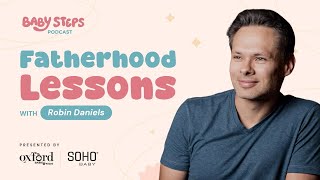
In this episode of the Baby Steps podcast, Robin Daniels—Chief Business Officer at ZenSci and father of a 19‑year‑old son—shares his journey from a modest, divorced‑family upbringing in Copenhagen to a high‑impact tech career at companies like Salesforce and LinkedIn. He describes the unexpected emotional intensity of fatherhood, which became his "North Star" and reshaped his purpose. Daniels explains how his own childhood, marked by limited resources and a distant father, drives his determination to give his son a better life while teaching gratitude and avoiding entitlement. He discusses the challenges of balancing a demanding, travel‑heavy career with intentional presence, including relocating to Madison, Wisconsin, to be nearer his son during college. Throughout, he emphasizes modeling joy in work, encouraging risk‑taking, and fostering a growth mindset despite the pull of screens and modern distractions. The conversation concludes with practical advice for parents: be mindful of daily micro‑behaviors, maintain positivity, and recognize that children absorb parental energy more than any external influence.
Chapters
And I just thought, for me, it's, um, can I give him a better life than I had? For me, I put a picture up of me and my kid, and I said, this is why I do what I do.
Hello everyone, you're listening to Baby Steps sponsored by Oxford and Soho Baby, a podcast dedicated to exploring the personal and emotional journeys of parenting. I'm your host, my name is Madea. Today I have Robin Daniels, Chief Business Officer at ZenSci, father of one. Robin Daniels, welcome to the show.
Thanks, Vidya. Good to see you.
Yeah, good to see you too. I'm excited.
Me too.
All right, let's get into the questions.
All right.
So first, what surprised you most about becoming a father that no one warned you about?
Um, that's a great question. I would say probably that, um, you will do anything to ensure that your kid is taken care of and happy and safe and protected. You know, it feels like you— I've read all the kind of books beforehand. I became a father and everything else, but I don't know if I was emotionally fully prepared for just like the love that you can kind of give to another being in that way. I mean, and now it's like, I would say my North Star in my life is to make my kid proud. I'm like, that's why I work hard, that's why I do a lot of things that I do. I'm trying to be out there being a good citizen of the world. But ultimately, if I had to think about my North Star, yeah, it's to make my kid proud. But I would say it was for me, it was like just this emotional pull that suddenly is a little bit outside of your control. It's like, it's very, very powerful, very powerful.
Yeah, people say that fatherly instinct kicks in and your whole world changes when you have a child.
Yeah, for sure, for sure, for sure. It was like, I come from myself, from a family of divorcees. My parents got divorced when I was quite young and I'm the youngest of 3 boys. And so, and I was never super close to my dad, if I'm honest about it. We got a little bit closer towards the end of his life. He passed away many years ago from cancer. So we got a little bit closer when I was a little bit older, but we were never really super close and he was never honestly a strong figure in my childhood in any way. And part of my motivation, of course, is like, how can I do the opposite? I mean, oftentimes you learn from your parents what not to do. And this is one of those very strong cases where I just thought, I'll do whatever I can to like be a good, a good parent and also inspire him by kind of leading a life that hopefully he looks at. Might not be the way that he wants to lead his life. And that's not what I'm saying, but at least he can see that I'm living it with intention. And with intensity, and I'm trying to do the best that I can every day. And that's all that I really kind of want for him too, ultimately, is that I don't really care what he does or what field he goes into, who he ends up being friends with or partners with, as long as he does it with intensity or intention, that he's like giving his all. Like this idea of just like floating through life and just letting it go by. I feel like life is such a precious thing. And hopefully I think he's gotten a little bit of that from me. Like, he's a good kid, so he, he, he embraces life in a very different way than I do. But it's great to see that he does that.
Yeah. As a child, your dad is like your superhero.
Yeah.
So it's important to be a good leader and inspiration because that's, that's all he knows at the time.
Totally. Totally. And it's kind of how I try to show up as much as I can and all these different things. I have a kind of job that's very intense. I work a lot and it's also, that's also part of my identity. I'm very proud of the work that I do. Big part of my reason for doing what I do is so I can provide him a better life than I had. I grew up poor with divorced parents, didn't really have much, had to fight for everything. I just kept collecting bottles in the street of Copenhagen to like get money. So that was kind of the life that I had when I was in my early years. And I just thought, for me, it's, um, can I give him a better life than I had, you know? But, and it's the paradox though, because there are also like some downsides to it now that I've had a fairly successful career, you know, in tech, Salesforce, LinkedIn, and other companies that hopefully many people have heard of. Like, how do you also make that sure that he's grateful for it and he doesn't get spoiled by it, you know, and so on. Um, and there certainly have been times where I'm like, just show some gratitude or some level of humility around it. But I would say now that he's 19 now and he's in college, he oftentimes will talk about how grateful he is for the kind of life that we have been able to give him. I think, you know, when he was a younger teenager, he was a little bit like, come on, just now I think he's a little bit more older and wiser having lived on his own for, you know, a good year and a half and so on. But it's really like a lot of my the reason for being. I work hard, I travel a lot, I miss a lot of his life, honestly, just travel. But it's also, again, always to like make sure that, that he has everything he needs. Him and my wife, who's also my life partner. She's the best. Yeah.
Yeah. Gratefulness is back to what you're saying is something that is taught. And if you see your parent being grateful, that's something that just kind of, you, you kind of pick up on it.
Totally.
Yeah. And some people have it the hard way where they have little to nothing and then they have something and then they're especially grateful.
Yeah.
Some people who grow up with everything, it's harder for them. But yeah, if you just keep teaching them it and yeah, at some point they'll, they'll learn and they'll be grateful as well.
And I think I feel like that, that with my, my son, I think he's, he is really grateful, honestly. And he, he doesn't take it for granted anymore, which I thought he did a little bit sometimes, especially in like teenage, early teenage years. But now I don't feel that anymore. I don't have that level of like, they're just going to grow up to be an asshole. I mean, I think like many parents, you just don't want your kid to be an asshole. I'm like, okay. And I'm just like, just, just be grateful, you know, show up with intention, with positive energy, be grateful, you know, like these, these things are like, they don't cost anything, but they mean the world. They mean the world, right? For how people perceive you and how you kind of also can end up making your own way in life, how you make friends or connect with people or find jobs and so on. Like, I mean, like this is what I preach all on online all the time. It's like, just be a good human. Nobody likes to work with a jerk, right? And everybody just wants to work with somebody or be around people who give, give more than they take, have great energy, positive, optimistic, helpful, you know, all those kind of things. So try, always tried my best to, to do that. When I, I was leading a team of about 50 people at LinkedIn for, for a couple of years and we did this exercise about why do you do what you do? And it was like a very like heartfelt exercise. And many people showed up with like super surprising things of why they were working hard every single day. For me, I put a picture up of me and my kid and I said, this is why I do what I do. Like, this is basically trying to like be a good role model in some ways for him, right? So, I mean, again, his life is going to be so different than mine in many ways, but also just knowing that he's going to grow up and hopefully make a difference, work hard, you know, do things that give him joy and purpose. And that's what I hope that he sees out of me.
Yeah, purpose, that's important. Having— I feel like having a child, you have a new purpose in life. That's what a lot of people say. It completely changes your whole perspective. Totally. Yeah, that's really important. And figuring out, yeah, why you do what you do.
Yeah, yeah, exactly. Exactly. Because until then, I mean, I had my kid, I was fairly young, I was 28 at the time. And until then, I was very focused on just like life, you know, like working hard, getting ahead, getting promoted, all those kind of things. And it still matters to me because I'm very ambitious. I don't think that you have to— this dichotomy where you have to choose one or the other, I don't believe in it. I think you can do more than you think you're capable of. But it certainly gave a new dimension to that purpose. Right. And I it's not just purpose, and it's not just kind of growth just for myself as perspective, but it's also for the impact that you can have on others around it. And you see it firsthand with your own child, of course, more than anything. But then you can see that with everybody else around you. It's kind of like the ultimate test ground if something sticks or they take after kind of what you really are thinking and doing. And, uh, and, and for me, it was just like it changed kind of my perspective in such a profound way that I was only going to do things that I really love to do as much as I could. Of course, there are always going to be some stuff at work that you don't love. There are always going to be some weeks or months even that kind of suck because of whatever reason. Business is hard, right? But I always have thought like, I want him to have the kind of parent where he sees that I have joy in what I do. And I'm just like, we, we live in a world where like 2 out of 3 people want to quit their jobs. Like the level of disengagement and unhappiness at work is so high. And I think to think that you can't— that doesn't affect the way that you parent or your partner or a friend, you know, it's like, I think it's— that's just, uh, totally naive. If you hate what you do, of course you're going to take that home after work. And so, because work takes up a big part of all of our lives, you know, maybe too much sometimes, but it does, right? It takes up a lot of our lives. So for me, it's always been, how can I, as much as I can, do the best work of my life but also have joy in that so he can see that, that work doesn't have to be a slog, that there can be a lot of joy in this. And the joy can come from many different ways. It could be being a good team member. It can be the work that you do, the fulfillment of a project done really well, the excellence you put into something, whatever that is. There's so many ways to do it. But, but really, like, I know just because of my own life how much work has taken up my life and how important it is to, to, to like that, that I hope that he's taken that away. As well from, from, from anyway, the, the interactions that we have, the way they see me, me do it. But for me, it's always been, I'd never want to be that kind of parent that comes home and like just bitches about their work all day long. Like, how awful is that?
I'm like, oh yeah, yeah, work spills over into every area of your life.
Of course, of course. And, and really, really rightly so, especially for some work. I mean, I get it, maybe if you're in some fields and you can kind of like switch it off, you know. I was speaking to a friend the other day who was kind of in, um, tech his whole career. And then recently he made a switch to become more like a, like a technician, you know, that goes out in the field and like installs various generators. And he's like, I love it. It's very different than what I used to do, but I have like basically like a 9-to-5 job. When I leave that job, I don't think about it anymore until the next day. And I think, but I think when you're in knowledge work, then I think you think about it all the time in some ways, right? And you carry that with you. And so work just takes up a lot, a lot of our life, whether we like it or not. It's just kind of the fact of modern life in some ways. And I've always just thought, you know, this is the greatest lever for either happiness or unhappiness. So find what you love to do. And I hope he does. You know, he's still early in his life and career. He's not even really have a career yet. But can he find something that he's just so passionate about that also makes a huge difference in the lives around him or even in the world. I think that would just be a beautiful thing.
Yeah, it's really hard to find. It's very rare. But if he's seen you do it, I feel like he can do it too. Yeah, because he knows it's possible.
Yeah, totally.
A lot of, a lot of people don't even see that in their household, so they don't even— they can't even fathom that that's an— that's a, that's a possibility.
Totally. All they've known is like unhappy parents who are just kind of complaining about their work. I mean, it's also when I was 21, I bought a one-way ticket from Copenhagen to California. I didn't have a job. I didn't have a place to stay. I didn't know anybody. I'd never been. I just always had a driving desire to be in tech because I'm a nerd. And even though that's kind of my journey, it's certainly not going to be his life and all. Like, I just couldn't wait to kind of escape Denmark in some ways because it felt so limiting to me. But hopefully it's also just, again, telling him, having him hear those stories. Hopefully he will get a little bit of that courage to go do something, you know, that's maybe courageous or different. I mean, my, my mother, uh, when I, I grew up with her and my two, two brothers, and when I would leave the, our tiny little apartment in Copenhagen, my mom would always say to me, go out there and take some risks. I love that. And I, I think of that often as, you know, and it's not to be reckless or dangerous or anything like that, but like, how do you do something that scares you a little bit, knowing that at the other side of that you might find fulfillment or happiness or something new that you didn't even know existed before. Once you get beyond that kind of fear. And, and I think, you know, nowadays one of the observations, but it's pretty obvious, is this: how do you get young people to do that even more? And I think as a parent, a lot about this, you know, with the age of screens and smart technology, social media, it's just like, how do you not just have people retreat? And it's like, I see this, my son, like to the comfort of something he knows, you know, sitting in front of a screen all day versus going out there and like meeting people, talking to strangers, all those kind of things. I think Lisa, just a life of confidence, but also fulfillment in many ways. And so I still, so I guess part of that point is also even now that he's older and I'm older, I still think about my kid every day. It's one of the reasons I live where I am is I wanted to be closer to my kid. I only have one child and, and, uh, at the same time, you know, uh, when we were living in Denmark for the last couple years, we did, we moved there as a family during COVID When he decided to go to college, uh, he applied all over and then he ended up choosing Madison, Wisconsin. And we're like, my wife and I, we only have one kid. Being halfway across the world from him seems too far. So we ended up getting a place in Madison where I am right now, but we kind of have a place in Denmark as well. So we split our time. But just the idea that I would see my son once a year or twice a year, I'm like, nah, we're too— we're way too close. And he also likes us being around. Yeah, that's the other realization I have, because I think as a parent, sometimes there's a little bit of that narrative in the world where you're like, oh, you just like let your kid go and just get him out there in the world as quick as you can, right? And I'm just like, maybe for some, but I'm also trying to live in a way that's truthful for me. And I think I'm not going to look back on my life when I'm 90 years old and say, oh man, I spent too much time with my kid. I think it's going to be the opposite. I wish I had more time, you know? And so I want to squeeze every moment out of it I can. I mean, I still only see him maybe once or twice a month, you know, but at least I'm like closer to where he is.
Yeah, family is the most important thing.
Most important by far.
By far. And if you're across the world from them, then what's the point?
Yeah. And it's also, you know, my son is, is 19 and he's at that stage where he's definitely not a kid anymore, but he's not a full, fully functioning adult, I would say, either, even though by, by maybe legal standards he's considered mostly one. But I wouldn't say most kids seem like that. Probably 16 to 25, they're still kind of developing. And so being closer, like, I have no, I have no issue with it. I love it. I'm just like, and, and the moments that we have together are just like super special because I also feel like this is the, this is the age, honestly, where he can finally see that some of the work that I've been doing or the way I've lived my life, I think he appreciates it more now, honestly, as a, as an older kid as well versus being a 10-year-old kid who just wants the next, you know, game or whatever it is. You know, I, I feel like the conversations we have are much, much deeper. Um, maybe also because he's studying philosophy. So that's, that's part of it.
Oh, that's really cool.
Uh oh.
Um, final question for you.
Sure.
What advice would you give parents listening right now?
I would say, um, do everything you can to, to Be aware of the way you show up every day because it's like these micro things. They pay attention to everything. Like, you might not think so, and it sounds so obvious and it sounds easy and you're like, oh yeah, yeah. But I just see a lot of parents who are not really true to that. And I'm not perfect either. It's like hard to have a perfect day every day for sure. But just, I mean, they key off of your energy, your emotions. So if you can show up with positivity, you know, an open mindset, energy that's full of enthusiasm for life and optimism for the future. If you're coming home every day again complaining about your job, mad about where the future's going, AI is going to take all our jobs, all this stuff. What do you think that's— what signal is that going to send to your kid? Do you think they're going to grow up to be happy? Are they going to be, you know, fearful, scared, anxious, you know, so, and they get a lot of input from a lot of places, every kid does, but I think they get the most from their parents. So you have a huge burden of responsibility in a great way. And like, just if you can embrace that, I think it's going to be the next generation is going to grow up to be just fine.
I love that. Thank you so much for coming on today. Listeners, thank you. Listeners, thank you for tuning in. You've been listening to Baby Steps, sponsored by Oxford and Soho Baby. Have a great rest of your day, everyone.
You've been listening to Baby Steps, sponsored by Oxford and Soho Baby. If you're in the market for a new crib, glider, dresser, or more, we'd love for you to check out our line of furniture. Head over to oxfordbabyandkids.com or sohobaby.com. All links are within the show notes. For more information As a listener, enter the code PODCAST10 for 10% off your total purchase, plus free shipping on all orders over $799. Thanks for listening and tune into our next episode. Bye for now. And remember, every step is a step towards progress. We hope today's story gives you the confidence and the assurance that every journey is different, but we do it together.
More from Robin
Why Teams Struggle to Adopt AI in Microsoft 365 and How to Fix It with Robin Daniels
How to cultivate trust with teams to ensure alignment? | Robin Daniels, CBO, Zensai