How the Ex-CMO of LinkedIn & WeWork does B2B marketing in the age of AI
Robin Daniels, former CMO at LinkedIn and WeWork, argues B2B marketing should use emotional storytelling like B2C does. She builds Senseye's marketing with AI tools like Copilot and Claude, but sees AI as freeing people for creative work, not replacing them. Her upcoming book, The Human Success Playbook, guides HR leaders on people-centric investment in the age of AI.
Chapters
So we are here at HumanX.
Yes.
The AI conference that literally anyone who's anyone in the world of AI is at. Now, I'm really excited to speak to you, Robin, because this, this podcast is called Marketing in the Madness, and you have been a CMO at some of the hugest, in fact, probably companies that I respect the most for their marketing through some fairly challenging times. So before we talk about what's going on here at HumanX, Can you give me the, the Robin lowdown? Tell me about your, well, Robin Daniels lowdown.
Robin Daniels. Yeah.
So give us the Robin Daniels lowdown in your career.
So I wasn't born Robin Daniels when I met my wife. I ended up taking her last name when we got married in 2003. Yes. I come from Denmark. I was born and raised in Denmark to a very strong mother. And I thought like this, this idea that women should always lose their identity when they get married, just, this didn't sit well with me, so I took her last name when we got married.
I love— can I just high-five you for that? Yes, let's do it.
Because— there you go.
Like, that's amazing, and there needs to be so much more change like that. That really— thank you for empowering us women and doing something bloody brilliant.
Well, it's just like, I think it's— to me, it's always been, uh, actions speak way louder than words. Like, so much talk about, you know, doing the right thing, and then when it actually comes to doing it in practice, Yeah, you know, crickets. So, and I actually like the reverse. I actually don't like talking about it. I just like doing it. It's just that anyway. So, so I am from Copenhagen, Denmark originally. I moved to California in 2000. I wanted to be with all the nerds. I actually started my career as an engineer, but I quickly ended up working for a startup where my boss was the VP of marketing and she saw something in me and she's like, even though I was focusing on engineering for marketing, I was building the website and stuff like that. She said, you should be in marketing. You're much better at that. I'm like, okay, fair enough. So she kind of put me on a path in marketing. She took me under her wing. She was incredible. And, and I ended up having a great career in marketing. I mean, not everything I did turned to gold. Lots of failures along the way, but I was early days at Salesforce, then at Box, helping them go public. Then I went to a startup in Silicon Valley, a cybersecurity company that ended up getting acquired. Then I went to LinkedIn. Super fun. I actually thought I was going to be at LinkedIn for quite a while until I got poached by WeWork to be the head of marketing over at WeWork, which was completely bonkers. Didn't exactly turn out the way I thought it was going to turn out, but that's a different story. And then ended up going to a company called Matterport that we took public in 2021. That was super fun. Certainly a highlight as a CMO to, to be on Nasdaq and press that button and everything else. And now I'm at a company called Senseye. We're an HR tech company that's focused on really how do you unlock the full potential of people to be the best that they can be every single day. We're scale up about 200 people, global presence, and I run marketing, product, and our go-to-market team there.
Oh my God, what a career, Robin. Honestly, like insane. You've done some incredible— well, you've had some positions at some incredible brands. I can't skim over those because you've worked for some of my favorite. I mean, I'm a big fan of LinkedIn. Yes, yes. Big fan of WeWork. Tell me some of your, I don't know, career highlights, like the most impactful things that you were able to do whilst you were in role at those companies.
Well, I mean, so that my, my real claim to fame came as I was when I was at Salesforce. This was, I joined in 2007. And I'd always admired Salesforce. I think Marc Benioff is an incredible leader, an incredible visionary. And I realized when I look back on my career now, I quite like working for a little bit unhinged, crazy people with big visions. I don't like working for just like great operators. They have to have like some kind of fire in their belly. When I think about the silver lining between Benioff and Aaron Levie and Adam Neumann, you know, these are all visionaries with crazy ideas and sometimes it goes really well And sometimes it doesn't, but that's new here. So my, my career really took off when I was at Salesforce. I ended up being in charge of marketing for a product called Chatter, which was kind of like the Facebook, of course, for corporates at that point in time. And this was right when Facebook had reached about 500 million users. And we came out and we launched what was called Salesforce Chatter and was kind of like a social network where companies could now communicate, collaborate, and kind of break down silos that were in a company much better to get shit done. And so I launched that to the world and I went all out in my career. I leaned in, I was flying around the world speaking at conferences. We did a lot of great marketing and I kind of became synonymous with the growth of that product. And that kind of made my career. Since then, I luckily never had to look for another job 'cause now people found me. So at some point, that's also what I try to mentor people around. You have to decide when and where and how, but at some point you really have to go all in on your career. You can't do it all the time 'cause you could burn out. It can be super stressful and it was stressful. No doubt, but it also made my career in many ways. So, and that, that whole experience culminated with us in 2011 doing a Super Bowl ad with the Black Eyed Peas. I think it was maybe the first enterprise software ad at the Super Bowl. And the ad was just okay, if we're honest about it. That was kind of an epic moment. But when we launched that ad, we had over 20,000 unique companies sign up in the first 24 hours. So you can imagine from a lead gen perspective, from an awareness perspective, it definitely worked. Did it all turn into like revenue? It's a little harder to say, you know, it's a little hard to like do that attribution. But from a pure awareness perspective, it was awesome. It was awesome.
And that's taking B2B marketing into the B2C space.
Exactly.
Which we are starting to see more and more.
Yes, yes, yes.
But I think, you know, people often think of B2B marketing as like the boring, you know, the boring side of marketing. But you are absolute evidence that that Does not have to be the case. No, no. And that you've brought that to life in some really fun ways that have, you know, I guess, yeah, been huge highlights for your career and helped you get where you are today.
Well, it's also, I have this mindset that even though you're marketing for a B2B company, and that's the only thing I've done in my career, right? Yeah. Even LinkedIn is a B2B platform, really. That's how they make money. We work the same. I've always had this mindset that you should market yourself as a B2C company because that's, if you ask anybody, if I ask Anybody, if I ask you what are your 3 favorite brands, it usually comes back with consumer companies. Like for me, I love Lululemon and I like Nike. I like, you know, these kind of brands because you have an emotional connection with them, right? And I get it, it's a little bit different. Why can't you market in a way that has an emotional connection for B2B brand that makes it a little bit human, fun? Like I hate when people say, oh, it's not corporate enough. It's one of my, like, terror words. I'm so with you. Oh, it's the worst.
Well, Robin, you probably don't know my agency. So I've got B2B marketing agency. If you ever need any help, we can talk about that offline. But everything that we do is about people-powered marketing. And I think, and that was actually going to be my next question, in the era of AI, actually humans become even more important because we don't know what we can trust, what we can't trust. I think traditionally B2B marketing has been very corporate, like not quite, you know, exciting enough. It's been, you know, lots of heavy, heavy on the design and the visuals, not heavy enough on actually putting people front and center. So that's like truly what I believe will help businesses cut through. But I'm, I'm interested to hear what you think, like in this era of AI, what are you, you know, what are you working on at Sensai? What's your kind of prioritizing— prioritize? Your prioritize? Watch, I'm going American. What are your priorities when it comes to your kind of go-to-market strategies for, you know, for a tech company in the B2B space?
I mean, you've honestly nailed it. For me, it's really around the north star I have is that people buy with emotion and then they support with logic, facts, data, all the stuff they need to justify this. And of course, this is where B2B and B2C is very different. In B2C, you just go make the purchase yourself, right? You just justify it to yourself usually. In B2B, you have to justify to your CFO, to your team, to whatever, right? But it doesn't change the fact that people buy with emotion and they just support with logic, facts, and data. And then So if you can get people excited by it and I'm selling right now to chief people officers, chief HR officers, if I can get them to believe in the mission of what we're trying to do, then I can give them the statistics, the data, the logic, all that stuff that they need to build a business case internally. But until I get them to believe, it's very hard. So how do we do that? It's about telling authentic, different stories. To your point, it's about making the humans shine much more. I mean, So I think of it this way, is that we live in the golden era of storytelling. There are more opportunities than ever to tell the story of who you are, what you do, what you stand for, whether you want to use TikTok or podcasting or YouTube or LinkedIn or whatever. There's— it's, it's amazing. I love it. The downside of this era is that there's so much noise out there. So unless you have the courage, the bravery to stand out, you're never going to break through because people are just so inundated with noise and there's just so much of it. So I'm trying to push the boundaries with my team and say, well, what are we saying that's different, that's bold? Even if not everybody agrees with it, there's so much that everyone, especially in B2B marketing, let's try to make sure we don't piss off anybody or please everybody. No, no, I, of course I prefer people to be happy and excited about what I do, but I'm also okay if people are not excited or they say this is BS or whatever, 'cause at least you're eliciting an emotion from them. And I'm not trying to be controversial. I've always said to my team, we only market on positive feelings. I don't want I don't want to create more negativity or fear in the world, but I do get that it's an effective, of course, emotion. And so some companies do that very well. For us, it's how do we use emotion? How do we use like emotional storytelling? Because also when I think about our brand, we compete in a sphere that's very crowded, some very big players out there, Workday and Oracle and SAP. I'm never going to be able to compete with them on just like ad spend or marketing spend. The only way I compete is by telling a different story. Yeah. So that's what I'm really trying to do. For example, today we just announced this morning that I am releasing a book next month called The Human Success Playbook: A Leadership Tale for the Age of AI. And it's coming out on May 4th, Star Wars Day for all the nerds out there, you know, love Star Wars. And it's our way of trying to kind of set a different agenda for HR leaders and give them the power and the tools they need to go into a CEO or CFO that's only talking about cutting people because of AI and given the roadmap and tools to show if we invest in our people, this is what it's gonna turn into. That's the story I wanna, I wanna tell to the world.
I love that. Yeah. I am so excited about that book. We'll make sure we pop a link.
Thank you.
And if it's out in time, and if not, we'll retrospectively add it. We'll pop a link to the book in the show notes so people can go and find it.
Perfect.
Um, I want to know from an AI perspective. Yeah. So, you know, of course you guys are doing stuff with AI within your own platform, but as a marketeer, what AI platforms are you— I mean, there's so many being used around content creation.
Yes, yes, yes.
You don't— well, I mean, great. If you're happy to call out the platforms, please do. So I'm always interested to know what platforms are you using? What are you finding really helpful?
Yeah.
What's working? What's not working?
Well, say the, the platforms that we are mostly relying on right now, there's a couple of like fundamental ones. We certainly, we, we are Microsoft Super Partner. So we use a lot of Copilot and we've kind of modified it to fit our needs. You know, we've kind of created, for example, in marketing, a lot of workflows that help us become much more effective. So even though we have more than doubled in revenue about in the last 2 years or so, our team has not doubled, right? So we're trying to be much more mindful about how we actually get the better outputs. So for example, we've taken and we've created this marketing brain that has all the inputs of what it is we're trying to do, our plans, our tone of voice, our graphics, everything, you know, all the LinkedIn posts and blog posts and articles, everything we stand for. Even this book has gone into this brain. So we can instantly create content based on what we need, right? At least the first draft of it. It's not always perfect. There's still a lot of things I think you need to kind of modify for this.
And you're doing that in Copilot?
We use that in Copilot. Yes, exactly. Yes, exactly. Yeah. Well, because we're, we're just like, we, we run on so much Microsoft. But having said that, we also use certainly OpenAI's ChatGPT. We use Anthropic's Claude a lot, but that's more on a personal level that people are using it for ideas or brainstorming or like getting better results on think drafts of things that they're doing. Then we also use Gong and HubSpot's AI quite a lot for, you know, better understanding what customers are saying and needs so we can modify that into our marketing outreach and campaigns that we do through HubSpot. So we're listening to a lot of customer conversations to understand what words they get excited by when they kind of lean in, what their high priorities, top priorities are. And then we use that, of course, to really drive the marketing content that we do. So It's kind of like a really like virtuous circle that we have. But I would also say, you know, I still have a lot of like FOMO if I'm honest about that. Whenever I go on LinkedIn, I see like everybody else is doing amazing stuff. And then I have to— and then I go talk to real practitioners and they're like, oh, we're doing the same stuff as you. So I'm like, okay, that makes you feel better. But I think we're doing good. I still want to push the boundaries a little bit more on automating things. Where I think AI has not come true for me yet, and we're looking into this here in 2026, is I think the promise of AI is that really you have it working for you 24/7. I still feel like there's a lot of manual work that goes into making AI super. It is, I mean, you can get so much better, faster output through AI, but is it still working for me 24/7 when I'm not thinking about things? Not quite yet. I don't think we're quite there yet. And that's where, of course, judgment, human taste, like, you know, your morals and ethics and everything else comes into play. That's hard for, I think, AI to kind of grasp at this point in time anyway. We'll see where it goes.
Yeah, I mean, it's changing all the time as we're hearing at the show.
Of course, of course.
I'm going to delve into, um, I guess maybe something more traditional, which is the tactics. So what kind of content tactics are you seeing really perform for you? Like we do, um, and certainly something that we're seeing perform really, really hard is that like human-centered bit like this, which is why I have a podcast, you know, human-centered content where people are, you know, the long form, that building of trust in the world of B2B is really, really important. So creating that kind of longer form, but also of course, yes, 20, 30-second clips that we can see it on YouTube, LinkedIn.
Yes, yes, absolutely.
We're also doing a lot with events, like we host a lot of events in terms of, again, that kind of bringing people out of, you know, just the digital environment and building those relationships in real life.
Yeah.
But are there any specific tactics, kind of content?
Yes.
Like stream strategies that you're seeing really perform highly at the moment?
Yeah. For, for us, um, we do a lot of like the, the really top of funnel stuff is myself, our CEO, our CHRO, or we call it the Chief Human Success Officer, Nina. We are speaking at a lot of events. We go do a lot of podcasts on HR podcasts, leadership podcasts, because that's, that's the topic that we're kind of really like deep into. And it works, you know, it creates just an amazing amount of like momentum at the top of the funnel that is really hard to like just pay for. Again, like we don't have the budgets of going and doing billboard ads everywhere and TV ads and so on. So, so we have to be much smarter about how we do it. So we can use our human capital. It's not as scalable maybe, but it's certainly effective because like you said, a lot of people are willing to sit down and listen to a conversation that dives really deep for 20, 30, even hours sometimes, which is kind of wild to me. So we do a lot of that and that's what I would say spend a decent amount of time with. Then in terms of next-level tactics, we do a lot of like co-work with these industry bodies that gives us a veneer of credibility that maybe we don't always just have by ourselves where we're just saying things. But if we partner up with a Fosway who's an industry analyst, you know, based really focused out of Europe, if we partner up with Gartner, you know, we do some work with them. CIPD or ATD, which is like, you know, all these like HR organizations. So we do some research with them and co-sponsor different events with them. But a lot of like, we just did a webinar with them 2 weeks ago, I did, where we had several hundred people show up because it was me interviewing this PhD from ATD who's like really, you know, deep into it. And of course it's a way of bringing people together, but also diving into a topic that Again, if I was to say it doesn't maybe have the same level of credibility as of somebody who has spent their life like doing this, my credibility comes from, like you said, I've been in some of the leading companies, so I've led teams, but I'm not an HR person per se, so I can, I have more credibility when I speak to business leaders in general, CMOs, CROs, you know, we're trying to understand how to build high-performance teams, but so we spend a lot of time with that as well, and then we also, of course, we do a lot of like traditional digital marketing as well, but actually much less. We're leaning heavily into LinkedIn as our platform. It's where our buyers are. I mean, let's think about HR buyers. Where are HR buyers and HR leaders? They're probably on LinkedIn, right? It's more so than engineering leaders maybe, and, yeah, right, they're maybe on, you know, different platforms and so on. So we spend a lot of effort on LinkedIn and trying to curate an experience through there. And then one of the things I'm most excited by this year is a lot more in-person events as well. Again, trying to get a small curated set of leaders together to really build a community around this idea that we call human success, which is about, again, unlocking the full potential of people in this age of AI. So as C-level leaders, small intimate conversations where it's not about us, but them like sharing. I mean, there's so much, and I get invited to a lot of CMO dinners and so on because that's the world I've come from. And it's so great to be able to have honest, open conversations with others who understand what I'm dealing with every day. And we want to foster the same for HR leaders out there. Nice.
Love that. That's exactly what we do at Street. So I'm glad. It sounds like we're doing the right tactics, guys. We've got this. I've heard it directly from Robin Daniels. In terms of— I'm going to ask quite a big—
Okay.
A big question now. So of course, you're You are here, you know, helping the people at this stage, creating, you know, your platform and the business that you work for kind of helps curate and create much nicer work environments.
Yes, yes.
What do you think is gonna happen in the world of AI? 'Cause there is signs around here of like, you won't need your team anymore. AI is replacing everyone. Like, you know, and it's a real, you know, it's a real worry for a lot of employees.
Like, I know.
What's your view?
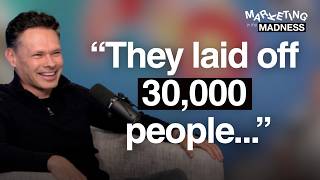
The message I see, the message I see, don't hire humans. I fucking hate it. It's just, it's the worst. I've seen it. Yeah, I've seen it all over. It's definitely not my vibe and it's not the side of history I want to be on. I want to use AI to be the superpower that humans need to be much more effective and focus on the work that matters. That's at least the promise and what I'm leaning into is can we use AI to get back to focusing on the stuff that gives us the most joy? The most happiness, the most energy. But even in my job, there's stuff I don't like to do. I hate doing budgeting, for example. Sitting in spreadsheets all day is the worst, right? Would I love to have AI on my side to help me automate some of this stuff? For sure. So I can focus on what I'm good at: the creative part, the leadership part, the doing a little bit of stuff that's crazy or different and so on, even if it doesn't all work out. That's what I— I think AI can be such a superpower in that. But the idea that it's going to come and replace humans— when I see, like, for example, Last week, Oracle laid off 30,000 people, right? And it just, it pisses me off to no end because I think to myself, if you're highly profitable and you're sitting on boatloads of cash, are you telling me that the employee-employer contract is so broken that you can't take some money and invest in your people to become better at what they do or maybe learn some new skills, even if it impacts your bottom line a little bit? Then I think we've lost the plot a little bit as a society. I totally get it. If you're a startup and you're fighting every day for survival, sometimes you have to let people go. I've had to let people go. I've also been let go. Super painful. But if you're sitting on boatloads of cash and you're still letting people go because you don't believe there's a future for humans to become better, I think you're missing the point.
And also, I think, you know, as we— I mean, let's like, you know, not go too far into the robot future that we make here. But I think as humans, you know, we're driving the purchasing decision. We're the people that have the cash, right? Exactly. Not the robots yet. Exactly. So if we start to see these companies are laying people off, as a human, I don't want to invest my money with them. I don't want to spend my money with them. I want to spend my money with businesses that are supporting humanity. Totally. So, and I think that's, we're going to start seeing that more as the next few years.
I think there are only two conditions really that you lay off people. One, if they're not performing or they're jerks, right? Of course, let them go, right? But you do so in a humane, compassionate way. Or if your company is like fighting for survival, like then you have to optimize for what's best for the majority of people, even if it means letting people go. But again, if you're sitting on boatloads of cash, billions in a war chest, and you're just like, ah, let's just become more efficient and get a little bit more money back to our shareholders. I'm like, is this really the kind of world that we're setting up for everybody else around us? Yeah, like, let's invest in our people. And I think the reason why it's been so hard to do is because Every leader, if you go speak to a CEO, if you go speak to any C-level leader and you ask them, what's the most important thing in your company? What do they all say? Our people, right? They all say our people is the most important. But because they don't know how an investment in people is going to lead to better outcomes or better outputs or better results, they go back to what they've always done, which is what? Chase profit, chase growth at all costs, right? And not do the right thing. And so what we're trying to do with this Human Success Playbook and what my mission in life truly is now is how do we, how do we give the right tools for leaders to know that their investment in people is going to turn into actual results? Yeah. It's been very hard to correlate these two, but we're trying to solve that.
Yeah. I mean, it's what we need.
It's what we need.
I would buy it. You've got me. You've got me. Good job. In terms of what you've heard at the show. Yes. Biggest, I guess the thing that you are most excited about when it comes to AI and the future of marketing.
Yes, yes, yes.
Give it to me.
Well, I just got here, so I actually honestly haven't heard too much yet. I'm excited to see this again. It's very early. It's just really early. I've only seen the keynote so far. And I think that my takeaway from the keynote is at least it eased my FOMO a little bit because it's like we're all figuring it out. Even the keynote, Stefan was saying, you know, like we're in the fog right now. We're all trying to figure it out. There's a lot of investment going into it. But the results are still a little hit or miss if we're honest about it. But at least we're experimenting, we're trying and so on. But what I just heard, I was just as we were getting ready to chat, I just overheard because you can hear kind of the keynotes going on. Somebody talk about more authenticity, more humanity. I'm like, yes, I'm not the only one saying this because again, I think I have a kid who's 19. I'm just thinking about his future. I mean, I want him to be in a future as well where there's a place for him. For him to shine and him to grow and thrive and solve some of these issues that we face as humanity. And I think we do that by leaning into each other's superpowers, whatever they may be.
Yeah, I'm so with you. I think there's, you know, there's a lot of very exciting talk at HumanX, but there's also some stuff which does feel a bit scary when you've got children.
Like, what have you heard? Have you heard anything interesting so far?
I guess the biggest shift change that I've noticed and was definitely talked about yesterday when they did some of the initial day keynotes was Actually how it's gone from us, um, asking things. Mm-hmm. So asking, you know, asking your LLM or whatever platform it is you're using, your Claude, your Perplexity, your, yeah, yeah, OpenAI, your ChatGPT, asking it and it giving you answers to you asking it to do something.
Yeah, yeah.
Okay. That's fair. And that, so the, it's now becoming a creator and I think that's the shift change I've certainly seen. Like we're actually, You know, as lots of people are moving from potentially moving from ChatGPT over to Claude because it's creative abilities. I can say, I can actually ask Claude to go and create something for me. Yeah. And it integrates with Canva and it will come back with a pretty much finished article.
I agree.
So it's gone from me chatting to it, asking it questions to actually me instructing it to do something. And I think that's the biggest. Change in the last, you know, few months maybe that we're actually seeing come to play. Yeah, yeah, yeah. Who knows where we'll be in another year.
It's interesting. It's a good example. I've been doing the same a lot with AI recently. For example, we just wrote this book, myself and my two colleagues, and it's like 200 pages. And I said, okay, uploaded it to Anthropic. And I was like, based on this, and can you give me a 20-minute keynote, a 30-minute keynote, a full session, you know, give me like different outlines. And it came back with a fairly good draft, you know, of it.
It's amazing.
Which has taken me a long time to like go through the themes and really think through, even though, you know, I wrote the book, but it's, it's written over a year. So there's a lot, there's a lot of thoughts in this book and it's like, it just analyzes, synthesizes it instantly, comes back and says, here's what would be a great keynote outline. It's a little spicy based on this data. And so I'm like, so smart. I love that. I love that.
You know, so smart. Yeah. But it's so true, isn't it? That, that, that kind of stuff I'm finding really interesting. Like it's, it's moved from, having a chat and asking it, you know, questions, so instructing it and it's actually doing stuff. Yeah. So much quicker. Of course. Yeah. I know. Yeah, it really does. And that's what's interesting. It's, I guess that, you know, I mean, I won't go too into this because it'll be a whole other podcast and we haven't got time. The studio will kick us out. But I think what's happening now is like, it's that, it's that extra element that is enabling you to like take it to the next, to the, to the next level, uh, which is quite exciting. That's right.
That's right.
Robin, thank you so much. That was super interesting. Enjoy the rest of the show. I'm sure I'll see you around and yeah, thank you for joining.
Thank you.
More from Robin

Why Teams Struggle to Adopt AI in Microsoft 365 and How to Fix It with Robin Daniels
How to cultivate trust with teams to ensure alignment? | Robin Daniels, CBO, Zensai