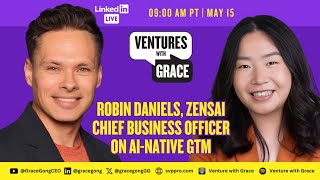
Robin Daniels, Zensai Chief Business Officer on AI-Native GTM
In this interview, Robin Daniels, Chief Business Officer at Zensai (formerly Sensei), discusses several facets of the company’s go‑to‑market strategy and his personal leadership philosophy. He explains why Zensai values G2 reviews and how predictable per‑seat pricing appeals to mid‑market and enterprise buyers, while noting the challenges of outcome‑based pricing and AI usage fees. He outlines the typical buying committee (CHRO, CFO, CIO/CTO) and the importance of compliance‑driven learning platforms versus “vitamin‑style” L&D tools. Daniels highlights Zensai’s rapid deployment on the Microsoft ecosystem, contrasting it with slower competitors, and describes how the platform drives instant compliance results and longer‑term goal achievement through AI‑generated employee goals. He shares his transition from CMO to CBO, emphasizing the need to align sales, marketing, and product under a unified go‑to‑market vision. Daniels also identifies “courage” as the essential modern marketing skill, advocating bold storytelling across channels despite the noisy environment. Finally, he talks about personal branding on LinkedIn, his love for "Lord of the Rings" and "Purple Cow," and his belief in positivity over fear in communication.
Chapters
Are we live?
I'm waiting. I'm like, this is still processing. Oh, we are. Oh, we're live. Okay, we're live.
Okay, good, good.
Oh my God. Hi Robin Daniels, welcome to Venture with Grace.
Oh, hey Grace, it's good to see you again. I feel like I've seen a lot of you over the last month or so, right?
Yeah, I know, we're at the Huma X thing and then, you know, obviously I feel like you're such a legend. I'm just like, um, yeah, I'm just like so excited to like for our second conversation because Robin Daniels was such an OG guest during the pandemic. Okay, before we dive into the show, I want to give a quick shout out to our amazing sponsor. This episode is brought to you by Nebbius, the ultimate cloud for AI innovators. Nebbius provides AI infrastructure you can count on, combining reliability and speed with flexibility and engineering support on major hyperscalers. AI leaders like Meta, Shopify, and Higgsville already partner with Nebbius to run their AI workloads. Plus, venture-backed startups can save up to $150K on compute costs when they apply for access. Visit nabius.com or nabius.com/startup to learn more. Robin Daniels, I want to start with like, I feel like you are such a— you always have such amazing, like, positive energy, like, and I don't know how you do it because, like, obviously I feel like in the world of, like, startups are, you know, it's not very easy. Yeah, literally, I just want to say Thank you.
Well, first of all, I was so excited when I ran into you last month at HumanX in San Francisco because, yeah, I remember you reaching out cold and asking me during the COVID days, hey, do you want to be on my podcast? I'm starting up. Like, sure. And it was just like such a great conversation. And I'm so impressed with how far you've come with both your podcasting, your investing, your ability to create community. When I saw you in action last month at HumanX, how you just have this uncanny courage to just go up and talk to anyone. And it was just like, it was super inspiring. I mean, like, hey, it's the founder of ServiceNow, the founder of Lovable, the founder of whatever. It's like, let's go chat with him. Like, no fear. Most people always like, oh, I can't talk to these people, but very impressive. So thank you for having me on again.
Thank you. No, thank you. Actually, so some of them are already our guests. So like, president of ServiceNow was our guest and then it was like, so like, it was actually my first time meeting him. Well, my second time meeting him in person. And so it was like, I wanted to say hi, But yeah, honestly, UMA X was such an amazing experience for me because I feel like being in the speaker lounge to meet all the iconic CEOs was freaking crazy.
I felt the same. I still nerd out on that. I'm like, oh, these cool people. It's the founder of Synthesia or ElevenLabs and just like all these cool companies.
Yeah, seriously, within 2 minutes, all the Fortune 500 AI CEOs are in the room. It was so crazy. Um, but Robin, I want to start with like, I feel like, you know, I was like literally listening to my, um, AI podcast about you, and then also obviously I listened to your like 6,000 podcasts because you were such a popular guy, like on the, um, in the marketing space. And then you are, uh, investor yourself, you are LP of Sequoia, and then, you know, you have invested in many of these like, uh, great like venture firms like Stage 2, among others. And then you were the CMO of, for the, for the Those who don't know, Robin Daniels was a 3-time CMO, so he was the CMO of Matterport, which is a public company, WeWork, and previous, like, serving, like, in leadership position, like LinkedIn and Salesforce, Box, and among, like, other top companies. So I want to start with, like, you know, since, like, our last time we chat, actually, I think we chatted before you were at Matterport or like maybe you just joined Matterport. So it was like a while ago. So maybe, maybe we could talk about like How does it take to take a company public? And maybe we could talk about Sensei as well, because I was listening to my thing. I know that Blue Cloud is your investor. So a partner from Blue Cloud or the founder of Blue Cloud was actually on our pod as well.
Oh, really?
Nice.
Well, it's interesting. I've been part of a couple of IPOs now and it's such a fun journey. It's so intense. It's one of the things that it's not obvious when you're going through it, especially not from the outside. So when I went through my first one, which was at Box back in the day, it's just like you end up doing basically double work. Uh, and a lot of the work you're doing honestly is secret because it's even the people inside your company, you know, there's like a, an inner circle of people who know that you're about to go public. And usually that runway is anywhere from 6 to 12 months or something like that. And then there's just so much work to do to prep the business because what you wanna do when you go public is you wanna have an inspiring vision that the public can understand. 'Cause suddenly you're going from being maybe a nerdy tech company to something that everybody can invest in, right? So that's the whole idea of going public and you can raise a lot of funding that way. And so there's so much working going on around how do you create excitement in the market, predictability in the market, consistency in the market and all that stuff. And it's besides your day job, you have a day job. And like when I was at Fox, you know, I was running enterprise marketing and it was just like this whole other work stream that you really get very little credit for or any like, and, and, and most people in the company don't know what you're working on. So they're just like, ah, Robin's just working all the time. Right. I was, it was me and a few other people. I mean, obviously that, that, that group of people as you get closer to the IPO expands out as well, but I was not the CMO. So I was not like the person going to NASDAQ or NY, uh, New York Stock Exchange to kind of press the button.
Mm-hmm.
That came later in my career. So, but it was my first taste of like this IPO then. Then I went to WeWork a couple of companies later, you know, and I came in as like worth $20 billion. Then overnight it became worth like $47 billion 'cause we were just kind of growing crazy fast. And then we were gonna go towards an IPO. We were hitting $2 billion in revenue. We were spending a lot of money to get there. We can talk about that too. And that was at NASDAQ planning the IPO. I have pictures in my phone still, you know, from that time. And then of course, 2 weeks later, it all came falling apart. So it was emotionally hard. It was hard for the team. It's hard just on like when you build up, 'cause it's such a moment in your life and career to take a company public. Like it's something to be really proud of. The fewest companies, first of all, make it. And then of the ones that make it, so few of them end up going public. A lot of them end up getting acquired for maybe nothing that's that special. So to take a company public is such a pinnacle and then to see it all come apart as a CMO was tough. There's no doubt about it. And I'm like, you know, will this chance ever come again? Then I joined Matterport and right as I joined, the pandemic hits and I'm like, shit, you know, and I've been kind of sold on, hey, this journey we're gonna go on is gonna be super exciting. We're growth, the vision is amazing. I love the CEO and what we're doing. And the first conversation I have when I come in because of the pandemic is like, we have no idea what this uncertainty is gonna cost. We're gonna have to lay off 30% of the team. The company. I'm like, what? You know, I thought where I was coming in for a growth journey and now became kind of the opposite. It obviously turned. So we had to lay off quite a few people. It was super tough to do. It's never fun in the best of times, but it turned out a few months into the pandemic that the pandemic was a great tailwind for us and so many other tech companies as we saw, right? But we didn't know it. Remember that first month in the pandemic, everyone was just freaking out. Airbnb was gonna go out of business and all, every company was like, just screwed. And then suddenly it turned out, hey, actually these companies are doing better than ever. Maybe not Airbnb, but like Zoom and Salesforce, and everybody was just kind of growing like weed, including Matterport. So we ended up deciding to accelerate our IPO. Uh, when I first joined, I thought it was going to be honestly like 3 to 5 years. We ended up doing it a year later. And then I had my moment when I took the company public, uh, July 2021. I went there and it was kind of a— it was both of course a highlight in my career in taking a company public But it was also just a personal kind of redemption 'cause the last company I was at, we were ended up crashing and burning, right? Very, very spectacularly. So it felt like a personal like moment. But it's coming back to you, to take a company public, there's just so much work you're trying to do to prime the story in the market. So people, when you go public, it's all about can the average investor understand what you do? Can they get excited by it? So they will go and put their money into the business 'cause they can see the potential where this could go. So we spend a lot of time, like 6 months is kind of what I call the road to IPO. 6 months preparing that, trying to get the market ready. But it was also one of the most exhausting times in my life, which again, like you're doing this double work, right? You're trying to run a business, grow the business, being a CMO, and then you're also trying to take a company public. It's brutal, but very, very rewarding in other ways, right? In terms of what you learn and what you gain out of that, of course.
For sure. I feel like, so I really like what you said about like you have to do your day job, which is like B2B marketing. And then on the other hand, you have to prepare for these like all the crazy moment. And I feel like selling to regular consumers is very different than selling to B2B SaaS audience. Like they are both like requires different style of marketing as well. And I think Pravier in our conversation would definitely discuss about this in the past, about like, you know, marketing to customer versus like B2B. But I want to like maybe dive in a little bit into like Sensei and then your book. So honestly, like, I feel like it's such a big thing about like, you know, after the pandemic, not after pandemic, but like I said, in the AI era, like I feel like hiring or like the human success is like very, very important. And Sensei is like a company that's focusing on like human success. And maybe we could talk about like, what does that entail? And then like, you know, obviously you guys are Honestly, I was like, well, listening to like the thing I made myself, but you know, you raised like $20 million Series A when you have $19 million ARR already. So maybe we could talk about like what was the journey like to actually bootstrap a company to this stage, maybe from the founder perspective as well. So it's just like you are the chief business officer for the company. Maybe what are something that you're doing today to help with the company's success, the succeed.
Of course, of course. So there's a lot to unpack there, and I think you're at the forefront of this too, Grace, honestly, with the conversations you're having really around what is the intersection and what is the space for humanity or humans in this future that we're creating for ourselves, and how do we ensure that people are not left behind? And it's certainly— I want to be on the side of history where AI becomes a superpower that we use to unlock insane potential if we want to solve just the challenges that you have in your business, you gotta have like everybody show up and do great work every day. And if you take that further, if you wanna solve some of the challenges we have in society, well, that's around access to, you know, a good life, inequality or whatever it is, we're gonna have to be able to like dig deep and really want to be motivated to do that. And I think AI can become a superpower for us to do that. Not that, I think we're at such a moment in history where, the conversation can either be, are we going to use AI to cut costs and become just hyper-efficient, or are we going to use it to invest in people to become the best that they can be every single day, giving them back the space and time and so on. Think about how much time we spend on admin and meaningless tasks every day. If we can get that time and mental space back to focus on the things that humans are good at, I think it could really unlock new avenues of growth. And so, so this idea of human success— I joined the company back in 2023. So it's been close to 3 years now. And I'll tell you the story of how I joined. I was speaking to a bunch of companies about joining, and I remember going for a run with the CEO, Rasmus. And during this run, you know, because oftentimes when you become an advisor to a company, and I'd become an advisor to this company, you kind of get a very little sliver of what it is that they do and how you can help. And during this run, he was just very open with me. He just told me about all the shit that was not going well. And afterwards I go, I like that, I'm in. 'Cause I actually like when there's, you can come in and there's big stuff to do. I don't like to just come in and, you know, tweak and optimize, but take some big swings. And the big swing that we had is how do we reposition ourselves in the age of AI? You know, we were basically, our name of the company was called LMS365, a name that I never loved because it was also just too limiting. It's very, very descriptive about who, what we sell and who we're for, but it's very limiting in the future potential of it. And we were just selling a learning platform. And I'm like, well, that's not where the future is just going to be. Learning is always going to be, learning has been around for a long time, but it's also just not the full way of how you unlock complete potential. If we can create a platform that's really much more inspiring around how you unlock people's potential, given the skills, knowledge, motivation they need to do great work every day, that's incredible. And it's both very personal because I think about, I know that I am where I am in my life because so many people along my journey has invested in me, given me the skills, knowledge, and motivation I needed to constantly push myself forward. And I think everyone should have access to that. And sometimes that's people and sometimes that's platform and technology. And if we could become that platform and the technology to do so, think about what that would unlock. If people felt like every single day they're getting a little bit better, just that 1% better in what they did. You know, I'm learning something new. Feeling more connected, I'm on my path to reach my goals, I'm growing my skills so I can maybe get promoted to whatever it is you wanna get promoted to, going from marketing manager to CMO in the next 10 years and so on. If we can put everyone on that path, and that's a combination of motivation, goal setting, personal like desire, learning the skills that you need to not just for today, but also for the future. Like, oh, it's a combination of, if we could become that platform, that was always the vision behind human success. It would unlock tremendous amounts of momentum and energy in yourself and personally, but also of course for the companies you work for, right? It's so obvious that people who do great work or feel motivated to do great work, their companies benefit from it. We've seen this all the time in companies where they have employees who are fired up to do great work every day, they outperform anybody else, right? So it's not just to be altruistic or super nice around, oh, we wanna give people like, I love them. It's actually so the companies that they work for can also benefit tremendously. So the idea behind Human Success is fairly simple. It's something that Rasmus and I came up with in collaboration when I first joined this. Can we basically create some momentum around this idea that HR is dead? And what I mean is HR has been around for a long time. It's overpromised and underdelivered. Most people think of HR as something that I get, used to get paid every month. I'd take my vacation, get my benefits. Maybe I'd take some courses for compliance reasons, you know, the sexual harassment course, the cybersecurity course, blah, blah, blah. How uninspiring is that? And it's not to say it's not important. It's important that people get paid, they take their vacation, all that stuff. But is that gonna unlock people doing the best work of their life? I don't think so. And so HR's been trying to solve this and there's a bunch of companies out there for the last 20 years who've been like overpromising. We're gonna do this. But if this was true, if they had really solved this, then you would not have the statistic that shows that people are more disengaged than ever. I would say like the, the, every time you see the Gallup like State of Workforce report that comes out once a year and shows how unengaged people are and how unhappy they are, that number's actually going in the wrong direction. So if all these HR companies have really been able to deliver what they promised they would, we would probably have a much more motivated workforce. And I think it's because— and there's many reasons why. It's not just like a technology platform is going to solve that alone. It's many, many reasons for that. It's culture, it's philosophy, it's leadership, it's lots of things. But at some point, you also need to give people the right opportunities and tools to actually be able to fulfill that promise. And, and we just thought, is there a different way to do this? And this is where we come— we're a small company, we're mostly bootstrapped, we finally raised $20 million in the beginning of 2023, right? That's what I was joining so we could scale that journey. But $20 million is still nothing when you consider what Cornerstone and Lattice and Docebo and Workday have raised. They've raised hundreds of millions or even billions. And so the reason, one of the reasons we ended up writing this book around human success and putting it out there last week on May the 4th is because we only can win in this market by doing something differently. Like, I'm not, I'm not gonna compete with Workday, uh, on digital spend. They can outspend me any day of the, the week, right? And so, um, and in terms of their brand, they, they're, they have so many more employees. So I can only win in this market by telling a different story in a different way, in a way that makes people interested and fall in love with who we are. And so that's what we're trying to do. And it's not just about our company, but it's about the philosophy behind The story of human success is not a story about our platform or our product. It's part of it, but it's just a story about having a different philosophy of how you believe in investing in people as actually worthwhile, as a worthwhile venture. And so I know it's a long answer, but we want to be on the, I want to be on the side of history that's all about investing in people. I don't want to be on the side of history that's about just cutting costs and using AI as the excuse to run your company into the ground by just letting go of humans. I think we should do the opposite.
I love that. I feel like, okay, so I have so many questions there. One is like, oh, like, no, literally, I'm like, I feel like it's so maybe because of like, I'm like, kind of my limited amount of like big tech experience or like big company experience because like, I think most company I work for, like whether it's like investment firm or something, it's like mostly small. Compared to, you know, Google or something. So I guess like when, you know, a big company kind of onboard their employee, like what was the traditional process kind of look like? And then how is that kind of Sensei plays into it? And maybe we could talk about like, since I feel like you guys have, you know, you mentioned about like, you know, Workday or Lattice or like all these kind of like, like major venture-backed startups. Like I guess from the clientele perspective, like where do you guys entry first because of a lot of these companies maybe targeting big tech, but I saw that there's so many traditional companies on your platform. How do you guys decide on the manufacturing, healthcare, and finance, all these kind of industries, is the one that you want to go after first?
So in many of the companies I've worked for, midsize or even larger companies, I've had access to a lot of great platforms. I never used them because it was always this extra thing I had to go do. And so our philosophy is just fundamentally very different, is that we want to show up in the moment when people need it the most. Meaning if you're in Teams all day or Copilot or PowerPoint or Outlook or whatever app you're using, then we show up in that area of space and they're like, hey, Grace, you should take this course, or maybe you should connect with this person, or here's a skill you should be learning in order to optimize your usage of Excel, for example, if you're trying to sit there and work on some formulas and so on. And so our philosophy has always been it only works if we can show up in the space where people need it the most, not this extra thing. Like the biggest company I was probably at was about the same size, LinkedIn and WeWork. And at WeWork, I remember we were using Workday and it was always like, you've got access to learning, right, through all these courses we're putting into our platform. But you have to go log into here and then I have to go like search for the right course and I have to go learn this and I have to go sit in a very structured way. I'm just like, is that really how people learn? Think about the way you learn. You learn like when you need it the most. That's when, when learning sticks is when you have a need for something and then you learn that skill or you connect with that person. That's usually when something sticks. So our philosophy has always been, how can we show up in the most positive way unintrusive way, but in a way that actually is when you need it the most. So that's kind of driven our philosophy from the beginning, and I don't know of any other platform that really does it that way. And the reason why, to be clear, is we're 100% built on Microsoft, and we only sell to companies who use Microsoft. And that means that we are so integrated into that, that kind of looks and feels like a Microsoft app in some way. So it's just, it's hard to distinguish that, but you're actually using this Senseye app in the background to push you forward in some of these learning moments or performance moments that you need. Versus again, there's a lot of great apps out there, but they're oftentimes this patchwork of different applications, right? Okay, I log in here, then I do this, and then I go here and so on. And this becomes a little bit, as a user, a little bit of a nightmare to kind of manage. And our philosophy has just been like, how do we do this a little bit differently? And so, so it's interesting that you're showing this. We're actually just about to redefine our pricing and packaging. It's coming out next month, but that's okay. You can share We're trying to simplify this a little bit as well, 'cause we know that there's some work to do there. But basically, what we offer is kind of 3 different modules. We offer a module that's focused on giving people the knowledge they need in the moment they need it. We'll call that learning. It's an LMS. Then it's about making sure that people have the right path towards the goals they've set. We call that the performance management module or Perform 365. And then there's the engagement module. And this is around making sure that you are focusing on the right things at the right time, and you have a connection to your manager and your team in a way that makes you feel like you're doing something that really matters. Because we know that that sense of belonging, that sense of purpose every day actually leads to much better performance outcomes. So we have those, those, those 3, 3 products. But our philosophy has always been it has— it only really works. And this is why we have millions of users around the world. We have several thousand customers. And many of them, they love, if you go to like G2, they love like our platform because again, it just feels very, very natural. And to be clear, if you're at Microsoft, if you use Microsoft in your environment, like a lot of, most, the majority of companies do around the world, maybe not startups in Silicon Valley, but the majority of companies around the world do, you're gonna love our platform. And if you don't use Microsoft, you're probably not gonna like our platform. Because it's just like, it might not look like to be some, some something like that's the most modern looking thing that you can find out there from one of these startups in Silicon Valley, but that's not the market we're going after. We go after, um, I would say mid-size and larger companies who are all on the Microsoft ecosystem. If you can, if you just look at the Fortune 1000, I would bet that probably 99% of them are all in on Microsoft. 'Cause Microsoft is the most trusted brand in the enterprise. So the market is just very large for us and we're just trying to make it work. But coming back to your question, yeah, I mean, part of what we're trying to do is just to stand out in a market that's honestly somewhat crowded. And the other thing that we've done, which might not be obvious, and I'm announcing this, I can give a little sneak peek at this here, is that we actually going to include Agentic AI as part of our platform at no extra cost. And the reason why is because this Microsoft partnership that we have, we're Microsoft top-tier partners. So while every other vendor out there is thinking about how do we charge more for uses of AI, how are we going to do it, and we see now costs skyrocketing because AI is becoming very expensive to run, we're not going to charge anything extra for it. It's just part of our platform. Platform. So I think that's going to be a huge way to also— again, it's a small company. I love the David and Goliath story. It's been the story of my career. This is a way that we're going to win against some of these big companies who've been overpromising, but now you have to pay for this extra stuff again. They're always trying to charge you more and more and more.
That's not how we think about it. For sure. Are you going to the Microsoft event? I think there was something yesterday. I was chatting with a founder, so he sold a company, $500 million, to a different company, and then now he's a CTO of a bigger company, and then they are also only building on Microsoft building your digital twins on Microsoft. So I was like, wow, that's very interesting. Everyone's just going to one platform.
But we are. And the CEO highlights it in pretty much all his keynotes. When he goes to talk about best players in the ecosystem, you'll always see the Sensai logo up there, which is great. We're one of the smallest companies on that. It's like big companies on there and then you see— it makes me very happy. But I'll be honest with you, when I Before I joined the company, I was a little skeptical. I come from Silicon Valley where I spent most of my career. I'm like, it felt very limiting to just sell to just Microsoft. Actually, now I think it's an awesome superpower. 'Cause one of the problems when you're in Silicon Valley is you build these platforms and you're like, oh, we can sell it to anyone anywhere. And it becomes so broad, right? And it's like, and here it's like, we're very, we know exactly who we sell to. People in HR, in Microsoft, mid-size to larger enterprises, right? Like that's it. And if you don't fit that, we're not gonna talk to you. It's a great honing in on your ICP.
For sure. So I guess, like, how do you build the channel with Microsoft to like kind of co-sell? Or like, is there any kind of like— I know obviously Microsoft will highlight you guys in the platform, but like, is it like a default? Like, oh, I just joined Microsoft, I'm going to use Sensei. Or like, I wish it was.
I wish so. I wish that was the case. I mean, Microsoft is a big company, right, with lots of people. And, um, and, uh, they have a lot of— they sell their own platform, they help sell other, you know, partners as well. We're Microsoft top-tier partner, and their team gets quota relief and benefits when they bring us into deals. So there's a huge opportunity for them to do so as well. Uh, but of course Microsoft is mainly focused on selling their own platform, but they do bring us in. So we get— so the way that we get business has traditionally been 3 ways. We sell direct, and I would say that's more than 50% of our business. Then we sell with Microsoft, they bring us into deals, and that's, I would say, specifically more enterprise deals. And then we have lots of channel partners around the world as well. So those have been the kind of the 3 ways. The new partnership that we just formed last year, which is showing just amazing promise, is a partnership with Pax8, one of these hyperscalers, right? And they're doing phenomenally well. They're several billion dollars in revenue. For a company that's only like 10 years old, It's impressive. It's one of those companies don't get enough of attention because I think a lot of that's going to the hot AI companies, but they're just scaling like nobody else. And they have a network of over 40,000 MSPs, Microsoft Service Providers, that they go and they sell, you know, products to. And now we've become a partner to Pax8, so we can go sell our platform through them to all their MSPs. And what the MSPs do, they go and sell their, their products to small businesses around the world. So for example, um, my wife's, uh, sister, she has a small security company in Milwaukee, right, where she has maybe 80 employees. She deals with an MSP locally that helps her set up, you know, her, her tech stack and, you know, security, email, blah blah blah. And they need a platform like us. So now we can get through that, that, that ecosystem, which is just awesome for us. We've actually built a special version of our platform just for that ecosystem for SMBs, for smaller businesses. That's like very easy, like you get going instantly. It's basically like self-service. It includes courses on how to use AI because the basic question you get from all, uh, I would say smaller businesses, especially if they're not in tech, right? Like a small business that's selling cookies or whatever they're doing, how do I use AI? You know, how do you— everything from very basic questions to maybe more intermediate or advanced expert questions. But like How do you use it? How do you set it up? Blah, blah. So we actually, for the first time, because traditionally we've just sold a platform and the content and the stuff in it, you have to go kind of figure out yourself. Now we actually put in courses, about 100 AI courses into this platform for small businesses to really understand and learn. And of course, Microsoft has been all over this, coming back to Microsoft because they're selling a lot of AI everywhere and their big worry is, we want people to use it, you know, like what's going to happen if you end up paying for this AI Copilot license and you're not using it? You're going to churn 6 months later, you're going to be pissed off that you're not getting the value. So they also really interested that, you know, that their customers use it. So we've been working with them on making sure that all of their customers around the world get access to AI learning paths.
For sure. I guess like since you mentioned about the partnership with Paxsy, so like How did that partnership kind of came about and what are some kind of business benefits that you feel like they can actually receive over the partnership? And do you guys structure some sort of revenue split in terms of if it's co-selling motion? Obviously, you don't have to disclose any deals.
No, it's all good. Yeah, it's a huge partnership for us and we're actually investing a lot of resources and even funding into making this happen and building out a special version of this, which we've already delivered. The partnership came about because the chairman of our board, Dave Willis, who spent 30 years at Microsoft, he's also on the board of Pax8. And our investor, Blue Cloud Ventures, who invested in us, it's also an investor in Pax8. So there's just a lot of synergies. And at some point we just went, we should actually do a lot more together. So of course then we ended up meeting up with them, spending a lot of time with them last year, and we ended up striking this partnership. And our first partnership, it was very light. We thought it could be very light, just about how do we, you know, help do some joint marketing, go-to-market. Over time we realized there's such an opportunity to do more. That's why we ended up building a special version of our platform just for the Pax8 community because they have such reach. And of course the biggest thing for a company of our size is how do we get our solution out there in a way that's very, very economical and scalable. So what we built is a way to do this in mostly a self-service fashion. And we still have more like enterprise versions that we go out and sell directly to customers that can do a lot more than the version that we sell through the Pax8 partnership. And then of course with them, yeah, we do of course a revenue share and we both benefit from this as well. For sure, for sure. I can't explain, I can't disclose exactly the split, but yeah, it's definitely there.
For sure. I want a quick shout out to some of the people who commented. Hi, Steve. Hi, Steve.
I love Steve. Steve is my man.
I know. Hi, Sachin. Hi, Anurag. And Anurag is asking some questions as well. So Anurag is asking, what's your view on future of human approval layers? Temporary safety rails, permanent infrastructures, and trusted AI systems? Wow. Okay. I want to kind of like shift this a little bit on like, since like, I feel like you guys also created like, you know, there's personal goal, there's AI goals for the company. In the AI era, like, how should an employee leverage AI to improve their kind of like business? And in terms of like the— because of you guys serve some of the traditional companies, like, what is the current state of like people from Milwaukee using AI? Because living in Silicon Valley, you know, obviously everyone's building their own internal tools. But I was speaking at a VC summit, at the FLY VC Summit last week in Texas. No, I think people are still like, oh, I'm using Airtable because of Airtable has better UI than some of these other stuff. And when I'm living in Silicon Valley, everyone's building their own Airtable in-house. So what is the current state of people leveraging AI outside of Silicon Valley? And I feel like to motivate people to do work. And then I think we should dive into the topic of in the AI era, like, what are some work even exists right now? Um, what are some work that like, who are like a people like, so who is like, what kind of equip, like what kind of like, um, AI capability that company are actually hiring in the traditional business as well?
Yeah, so there's a lot to that. I think first of all, It is amazing once you get outside the bubble of Silicon Valley, just how early in the AI journey most companies really are. And I think it's actually, it's really enlightening. And I encourage anybody who spends their time in Silicon Valley to get out outside of that bubble because most companies are still just trying to figure out very basic stuff. I mean, many of them are on the journey, right? It's just like on a scale of 1 to 10, where are they? Many of them are probably at a 10. 2 or 3, maybe, maybe even less than that. Whereas of course if you go on X or LinkedIn, it makes it seem like everyone is at a level 11 already, right? They're just doing amazing things and their whole company's running with 5 people and just a bunch of AI. I just don't think that's the case. I think to the question of how do you layer in AI, I mean, there's, there's first you gotta identify this, the places that are obvious where AI can, I think, replace or, or augment some of the things that you do that don't add a lot of value, right? Whether that's very basic things like scheduling or, or answering some emails or tech support, maybe that's where you get the same questions over and over again. Those are kind of obvious ones, and I think most companies honestly are already thinking that as well. When it comes to actually starting to make much more advanced decisions for your business, I think this is where you have to focus on governance. This is part of the book that we wrote. It's like, it's not just about— can't just be a free-for-all. It has— you have to have some governance and some structured thinking behind this. There's probably some decisions in your business once we get fully agentic in most businesses, and you have agents just running around while doing decisions on their own without any human interaction. There are probably some decisions that are low-risk decisions that just let it go. It's not— if it gets it mostly right, perfect, and it gets sometimes wrong, that's okay as well. But there are probably some decisions where you absolutely want a human in the loop, right? I mean, like, there's, there's still like a recognition that, that AI is not perfect. I think everybody would say that. It still gets a lot of things wrong and still a lot of things that doesn't know enough, doesn't have the right context or the information and so on. So there's some things where you absolutely want, like if you're talking specifically like legal or finance, you can't kind of guesstimate this stuff. It has to be fairly airtight. If you're talking about an email cadence that's going out to prospects, ah, if it's not perfect, could it hurt your brand somewhat? Of course it can, right? There could be some damage to it, but it's not the end of the world either, right? So you just have to decide on where do you put humans in the loop and where can you let it automate? The more you can automate, of course, the more time you can get back to do other things. And that of course is kind of what I'm saying is that you should automate more and more parts of your business so you can focus on what humans are good at. What are humans good at? They're good at the creative part. The collaboration part that still I think AI struggles with, being able to lead and guide and bring clarity to some things. AI can help with some of that, but I haven't seen it be able to replace some of those things anytime soon. So you just have to decide. So it comes back to this question that you asked, Anurag, it's like, where do you approve and where do you not? I mean, it's all about making sure I think that Humans are in the loop on the things that, that really matter. Um, I have not seen it to the point yet where, um, we are at the level of trust and confidence that AI can just run things automatically in some mission-critical areas, right? Think about— there's so much in, in a manufacturing company or in a company that makes drug discovery or whatever it is. There's a lot of stuff that you probably can't do yet, of course, But there's a lot of things now that actually the tools are out there. You can automate a lot of things. You can set up agents to just run for you. I mean, the promise of AI I think has always been that it'll work for you 24/7 when you're not working. And I think we're starting to get there in some smaller cases, but I also think most people are still using AI as an advanced prompt. They're still going in reactively and they're setting it in motion and they're saying, do this Claude or do this, ChatGPT and so on. But the promise of it's not that. I mean, that's good and it's, it's a, it's a start. It gets you comfortable with it. The promise is that you have, you know, agentic AI just doing the work for you when you're not even thinking about. So you show up, you know, in the morning and you open up your laptop, your phone, and like, oh, all this stuff has happened. Amazing, right? And we're getting there, but we're not fully there yet. But it's a hard, it's hard one to answer because it's so nuanced. There's so many areas, yes, you can do it. There's somewhere I would Definitely not trusty yet. Grace, you talk to a lot of them. I'm curious to get your take here. What are you seeing?
I am so— I feel like I'm living in the bubble of the bubble. That's what people say, but I don't think it's a bubble if Silicon Valley is a thing. I feel like everyone's building their own stuff. I think the biggest trend I'm seeing in all these top AI startups, everyone's building a basic tool in-house. If you can build, you never buy. So that's becoming the new thing. But I think if And then everything is being cloud-shattered. So from the Fortune 100, every single day there is a big news of cloud announcing partnership with some company in Wall Street and then trying to take over Deloitte.
That's right.
That's right. The trend that I'm seeing in Silicon Valley. And then obviously I feel like because of Silicon Valley is focusing on FDE, which is popularized by like, you know, the volunteer community, which is like essentially you send an engineer to another company to like build some tool in-house to like, you know, creating the design partnerships and like, you know, co-creating solutions for a particular company. I feel like that's getting more popularized in Silicon Valley. And I was like having like— so I hosted like another CEO dinner. I may as well just call these things CTO dinners these days because a lot of people are just CTOs coming to our dinner. And like, so from like Series E companies, I think there is so many people building. I think we're living in a dev tool society in Silicon Valley, so everyone's building dev tools. And but on the other hand, like, I, I see a lot of people particularly building for FTE, um, to like really help them optimizing their stuff because of like no one's actually building a tool anymore. Everyone's building a solution for the other company. So that's the stuff. But obviously, like, you know, outside of Silicon Valley, there is so many companies that are still like just like traditional SaaS company who are building one solution that like, you know, sell to 4,000 people. Like, um, that's kind of the trend. So it's like very polarizing sometimes to think about what's going on. It's like I constantly think about like, what does the future of job look like? And in Silicon Valley, the answer is like everyone's a builder. Like, you have to build to like survive and like to exist. And then you understand the business problem and then you code your own business solution. It's not even code anymore because nowadays like I think the whole programming language is like English nowadays. So you just type in your existing ecosystem and then a solution pop up, um, internally. But clearly that's probably not the case if you live in anywhere that's not Silicon Valley because like Some of these tools are not extremely non-technical friendly, so everyone's still using traditional tools. I feel like the current state is very polarizing. There's one group of people who are building native stuff, and then there's the other group that's still not using anything.
It's also interesting. I don't know if you followed some of the data or the current, like, uh, statistics that show that most people are very skeptical on a negative way around what AI is. And I get it because I think it's being used to drive such hype in the market and fear of losing jobs. And, and I think we have to do better as leaders of, like, the narrative out there. That's why I want to change it with this book and other things. Just, I mean, I, I understand some of that fear. I mean, I have a son who's 19, he's studying computer science. I mean, guess what's going through his mind and all of his classmates? Like, what does that mean for the job market when I graduate, right? You know, it's like, and I think if you're smart, um, and you have skills, there will always be a job for you. But that's not the narrative that's coming through. It's much better having a narrative that's fear-based. And it's just like, it's frustrating because actually I'm very hopeful about AI being a superpower for us in so many ways. And when you say now, so finally we can use AI for everyone to be able to— certainly what Replit and Lovable and Cursor and all these great companies are doing, right? If people understood that, that suddenly gives them all access to, to become— to build the thing maybe they've been dreaming about since they were a little kid, you know, and now they ended up taking a dead-end job because they didn't think they could. Now actually, you know what, this opens up possibilities that you never even dreamed of. And you think of it that way, and if we get those more of those stories out there I would love it, but that's not what makes the headlines. The headline is Oracle cuts 30,000 people because of AI. And what do you think that's going to do to people's psyche when they read that? Or Meta cuts this many people, or blah, blah, blah. It's like, oh, just like these headlines are brutal. Brutal. It's not doing much for the brand of AI, I think, to be a loved brand right now. I know.
I know. So speaking of that, I guess what kind of skills are you guys thinking about like, so because you guys are working so closely with HR or like all these like talent department, first of all, how do you really motivate people to work? Because for example, even managing my like fractional team, like I find it very hard to motivate people to work. They have to be self-motivating. But the problem is like, and then sometimes like also like upscale like their own current skill because sometimes like, you know, when you tell your team member to be like, hey, Why don't you just try, you know, Cloud Coworker, like, even like any kind of tool? I think people are not very— one part, it's like, I think like, who is actually gonna give them a training? And then the other part is like, like, how do you examine if they maximize their ability? Because especially in the remote workspace, like, how do you even know people are at work? Because most times, I don't think I know people are at work or not, like, unless— so unless you gave people like a really tangible, like, project-based compensation, like, oh, I'm just only paying for X, Y, and Z result, people may be focusing on the result. But like in the day-to-day task for an average employee, it's like you are constantly problem solving for the company and then the problem are changing every 2 minutes. And like, how do you even evaluate if they have done what they're doing? Or maybe it's like the leadership's problem because the leaders are unaware of what am I supposed to judge based out of? Because we have these 5 goals and then there's some random stuff popping up on Tuesday and then now we're solving this Tuesday problem.
Well, I'll tell you, I mean, everything you just mentioned, you know what the job is? That's the job of leadership. That's always been the job of leadership is that you have to provide a direction. And you have to provide clarity and you have to provide the space for people to do great work every day. And it's very hard to ask people to, hey, just use AI. It's like asking turkeys to vote for Christmas when they're gonna go get slaughtered, right? It's like, hey, just use AI to do the job that I want you to do. It's like, hey, shit, am I just gonna be replaced with AI? So nobody's gonna love that. I think it's about, so the key skills is that you have to be able to provide clarity of what you're trying to do. So, so those skills are more important than ever because if you can't provide clarity to a human and if you can't provide clarity to AI, the output you're gonna get is always gonna be crap. Like it's, it's true of humans and it's true. So clarity, being able, what does that mean? How do you translate clarity? Well, that's around communication, it's around direction, but with, without giving you so much prescription, where you feel like the agency has been taken away from you. So for example, you know, the best leaders out there, they say, hey, we want to go and do this. This is our end goal, our North Star, and here's the kind of constraints that we have. Maybe we have $10 million to execute this project and we're going to have 5 people on it. Now go figure it out. So they provide guardrails and a North Star, but then they say, give them the freedom within that to go do that. That's how you build a company. It's how you build momentum towards a project. And it's the same with, with AI. So the key skills to learn if you wanna learn how to really utilize AI is can you communicate clearly and give direction to something? Because if you don't know how to do that, the results you're gonna get back, it's gonna be kind of crap. And so I think of, so language matters here. If you think of AI as something that's gonna replace you and you say that to your team, hey, just use AI. It's kind of like asking people to, you know, vote for their own replacement, which is never gonna have, nobody's gonna love that. So it's much more around the language around, can we scale yourself? Like if you, if you, if you could, hey, uh, Grace, if you have to achieve this here and you could go hire 3 people, what would you hire for? Oh, I want to hire a graphic designer. I want to hire somebody who's an engineer and I want to hire maybe somebody who's a, somebody who's a salesperson. Great. Well, now that if you were to, if we can't hire that because you don't have the budget, how could you use AI maybe to hire those 3 people? Think of them as like team members that you you can use to scale yourself. And I think the language that you use here to help people understand the power of what AI could be really, really matters. If you use it as a way to like replace the stuff that you're doing, everyone's just gonna retreat to a space of protectionism and defense, right? And fear because it's like, shit, over time I'm just gonna be made irrelevant. And it's just what you're seeing in the market right now. But if we can figure out ways to make people understand that this becomes a way for scale or to do new things that you couldn't do before, right? And of course, I think many people in the industry get that, but that's not what's coming through, I think, in a lot of the headlines, unfortunately, right? And this is where the gap that we have to bridge, because then when you see— I just saw, I think, said that 90% of people now think that AI does not sound like something that they're excited by. I'm like, geez, that's higher than I thought, actually. That means only 10% think it's going to be great. That's a big, big bridge to get. I think a lot of because they're just reading those headlines. If they could understand that this is a way to scale yourself, become that person, to get that job that you always wanted, then that's much more inspiring and motivational. But it starts with clarity, communication skills, delegation skills. If you can't delegate to a human, because ultimately you need to be able to delegate to AI, you're never going to be successful. So all the skills that you've required as a leader, as a manager, become more important than ever. So what we're trying to teach people coming back to your question is how do you get those questions? So we actually think some, some of those like basic entry-level skills are still going to be important in some jobs depending on the job. But what's more important is like some of these actually, um, traditionally have been labeled as softer skills. Being able to like figure out how do you set direction, inspire people, so on. If you do that with people, think about what you could do with AI really well. But if you can't do that with people, I think you're cat's food when it comes to AI.
I have so many questions on the AI employee part. So like yesterday when I was chatting with the CEO of the, you know, the person who sold a company to like $500 million to another company. So the new company he's building is literally like, okay, besides the AI twins part, it's like you can onboard your AI employee. So like they have like kind of pro-automated the AI employee on marketing or like sales, like stuff. So I guess like And then like, it's basically different agents doing different tasks, right? So like, I guess like, when you're thinking about managing the human and the AI employees, obviously, if you can't manage human, you can't manage AI. Like, how do you define the metrics of like, if a person is actually doing their job? Because, you know, obviously, you mentioned like, it is kind of like, you know, it's the big problem every leader person ever think of, think about. But how do you guys like think about Essentially, like, how do you— since like it's a human success, like platform, like how do you think about like the benchmark of judging if a person is doing good work? And then when they're taking these courses, like what is the end result? Like how do you showcase the performance to like a traditional company that's like, you know, trying to see success? In different companies. And then, yeah, maybe we could talk about, since you guys are serving different populations.
I mean, I'm very inspired by what you see in the consumer world. I have an Oura Ring, as you can see here. I've got my Apple Watch, right? So I'm very, very quantified human being. And the cool thing, I wake up in the morning and I can look at my sleep score, right? And it says this morning it was 78. I just came back from Europe yesterday, so I'm a little jet lagged. I didn't sleep that well, but it was okay. It's good enough to function. Be here with you today. And underneath that sleep score, there's a lot of markers, right? My heart rate variability and temperature and how restless I was and my deep sleep and so on. So it's made up of all these factors. And if I just look at that once, I'm like, it doesn't actually say that much to me. But if I look at it every day and I look at it over time, I can kind of get an indicator of what things I need to improve, right? And so we put something into our platform we call the Human Success Score, very much inspired by these like very simple things we've seen Strava and Oura and Apple and so on. It gives you kind of one score. We call it the Human Success Score. And you can get as an individual, you can get as a team leader, you can get as a CEO or a C-level leader, and you can instantly understand the things that are going well in your team and the things that are not going so well. And more importantly, what actions you should take, 'cause data without actions, I think, it's a little bit useless. So we give you the insights of, for example, the engineering team is doing really well. They're happy, they're hitting their goals, but maybe the marketing team is like super dissatisfied right now. It's a lot of dysfunction. They're not really hitting their goals at all. Here's what you should be doing and learning from. And we can do that within a company, but we can also do it across companies because we can of course start to see what best in practice, best in class companies do. And the reason we have this human success course, because If you ask every CEO what matters the most, they all say the same thing. It's our people. It's our people matter most. And then I go, okay, well great, it's your people. What are you doing to invest in your people? Are you investing in them? Are you giving them the skills, knowledge they need to be successful? Are you getting the motivation, the clarity they need? And they're like, mm. And so what we're trying to say is this human success score, is correlated with the business performance. It's not just like a, a score of like sentiment and like how are people feeling. It's like, it's based on factors like performance. Are you hitting your goals? Is the team hitting its goals? Are the people hitting their goals? If not, you'll get a lower score or a higher score. Again, like you have your sleep score and it's all this markers underneath. The human success score is based on are you hitting your goals? How often are you hitting your goals? Uh, it's based on your ability to learn new skills. You know, and so on. Like, are you learning the skills that we need for the future projects that we have set in motion? Because skills get outdated very quickly. We know that. Are you engaging in the right way? Are you collaborating well across team lines? Are you communicating well? That becomes part of that factor as well. So we can diagnose what is happening to give you better outcomes ultimately, because we want to drive better performance. It's all the service of really kind of one goal, and that is, can we drive high performance high-performance cultures. Because that's, if you ask any CEO, and before I came into Sensai, I spent about 2 years just advising companies in US, Europe, Asia. And I thought many of them would want to talk to me about marketing and branding and so on, which is kind of my expertise. But all of them wanted to know, you've been in some great companies. What is the alchemy and magic that goes into creating a high-performance culture? And so I've become obsessed with this, this, this, this kind of question because I got it so often. And this, what we are trying to do here with this human success course, ultimately, give you the markers so you know how to create a high-performance organization. You could do this yourself. You could take all kinds of markers and go put you, unless you quantify it, it's very hard to actually know if you're doing the right thing. So at some point you have to actually have the data and the insights that ultimately leads you to change your behavior. So for example, if you're sleeping like crap, Grace, every night, they'll probably change your behavior. Like, hey, my, maybe my bed is not good enough, or my room is not temperature controlled, or I'm going to bed too late, or I shouldn't be sitting on my phone right before, but unless it leads to a change in behavior and some action, it's just kind of worthless, honestly. So that's what we're trying to do with this.
I guess another question is, I mean, I completely agree with what you were saying. Some of the most basic stuff are actually impacting your employees' behavior and then making sure everybody is actually come committed to work is like they have to feel like generally comfortable and stuff like that. I guess like you guys are on like, you know, G2s, like all these kind of like leadership category board. Like, how do you get on that? Like, I'm, I'm just curious. I mean, I see the G2 board sometimes. I'm like, I know it's like the Yop of SaaS, but how— like, I'm out of curiosity, actually. So like, how do you really get the badge or like Um, also, like, you know, obviously, like, you guys are preferred vendor for a lot of people. Like, how— oh, I guess for your company, how do you guys use AI internally? And in terms of pricing, obviously right now everyone's talking about, like, outcome-based pricing, um, you know, like services, or like, you know, uh, selling software as like a service, like just literally like providing the services, selling the outcome, selling the usage instead of like selling per seat, is that affecting how you guys kind of charge as well?
Well, to the first question on G2, if you've never given a review on G2, you should try doing it. It's a hard thing to do. It takes, it's a lot of stuff to fill out. I've given it for a couple of companies that I've worked with. And so when I see our customers go in and give Senseye and our products a good G2 review, I don't take it for granted. I really appreciate it more than you will ever know because it's like a commitment to do so, which it should be. It's like you have to answer a bunch of stuff. And so the fact that we've gotten, you know, such high ratings in G2 across adoption, ease of use, how to do business with us, our products, it just, it's awesome. It's because we really like focus heavily on making sure that our customers love what we do and what we deliver for them. In terms of pricing, yes, there's a lot of talk about outcome-based pricing. We are not in that, we're not going in that direction. We basically charge per, per seat and per employee, more or less. And the reason why, because it's predictable. And we deal a lot with, again, like companies who are in the mid-market, larger enterprises who crave predictability. And I think a lot of the outcome-based pricing, it's very hard to give that predictability. And it's also why we don't charge for AI, because I think you, you're starting to see suddenly a lot of companies get very surprised when they get the bill on how much AI they've used. Oh, how many tokens they've used or whatever, however they measure it. And they're like shocked at how much money they're suddenly spending on AI. And we want to, we don't, it's very hard for us, for the companies that we sell to, to go in and be successful if there's no predictability. So we deal with, yes, our, our main buyer is oftentimes a CHRO or somebody in HR, but the CFO is always involved. The CIO is always involved. CTO is often involved. So it's a multiple, collection of people and if they have no predictability in that, they oftentimes just becomes a deal blocker. Now I'm excited about outcome-based pricing. I think it could be something we'd look at maybe in the future, right? To once I think this human success score is a little bit more established and you can really correlate that to business outcomes. I would love to do that, but I don't think we're quite there yet, right? I mean, you can imagine it in a future where it's like, hey, if you're ordering helps you get better sleep guaranteed, maybe you pay a little bit more, right? Because it's helped you change your habits. I mean, it's kind of the same concept, right? It's outcome-based pricing. But I don't think you can— you can't promise that yet. That's why they just charge per use every month. You pay— I take charge— they charge me, I think, $5 per month for subscription to my Oura Ring, right? Um, but if it guaranteed better outcomes, you know, and happier, happier person, I would absolutely pay for that, right? But I don't think they quite promise that yet.
Yeah. So I guess like, which leads to my— I want to be mindful of time. Maybe we do like one real question and then one extra one. When it's like— so I feel like for selling any type of like, you know, I feel like human resources are like basically all the learning and development tools are kind of like vitamin instead of like painkiller compared to like, you know, for example, you're selling something like a coding tool that like everyone have to use immediately, like Clockwork Cloud or something. But what would you say is like your— the way that you kind of like demonstrate the result for the company, or like let them see that, oh, your efficiency is improving, and, you know, making sure people see the result before they buy, or like, you know, how do you kind of like convince customers that this is like a thing that I need?
Yeah, it's, it's a good question. I actually think, um, it is not just a vitamin because once you reach a certain size as a company, you have to have a platform for compliance reasons. So in that sense, you'll get fined if you don't, right? You have to be able to give your employees, you know, GDPR training or cybersecurity training or whatever industry like specific thing you have to do, you know. And oftentimes when you come to bigger companies, like manager training around, you know, code of conduct and sexual harassment and all kinds of things. So it's certainly not a nice-to-have in that sense. But that's not the same as how do you create an environment where people motivate themselves to go and grow themselves and learn new skills and so on. And that's, of course, where we think that we have hit upon something that's very unique because again, we're in the flow of how people work. 'cause it'll never work. I mean, again, like learning has been around and in that sense it's been kind of a vitamin, this, oh yeah, you can go learn these courses, but you know what? I could go on YouTube if I wanted to do that and learn how to do something. Even though companies would provide these courses themselves, I think unless you do it again at the moment of need when you need it the most, then it's never going to take off. That's what we think we're different. And then in terms of just of like, like the, the results that you see, um, the beauty of our platform is you'll see instant results. It usually gets— because of the way that we are architected on Microsoft, you can get it up and running in a few hours. Like most— if you look at Cornerstone, which is a company that we compete with, very antiquated, I saw them at a conference. It was hilarious. They said, oh yeah, you can get us up and running in months, I think is what they talked about. I'm just like, how does anybody accept that nowadays? Like, uh, take months? I mean, nowadays you just want something much much faster. You can get our solution up and running in a couple of hours if you want to, right? And because you still have to like integrate it and set up the, you know, permissions and all kinds of stuff. But then, then you can start seeing instant results. And of course, a lot of the instant results are— you'll see it in compliance training and onboarding. When a new employee starts, they come in, they can get going with their tasks and skills that they need to much faster. But over time, what you start seeing is this notion of people hitting their goals more. But that doesn't happen. The first thing that you have to do then, and usually happens in the first month of you joining a new company, is that, or us rolling out to a new company, you have to set goals for every employee. Most companies actually don't have goals. It kind of blows my mind. I saw a statistic the other day, Grace, that said 92% of employees in most companies don't have goals. And I was just like, Jesus, how do you expect to do great work if you're not sure what you're trying to work towards? In the first place. And so part of our platform is, is you having the clarity on the goals that you need to achieve. And you can do that in a bunch. You can go and manually put these goals in, but you can also just write them up in a Word document and an AI prompt, and it'll just create the goals for you. Like, so over the next quarter or two quarters, you should be achieving these different things, in line of course with what your team is trying to achieve and what your company is trying to achieve. But at least put you on a path of working towards something that's meaningful for the business, because that's ultimately what creates success.
I love that. I want to end with, I guess, like in the past we have done like a mini fire round before, but today I want to do maybe like a fire round towards your new role. Maybe. Okay, so what is your favorite? So like in the past I asked like, what's your favorite book? But what would be I guess what's a, um, oh my God, I have like so like, why don't we keep it— okay, let's keep— let's start with the usual, which is like, what's your favorite book?
My favorite book, um, of all time, I would probably say Lord of the Rings. Lord of the Rings.
Yeah, I think you said the, the, the same thing last time.
Yeah, it's good that I'm consistent, right?
You know, I know, I know. Wait, What is your favorite marketing book?
Oh, my favorite mark— it's, I would say it's Purple Cow by Seth Godin.
Yeah, I love that. Yeah, it's a great book. I guess when you were, since you transitioned yourself from a CMO to a chief business officer, what is the biggest difference?
Well, it's just that I get involved in, I run marketing still in the company. I love marketing. I also run product now, which is super fun, and I run what I would classify as a go-to-market team. Partnerships and channel and so on. So I run that. And the biggest difference is just trying to set an ambitious cohesive thing across all the different parts of the business. So the reason I took this role is I think in the modern organization, it's very hard to separate out marketing from sales, from product development. They all kind of very interrelated in many ways. And I wanted to have that impact. And so my goal is really to make sure that we are staying closely aligned around that kind of trifecta of sales, marketing, and product. So the way that we go to market, the way we build, it's all like aligned. So there's not like this, oftentimes what I've seen in my career and business I've been in, they're a little bit disconnected. And so they're not always speaking same thing. There's a lot of coordination that happens. I basically become that person that sets that tone at the top and then everybody else goes and kind of builds towards. That. So it's been super fun, super fun.
Um, so I guess like one, one thing is like, what is like the best like marketing skill to have like these days? Because— or like, what is the best— what's the most underrated marketing strategy? Because in San Francisco, you may think like, you know, oh, you know, everybody's running like G-O-A-E-O, like SEO ads. But, um, literally, I think the most like effective way is literally the best The billboard and like that 101 Highway, it's like 4,000 AI ads. But like the problem of like the 4,000 AI ads is like sometimes like I don't really know what the company does. It's like, okay, there's a one sentence. I'm like, okay, but what exactly do you do? And like, you know, it's very—
I'll tell you, I'll tell you, I'm fairly clear on this. I think the main skill that you have to have in marketing today is courage. And the reason why is The reason why is we live in this amazing golden age of storytelling. There's more incredible ways to tell the story of who you are, what your company does, what your product is, what you stand for than ever before. Whether you use LinkedIn Live, podcasts, TikTok, Instagram, video.
Are you a TikToker, Robin Daniels?
I'm not. I'd like to be, but I never cracked that code. But I do have TikTok and I have posted some videos, but I don't think they're Right. But there's, there's so many wonderful ways to tell the story of who you are and what you do and what you stand for. The problem is, the problem is that there's so much noise out there and people are just so inundated and overwhelmed with noise and information that if you don't have the courage to stand out and do something different, you're never going to break through. So the key skill for marketers today is the courage to ideally be right, but also be wrong. The worst is to just do stuff that's bland and boring and you're never going to break through.
Yeah, you have to rage bait everyone all the time.
So my philosophy is there's enough fear in the world. I don't want to put out more fear, but I do understand, Grace, I'm not an idiot, that fear works very well and a lot of people use it. It's just, it's not my jam. I'd like to put out positive things because I think we need more positivity in the world, but fear is absolutely a super powerful emotion to spark something.
Oh my God. For real. Last question. Where can we find you outside of work?
Just find me on LinkedIn. I'm not hard to find. Robin Daniels. I post a lot. Some would say too much.
But honestly, like, I was listening to your other podcast. Every podcast host are like, oh, Robin, you look so good on LinkedIn. And then basically your whole family is your photographer for like every trip.
I know.
It's true, actually, though. Like, yeah, like, literally, I feel like posting your own pictures are giving you so much, like, perspective, giving people perspective about you. So, like, you know, I feel like this is a more trustworthy than, like, You just post a work report. I know.
I'll tell you why I do it. It's so I put a face to it. So many posts I reach are really good, but they're anonymous and you're like— it's also honestly, the benefit is that when I travel a lot, people will literally come up to me everywhere and be like, hey, are you Robin Daniels? And I'm like, because they've seen me. They've seen me, right? Because I post a lot of pictures and they're not perfect and I don't professional, but it's just like, but it's just like, it's been so great. I've been all over the world and people like, hey, are you Rob? I'm like, yeah, yeah, I've seen you on LinkedIn. I'm like, oh, that's so great, it's so great.
Yeah, I love that. I feel like you're such a positive king. Um, and then also I see your Instagram pic of the whole fam. It's like you guys are traveling across the globe.
Yeah, yeah, Grace, uh, it's so wonderful. I, I love what you've built. You are such an inspiration, honestly. I know I'm your guest here, but honestly, I look at the stuff that you've done. It's just you're such an inspiration for next generation of talent and what you can build. You set your mind to it. It's really inspiring.
Thank you so much, Robin. It's always so fun to chat with you. And then you were such a legend yourself. And then literally you had my dream jobs, like the CMOs and doing all the stuff. But yeah, thank you so much, Robin. It's such a fun conversation. Again.
Thank you. Thanks, Grace.
Thank you. Let me, let me quickly
More from Robin

Why Teams Struggle to Adopt AI in Microsoft 365 and How to Fix It with Robin Daniels

How to cultivate trust with teams to ensure alignment? | Robin Daniels, CBO, Zensai