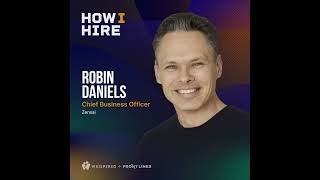
Whispered Hiring with Robin Daniels, CBO @ Zensai
In this episode of the "How I Hire" podcast, Andy Mullett interviews Robin Daniels, Chief Business Officer of SenseUp (formerly ZenSci), about his philosophy on hiring, talent development, and building engaged teams. Robin explains the mission of SenseUp’s Human Success Platform, which aims to combat employee disengagement by providing continuous coaching, skill development, and motivation. He outlines three non‑negotiable traits he looks for in candidates—grit, aptitude, and passion—and describes how he evaluates them through storytelling‑focused interview questions that reveal communication ability, self‑awareness, and impact. Robin shares personal anecdotes about his own unconventional career path, the importance of surrounding oneself with supportive, optimistic people, and the network effects of moving between high‑performing companies (Salesforce, Box, WeWork, Matterport). He discusses the role of AI in surfacing candidate signals before interviews, the need for clarity when defining executive hiring needs, and the distinction between product‑marketing and revenue‑marketing CMO archetypes. Throughout, Robin emphasizes the power of energy, authenticity, and genuine conversation in both hiring and leadership, critiquing rigid, checklist‑driven interview processes and advocating for a human‑centric, story‑driven approach.
Chapters
And when you look at why people are disconnected, disengaged, it's because nobody believes in them. Nobody is investing in them, giving the skills or growth that gives them the motivation to show up and be the best they can be every day. So we want to be the platform that does that.
LinkedIn knows who people are, what they've done. But I think the interview uncovers what they want, what they've achieved, how they work.
There are 3 fundamental things that I look for when I hire people at all levels. It's grit, aptitude, and passion.
What have you found works well there? Have you found any things that you think you do differently than other people on the interview process? Process.
I key in a lot on storytelling. Ultimately, people buy with emotion and they support any of that purchase with logic, facts, data, and so on. But if you can't hook them with emotion, you don't have anything.
Welcome to How I Hire, the podcast where we talk with senior go-to-market leaders about how they find, vet, attract, and grow new talent. Uh, I'm Andy Mullett, founder of Whisperd, Today I'm joined by Robin Daniels. Robin, great to have you.
Hey, it's awesome. It's great to see you again.
It is. It is. I'm excited for this. Robin is the chief business officer of ZenSci, a top HR platform for managing your team's performance and engagement. Given that I've been at two HR tech unicorns, I'm pumped to talk about work and impact there. Before that, Robin was CMO at Matterport, WeWork, and also led marketing for talent solutions at LinkedIn. He's also the most photogenic guy any of you know on LinkedIn, and he's truly a great person. So, Robin, thanks for being here today. Thanks for that honor. I appreciate it. You got it. You got it. I mean, I wish I photographed as well as you do, my friend.
Um, so you just can't be shameless about it. I always ask my wife or my son like, hey, can you take a photo? And they're like, another fucking photo? You know, it's like, yes, I need it for LinkedIn. So you just gotta have the courage, you know, you're a good looking guy. Just, just ask a stranger. It'll be fine.
I have a feeling your percentage of quality photos to mine is going to be higher, but, uh, but we'll still Give it a go. So you think, I mean, given that you're at a company right now impacting how teams work and on performance and engagement, I'm betting you think really deeply about the impact of AI on work. How do you think AI changes how you build your team going forward? And maybe before you start, just explain the role you have, 'cause you're no longer just CMO, you're also Chief Business Officer as well too.
Well, I think it changes everything. Yeah, my role at SenseUp, so we're like a scale-up, just over 200 people. We're growing fairly fast, mostly bootstrapped. We did take one round of funding, but doing well. And we basically produce a platform we call the Human Success Platform. That's all about, not about hiring people as much, but once a person is in seat, how do you give them the knowledge, skills, motivation, goals that they need to be successful every day? When you look at all the data out there that says about how disconnected and disengaged people are, drives me crazy. And it's been the same the last year, 2 years, 5 years, 10 years, even probably a couple of decades. And it's not getting any better. Actually, it's getting worse. And when you look at why people are disconnected, disengaged, it's because nobody believes in them. Nobody is investing in them, giving the skills or growth that gives them the motivation to show up and be the best they can be every day. So we want to be the platform that does that. And it's a very personal mission, honestly, because I'm under no illusion that, yes, of course I have grit and I have tenacity and all those kind of things. I work hard. But I'm also 100% where I am because a lot of people along the way have believed in me, giving me the knowledge and push and skills and kind of direction and feedback that I needed to be successful. Sometimes that was a boss, sometimes that was a teacher, parent, friend, mentor, coach, what would you name it? So a lot of people have believed, and I wanna pay that forward. I wanna of course do that physically in the way that we kind of mentor people and coach people, but also with a platform. You also sometimes need the right tools to do so, especially in a company. And that's where of course, Sensei comes in. And I think AI has the opportunity to really kind of fundamentally change everything about how we both coach and mentor, push people in the right direction, but also even starts with hiring. How do you hire people? How do you find people with the right skills? No, when I first came to America, I was born and raised in Copenhagen, and when I was 21, I bought a one-way ticket from Copenhagen to California because I'm a nerd. I wanted to be— I had such passion for it. Didn't have a job, didn't have a place to stay. I'd never been in my life. I actually didn't go to university, you know, so, so I didn't have that going for me. I didn't, couldn't come in with like a big university degree and say, hey, you know, look at my skills and so on. I had two things going for me. I had my kind of like initiative, the way I would like, like lean into opportunities and network with people and the energy I would show up with. Right. And nowadays, I think, you know, with AI, you can probably be much better and more prescriptive in finding those kind of people by reading the right signals and putting that together. Into hiring people who are not just have a great background and has a great school and great upbringing and good like networks and so on, but also have the potential to go really far. There's 3 fundamental things that I look for when I hire people at all levels. And of course it changes then a little bit at some of the individual to senior, but the 3 things I always look for, it's grit, aptitude, and passion. And what I mean is grit, like, you know, building a startup is hard. You're building one, I'm building one, I've built several in my career. And it's always like 2 steps forward and then you get smacked in the face. Things go wrong, customer gets pissed off, an employee is not happy, the product falls down, investment doesn't come. So grit, the grit to be able to persevere through hard times, I think is super important. So I look for that in hiring. Well, how did you exhibit grit in your past? What have you gone through in life that had to build grit for you? That resilience that is so important, super important. That's number 1. Number 2, aptitude. You know, building a business is challenging and there's no easy answers and I don't have the answers and I don't expect you to have all the answers either, but I expect you to have the curiosity, the kind of mindset of like, let's go figure it out. Okay, I don't know the answer, Robin Daniels, but you know what? I'll go figure it out. I'll come back in 48 hours. I'll come back next week. With a suggestion or maybe some ideas for how we can solve this challenge. 'Cause all the company is every single day is a group of people with challenges to solve. Sometimes those are small challenges and sometimes they're really big challenges, right? And so if you don't have that aptitude, that curious mindset, you're gonna struggle a lot. So that's the second thing. And then the third thing is passion. Just like passion is such a force multiplier. Show up and with energy, conviction, excitement, enthusiasm for what you do is just a game changer. And you don't have to have passion for the same things as I do. You can like yoga, you can like wine tasting, whatever it is that, that floats your boat. Knitting, you know, is very popular in Denmark right now. I see a lot of people doing that. I don't really get, but just be passionate about something 'cause it's such a, it's an attractive force for people, but it also is a multiplier to other people. So to me, those three things have to be there in some way. And I, I test for that when I, when I, when I try to build my team. And then of course, individual contributor, manager level, executive level, then I look for different skill sets on top of that. But those three things are absolutely non-negotiable.
I love it. I, I agree. You said at the beginning that you think AI may be able to help find those things. I spent a lot of time thinking about this, right? Like, if you— and you were actually at LinkedIn, so you probably know this even better than I do, but LinkedIn knows who people are, what they've done. But I think the interview uncovers what they want, what they've achieved, how they work, how passionate, how much grip they have. Is there any way you found to figure that out before you get them in an interview scenario?
It's, it's really around, I think, the way that they even show up beforehand. It's a leading— so, so yes, of course, when you're in an interview, that becomes kind of a little bit of an artificial environment in many ways. So what can you do? Well, you can look for the signals that they have exhibited beforehand. Like you said, I mean, LinkedIn probably knows more about you and your past and your skill set than any other platform. I'm still a little surprised, honestly, that here in 2025, they don't do more to project that forward to what your potential could be. I think they easily They could probably if they actually wanted to go in that direction, 'cause they probably know where you've been, where you are today, and where you could be. And that could be totally different than where you are, right? Based on what you've exhibited and so on. But I don't think they do a great job of that. But I think you as a, if you start becoming a little bit more experienced as somebody who's hiring a lot of people, that pattern recognition starts kicking in. You can start seeing the patterns that people have exhibited, even the way that they show up in their outreach. So for example, I was working at LinkedIn, you know, for a while, as you mentioned, and I had a guy reach out to me and I don't think he minds me mentioning his name 'cause he's been talking about it as well. His name is Yanik and he wrote a really heartfelt note to me on LinkedIn. He said, hey Robin, you've had a great career and I feel a little bit stuck. I feel like I'm constantly running into some walls. I would love to pick your brain for 30 minutes just to like, what could you recommend to a young guy like me who could really use the boost, you know? And it was such a heartfelt message full of passion and grit and attitude, curiosity, right? Like he said all those three things, right? But which didn't necessarily show up in his profile. So I invited him into LinkedIn and you know, they have a great cafeteria, great coffee shop. So I invited him in to kind of like come and chat with me. That 30-minute conversation ended up being like an hour and a half of us just chatting. I was so fascinated by his story and this passion he showed. He really wants to break through. He just needed, He just needed somebody to believe in him, somebody to give him the shot that he really, really wanted. 'Cause he knew he had it in him. He was a super smart guy, worked hard, high work ethic, high integrity. He just didn't have anybody to like fight for him. And so at the end of this conversation, you know, that ended up being much longer than I thought, I said, hey, how about coming and working for me? And maybe that was his plan all along. Who knows, right? Maybe that was like a sneaky way, but it doesn't really matter. I ended up hiring him and he's, he was amazing. He stayed with LinkedIn for a while, it went on to become a VP, then he was CMO for a while. Now he's actually started his own company. Like, just like, but I saw that it— but he just needed somebody to see it. But he— it came from his— him like reaching out in a very heartfelt, like accepting those three things.
I think that, yeah, you added maybe on top of that, like the sincerity side as well too. I think it can be so powerful when people do. Here's an interesting question I'd be curious to take. Like, that guy was probably at the time 25 or 30. I feel like when you have those young people that have lots of potential and are eager and sincere and have the soft skills.
Yes.
You almost want to take a bet on them almost all the case. I see a lot of people now that with all the disruption in hiring are in their like 40s and 50s. I tell you, I talked to somebody that just left big tech and a lot of these big tech departures, you actually were one too. I was talking to Melissa Moody. Is my sister. She's like, oh, Robin's a former Googler. And I didn't remember that, but all the people that are leaving big tech now in their like late 30s, early 40s that haven't defined themselves that have been more generalists, I think are really struggling. And so I feel like it's really easy to take a call from a young person that's eager and fresh spine years and eager to learn. But I think there's this bias against older people, maybe not older, but like mid-career people. If they haven't picked their path. I'm curious, like, how do you look at that?
I don't know if I agree with that. I think that there might be the perception. I certainly try not to have that bias. Um, but, but I also think it still matters how you show— I'll give you an example. So I still get, I get a lot of outreach all the time. I have a decent LinkedIn profile.
You're incredibly open to it.
So I get, so I get a lot of outreach from people at all ages in their 20s, 30s, 40s, even 50s who says they want to pick my my brain or get some advice. And I respond to a lot of it because I try to be accessible and also I want to be helpful. And so I had somebody who's been honestly kind of hounding me for a decent amount of time. He shall remain nameless. He also reached out very sincerely. He wanted some help with something. He was a little stuck. He was in his 40s, right? A little stuck with his product marketing career and constantly like pinging me for advice and opportunities. And then one day, you know, a couple years ago I was back in Silicon Valley and we met up, you know, and I just thought, okay, this is great, you know, finally, 'cause he's been asking, whenever you come, let's meet up for coffee. So finally we met up in Palo Alto. I was in Palo Alto, might've been Burlingame. I think it might've been Burlingame, but it doesn't matter. So we met up, had coffee, and it was just such a downer of a meeting. And I just thought to myself, you know, here you are, like you have kind of one shot to kind of connect with me and the energy was a downer. He was kind of a downer, just pessimistic and negative. It didn't show any of those three attributes that I just mentioned. And you still have a lot of people, I think, in their 30s, 40s, 50s who have that hunger and grit and attitude. This guy just didn't, and I thought, what a shame, you know? Like, you get your shot to meet with him. I'm not even that important, but why wouldn't you like show up and show that, hey, I'm the guy. So if you ever come across an opportunity, recommend me. And I was just like, so I think, I think to, to your, to your point, like I see a lot of people who have it, but certainly it could easily also get snuffed out maybe because you've been rejected so many times or you just feel like you've been laid off and there's no opportunities. So you kind of end up going down there. And I felt like he was down in that spiral of like, just, it's been so hard and I get it, but you're not actually not making it easier for yourself by the way you're showing up. And this is the thing I'm out there preaching about all the time is like, Input plus output equals outcome. That isn't the formula for success, I believe. And I was just talking at Texas A&M University a couple weeks ago about this. I was invited to come speak. And what I mean by that equation is that an input is the way that you show up every single day. You control that 100%. You don't control outcomes. And anybody who says they control outcomes, I think, are full of it. But you control the way you show up. Now, that doesn't mean it's easy. I have a kid, he's a teenager. He can be an asshole sometimes. Sometimes my flight is delayed, a meeting goes badly in the morning. It doesn't change the fact that the way I show up to a meeting, to meet somebody, to my team, I control that 100%. And coming back to that story, so the way that he showed up was just like, after that, I'm like, I don't really particularly want to waste my energy or time or network on somebody like that. Instead of saying, okay, I'm going to show up, I'm going to show you that I'm worth investing in. That's again, coming back to how I got started in Silicon Valley. That's the only thing I had going for me. I could show up, As long as you believed in me and gave me a shot, I would do my absolute best to prove you, to you that, that I belonged, that I could, I could do it.
I love that. We have a, um, we have about 80 playbooks on how to search, um, in your kind of in your search. And I think we have this one philosophy that a lot of recruiters love, which is we, there are A candidates. We all know who those are. There are Bs and Cs, but there's these polishable people, right? And we, we kind of figured like The things we can polish are like clarity, how you're communicating, how you can nail your talk track. I think the things that we found that we can't polish are A, a lot of short stints at unrecognizable companies, B, just like cynical and negative. And if you're cynical and negative, I think you're just gonna come across in a terrible way. And that's exactly, or like not positive, not, and it really is tough. This market is hard, but I think—
Of course.
Of course. We pride ourselves on taking those polishable people and training them up. And it's always sad when you try to polish somebody and you just, you can't, right?
Totally. I mean, it's like, it just, it still doesn't change the fact that the way you show up, right? Isn't like, think about when I came to California, uh, February 1st, 2000, hustled my way, applied to every job I could find. I finally got one. A month after I got there, the whole market crashed. This company did not end up making it. 6 months later, I was out of out of a job, had to hustle my way, found another one. 4 months later, that company, they're not in the MA. So the first year was tough, of course. I mean, I could easily have just gone like, okay, gotten really negative, you know, gone back to Denmark and so on. But, and of course, and that's what I'm saying, it's not easy. If it was easy, everybody would show up perfectly every day. I totally get that. It still doesn't change the fact, I think, that the way you show up is fully in your control. So that's why I take a moment Whenever I go into a meeting, whether that's a one-on-one team meeting, a hiring situation, speaking in front of a large crowd, just kind of gather myself and remind myself what it is that I want to convey and what I want them to take away, the energy I want them to leave with. Because I think it's so important because yes, you can absolutely impact other people. You can transfer that. I think a lot of times a meeting is very simple, but again, that's an interview or you know, maybe a bigger presentation. It's a transference of energy from one person to another. It is, it's a one-on-one or oftentimes one-to-many. And I always think to myself, if I leave this meeting and having transferred my energy, passion, vision to that other person, I've done a good job. I can't control what they do with it, but I can at least try to control it or impact the way that they leave the meeting and what they think about me and the whole situation that we're in together.
That's probably why you're a great marketer too, because it's like, that is also great marketing is transitioning like the passion you have about the product to other people. I am, you and I are of the same genre and age. Like I graduated from Stanford Business School in 2001. I went in in '99. I was actually living in Europe at the time. I came over, I went in in '99 and it was amazing party and I came out in '01 and it was terrible. And I often say to people, I think people get punched in their face with their career at some point. Right? It's the point when no one's recruiting you, uh, when you can't follow a boss. And it sounds like both you and I had that happen early in career. For me, I was like, I had 9 months with no job, which was like the most— I literally just went and spent all this money on Stanford Business School, all the things about how you can comp, right? And so I had to learn how to network and do all those things. What did you learn early about your career that's Helps you because I actually think it's better to get punched in the face early versus those people that are like 35 and 40 that have been just rocking it their whole career and they're like, oh shit, this is a new world.
Yeah. Um, I think a lot of it's, um, I mean, I also had some moments later in 2006, uh, my son was about to be born in June of 2006 and in April I got laid off and I was honestly panicked. I just bought a house, had a mortgage, had a kid on the way. I was like, shit, what do I do?
So.
I've had moments in my career where, but I also just try to remind myself like panic and desperation is not an attractive energy or strategy. So I think I learned that fairly early. I think the biggest thing I've learned is that who you surround yourself with, where you get your energy from and who you surround yourself with makes all the difference. If you're surrounded by people who are negative and pessimistic and bitching all day long, that ends up becoming your energy. And if you can do the reverse, find yourself people who can lift you up, inspire you, motivate you to go do something that you didn't even think you could do, that is an absolute game changer. So I think I learned that early on, maybe even from my childhood, but really when I came to Silicon Valley, I never saw people as open and as optimistic as I saw in that area. I still haven't seen it honestly. I still think that's why California is kind of like an N of one because it's so unique in that sense that everybody's kind of like willing to talk to you if you show up with good energy, be passionate, anybody will chat with you. Like there's not really much, that much ego I think that exists, you know, and lots of bright people. The talent density is just absolutely immense. So if you can surround yourself with really good people. So I learned early on in my career to really kind of align myself with really smart people who I believe were going to go places. It's when I met Nick Mehta early on at Veritas, we were working together in 2001, 2002 in Mountain View, right? He became a superstar CEO at Gainsight and so on. I met Jonathan Martin, who ended up becoming a CMO of Pure Storage and now is like doing all kinds of cool things. So just like aligning yourself with people and my career was going well and that, but it really started taking off when I, when I joined Salesforce in 2007, because that's when I've truly joined like a club of people that were like the elite, the best of the best. I mean, like it started of course with Benioff, who I think is an absolutely insanely great leader. And the way that he sets the bar high, but even everybody at the company, you had to really show that you were both could contribute and impact outcomes, but you can also learn and grow from all the people around you. So to me it's always been, you know, I've never chased money, I've never chased like titles in that way. I mean, sometimes a little bit 'cause I wanna have a good life. Of course I'm not oblivious to it, but I've always honestly chased connection with the people that I need to work with every single day. Like being part of something is, and maybe it comes from my parents getting divorced when I was early young and so on, but this sense of belonging to be part of a group of people that really care and support each other is absolutely vital, vital to me.
I like that. Um, would you touch on with Salesforce is an interesting thing we preach a lot too, which is you'll have these nodes in your career. Uh, for me, Fox was definitely one where you're working with people, know their stuff, are well managed. I remember the lecture from Dan Levin when I was new at Box. He's like, we never compromise on what a director is and what a VP is. And if you make it here, you'll make it anywhere. And I was like, it's like, okay, now I understand what, what the director is not a title you get given. It is a title that, that, that you deserve or you don't deserve. Um, but I think maybe going back to the Salesforce one, it sounds like that was a powerful note in your career, right? Like, absolutely, the relationships that you had out of there, did that, how did that help you with the career?
Yeah, I mean, it really was. I mean, and after that, because I both got given the opportunity to run with a product that was kind of new and hot and that I became synonymous with building that success chapter at that point in time. And since then I never had to look for a job. People started finding me, then Box found me. I went to Box afterwards, of course, and ran enterprise marketing under Whitney. And I loved that. What a great group of people that was at Box too. Some of the best of the best. And then my career, you know, was taking me, but what I really learned is it really, that's where my network really took hold. And so many people that I've worked with since then honestly came from there. So for example, I worked with a guy called Indy Send 4 times, but we met at Salesforce. That was the first time we worked together. Then we worked together at Box. Then I brought him with me to WeWork and then I brought him with me to Matterport. Nicole Rogers, I met at Box, you know, and I brought her with me to WeWork and brought you to Matterport as well. So you start like, Finding these kind of like unicorn people that you just know of that both have the same work ethic as you, good people, they know how to have fun as well. Like you just get joy out of their company. And to me, again, I try to bring as many people with me as I can that I— so what I learned is that every job that I've had, you pick up kind of a handful of people, not usually more than that. I mean, you can stay in touch with a lot more and I'm of course connected to a lot on LinkedIn and Facebook and so on, but there's usually like a handful of people, kind of like your inner, inner circle, the people you call on, that you text with frequently and so on, right? Maybe even start working with again. So I have a few of those and it really started with Salesforce because I could see that the tight-knit nature of these kind of clusters and think about just the network that they created at Salesforce because of the high bar they set, creating Okta and all of these like, you know, soar fantastic companies. And those CEOs then brought a lot of people with them as well, right? It's just like, was this kind of like profound network effect of humans coming together to solve really, really interesting challenges.
I love that. Yeah. The power of nodes.
And I think the people that have taken only small companies can struggle.
Let's, uh, let's shift gears maybe to talk about how you hire. I think this has been amazing just to talk about some of the approaches to getting hired, which, and I hope people are listening. Yeah. When you think about building out your executive team, what do you need in place to do that well?
I think it starts with clarity around what it is you're trying to do in the first place. It's very hard, I think, for anybody to come in and do a great job if you're not really clear on what that person's mission is. Doesn't mean that you can't figure out together, of course, that's why you're hiring me, it's like how to get there and what it is. But if you're just completely unclear about what it is you're trying to solve for, I don't know if this hiring an executive is going to solve. So I think a lot of it starts with clarity. Like we have an issue here, you know, our product development is not going fast enough. Our marketing engine is not working. RCS, you know, is, is kind of woefully behind in terms of tech and, and the process that we use. So if you're clear on what you're trying to solve for, I think you can really be much better at hiring because I see it going wrong so often. So of course I've been a CMO a lot of times in my career, and so I get asked a lot around CMO hiring, and I always say that it starts fundamentally with knowing what you're trying to hire for because, and in CMO, in, in the marketing world, you kind of have two archetypes, archetypes. You've got the CMO leader who came from kind of product marketing or the CMO leader who came from like more like demand gen, revenue marketing. And there's— and you have to know what you're trying to solve for because you hire the wrong person, then you're going to get— you know, you could look back a year later and be really unhappy with the results. So if you have an issue and create demand and, you know, finding customers, then maybe you need to hire a revenue marketing leader, somebody with that background. And if you have an issue with your story is not tight enough, your and nobody's converting, you know, the competitive landscape is too tough and you're not like winning against competitors, then you probably need somebody who's more product marketing.
And it's—
I recognize it's never either or, it's never 100% this or 100% that, but it's usually more one than the other, right? And in what you're trying to solve for. And then you can kind of build up the strategy around that leader because you have clarity. And it's the same probably in most positions. But so it starts with clarity. Know what you're trying to solve for. Because if you don't have that, then you oftentimes just end up, so I was advising a company, you know, and they said this usual, okay, we need to create a category, we need, we're gonna create a world-class brand, all that stuff. Great, okay, you need somebody with a product marketing background, you know, and so on. And then it came back to me like 9 months later, oh, I think we think we fucked up because we hired this person that I recommended, but that person, you know, but we actually really needed more a demand leader, you know, somebody who was like in the weeds of the channels and the paid program And come on, I'm like, okay, well, it's not that person's fault. Honestly, it's probably your fault because you were not clear in the beginning, right? And it's okay to change your mind, but don't point the finger at them and say that they failed. It's honestly that you failed, right? It's the CEO or the founder. So it starts with clarity, honestly. I don't know what you see.
I mean, you nailed it. I cannot wait. So every week we have basically sales, marketing, CS, and RevOps functional groups where all the members will get together once a week and talk about what they're seeing in the market. I guessed it. On one today, um, and the number of roles that have been sitting out there. We talked about one that has been out there since June and we all just kind of laughed at the company and everyone shared their experiences interviewing with them because the companies don't know. So I think I especially see it like the A and the B level where CEOs like, I just need a marketer, right? But they don't.
Exactly. Yeah.
Yeah. I mean, I give the same advice you give to anyone trying to hire. It's like, what type do you need? I, it's fun because it's either 2, 3, or 4. I've heard the 4. I've heard, uh, somebody said demand gen, brand, PMM, and comms. I was like, interesting. Like, comms to me is a later stage one. Uh-huh. Brand I actually love a lot, right? Like, as a marketer. And so I think clarity in the role, you can kind of tell if the, you know, everyone always says I want to run a tight interview process. Yes, yes, yes. And then when you start to throw in other people or it goes slower, it's like you start to realize, shit, you don't really need to know. What are the, uh, if you're an executive.
It's also, it's also, it's fair enough for as founder or CEO to not have theory, but then you talk to an advisor, get some advice from somebody on what it is you should be hiring for. Here's the situation we're in. What do you think? I said, talk to somebody who knows, right? Because it's totally fair if somebody is not completely clear, they might not know. A lot of these tech people are great engineers, great product people, but they might not know go-to-market very well. Totally fair to then go talk to someone, right, about it. This, this, this breakdown of marketing, you might actually have heard it from me. I remember you and I chatting about it. So, so I think there are that 4 archetypes in marketing: product marketing, revenue marketing, brand and comms. And I think in B2B, usually a CMO comes from revenue marketing or product marketing. And in B2C, it's much more brand and comms.
Yeah, interesting, the B2C. Yeah, the, uh, although you could argue that the best demand gen people out there are B2C people, um, because they figured out how to pull this lever and do this, right? I've heard, uh, you know, the Grammarly people that were great at YouTube ads. I feel like B2C you get to experiment a little bit more with.
100%. 100%. Did you ever think it's public— it's probably true to some extent though, you know, B2B, it's very complex. Like the buying cycle is so long and being able to have 10, 15, 20, 30, 50 touchpoints, it's very different than B2B, which converts very quickly. But that's not how it is in B2C. I mean, that converts very quickly. B2B, it doesn't at all. But you usually have to map out the universe of stakeholders and buyers. So, and if you only try to like optimize for the fastest conversion, you might do a sale, but it's not a lot of loyalty there, right? You want to actually get people to fall in love with your product because else retention is low and churn is high, which is not great for a B2B company, of course, which is much higher in the B2C world, right? So I don't disagree, but I also don't know if it's as simple as just saying that you could take a bad B2C, market it. You probably could. I mean, the mindset I've always had is that even though I've only worked at B2B companies my whole career, I've always tried to market like a B2C company because those are the companies you fall in love with. I mean, like, I learned that honestly from Benioff early on, even though we were selling a CRM platform, a developer platform, not the most sexy thing in the world if we're honest about it. Like, we always try to market it in a way that's human and interesting and much more like a B2C company because that's, that's what people love. Same with WeWork and LinkedIn. Box did a great job of that too, I think, right? Trying to speak in a much more human way than using enterprise gobbledygook that nobody can relate to. Anyway, I'm taking those off course.
I honestly don't care because I think these are so fun to go through them. It's, um, I, I look at so many B2B companies that I advise and they, and they tell me what they want to do and I'm like, okay, cool. Here are the 4 other companies that could have that exact same thing. Right. And so for me, I think you remember you got to know me when we did Gated and somebody named, it was like, it was a sales leader at Calendly, which said, you know, your, uh, How gated is the noise-canceling headphones for emails? Like amazing. Like if you can cut through the noise and then somebody, ChatGPT actually named Whisperd, which was your next role won't be posted, it'll be whispered. And everyone's like, ah, but if you can find that one tagline that can just personalize the brand.
I know it's so good. It is really good. I, I'm excited to like dive into Whisperd honestly.
Yeah. We'll have some fun. I'm, I'm pumped for it. I, given how much you are a giver and a helper with careers, it's, it's so much fun. Um, maybe let's shift over to the— since we'll, uh, we'll probably run out of time, which is half the fun. Um, we've shifted over to the interview process. Like, what do you— what have you found works well there? Have you found any things that you think you do differently than other people in the interview process?
I, I key in a lot on storytelling, and I try to answer— ask questions that get people to tell stories. I really try to not just focus on yes, no, or very short answers. So I try to open up and see if they can tell stories. Because of course, I am looking for certain skills, there's no doubt about it, but I'm also looking for communication skills, especially if we're talking about leadership. I mean, the thing that will make or break a leader for our spot is their communication skills. You can be the best in your domain, but if you don't have the communication skills to communicate your ideas, get other people to believe in those ideas, you're always going to suffer. So I really look for communication skills a lot. And it's something I had to develop over time. I was not like born with it. I had to learn how to like practice it, use it, take training in it and so on. And I think a lot of people have maybe more naturally and some people can develop it. But I look for that. So I ask questions that really kind of bring that out. So the favorite question that I usually ask is that really allows them to go anywhere they want with this. I say, hey, you know, so if you look back on the, on your career, long arc of a career. Usually when at the executive level, they've done things for 10 years, at least about 20, 30 years. You look back on your life and your career. Tell me about the most epic thing that you ever did. What was it? What was your role in it? What did you learn from it? What was the outcome of it? You know, what would you have done differently? I'd love to just hear a story around all of that. And then they pick anything they want. Doesn't matter. I don't really care. But then I can hear you. What are they using? Me, me, me, or we, we, we? Are they, you know, what are they saying about it? What are they learning from? Do they have self-awareness to reflect on things they could have done better? Do they highlight the great work that the team did, but also their leadership in driving this project forward, whatever that is? What did they have to overcome, you know, and so on? Like, I just love like asking that question. And also honestly lets me gauge a little bit on their level of thinking around what epic actually looks like, you know? And again, I don't have a preset answer. I just like looking to be inspired and listen for clues. So when I was at Box, actually, I was hired for head of industry marketing. I was interviewing a lot of great candidates, you know, to come join my team. And I remember interviewing one candidate from HP and I asked the same question, you know, tell me about the most epic thing you've done. Well, what's it, blah, blah, blah. And he started going on and on about how he wrote a white paper and they put it up behind the gate and they, you know, started like promoting it and they got like 100. And I just thought, if that is what you classify as epic, then I think you and I have a very different bar of what epic— how you write a white paper and gating it. I was just like, oh my God, this— he obviously did not end up getting hired, but it's just like, so it's a great way of also testing for like, the level of their thinking, you know, and again, there's no right or wrong answer. And even if you don't have something epic, you could say what I wish I would have done, right? To show that if there's like the question, also times I believe you'll learn a lot from your failures. Like we set out to do this, this was a plan. We ended up screwing up along the way and it ended up not being the best results. But here's what we learned. Like it just allows you to go anywhere you want with this. And I love that question because it's very open-ended and I really hope when I ask that question that they will end up talking for 10, 15, 20 minutes. Like, I want to hear a story, like tell me, like get me engaged, you know? And you can kind of usually tell if they're petering out after like a minute or two or if they're getting back going about it. And it's also because those are the stories that people get very passionate about, right? And I love to see people's passion versus when you ask them something like a yes or no question, then they feel like they get a little bit more robotic. Yes, we did this. And I'd like this, like, get into it and it takes a little while. So they like warm up and then they get going. It's such an awesome question. This is my favorite way to test the level of thinking, their grit, attitude, passion, their skill set, their kind of way they would think about fitting in with our culture and how they would either add to it or change it and so on, like in better ways. So just, just an awesome question.
Yeah, I like that. I think a lot of people don't realize that these open-ended questions that a lot of us execs ask are designed to teach that self-awareness and to do that. Um, I, I actually was running through my own mind, like, what would be the question I would, I would tell? And I, I, I, I'm curious, what percentage of people that you ask that tell a personal story versus a work story?
It's funny.
Yeah. As part of that, are the ones that— are the personal stories the ones that land better with you? I'm, I'm guessing.
But it's probably 80-20, 80% work and probably 20% personal.
Yeah. Yeah. Yeah.
A lot of people end up telling work stories because it can, I think it may be more comfortable saying that, but there are a few people who kind of go straight into the personal stories of what they've overcome, which is pretty inspiring. Like I set out to climb the 5 peaks in all the continents or I set out to do this, you know, it's like, it's like really, yeah, really, really fascinating, but I, it's it's such a great way, I think, to really kind of just find the magic in people. And again, I love when people can fully capture my attention, where I just like, I wish they would just go on and on and on about this because it's just like so fascinating. I'm learning a lot and I love that. You know, I think an interview should be mostly them talking. I got a little flack for saying that, you know, when I posted this on LinkedIn, I said, Of course, if I'm selling, I'll be doing probably more talking, but if I'm interviewing, I expect you to do more talking. And it's never 100% like I'm just sitting, it's probably, but it's probably should be mostly you talking. I always know if I have to drag answers out of you, it's never going well. It's not going well. It's just the truth. And of course that's easier said than done. Some junior people, sometimes you do have to prompt them a little bit more. Senior people, you usually don't have to prompt them as much. They know that what they're there for is to tell stories. And then of course, I want you to ask that question. You also want to get some details, right? It was like the, the story, the color of a story really comes in, like the details, like the nuances. Like, what did you do here? Like, what was the team challenges that you had? You know, how do you deal with this situation? Because you can then start asking, you know, follow-up questions. What were the results of this? Like, so you can also see if like they did it data-driven, not just, you know, storytelling masters, which some people especially like in some go-to-market roles to be really good at storytelling, right? As I'm sure you've seen before. So it's that finding that balance for the role itself.
I love that. Um, how did you get good at storytelling? For me, one of the best ways is being a guest on podcasts just like this, right? You get practice your stories, you don't get preparation for 'em, and you start to figure out what those stories are. But how did you personally get good at storytelling?
From? Well, it starts with a deep love of story time. You know, before I even came into tech, I've always loved reading, I've always loved movies, I've loved just the stories, stories of transformation, of overcoming. And I actually thought for a while maybe I'd go into more like the entertainment industry and like be there and like create movies or TV shows and so on. So I've always loved stories. And but I was kind of, I had like two paths I could take, either like that the entertainment route or kind of the technology route. I ended up going more technology, but I ended up combining the two and being in marketing, you have to kind of do both. I think the way I kind of came into storytelling, I just started realizing that ultimately people buy with emotion and they support any of that purchase with logic, facts, data, and so on. But if you can't hook them with emotion, you don't have anything. And think about that. If you're in an interview and you're trying to sell yourself, that's an emotional thing. If I'm trying to sell a product, it's an emotional thing, right? So it's all about how do you tell a story around yourself, the product, whatever it is. And then you support with the right data and some proof points and so on. But it's about getting people hooked, and that's about energy, passion, transference of energy and enthusiasm like we talk about. Um, but I got good at it, I would say, um, being surrounded by people who are really good at it. Um, but also by having some really massive failures myself in, in the realm of storytelling. I can tell you hand on heart, I've succeeded because of my ability to communicate in certain roles and I've failed in other roles because I could not communicate in the right way to the people that mattered. Sometimes, you know, like the way you communicate, the way I communicate, for example, with a peer who's in sales versus a peer who's in finance has to be very different. They see the world very differently. And if you treat them all and communicate the same way, you're probably not going to be very successful. I've learned over time to moderate the way I communicate. Based on who I'm talking to and trying to base it on their worldview. You know, the way you communicate to somebody who's in engineering is very different than somebody, again, who's in more of a customer-facing role. So you just have to learn how to do that. But it also comes from, from like deep failure. I mean, I've had some experiences that were just so painful, if I'm honest about it, in the beginning of my career in Silicon Valley that were just so horrible where I was like shaking and sweaty and just like, stammering. I was just horrible. And it's like, said to myself after that, I'm like, I never want to have this again. So I did everything I could to learn how to communicate in a great way. I took presentation skills courses. I listened to podcasts, the stuff at the time, audiobooks, read books about it. But the best thing I did, I took acting lessons at Stanford. You know, that was the best thing I did because I've always admired how actors use the totality of their body to communicate something. Especially people on stage, right? They're not just using their voice, but their body, the way they move, the way they kind of modulate their voice, the way they look at you and so on. And so I took acting lessons at Stanford and it was a game changer. I had to really kind of break through some personal barriers to stand in front of a class, you know, and do these monologues from movies and plays. It was like fucking nerve-wracking, but you just learn so much about the craft of being able to like hold people's attention. Which I think is really what actors do super well. And, and because I think the best presenters, they then find what works to them. They, I mean, like you, you work with Aaron Levy over at Box, you know, he does, he breaks all the rules when it comes to communication style, but he's a great presenter because he, he's, he's so quirky in his own way that he's so compelling to listen to and look at and, and hear from. Marc Benioff's the same, right? So I've never believed that you should like follow a playbook and that's what I, dislike a little bit about some of the communication skills courses I've taken is like, they kind of assume that you all need to follow in the same pattern. I just like, don't. I think that's BS. Find what works for you, find your own style, and then make that work for you. Like bring out your inner freak, you know, in some way and like get that to shine versus trying to be all professional and like, because oftentimes it ends up being just kind of boring. That's also why I like asking more personal questions in the interview process because Here's a great example of another question. If you ask somebody like, tell me, what does your company do? Like, what's your last company you worked at? What do they do? I'll guarantee you people, they get very serious and they'll be like very stiff around how they're saying, yeah, my last company we sold a single sign-on identity platform, blah, blah, blah. Okay, okay. Well, tell me about the favorite movie you saw. What was the favorite best movie you saw last year? Oh, you know, I saw this movie and you can just tell they light up, they get passionate. You know, it's like, So you got to like get, get, get people to open up a little bit. So you see, it's a lot about how you start a conversation and get them to feel comfortable because then the rest flows really well. If you start off too hard with some of these questions, I think you can go in the wrong direction. So I'll give you an example as well. After Matterport, you know, I was talking to a lot of companies who wanted to like interview me and get me to join their, their team. I was talking to one company in Europe, in Finland, and here I am, you know, coming in as a kind of an executive, you know, and instead of like doing interviews the way I know how to do it from Silicon Valley, where you have more of a conversation, they came in with a checklist of like 20 questions that they just wanted to hammer through. And I was just like, this is the most inhuman like style of interview for somebody like that's up my level and what I've done. Like, get to know me first, you know, hear about my background, what I would do for you and so on. But it was just like a robot. And I was just like, there's no way I would ever join this company. I mean, like, because interview at that level, I think it's much about me interviewing them as them interviewing me. Of course, it's horrible, right? And I just like, wow, this— you've got a long way to go if that's how you— but even at more junior levels, I would never do that. I would never come in with like a checklist. Of course, it's just like a horrible way, I think, to treat people. You miss so many opportunities to learn about the candidates in a really genuine way if you do that.
I bet you guys think a lot about that at Sensai as well too. Like, how do you create that culture throughout the whole thing? I, one kind of like con question, I love to at least, I believe everything you're saying, but we had another guest on, Kyle Norton, he said, listen, I, I use data and again, he's talking about salespeople, but he's like, charisma did not, it did not reconcile or it wasn't like statistically relevant to performance of people. And so I'm curious if, if you ever like backcheck all of the VCs you have on the storytelling side.
I certainly do. And I think the world of Kyle. He's one of the people I admire and I absolutely agree with him. I mean, I'm kind of saying that these are all kind of things I think are there already. I mean, maybe that's not obvious, but absolutely. I mean, like charisma does go a long way, I think, especially if you're in a customer-facing situation. You want to be able to connect with people genuinely. But if it never leads to any results or better outcomes, yeah, then it's kind of worthless. So I also, it's funny when you were hiring, for example, a head of brand at Sensai recently. And so, you know, that person is reporting into our head of campaigns, who's reporting into our head of marketing, who's reporting into me. And I just assume by the time they get to me that that stuff will have been checked. So I don't actually dive as deep into that. Because at that point I'm trying to get them excited and sell them on the vision and convince them. This is also, of course, want to get to know them and learn. So I don't dive that much into like the details of their past jobs. If they're working for me directly, yeah, absolutely. I want to know like, this is why I'm saying, tell me like what was the outcome? What'd you learn from it? What were the results and so on? You definitely want to like know about this because it can't just be based on their story time. I mean, story time absolutely matters. Like I said, communication is a key skill, but it's not the only thing that matters. She asks you, your ability to drive results and change and impact matters, matters a huge deal.
I love that. Well, we have had so much fun. I think this concept of storytelling, we've dove in deeper than I have with any guest. So thank you so much for the time. I'm excited to keep this dialogue going. And Robin Daniels, thank you for gifting us with your knowledge.
Andy Daniels, you know what, you and I, we, we've known each other a long time. I always love our conversations. I feel like we go into new areas. I learn a lot as well. I'd love to learn more about Whisperd and just kind of all the cool stuff you're doing. So excited for that. But thank you so much for hosting me on, on your podcast. Thank you, Robin Daniels.
More from Robin

Why Teams Struggle to Adopt AI in Microsoft 365 and How to Fix It with Robin Daniels
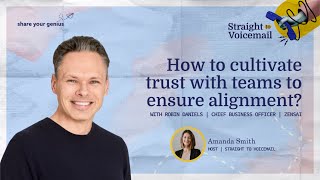
How to cultivate trust with teams to ensure alignment? | Robin Daniels, CBO, Zensai