He Bought a One-Way Ticket to Chase a Bigger Life (Robin Daniels)

Robin Daniels, now Chief Business Officer at Sensei, bought a one-way ticket to California at 21 and spent two decades at Salesforce, LinkedIn, Box, and WeWork. He built his leadership on grit, aptitude, and passion, and argues that investing in people, not replacing them with AI, is how companies win.
Chapters
Welcome back to What's Next. Today, I'm joined by the dynamic Robin Daniels. He's the chief business officer at Sensei. Sensei. Robin, I'm really glad you're here with us today. And before we get to the bigger questions, I just want people to hear about you. Who are you and why are you here now?
Well, it's good to see you, Lori. And I love the title of the podcast, What's Next. It's, you know, very much appeals to me.
I think.
Yeah, I mean, I'm originally from Denmark and when I was 21, I moved to the US and I moved to California 'cause I'm a nerd and I wanted to be with all the nerds of the world. And I ended up spending a good 20-plus years of my life in California working at companies like Salesforce, LinkedIn, Box, WeWork, Matterport. I've taken a few companies public. Some of them have failed spectacularly, so, you know, they can't all be winners.
Won't name any of those.
Won't name any of those. No, exactly. But sometimes you learn more from your failures than you do from your successes. So, And it's been a good ride. Now I'm the Chief Business Officer at a company called Sensai. And we really focus on something really simple. It's like, how can we make people the best that they can be every single day? And honestly, it's something I've become obsessed with as a leader over the last 15, 20 years is I'm not the best at a lot of things, but I'm good at getting people together and get them motivated towards a direction and being fired up to go achieve whatever goal it is that we have to achieve. So that's my life's mission and that's kind of what I'm working on every day.
I love it. I love that mission. We're so aligned. I love it, love it, love it. So you brought, from what I understand, you bought a one-way ticket from Copenhagen, right?
We did, yeah.
You landed in California and what, that's courageous. What were you thinking and what were you chasing, if anything?
There's probably a little bit of both. There's both something I was chasing, which was a life that was inspiring and motivational for me. I wanted to go make a difference, honestly. I wanted to go make some shit happen, just to be fair about it. And I felt like at that point in time, Denmark was very limiting in that, especially if you were in tech, there was really only one place to go, that was California. But I was also in some ways to escape a little bit, I think, maybe the shackles of my past. You know, I came from a dysfunctional family and parents got divorced when I was young. There was always like, discord in some ways. I just wanted to go create a life on my own terms. And I always had this kind of guiding thought and it was very simple. I don't want to look back in my life when I'm lying on my deathbed and having regrets about not having the courage to go. I'm like, Denmark is not going anywhere. If I don't make it, I could go back to Denmark. I could always go back.
I could always go back, right?
Sit on my brother's couch or hang out with my family or my friends. But I didn't want to just like not at least give it a shot. And so that's why ultimately, what of course didn't go in any way like I had planned. I think that's kind of our life, but it certainly what, you know, there was many wonderful things about it obviously, but also a lot of like uncertainty. But also when you're young, I mean, you can, I think, deal with it a little bit more and be a little bit more adaptable. I like to think that you stay that way as you get, you know, more seasoned and mature, but there's also of course the realities of a mortgage and kids and family and all these things, right? The realities of life obviously sets in. So when you're 21, like, those things don't even kind of really enter your mind in some ways, right? You're just like, go, go, go. No fear. No fear. No fear. No fear.
I moved to New York on similar, just, you know, had a suitcase and that was about it.
That was me too. Because you're from Maryland, is that what you said?
Well, I actually originally from, yeah, New Jersey, New York. And then I moved out to California with my family. Then I got my plane ticket, although I had a return Online. So just in case I needed to come back. So, but you know, I also have just a mantra for myself too is, you know, I wanna look back at my life when I'm 92 plus and have no regrets, you know? So, you know, let's achieve all that we can and, you know, jump out of airplanes and climb Machu Picchu and things like that.
Totally.
I love that.
Actually, that's on my list. I'm gonna do that this year, by the way. That's my, that's my, vacation later this year is Machu Picchu. I'm very excited for it.
Oh, it's just a dream. In addition to that, it's a dream come true. So I'll be curious to hear your thoughts when you get back.
So I'll have to check that out. Yeah, I'm excited. My mom always said this thing to me when I would leave the, our tiny apartment, go out there and take some risks. And I always thought that was kind of a beautiful thing to like encourage your kids, you know?
Good job.
Yeah, good job, Mom. And it was like, you know?
Yeah.
I know, I know, I know. So that kind of stuck with me in many ways. Just go, like, what's the worst that can happen? I think we overthink things in our head, you know? The doom scenario that can oftentimes creep in and it stops us just from trying. The reality is most people are just so busy with their lives and I can't remember the thing you said wrong or screwed up about almost so bad that it's—
I know, right?
You go to jail for it.
Analysis paralysis. And 9 times outta 10, they remember what you said.
I agree with that.
Yeah, that's true.
That's true.
So, you know, you've took risks very early on in your life. I'm just curious, you know, now you're, you know, you're head of product marketing and a few other roles at Senseye. I'm just— what do you think or how do you think your early-on experiences shaped your leadership, if at all?
Yeah, of course. I mean, I'm under no illusion that I've done this all on my own. I think I'm 100% where I am because so many people along the way believed in me and invested in me and gave me kind of a shot. You know, I don't have— I didn't go to Harvard or Stanford or Oxford or any of those fancy schools, right? And there's nothing wrong with that, but that was just not my life. I didn't didn't have those opportunities. So, I kind of had to hustle my way, if I'm honest about it. And I always felt if I could get in front of somebody, I could show them enough of my smarts and hustle and energy that they could see something in me. And luckily along the way, I met enough of those people that they saw something in me and they took the time to take me under their wing. My first boss was a woman named Elise Zimmerman. She was awesome. She saw something in me and she said, "Hey, this programming stuff that you claim to be doing, it's just, you're just okay with it, but you should actually be in marketing." And she kind of took me under her wing and— Yeah. Gave me a path in marketing, but that's kind of been so often happening, especially in the first 10 years of my career in Silicon Valley, just kept meeting great people who saw something in me. And I learned from that is that the thing that you can do that really unlocks, I think, potential for people is everyone just needs to feel valued and feel like there's something in there, in them. Everyone has something intrinsic, I think, whether it's right for the company or right for this team, that's a different story, but everyone has something to offer. It's just about, can you find that in people? So I've really tried to spend my time trying to find like what makes people just so fired up about what they do. And there's 3 things I always come back to when I hire people. So I've hired now people across multiple companies, hundreds of them, maybe even thousands, I don't know if thousands of them at this point, but I always look for grit, aptitude, and passion. These are the 3 non-negotiables for me is, do you have the grit to kind of persevere, because building a business is tough. Life is tough. You'll get smacked in the face. You know, it happens to a lot of us.
More than once.
More than once, exactly, right? This ability to bounce back and not let it completely ruin you is a superpower.
The second thing is— Yeah, that resilience, that resilience.
Yeah, that resilience, right, is absolutely key. And the second thing is about aptitude. Like, I don't expect you to have all the answers. I don't have all the answers, but do you have the kind of hunger and desire to figure it out and the smarts to go figure it out? Like, say, hey, Robin, I don't know, but I'll come back to you in 48 hours with an idea or some kind of solution. I just like, I saw that again in my leaders that I work for. They had this way of kind of unlocking that in the people around them. So you weren't afraid to say, I don't have the answer. Most people don't have the answer to a lot of things. And you can rule by fear or you can rule by inspiration, right? And this is a way of getting that inspiration out.
Well, you said really something very important. I wanna underline it and it's that you're holding mirrors for either people that work on your team, your colleagues, and showing them really who they are. And that's one of your superpowers. But the other thing that I also want to anchor is building trust with your peers, whomever, teammates, teams. Once you build that trust, they'll follow you anywhere. And you talked about aptitude. If you have that trust with your team, they're not afraid to not know.
That's right.
That's right, that's right. And it opens up the space, right? Tell me about that. How have you, when have you done that?
Tell me about that. That's a deep question, 'cause I think ultimately building trust is like something you do through action. I've always felt like there's like these 3 levels of how you model something, what you say, what you think, right? Obviously that's private, what you say, and then kind of what you do. And I've always believed that the third one especially is ultimately what builds trust. And so, whatever I do is like, there's sometimes when I lead through giving direction, like, we need to go do this, and I trust you to do it. And there are other times where I have to jump in and I have to like show that I can do this because that also builds trust in different ways to work for a competent leader who knows what they're doing, right? And what I've gotten better at, you know, as I've gotten more experienced, is to figure out when. I still err mostly on the side of giving a direction and then let people figure it out because most people are fairly smart, but sometimes you also have to do the other thing.
Mm-hmm.
You know, for example, Right now at Sensa, we're an HR tech platform. If I had to kind of put us in a space of where we exist, it's a pretty crowded space. And my superpower is messaging.
You got some big players out there.
Yeah, Workday, Oracle, SAP, right? My superpower is messaging, branding, storytelling, and I'm probably one of the best in the company on this here. So, I went in there and I kind of tried to redefine what our core story is in this like future of the market that's being taken over by AI versus I could have given it to someone, right? And then like, could be like, mm, is it like the right thing? So you sometimes just have to get to know and then, but most of the time, like, you can also just like say, here's the direction for. So for example, the opposite is we're redoing our pricing and packaging. Actually just, uh, it's launching here in, in, uh, June. And I have a super competent leader on my team. Her name is Enya and she just has been running with this for a year. She gives me updates, I provide input, but she absolutely knows what she's doing and I'm just kind of an input into that. So, sometimes it's about knowing, I think, when are you the lead and when are you kind of just the input and just like figuring that out. So, that's one way to build trust. The other way, I think, is especially as a leader, you have to know when to protect against pressure and when to apply pressure. And I think that also builds trust. And what I mean is sometimes—
Yeah, how do you do that? Because there's a fine line, right?
There's a very, exactly, it's a very, very fine line, right? If you constantly apply pressure, you'll burn people out. That's never good. So, you also have to absorb a lot of pressure from your CEO, your board, your other executives around the table, right? Yeah, that's true. Super tough. And then other times you have to go apply pressure and you have to do that. That's a super delicate balance. Too much of one and you'll fail, too much of the other and you'll fail. And it, and it's hard to get it right. I'd love to hear your take on it, but it's like one of the hardest things as a leader.
Well, you don't wanna thwart creativity and innovation because you're in, you know, you're in the forefront of what you're doing and HR is HR. I mean, it doesn't change or hasn't changed much over the years, but the tools have changed. And so if you can provide a tool that helps HR leaders or even leaders in an organization do things faster, better, or help them be more successful, I think it's really important.
But—
Agree. I mean, you need to be a good read of people. You know, you're a very intuitive man, and I think most of us are. And I think you can really talk to, you know, be that leader, be that mirror, and really understand when enough is enough. I mean, if they start shutting down, that's a signal, right? Or, you know, if, you know, they're just spinning their wheels and they keep coming back with the same thing or not really great ideas, that's too much. But you can also ask them, "Is this okay?" Totally.
Totally.
Totally. I mean, you said it early on, we don't have to know all the answers. But if we can show our hand early on in the relationship of our teams, our employees say, I'm not sure. What do you think?
How do you think we should move forward? Totally. Totally agree.
And you enlist them in the process. And then they can become even more invested in what you're doing towards your goal successes.
Absolutely.
Just my two cents.
Right? Love it.
Yeah, for sure. So you've had some wonderful moments with your team. You know, you've had some moments, you know, I won't name the company, but, you know, not so great moments. But, you know, how have you led through those challenging times? Because we're all leading right now, I think, through challenging times, you know, downsizing, having to let people go. And, you know, those are tough decisions. But how do you lead through those times? I'm curious.
I think the key ingredient, I think, I always try to remind myself, maybe it comes again from my mother from when I was a kid or whatever it is, maybe the previous leaders I worked for, is courage. I come back to that a lot. I mean, when you go through tough times, you have an option of, do you try to hide away and just like complain and like fold like everyone else? Or do you maybe become more visible? You become more engaged, you lean in more to the challenge. I mean, when WeWork was going through its epic kind of public thrashing, right? I mean, like my job was to—
I wasn't gonna name the company. It's okay.
It's pretty popular.
No, it is, it is, it is.
It's part of my story, right? So— Yeah, it is.
Yes.
And it was just like, I was working harder after that in some ways to show up for my team and be highly visible and try to give them direction when every one of their friends and the media was trying to contact them to get the scoop on what was happening. And just like trying to remind them that we can't control all these factors. All you can control is the way we show up and we have a job to do. I'm trying to be highly visible and provide them a direction and the clarity on what we need to achieve. I mean, it's not like any of us wanted that outcome, obviously, but I think nowadays when I think about what leadership is about in many ways, because things are changing so fast, it's always been changing, I think. I think there's no getting around that, is exactly that courage. I think a lot of leaders now, they hide away, they fold under pressure, they—
I was gonna mention that. A lot of leaders hide, and if you could be more visible at this time, that's gonna be a standout.
I think it's— and it's not always easy. I mean, we're human too. There's some days I don't want to, honestly, you know? I mean, not like every day is a good day, and I think it's probably— Sounds like you've coached people for a long time. Like, we all have these bad days. But what I try to remind myself of, it doesn't change the fact that the way I show up for other people is in my control. So, I could have a shitty day, you know, I can have somebody cut me off in traffic and be late for my flight or crappy meeting with the board, whatever it is, doesn't change the fact that when I show up for that one-on-one or my team meeting, the way I show up is in my control completely, right? I mean, if— If we were all perfect and life was easy, we'd all show up perfectly every day, but it's not. You have to work on it. And it's something you can teach yourself.
It's very true. And one of the things, if I can interject here, is I coach a lot towards impact. What impact are you having in the room? And to your point, you know, we can have a lousy day, our dog, whatever, you know, and, but, you know, I coach people to put those things in a box on a shelf. And then you're right, when you show up in a room, show up on a call, you are fully present with that person. And that presence is such a gift, Robin.
I know, I know.
Isn't it such a gift? It's a lifetime gift, not only, I mean, for your kids. Your kids know when, you know, "Daddy, Daddy," and you're not present, and certainly your partner. But our colleagues and our employees know too when we're not present. There you go. And it's, you know, it's so easy and it's free.
It is. You know?
But this is also where I— Stop that brain chatter.
I think, you know, in this age of AI, AI will disrupt everything, literally everything to do with hard skills, but not soft skills.
And so— No, not soft skills. Yeah, not soft skills.
If there's one thing you can lean into, being able to read a room. You know how you've had a lot of experience as well. It's like you go into a room and you can instantly feel the tension, or you know which two people are not working well together, or if there's a little click over here and they're like, you know, excluding this. You just know.
Can AI do this?
How do you break this tension? Maybe in the future, but not yet.
How do you break that tension? 'Cause, you know, yes, I have, and I've had to, you know, break that tension to make sure—
Me too, many times.
—come into an even playing field and then go to work from there. But how have you broken that?
It depends. I think, I mean, it's one of those, Answer is that it really depends on the situation. Sometimes, most of the time I would opt for sure to have like a one-on-one, very honest conversation with that person. I'm not afraid to do that. I think I've now had enough in my career where in the beginning, of course, it's super awkward and you were super nervous about having those conversations and what if they get mad and emotional and that happens, but that's just like life dealing with people. I think I've gotten better at like just having those honest conversations about how people are showing up and what effect it's having on other people around them and their ability to actually communicate, collaborate, get shit done. And then sometimes if it's like very visible to everyone, then actually it's good to have it in more of a public forum because then it shows that you're actually holding both leaders accountable. Like, for example, I've had in the past where there's two leaders who just didn't really get along and all their teams were suffering because of this. And so, just kind of holding them accountable in a more public way. I mean, not like in front of the whole company, but just like, hey—
You're not calling them out, but you're—
No, no, no. Yeah, there's something that's not working here and it's just, inhibiting our ability to work well together and do the best work of our life. I'm obsessed about one thing. How do we do great work every day in a way that's meaningful and joyful? And we can't do that if there's all this tension, politics, toxicity in an environment. It just doesn't work.
So, you mentioned earlier, I just wanna highlight that, you know, AI everywhere and I mean, I think an important leadership trait or acumen is to really understand that people are human. And to bring the humane back in leadership. What if you had kind of a superpower? You mentioned one. Is there any other superpower you can tell your audience that you believe in that works?
For me or for just like for leaders in general, you think?
Just for leaders in general.
I would say the ability to figure out the altitude of communication. And what I mean is, Especially as you become a leader, the people you will speak to are so varied and you can't speak to them all in the same way. If I go in and speak to my CFO in the same way as I speak to my CFO, the same way I speak to my peer or my team, I will fail. And it's not to say that you try to like become somewhat of a chameleon, but you have to learn how to speak their language, I think, in some ways. I think this makes you a much more effective leader. If you ultimately want to make stuff happen in your company and in your career, learning to do that is really, really effective. I've seen so often people who are really great at their job, but when it comes to communicating their impact, their project, whatever it is, and they really struggle with that, doing it the right altitude. Either they go way too deep and people just like lose interest, or they are way too high level and they're like, I have no idea what you're saying. It sounds fluffy.
Yeah.
So, you just have to learn how to do that. And it's a constant, like tweaking, honestly. There's, you're never just done and you're, that's it, I'm done with it. You have to constantly be able to read a room to understand which direction. So I would say communication and the altitude of communication is absolutely a superpower.
Yeah, I love that, altitude of communication. Yeah, I'll anchor that. That's really great. And that, yeah, the ability to read the room, as you mentioned, the ability to listen and understand the impact you're having as well. So, and being human and bringing the humane into leadership.
And if I may add a bonus one that I think is just so key, I think again, where we as leaders uniquely are positioned, and AI can't do this yet either, is the transference of energy. Ultimately, I think a leader is all about like, can I transfer this excitement, enthusiasm, passion I have for whatever it is that we're about to go do to you? Then I've done a good job. When I go give a keynote, like it sounds like you do as well, a lot of the— or give a team presentation, I always think of it this way. It's like, can I transfer some of this excitement, enthusiasm I have to them? I don't know what they're going to do with it. I can't control other people, but if I can do that, at least I feel like it's a step in the right direction.
Oh, I love what you just said. It's, um, I learned that very early on. I was at a peace conference with, um, the Dalai Lama and a young woman ran up to stage. She was about 4 foot 6, 7. And when she spoke, the whole room stopped. She was one of the original people that started the grape growers, um, union and just got them organized and unionized. She had so much compassion. I mean, not the most eloquent, but her compassion, to your point, really spread throughout the room. And I remember that day because she lit the room up, and that's where I got that that's really important. So nicely said, Robin. Yeah, it was great. Really appreciate that. We're about to wrap up. So What's next for you?
Well, I wrote a book called The Human Success Playbook, and it's really based on lots of conversations around how AI and humans will coexist. It basically is, I think, ripped from the headlines in some ways. It starts with a CEO who's being asked by his board to cut 40% of the company, and he refuses and says, let me invest in people instead and show it's going to lead to a better outcome. And he's given 6 months to do so. And it is written as a narrative because I love stories. I've always loved stories, love movies and books and you name it. And I just launched this book, my first as an author. So I'm very proud of that back in May. And now I'm just trying to talk about it because I want to be on the side of history. That's all about investing in people, not using AI or technology as a replacement for people. I think, of course, I'm not naive. It's going to happen in some cases, but I really think AI is amazing and it could be an ultimate superpower. I don't think AI's the enemy. Ignorance is the enemy and lack of courage is the enemy, but AI's not the enemy.
Robin, well said. Thank you so much for being on today. And then for all of our listeners, we'll be reaching out to you soon. So great job. Thank you so much for your time.
Thanks, Lori. It's good to see you.
Take care. Yep. Bye-bye.
More from Robin
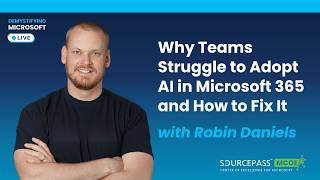
Why Teams Struggle to Adopt AI in Microsoft 365 and How to Fix It with Robin Daniels

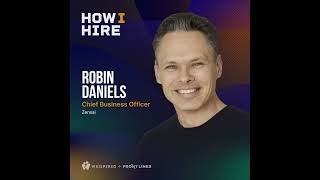
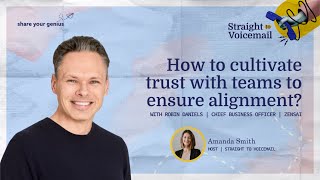
How to cultivate trust with teams to ensure alignment? | Robin Daniels, CBO, Zensai