Zensai CBO Robin Daniels on the 5 Elements of a High-Performance Culture
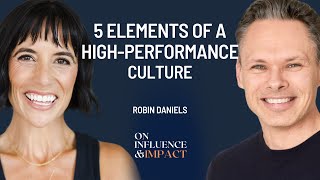
Robin Daniels, Zensai's CBO, built his leadership on connecting with people. He outlines five culture elements: clarity, focus, accountability, urgency, and recognition. His accountability formula rewards both how work gets done and results, tracked weekly through a platform that captures achievements, blockers, mood, and peer recognition.
Chapters
Welcome, Robin. I'm so thrilled that you're here on Influence and Impact. Thank you.
Hi, Amanda. It's good to see you.
You too. We, or at least I had the great pleasure of working with you during our time at LinkedIn. And I guess remember back really being admiring you for your ability to create these incredible people-first cultures that drive the balance between like hardcore results and also a lot of joy. And that's what you embody to me is, is this joy that comes through in everything that you do. So I'm really excited to sit here and just learn from you and share your wisdom and have some fun, hopefully along the way.
The feeling is honestly entirely mutual. I've been a huge fan of you for a long time. I always loved the way you show up for everybody around you and how you lift everybody up. It's such a gift to the world, and I feel honored to have this opportunity to chat, but also it's just great to see you and catch up and like to see you doing well. So I'm excited. I'm excited for this, Amanda.
Tell me about you before we get into all the work stuff. What are some of the moments in your life that have really shaped who you are, how you think about people, community, connection?
Yeah, I am born and raised in Copenhagen, Denmark to two very idealistic hippie parents. And they got together in the '60s and they had three kids, myself. I'm the youngest of three boys. But like many of these idealistic relationships, it didn't really last because I think they were just too dysfunctional together for many reasons. So they got divorced when I was fairly young. I think it was about 6 or 7 years old when it went through. I grew up in a household that had a lot of idealism, but not a lot of practicality around it. The beauty of idealistic people, new age people, like spiritual hippies and so on, is like they, they actually have really grand visions for the world and they're really beautiful oftentimes. And if you can marry that, especially with action and intention and really being specific around the changes you wanna see in the world, That can, I think, lead to a lot of very powerful things. But I think a lot of times what I saw in that community is that their actions were disconnected from their vision of the world. And so there are so many in that community that I grew up in, not just my parents, were very dysfunctional in the world, even though they had all these visions of how they wanted the world to be, they couldn't really manifest that in as many ways. And so I always thought to myself, how can I kind of be the bridge between that? I still love the spirituality of wanting something bigger in your life and seeking for something, this idea that it's not just about the monotony of every day where you're just trying to get through life, but actually there's a bigger purpose behind what you're doing. I love that idea. But also like, how do you actually then make that happen in your life? And how do you marry that with something that's actually good? And then realizing also that the more successful you become in your life, the more you can do for the world. So there's this idea, I think, cuz sometimes what I've seen, especially in that community, is you got this kind of stereotype of the hippie dippies who are so idealistic, but they care about the world. And you got the other side of things where you got the greedy banker all they care about is making more money and so on, but they don't have a spiritual bone. And I think the reality is that most people probably are on that spectrum. They're not either or, but they're a little bit on that. And I always thought, why can't you be both in some ways? I certainly am ambitious in my life. I want success. I want to do well, but it's really in the service of being able to do something bigger. So in terms of that, I thought my superpower, and I learned pretty quickly on early on in my life, was my ability to connect with people. I didn't grow up with a lot of money, And I actually had to go on the streets of Copenhagen. I had to collect bottles and return those bottles to the store to buy food because we didn't have any money at home. And my mom had a nervous breakdown, so she couldn't support her kids. So I learned very quickly to have a lot of grit and perseverance and be able to go on the streets and fend for myself. But I figured out pretty early on, I want to say I was probably 8, 9 years old at this point in time, that my superpower was my ability to connect with people. And I've kept that as my through line in my life. And of course, it takes many different forms and how I've now turned that into leadership career in software and so on. But it doesn't really change the fact that I realized early on that if you can connect with people in many genuine ways, then you can actually create something magical together. My ability was, could I get people to see my situation and have empathy for me and compassion for me so they would want to help me out in some way? But of course, then that only works actually if it's two-way, I think, in many ways.
Yeah.
So I learned that, I think, pretty early on, and I've carried that, I think, As a leader, one of the things I'd like to think that I am is intensely curious about people. I think the best leaders are, they understand the deep motivations that people have to achieve something. One of the things I did when you and I were working together at LinkedIn, I had an offsite for my team and maybe there was, I think, close to about 50 people on that team. So we did an offsite, we went off to this beautiful place and the exercise I did for everyone was show up with a photo that explains why you do what you do every day. What is your deepest why? What is, why, why do you do what you do? What is it that motivates you? And this exercise went beyond all my kind of expectations of it. People showed up and said, I'm doing it to make my parents proud. I'm doing it to get out of poverty because I grew up with this kind of, or I'm doing it because I want to create more happiness in the world. When you get to the deepest reason why somebody does something, then you can also figure out how can I help motivate them? If you want a team to really work greatly together, and I've become obsessed with the alchemy of what makes teams work really well together. It only works if you truly understand people's deepest motivation, what they want to achieve in their life. Anyway, that's part of like why I've gotten on this journey and why we're talking today.
I love it. And already I'm starting to see what shaped you as a leader, right? Where it's like you're integrating these two, not opposites, but like this deeply spiritual, as you call it, the hippie dippy side with the business side. But it's, it's what connects the threads is like connection, curiosity. And purpose is really what's at the core of integrating those together.
Yeah, there are 3 things. Number 1 is purpose. I wanna wake up fighting for something that I believe in, and I want that for everyone, but that can also take many shapes. That can be the mission of the company itself, and oftentimes that should be inspiring, but it can be a small thing as showing up for my team every day. That's inspiring me to show up and do great work. Maybe I don't really care about the mission of the company, but I love working with my team and that's enough. So the motivation can be different, but it doesn't change the fact that I think if you don't have a purpose, it's really hard to show up every day and do the best work of life. So that's number one. Number two is if you are clear on what that purpose is and what— why you're excited about, are you making a difference towards that purpose? It's very hard, I think, to stay motivated day in and day out if you don't know what difference you're making towards that, that grander purpose, right? Again, I'm showing up for my team or I'm showing up for the company and I'm making something happen that's magical. But if you don't know that, the worst is when you have these weeks where you're like, you're so busy, Yes. And you get to Friday and you're like, I was— I worked my ass off, but I don't really know if I achieved— what did I even do? Those are the worst weeks. And we all have— I still have them every now and then. And I'm just trying to make— but if you can honestly look at yourself in the mirror on Friday night and say, I made a difference, I think that counts for a lot. And then the third thing, which has become more and more important, I got on a mission of this, is to work with great people. I don't want to work with assholes. I want to work with people who are supportive and encouraging and cheering me on and want to see me succeed just as much as I want to see them succeed. I don't love politics, political environments, toxic environments. Nobody does. But there's also things you can do actively, and especially as you ascend to leadership, to actually stamp that out. And I've failed sometimes, honestly, if I'm honest about it, when I haven't stamped it out quickly enough. And I've succeeded when I've been very clear around the expectations of people's behaviors as well. But those are 3 things: purpose, impact, and people. Those are the 3 most important things.
Yeah. I love the clarity around it, and it sounds so simple, but it is difficult to implement.
And we're gonna get there.
It's clear even through the beginning of this conversation that the power of culture is so critical for you. How'd you get there? You've been near implosions, IPOs, every stage of everything.
Yeah.
What shaped this ingrained belief in the power of culture for teams?
I, I think for a long time it was something I just took for granted. Like many of us, when we were just like in the thick of things, I've worked at Salesforce and Box and LinkedIn and WeWork, which, you know, like you said, was an implosion, and then Matterport, which we took public. Done a few IPOs, I've done a couple of hypergrowth journeys. And when you're in it, it's very distinct what that culture is like. This LinkedIn culture that we both share, obviously it was very different than Salesforce or Box or even— they were all actually amazing in their own ways, but they were very distinct. But when I was in it, I tried to enhance it and make it better with all my actions. And I was part of it, but also enhancing it. But then I had a kind of a pivotal moment when I really started thinking super deeply about it. I've always been passionate about it. I've talked about this for many years, But then after the Matterport IPO, I ended up leaving that company. I was so exhausted. It was during COVID I was just a little bit burned out. I'm like, I'm going to take a break. I'm going to start advising companies through my network. So I got introduced to all these CEOs all over the world, in the US and Singapore and Germany and the UK, you name it, through my VC connections at Sequoia and Index and all these great companies. They go talk to this founder. And I always thought they wouldn't want to talk about marketing because I've been a chief marketing officer and taken companies. I thought they would talk about marketing or category creation or branding or whatever it is. But actually the number one question I would get over and over again was, how do you create a high performance culture? What is the alchemy that goes into creating a high performance culture? What is it that you've done at Salesforce, at Box, at LinkedIn, at WeWork? Like what worked and what didn't work and can you teach it to us? And so I started codifying this, like putting it down into paper and I've been writing about, but also have a whole kind of course around it. What I talked about in Barcelona last week. Because I would get this question so often again and again. I'm like, okay, people have not figured this out. Of course, leaders and CEOs often will put down some things. Here's what we stand for, here's our values, and so on. But it goes deeper than that as well. How do you actually then make that stick throughout an entire culture? And I've seen it work really well. I think you and I shared the culture at LinkedIn. I just thought they were really good from top down through every layer of the organization. Sharing what the culture was about, the values that we stood for, how we held each other accountable to those values versus other times when I've gone into companies and you see all these kind of quotes on the wall.
And they're just on the wall and that's it.
We're accountable. We hold each other. And this here, we're creative. And then they're like, how do you do that? And you just kind of get crickets, right? So there's, it's obvious that some have figured it out and some have not. And I said, okay, shit, I gotta put this down on paper and start making sure that I can teach it on to other people. All these founders of these great companies who I want to succeed so badly. If they don't figure out the cultural part, which is probably the biggest part of—
it'll fail the company.
So you'll just be your own worst enemy and create all this friction for your growth, which that should not be the thing. So that, that's where it came from.
So I remember when I, we were going back and forth, you immediately said for the topic is we're gonna talk about accountability, joy, and empowerment. Tell me about why those three, if they still are the three core ingredients of creating an incredible culture. Empowerment, joy, accountability. Break them down.
Okay, let's break it down. The first thing I did was try to think about what are the key elements of a great culture, and I broke it down into 5 different things, and I'll just walk through them really high level, then we can dive into each of these. Number 1 is around clarity. The best cultures in the world are super clear on what they're trying to achieve, how that affects every department, and then team, and then individual, right? And you've seen some companies do this really well. You can, but you can use a V2MOM or an OKR or whatever framework you want. It's just about clarity. Now, I always say this when it comes to clarity, it's the most important thing because if you don't have clarity, then everything else is gonna be way off because then you also allow toxic behavior, political environments, because people will be jockeying for themselves. They're not looking out for the greater good of the whole. All the company is, it's a collection of people coming together to try to do amazing things, sometimes small things and sometimes really big things. But if you're not clear on what you're trying to achieve, then that's impossible to do, I think. And clarity is everything. And the key thing I'd like to say to all the leaders that I also try to pass this on to is that clarity doesn't mean that it's always good news. Clarity is just clarity, like be clear with people. And so people, of course, like good news and good plans. They don't like bad news and bad plans. But the worst is uncertainty when you're not clear on things, because then you just let things slide and it creates a lot of toxicity. I mean, really dig into why people are frustrated with their manager or their work environment. A lot of times because they don't know what's expected of them. Because if you at least say what's expected, then people themselves can say either I'm in or I'm out. But if you don't know, then it's just like you're just left in no man's land. That's key reason why 2 out of 3 people wanna quit their job. So that's number 1. Number 1 is clarity. Number 2 is focus. Once you give people clarity, then you also have to pave the way for them to do the work on those key priorities. Whether that's 1 priority, 3 priorities, 5. A lot of companies have 5 to 10 priorities, but then you have to actually say, that 80 to 90% of time should be spent on the things that matter the most. Because the worst is when you get to the end of the year or even the end of the week and you're like, shit, I was so busy, but I don't know if I achieved any of the things that we set out in terms of clarity, what we're trying to achieve. So that's number 2, is it's really hard to do great work if you don't have focus. And that's also why people burn out all the time because they're just spread so thin because you don't have clarity and you don't have focus. Number 3, which is one of the hardest things to do, is accountability. And we can dive into that because it's a big topic. Accountability, not just to the outcomes that you're trying to achieve, but also to the values of how you show up every day. Again, coming back to, you have all these values on the wall everywhere. Okay, but how are you holding people accountable to them? So there's a whole like framework we can talk about there. But accountability is really important and it's very uncomfortable sometimes, especially for new managers, I think, to hold people accountable. But being able to actually go in and say, hey Amanda, what did you achieve this week? And with the attitude of more like, how can I help you? If you're not achieving what you achieve, that's as much on me as it is on you. Maybe I'm not being clear enough, or maybe you don't have the resources, or maybe you don't have the skills and I can help you that. But if you don't dare ask those questions, you're just gonna create a very awkward environment where at the end of the month or quarter you look back and we didn't achieve this thing together, right? Because maybe we're not, I wasn't comfortable holding each other accountable. And then accountability goes two ways, right? Of course. Number four, number four, the fourth—
before we go on, could I say two, two things as you're going? Yeah, of course. This is brilliant. What I love about the accountability piece is two things. One is it really ladders off of the clarity and the focus. Like you can't have accountability without the other two. And I also just wanna call out that I really appreciate that accountability isn't just around the results, but also around the culture that you're trying to create. And I think that's often a piece that gets missed or gets overlooked for the sake of the results that you're trying to achieve.
Let's dive into it before we get to maybe 4 and 5. So I've created this new formula for accountability. I call it the new success formula because I think the old way of thinking about this is that outcome is everything. And I think honestly, if I look at the world, and of course I have my worldview, but it's, I think a lot of the outcome of why the world is in the state that it is because we live in a world where outcome is treasured and valued above everything else. Like it doesn't really matter how you do it or what you do as long as the outcome is there. Look at social media or politics or pollution or whatever it is like, The end justifies the means. You hear this a lot of times. I just think we— the world is shifting so fast. I don't think the next generation, they're definitely not inspired by that. Actually, the how and the what matters just as much as what.
We see that with our late teens. That's all that—
exactly. They're inspired by the next generation. Exactly. And so this idea that outcome is everything is very antiquated, I think. I think it's due to a really misguided mindset around that you can control this. So I think the new formula for success is that input plus output equals outcome, and you should be rewarded in equal measure. Let me explain what that—
let me break it down.
Say that again. Yeah. So input plus output equals outcome. And so in the old world, outcome is everything. Your bonus, your salary is probably tied to outcome in the old world, right? Do we hit this KPI or whatever it is, this goal? But in the new world, an input— what is an input? An input is the way that you are true to the values that you have set as a company. Again, those things that you have on the wall, the way you show up with energy, intention, passion, the way you collaborate, the way you communicate, the way you work well together, the way you lead from the front with courage, all these things you as a human being can control this 100%. And you should be rewarded for that if you show up in that way. So I think part of your bonus should be tied to that. Maybe it's 25% or so on, right? Because you're not holding people accountable to the things you say that really matter. And trust me, this is not easy. It sounds easy, but it's not. If you had a, you have a teenager, if they're being a jerk to me in the morning, of course I'm gonna have that when I show up at the office or somebody cut you off in traffic or all this stuff that happens in life doesn't change the fact that the way you show up to your team, the way you show up on the projects, the way you show up with intention, passion, curiosity, you control that 100%.
Yes.
If it was easy, everybody would do though. That's what separates, like, I think the good from the really great. So that's the input. The output, what's an output? And output is this thing that you do work on together, the end result of it. It could be a new HR policy, it could be a new sales program, it could be a new marketing campaign, it could be a new way that you report on finance, whatever it is, the output that you're doing of this collective thing that you're working on, is it best in class? Is it better than anything we've seen before? Are we proud of it? You can look at something objectively and say, this is awesome. We're really proud of this here. You can also know when you've created something that's mediocre. Okay, but let's ship it anyway. So you know when something is best in class. Groundbreaking news. So you can look at something, this output, and say that should also be rewarded.
Yes.
Maybe that's 25% too, or whatever it is. And then maybe the last 50% should be on outcome. And the reason why I'm so against only rewarding on outcomes, because you can't control outcome. And anybody—
that's right—
who says they can control outcomes, I think are full of it. You can't control— you can affect outcomes, but you can't control it. And so if you're only rewarding people based on outcome, you're incentivizing really toxic behaviors because then suddenly the end justifies the means. But if you're rewarding people and holding them accountable to the inputs, the way they show up, the work that they do. The outcome is influenced by the way you show up and the work that you do. For example, at LinkedIn, when we were there and we wanted to reach $1 billion in revenue for our marketing solutions, right? If we had shitty teamwork and we were really unclear on our priorities and the work we did was— the likelihood of us hitting that outcome, probably minimal, average at best, minimal. But if we show up every day and we do the work, however hard it is, and we work well together, we look at that and say, this is awesome. The likelihood of us hitting that goal is much higher. Could we hit it 100%? No, because you can't control control outcomes, right? So many things can happen that are outside of your control. A global pandemic can hit. Maybe a competitor comes on just 2 weeks before your big launch and does something that's even better than you. Who knows, right? Or maybe it's like a war starts or inflation starts happening or whatever it is, right? And so if you're only again based on outcomes, then you will take all these shortcuts. You will do whatever is necessary, right? I remember when I was at LinkedIn, one of the things I think LinkedIn as a company, could probably have grown a lot faster if we had done what Facebook had done and sold all the data to the highest bidder. Well, also said trust is our number one value. We want to make sure that people trust our platform more than anything else. So we are never going to sell that data to the highest bidder. We're going to protect it and be very mindful of who gets access to this. And Facebook was nearly the opposite, like whoever wanted to buy it, get access. Yeah, they grew much faster, but also look at the consequences of those decisions, right, to the world and the society we live in. And because outcome, the end justified what they thought.
So inherent in this model too is almost like optimizing. It creates a longer-term mindset than just short-term too.
Yeah, for sure. But also I think it's— if the reason why the input matters, it keeps people motivated and it keeps people engaged in this collective thing that we do called work. If you're showing up and the work environment is awesome, we're supporting each other because we want the best for each of us. That should motivate everyone to go above and beyond or at least be part of this thing collectively. And if the output also matters, you also get rewarded by the output you do, then it keeps people aiming high. I want to do the best work of my life. I want to produce stuff that I'm proud of, that it's high quality and so on. And so those two factors really make it, it keeps the internal motivation but also the external motivation going in a really powerful way. And so what I'm advocating is that you can, you could do a third on your bonus plan. You could do 25%, 25, 50. I don't really care, but until you start actually rewarding people based on input and output and you're only rewarding based on outcome, which is pretty much every incentive plan out there today, you're setting up the wrong incentives for behaviors.
Is there a story? Because I love this so much, but is there a story that can bring this to life for you?
When you made this shift, we use a platform where basically we call it the Human Success Platform, where the whole idea of this platform is that On a weekly basis, you do what's called a light check-in. It's supposed to take a few minutes and you're supposed to share 4 core things. One is, what did you achieve this week so I can know how I can help you as a manager? What's stopping you from achieving your things? Okay, okay. What is it? You don't have the resources, skills, the teamwork is not working, somebody was on vacation, whatever it is. Number 3 is, how are you feeling on a scale of 1 to 10? That gives you a quick check. And number 4, maybe the most powerful question is, Who on the team do you want to high-five and give kudos to? Who's helped you have joy and success and impact this week? But who do you want to high-five? And so we, at my company, for example, we're like 200 people, just over 200 people. And I have a team of maybe 60 people, but I have 4 direct reports who work for me. And every week I get the, these kind of check-ins from the team, right? Week after week, there's one person on my team, her name is Anya. The amount of high fives she would get from across all these different departments that I didn't even know she was working with.
So telling for you.
Finance and product and sales and somebody in support just tells me that she is showing up every single day and being such a net positive to their success, the culture, and the way that, that people feel included and a sense of belonging. And that really matters. It's like far and away anybody else, not to throw anybody under the bus, but her, like amount of like kudos from other people consistently was way higher. And so it just told me that the way that she, the impact she's having, and sometimes maybe the results would be even, just if I only looked at results, some of the other people maybe just as good result, but the, the hidden impact of what she was doing was so much higher. So I ended up promoting her. I said, and she hadn't actually asked it. And one of the best is when you can promote people who are not actually pushing for it. And I said, hey, this the, I am seeing the data of how you're consistently showing it, and I want to reward you for that. And I made her the vice president of product marketing, which she is now, but she's a key player in this company because the way that she shows up for everybody around her, and that should be rewarded. Again, comes back to the input that she's showing up with every single day is, is being noticed and rewarded, right? Because we can see that in the data. You can do it as a leader by listening and being very attuned to what's happening. Or you can have a platform that kind of makes that accessible for you. Yeah. So the input was there and then the output as well, like the work she was doing was actually changing our trajectory as a company. It was helping us close more deals and win more customers and all those kinds of things. And so the input and the output was there and I ended up rewarding her for that.
And it's just like— What a great story.
I love it. It's great to see it that like actually be— but it happened. It was just like the way she showed up every single day. Was felt so widely. It's like the spider web of her intention was just coming across in everything that she did.
I love that framework for the weekly check-in. It feels like that's a clear way that you drive accountability or you're able to tactically get there. Are there other tips now that we're on this accountability piece that you're like, ooh, this one works so well, or that one works so well that you can share?
Yeah, I would say the main thing I think is to get comfortable asking, what have you achieved and how can I help you achieve that? I think it's such a key thing. It doesn't matter if you use a platform, you can use Slack, you can use WhatsApp, you can use Teams, whatever you want to do. But being able to check in with your team, because then you also, if you do that first, it sounds uncomfortable both for the manager and probably also maybe even for the employee. It sounds like you're being micromanaged. But over time, if you just start showing up for your team in a way that shows that you care about this so you can actually help, it just starts adding to a culture that we're in together. You get that psychological safety that so many people crave. The first time you get that question from your boss, you're like, so what did you do this week? You're like, shit. You feel like you've been put on the spot. But if you just get, do it in a tone that's friendly and it happens consistently and the person actually starts taking action based on that, they're just asking because they want me to succeed, right? So much of this is about habits. I think this is why that idea of the weekly checking is so powerful. Cause I think the first time, if you just do this in isolation once every now and then, honestly, it's not gonna move the needle.
That's right.
But if you do it consistently week after week It's like trying to go run a race. You can't go run a race if you just train for 2 weeks. You gotta do it consistently. So my tip is really just get in the habit of this. And something actually I learned from Salesforce in the early days, I remember having a manager who would consistently ask me this every single week. What have you done and how can I help you achieve more? I was like, okay, it really made me think about this, this question. And at first, honestly, it was uncomfortable. I felt like, shit, am I gonna be fired if I don't say the right things? Right? But over time I realized, oh, he's asking because he actually just cares about me succeeding. But of course, if I succeed, honestly, he succeeds more.
That's right.
So it's like a win-win situation for everybody.
But I'm gonna push you on that. Cause you, you said it's all about consistency, but I think what you're saying there, the care and the container is just as important as the consistency.
Yeah, I get it. I asked a question on a mini survey, and I think I have enough people connected to me on LinkedIn that it was statistically significant. I asked, how often do you want to actually have a conversation with your manager I don't know, how you doing weekly, monthly, quarterly, or yearly? I asked, I give those 4 options and over 85% said either weekly or monthly. Everybody's actually wanting this already. So if you're not doing it, you're letting down your team as well because they want the feedback, they want the encouragement, they want to know what's going on. And also what's not going on. Of course, the way you do it, to your point, the way you show up with compassion and care and empathy matters greatly. If you're showing up asking those questions, you're an asshole about it. Yeah, of course you're gonna destroy the culture and you're gonna destroy their confidence and they're gonna leave. But if you do it genuinely and you show that you're taking action, you're listening well, and you're actually caring about their outcome because you want them to grow and succeed, it's a very different thing. And so this is this, so the second thing is this idea of accountability also has, there's two sides of it. There's soft accountability and hard accountability. There's both accountability as an individual employee, but also Honestly, as a manager, most companies think a lot about hard accountability because it's the easiest thing. But if I think back on my time as a leader, 90% of the times I'm coaching people or giving them feedback, it's on the soft things, right? The way you showed up in that meeting, the way you communicated to your colleague there wasn't actually ideal for great collaboration. What you said, the words you used, it's a lot of like soft skills, right? So soft accountability, I think, really matters. And this is where if you learn how to do this well, and it's probably a lifetime of practice, I can improve a lot as well. But the way you ask questions, the way you show up. One of the things I learned from a course I took with actually Tony Robbins a long time ago. It's a different stuff, right? So when I first moved to the US, I ended up going to a Tony Robbins course very randomly. Somebody invited me. I'm like, I had no idea what to expect, but I actually changed my life quite a bit. But this idea of mirroring and rapport and creating rapport with somebody really quickly, like the way I would talk to a CFO, versus the way I would talk to somebody who's a VP of brand, who's more sensitive and so on than a CEO who cares more about— you also have to learn over time if you want to be an effective leader and communicator, how to actually have these different and navigate these different personas. You can't treat everyone the same. You will fail as a leader, right? This is why, of course, when you go in front of a big crowd on stage, yes, you're speaking to everyone. But if you're really trying to get to the deep truth of something, you have to learn how to communicate in a way that they can hear you. You're gonna fail.
So to close that, because I think it's an important piece. So there's accountability. You said there's a soft side and a hard side. So the soft side I'm hearing is like really giving feedback or building skills around the soft skills or the being, who, how this leader's being or individual's being. And the hard side, I'm guessing, is that all more around the results?
Yes, exactly. Exactly. Yeah, exactly. It's interesting, but it's also Learning how to— I'll tell you this funny story. I was speaking to somebody who was a Gen Z on my company recently, and she— I love her. She's amazing. She was giving me some feedback. I don't think it was intentional, but she was saying we were just having a conversation over lunch or something. She's saying whenever she gets a Teams message and if there's not like an emoji attached to it, she feels like people are angry at her. And I was like, interesting. It was like such a different way of thinking about things, but it definitely gave me an insight. And she's like, I'm always, when I'm chatting or texting with my peers, my age group, we're always like lots of like symbols and emojis. I'm like, okay, nobody's angry with you. We just have a different, but it's both verbal, but it's also written, of course. And, but the way you actually, if you're trying, if I was trying to get through to her and I was just like being my old school, very matter of fact, she might think that you're pissed. I'm not appreciating. I'm pissed at her. I'm not appreciating her. She's not doing a good job. Her self-esteem might fall. But it's just, you just gotta learn how that every single person has their own—
that's right—
model of communication.
And what I hear in there so much is that takes the art of slowing down for a second to have that conversation. And it's— we move so fast, and so much of what you're describing is slowing down, being curious to learn and adapt and mirror, which is such a key component of how to create the safety to uphold the clarity, the focus, the accountability.
It comes back to the other word you used in the beginning, is joy. I care a lot about creating a joyful work environment.
Is that the fourth one of five?
No, it's not, but okay. Come back to it. The joy is an outcome. If you have that clarity and you have the focus and you give, you show people that you, they care, you, you care and they matter, it creates joy, right? It's an outcome. Like you can't just force joy, but joy is an outcome of other things that are happening in the workplace, of course, right? When you feel like people care about me, they care about my wellbeing, they care about my success, and we're in this together, that, that creates joy. The fourth thing is urgency. That the key trait of high-performing teams is an innate sense of wanting things to happen, not just waiting and waiting. There's an urgency you have yourself, the innate one, and then there's also the urgency that you have as a collective, as a team. I've been in teams where it's like you can tell that there's just different levels of urgency in the team. It can be super frustrating. Sometimes I've probably been the one that's been a little slow because I've been— had other focus, and sometimes it's been me, the one pushing and so on. But a collective sense of urgency is really powerful, but also an innate sense of urgency yourself. If you don't wanna get to the next level and you're not like ambitious in your career, that's fine. But if you are, and I think we're probably speaking to a lot of people who are thinking about leveling up their life and career, that sense of urgency really matters. Showing a sense of urgency, exhibiting that, taking action on things, showing that you want to actually things to come to a conclusion, not just letting things slide. Okay, we'll get to it in 3 days. I'm hungry for a conclusion of this. And driving that sense in a team as well is a very delicate thing. So it's because if you do it too often and too much, it can lead to burnout and people being pissed off and feeling like they're not part of it and hurt. But at the same time, if you don't drive that sense of urgency, I actually think I learned this early again in my career at Salesforce. They were really good. And the way we sometimes was a little artificial, we would set deadlines for, we're gonna launch this thing. Mark Benioff is gonna go and talk about this on stage or whatever it is. But it creates a sense of urgency that we have something. A lot of times you can figure out ways to create that urgency, but you have to at some point have a little bit of being tenacious, being like, I want to, I want to chase this down and so on. The best teams in the world, they know how to do that. I got to say, again, you and I have worked at best teams at LinkedIn. They certainly knew how to do that as well.
It's not just urgency to get things across the line, finish deadlines, but it's also teams that are urgent around, oh, there's a problem over here. How do I go and fix it? It's like, it's going and finding here are the biggest challenges. What can we do? To drive us forward too.
And it's the biggest thing. I think if you're new in your career and you're ambitious for your life, the best thing you could do is take initiative and show up with urgency. Show up, take initiative on things that you see are not working. People will never fault you for it. Be like, you saw, you solved something. That's, you know, of course they'll reward you for it. And if they don't, at least you learn something from it. So go for it, right? What do you have to lose? And then the 5th thing, which I think matters so much for creating an environment of joy and motivation, is recognition. Like we, we too often, and I honestly have been in too, too many companies where you're like, you're working so hard and it's really hard, and then you get to the end of this project and you move on to the next thing already without taking the moment to recognize the insane amount of work that the people did, the team did. And you don't have to overdo it. Doesn't have to be like, oh, you get a huge bonus and blah, blah, blah. You can just be a high five or just a moment of, hey, let's go out for lunch or whatever it is, or take the day off cuz you just worked hard the last 2 weeks or whatever it is. But if you don't do that, I can guarantee one thing will happen. People just over time lose motivation because it feels like nobody cares. So recognizing the great work that people do, and sometimes it should be rewarded with a promotion, more salary, bonus, whatever. But oftentimes it's the small things. Like Dale Carnegie said it super well, like, people work for money, of course, but they go the extra distance for recognition. And it's so true, right? It's like, that's when you feel like you matter. Like, people care about me. There's a sense that I'm being seen. I belong here. That's not just being like papered over all this work that we're doing, all these late nights, and that there will be several of those in your life and career, that they matter, that they actually lead to something, right? And over time, you will just lose motivation if nobody cares.
It's— this is such an interesting one because I see this all the time in my practice, the importance, but also how much leaders struggle with this, both identifying when and where and how to give that recognition. I'm curious Do you have ways in which that's worked for you? Yeah. Do you bubble it up from others? What's, what do you do?
I try to do it as much as I can one-on-one. And the reason why is I feel like it's always a minefield to do it in a group setting with when you're trying to call out too many people, because then inevitably if you forget one or two people, it just creates a lot of animosity for that person. I've done it too many times. They'll be like, hey, but you forgot to call out this person, or this person worked really hard. Or, or if you call out just Let's say I'm leading a team here at Sensei of 60 people, and if I'm calling out certain people, then all of a sudden all the other people start just feeling maybe like, okay, they don't matter as much. So I'm very mindful of not trying to do that. Not because I don't think some— most things people do is actually teamwork. It's very rare that people just do these superhero things on their own. It's usually in a collective, but I'm trying to reward people or thank them on their own. And that's me calling them up, sending them a note. If they're in the office and I see them, I'll go over and tell them to their face if I can. I prefer doing that, but I'm very mindful of not doing it as a collective unless it's somebody getting promoted. Then I'll call it out, say, hey, like Anya, right?
Great.
Talk about she's getting promoted because the way she shows up and give the reason and so on. But I'm very mindful of not doing that too much because it just oftentimes can make people feel like they're not being seen or heard. And I definitely don't want that kind of culture, honestly, for leaders and companies. Go into a room of leaders and ask, how are you recognizing the good work that people do? And oftentimes you just get these blank stares like, always. And this may be the most important thing of all, because if you don't do that— and think about it again, some of the best leaders I've worked with, they knew how to do that. They knew how to recognize the teamwork. It's hard to do though. It is. And I feel like guilty sometimes. I can tell if I've done like an all-hands with my team and I forgot to call something out, beat yourself up about it.
I love all of this. And I can hear some of my early-stage CEOs chiming in my ears saying, okay, this is like All swell for later stage, but this all feels like little moments of luxury for this crazy high growth, insane pace. Any wisdom for how to apply this in that moment when it all is a series of fire drills constantly?
People and teams and companies operate at 3 different levels, tactical, strategic, and epic. And the way I think about it is that I've never seen any company become great if they only do tactical stuff. Day in and day out, which is like the firefighting, fixing things. And so there will always be plenty amount of that. I've never seen a company become great if they focus the majority of the time on these strategic things. And that comes from having a strategy, having clarity on what you're trying to do, giving people the focus, being clear on rewards and incentives and all these things we've talked about. But at some point, you also got to figure out like, how do you go beyond this, that level to something that's even bigger and take the chance on something that's never been done? The way I would define epic issue. Either find something that's so broken you say, shit, that's so broken, we could do it 10 times better, or you do something that's never been done before. There's many opportunities to do that, but it requires courage. And that applies to whatever stage of company you're at. Absolutely. The smallest company I worked at in Silicon Valley was Vera. I was employee number 8, and we went out and got funding and we scaled that. Then I worked at Box and Matterport for about the same size. I joined about 200 people. Now Senseye is about 200 people. So I love that kind of growth stage. And then I've worked at really big companies, LinkedIn, WeWork, and so on. They were a little bit bigger, but these principles really apply to all stages. Even when I came into Verra, I was the first business hire. It was all kind of engineers and the CEO. Okay, what are we trying to achieve? What's the end goal? How are we going to get there? What's the strategy like? But then also making sure that we're accountable to this here. And I didn't use the same words back then, but that was kind of like the formula. I think this applies to everyone, but I even saw the CEO of that company, for example, visionary around what we're trying to do, very ambitious and aggressive, but terrible at the recognition part. Right. And so it's just, it ends up too many people leave, a high retention risk because it seems like nobody cares. I'm working my ass off for you as a CEO and founder to get a lot of money at the end of this, but I'm not, you're not even giving me a high five because of the work I did. So I think these principles, honestly, Amanda, they apply at all levels. They really do. Yeah.
Beautiful. I love all of what you stated around the culture and how to build it. We're now in this wild moment of massive disruption globally with AI. I'm curious, like, what do you feel like this moment now needs or in the future? And does that shift any of this?
I think it needs it more than ever. That's why I'm so excited about this new formula for success. I'm actually writing a book about it because I'm so excited by it.
Hey!
Uh, because I feel like what we need is that if we want to create the world that we aspire to, many of us, when I have these conversations with you or the friends and family who have kids and who are dreamers, maybe like I am, and you are as well, like, how do we then actually put something into the world that matters to people and holds people accountable to this? I think if we let it slide, especially in this world of AI where now it's like you can do pretty much anything, but if you don't have intention behind it, if you're not accountable to the way you show up every day, And I think again, we're going to continue and start seeing this kind of growth at all costs, outcome at all costs. And we're going to have a lot of unintended consequences. And I just can guarantee if you talk to anybody who is alpha generation, Gen Z, that is not the world they want to live in. And I'd like to think that we can model a better world for them.
May it be so.
May it be so. We can do it together, Amanda. I believe in us.
One to one or one to many. So final question for you. What's next for your stage of influence and impact with your leadership?
Yeah, I am the Chief Business Officer of this company called Sensai, right? And so I've run product and marketing and go-to-market, and I love it. But my big passion, my North Star, is basically how can I pay it forward as much as I can? It's like, how can I make sure that I put out a little bit more joy and a little bit more wisdom into the world? And that's what I'm trying to do every day and have the things that I put out there to give people the motivation and purpose that they need to be successful in their life. I'm so lucky. That I've had so many people along the way who believed in me and who've invested in me and given me the skills and the nudges I needed to be successful. And I want to do that both on a one-to-one level, but also at scale to as many people as I can so people can fulfill their dreams, whatever that may be.
Beautiful. Thank you, Robin Daniels. I'm, I'm thrilled. I love how you broke it all apart. Let's see if I can get it right. So it's clarity, focus, Yep. Accountability.
Uh-huh.
Urgency.
Yep.
And recognition.
Oh, you nailed it. That was awesome. Boom.
Got it. Thank you. I love it. I think it's, I love, I'm a huge fan of frameworks, so I love that it's so clear as a way to create a culture that just allows companies and individuals to thrive. Thank you so much.
More from Robin

Why Teams Struggle to Adopt AI in Microsoft 365 and How to Fix It with Robin Daniels

How to cultivate trust with teams to ensure alignment? | Robin Daniels, CBO, Zensai