Ask Conscious Girlfriend: My Girlfriend Is Avoidant... What The Actual Hell?!

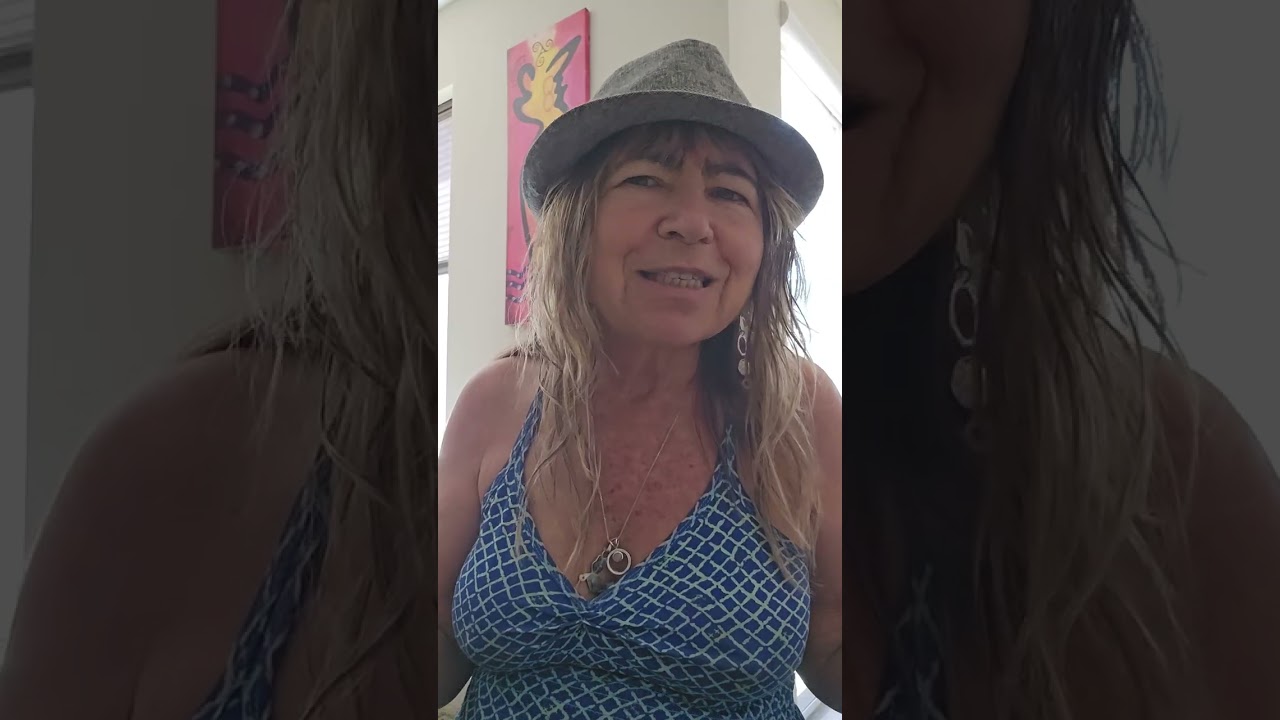
In this YouTube advice episode, Ruth Schwartz, director of the Conscious Girlfriend Academy, answers a listener’s question about an avoidant girlfriend who spent an entire date silent, leaving the anxious partner feeling confused, hurt, and frustrated. Ruth first clarifies the core concepts of anxious and avoidant attachment styles, explaining how they develop from early caregiver experiences and how they manifest in adult relationships. She describes typical avoidant behaviors such as “parallel play” and the anxious partner’s tendency to seek reassurance. Ruth then analyzes the specific interaction, highlighting how the anxious partner’s repeated check‑ins were perceived as demanding by the avoidant partner, and how both parties were reacting from their attachment patterns. She offers concrete communication advice: own one’s own anxiety, express needs without blaming, and invite the avoidant partner to share their preferred way of togetherness. Ruth emphasizes the value of building a secure attachment base—both individually and within the relationship—and recommends the Lesbian Attachment Healing Intensive as a structured way to rewire nervous‑system patterns. The episode concludes with a call to action to explore the Conscious Girlfriend Academy’s resources, including a free excerpt of “Conscious Lesbian Dating and Love.”
Chapters
Hey there, it's Ruth from Conscious Girlfriend Academy doing an Ask Conscious Girlfriend question. So today's question comes from somebody who says, sometimes it's really hard to understand avoidant behavior. I just spent time with my avoidant girlfriend, which was her idea, and she barely said a word the entire time. Honestly, it left me wondering what the point of hanging out even was. As I was leaving, I asked her if everything was okay since she'd been so quiet. She said everything was fine, but when I gently asked again, she got defensive and gave me attitude. I calmly told her I didn't appreciate her tone, said goodbye, and left. I'm just sitting here thinking, what the actual hell? Okay, so this person is feeling really frustrated. Confused, hurt, because her expectations of what time with her girlfriend would be like did not get met. And she describes her girlfriend as avoidant. So for anybody who's not familiar with the terms avoidant and anxious, those are the 2 really common insecure attachment styles. And most of us have some of each. Some of us have more of one than the other. The easiest way to understand these different styles in a nutshell is to know that the person who has more tendency toward anxious attachment is the person who is more concerned with the possibility of losing the connection. That sounds like this person who wrote the question. She's You know, checking in. Are we okay? Are you okay? What's going on? Because she's anxious, you know. Is— can I count on this relationship? Can I count on you? That, that's the place that she's coming from. The person who tends more toward avoidant attachment is a person who is more afraid of losing contact with herself. That will be her predominant fear. It doesn't mean that the relationship is not important to her, but it just means that perhaps she knows she tends to give herself away, people-please, take care of other people. She's done that a lot in the past. She starts feeling invaded, engulfed, crowded. She doesn't want to do that. So her primary concern is, how can I be true to myself? How can I maintain contact with myself? Lots of us, of course, have some of each, right? And depends on what relationship we're in. I personally have found the anxious parts of me have gotten much more activated with some of my girlfriends, and the avoidant parts of me have gotten much more activated with other girlfriends. Maybe you have found the same, or maybe you have sometimes experienced even within the same relationship, sometimes you're more anxious and then the other person comes too close and then you're more avoidant, like, oh, wait a minute, I feel like I'm losing myself here. So it's all common, but it gives us a really important lens for understanding the confusing interactions that often happen between Us and the people that we're trying to be close to, hoping we're close to, getting attached to, building the little universe of our nervous system in the connection with somebody else. Those are the relationships where these nervous system patterns get kicked up the most. And what's really important to understand, by the way, is that nobody makes a conscious choice to be anxiously attached or to be avoidantly attached. These are nervous system coping strategies that we mostly developed very early in our lives in response to however our parents or primary caregivers were with us, whether we learned that we could count on them, whether they were reliable, whether they were resourced and adult and mature and steady and available to us. Most of us were not lucky enough to have caregivers that were like that all the time. And so if your people taking care of you were very intermittent or inconsistent, you may well have developed a pattern of feeling anxious in your connections. Are you gonna be there for me? How can I know? Are we okay? If, on the other hand, the people taking care of you were really standoffish or critical or judgmental, or, you know, seemed to care about you more because of your achievements than, than you, who you were inside, if they made you feel like you were a bother, things like that, you likely developed more an avoidant style because it didn't feel safe to try to be close to those people. It felt safer to go off by yourself and take care of yourself. Both very understandable patterns, right? And if your caregivers when you were a kid were extremely inconsistent to the point where sometimes they were scary or abusive— maybe they had mental health issues, maybe they had substance abuse issues— some of the time they would be kind, some of the time they would beat you up or verbally abuse you or sexually abuse you, then you likely developed what is called fearful avoidant attachment as your primary nervous system template, which is craving connection but also fearing it at the same time. Again, super common, right? None of this is any of our fault, but it's really helpful to understand it because it shows up often in painful and confusing ways when we're in primary relationships or attachment relationships. So back to this question. So the person says her girlfriend is avoidant, and my sense from reading her letter is that she's on the anxious side. So they spent time together. The girlfriend barely said a word the entire time. So this letter writer, the anxious person, said, honestly, it left me wondering what the point of hanging out even was. So it sounds like she had a hope from the hanging out that they would be talking, that they would be connecting. Now, one thing that often happens with people that are more avoidantly attached is that sometimes they want to They want to spend time with their special person, but they don't want too much to be demanded of them. Oftentimes people that are more avoidantly attached really like parallel play, for instance. So like, let's just sit in the same room, you read your book, I play my video games, or whatever it is. We're together, but it's kind of like togetherness lite. L-I-T-E. Some people really love that way of being together. People that are more on the anxious side tend to want a much more active style of engagement and tend to feel, as this letter writer did, like, well, what's the point of even being together if we're not talking or, or being physically affectionate or being sexual? In that case, I'm not feeling connected enough if we're just kind of sitting in the same room and not talking. So if I'm on the anxious side, I'm going to feel like, well, what was even the point of hanging out? So, and I'm also going to feel anxious, like, is something wrong that I don't know about? How can I find that out? So that's where this letter writer is coming from, as I, as I understand her question. And so her way of dealing with that was, as she was leaving, to ask her girlfriend, is everything okay since you were so quiet? The girlfriend said, yes, everything's fine. But the letter writer, being on the anxious side, didn't believe her. So, she asked again, gently according to her, well, come on now, is everything really okay? The girlfriend, who's more on the avoidant side, got annoyed. Like, wait a minute, what are you— you know, stop bugging me. What are you asking for? One of the characteristics of people that run on the avoidant side is that we— I'll use we when I'm talking about both because, as I said, I do have some anxious in me and I do have some avoidant in me. So when any of us are in our more avoidant side, we often feel quickly criticized or blamed, and it tends to feel like the other person is demanding something from me. And often I either don't even understand what it is, or I just don't want to give it, or I don't feel able to give it. I don't feel like I have that capacity within myself to give it in that moment. And so it's stressful to have something being asked of me that I can't give or don't know what it is or, or just don't want to give in that moment. So it sounds like the person with the avoidant attachment responded from that place of stress. The letter writer says she got defensive and gave me attitude. I don't know exactly what that means. But I know for me, if I were in that situation, if I were on the more avoidant side, I might feel like, come on, I just wanted to spend time with you. We spent time. What's the big deal? You know, it's like, wait a minute, I didn't know that you were going to have some hidden agenda here. I'm fine. I wanted to see you. We spent what I thought from the avoidant standpoint was maybe a perfectly nice time together, but it wasn't enough for you. Here you are kind of trying to extract something else from me. That's how I would feel if I were on the— in my avoidant side. Now, if I were in my anxious side and I'm always tracking for, you know, are we okay here? Are we good? Are we connected? Are you really in this relationship? Can I count on you? Do you still like me? Do you still love me? Do you still want me? That's when being around somebody for the afternoon or evening and having them not talk much would give me this gnawing feeling. And I remember the last time I was in a relationship where I had this happen. I watched myself in this position. I remember one specific day where my girlfriend at the time and I took a walk on the beach. And it was a lovely walk, beautiful scenery. She was being quite quiet, and I was watching myself feeling anxious. Like, does her quietness mean something? Is she upset with me in some way? Is she wanting something different? You know, going back in my mind to the last time we had seen each other, was there something Some holdover from that that I hadn't been aware of, but that was causing a wedge between us now. And as I was having all these anxious thoughts in my mind, at the same time I was thinking, come on, Ruth, you're making a big deal out of this. Everything is probably fine. We're taking a beautiful beach walk. She's being quiet. There's nothing wrong with being quiet. I myself like spending time in quiet with my special person when I feel confident that we're in a good place with each other. So it was a very uncomfortable experience. Now, because I was watching myself in this anxious place, and I knew it was probably generated in my own head, I didn't say anything to my girlfriend about it. I didn't do what this letter writer did. I didn't say, are we okay? Are we really okay? Is everything really okay? But I was also not completely at ease and relaxed, right? Because part of my mind was generating these anxious thoughts. Or I should say part of my nervous system was generating these anxious thoughts. My guess is that Even though I wasn't saying anything, my more— my girlfriend, who was more avoidant than I was, was picking up on something. And so likely she was not completely relaxed either. And this is how 2 girlfriends, you know, any 2 people in a romantic relationship, but here we're talking about lesbians and queer women, Can get in this kind of really uncomfortable pattern where we're both trying to read each other. She was probably thinking, is everything okay? Did I do something wrong? Are we okay? I'm thinking, is everything okay? Did I do something wrong? You know, but, but she also was likely feeling like, wait a minute, I don't want to have these unspoken expectations. I just want a nice quiet walk on the beach. So when I look at it from this perspective, I feel a lot of empathy and compassion for both of us. And I hope that perhaps you do too, because out there in the world, when you start, you know, reading or watching YouTubes about anxious and avoidant people, a lot of times the avoidant people get a bad rap, like there's something wrong with them. They're not good partners. away from those avoidant people. Honestly, I think it's quite challenging, uh, to be with an anxious person. I think it's quite challenging to be with an avoidant person. It's quite challenging to have the inside experience of somebody in a more anxious state, and it can be quite challenging to have the inside experience of somebody in the more— which one did I say last time? Okay, both experiences, anxious and avoidant, Are both quite challenging on the inside. The most comfortable experience on the inside and on the outside, you know, to be experiencing in yourself and to have coming at you from your girlfriend or partner, is the securely attached experience where we have resilience, we have ease, we have a comfort level with one another, and then we're not constantly tracking. Are we okay? Is she encroaching? Is she demanding too much? Is she withdrawing? Is she pulling away from me? And this is the hope when we're in a relationship that over time, both with each other but also within ourselves, we're building more and more secure attachment. Honestly, I think that the best thing to do is build this kind of secure attachment base inside of yourself, whether you're in a relationship or not. You can absolutely work on this while you're single and then carry it with you into future relationships. Otherwise, when you get in a relationship, if you haven't built this secure base inside yourself, you're likely to swing either toward the anxious Or toward the avoidant, or perhaps swing back and forth between the two, which is going to be really painful and uncomfortable both for you and for your special person. So what would I advise this person to do differently in the relationship? Well, quite a few things. One is at the end of this time together with her avoidant girlfriend. She was feeling anxious, but rather than saying, "Hey, you know what? I'm feeling a little vulnerable. You know, because you weren't that talkative tonight. But I know this is probably my stuff. But I just kind of want to check in and see, are we okay?" That would have been easier for the girlfriend to respond to because instead. Instead of owning her own stuff and saying, you know what? I'm feeling anxious, but I know there's a good chance this is just me. She said to her girlfriend, is everything okay? Basically, like, are you okay? And then when her girlfriend said, yes, everything is fine, she was. Still feeling anxious, and so again, rather than owning it and saying, "Wow, you know what? I hear you saying everything's fine from your perspective, but I'm still feeling anxious. I think I need to go do some work on that." She could have said that verbally, or she could have just thought that. Instead, she quote unquote gently asked her partner again, "Well, really, is everything okay?" Her partner at that point got annoyed. That's my interpretation. What she says is that her partner got defensive and gave her attitude. And then she says, I calmly told her I didn't appreciate her tone, said goodbye, and left. Okay, so what that means is that she started finding fault with her Girlfriend's tone, quote unquote. She was not copping to how she might have contributed to this tone by saying, "Is everything okay?" No, wait. Is everything really okay? She wasn't owning her own anxiousness, and that that can be quite challenging to be in relationship to. And so she's now saying, "I'm sitting here thinking what the actual hell." No. She's really attributing the problem to her avoidant girlfriend rather than looking at the truth, which is the problem honestly is that people who are more on the anxious side are extremely attracted to people who are more on the avoidant side. People who are more on the avoidant side are extremely attracted to people who are more on the anxious side. So we get in these relationships, we get polarized, and then we find fault with each other rather than realizing, oh wow, wherever I go, there I am. I am a common denominator here. I'm guessing— I don't know for sure, but I'm guessing that this letter writer who's more on the anxious side Has likely had other relationships with people on the more avoidant side. Probably this more avoidant person has also had other relationships with people on the more anxious side. So they've both got some scar tissue built up. The anxious person has gotten more anxious. The avoidant person has gotten more like back away. Just leave me alone. What do you want from me? However I show up, it feels like it's. not enough for you. That's a pain point, a repeated painful experience that people on the more avoidant side often have. Like, whatever I do, it's not good enough. You always seem to want something more. Sound familiar? If you've ever had that experience, probably you were in— you're more avoidant when you were having that experience, and you were with somebody Who was showing up more anxious. So what is the solution to this kind of pain? The best solution I have ever found is to work on our own attachment styles. And again, you can do that if you're single, and you can do it if you're in a relationship. But it's super healing when you are in a relationship with somebody who has the opposite Tendency to own your own stuff. And so if you're on the more anxious side, to be able to say, you know what, I appreciate that you wanted to see me tonight even though you weren't feeling that talkative, and I love you just the way you are, and I own that sometimes I get scared, sometimes I get anxious, and I know that's my stuff, and I'm gonna work on that. Because I don't want to put it on you. Wow! If you are the more avoidant partner and somebody says that to you, what a relief. Now, on the other side, if you are the more avoidant partner and you want to help your anxious person feel less anxious, if you can say something like, you know, sweetie, I know I was in a really quiet mood tonight. It doesn't mean there's anything wrong. It's just kind of how I was. I hope that was okay for you. I understand it might have brought up a little bit of anxiousness. And I just want to tell you, like, we're, we're fine. And I, I just, I felt like being around you tonight, but I just, I didn't have a lot to give in a certain way emotionally. I just kind of wanted the, the comfort of being in your presence. I hope that was okay for you. If I were the anxious person in that situation, wow, what a relief it would be to hear that, to have, you know, my person acknowledging what was going on for her and, you know, preemptively assuring me we're okay. Now, in the absence of being able to really work with and own our own attachment tendencies and the characteristic states we get into, whether anxious or avoidant or some of each. What we tend to do instead is point the finger at the other person, blame them. And that's what I see this letter writer doing. Like, what is it with avoidant people, you know? What the actual hell? And the avoidant girlfriend was probably thinking, what is it with these anxious people? We spent the whole evening together. I thought we had a nice evening. Obviously, she wasn't satisfied. She had to keep asking me if we were okay. I told her we were okay. She didn't believe me. She had to ask again. What the actual hell with these anxious people? And so quickly, These 2 people are getting more and more polarized and feeling less and less safe, less and less understood. If this dynamic resonates with you, in other words, if this sounds familiar to you, if you've experienced being on either side, what I would really suggest to you is that you check out our class on Lesbian attachment healing. We had a four-week class, Lesbian Attachment Healing Intensive, and many conscious girlfriend people said this was one of our most impactful classes. They got really life-changing information from it. I got so many emails after that class, so many testimonials because the thing is these dynamics are. Super common, partly because most of us did not get what we needed as small people. Most of us have some anxious in us, some avoidant in us, or both. And as I said earlier, we are specifically attracted to people who show up with the opposite strategy. If you're very much on the anxious side, you likely don't feel attracted to people who show up with secure attachment. They seem kind of boring to you, or there's not enough of a zing, or there's not enough intensity. If you're very much on the avoidant side, you're also probably not so attracted to people with more secure attachment. You're drawn to that person with her anxious attachment, and then the relationship feels really difficult. So the healing approach is to rewire your own brain, your own nervous system, toward more and more secure attachment yourself, which is what we talk about in that Lesbian Attachment Healing intensive class. There are actually lots of ways to do that. And as I said, if you're watching or listening to this now and you're single, You're in a great position to do this because you don't have to worry so much about somebody else either pulling away from you or pulling on you. You just got you with you, which for many of us is complicated enough. And you can work on healing your own attachment template while you're single. The more of that you do, the more resilience you'll have in your next relationship or any future relationship, so that if somebody is more on the anxious side, you won't be as reactive to them tugging on you. And if somebody's more on the avoidant side, you won't be as reactive to them doing things that you interpret as pulling away from you. And you will more likely have more capacity to be attracted to people that are showing up more securely attached themselves because like does tend to be attracted to like and to attract like. I think I've kind of circled around here, you know, so to the letter writer, just to finish this up, I want to say I get it. It is hard from where you sit to understand the other person's needs. The needs of the person that is more avoidantly attached. And what I really urge you to do is search through your own memory banks. Did you ever feel that someone was showing up anxious with you, tugging on you, asking you repeatedly if things were okay? Can you remember that experience at all? Oftentimes, if we can remember That kind of experience ourselves, it helps us have more empathy. And empathy is a superpower because in the absence of empathy, we so quickly get into this polarized place of I'm right, you're wrong. What's wrong with you? Nobody wants to feel that in a relationship. You don't want to feel that coming at you. Nobody wants to feel like the other person is thinking what's wrong with. What's wrong with you? And nobody wants to feel that painful feeling of being misunderstood, disconnected, or pulled on. So I get it. I get that it was painful and scary and confusing and frustrating. But rather than criticizing your girlfriend for her tone, it will help. It helps so much if you can take responsibility for your own anxiousness. And then ideally at a time when neither of you is triggered, actually have a conversation about, hey, what is it that we're both wanting and hoping for when we hang out? Like, it may turn out that your girlfriend loves to just spend time in the same space without a lot of active connecting, at least some of the time. Is that going to be okay for you? You know, it may turn out that that makes you too anxious, or it may turn out that once you understand that that's often what she wants and needs and craves, and it doesn't mean that there's anything wrong, you might also be able to relax into it. And either way, I would definitely recommend for both of you and for pretty much every lesbian and queer women, uh, to check out the Lesbian Attachment Healing Intensive. Because as I said, I got so much feedback that that was really a life-changing class. Um, thanks for being here. Lots of love. I am Ruth Schwartz. I'm the director of the Conscious Girlfriend Academy, which is a global organization devoted to helping lesbians and queer women and adjacent queer people including non-binary people, to prevent heartbreak, date wisely, and love well. We've got so many resources to help you do all of those things. So if that sounds good to you, if you want to prevent heartbreak— who doesn't? If you want to date wisely— who doesn't? If you want to date at all, we got to date wisely, right? And if you want to love well, which I think deep down inside all of us who want to love and be loved, of Of course we want to do it well. Definitely check out the resources at the Conscious Girlfriend Academy website. You can also download part of our book, Conscious Lesbian Dating and Love, absolutely free on the website. So go check it out. Lots of love.
More from Ruth


Lesbian/Queer Bedroom Communication: How To Know What You Want, & Get More Of It

coming out later in life? here's how to go from isolation...to a warm, welcoming lesbian community.



The worst lesbian breakups of my life, and what I learned (and how it can help you save YOUR heart)

The #1 Cause of Lesbian/Queer Fights & Breakups, And How To PREVENT and HEAL Attachment Wounds

The remarkable new movement changing lesbian lives around the world -- and how you can be part of it


Love Letter To An Amazon: Celebration Of Butches, Mascs, Studs & MOC Lesbians & Queers