How to Stop Lesbian Fights: Understand and Heal Your Attachment Style
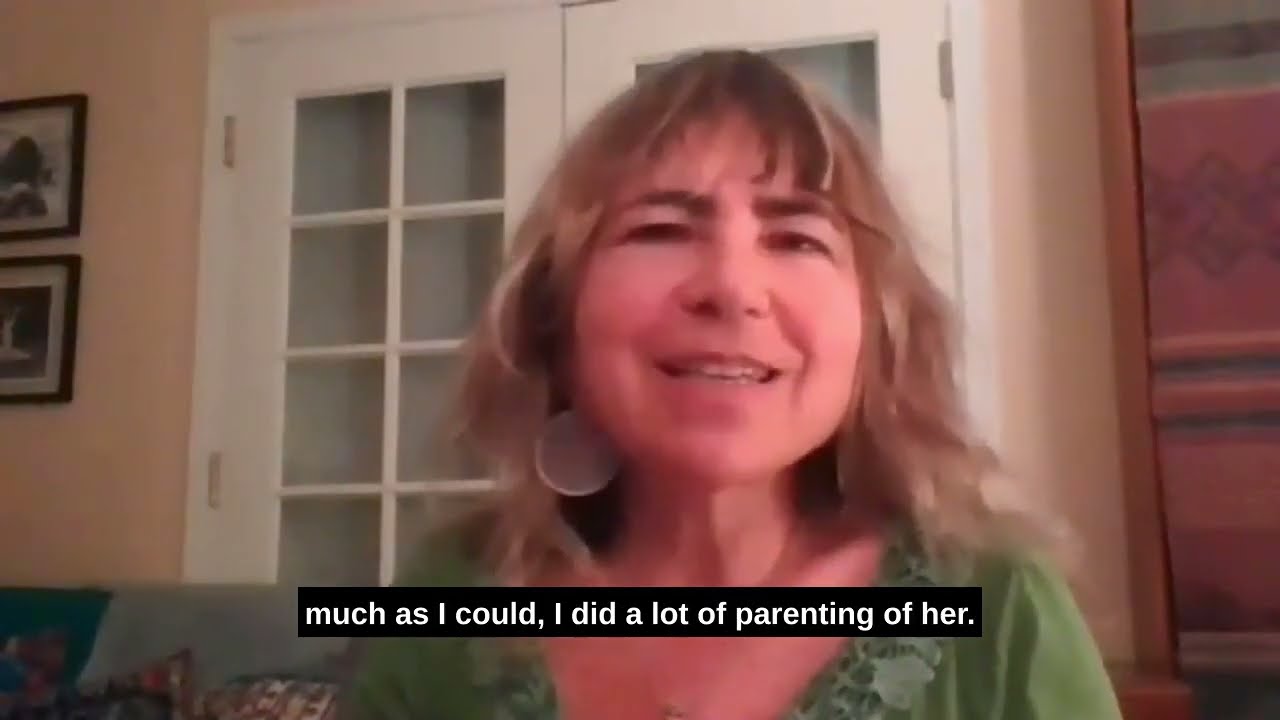
Ruth Schwartz explains why lesbian couples get stuck in push-pull cycles: one partner's need for closeness triggers the other's need for space. These patterns come from early attachment styles (anxious, avoidant, secure, disorganized) that live in your nervous system. Earned secure attachment can be learned through intentional work.
Chapters
Hello everybody. I am so glad to talk to you tonight about a topic that I know is dear to most of our hearts when it comes to thinking about relationships. And the informal title of this talk is How to Make Love Work Even When You Need More Closeness and She Needs More Space, or Vice Versa. Because I think all of us have experienced at times, and sometimes frequently, and sometimes very painfully that dynamic in a relationship where even though in the beginning it seems easy to work out these things because we're in the honeymoon stage and we both want to be together all the time, oftentimes as things go on, as time goes on, a really painful polarity will develop between 2 people where one is always pushing for more and the other one is always trying to get away and have a little bit more space. And both people in this dynamic get incredibly confused because they love each other, they want to be together, and yet they get locked into a pattern which is literally a physiological nervous system pattern. And I'm speaking from personal experience here. I have been on both sides of this divide in different relationships. I have been the one who Just felt like, you know, how can somebody who loves me treat me this way? Why won't she spend more time with me? Why won't she get emotionally closer? Why doesn't she want to have sex more often? Why aren't I more of a priority for her? And it was excruciating. And then I have also been on the other side of the dynamic where I have had girlfriends that felt emotionally starved by being with me. And, you know, they just— they just needed more. They needed more of my time. Mm-hmm. They needed more commitment from me sooner than I was able to give it, and they kept pushing and pushing me. And the more they pushed, the more I felt like this, like I had to back away. And in both cases in, in my past, those dynamics were relationship killers. And with what I know now, I can see that they actually didn't have to be. So if you have ever been on either side of this equation, the wanting more when she needs more space, or the having her want more and you need more space, and gotten locked into this painful dynamic, I want to let you know that there is hope. And the hope comes not only through the Conscious Girlfriend tools that I have been teaching and sharing for a long time, although those are very useful too, But from what I'm calling the life-changing science of attachment styles. Now you might have heard of attachment styles already, or this might be a new phrase for you. Psychologists have basically been talking about attachment styles since the 1950s, which is, wow, 70 years now. But just recently in the last 10 years or so, there has been an explosion of research and understanding on this topic, and really a lot of therapists and researchers bringing down what had previously been fairly heady conceptual material that, that only therapists and psychologists knew much about and didn't really know how to put into practice with their clients, to now a tremendous amount of research showing exactly how and why this dynamic of One person pushing for more and the other person backing up in response, or one person backing up and the other person pushing for more in response. It doesn't really matter actually which one started it, and it becomes quickly impossible to figure out who started it. Fortunately, it doesn't matter. What matters is understanding what is really going on when this happens. and how we can change it. So the more formal title is The Life-Changing Science of Attachment Styles. And I'm Ruth Schwartz. If you don't know me, I am the co-founder and director of Conscious Girlfriend, which is all about helping lesbians and queer women, women who love women in general, date wisely and love well. And I have a PhD in transpersonal psychology. I've been working with individuals and couples for 17 years now. I have published 8 books. I've taught at 6 universities, done lots of transformational and healing study as well. And I have also walked my talk over and over again for many years. I came out and got in my first relationship with a woman in 1982 when I was 20. So I've been a part of our community for a long time, and I have been around the emotional block. I've been through a lot of heartache and challenge and confusion, relationships that I hoped would work that ended up shattering. And so along the way in that journey, around 2013, I committed myself to offering tools to our community To help us, all of us women who love women, date more wisely and love better. And by what I— what I mean by that is date in such a way that we are doing what's smart for our heart. We're not just plunging all the way in toward heartbreak, but we're also not standing out on the shoreline afraid to go ever near the water again. Because I see a lot of both in our community, and there is pain again on both sides. I mean, and oftentimes women will plunge in without enough understanding or forethought or skill over and over again, just fall madly in love, bond quickly, you know, not necessarily the physical U-Haul, but oftentimes the emotional, the energetic, maybe the sexual U-Haul on the second date. And then things will fall apart, sometimes within a few months, sometimes in less than a year or within a few years. I have seen that. I have lived that. I don't want to do it again. If you're watching this, probably you don't either. So that's a lot of who I work with. And on the other side, I've also seen a lot of women get so burned and so, so scared. by that kind of experience over and over that they just decide they need to stay out of relationships altogether. You know, I've had women say things to me like, if I'm attracted to her, I know she's going to be bad for me. And to me, that is tragic because I know as a community of women who love women, we are brave, we are resourceful, we are powerful, we are loving. And so whether you are just in the coming out process right now, or you have been out for decades, it's not easy to come out. It's not easy to, to, for many of us to admit to ourselves, much less tell all the people around us that we are women who love women. And when you have been on that journey, it is because a part of you so deeply knows that that is what you want. That is what you need. That is what your soul longs for. And so my work is all about helping you do that, that dance and give and receive love with another woman or women in a way that really works for you, that brings in the love that you seek and gives you an outlet for the love that you seek to give. And so that's, that's what Conscious Girlfriend is all about. So let me go more back to the topic of tonight. Because I want us to understand better why this dynamic so often occurs when one person just wants more and starts feeling emotionally starved, unloved, uncared for, not made a priority, and the other woman is there thinking, I really love her, but I can't, I can't access those feelings. I'm overwhelmed. I'm overloaded. I just need some space. I need more time to myself. What she's really saying, although she may not know it, is, I need to regulate my nervous system, and I won't be able to access my love for you until my nervous system is more regulated. Well, meanwhile, the other woman who's needing more closeness is saying without knowing it, I won't be able to regulate my nervous system until you get closer to me because I'm looking to regulate my nervous system through you. And by the way, this is not a bad thing. We actually all regulate our nervous systems in relationship with each other. That is how human beings are wired. It's how we're designed. But it's also why it becomes so incredibly Painful when we are triggering each other and we can't get back to that co-regulation state. So what's the nervous system? The nervous system is the part of the brain that helps us process all the stimuli. You know, if you're walking around in the world, you know, there are literally thousands of things that you might be thinking about, aware of, hearing, smelling, touching, navigating all at once. And so it's very easy for a nervous system, a human nervous system, to get on overload in our overloading world. And so as infants, we all developed strategies for how to soothe ourselves, how to calm ourselves down when stress was too high or when our nervous system started getting overloaded. And some people developed the strategy of regulating their nervous systems primarily through closeness with other people, and other people developed the strategy of regulating their nervous systems primarily, or when they were under greater stress, by kind of hunkering down, pulling back, going into themselves. We all need both closeness and autonomy. Every healthy relationship has both. We don't all need them in the exact same ways, in the same proportions, But we all need both. So neither person is right or wrong. Neither way of regulating the nervous system is better or worse, but they are deeply wired into us in ways that we didn't consciously choose. This happened all— these patterns got set into our brains before age 2. We didn't choose them, and we can't consciously change them. At least we can't change them just by deciding to change them. There are ways we can change them. Fortunately, through the miracle of neuroplasticity, which scientists understand much more in the last 10 or 20 years— they used to think that what you learned before age 2 had to dominate and dictate your entire life. Fortunately, what we now know is that the brain is plastic, not plastic like Tupperware or the stuff that pollutes the oceans, but plastic in that it is malleable, it's changeable. Mm-hmm. You know, if you think about literal plastic, it can melt and be reshaped. And that's part of why trauma affects us so deeply, because our brains got kind of melted and reshaped by whatever traumatic experiences we've had in our lives. But it's also why there is such a profound possibility of healing. And so much of the Conscious Girlfriend work is based on understanding that when we work with our brains, our nervous systems, our thoughts, our emotions, And each other in the right ways, we actually heal, not just making an individual one-on-one relationship better, although that's a huge valuable goal in itself, but we actually heal so that all of our relationships can get easier, including the relationship that each one of us is in 24/7, 365 days a year, Which is the relationship with ourselves. So in relationships, there is tremendous possibility for healing, as well as unfortunately tremendous possibility for damage when we are showing up without the right skill. So what I want to give you a brief overview of tonight is how you can better understand this push-pull dynamic that happens so often. And how you can work with it both within yourself and with another person so that it doesn't have to take over. It doesn't have to destroy your relationship. And if you're in a relationship now that has that dynamic, it's fantastic that you're here. Hopefully you can put this into practice. If you're not in a relationship right now, it is totally fantastic that you're here. Because I love working with single women. Because it's actually in some ways the best time to gain new relationship skills because it's simpler. You're not all, you know, enmeshed with someone else trying to figure out what's her stuff, what's your stuff, whose trigger is this, how do you work it out. So you're in a perfect position to just develop and take in new abilities, gain new competencies. on your own and then bring them into your next relationship. So whatever your relationship status is right now, I am so happy that you're here. So, and this is a complex topic, and so I want to say that a little later on in this call, I am going to offer you a chance to sign up for a 3-week attachment healing intensive Which I am super excited about because tonight's material is only going to, I hope, whet your appetite and make you know that you actually need to go even deeper with this topic to get the change in yourself and in your relationships that you seek. So I offer you a chance to do that at an incredibly affordable price. And I'm going to give you as much as I can. Tonight. So let's go back to the concept of attachment styles. I'm not crazy about the word style because it makes it sound kind of like a hairstyle or, you know, something optional that you could change at any moment, like different hairstyle. Attachment styles are not like that. As I said earlier, they basically are blueprints. They're templates inside your brain about what's going to be possible, what you're going to receive and not receive, what's going to be safe and unsafe. In a relationship, and they developed early in your life in response to however your parents or your primary caregivers were with you. It doesn't necessarily mean your parents did anything wrong, but lots of our parents were, you know, distracted or preoccupied or maybe depressed or maybe had substance issues. Most of us did not get ideal optimal parenting, and if you did, you are incredibly fortunate. But most of us didn't, and even if we got it some of the time, we didn't get it all of the time, which in itself is very confusing to a vulnerable infant brain. So we developed our attachment styles as an adaptation to whatever was happening. whatever was available or not available with our parents or whoever was taking care of us when we were really little. Researchers have identified 4 main attachment styles. Different researchers give slightly different names to them, so I'm just going to give us one system. If you're doing more research into this topic, which is fascinating, you'll be able to correlate The names I'm using with, with other names, but what I'm using I think are the most common. So, um, if your parents were there some of the time and not there some of the time for whatever reason, or like in my case, my parents were very young, they were 18 and 20 when I was born. The first time that my mom held me was the first time she had ever held a baby. So she was kind of a kid in some ways, and I, as you know, as much as I could, I did a lot of parenting of her. That tends to create what is called an anxious attachment style, where we're always reaching out for more from whoever we're with. Now, if your parents were critical Or neglectful or abusive. Or perhaps they just were following Dr. Spock at, you know, a moment in time when Dr. Spock said, let your baby cry for hours and hours, you know, only go in to feed your baby at this time and that time, but if she cries the rest of the time, just ignore her. Unfortunately, that was the best advice. at the time. Well, it was the prevailing advice at the time. It was not good advice. That kind of dynamic creates what is called an avoidant attachment style. Anxious and avoidant are pretty clinical terms, so I also like to use the terms that a psychologist named Stan Tatkin came up with. He calls the anxious style the wave. The wave, like if you think about the waves in the ocean, the waves are just like churning and breaking against the shore. That's the person in the relationship that tends to be wanting more. And he calls the avoidant attachment style the island. So if you think about islands, they're more self-contained. They're more independent. They're less quick to show their feelings. And typically, islands and waves are attracted to each other, right? Because we're often attracted to our opposite, somebody who holds down the opposite polarity in some way. But even if you are both waves or both islands, so let's say you're both fairly self-contained, independent, mature people that tend to take care of yourselves. When you get together, one of you is going to be a little bit more, at least a little bit more like that than the other. And so guess what? The person who is a little bit less islandy is then going to play the part of the wave in that relationship. Same thing happens when 2 waves get together, you know, 2 people that both like a lot of contact, a lot of connection, you know, the kind of people that would be fine, like We can live in a studio apartment together and spend every night in the same bed and, you know, spend most of our days and nights together. Personally, that would drive me crazy. But there's nothing wrong with that way of being, especially if both of you want the same things. But even when you have 2 waves together, you got it, one of them is going to be wavier than the other. And so the one who's a little bit less wavy is then going to end up playing the part of the island. And this same painful push-pull dynamic will tend to recur. The reason why I bring this up is because oftentimes people who have just learned a little bit about attachment style think, oh, as long as I find somebody who's got the same attachment style as me, I can avoid these problems. I wish it were that easy. It's not because you're never going to be identical. And so these same push-pull patterns based on your nervous system template will tend to recur in just about any relationship, unless you have the holy grail of relationship styles, which is what's known in research as a secure attachment style. If you had incredibly well-resourced, consistent parents who had their own support systems, were really well prepared emotionally, physically, financially to have you come onto the scene as a kid and you didn't have intense pain or illness or other trauma in your first couple years of life, you may have emerged from your childhood with an inherent resilience. And it is a wonderful thing if you got that. People with relatively secure attachment styles are much more able to ride with the ups and downs of a relationship. So, you know, let's say Jane has a pretty secure attachment style, and let's say her girlfriend Sally is really stressed out at work, doesn't have much time to spend with her for some period of days or weeks or months. Jane can handle it because she feels secure in the relationship. She knows Sally loves her. On the other hand, let's say Sally goes through a time of feeling really needy. She has some, you know, deaths or some difficult experiences in her life. She, she like wants to be with Jane all the time. Jane can handle that too because her nervous system is geared to tolerate both distance and closeness. So most of us were not lucky enough. Research varies. Some research indicates that a slim majority of people emerged from childhood with secure attachment styles. That is not what I see, and it's not what I see in the community of women who love women. Part of that, my theory is that relationships with women are actually— have the potential to be much more rewarding because as 2 women we can bond so much more deeply, get to so much more intimacy. But that also means that our relationships tend to be more demanding. So even if you might have been relatively more securely attached in a relationship with a man, and I hear this kind of story all the time, women that were in long heterosexual marriages, it was relatively stable, then they realized they want to be with women, they come out, they get involved with a woman, and it's like, oh my God, this is a roller coaster. So personally, I think as women with women, Most of the time we have to deal with attachment issues, but you can work with some of the tools that I teach in the Attachment Healing Intensive. And if you're in a relationship, you can also work with your partner to implement different ways of being so that over time you can get to a state which is called earned secure attachment. That means that you didn't necessarily emerge from your childhoods, either one of you or both of you, with secure attachment, but you earn it with each other. You build a level of trust over time together so that each of you becomes more and more resilient. And that is the promise, how you can get out of the painful dynamic of, you know, one person wanting more and the other person needing to back away. When you're in a relationship, over time, by practicing the right tools, the person who is more anxious will become over time relatively more self-contained, and the person who is more self-contained, the island, will become over time relatively more able to open up. And so the 2 people will be able to meet much more, not necessarily in the middle, But finding more meeting ground, and I think healthy relationship is actually much more fluid. It's not like you will reach the spot and stay there, right? That's not how we are as human beings. But you can reach a place where you flow much more easily together, whether you're flowing back and forth in times of more closeness, less closeness. You know, you go back to school, you have less time together. You have a kid, you have way less time together. You know, one of you maybe has an illness. You're less available for closeness, or, you know, you go on vacation and you're super close all the time, you know, and being able to flow back and forth. That is the wonderful thing. And what I think most of us really crave in relationships is that experience of feeling secure, feeling trust, knowing she's got your back and you've got her back. You can count on her when things are hard. She's not going to be, you know, worried if you come home late from work one day. You're not going to be worried if she comes home late from work one day. So that's, that's what we can get to either. Again, if you were lucky enough to emerge with that from your childhood, you may not even be on this call tonight, but maybe you are because maybe you're dating someone or have dated someone who wasn't that lucky. And if neither of you were that lucky, you can get there. So the one other attachment style that is often talked about is sometimes called disorganized. Now, I'm not so organized. If you were to see my desk, there are a lot of papers on it. But in the world of attachment style, what disorganized means is that Whatever the circumstances were of your early childhood, you emerged with some amount of fear about closeness and also some amount of fear about distance. So it's common that many of us in a given relationship settle into a given pattern. So for instance, I've dated a number of women that were definitely more islandy than me, and in those relationships I was the wave. I've dated a few people that were more wavy than me, and in those relationships I've been the island. And you might have had that experience too. The disorganized attachment style, maybe we could call it the Wyland, is more often experienced where within the same relationship You will go through big swings. So oftentimes you— I've had girlfriends that I actually think fit this category though, the Wylan category or the I-lathe category, the hybrid, where like a girlfriend that would push and push for us to spend more time together, but then when I would agree to it, then she would be like, whoa, that's too much time. I need more space. And then, but she would want me to come after her when she was taking space. So it was, it was very confusing navigating with that. And if you have that kind of hybrid attachment style, it's probably confusing to you too, and it's painful both to you and to your partners. But the good news is that also is changeable. It just means that you want to listen closely to to the strategies and the tools for people in both categories, because you need the wave strategies for when you're in your, your more wavy place, and you need the island strategies and healing tools for when you're in your more islandy place. And then you too can get to a more secure place. So I hope I'm making sense with all of this. I know I am covering a lot of material quickly, and as I said, To really understand and learn how to work with this stuff definitely takes more time than we have tonight. If you are in a relationship now with struggle around these issues about closeness and distance, my top recommendation for you would be to actually get yourselves, if you possibly can, to a therapist who specializes in attachment work. Most therapists don't. So you really need to make sure that you're seeing a therapist who is trained in experientially working with attachment style issues. And 2 of the main therapeutic schools of work that are, are really good at this stuff are Emotionally Focused Therapy, which was developed by a therapist named Sue Johnson, lots of emotionally focused therapists spread through the U.S. and in a number of other countries at this point, or PACT therapists, P-A-C-T. I don't remember what that stands for, but that was a modality developed by Stan Tatkin, the psychologist and researcher and author that I mentioned earlier. There also are a few really good books to help you understand attachment style differences and how to work with them. I recommend Sue Johnson's book, Hold Me Tight: 7 Conversations for a Lifetime of Love. I think that's— Hold Me Tight is the one. I might be mixing up 2 of her book titles together, but you can find them on Amazon for sure. Stan Tatkin has written 2 popular books. One is called— and popular, I mean sort of at the layperson level— one of them is called Wired for Dating, and one of them is called Wired for Love. They are good general primers. If you are more of a geeky type that can read, you know, psychological texts, I highly recommend Stan Tatkin's book In Love and War. That's his book for therapists on working with attachment style. And when I was reading his book, I was having like a light bulb go off every minute. I was wanting to underline every line. It's really was really full of epiphanies for me, but many people are not going to want to read something so dense. Those are some of my book recommendations. If you are single, there also are therapists that work with attachment in particular. There's a modality called AEDP and then lots of other therapists that work with helping you develop a Secure attachment with them and then internalizing that so that you can translate that sense of secure attachment into your other relationships. That tends to be a slow process, and frankly, I think a lot of the therapies that have been developed in, in the last decade or so are more dynamic, more effective, and For the do-it-yourselfers, if it's just not within your budget or within your time to go off and see an attachment therapist, there is really a lot you can do on your own. And so that's what we will be diving into with the Attachment Healing Intensive that I'm offering. You will learn a tremendous amount about your attachment style. You'll be able to recognize the attachment styles of everybody you've ever been with, probably everybody you've ever dated or anybody you might date. And more importantly, you will learn how to navigate the differences which will, as I said, inevitably come up. Even if the two of you are more similar, there will still be differences. There will still almost invariably be tensions. And you will learn how to navigate. So whether you're more the island in a given connection, you will learn the kinds of things that will really help the wave soothe her nervous system, calm her down, de-escalate her so you can get closer again. If you are being the wave in a given relationship, you will learn the things that you can say, the ways you can be that will soothe and de-escalate the island. And the reason why de-escalation is so important is because, again, what we're talking about is not the cognitive brain. We're talking about the nervous system, which is wired into us much more deeply. And so when you know how to de-escalate yourself, which is another huge part of what we teach in all the Conscious Girlfriend work, and, and we'll dive into in this Attachment Healing Intensive class again, the more you can regulate your own nervous system, The more clear and empowered you can stay in all your relationships and in all the stressful circumstances that come up. But when you're in an intimate relationship in particular, oftentimes it will happen that your girlfriend might be more triggered than you in a given moment. Typically when one person gets triggered, the other person does too. So it, you know, we can be neck and neck up there pretty quickly. But the more you know and the more you can pull yourself back and recognize what's going on between the two of you and realize, oh, this isn't personal, this isn't that she doesn't love me, this isn't that she wants to swallow me up and nothing I can do will ever be enough for her, which by the way is how islands often end up feeling in relationships where waves often feel like she must not love me. When you realize, oh, it's not that. It's not that she doesn't love me, or it's not that nothing I do will ever be enough. It's just that we're caught in that attachment style dance. Oh, I remember that. I know how to deal with that. And then you can say some of the magic phrases that will help the wave. You know, if you've ever been at the ocean on a stormy day and you see those waves getting really big and turbulent and crashing. But if you've been at the beach on a calm day, you know, you know that the same wavy ocean can sometimes just be like gently lapping. So if you are playing the part of the island in that relationship and you know how to show up in a way that helps the wave you love become that calm lapping wave, everything is going to be a whole lot better. for both of you. And if you are the wave in the relationship and you perceive your island partner kind of backing further and further away and, you know, kind of literally physically or energetically kind of, you know, crossing her arms across her chest, hunkering down, hunching down, going further into herself, being less and less available to you, If you didn't understand about attachment style, you might think, oh, that means she doesn't love me. But when you do understand attachment style, you will recognize, oh, it's just she's triggered and she's going into island mode. And then you will know some of the wave things you can do and say that will help her calm down and relax. And when an island gets de-escalated and, and her nervous system calms down, Then she will be much more able to reach out to you again and able to let you reach into her. And again, everybody will be happier. It, it's not about like who has to compromise more, who has to sacrifice more. It really behooves all of us to know how to work both with our own attachment style in any given moment, because as I said, it's, it's not necessarily a fixed thing. You might be a wave in some relationships and an island in others. It's good to speak both languages, become bilingual in attachment style. And if you are somebody who has more of that hybrid where some days or some hours you're more wavy and some hours you're more islandy, just means you need to understand both to work more personally with both. And ideally, if you're in a relationship, your girlfriend or partner will also be willing to recognize, oh, It's not personal when she's backing away. It's not personal when she needs more contact. It's just her, her island-wave stuff or her wave-island stuff coming up. So this is the promise. This is the possibility of really learning how to work with attachment styles. So let me share just a couple of personal stories to help bring this potential home. To you in a deeper way. I was in one relationship where I was madly in love. In fact, this was at that point in my life the most in love I had ever been. I was totally crazy about this woman. And in that relationship, she was definitely the island. I was definitely the wave. And it's part of what we were drawn to in each other. She was a little bit more, you know, held back, self-contained, quieter. I was definitely more like outgoing, more, you know, affectionate, more kind of bubbly or sparkly, and we were really drawn to each other. And then a few months into our relationship, we decided to drive cross-country together. I was super excited about the drive because I was so crazy about her that I couldn't wait to just be alone with her in a car day after day. It just sounded like heaven to me. And the first couple days, it actually was pretty heavenly. It was really sweet and intimate. We were playing great music and singing along, and I was just, you know, looking over at her as she drove and feeling madly in love. And, you know, then we would like stop and go to a hotel and have great sex. And, you know, Even played around a little bit more sexually than we probably should have while driving. I don't recommend that in terms of safety, but it was really fun. But then we stopped in Texas and visited her family for a couple days. And when we got back on the road, something was different, and she had kind of clammed up. She wasn't talking. She, you know, she felt energetically removed from me. She wasn't flirting with me. She wasn't looking over at me and smiling. And I got really freaked out. I went into wave trigger mode, and I didn't understand what had changed. It felt unfair. I hadn't done anything. We hadn't had a fight. And I kept You know, trying to engage her attention, you know, trying to initiate physical contact with her, trying to talk to her. And of course, the more I did that, the more she pulled back into her shell like a turtle, or, you know, like an island. And I got more and more frantic and freaked out and desperate. And I I'm pretty good at regulating my nervous system if I can just go spend some time alone. Like, nature is really good for me. You know, going off and reading or taking a walk would have helped me, but here we were trapped in a car together, and I didn't have any of the understanding that I have now about triggers or attachment styles. So all I knew was I felt terrible. I felt panicky. I felt desperate. And then I started to feel angry. Because again, I didn't understand what I was— what was going on. And so I was like, you know, what the— what the bleep? You know, we're in love. You're not acting like somebody who loves me. And so more and more tension developed as we drove hours and hours across Texas, which is a big state. And when we finally stopped for the— for the night, I just said, I just need you to kiss me. And I went to try to kiss her. And she turned her face away and said, I can't. And that felt like such a blow to me. I was like, what do you mean you can't? You know, you're my girlfriend. We're in love. What do you mean you can't kiss me? And I was furious. I was hurt. I went to try and run myself a bath. I was sobbing. I was really in a highly triggered state. What I know now is that she was in a highly triggered state also, but the way an island shows that they're triggered is that they look shut down because they pull back into themselves. So from what I could see through my wave lens, it looked like she was just fine and nothing was wrong, which made me feel even more desperate, even more frantic. And I was sobbing and sobbing. I don't, I don't know how we got through that night. And, you know, we drove several more days before we got to California. We didn't really know what had happened. Neither one of us knew how to patch it up. And we tried, you know, things eased up between us after a while, but we never had a healing conversation about what had happened. And I can see now that that was the seed that led her to break up with me four or five months later. And what I see now is that if I had had an understanding of attachment styles, first of all, I would not have had to freak out the way I did as she pulled back. I would have just thought, oh, we're having a. An island wave moment, and probably she's having feelings about what happened with her family. It's fine if I just kind of get more self-contained myself right now and have a little, you know, soothe myself for a while. She'll come back and we'll be able to connect again. That would have been one possibility. If I wasn't so able to regulate my own nervous system in a small car speeding across Texas, At least understanding attachment styles would have prevented me from blaming her, taking it so personally, feeling so hurt, and then feeling so angry. Because that's really where, you know, the things I said out of hurt and anger are really what ended up, from the point of view I have now, damaging the relationship. And if I had Only known some of the ways that waves can talk to islands to help them de-escalate, it could have been a completely different scenario. So that's one story about how you could use what you will get in the Attachment Healing Intensive if you choose to take it with a girlfriend or partner or wife. In a really tense moment. Um, I want to tell another story about a time when I was at the other side of the spectrum of the divide, and that's when I started dating a woman who, again, I was really into her at first, but very quickly, I think when we had literally only been seeing each other a couple weeks, she said We need to talk on the phone for at least an hour every night, and I need to be able to feel you thinking about me even if we're not talking on the phone. And at that point, I think we had been talking every day or most days because I wanted to talk to her every day and she wanted to talk to me. But maybe we had missed a day, or maybe I had been less available or more busy one day. I don't remember. I don't remember what exactly prompted her to say that. If she were here, she would, she would be able to tell you, I'm sure, but I wasn't tracking that. But I do know that when she said, we need to talk on the phone for an hour every day, I, I froze inside. I was like, what do you mean we need to or we have to? What if I'm busy? What if I don't feel like talking on the phone for an hour? What if I only have 20 minutes on a given day? You know, it felt to me like she was trying to dictate. It brought up, you know, push buttons for me around having somebody try to control me. And I also just started backing up internally. And then when she said, I need to be able to feel you thinking about me, even when we're not talking, That just seemed crazy to me in that moment. I was like, you know, I want to think about other things as well as you. But what I understand now from having studied attachment style is that our relationship was making her feel really vulnerable, and it was triggering some very early attachment wounds from in her. And she was saying those things because she wanted to make sure she would have enough contact with me. She was basically trying to establish a container that would feel safe for her to be able to continue to open to me. Now, she didn't know this attachment style stuff either. She didn't— Say what she said in, in the best ways. But if I had understood what I know now, I would have heard what she said and realized, oh, she's just having a wavy moment because she feels scared. And that's precipitating an island moment in me. But if I had been able to use the island behaviors, the island statements to help de-escalate a wave, Um, I probably could have helped her feel safe enough so that she realized it wasn't really that she needed an hour a day of phone time, you know, rigidly every single day, no matter what else was going on in my life. It wasn't really that I had to be thinking about her nonstop. She just needed to feel safe. And, um, with what I know now about attachment styles, I Could have approached that in a radically different way. Now, that relationship blew up after 6 weeks because, again, we got so quickly locked into this dynamic. And it's crazy, you know, it's like 2 women, you know, feeling super drawn to each other, having lots of chemistry, going from a state of joy and excitement and happiness to a devastating breakup. in 6 weeks. That happens because of attachment style differences and lack of understanding about how to navigate them and heal them. And so that's why I feel so passionate about teaching the material that I'm offering in the Attachment Healing Intensive, and I would love to have you join the class. More information is below. In the email. And if you have any questions, just hit reply and let me know. I love talking about this stuff. Let me take just a quick look at my outline and see if I have anything else I wanted to share tonight. Um, yeah, I'll just say briefly, a lot of what I teach in Conscious Girlfriend is About how to work with your own triggers. If you followed Conscious Girlfriend material much, you know we developed a process called the SCORE process, which is about being able to step back into yourself when you get triggered and give yourself compassion and become more observant and dismantle your trigger and get to a more self-responsible and empowered place. And those are fantastic tools to have. They work well in almost every situation, but because our attachment styles are so deeply wired in at a really literally primitive level of the brain, you know, the level of the brain that is all we have before we're verbal, you know, before age 2, oftentimes processes like the SCORE process, which do require More of the prefrontal cortex, the cognitive brain, to be online, just can't touch the level of anxiety that comes up, or you need to have other deeper tools to be able to work with. You need to be able to do more healing before you can really be ready to implement the SCORE process and other Conscious Girlfriend tools in your deepest places of attachment, fear, and wounding. And again, that's why I'm going to add this new understanding that I've just gained in the last few years. Frankly, it's been really eye-opening and life-changing for me to dive as deeply as I have in studying attachment theory. And so over time, I'm going to be incorporating it much more into all of the Conscious Girlfriend But at this point, I'm only teaching it in this specific standalone Attachment Healing Intensive course. So if it calls to you, I would love to have you in the class and look forward to working with you more. Thanks for watching and listening, and thank you so much for being part of this amazing, conscious, growing, learning, healing Community of women who love women. We can do this together.
More from Ruth


Lesbian/Queer Bedroom Communication: How To Know What You Want, & Get More Of It
coming out later in life? here's how to go from isolation...to a warm, welcoming lesbian community.


The worst lesbian breakups of my life, and what I learned (and how it can help you save YOUR heart)
The #1 Cause of Lesbian/Queer Fights & Breakups, And How To PREVENT and HEAL Attachment Wounds

The remarkable new movement changing lesbian lives around the world -- and how you can be part of it

Love Letter To An Amazon: Celebration Of Butches, Mascs, Studs & MOC Lesbians & Queers