Roadmap To The Lesbian Or Queer Love You Want -- Happy, Healthy & Drama-Free!
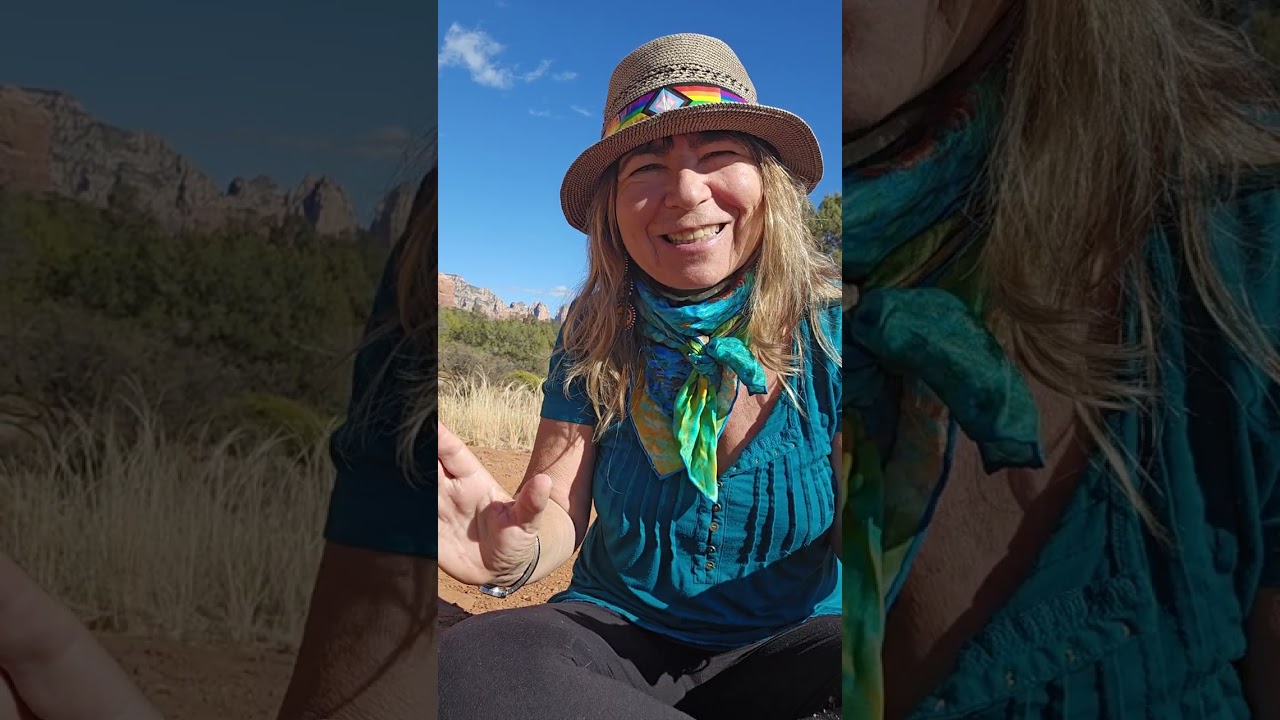
Ruth L. Schwartz introduces the Conscious Girlfriend Academy's 12-week program for lesbian and queer dating. The course teaches compatibility assessment, communication, boundaries, and how to work with triggers and attachment styles to build healthy relationships without the drama.
Chapters
I'm Ruth. I'm the founding director of the Conscious Girlfriend Academy, and I want to tell you something about what you have stumbled onto here, because it's not actually something that exists anywhere else on this beautiful planet of ours, as far as I know. This is a home, a community for growth-oriented lesbians, queer women, adjacent non-binary people, When I say growth-oriented, what I mean is people who are trying to understand, you know, what this really is, this thing that we're doing here on this planet, on Earth, as women and non-binary people who love women or want to, and how to do it in the way that is smartest for our hearts, how to prevent heartbreak Date wisely, love well, so that we can have the beautiful love lives that we want and deserve, which have not been too easy for us to come by. You know, relationships honestly are difficult for people of all genders. We're kind of a difficult species as human beings. We're living on kind of a difficult planet. But what I have found— the reason why I founded The Conscious Girlfriend movement over 10 years ago now is that first through my own life, and then I— as I started to work with many other people, I found that women who love women tend to come up against very particular challenges in our dating and love lives. And we also have very particular opportunities. You may know what I'm talking about already. You know, if you've ever talked to any straight women or straight men or gay men, you know that each of them tends to encounter characteristic difficulties in their dating and relationship lives, and so do we. I like to say that lesbians, queer women, and adjacent people are capable of having the best relationships on the planet because we are capable of so much intimacy. We bond, we connect in ways that most people of other genders really struggle to do. We do that Automatically and with ease, but that gives us a whole other set of problems because once we have bonded so quickly and so deeply, sometimes you might find as the weeks or months go by that you have bonded with sticky lesbian super glue to the wrong person. Of course, she didn't look like the wrong person at first, right? Because we're So good at feeling that sense of chemistry and connection that just surges up, that makes somebody seem so perfect for us for a little while. That's actually a brain chemistry state. That's a state called limerence. And what I have found in my research is that lesbians or adjacent queer people, women with women, we go into limerence faster and harder. than couples of other genders. And this explains why, for instance, we have the joke about us, you know, what does a lesbian bring on the second date? A U-Haul. You know, it's because when we are in that brain chemistry state, we are stoned. We are stoned on love. It doesn't mean that you, you know, used any alcohol or drug outside of you. It means your brain itself created this intoxication, especially when the other person's brain was creating it right along with you. So that's one of our first challenges. But, you know, even before we get to that, we have a challenge of finding ourselves, knowing who we are, knowing that, that we love women or want to, figuring out who else is in that category. And so sometimes by the time that, you know, you, you find another person, you find out she's also a lesbian or queer, she's also single, and you're both attracted to each other, and then the limerence brain chemicals start. And so, you know, you have some fun, you have some sparks, you have some laughter going on. It feels like that's it, you found your person, you know. What else do you need to have? Like, how good it feels right now, it can feel this good forever. Many of us get snared on that sense of potential and promise over and over again, and I know I certainly have. But when I've talked to women in our toxic lesbian relationship recovery classes, so often what they are mourning— you know, sometimes they've been through months or years or even decades of difficult, painful, toxic interactions, and they keep thinking back to how it felt at the beginning and how wonderful it was and trying to get back there to that person that they first fell in love with. Very often that was just within the first few months. So it's super important to understand that the first few months are tragically not predictive of long-term compatibility, long-term successful relationships. So what is predictive, and what can you do as an individual person if you're in a relationship now and you're struggling, or if you're single now and you don't want to stay that way forever, but you also don't want to have the painful experiences you've had in the past? Past, what can you do differently? Well, the good news is there is a whole lot, and we have a training program designed to take you by the hand and walk you through both some of the difficult landscapes of your past relationships, arriving in the present— who you really are right now. What are your strengths? What are your goals? What is your vision? Who would actually be a good match for you, and for whom would you be a good match? A lot of women get discouraged at this point. They think, oh my God, there's just nobody out there for me. And what I want to say is, having worked with thousands of lesbians and queer women over these years— many thousands from 25 countries— I know there is somebody out there for you. In fact, I know there are a lot of somebodies. Um, there are so many well-intentioned, good-hearted, warm, loving women and adjacent non-binary people who really want to do this thing right. And part of what we do in the Roadmap to Conscious Lesbian Dating and Love is walk you through, you know, what does it mean to do it right? What are skills that you have to be able to bring to the table, and what are the skills that you have to be able to assess whether the other person brings to the table, and how do you assess that? One of the biggest problems with how quickly we tend to fall in love is that we skip the assessment phase and we assume that those amazing good feelings that can start up so quickly and feel so deep are mean that we know everything that we need to know. Most of us do this over and over again, and if you've done it, it's not your fault. You just didn't have the information about what to do instead, how to take better care of your heart. So we're going to walk you through that in our 12-week roadmap to conscious lesbian and queer dating and love. We're going to walk you through your past. We're going to walk you through your relationship to your own emotions. We're going to walk you through how you communicate when you need something that's not happening, or when you need to say no to something, you know, boundaries and requests. And what happens when you get triggered? You know, I would say that triggers are the, the biggest challenge to human relationships in general, but Definitely a huge challenge to us as women with women because women are wired— and I'm going to speak generically now. I know that not everybody is a woman or a man. I know everything exists on a spectrum. But just to simplify for a minute here, women are biologically created to be the nurturers. That means we have about 100,000 more neurons devoted to bonding than men do. That explains a lot, right? We also are much more in tune with our emotions, which is a big part of why we can bond, but also gets us into trouble. Who knows? So part of what the Roadmap class teaches you is what to do with your own emotions when they come up, which of course they need to come up. We fall in love in order to have emotions and share them. Most of us prefer to have happier emotions more of the time— less grief, less pain, less fear, less anger, less hurt— but the whole gamut of emotions is going to come up in our intimate relationships. There is no way around it. And so often what happens is, you know, one person starts feeling one of those more difficult emotions and either doesn't communicate at all about it or communicates in a way that then leads the other person to start feeling her own set of difficult emotions. And if you know how to work with your triggers, ideally of Both of you know, but if at least one of you knows, that doesn't have to be a big problem because whoever knows can take a step back. We actually teach a 5-step process what you can do in this situation. Take a step back and really identify, okay, what's going on here? You know, what does this connect to in your past? What is it that you need to communicate to your partner or to the person that you're hoping will be your partner? How do you best do that in a way that makes her more likely to hear you and makes you more likely to feel heard? Sometimes we just need to communicate so people know us better. Other times we need to make a very specific request or even communicate that something is a deal breaker. So we teach processes for how to do this because in the absence of that skill, Most relationships shatter. One person feels strong emotions, the other person feels strong emotions. We bang against each other. We each get more and more hurt or scared or angry or disillusioned or disappointed. I've had relationships where fairly early on this happened, and although we tried for months to make our way back from that rupture, We never did, and that's tragic. So we're going to teach you how to make sure that doesn't happen to you. We're also going to teach you how to work with your fear when it comes up in dating and in a relationship that's important to you. By the way, you know, all of this training is specifically about lesbian and queer romantic relationships, but so many of our participants have said that what they've learned in the Academy has improved all of their relationships. And that makes sense, right? Because if you know how to work with your triggers and communicate skillfully, of course it helps all of your relationships. And if you know how to be with your own emotions more skillfully too. So then we enter into the dating part of the class. We talk about how to date, what dating even is between women, how to know what you're looking for, how to have the conversations early on so that you're actually finding out who this other person is and who you are with her and how the two of you are together, how safe you feel, how comfortable and at ease you feel to be yourself, or whether there's something else going on. Many of us tend to, um, feel attracted when we don't necessarily feel all that safe, and that can be an exhilarating feeling, but Does not typically lead to a healthy, happy, stable relationship. So there is a whole lot of knowledge that we go through here that honestly it took me decades to put together. When I first realized after having 3 breakups in 3 years that there had to be something I could do differently because I was not willing to keep on doing it the way that I was. I went searching for a roadmap, for something that could make sense of who I was and where I wanted to get to and how to get there. And I found that there was no such thing, at least for me as a lesbian. You know, there were a lot of books designed for straight people, workshops designed for straight people. A lot of them were along the whole, you know, men are from Mars, women are from Venus thing. How to get the guy to commit right away. You know, all this stuff that just completely did not speak to my experience and was not helpful to me. So it took me decades of first painful, difficult experience, and then a whole lot of study piecing together all the puzzle pieces that I could get from some of the leading theorists on relationships, on psychology, on neuroscience, on attachment research, and piecing all of that together to create what is now the Roadmap to Conscious Love. Lesbian and Queer Dating and Love. It's a 12-week class. There is a lot in it. We have some participants who have taken it numerous times because like anything deep in this life, each time you take it, you get it in on a deeper level. And each time I teach it, I do it differently because I am continuously learning. And the, the audience, the group in the class is different each time. So different questions come up. There's a different dynamic. This time around, I'm really excited because we're going to be focusing more on attachment than ever before. I've been studying attachment theory for about 7 years now, and the more I understand about it, the more I see that it explains almost everything about why our bonds often get so painful and how to prevent that, how to keep growing closeness once you've ascertained that, that somebody really is the right person to To do this sacred dance with. So my hope is that the Roadmap class will give you the kind of support that you have needed for years, or perhaps decades, and had no idea how to find. Because honestly, you know, when I came out, nobody handed me an instruction manual, and I bet nobody handed you one either, you know. And this is that instruction manual that we all needed to get. At the very beginning, but the good thing is at least here it is now for you. So I look forward to seeing you in the roadmap class. If you're seeing this video at a time when the roadmap is already over, I want you to know we have a whole lot of other incredibly valuable, powerful, impactful classes and programs in the Conscious Girlfriend Academy. So any time of year, we've got you covered. We also have an incredibly welcoming and open-hearted, compassionate, intelligent community waiting to share their stories with you, hear yours, and traverse this path together. So, so glad you found us, and I look forward to seeing you really soon.
More from Ruth


Lesbian/Queer Bedroom Communication: How To Know What You Want, & Get More Of It
coming out later in life? here's how to go from isolation...to a warm, welcoming lesbian community.


The worst lesbian breakups of my life, and what I learned (and how it can help you save YOUR heart)
The #1 Cause of Lesbian/Queer Fights & Breakups, And How To PREVENT and HEAL Attachment Wounds

The remarkable new movement changing lesbian lives around the world -- and how you can be part of it

Love Letter To An Amazon: Celebration Of Butches, Mascs, Studs & MOC Lesbians & Queers