How to be your true self EVERYWHERE | Ep. 60 w/ Ryel Kestano
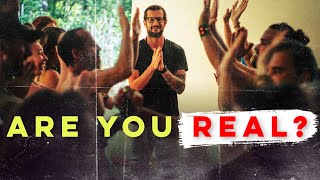
Ryel Kestano, co-founder of Art International, talks about bringing authentic relating beyond workshops into prisons, families, and politics. He argues that curiosity and honesty build trust, and that conflict can deepen intimacy when approached with genuine interest rather than judgment.
Chapters
We have just this already, this sort of built-in radar for authenticity versus you're just telling me what you think I want to hear. Like, obviously we see that like in the political world, authenticity in the political world, for whatever reason, seems to be a detriment. Like you can't actually be honest. It's this constant calculation of saying what I think other people want to hear. I think ultimately backfires. Because it's like, I can't feel you. Like, what do you believe? You're just saying— you're saying one thing over here and then another thing over there. Like, who are you in between and underneath? Being honest and authentic builds trust, and trust is the foundation of a healthy relationship. You are now entering the container.
The container is now open. Earlier this year, Si and I had the opportunity to be in spaces that were facilitated by Rael Castano. That was a big deal for us because he co-founded Art International, which is probably the biggest company offering authentic relating training, and they do it with workshops all over the world. But even more important than that, Rael Castano wrote this book, Authentic Relating, which was formative for Si and I early on in our journey. So we're really grateful for a lot of what Rael has already done, and we were delighted to sit down and talk to him about the work he's doing now, which is about spreading authentic relating beyond kind of the traditional workshop junkie circuit. He believes in this work, and he believes that it should be for everybody. It's a, it's a mission that really resonates with me and It was just an amazing talk with a master of the field. Before we get to that conversation, I would like to give a shout out to our patrons. They went to patreon.com/thecontainer. Through small monthly contributions, they help pay for the show and its costs, and that means more content like this. And it's really content you can't get just about anywhere else in the world. Yeah. And so with that, here is our conversation with none other than Raelle. Castano.
I mean, I would say that the spirit of my and our work at ART has been to bring the essence of authentic relating to a wider audience that had not already been exposed to it or had connections to it, or even was sort of in the culture of personal development. Right, and to sort of break it out of this context of the personal development world and workshop world and try to actually be in the practice to construct and cross bridges into new territories and populations that would otherwise not be exposed to it. Um, you know, as we all know, the vast, vast, vast majority of the planet doesn't know anything about authentic relating and doesn't even— has never been to a workshop and probably would never go to a workshop of any kind. And so do we just sort of dismiss them, like forget them, and just sort of circle the wagons around the people that do share those values? You know, and that was my initial experience in this world, was this sort of microcosm insulated ecosystem of people who were drawn to the practice, dedicated to the practice, and really somewhat only wanted to relate to other people and build community with people within the practice. And I just, yeah, I, that's fine. I mean, there's room for that as well. I've just always been excited about being more on the far edges of you know, this community and seeing where it is that I can sort of be an ambassador or missionary or something to reach people that hadn't been exposed to it. Um, I mean, a lot of my, I was really influenced by my time at Burning Man, starting a camp there and being pretty like deep into that world. And at Burning Man, there's this sort of, uh, I don't know, like judgment around camps that are insular and sort of closed. It's like you're supposed to be part of the greater community there. And it's like, yeah, you come here with all your provisions and amenities and everything, and then you'd like kind of build these either physical or energetic walls around your camp. And that has a kind of energy to it. What I really appreciate about Burning Man when I was going in the early days especially was just this real, like, infiltration of people and energy all throughout. Like, I remember coming back to my RV in a dust storm and walking in my RV and there's just these two random strangers sitting inside at my table in the RV. And in any other context, that would be like, What the hell are you doing? Get out. But here is like, hey, what's up? And they're like, oh, it was like crazy intense outside. We just found shelter and decided to come into your RV. And then we ended up just hanging out and rocking out and having a great time together and being friends. So like that informed, I think, how I sort of frame how, like, at least my responsibility in having learned this work and how I can bring it for the benefit of others. And then once I'm committed to that, okay, well then what is the approach? What is the, uh, sort of internal energetic structure that would be most conducive to relating with and connecting with people outside of the sphere of authentic relating relational practices? Well, it's probably not me coming in being like, hey, I'm just going to dump all this like amazing shit on you and you're going to just be mind blown and then we can welcome you into our tent. Like, I actually tried that in other ways early in my life and it totally misfired, backfired, and had people just be like, you don't get us. Like, don't, you know, and just because you have a different perspective doesn't mean yours is right. In ours is wrong. I think people are sensitive to perceiving like their way of life and their value system is inferior. And, and so the way we've always taught authentic relating at R is really to lead with humility and lead with listening and curiosity upfront. So when you encounter somebody new, The first step is like, tell me about your world. You know, what's it like to be you? What's it like to see the world through your eyes? I remember in my circling days, I felt most connected and most a part of the circle when people were really curious about me and how I was seeing the world rather than their sharing their experience with me. Of being with me, sometimes I'd be like, I— you're taking me out of my own experience. I don't really care right now about you have this tingling in your belly. Like, that doesn't actually serve me feeling connected with you via my own experience. So yeah, it's like, you know, if I go to a foreign country, you know, and I don't— I've never been there, I don't know anything about the culture, My first step is gonna be to really quiet myself inside and reference outside, reference outward. What's happening outside of me? What are the customs? What are the values? How do people, you know, show up and navigate and relate and see the world? And that's just like a, a fascinating endeavor anyway. So, um, You might know I co-founded a nonprofit to bring authentic relating to prisons and jails. And that was exactly, that was like, I had this idea and then I was like, okay, how do I go out and apply this in the world here in Boulder? I'll volunteer at the Boulder County Jail. It's a world I know nothing whatsoever about. I have all sorts of stories and judgments about that world that have been sort of indoctrinated into me by surrounding value and culture. So let me go in and actually really pay attention, get curious and listen and see what this world is like. And it was nothing like I thought or expected it to be. And I also thought that, oh, I was gonna be the one to like enlighten these guys and, you know, share all of these valuable resources. And sure, that was the case, but much more so it was the profoundly enriching experience of me getting curious about them and their path, their journey, their world, their perspective. And it's just like I was just on the edge of my seat, just so engrossed and so fascinated and in awe, um, from so much of what they were sharing and how they were relating to me and showing up. And it was just giving me this window into the world, into suffering, into darkness, into shadow. That I just had never been exposed to. I was just realized how cut off and insulated I was from that. So it was super enlightening. Uh, and so yeah, like that's, that's sort of the ethos and approach that I and we have taken is how can we bring that to sort of a, a wider scale and, um, include that and integrate that in our pedagogical structure of teaching authentic relating. Because I actually, I think like there's this, so you could, it's arguably an epidemic in the personal development world that like prioritizes ego, like me and my work and my healing and my trauma and my journey and my enlightenment, right? It's like, okay, cool. There's like room for that. But like, what about everybody else? You know? And maybe actually my journey and my enlightenment can be enhanced by how I show up humbly and in a place of listening and curiosity and making room for others. Maybe actually that is the path of enlightenment, you know, is to quiet myself and invite other people to take up space and show up. And that's been my experience. You know, I love traveling. I love going to new places, bringing my kids to new places. I see the look on their face. It's just, yeah, there's this feeling of potential expansion. And I'm most served in that journey, in that, you know, practice when I go in really receptive and nonjudgmental and really curious and, you know, wanting to really be alongside and immersed in the world of the people that I'm surrounded by in these environments. So yeah, that's all kind of informed how I think I relate and hold this practice.
Yeah, something that is really like coming up for me is this like orientation outside of yourself into like relating with other people. It connects, it connects really strongly with like, something I think a lot of human beings have experienced where the more they're focused on themselves, the more miserable they are. And like, the more that they're just, their lives are about something other than themselves, the more it's just like the gravitational pull of that, or the like momentum of that, it's like, oh, this is somehow more how I'm supposed to be in this world. And it feels like, yeah, something that comes up for me listening to you, like, yeah, there, if, if we're just focused on how we develop our relationship with ourselves, that can definitely like get things out of the way that are like in the way of ourselves getting along with others. But it's like, Yeah, there is this, there is this risk of just like looking into your belly button for decades and then like, oh, let's excavate more trauma. And let's, you know, let's like do more mirror therapy. Yeah. And that like, once you start, like, to me, it's something that authentic relating gave me were tools to like harmonize with others so that then I'm like just more here in the field with others. And like, you know, I don't even know if I could really have— if I could really be fully curious about someone else before I learned these practices. Like, you know, I don't know if I could really fully be harmonizing with other people. Yeah, I don't know. So all of that kind of comes up. Listening to you, and I guess a lot of gratitude too for the— how much authentic relating kind of freed me.
Yeah, what's coming up for me is like I'm zooming back to my very first experience, um, in an authentic relating. It was like a games night or something, um, and I remember like going in with this story about myself that, and I had a running story about myself for my whole life about how I had social anxiety, or like anxiety was the main thing. I have anxiety, it's my anxiety that I have. And like, especially in XYZ situations or whatever. And I went to this, this event, and there were all of these people being extremely curious about my world. And it was the first time I'd ever experienced that. And I was literally— I was sitting on a chair in the middle of a whole group of people, like a chair that was higher up. So like, I was the center of attention. Like they were all looking at me and asking me questions. And in my imagination, that would have been like my nightmare. Like that would have been, oh, I can't do that. Like, I'll, I'll, you know, fall to pieces from— I'll have a panic attack. And instead, it was the opposite experience. I was— I felt seen, I felt held, I felt loved, I felt like included, I felt like all of these things that I would have never expected to feel. And that's something that I wish— like, I think that— I think what my point is, is that that is an experience that I wish for every person to have that has a story about themselves around, this is the kind of person I am, or this is how I walk around in the world. Or, you know, um, that the type of relating that we're doing is maybe like increasing that story of ourselves versus, um, canceling it out or making, you know, making it—
Yeah. So I'm just curious in that example. Why didn't you feel what you expected to feel, which was all this anxiety? What made it such that you had a totally different experience?
Yeah, that's, I mean, it was almost like mysterious. I imagine it was that people were genuinely interested in what I was saying. It wasn't this other way that we walk around in the world, like, relating with each other, it was like there was eye contact, there was presence, there was like a felt sense of curiosity. There was a very distinct lack of judgment about how I was showing up. I mean, that's, you know, yeah, those are my best guesses.
Yeah, cool. So what I'm getting is that you, you had already a pre-existing capacity for social relating without anxiety that required certain conditions for you to access and lead with, right? And, and then the anxiety that you had felt before then perhaps was actually induced by conditions that stimulated or activated it.
Yeah.
Right. That had you maybe feeling overlooked or judged or unseen or sort of put into a box or something. Is that right?
Yeah, exactly. Yeah.
Yeah. Cool. So, I mean, yeah, it's, that's a super beautiful experience. And for sure. Yeah. It's like, I think that's correct in that we're going to respond to and tap into parts of ourselves as an outcome of the particular stimulating conditions around us that we're met by. But also, it also, like, presumes that we have this underlying circuitry for non-anxiety social engagement, right? And, um, and maybe we do and maybe we don't. I mean, I'd like to think that that, you know, we are all actually wired for connection and that whatever anxiety we feel in connection has been sort of absorbed into us, layered into us from, you know, wounding relational experiences. And yeah, I don't know, it's like, you know, every now and then I do encounter people who, for whom anxiety, even from like, as far as they can tell me, from like a very early age, was wired into them. And it doesn't matter what conditions they might be faced with. So yeah, I think like, yeah, maybe part of me wants, would love for you to sort of also take credit for having the experience that you had. It wasn't just the surrounding conditions. Is also that you had already this, like, kind of dormant wiring for secure connection experiences, right, that was activated by, you know, the surrounding conditions, something like that.
Yeah, dormant really stands out. Yeah. And I think what led me to that, you know, to even go to the, you know, to make the decision to go to that group was was like a desire to reignite something that had, had gone dormant in me, for sure. Yeah.
Yeah. Because what could also have been interesting is that you're faced with this array of people and you're totally gripped in anxiety. You know, it is actually the expected outcome that you would have had, and still you would have been welcomed and cared for and worthy of relationship and all these things. Right? Because then we can start to correlate, well, for me to have the experience means like I need to show up in a certain way. Right? So what's it like to consider actually, now I can actually show up in relationship totally anxious, you know, totally in my stories about whatever it is, unworthiness or something, right? And still actually be able to rest in some kind of relational connective field. By how the other person is relating with you. And I guess this goes back to the last piece I was sharing because I was noticing like, oh yeah, like in, in these sort of more insulated circles, um, there's this sort of usually mostly implicit, um, like criteria almost, like you need to show up in a certain way for me and us to like welcome you and relate to you and consider you part of our community. Um, and yeah, I was like, I don't know, I was like, yeah, at the prison or whatever, these guys are showing up often not at all relational, totally closed, totally guarded for very good reasons. I mean, just as survival mechanisms. And what would it be like for me to just really meet them and stay with them? You know, and accept them and welcome them just as they were. And in some cases, it would take months and months of regular meetings with these guys, and for me to show up consistently in this sort of unconditionally welcoming space, for them to start to kind of soften, you know, and drop in and open. Yeah.
This feels in one of the, like, beautiful, like, trip logic of the universe things. This is perfectly— sits on top of something that happened last night in practice. I was working with a guy who's super brilliant, and we were like circling, and there was this moment where, yeah, I had this desire for him to make some kind of, make some kind of like vulnerable move and just like reveal himself. And the thing, thing was about like him potentially feeling frustrated or lonely because of some kind of dynamic. And like, and then he made this move to describe how that like fits a lot of his experience. And I had this feeling of like, separation and stuff. And like, oh, you know, I was so attached to like wanting this moment of vulnerability, like, yeah, I feel lonely, rather than like, it would make sense if the case were to be, you know, this like, kind of more intellectual, like laying the groundwork of it. And then I realized as I was like, or like, as we were kind of like working through it, it's like, He's not hiding a truth about himself. He is unfold— like, that is part of the truth about himself is there. It's all right there all the time. And it's like, I'm wanting him to fit into some kind of like, unspoken and uncontexted language game that has developed over time in these, in these, like, in circles and authentic relating and like, you know, doing all this practice with people who do a lot of this practice, right? And so yeah, and it was like, this is him. This is— I'm not like missing him. I'm only, you know, I'm only missing him if I need him to fit into this like extremely contrived and unique set of, I don't know, like behaviors. And Yeah, it was. So I'm just like really, really holding on to what you're saying of like, yeah, that like not letting these practices become like they can end up being hindrances if we treat them a certain way to actual connection when it's like we use these practices to meet people, not to like, yeah, lock your RV at Burning Man, basically.
Right. Yeah, exactly. Yeah, that's great. That's super relevant. Um, yeah, the, for sure, I think that there's this correlation in the authentic relating world of vulnerability equals connection, right? Um, it's like, well, I need you to be vulnerable if we're gonna connect here, right? It's like, no, I don't wanna be vulnerable. So does that mean we can't connect? Right? Or whatever your version of vulnerability is, like, I don't, I reject or don't subscribe to or live in a different frame. Right? It's like, okay, well, given that, what can connection look like and feel like? And it's almost like people steeped in this work kind of short circuit at that point. Well, what do you mean? Like, how, how are we supposed to connect then? Right? And like, that's been like the really rich experience for me stepping more out of that world is like, wow, we can connect talking about sports, actually. Like, like, literally, we could be talking about, like, football, you know, and teams, and, and what happened last weekend. And I can feel totally connected to this other person. Right? Like, it's just outside of the frame of, like, oh, talking about our deep feelings and, you know, our fears and whatever it is. What occurred to me too, as you're sharing, is Uh, maybe this is, uh, biased or something, but at least in my observation, empirical observation, a lot of people who are drawn or are in the authentic relating circling world happen to have difficult relationships with one or both of their parents, right? And if you ask them why, why is that? Yeah, because they just are, they don't, they're not emotionally available. They never get vulnerable. They're stuck in their own ways. They don't see me. They don't accept me. We have different values, right? Like all of those equal not connected, right? And, and that's tragic, right? It's like there's, whether we like it or not, we are part of this sort of generational lineage. You know, these are people that came before us. That might have some really valuable things to share about the nature of being the predecessor member of this shared lineage. You know, I mean, I have 4 kids, super alive for me. I always want to be, I wanna be authentic to who I am, and I also really want to value connection with my kids above all, right? And be available for that. And that's not, that's, that's kind of a tall order is like, Okay, well, we have competing or different or opposing values, you know, and that's already occurred. My 3 of my kids are well into their teens, so they're getting pretty, you know, sort of refined and solidified perspectives of the world that sometimes are different than mine. Well, great, but like my default is to set those to the side as sort of secondary to really fostering and maintaining connection with them. And so, you know, to all the people in this wider community who do have, who do have a struggle in relating with one or two of their parents, I would say, where is it that you could access an aspect of this practice that would allow for a transformation in that experience? Right? And I love this sort of prompt of like, how could you show up in a way that would facilitate deeper connection between you and your parent? Right? And, and however that is, that is your path to enlightenment.
Well, I love that.
That's, yeah, it's like the golden road for you is the Yeah, it has me thinking, like, I have this image for one thing is, is like this, this image of like arms just like kind of getting bigger and wider, like this widening of welcome, like the welcome everything, but it's like welcoming the whole world. I don't know, I have that image coming up. And then, um, the— I mean, just unconditional love. You know, that's like kind of like that there are these conditions that we set around connection, and so it's like removing those conditions. Those conditions actually are preventing the connection that we actually, um, would get, you know, would get the— and I feel, I feel so kind of like called out or seen or something. And, you know, thinking about my relationship with my, with my parent and, um, and the stories I have about it. And then thinking about, yeah, I feel like I'll walk away from this conversation and really considering like, what is, what is the way that I would, that I would show up for, um, for my dad to have that connection, you know? Yeah, yeah, yeah.
I mean, I, I've always sort of appreciated the sort of rough mantra that the, the most, the most, um, that I could learn— there's the greatest potential for me to learn something valuable from the people who are most different than me. Yeah, right. Like, they just see the world so differently. And the initial meeting of a person like that can feel threatening. It's like, well, only one of us is right. And if I'm not right, then I'm fucked. Like, I need to be right, which diametrically makes you have to be wrong because we can't both be right at the same time. Right? So it sets up this sort of zero-sum tension. Right. So yeah, I get that. Right. Like that's human. But if we can just rest in that and move beyond that. Right. And again, like lead with humility. That's like a refrain of ours. It's like coming in. Okay. What, what, what am I missing? I'm assuming I'm, I'm missing a lot about the nature of the world and about the nature of humanity and even about the nature of my place in humanity and the maps that I'm relying on. To orient to and navigate through humanity. I'm gonna come in with that assumption, and I'm gonna come in with the assumption that the people that I encounter on the path of life can provide for me the missing gaps and blind spots and the maps that I'm relying on. Right? And it happens to be, I think, that the more different they are in their upbringing and value system and perspective, the more potential there is for, for them to fill in those missing pieces for me. And it's going to be my humility and my curiosity that are going to act as keys to unlock that. And maybe even amazingly, like me for them.
That has me wonder if you have on hand, uh, any tactics or like one weird trick to, to like, click yourself out of conflict mode? Like, once I've been noticing, like, there are a few relationships I have in particular where it's like, there are ways that conflict mode just like, is very seductive to me. And, and a move I have is like just to be witnessing. And once I feel conflict come on, I need to like create space and kind of chill out. But that feels also a little bit like, like incomplete or something. It's like the minimum viable way to like avoid unnecessary and sort of like, it's like there's, you know, good, quote unquote, good conflict. Whatever, but there's also just conflict that kind of like you're saying is just me blinding myself to ability to connect with someone. Um, so if I'm noticing that coming up, like, like, yeah, I'm curious if you have any tools to like, be like, okay, I'm in conflict. How do I, yeah, disentangle?
Right. Uh, I'd say a couple of things. I mean, one is, yeah. Again, I think that there's this sort of, um, like built-in idea in authentic relating that like, yeah, if I, if I can just muster and access and, and apply all like the skills, the relevant skills and mindset and all that, like, yeah, then like conflict becomes this like beautiful fountain of, you know, connection and intimacy and all that. Okay. But also sometimes conflict just fucking sucks and that's it, period. Like there's actually nothing there. It just is a shitty thing that happens between human beings that is just latent and inherent to the nature of human beings clashing against each other. Right. I mean, I have kids and I see them fighting all the time about seemingly totally superficial stuff.
Totally.
Right? Like meaningless.
Watch children for 5 minutes and you'll see. It's like these things just arise out of the muck. It's like, yeah.
And then it's just totally, exactly. Yeah. Like I have 2 boys, you know, they're like 5 years apart. So it's totally set up for like older brother, younger brother type of dynamic. Right. And the older brother's just constantly like pushing buttons. You know, and activating the younger brother. And then the next day they're like totally bonding and doing something together and collaborating, and older brother's now like helping younger brother. So it's like, is there anything wrong or bad or should be done about the conflict there? Or is that just the nature of human relating? And it's totally actually fine, right? It's just part of the deal and nothing needs to be done about it. So I think that that's just one interesting thing to consider. Um, you know, in the context of a couple, it's like, yeah, we're going to fight sometimes. Right. And we don't need to make it this whole thing about, you know, oh, here's an opportunity for us to like get closer and like learn about each other and manage our triggers and, you know, take responsibility for our traumas and all that. Yeah. Okay. I get that. But also sometimes it's just like, yeah, we're going to fight sometimes and it's not a big deal. And we can just fight and then get on with our lives and our relationship. Right.
So it's like the trip logic coming up again, like from last night. Yeah.
Yeah.
We had this like conflict on the couch where it was, and it was about nothing at all. It like came out of nowhere and then it, again, it receded back into nothing. It was like, oh, I feel better now. I don't even know.
Yeah, exactly. Yeah. It's like a release valve. Yeah, yeah, totally. And I, I think, you know, resilient couples can show up in that way for each other. Yeah, you can go ahead and just fucking spew on me, you know, for a little while. I get that life is life, you know, we accumulate tension in our bodies. Sometimes it's just, we just need to vent and just get it out of our system. And that's okay. That's what we can be here for each other as. So great. So that, and then to the extent that like, yeah, okay, there is something actually that can shift or transform around the nature, quality, and texture of a conflict. For me, what's really helped, I would say two things. One, on my side of things, is recognizing that basically the distinction between my feeling secure and my feeling triggered is what's integrated and not integrated. My own system. All right, like, like somebody could say, uh, you know, insult me or attack me about something that I just know isn't true, you know, attack, maybe attack my being a terrible father or something, you know. And I used to think that actually. So, you know, done a lot of introspection and work and, you know, striving to like secure that and integrate that within my system. You know, and, and be in relationship with my kids to verify it. And so like, that's just, that's not going to go anywhere. It's like, okay, I hear you, you know, uh, I don't, it doesn't land. Maybe even that's a projection of yours. I get curious about you. Where does that come from? Right? And then somebody else says something about something that isn't integrated, still, um, a pain point. It's still something that I'm ashamed about or insecure about. Or have a wound around, and then I'm going to get triggered and defensive. So then it's like, oh, okay, what is this showing me? What is this pointing me towards? Um, and I may not be able to do it in the moment because it's like the heat of the moment, but afterwards I just make it a rule always, like after tension, argument, conflict, breakdown, to reflect on like, why did that happen for me? So that's on my side. On the you side, on the other side, what's really helped me is this phrase, for you. Oh, so for you, this is how you're feeling, seeing, perceiving, experiencing what's happening. Or me. And it just gives me an entry point because it comes at the beginning of the sentence. For you, it must feel this way.
Mm-hmm.
Right? It just helps me like really orient to like what's happening for the other person in a way that validates what's happening for them. And it gets me out of my, uh, judgments and perceptions and categorizations of what's happening, or like applying a ranking of how accurate or inaccurate or appropriate or inappropriate their experience or reaction or feeling is. It just gets me out of all that. And it just really gets me with them. And again, I might have to do that retrospectively afterwards. Oh wow, for them, it must have really felt this way. I really, okay, I get that. And then we can come back and share about these things, right? I mean, to me, kind of tying all this together, it's actually the reconnection process that matters way more than the conflict itself. In my world, it's like, yeah, we're gonna have conflict and arguments and breakdowns. What happens a day later, a week later, however much time later, we come back and from a more grounded, reflective place, what, what can we say about it? You know, what, if anything, arose from it that would be useful to know? That's where intimacy is built, actually, I think, is in the reconnection slash repair process afterwards. The conflict is conflict. Yeah, it's just, it's going to be rupturing perhaps. It's like, how does it feel to come back together in the, you know, re-stitching? That's what creates more trust, intimacy, connection.
Yeah, I'm noticing there's like a way that that perspective takes pressure off in the moments when we have probably the least resources to be trying to, yeah. Yeah.
Yeah.
Yeah.
And then I also noticed there's another part of me that hears that and is like, well, but Conflict is also a really good time for practice and like, you can learn a lot and like, yeah.
Um, yeah, I mean, I think it's just, you know, if, if, if the, um, core theme is authenticity, you know, and having, you know, one definition of integrity is to like be in the full and intimate expression of what's authentically happening within, whatever that is, right? And if it's authentic in the moment to just be like fucking pissed and raging and disowning of one's experience and spewing stuff and making accusations, that's actually all like what's actually happening, you know? I think, yeah, there could be something to be said for just being in contact with that. I, I remember, you know, this piece around like people just keep saying, I notice all the time. I notice I'm feeling upset and angry. It's like, but they'd just be this sort of, they'd be like gripping, trying to maintain this like container, you know? It's like, I just let it rip. Let's just do this. Let's just get on the mat, you know, and let it rip, and then we'll deal with it afterwards.
I love that. Yeah, I noticed the, I noticed. That's so funny that that's the first I noticed, I feel. Yeah, I spent a lot of time noticing the I noticed step. Yeah, the way you began that is with this, like if the Basically, like, if the name of the game is authenticity, and then that, that kind of sparked in me, like, yeah, you know, that's this— there's this huge question about authentic relating, and like, why is authenticity the thing that's centered?
Well, again, first thing, we just need to make sure we decouple authenticity from, like, vulnerable revealing. Um, authenticity could sound like, yeah, I don't I don't want to talk about that. Like, that actually feels vulnerable, so I don't want to talk about that. Like, yeah. And I've noticed being guilty of like, uh, I don't want to be with that. Like, let's just talk about it. Like, I want to go deeper with you, you know? And then I can start to feel that sort of calcification of I can't relate with people who just have all these boundaries and defenses and protective mechanisms, right? Which is unfair and, um, uh, I think isn't actually in the true spirit of what we're up to, right? I mean, it totally bypasses the welcome everything piece right there. It's like, yeah, I mean, I'm, I'm— a lot of my work now is in the dating world, like dating coaching and facilitation and stuff. Um, and so, you know, I'm thinking a lot in the context of like people going out on dates, and here I am telling people about vulnerability and how that leads to connection and intimacy and all that stuff, and they go on a date and then the other person's like, uh, like, that— I don't want to— yeah, I'm not— I don't want to talk about that, that's too much, I don't actually want to go that deep that quick, right? Well, that's not a failure, that's not like somebody to write off. It's like, where can I stretch to welcome exactly that? We had this, um, this sort of phrase or guideline at our courses that we would only move at the pace of the person that needed the most time to process, to move, to open, to reveal. And we wouldn't rush them, pressure them, override what they need. And I think that's really useful in the context of a relationship. You know, there's typically always somebody who's going to move faster than the other, process faster, want to come back into connection faster, want to go to a deeper place more immediately. And actually, that person, I think the relationship will benefit by that person slowing down to match the pace of the person that needs more time and welcoming that. It's easier to slow down you know, and sort of come to the surface than for the other person to like try to drill down or go faster. Yeah. So anyway, so I just think it's useful to define authenticity in that way. I just think that we have, we have just this already, humans, when I say we, I just mean generally humans, have this sort of built-in radar for authenticity versus you're just telling me what you think I want to hear. Yeah.
Right.
Like, obviously we see that like in the political world, right? Like authenticity in the political world, for whatever reason, seems to be a detriment. Like you can't actually be honest and re— and like say what's actually true for you. It's this constant calculation of saying what I think other people want to hear. I mean, maybe media to some extent as well, at least new media, modern media. And like, it just, I think ultimately backfires because it's like, I can't feel you. Like, what do you believe? You're just saying, you're saying one thing over here and then another thing over there. Like, who are you in between and underneath? So I think being honest authentic builds trust, and trust is the foundation of a healthy relationship. Yeah. So that, that's what I would say in a nutshell.
Yeah. There's a way that that works with others and then also with yourself, I imagine, where it's the more you kind of don't abandon yourself and you are authentic, the more trust you have in yourself, even.
Yeah.
Yeah. I also think that— well, I'm, I'm thinking about the— again, about our, our, our community of practice. I am. But, um, the skill of, of noticing and witnessing one's experience aloud in a group or otherwise, or like even just with another person, that that is a very useful skill. But that there are this— I'm just still going back to when you were talking about making contact, like being in contact with like what is really arising. And I think something that we have, well, certainly Jonathan's done a lot of work in developing as a practice is actually getting really good at the noticing and witnessing so that when we come into contact, we're doing it with this— we're making subject of something that we've already made object of. It's been sort of cleaned and purified in this way that it's like now I can I can be in, in this fullest authentic expression. Um, so whether that process was done internally or, or externally in a group or in, you know, in a relationship with, you know, a partner or whatever, um, it's like cleaner. I don't know, there's, there's like a more of a, a learning from it, or like it's, it's a cleaner way to be. I don't know. I feel like now I'm, I'm uncertain of what I'm saying, but yeah, that was the authenticity piece is what had that come up for me.
Um, yeah, I think it's what trust can allow for is experimentation in context and arenas that may not be familiar. Right? So like, you know, if you already have pretty trustable foundation of relationship, it's like, what's it like if we just experiment with being messy and unclean and dirty and unowned, you know, for a week or something? You know, like we trust ourselves and each other in the relationship to apply the appropriate context to that as one of learning and insight, potentially. And then we can come back and, you know, carry on with our usual way of doing things. Right. But it, I think that's the, the, the way that the vehicle relationship can be really exciting is to be co-creating experiments that can allow you to experience something new and different. It's almost like you're conjuring a foreign country to go visit and see what happens there and what it might feel like and what you might learn about yourselves and each other by conducting these experiments. Like at the end of my training at the Integral Center, that was the last piece was experiment, experimental circles or, you know, experiments within circles. And that was the most juice and fun and playfulness and excitement was when we were playing around with, you know, coming up with different ideas for how to set things up to see what would happen. Like, as a coach, one of my favorite things to do is with clients is, hey, let's just say like this is the case just to play with it, right? We're going to just create this scenario. As if it were true, even though it may not be, right? Like, what would it be like to consider that, yeah, on that last date, you were totally projecting something onto the other person? Maybe you were, maybe you weren't, but just to see what might occur if we step into that, you know, the house that is built by that, you know, scenario and look around, what might we see? And I've just found that to be so rich. In uncovering new places that we wouldn't otherwise consider if we're constrained by our, um, like bias towards what is already known and familiar. Yeah.
The, like, container construction is so, especially when you, when you start getting a community that is willing to go into weird experimental containers. It's so— it's just like, yeah, the amount of fun you can have just like reconstructing reality. It's— there's something strange too about like if people around you are acting as if something is real, it's— that is so constitutive of like how the brain like trusts what is real. That's like if you just have like 3 or 4 people around you in this like new, yeah, like according to this like set of parameters, it's so easy to just be like, yeah, that's the way the universe works. I don't know. It's really, it happens really fast, I think. At least in my experience.
Yeah, for sure. Yeah. I think there's, you know, a good balance of, there's probably a good balance to strive for in being surrounded by that which is familiar and predictable, and then that which is new and novel and unknown and mysterious. I mean, honestly, I think historically that's what country and city each represented, right? Like, you would live in the country, every day would be the same, you'd be surrounded by the same people, have the same practices, same routines, right? And it's sort of grounds the nervous system. And then you take a, a pilgrimage, a visit, a trip to the big city and just be like, oh my God, like what the hell is happening? All these new people wearing clothes I've never seen and talking in languages I've never heard. And the marketplace is full of things that I've never, you know, held before. It's just like dazzling, right? But it's also the place, the nexus of where the most information is being exchanged. You know, there's the most opportunity for learning something new and being enlightened by it. So how do we recreate that in our lives? I think it's a worthy objective, right? Like, I, I love— I think there's so much richness in venturing into unfamiliar places, you know, like I like working with clients who they are just so like familiarized with the dating apps and they just won't go out and meet people out in the sort of real world public domain. And I'm like, yeah, what would it be like just to consider going to like a singles event or an event happening, you know, in a group? And they're like, oh, I could never do that. Like, I just wouldn't do that. Cool. So now we've got something to work with, right? So it's like, oh, interesting. Okay. Like, let's, let's engage in that process. Of what provides that sense, that perception. And then, you know, ultimately we get to a place where they actually do go to a thing, you know, way outside of their comfort zone. And overwhelmingly they come back and say, that was amazing. I learned something new about myself and other people. Right. I think that's, there's, there's something about that that's ingrained in us. It's like this both like homesteading, you know, build a home and create sort of like a, you know, comfort zone at home. And then this pioneer explorer person who ventures out, you know, and seeks to exchange information with other people. Yeah. So I think it's just a worthy balance to strive for in relationship together. It's like Yeah, you're a couple. Do you just do the same routine every single day? Well, you're just roommates then, right? You're just cohabitating out of just routine function, right? Right. What's it like to go do something scary and edgy and new, right? And novel? There's, there's a lot of richness there. And then come home and sit with it.
Yeah, I'm thinking about like, it's so evocative, the country and city, especially I'm thinking of like medieval, like peasant, and then you go into Paris and it's like, whoa, this is crazy.
Yeah.
And noticing that, like, there is a rhythm there of like a yearning to just be back home and be in peace. And then that, and that often like for a long period of time, and then there's this like horsey, like, kind of chomping at the bit to get out there and like, yeah, do something wild. And yeah, I don't know, I really, that's so such an evocative way to describe that energy and that sort of like respiration between kind of grounding in peace and then sort of these spikes of novelty or excitement.
Yeah, I think it maps onto like dignity and humility, right? That I think is relevant for the, for the age that we live in today, all the polarization. And it's like, yeah, it's definitely important to be surrounded by people who get you and share values and you can build a community and home around. And I think so vital that you get outside of that and go venture into unknown territories with humility, assuming probably very safely that there's a lot you don't know about how the world is.
It's an incredibly humbling experience to do that. It is.
Yeah. I mean, we, we, um, you know, we definitely know that the authentic relating world is heavily biased towards, you know, progressive kind of liberal values and perspectives. I mean, to me, that is, that is an unfortunate bias in this work. I think it would be much more, much more greatly served if there's a better representation of the greater demographic of the citizenship, the citizenry of, of people, you know, and so it, it all, it behooves us all the more, especially given the practice that so many of us have dedicated ourselves to. To use that to actually go out and recreate a more balanced access to, you know, demographically diverse perspectives and people and communities, I think, to actually really make applied use of this work.
Yeah, I noticed there's like a, I have a suspicion there's some kind of like personality, like biology of politics level thing going on too, where it's like, like if someone just described to you like, yeah, it's an event where people, like figure out how to communicate or like they experiment with communication in these different ways, like based on these principles. And they, they like work with depth and vulnerability and authenticity. And like, like, if I, if I had never stepped foot in an authentic relating event, I would just bet all of the money in my bank account that the majority of those people are not conservative. It's like, like, there's some kind of like, yeah, and I noticed, I noticed too, like, as I'm, I'm I'm doing more, more spending more of my time inside of a church, even that like inside of, inside of these spaces. Like authentic relating in a lot of ways would greatly serve the Christian mission. But there's like an interesting way that the like, Yeah, I don't know, like the essence or the way the nervous system kind of sits, it's like less interested in the kind of thing authentic relating is.
Well, I think that's maybe more pointing a finger at the definition and constraints of authentic relating than what is actually possible. Broadening that definition, right? Like, I love that you're spending time in the church. Like, I bet if, you know, I just, I haven't, but I can imagine if you look, there's a lot of authentic relating already happening. I mean, let alone between man and God, right? It's like, you could totally frame that as like the core authentic relating relationship, right? Like, like human and divine. Right. So how, it's like, wow, what an interesting sort of project or challenge is like, how can you bring your own values and what lights you up and experience and fit that within this complementary way within the already existing framework of the church and the church community? You know, that, I think that's a beautiful opportunity. I mean, that's what I try to do in the prison.
I think that's what you, you do, you try to do at church.
Yeah.
I do.
It's, it's not always easy yet, but it becomes easy.
At the, um, OCIA class, the, I, he was reading through some responses he had done for this question session about the catechism.
Mm-hmm.
And I was, I was listening to his responses and I'm like, you're giving that to the priest?
Yeah.
You're letting the priest read? Like, it was just so like like his authentic, like, truth, like, you know, blending with the church dogma. And it was just so beautiful. I was like, this is, this is so cool.
I mean, I've, I've described, I love that. I mean, I've described sort of like what we try to do at our, as sort of, uh, like in the style of Martin Luther, right? Who's in a sense, I mean, I, I'm not a scholar or anything, but at least in a sense, he, he came along and was like, you can have the most intimate relationship yourself with the divine. You don't need anybody else. You don't need to go to church. You don't need all these structures and systems. You know, you don't have to operate within this whole, like, paradigm. You can cultivate that quality of intimacy and relationship yourself in every moment, everywhere, you know, with God. And like that, I love that as a parallel to what we get to say about authentic relating. You can have that experience with everyone and anyone in your life at any time, right? By just applying the, the context that facilitates that. I think there's so many fascinating overlaps and parallels and ability to map these different worlds onto each other between authentic relating and sort of religious tradition and practice.
Yeah, something along those lines that kind of gave me chills when you said it about like the authentic relation between man and God. There was this thing recently, I was reading a priest talking about prayer and how like, often we are least likely to pray when we like kind of could use it the most. Because we sort of are like, oh, I'm feeling like lustful, or I'm feeling, you know, I'm in some way I'm like judging myself as not and, you know, not like worthy or something. And that actually like, and this really cracked open for me, like this other approach of like, just give whatever is alive for you right now. Like that is just what you give up in prayer. And it radically changed my relationship to prayer. I'm still like feeling self-conscious about talking about prayer on the podcast. Um, that's funny. There's like this, yeah, it's like, oh yeah, I can just like, I'm not hiding anything from like the totality of existence. I can't hide myself from it. So it's like better to just like the prayer is for me. It's not for the totality of existence to like hear how it's going, you know? It's for me to like be authentic to the sacred dimension. And it's like, whoa, that's such a different way to do it, you know, than—
Yeah.
Than waiting for when you're feeling really chaste and, you know.
Right, right. Totally. I love that. Yeah, I think prayer is the act of embodied humility. Right? Because it's like, you have to be humble to actually, you know, fuel the spirit of a prayer. Towards some higher presence, being, consciousness, right? It induces humility, right? I think that's the purpose of prayer is to induce a humble state. And by the way, I think just a side comment, I mean, like, for all intents and purposes, like the Authentic Relating Movement is a church, right? It's got its 10, 5 commandments, right? It's got its, you know, value system. Right? It's got its way of bringing a group together, you know, in a shared context towards a common purpose. I mean, you know, it's got its slogans, whatever. It's, you know, it's very, very similar. And I think that just speaks to that we are also wired for congregation. I don't mean that in a religious sense. I mean to congregate, right? With other people, whether it's in a church or in the authentic relating community or anywhere else. You know, so it's, it's like we're not that far apart. That's my point. It's like I'm always seeking like, where is it that where we think we're far apart on the surface, we're actually not at all. There's way more in common between a so-called conservative and a so-called progressive in relating about things that they each share. Right. And then where they're different, it's like, oh wow, you, you see the world this way. Wow. That's so interesting. Never thought about that.
Where are you?
Yeah, right. Totally. Yeah. I mean, you know, it's like, I'm super into sailing these days. Like it's a big passion of mine. I really want to buy a sailboat this year and go spend a lot more time on the water. And there's this fascinating, like, um, culture around the world where you've got these sailors going into very undeveloped places and they're like, you know, very expensive sailboats, right? With all of the, you know, accoutrements of the modern Western world. And they're going into like the furthest reaches of the undeveloped world and encountering people there, you know, and overwhelmingly like there's, um, there's like, uh, you know, safety and regard and respect and consideration mutually. And then also there's bad shit that happens, you know, and there's just no way of getting around it. So I think we can include and welcome all of that. It's like, as a sailor preparing to go around the world, I, I'm going to strive my very best to stay humble, recognizing that I carry and visibly demonstrate you know, the differences that will be perceived by others, you know, and where is it that even though we speak different languages, different cultures, we're still human and have something that we can meet in and exchange something of value between. And, you know, I've watched, I've listened to and watched a shitload of sailing videos and people and their most memorable experiences of all are when they interacted in this meaningful way. We like this, you know, remote village on some island in the middle of nowhere. You know, that, that's the, those are the moments that really matter. I think, um, that, that move people and touch people is when we can cross that divide and have a really meaningful and impactful experience of connection with people radically different than us and realize that we're not actually that different.
Yeah, I'm stirred. There's a part of me that's stirred and another part that's like very honest with myself about difficulties I experience. It's like, it's interesting how Like, yeah, there, there are just like, it's almost, I mean, it's really at some point, it's almost like just a pain, like a hurt that can come out of like interacting with people and just not knowing how to be in connection. Just not knowing how to do it. And that there's Yeah, I don't know. There's like a, there's a pain about it. There's, and it's, yeah, I don't know. That's there along with it as I'm listening.
Totally. I hear that. And I, like, you, you come into a space of a shared space with somebody. You're like, I don't know how to connect with this person. And they are also feeling, I don't know how to connect with this person. And now you're both sharing the experience of not knowing how to connect with each other.
That's your shared experience.
Yeah, exactly. Right. And then at some moment you can just laugh about it. Like, look at us, right? We're actually having a shared human experience of how we don't know how to relate to each other.
Well, I also, yeah, I think there's this element of of doing this work and, you know, it— and then going back out into the world and going, oh, I've been hyper— I've been like focusing, I've been practicing, I've been, you know, at the, at the authentic relating gym pumping the iron, and here I am in front of this person and I'm blank. I don't— you know, when you said earlier about connecting through sports and Um, and, you know, and connecting with people in prison and connecting with people, just that I think there's uncoupling of connection from the, the tools and from the practices. Uh, you know, it's kind of going back to where we started, but is the key. It's like this, this removing the conditions, removing the, um, like, okay, great, I have these tools, they're here. But you know that I'm gonna put them down because I am like, yeah, like it's a, it's a clean slate. Like it's a brand new moment with this human being that I, um, but then I, I also just really deeply resonate with the pain and the, because I experienced that often as well. Yeah.
Yeah. And that's yet another thing that we get to share is that pain. You know, well, like, oh yeah, you, you know, you were hurt by a parent, a family member, or somebody close to you. Wow, so was I. Right? Like, we need pretty minimal language to get to that place of shared, a shared experience.
Yeah, I was at a, a little MVC workshop the other day. This woman came and thought that she was coming to a nonviolent, um, uh, like, thing for like Martin Luther King or something, like a nonviolent demonstration. She didn't— she'd never heard of nonviolent communication, completely unexpected to be in this, and didn't want to leave when she was there. So it was very interesting. Um, and it turned out she was sharing— she didn't have a lot of connections in her life, like people in her life, as we were all talking about a time that we, uh, had an upset, like an emotional upset or something. But her way in was just so beautiful. It was that she had this emotional relational interaction with her cat where it— and it had her notice something about herself that was super profound, like, um, you know, that she didn't believe she was a good cat mom because the cat like didn't want to snuggle with her and Anyway, it went on and on. Um, but I was, it was, I was shocked because I remember at first having this judgment like, oh, she thought she was at an activism thing. And like, you know, the, the other 3 of us here are like really well-versed at practicing NVC or whatever. So this isn't, I was like, this isn't going to go well. But then when she said the thing about the cat, I was like, oh my gosh. Amazing. I love that.
Yeah, totally. And that, yeah, that happened by quote unquote accident, right?
Right.
Somebody stumbling into a place where they didn't expect to go or be. I think it's, it's probably a worthy objective to create a life in which random accidents can occur.
Hmm.
Like that.
Yeah.
That is a really Big nugget of wisdom right there. That is like a, yeah. Um, it's one worth writing down.
Yeah. I mean, I think it's the, it's the mutational process, right? It's like, how does evolution occur? It's by having room and space and, and an impulse to run random experiments constantly. And like 99% of them won't lead to anything, but then one of them will stick. I mean, many of us can look back at the, like the turning points of our lives and they came about seemingly totally randomly and by accident. Right? So another reason to sort of like lean into the unpredictable, because your whole life—
Yeah. See, I'm thinking about my first Authentic Relating event. I didn't actually, I, I had a, an incorrect idea about what it was. And now I host the Container.
Yeah.
I'm curious here near the end of our time, if you could leave us with— I have two requests that I want to hear from Raela Castano. One is like, like laying out the hope or the vision you have for like the future of this work for you, like, and I realize it might look different than it has looked. But like, yeah, what, what the future and what your hopes are for how this can develop. And then also how people listening can learn more from you, how they can engage with the work you do. Yeah, various and sundry links or offers or You know, yeah, that's—
yeah, I mean, my hope is that people recognize, you know, authentic relating is something that's designed to be brought into already existing contexts of being and of relating and of doing. It's not an end unto itself. All right, so how is it that we can bring more relational connection, awareness, attunement and honoring into the already existing spaces in the world, wherever that might be. Right? So like teacher bringing it into the classroom, you know, an employee bringing it into their company, people just bringing it into their family relationships. And then for people to really look at like, where are they, where do they perceive blocks in their lives?
Right?
Like, if we think about the bridge analogy, where is it that there are two territories that as of now are divided by an uncrossable divide? And then how can we bring to bear the spirit and practice of authentic relating to build a bridge across that divide, which by definition means you're not changing imposing your way of being on the territory on the other side of the divide, you're connecting these two territories exactly as they already are and promoting more exchange between the two. So that's what I would hope. Yeah, and then, yeah, as far as where people can follow up, you know, my book is out there. Um, that was like, you know, my attempt to capture all this and put it into an easily obtainable form. Um, and then Art, uh, as a company, you know, is, has a website and resources that offers workshops in this work along the lines of what I've been sharing here. Um, and then even without any of that, just, yeah, see where it is that and, uh, yeah, you just get slightly more curious and lean slightly more toward the unknown and the uncharted and see what happens.
The container is now closed. It's just such a treat to be able to sit down with someone like Rael and pick his brain for an hour and a half, right? Again, if you want more of his work, you can go to authenticrelating.co. That will get you to Art International where you can get trained in authentic relating. And we really recommend this book, Authentic Relating by Rael Castano. It's available on the big evil amazon.com, and it's also available, I imagine, at all the other online bookstores that of course we all use instead of the big evil amazon.com. Yeah, I'm just feeling so grateful and excited, and there's something about the confidence Rael has that these practices can be sort of everyday normal practices for everybody that has me really hoping for the future, and it's a future that we build with every conversation we have, every interaction we partake in. Yeah, so with that, go forth. The container has ended. We have a real nice way of closing. Keep it. Namaste.