Ryel Kestano - Authentic Relating - with host Mark Walsh TEP #462
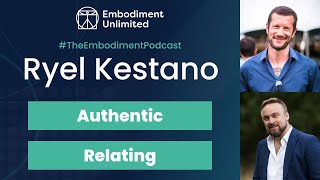
Ryel Kestano, co-founder of Authentic Relating International, teaches five foundational practices for genuine connection: welcome everything, assume nothing, reveal your experience, own your experience, honor self and other. He's taught the method in prisons and across cultures, and argues it works better than formulaic approaches because it focuses on listening, not scripts.
Chapters
Okay, on the show today, Raul Castaño. So Raul is co-founder, one of the teachers of ART International Authentic Relating Training. Am I getting— have I got the acronym right?
Well, you have indeed.
I had done a little bit of it, hear very good things from students, and I know you're one of the top people involved in this world, so welcome.
Thank you. Pleasure to be here.
How did you get interested in authentic relating? Like, you know, talking about feelings and connecting and all that girly stuff. Like, how did, how did that happen?
Yeah, I mean, honestly, out of necessity of my own life. It wasn't that I ever set out to specifically explore this or learn about it or teach it. I was really suffering and struggling in my relationships, my marriage primarily, and I was at least able to notice that there were there was evidence of some kind of underlying recurring pattern, but I couldn't put my finger on it. I couldn't penetrate it, couldn't figure it out. And then we kind of hit a rock bottom, and that was really the catalyst for me to like, okay, I need help. The universe, show me the way. Sought out any teachers, retreats, modalities that I could possibly find, did everything I could. This is like the very first step I'd ever taken in any kind of deeper introspective work or therapy or anything in my entire life. And it was in the midst of that that I was invited to my first Authentic Relating/Circling immersion weekend in Boulder. That was 10 years ago. And out of everything I had tried and experienced, the moment that I sat down in that first circle, the experience that I had of being fully welcomed and worthy of people's attention and curiosity was a brand new experience for me. I'd never felt anything like that before. In that even in just that moment, something healed, something opened. I had access to a deeper level of vulnerability that I never had access to before. So I was blown away even in just minutes of that first experience. And from that point forward, I said, I need to understand everything I can about this practice. Like, this is extraordinary. And even in that early stage, I could start to perceive that there was a universal access to the social technology unlike anything I'd ever been exposed to. I really believe that the skills and tools that I was learning and practicing and using to experience incredible transformation, not only in my personal relationships but professionally and elsewhere, just had massive worldwide implications. I thought these are the skills and tools that people need. Yeah, a foundational level to be able to create the relationships that we all deserve, and I would even say have the right to have. I've come to believe that healthy relationships are a human right.
A right, a right. That's a big thing to say. We'll come back to that. I didn't even know that. All right, let's take it back a step. So it's hugely important how we connect, how we relate, how we converse, how we get on with people. And I think most of us hit a pain point at some point. You know, we realize we're screwing up our careers or marriages is a big one for people, like you mentioned, kids is another big one. Some sort of pain point where we go, we're not taught this and it's a skill and it's an essential skill for life, right? Like a critical skill for our happiness and well-being. And yet we're not taught it.
That's right. Exactly. That's it. I mean, that's what I know. It's like I never got the education on how to create and participate in skillful relationship. And as I started to talk to people, hardly any of us did. It's the class that they actually didn't give us. In school. And it's just as you said, our entire lives are revolved around relationships with other human beings. And it's the quality of those relationships, I think, that have an enormous influence on our sense of well-being. And yet it's a completely— it's a huge gap in our education. So ART, the organization I co-founded, our mission and dedication is to provide that missing education for people and to give people very simple, basic skills and tools that they can bring into their relationships immediately with everyone and be able to experience access to nourishment and depth and intimacy and vulnerability that is potentialized in every human interaction, conversation, and relationship.
Yeah, yeah. So all the studies show, don't they, that sort of the quality of our relationships determines a lot of our happiness. A lot of the career studies that it determines a lot of our success, you know, great leadership, great communication, great sales, all those things. But we're just not taught that, so it makes sense. Let's just go a little bit into some of the things you studied and let's kind of, before we get more into art particularly, I want to kind of map this for people. So there's different systems out there, right? There's the nonviolent communication. We've had guys send stock on, on circling. We've had the European circling guys out who, you know, Marissa and John, they're friends of mine, you know? So there's all this, and there's probably, I've heard of verbal judo that was ancient. I've heard of all these systems. Let's kind of map the territory a little bit. We don't have to badmouth anything, but just to kind of map it out, you know, for sure.
Well, you know, I, I think any modality that brings elements of skillfulness and consciousness to the relational space is important and valuable. Um, so I, I'm excited and, and grateful that these modalities and teachings exist. I mean, NVC, nonviolent communication, you know, sold millions of copies, uh, and has made its way around the world and has really supported people in developing a framework to be able to be in conscious relationship. I personally, of course, I mean, I'm biased, but I think authentic relating goes further than any of them, primarily because it makes these skills and tools universally accessible and applicable. It doesn't require or depend on any kind of prior value system or training or experience or anything like that. I mean, just to let you know, I started a nonprofit along with Art to bring this work into prisons and jails and work with inmates because I wanted to test the hypothesis that authentic relating is relevant to everyone. Everyone regardless of their background and walk of life. So I started bringing and teaching this work to inmates in, in the jail here in Boulder and then throughout the state, and it was mind-blowing. I, I couldn't believe— I, I believed it was going to happen, but I couldn't believe how readily they picked it up and applied it even in the prisons with each other and, and, and cultivating a transformation even within the, the facility.
So, you know, language matters there. Sorry to interrupt, but if you tried like a classic NVC, you know, I'm feeling and I'm needing that. Yeah, those guys would be like, shut the fuck up.
Well, exactly. And then, you know, a huge part of our mission too is to go to where people are already living and being and, and relating around the world. We didn't want to make it like, hey, you need to come here, pay a lot of money, you know, take time off of work. We really wanted to make it as accessible, lower the barriers of entry as low as possible. And so, you know, I've had the opportunity to sit down and relate and connect with people from countries all across the world. And universally, there is a shared human experience. For me, authentic relating is the language. It's the universal language of human connection. And now our work is being translated into multiple languages so we can, you know, bring it to ever more people. And I think, you know, NVC is probably the most well-known of these conscious relating modalities. And while I love it, I think it can be a little bit clunky in its formulaic structure. And it also has a lot of emphasis on naming and expressing needs. But they themselves, there's a shadow. I think there's a way that the expression of needs can actually undermine the fabric of relationship because it's like I can say, I need you to do this. I need you to do all kinds of stuff. To make sure that I get to have the experience that I want to have here with you. And in authentic relating, I think we go deeper to the values. What are the values that I hold? What are the values that you hold? Let's bring those out and name those and then construct relationship around those values. And it's the needs that are an expression and manifestation of the underlying values. So I think it's important to drill down and penetrate, you know, into these subconscious layers of being to see what people actually care about in relationship and life and work in community, and then build relationships based on the striving to honor those core values.
All right, let's get into the nuts and bolts of it then. So I've done a few little things with you guys, but not much. You know, let's say someone turns up fresh to a workshop online, in person, whatever. What are you— what are you going to teach them?
Yeah, well, the very first thing is I say Authentic relating is an embodied practice. It lives in the entire body, and it requires our ability to be aware of our embodied state of experience in any given moment. And the key, the catalyst to be able to tap into the sensations, emotions, and experiences of the body is to slow down. That is the number one skill that I teach everyone, regardless of the context or the audience. I tell people, hey, and for the next hour, day, weekend, we're going to slow way down so that we have an opportunity to feel more, to experience more, to notice more of ourselves, of each other, of the shared space. So that's the very first thing I share. I often say at the beginning of workshops, if I had a megaphone that I could speak to the entire world through for 5 seconds, what would I say? What I would say is slow down. That's it. And then spend them— I would say that for the first 2 seconds and spend the next 3 seconds in silence. And then from there, we move into what we call the 5 practices of authentic relating. This is something that we developed early on that act as a kind of foundational basis. It's almost our Ten Commandments that we build all of our courses and programs upon. And so the 5 practices really are a way to create and build a context, an explicit context for the work that we do. And I can run through those if you like and just give some—
Yeah, yeah, just give us the overview and then we might drill down into some.
Yeah, sure. Yeah, so, and again, these 5 practices, they came from living this work in the world with people in all different kinds of social contexts. So it really was as if the practice spoke to us through our interactions and embodiment of the work in the world. So the first is welcome everything. And for us, this is sort of the first step. It's the gateway to be able to access the remaining territory of this practice. So welcome everything means becoming aware of, turning toward, embracing, giving space for. It's recognizing where it is that we suppress, avoid, fragment aspects of ourselves or our experience off from us. It's a recognition how we don't acknowledge aspects of ourselves, of each other, of the world, of relationship, and how those splits and fragmentation undermine and sabotage the very objectives we're trying to reach in relationship. So welcome everything is becoming aware of everything doesn't mean agreeing with everything, simply becoming aware of, conscious to. The second is assume nothing. And this is the invitation to check our assumptions. Assumptions distort. The channel of connection between people. There are relationships that have gone on for decades with built-in assumptions that have never been revealed or checked out. So assume nothing is having us first feel and notice the assumptions that we are making about each other and then to bring them out, to reveal them. Hey, I'm assuming this about you. I have, I've had this assumption about you and I want to check it out with you. Does it feel accurate or not? And so this is a way to be able to set aside the distortions of relationship and be able to come into more accurate and intimate relationship with people. The third is reveal your experience. And this is really built upon the belief that deep down, basically all of us, most of us yearn to be seen, loved, welcomed, heard, honored, accepted for who we are. We don't need to be anything or anyone other than who we authentically are. And that should be worthy of acceptance, of love, of welcoming. And yet, even with that longing that lives in many of us, how many of us are actually revealing ourselves? We long to be seen, but are we revealing ourselves so that we give other people the opportunity to see us? And the answer is often not. So Reveal Your Experience is invitation to create a kind of window or transparency into one's inner world so that people can experience us from the outside as we experience ourselves on the inside. The fourth is own your experience. This is the invitation to take responsibility for the experience I've had in the past, the experience I'm having now, the experience I want to have, and to check where it is that I'm blaming other people or I'm outsourcing the source of my experience to people or to external circumstances. And if that's the case, I'm just at the whim of other people's decisions or external circumstances that I can't control, which inherently is disempowering. It's like if I need you, if I need you to say something or apologize apologize or show up in a certain way or behave in a certain way for me to have the experience of relief or connection or anything, and you never do, well, I, I'm the one who's paying the price for it. So own your experience is a practice of re-empowering and reclaiming the ways that we have outsourced the sources of our experience to external people and circumstances. And it should feel empowering. I can make a difference in the experience that I'm having. I can look within. I can release the people outside of me, let them be who they are, and cultivate the experience I want to have within. It also means looking to see where it is that I can take responsibility for my contribution to any dynamic of conflict or tension with someone. It's so much easier to say, yeah, this is your fault, so you clean it up and then we can have the relationship that we want to have. So it shifts the frame from what can you do to make this relationship better to what can I do to make this relationship better. And then the final of the 5 practices is honor self and other. Which really is a natural and organic outcome from living in alignment with the prior 4. Honor self means knowing myself well and deeply and wholly enough to know what are my values, needs, and desires, and then to live my life in alignment with those. So much suffering, I believe, arises from people living out of alignment or overriding or suppressing their core values, needs, or desires. I, I am sort of challenge people to look back at their relational history and be able to see what it was like when they overrode something that was important to them, a need or desire that they had, how that felt. Usually didn't feel good. And so, you know, this also points to the fact that authentic relating doesn't in any way say you are supposed to be in relationship and connection with everyone all the time at all. You know, it really has us check ourselves. Where is it that I can remain an honoring of myself, while still being in relationship with other people. And then honor other is simply that mirrored outward. What are your values? What do you care about? What matters to you in relationship? And then let's create a container of relationship in which both of our values, needs, and desires are being honored. Or if you scale it to a group, to a family, to a company, and beyond. And so really all these 5 constitute a way of being able to live a conscious life, a life that allows for deep and profound healing, intimacy, health, vitality, enlivenment in relationships, both at the individual level and at the collective level.
All right, it's a lot there. And it sounds kind of theoretical in a way. Like, what I want to jump on is something that I experienced when I did some stuff with some of your students is they played like little games. It was, you had structures. It wasn't just this abstract theoretical thing. And they were quite fun. Like I've had experiences of sort of sitting in groups around communication and it just being fucking painful. Not like emotionally painful, just like dull and like, oh, you're talking about how I'm feeling about how you're feeling about your feeling. Yeah. And it was just like a circle jerk. And then what I liked about this is it actually felt like, um, like it felt like, oh, there's some little exercises. Oh, I'm learning something. I'm building a skill. You know, there's skills here. This isn't, this isn't just abstract philosophy.
Yeah, exactly. It's a training, right? It's like we're training people in the skills and tools so that they can take those skills and tools and apply them to their lives and relationships independently of our mentorship or guidance. That was the whole purpose. It's like Give a man a fish, he eats for a day. Teach a man to fish, he eats for a lifetime. We're teaching people to create meaningful relationships in their lives forever after, right? So it's inherently skills-based, even though I think there's a profound spiritual component to this, right? It's like tapping into the ancient instinct to be in connection and community with other human beings, right? I mean, we're becoming ever more isolated, obviously. I mean, just look at the state of the world. We're becoming ever more pressed into our corners. There's more and more polarization. You know, yeah, I was going to ask you about that.
It's one of the things, like, the other one I want to ask about is really is online, like, communicating now on Zoom. It's not the same as being in the room, but it's okay. You know, I can see a third of your body and we can't smell or touch each other, but, you know, this is exactly eye contact, but more or less I feel this warmer. I'm also having a lot of communication by text, like WhatsApp text.
Yeah, it's junk food. It's, it's junk food connection. It's not nourishing. Yeah, right. It's like, it's functional, it gets the job done, but we're denying ourselves of the deep nourishment that's available and necessary in real-time shared space human connection. It's like, again, it's like rates of depression, suicide, anxiety, you know, medication, all these things are skyrocketing. Why? Why is it? I believe it's because we are losing access to meaningful human connection. Yeah, it's critical. That's why I say it's a human right. If we're not in connection, we wither and die.
This is absolutely essential for our well-being, right? Like, our physical well-being is intricately tied to our social well-being. And, you know, I'm like virtual working in another country right now. I can barely talk to most of the people around me. You know, I was just in London where there's people from all over the world, and, you know, hey, diversity, that's a good thing, but no one can communicate. People are just about able to communicate together.
Well, I want to say too, you know, it's actually less— in my world, it's less teaching people how to communicate and express and actually more teaching people how to listen. I think that's the great missing here, is the missing of meaningful listening, right? And the gift that true, real, active listening is when it's offered to others, to other people in our lives. We were not listened to very often. And so I think, you know, enormous, you know, gift and opportunity in this practice is teaching people how to listen and offering a space of listening for other people's expression.
Yeah, yeah. I did a bunch of mentoring calls today, and sometimes I feel like the only thing I really do is just listen and be a bit encouraging, maybe on top of that, you know. I don't really have to do anything too skilled beyond that. Encouraging people wanting a real relationship with a real teacher bit of encouragement.
It's not exactly—
hard question. Do you think we're pissing in the wind here a little bit, Ryle, in the— so much of the way modern life is set up seems the antithesis. Like, social media does not encourage people to listen. Modern city urban living doesn't encourage people to connect. Virtual working and digital nomadism doesn't encourage people to connect. Like, do you think, like, the way the world's going is just so anti-this? Like, it's like— I mean, it's— I don't want to say it's hopeless, but it does feel feel profoundly countercultural in some ways.
Yeah, well, I, you know, I think it's, it's natural, you know, with the advent of technology and our ability to have access to real-time news, constant, constant feed of news hitting us, hitting our screens, hitting our devices, right? It's like you look through the lens of, of this technologically mediated window out into the world, and it's like, oh my God, the world is in absolute chaos. Right? It's like dangers are lurking, threats are coming at us from every direction. What do humans do when they're, you know, faced with an array of threats around them? They're going to find their tribe. They're going to find wherever it feels safe, and they're going to hunker down there and weather the storm. So I think it's natural that we're seeing, you know, a breakdown into tribalization across the world as people make sure that they find their strength in numbers and have people around them that they can feel safe with. So It's not that surprising that a phenomenon like this is happening. And, you know, I think that the evolution of humanity works in cycles, right? There was an era of our past in which, you know, you had warring tribes, enemy tribes fighting each other, you know, trying to claim land or resources. And then at some point there was the advent of trade. It's like, oh, we actually can benefit more by trading with each other than fighting with each other. Right. And so that went through that cycle. So I think like there's some kind of collective intelligence to the cycles that we're facing. But, you know, I, I think there's a growing— I mean, for sure I'm seeing a growing backlash against this kind of junk food style of connection and the ways that we are just closed to listening, fighting to score a point, and, and really never getting anywhere. It's a permanent stalemate. And so I, I think there is starting to become more of an awareness and value for meaningful connection. I mean, I love these, like, I remember watching a show where they took people who would otherwise be in massive conflict because of their values. In this one case, they took a newly arrived immigrant to the United States and then somebody who was like extremely anti-immigration, and they put them together and all they did was have them eye gaze for 5 minutes, right? And then 3 10 minutes into it, the tears are running down both their faces.
Yeah, yeah.
So it lives in us, you know, it lives in us. Like, it lives underneath these calcified layers that we've taken on, uh, that has us reactive and tribal. Um, so it's deep down in there. Again, in the work in the presence, it's like I've worked with rival gang members and gang leaders in the same space, you know. And it's, it's like when we spend a few hours together in these practices, these exercises, applying these skills and tools, all that garbage melts away. You know, all the surface tension melts away, and we realize that we are experiencing an experience of shared humanity that grounds us, that has us feeling at home with each other, and has us recognize that we're all tiny specks of consciousness floating on this minuscule pebble floating through space. And the shit that we fight about is just such a waste of time.
Blue team, red team, right? Bloods and Crips, Democrats, Republicans, blue, red, blue, red. And I mean, America's fucked right now with the polarization. I mean, the whole world is, but particularly the States, in my experience, that just— there isn't almost a possibility of listening. There's entrenched positions of I'm right and I'm ideologically— I've got a whole framework around that, a whole language around that. And I'm even seeing sort of kind of concepts from personal growth and particularly therapy. You know, I've had people say, I'm not talking to you anymore because it's boundaries. And there's a text message they've sent, you know, being— and some— there was also the normalization, like ghosting, which used to be a term from dating. I've had that professionally to me. I had, you know, a student just ignore my emails and messages. I'm like, what have I done? Am I fucked up? Have I upset you? You know, tell me what's going on. I just got nothing from them.
Yeah.
So like the normalization of some of these behaviors which can be justified with this whole ideological framework, it's not just— not— it's not just bad communication.
It's—
there's a reasoning and a justification and a whole framework behind that.
Well, it's like, I mean, our neurobiology has not hardly evolved from 10,000 years ago. While the state of the world has evolved at an insanely accelerated pace, I mean, essentially our nervous systems, our brain functions, our neurobiology has remained more or less unchanged for thousands of years. And so it's still, you know, oriented to an environment in which we had our small tribe or village. We had the people that we related to throughout our entire lives, the same people. And that was it. We didn't communicate with anybody else. And so living in this world, we're just bombarded by opportunities for communication with people we often hardly know and aren't maintaining a regular contact with. I don't think it's any wonder that there's a breakdown in the communication paradigm. We can't keep up with it. You know, I, like you, I have people, you know, not returning messages or just dropping off. I take it personally, or what does that mean about me? But if I drop that, I recognize like nobody can keep up.
Quantity issue, isn't there?
Yeah, it's impossible.
It's impossible in the space. Like, my phone's on airplane mode, right? But in the space of this call, we've been on here half an hour. I'm not going to do this, but I guarantee if I turned on my WhatsApp, my email, my Facebook, and my Instagram in the last half hour, I would have had messages. And I'm not boasting about this, I just don't know what to do even about that situation.
Right.
Then I have to go, okay, well, this person's a student, I want to respond to them. This person's a friend who I want to stay in connection with. I mean, I've just— even on this interview, I've thought of like 2 people in this field I haven't talked— I've like, shit, I haven't talked to Guy Sinstock in ages. He's amazing. Where's he going? You know, I should give him a call. You know, like, it's like, ah, it's too much.
Yeah, totally. Well, I mean, just remember the days. I mean, you're old enough to remember the days before, you know, the internet and devices and smartphones. We actually wrote letters to each other. We called each other. You know, I remember the days you call somebody up on their landline and you'd say, Hey, is, you know, Joe there? You know, and the person would be like, oh no, they're out right now, right? It's such a simple time, you know. And, and the cadence of communication was much slower and much more spacious and less like laden with expectations, right? It's like if I don't get a response from a friend in a day or two, it's like something's going on, you know. Uh, and, and it's just, we just haven't been able to keep up with the rate accelerated development, you know, that we're seeing in the world. And something really, I think, really important is being lost in the cracks, and we're seeing the consequences of that loss manifesting in these breakdowns, these tensions, conflicts, polarization all over the place. I don't know where it's going. It's a bit unnerving, I would say, you know, to sort of try to read the tea leaves and see where this whole thing is going. I wonder if there needs to be some major breakdown that has us actually, you know, like COVID I think was an opportunity for us to get to know our neighbors, so to speak, you know. Yeah, yeah, come back to the local level. Um, and I think that's really important to, to actually kind of retract from trying to track the entire world and start to cultivate more of a sense of neighborliness and connection with the people that we live with.
Well, seeing how well the Ukrainians have bonded with each other and got better at communicating with each other since the start of the war, the only solution I see is an alien invasion. Because that would just create that for the whole planet. We would have to get our shit together. So I'm calling that one in.
Yeah, some great reset of some kind. I think that's it. I mean, it's like I remember— I'm old enough, too, to remember the 9/11 and World Trade Center bombing or attacks. And, you know, I remember how it was, you know, in the United States and the days, weeks, months after, there's a kind of real bonding. Let's set aside our differences and come together to support and love each other, you know. And so in the face of crises, we remember our deep nature of connection, of bonding with other humans. In an experience of shared community. You know, my, my mom's from Kansas. I, my half my family's in Kansas, which I don't know if you know, but is in the middle of the country from a similar area in the UK. It's the Kansas. Yeah, yeah, exactly. And it's like I grew up in very progressive liberal environments, you know, in the cities, and I always, you know, you know, falsely judge my own family as being sort of ignorant and backwards and misguided and all these things. But as I got into Authentic Relating and started spending more time there, I actually realized how much I was missing. And one of the things I was missing was a deep and abiding sense of community that they have there, right? They're actually probably closer to the spirit of this practice than other people who come to our workshops, in the sense that they really care about each other, even intergenerationally. You know, it's like there's a, a sense of an unchanging, reliable, consistent value for neighborliness, for community, for caring for each other, looking after each other, rallying around those that are needing support. It's a beautiful thing, you know. Yeah. And they're really a model for, for the rest of us in cultivating a sense of meaningful and authentic community, uh, among the people that we live with.
Yeah, that also can relate to that. I've also seen it in Southern Europe compared to Northern Europe, you know, in terms of connections and the sort of social, social bonding and Part of me has kind of come to the conclusion that kind of progressive urbanites are just kind of selfish, narcissistic cunts, and I'm not sure there's much hope for us by going on a weekend course to learn about communication.
Yeah, well, yeah, I mean, it's tricky. I mean, you know, we at least want to get the ball rolling, you know, at least like let people know, hey, there is a whole body of practice of skills, of tools that are available for you to use to experience a deeper sense of connection. And what I really like, one of the implications of this practice that I really love is the ability to connect with total strangers, just moving through life in a meaningful and sort of present moment way. It's a rehumanization. We can get lost in roles. You know, it's like, oh, here's the person who's scanning my groceries as I check out. Here's the Uber driver. Here's the teacher, the police officer. Well, inside all of those roles and uniforms, is a human being that I have something to learn from and something to offer to.
There's the piece on roles, right? But then there's also like, I've noticed this increasing objective. I first noticed that in the States actually, then it spread to the UK. This is often the case. This— another person exists to do something for me. Like the Uber driver just turns up. I don't even see their face sometimes, you know, back of the head. Mark.
Yeah.
Okay. Car goes where? Or the one I used to hear in the States, which spread to the UK, was, 'Can I get this in coffee shops?' And there was just some sense that the person working in the cafe was just a coffee delivery device. Yeah, yeah. It's just that spread, that objectification of others.
Exactly. Yeah. It's just everyone's become a utility of some kind. I think we're going through radical dehumanization across the board. I mean, how do you train soldiers to kill people on the other side. You have to dehumanize the enemy. It's the only way that you can get humans to pull the trigger and kill other humans is to dehumanize them. They're scum, they're rats, they're here to rape your women.
Yeah, yeah.
And, and so that's happening everywhere. It's like you can attack somebody that you've dehumanized, right? You've forgotten, oh, there's actually a human in there.
Well, in Ukraine it's orcs, so the Ukrainians call the Russians orcs, so they're literally humanizing them. And I've sort of said to my team and friends, I'm like, look, I get it, you're in a lot of pain, your country's been invaded, horrible atrocities are happening, mostly from the Russian side. Like, really, there is a difference, it's not 50/50.
Yeah.
And, and I've said, and, you know, if you want to be brave, if you want to try this with me, you know, please don't use orcs as a term because it is really like a— and then if they do, I kind of, you know, I don't fucking give them a hard time about it. They're going through enough. But I've seen that dehumanization. I know where that leads.
I know where that Oh, definitely. I mean, I remember we were invited to deliver a course to the sex offender unit at a maximum security prison in Colorado. And in prison culture, the sex offenders are the lowest of the lowest of the low, right? Like the other side, right? Yeah, you don't look at them, you don't acknowledge them. They're, they're, they're scum, you know. They're, they're just the lowest and worst form of an organism you can imagine. And so, you know, I'm being called in to, to meet these guys, to spend time with them, to teach them, to, you know, go deep with them. I mean, I have 4 kids myself. It's like, it brings up a lot, you know, to venture into such territory. And yet, you know, I'm like, I will go sit with someone and meet someone and connect with someone no matter who they are, what they've done, where they come from, anywhere in the world. Like, that's how much I care about really bringing this work and practice out to the world. And so we went down to this facility and met these guys. You know, I remember watching them file in and sit down. I was like, you know, from, from just first glance, they just kind of look like humans, right? Without knowing their entire history or story or biography. And as we sat down, it's like, and over the course of the 2 days that we taught this course, like, I really see the human in you, you know? And they got to have the experience of being rehumanized by us. And it was remarkable to see like a kind of like spark spark or light or life come back into their eyes, their faces, their bodies. And I realized in that moment that it was in, in basically all of those cases, it was the complete absence of meaningful and nourishing connection from their lives that led them to make these dysfunctional and toxic choices just to try to get connection anywhere they could, as distorted and warped as it was, right? As a need and, and, and, and call to experience connection, if they'd had the opportunity to experience and be imprinted with healthy connection from an early age, I'm positive that their lives would have unfolded very differently, right? And, and so it's— I'm all the more passionate about bringing this work and getting into the hands of young people, right? It's like, I have suffered immensely by having no idea how to navigate through challenges in relationship, which is what drove me to find this practice in the first place. So it's like, I want to save people from unnecessary stumbling and suffering.
Even a little bit can help, right? Like the difference between someone who's completely unskilled, someone like myself who's learned a few tricks and, you know, we're not— if there's a scale of 1 to 10, I might be a 1 or a 2, right? But not being a 0. And it's like just going, okay. I remember saying to one of my employees yesterday, it's like, what's the request here? That was just something I picked up from MBC. And it was like, and then the whole conversation just got a lot better because it was like, yeah, I mean, sometimes those little things can be really helpful.
Exactly. I mean, going from 0 to 1 can transform the entire world on a scale of 1 to 10, you know. Uh, and that's the thing, that's, that, that's why I became so passionate about this work is because these skills are so simple. It's like, take something like reflection, right? It's like, okay, somebody shares something with you, don't just take the attention back and start talking about you again. Take a moment to be with them. Let them know what you're hearing, right? Like strive to really get them and understand them and have them have the experience of being seen, received, acknowledged, and gotten. Just that alone, you know, can completely transform the quality of a conversation, a relationship. You know, just like we have a huge emphasis on the here and now, what's happening right here, right now. How are you right now? How am I right now? How is this conversation going? Like, I teach an authentic dating course and dating coach here and there. And one of the most powerful questions I have people ask on a date is, how is this date going for you? Can I share how this date is going for me? Right.
So not everyone is comfortable with that. Like, if you move to like, for example, we could go into the relating mode now and say, hey, it seems like this conversation is kind of lively and it's passionate and there's a bit of banter, you know, and yeah, it is. Or no, I don't experience that way. We could probably do that. Pretty easily, right? Like, John does that all the fucking time, my circle of friends. And it's like, it's fine. But I noticed if I make that move with some people, they're like, why are you talking about the substrate of what we're doing? It's kind of—
yeah, I, I get that. So I played this game when I first started, um, you know, being exposed to authentic relating. I was running an 80-person marketing company before then, traveling around the country constantly on airplanes. And I played this game where I was going to strive to experience intimate connection with whoever sat to me on the airplane, no matter what, and just experiment just to see what it would be like, just gathering data from the field.
Yeah, yeah.
And I would just— I wouldn't go like, oh, you know, what are you experiencing in your body right now? Or anything ridiculous like that. It would just be simple, you know, how's your day going? Where are you headed to? You know, with a genuine desire to learn, to listen, to be with. And I would say 95% of the time time, you know, maybe even more. We got to experience not only a meaningful conversation, but in many cases, like, deeply memorable, deeply intimate, um, emotional moments of connection. I mean, tears, laughter. Like, stayed in touch with many people I met that way, you know. So it's, it's, this is just basic fundamental human connection. It's not fancy, it's not meant you know, like take people off of, off of some kind of, you know, reliable or familiar territory. It's really just illuminating what's already happening. I mean, authentic relating in its core is just simply revealing what is already happening. It's not contriving anything or bringing anything new into the space. And honestly, I think maybe it's uncomfortable for people to be asked a question like that. But on the flip side, I think we crave novelty. We crave the new. We crave getting off of the same boring, tired, old scripts, right? Which many, in this case, many dates are, oh, you know, what are you doing? Where are you from?
It's just conversation, right?
It's flat and dead, right? And just to ask something like, hey, uh, like, how is this conversation going? How's this date going? How are you feeling right now? There is no script for that, right? It's, it's happened. The script is being written in the present, in this very moment, in the here and now. And I think people crave of that novelty, excitement, edginess, you know, venturing into new territory, getting off of these old scripts. So I think in many cases that what people describe as uncomfortable, it's actually exciting as well.
Yeah, people like a live conversation, even if that doesn't sound like it. I always feel like there's these classical forms and every, you know, kind of exercises that point people to just having a live I noticed the difference on podcasts. Like I said this to you before we hit record, like about 1 in 3 or 1 in 4 podcasts is dead. It's flat. I'm fucking bored. Yeah.
You know, occasionally even tell the guests I'm bored, but it's like, but like, but that's awesome to be able to say, I'm feeling bored here with you right now. Like, that's interesting. It's interesting that I feel bored, you know, like that, that's What I love about this practice is that it includes everything. I feel disconnected from you. Like, that's interesting. That's worthy of curiosity. Let's check that out together, right? Like, why is it boring? What is the nature of boredom here?
You might go there. Last time I did that in a sharing circle that was going on for fucking hours at the end of an event, I got banned from the event afterwards for saying I was bored. It's like, that's what was true for me, you know?
Like, I'm bored. I think being banned is a sign of pride in some certain circumstances. Sometimes, right?
If I can't say I'm bored, it's no sharing circle, really. Um, so another one— took going to sharing circles— I do a lot of workshops, participant, trainer— and new things started happening. At the beginning, you go around the circle, introduce yourself, right? People used to say, hey, my name's Ryle, I'm from Boulder, I teach this. Now they say, um, whatever, these are my pronouns and these are my mental disorders. Yeah, like, um, my pronouns and my, you know, I suffer from autism and PTSD and anxiety and I'm neuroatypical. Now I'm neuroatypical myself. I'm not against this kind of thing. You know, people can call themselves what they want. As far as I'm concerned, it doesn't bother me. You know, you want to call yourself Jack or Jill, it's all good with me. Yeah, but something shifted in terms of a sort of this identified thing that seems like a barrier to actual connection because it's like, like you were talking about roles earlier. That's just the Uber driver. It's like, I'm this and you're a white cis male or a member of this oppressed group or— Yeah, that kind of intersectionality to me seems to be quite a barrier to actually authentic.
Yeah, but it's, it's for me, it's the surrounding content. It's like, what is, what is the surrounding context around those namings of characteristics or elements of identity? Because I actually want to know what has us be different so that I have a place to explore what I can learn from you about the world, about how you see the world, right? It's like we're all only looking through the tiniest of slivers into reality, right? It's like I want to enhance my perception and relationship with reality as broadly and deeply as possible, which means I need to listen to and get curious about people who are different than me. And the more different somebody is from me, the more I actually have to learn. It's like when I went into the prisons, you know, sitting down with an inmate, like they've lived radically different lives. And we've learned so much from each other. So when I'm, you know, somebody comes into the circle and they're like, I'm this and this and this, it's like the surrounding context is wonderful. Like what a basis for us to explore what makes us different in service of our learning from each other and teaching each other about a way of living in the world that we might be missing. You know, I mean, I get that there's— that's why the context is so important, because in a different context, it's like, No, like, these differences actually act as walls between us, right? Where we're erecting walls between us based on our affiliations and identities and, and disclosed characteristics. You know, in, in my world, and what I'm trying to teach people, is that those are the basis for fascinating and never-ending exploration about how we each see the world. It's like, it's boring to be with people who see the world exactly as I It's like, I already know that. I already know that for sure.
Right. But I, and I, I'm with you in terms of difference is interesting and I might not see the world that way. So sometimes that's useful. Like I was marking an exam where a coach was working with a woman on breastfeeding and quitting breastfeeding today. And I was fascinated. I was like, I'm never gonna have this experience. I don't think I can coach adequately on this experience.
Yeah.
You know, I was coaching the form, not the content, obviously. And, um, I was evaluating the techniques being used. And I was fascinated because I was like, this is so different than my— I've never coached someone on breastfeeding because probably no woman's going to ask me about that as a coach. That's interesting, right? But I guess what to me feels more is going on with these identities, which are very limited categories, right? They're just certain categories that are deemed as important by North America. And it seems more like a power move or something. It doesn't seem like, hey, here's a really interesting way in which my experience might be different from yours.
Well, again, it's, it's, I, I want to be able to zoom out and understand. It's like so much of this practice is to, is to spend the time to seek to understand where people are coming from and not just to take the surface expression as enough of a reason or basis to put them in a box and close the door and lock, lock it and throw the key away. It's like, that's what we're doing, right? It's like, oh, you're Black, you can— I can put you in this box, and now I understand everything about you because of the box that I put you in, you know? I mean, it's— that is inherently dehumanizing, right? And, and so, yeah, I mean, I'm just one person, and we're just one company, and our graduates are just one body of graduates, but I'm doing the very best I can to convey— it's like No, we're not trying to eradicate differences between people. We're trying to actually celebrate differences as an opportunity to be in dialogue and learn about each other. It's like, man, like, I mean, these sex offenders, for instance, like, oh, you know, you might think like, what the hell do I have to learn from people who live their lives this way and made the choices they've made? But man, when I hear their stories of their childhood and background, I mean, I remember one guy, his parents were brother and sister, right? And he had 8 siblings and they were all fucked up in some regard or another, you know? Hearing his story of where he came from and what he endured and the challenges arrayed in front of him, like, dear God, like, compassion more than anything, you know? But it requires like some time to spend with somebody versus just reacting from the surface expressions, you know? Like, you're different and I'm different, period. We got nothing in common, nothing we can talk about. You're on that team, I'm on this team, we're gonna fight it out. And there'll be one winner. It's like, where is that leading us? Where is that going to go? You know, at some point, even if there's just a complete meltdown of society, at some point we're gonna have to learn to get along with each other, even if that means rebuilding the, you know, a broken-down world. So I want to, I want to be one of those people who, who can remain and, and facilitate, you know, dialogue, connection. Exploring the nature of differences in service of enhancing our worldview so we actually can find solutions that honor all of us.
Nice. And I'm glad my sister's not hot. Marianne, if you're out there, I love you, but not in an Alabama kind of way.
Okay, Marianne?
Yeah, that's right. That's just me being silly. So this has been great. I've enjoyed this. I love your passion for what you do. And, you know, I can really feel like it sounds like it just means a lot to you. You know, what you're putting in, what you're putting out there. Um, what's in the new book? You've decided to put pen to paper. I've had a kind of skim read of the PDF. So, um, yeah, what's in the new book? Tell us about that before we wrap.
Yeah, here's, here's the book. It's always a trip.
There we go. There's a plug for you.
There's words in it.
It looks nice. Looks nice.
Put together.
Is it published by—
is it published by— self-published. Yeah.
And it's called Authentic Relating.
Authentic Relating: A Guide to Rich, Meaningful, Nourishing Relationships. Um, Yeah, you know, it's one thing to write the book, but it's a whole other thing to actually get it out into the world and promote it and tell people about it and get people to buy it, you know, which is the part I don't like. I don't like promoting and marketing and all that. So this is definitely my edge, you know, to put it out there. But I mean, yeah, I mean, it's like it's, it's, it's in perfect alignment and is a perfect expression of my value for bringing and sharing this work with as many people as I can. And there's something about writing a book that is relieving in the sense that I could die tomorrow and something that I've learned or some value I've acquired in my life can endure, endure beyond me, endure beyond the time and space that I occupy. And that's really meaningful, you know. All right, we've already sold— I've already sold almost 1,000 copies in just 3 weeks, and I'm already getting—
that's a lot for listeners. That's actually quite a lot for a book. If you—
for this, for a book in this niche, yeah, hell yeah. Uh, and I'm already getting, yeah, just feedback from people like, man, I read this piece or, you know, read this chapter or tried out this skill and it really, really worked. I got to experience something really precious and unique and profound and meaningful with someone in my life, you know? And that's amazing. I mean, that's the reason why I wrote it. That's the reason why I'm in this work. I mean, I'm in it, I don't, it's like I shun the spotlight. I don't want to be at the center of attention. I'm an introvert. I've always been, you know, At parties, I'm the one who's hugging the wall, you know, like just watching everybody else, you know. But it's like I care so deeply about this work and getting it into the hands and lives of people that I'm willing to— I've definitely been willing to be extremely uncomfortable for years now in service of bringing this work around the world and to ever more people. And it's working. Like, we are— we've reached more people than ever. Um, with this practice, you know. And, and, and it ripples out. It's a relational practice, so naturally it ripples out to other people, you know. That's what I love too, is like you can be in relationship with someone who's never been to a workshop, doesn't know the first damn thing about this practice, and they can also experience transformation in relationship by virtue of being in relationship with someone who has.
That's good as well, right? Like you're part of a movement. Like I think some of what we said sounded quite depressing today, but like if I look at the young Ukrainians I work with, they're like a different species than their parents.
Yeah, let me tell you, like, since the war broke out, we've had untold number both of Ukrainians and Russians reach out to us asking about our work. How can they learn about it? How can they bring it to their communities? You know, I've had an invitation to travel to Ukraine to facilitate connection there, you know, and create a space of listening and receiving and welcoming. So, you know, for me, the implications of this work go all the way. To the most intransigent conflicts and tensions you can name. And I really believe it can make a difference there, you know. So I want to get in schools, into government, you know, United Nations style, like wherever it can really have an impact in people communicating and listening effectively to reach a mutual understanding. I don't— it's like we don't need to agree, but at least we understand where we're each coming from. And if I spend the time investing into listening, I might learn something about the nature of the world that I was otherwise missing. Boom.
In terms of finding you online, it's Authentic Relating, just.co, right? So not.co.uk for our British listeners, but just.co. Is that right?
Yeah. So, so if you want to find out more about our itself and the courses and programs, that's AuthenticRelating.co. And then more about me, I do a lot of coaching and working with individuals, couples, and small groups. Uh, that's rylecastano.com. You can read more about the book there as well. Get free sample chapters there on my own website. So that's just my name, rylecastano.com.
And on there, there's— I did some online work with your guys. Shout out to Vicks, who I think is a mutual student and friend. Yeah, you know, I think put us together. So shout out to Vic. She's probably in Bali or somewhere nice.
Yeah, yeah, totally. Yeah, she's got a book out, fast rising, uh, superstar in, in the field.
So yeah, I like her sessions. If people get a chance— there she is on your website. There's a lot of good-looking people on this website. These workshops Yeah, for all the singles who want to connect, this looks like a place to go as well. I'm going to say that. Yeah, awesome.
More welcoming space.
Okay, got it. So yeah, love the work you're doing. Want to thank you for coming on. Got a closing, closing line to finish us off?
Yeah. I mean, thank you for being here. I hope this has been of service and of interest to your listeners. And closing line is keep your heart open and see each other. Take a moment to really see that human across the way. Spend a— slow down and spend a moment. Meaningful connection. It will serve you and it will serve the world.
Thanks, man. Well, actually, if you like that, you probably like embodimentunlimited.com and our app. So on both of these things, you can get a bunch of podcasts that aren't available here and some exclusive ones with some big names, some people you'll probably recognize that are over there. There's a copy of my book, PDF of my first book on embodiment, which seems to be— people like, sold quite a few copies on Amazon, there's a free copy there. What else is there? Loads of videos of me coaching embodiment, resources on trauma, on meditation, on yoga. And you can also chat to people without going on Facebook or any of that nonsense. So if you want to chat embodiment people, that's there. And it's on the embodimentunlimited.com, all free. And the app available at the App Store and all that good stuff. So if you like this, do check those out.