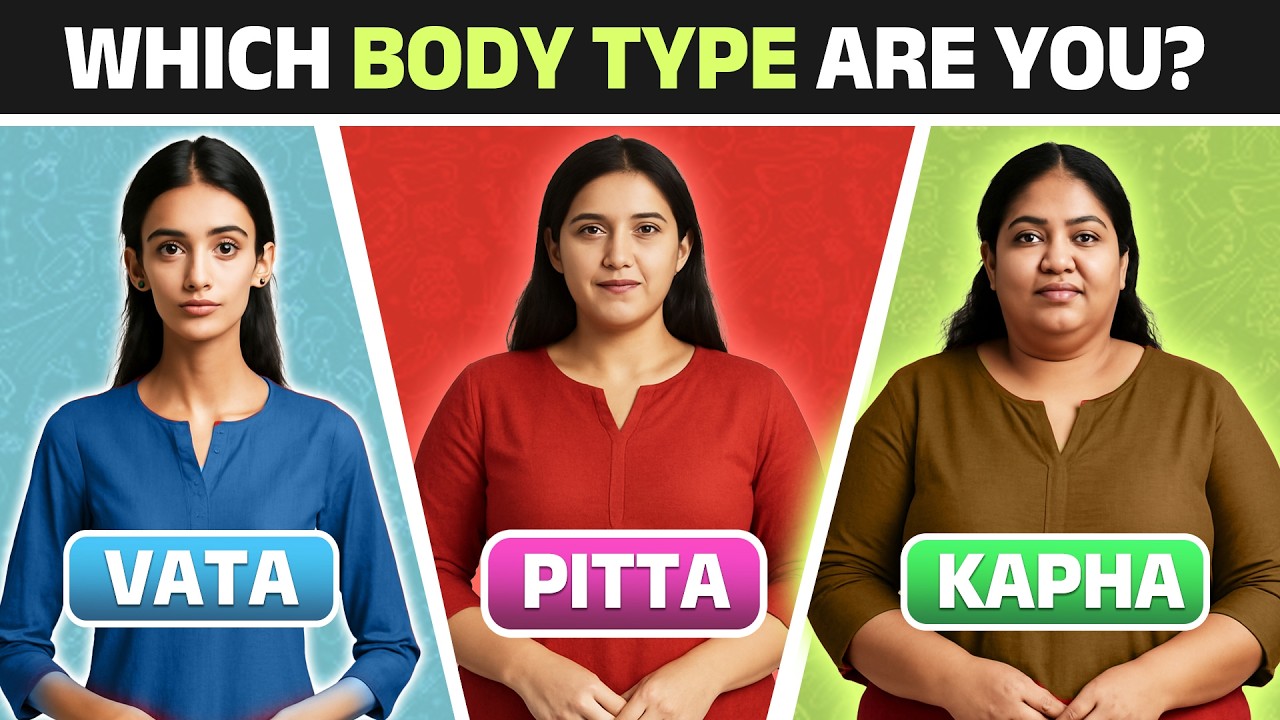
In this instructional video, Ayurveda practitioner Salima Sukumaran explains the concept of doshas—Vata, Pitta, and Kapma—as the three biological energies that form each individual's unique constitution (prakriti). She outlines how the five elemental forces combine into each dosha, describes the physical and mental traits, preferred foods, ideal environments, common imbalance symptoms (vikriti), and three specific lifestyle or dietary avoidances for each dosha. The video also clarifies common misconceptions, emphasizing the difference between a person's innate prakriti and temporary vikriti, and stresses that no dosha is superior. Salima concludes with a call to action, inviting viewers to book a personal consultation for a deeper, personalized dosha analysis.
Chapters
Have you ever wondered why your friend can skip meals and still feel fine while you get irritable and hangry if you don't eat on time? Or why some people love cold salads while others feel better with hot soups? The answer lies in timeless Ayurvedic wisdom. Hi, I'm Salila Sukumaran, your favorite Ayurveda practitioner helping you stay healthy, wealthy, and wise. And today we are diving into something every person You should understand your dosha, your unique blueprint. So what are doshas? Let's start with the basics. Ayurveda teaches that we are made up of 5 elements present in nature: space, air, fire, water, and earth. These elements combine into 3 biological energies called doshas: vata, pitta, and kapha. Vata is made of the air and space element. Pitta is made of fire and a little bit of water element. Kapha is made up of the earth and the water element. Your dosha is like your personal operating system. It governs how you digest, how you react to stress, and how you sleep, and even your natural strengths and challenges. According to Charak Samhita, everyone has all 3 doshas but in different amounts. 1 or 2 are usually dominant, and that creates your prakruti, or your natural constitution. Your body has one of these 4 combinations: Vata-Pitta, Pitta-Vata, Pitta-Kapha, Kapha-Pitta, Vata-Kapha, Kapha-Vata, Vata-Pitta, and Kapha. We will discuss these combinations in future videos as they require detailed explanation. For now, let's understand just the basics. Why is knowing your dosha so important? Knowing your doshas is like having a life manual for your body. Once you understand your dosha, you will know what foods energize you, how much rest you need, what kind of exercise suits you, and even how to prevent future illnesses. When you were born, your dosha was already set. This is called as your prakriti, your original natural constitution. It depends on your parents' health, the environment, and even the season you were born in. Your prakriti does not change. It's your baseline. But due to diet, habits, or stress, your current state called Prakriti can shift, and that's when imbalances appear in the body. When your doshas are balanced, you feel clear, grounded, and vibrant. When they are out of balance, that's when health issues like physical or emotional issues start showing up. Now we are going to understand all the 3 doshas with their physical and mental attributes, which foods and environment suit each of you, what happens if your dosha is out of balance, and what you need to avoid. Let's first start with the Vata Vata dosha folks contain natural elements of air and space. They are very quick thinkers, creative, adaptable, highly enthusiastic, and quick to grasp new ideas. Physically, they're naturally thin with visible veins and joints. They are swift movers and have dry skin and cold hands. Vata folks are uncomfortable in cold environments. Late spring and early summer are their preferred season. They love eating sweet, sour, and salty foods to balance their naturally cold, dry, and airy qualities. They should eat warm, moist cooked foods, grains, sweet potatoes, carrots, pumpkins, warm milk, fresh cheeses, ghee, and wholesome oils, lentil soups, warm drinks, etc. This should be part of their diet. But once their vikriti, that is their current state, is out of balance, they suffer from anxiety, restlessness, dry skin, insomnia, constipation, and joint pain, and they can feel ungrounded overwhelmed. So here are 3 things you need to avoid if you're a Vata person. First, you need to avoid any kind of cold, raw, dry, stale food like salads, crackers, popcorns, leftovers. Secondly, you're highly sensitive to cold weather and dryness, so avoid cold climates like fall, winters, dry winters. And third, please avoid irregular routines and skipping meals. Following your routine and having proper meals can keep your dominant Vata dosha in balance. If If you're consistently suffering from diseases like arthritis, anxiety, insomnia, joint pain, and digestive issues, your Vata dosha is aggravated and it needs balance. Let's focus on the second dosha, that is Pitta dosha. If you're very driven and competitive and have an athletic body, chances are that you have higher Pitta dosha in your body. Pitta dosha people are naturally born leaders. They're very sharp, intelligent, focused, highly competitive by nature. Their body is of athletic build and has good muscle tone. They have sharp eyes and oily skin. Their body temperature is warm, so they're very comfortable in cooler environments with nature and water. The best seasons for them is fall, early winter, and spring. The digestive fire in a Pitta dosha person is high, so they need cooling hydrating foods like coconut, cucumber, leafy greens, rice, broccoli, fresh yogurt, and vegetables from the pumpkin and gourd family. Add in fruits like melons, mangoes, berries, grapes, and apples to their diet. They love eating sweet and bitter foods. But it gets worse if Pitta dosha is out of balance. They can experience heartburn, acidity, inflammation, hypertension, and skin rashes. They can get impatient and short-tempered with others. So to prevent that imbalance, avoid these 3 things. First, avoid spicy, salty, fried, oily foods such as red meats, chips, garlic, pickles, etc. Second, avoid overworking, excessive competition, and multitasking. You will get burnt out easily. Third, stay cool during hot summers and tropical climates, as people with dominant Pitta Dosha are sensitive to heat and direct sun exposure. Also, watch out for diseases like ulcers and skin conditions and inflammatory issues, as excess internal heat through Pitta Dosha can literally cause headaches for you. Now the last dosha is Kapha dosha. Kapha dosha forms with a combination of earth and water elements. Just like the basic elements, they have very calm, stable, nurturing personality. They have excellent long-term memory and are very loyal and patient by nature. Physically, they can be heavier and broader framed with good stamina. Their skin tends to be smooth and moist, and they can feel sluggish in cold, damp environment. They thrive in warm in dry climates such as late spring and summer that keeps their energy flowing. The best tastes for kapha are spicy, bitter, and astringent, which helps reduce heaviness and sluggishness. Their food choices should include millet, barley, leafy greens, cabbage, cauliflower, pomegranates, apple, buttermilk, lean meat like fish, chicken, and chickpeas. Spices like ginger, pepper, and mustard in your food helps your kapha thrive. If kapha dosha is out of balance, it can make your body very lethargic and heavy. You will suffer from sinus congestion, daytime snapping, weight gain, emotional heaviness, and anxious attachment. To stay in balance, avoid these 3 things immediately. First, avoid heavy foods, dairy like cheese, yogurt, nuts, heavy sweets, fried food, as this slows down your metabolism and can lead to weight gain. Secondly, you thrive on active lifestyle, so avoid inactivity, overeating, and oversleeping in your daily life. Third, Avoid cold, damp, and humid climates like rainy season, foggy weather, and early spring. Protect yourself. Keep an eye out for diseases like diabetes, obesity, depression, respiratory illness. This is all caused due to long-term kapha imbalance. Now, what are the common misconceptions about doshas? One of the biggest mistake people make is confusing short-term feelings with their true dosha. For example, just because you're feeling anxious or bloated for a few days does not mean that now you are a Vata dosha person. It just is a temporary imbalance caused by your diet, stress, environment, or lifestyle. In Ayurveda, your prakriti refers to your original natural constitution, the unique combination of Vata, Pitta, and Kapha you were born with. This does not change. Vikriti, on the other hand, refers to the current imbalance, which can shift daily or seasonally based on diet, lifestyle, and stress levels. Another common myth is thinking that one dosha is better or healthier than others. No, that's not true. Every dosha has its own strengths— Vata's creativity, Pitta's focus, Kapha's calmness. The goal in Ayurveda is not to change who you are, but to bring your current vikruti back into balance, into your natural state of prakriti, so your body and your mind feel stable, clear, and healthy. It's all about balance, but not about perfection. And if you've ever felt confused about your dosha, or wondered why certain diet or routines don't work for you, then remember, true healing starts with understanding your unique body type. When you know your prakriti, your natural dosha, and your current imbalances, your vikriti, you can make simple personalized changes that not only fix your current issues but also protect you from future diseases. This means fewer random doctor visits, fewer pills, and more control over your health. If you would like to finally understand your dosha, get clarity on your ideal diet, and learn how to build daily habits that actually suit your body, I invite you to book a personal consultation with me. The link is in the description. Your body is always guiding you. Let me help you understand its love language. Stay rooted Stay radiant, and I will see you next week with another video to activate your inbuilt AI, your Ayurvedic intelligence.