Are you effectively using data analytics and SEO to grow your business?
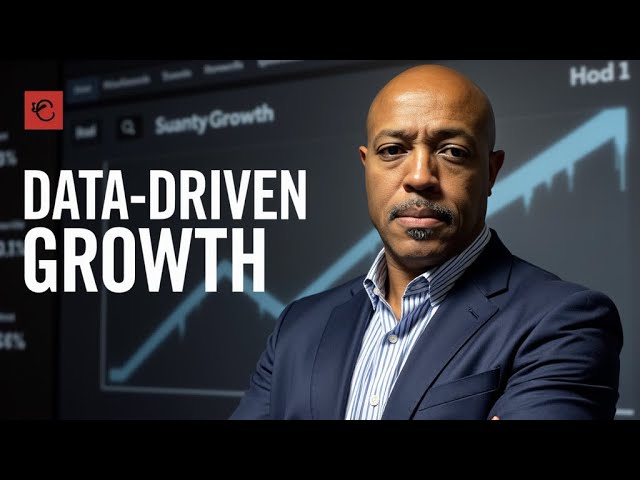
Claudius Taylors explains how small businesses should use data and SEO to grow. Track traffic that converts to leads and sales, not just visitor counts. Simple changes like adding a quote box or optimizing a high-traffic blog post can dramatically increase conversions without more traffic.
Chapters
Welcome to another episode on the FSBO Podcast. This is the Small Business Credit Minute, and I'm your host and business credit expert, S.E. Day. On weekly episodes, we bring you, the small business owner, issues that matter most to your business financial wallet, because in order for you to compete in today's business financial world, you should know the rules of competition. Today we're diving into a question that separates struggling small businesses from thriving ones. Are you effectively using data analytics and SEO to grow your business? In a world where data is power and online visibility drives revenue, understanding how to turn those numbers and keywords into action is a game changer for your business. When we return, I have an in-studio guest with me that will help us— me understand the rules of competition and how data analytics and search engine optimization can help grow our businesses. Stay tuned, we'll be right back. In today's competitive world, your business deserves more than just hard work. It deserves the financial freedom to grow. Building business credit is the key to unlocking opportunities. With strong business credit, you can expand faster, invest smarter, and reduce your personal risk. Start building your business credit today because your dreams deserve the chance to grow. Just like your business. Secure your spot at the next Small Business Credit Survival Boot Camp and receive business credit guaranteed. Welcome back. Thanks. Joining me today is Claudius Taylors. He's a data analytics and SEO strategist who helps businesses leverage insight to improve customer engagement, market return on investment, long-term profitability. Welcome to the show, Claudius.
Pleasure to be here. Thank you for having me. I'm really excited to share my expertise and to meet all of the great business owners out here.
Absolutely. Thank you. So let's start here. A lot of business owners still make decisions based on instinct rather than information. Why is that risky today?
Well, I would say that that's risky because you're playing a guessing game. You're really taking a chance that your assumptions are fact. And whenever you do that, I mean, in any form or fashion in life, it's a very risky and bold thing to do. Sometimes it works out, but more often than not, the data and the numbers don't lie.
Now, that's powerful. And I think many small business owners don't realize how much data they already have access to. What are some of the biggest misconceptions you hear about analytics and search engine optimization?
Yeah, I mean, I hear the same 3 most of the time. You know, we don't have the data. You know, where do I get it from? Well, you do. Google Search Console, Google Analytics, your email list, the folks that you talk to on an everyday basis. There's a wealth of data that you can actually collect and even sometimes go back and collect. That was one of the things that you know I've always encouraged agency owners to do is go back and talk to those clients or go back through that log and session data and figure out exactly what was living in that. And then also the SEO is just keywords. Some people think like oh that's search engine optimization is nothing but keywords. That's not true, right? There's something called acronym called EAT E E A T experience. Expertise, authority, and then trust. This is how, you know, you can continue to boost your SEO. And then another misconception that I hear a lot is small businesses can't rank, right? All the big guys got all the money, and there's no way that you even stand a chance against the big guys. It's just not true. And I tell people all the time, you know, if done properly and I could get you the type of results that you are looking for Would you rather take $10 million that you have 95% control over, or would you try to chase some of those big guys and, you know, compete in a market share world that you're not going to be able to really get a lot of market share? I think most people would be good with $20 million and just owning their local market.
You know, that's very good information. And you and I know it's not just about having the data, but knowing what to look for, right? So for a small business that's ready to get serious about analytics, What are the first data metrics they should track?
Yeah, so I would say that one of the most important things is just thinking not about rote numbers or thinking about any type of specific statistic, but think about what traffic brings you leads or sales. Not how many people came, but who actually filled out that form that you have on your website or who actually bought. The conversions by the channel. That's what I would definitely be focusing on. Where are my leads coming from? What type of traffic is coming in? And then what is the outcome that's coming out of that? You know, if I'm bringing in folks from Instagram and Instagram is my primary lead channel and I want people to watch a reel and then take an action, once they take that action, what action are they taking? And if I see that, hey, they're coming from Instagram, they're really interested in the thing that we have, they're filling out the form. And then they're going ahead and clicking purchase at $39.99. How many times can I continue to make them take that action or help them, not necessarily make, but help them to continually take that action? And then of course, you know, deliver that value that you are delivering that they're choosing to purchase.
You know, a true statement is people love to buy, but they hate to be sold.
That's true. 100%.
So, right, we're not making them. We're just putting it in front of them and enticing them to want to buy.
Absolutely.
So, now let's turn— let's see how we can turn this data into action. Once a business starts collecting the data, the next challenge is turning that data into action. How do they make that transition?
Yeah, I mean, I would say I could break it down into 4 simple steps for you. Measure, spot the problem, fix, recheck. That's measure, stop, spot the problem, fix, and then number 4 is recheck. So for an example, right, you see people landing on a page and they're leaving in 5 seconds, which is majority of websites these days.
Right.
That's a problem. You move off the offer higher, right? You make the headline clearer, or you speed the page up. Then you check again to see if any of those things have actually made a difference. Data is only useful if it changes the page.
Got it. Got it. So that's smart. That's very smart. Can you give us a real-world example of how, say, analytics uncovered something unexpected that led to business growth?
Yeah, absolutely. I'll give you one. We had a company getting a ton of traffic to just the one blog post, but nobody was calling. Analytics was showing that people were actually reading, they just weren't clicking. So we added a get a quote box right in the middle and linked it to a service page. And then leads really just started going up without having any more additional traffic. So it wasn't to get more visitors, it was to make the traffic you have actually do something. So making the people that are already coming into a page actionable. There's another company that we just recently solved this for, was a pretty significant opportunity for us and a premier brand that we were able to service. I won't say too much because of NDAs and everything like that, but it was literally the same problem. They had 4,000 people coming to their website daily, and on a monthly basis it was like really, really high traffic, but it wasn't converting. So it was literally just getting that people that were already looking for the solution and already qualified Now, that's an incredible turnaround.
So, what about tools for those who don't have a data team like Gambix, your company?
Yeah.
What are your go-to analytics resources?
Oof. I like this question, but then I'm also going to be biased too, right? This is like one of those biased questions in that I'm going to be kind of promoting any type of brands. And this is not a promotion of any of these type of brands. All of the search engine optimization maxis out there on Reddit, please let me live. Like, don't start saying this guy was completely wrong. We live by, we die by this product. No, I get it. I get it.
Okay, got it.
These are just suggestions. Google Analytics, it shows where people come from. Google Search Console, it shows what people specifically searched. Hotjar shows how people move on your page. All these Microsoft Clarity folks, Feel free to use Clarity. Looker Studio, it turns everything into a simple report. And for SEO ideas, you can use things such as Ahrefs or Ubersuggest. So that's enough for most small businesses. Analytics and Search Console, of course, are free. Some of the other ones that I mentioned are paid tools.
And it's important to remember, if you're not looking at your data, you're likely leaving money on the table, right?
100%. You're leaving a ton of money on the table. I like to say, like, it's phantom money. It's the silent killer for most businesses, small businesses' revenue is them not paying attention to what we're talking about.
Got it. Got it. So, let's pivot a little bit now to the search engine optimization portion. We talked about the data. Um, search algorithms change constantly, right? And I know, and I'm just telling you from my vantage point, man, 11 years ago was like eons ago. Right. Things were changing so fast and they're moving so fast right now. What are the most important ranking factors small business owners should focus on in, say, 2025? And we're about to go into 2026. So can you, can you kind of harp on that a little bit? Yeah.
And I think that 2025 elements still will hold a lot of truth into 2026. You want to answer the exact question that people Google, right? When people are going into Google now because you have AI built right into the search browser, People are going to be looking for the exact answer to their question. Um, with all of these AI tools these days, people want to get to the point. We've always been kind of getting to that, uh, in our daily social life. I mean, we probably heard in our social life, like, get to the point. Um, everybody's like on this 15 seconds or less type of wave. And, um, that's a story for another day. But answer the exact question that people Google. That's what we call search intent.
Okay.
You want to make sure that you answer the exact question. Number 2 will be make the page fast and mobile-friendly. Slow pages, they just drop out. Nobody wants to wait for it to load. I was just joking with this with my friend over the last 2 weeks, and I told her flat out, I was like, I mean, dang, I know, I know we got 5G because we're in an area where there wasn't so much service, right? I was like, you know, but LTE can't be this slow. I mean, we were using 4G for a while now, and I'm like, am I really just that addicted to 5G that like Right. LTE just seems so slow to me. Um, and you gotta understand, like, that's gonna be most people that are coming onto your website. And if it's not mobile-friendly, most people are accessing this from their iPhone or Android, uh, devices. If it's just slow and it just doesn't look right, nobody's gonna pinch and zoom and scroll. It's too much. They're not gonna do it.
Got it, got it.
Yep. Number 3 will be to show that you're real. Clear contact information. Your about page, your reviews, your name on it. That's that E-E-A-T thing that I was talking about, right? Yeah, clear contact info, about page reviews. They've got to see that people are actually using your products and services or using your offerings, having great experiences with it, or I mean at least realistic experiences. You don't need to fake 5 stars. Um, and then last but not least, you want to use structured info so that Google and AI can read it fast. That means your page is understanding Um, it's organized in a way that it can be understood by the machine. So the machine has to have an understanding of your organ— your, your organization of your content. That's why good content structure matters a lot. Do not use a bunch of AI to write your stuff. This is the reason why just having AI write all your content is not always the best thing in the world, for that reason alone. And you know, that one I think the Reddit people are going to come after me for, so I'm willing to argue that.
So get ready to be mean, right?
Yeah, I'm ready for it.
Okay, so now that's crucial information. Um, full disclosure, people, um, Claudius is working with my company, um, definitely on what we're looking at for our January event, the Small Business Secret— Small Business Credit Survival Boot Camp, and also branding me, um, out the company. So I just want to let you know that disclosure. Now, this is crucial here. What about local search engine optimization, especially for service-based or brick-and-mortar businesses? What about— how does that work into that?
This one I'm going to gatekeep because everybody that's not working with me, Sandy, they don't get access to this type of information. I'm going to make sure that anybody that is working with me is going to overtake them in all the rankings and volume?
Listen up, people. Listen close. This is where we're getting into the real now.
So this one, I'm about to get— I'm going to drop some gems on this one. This is the one where I'm going to give like the best answer. Local is where small businesses win. It's extremely important. Like if you always— and I know I live in the DMV, which is DC, Maryland, Virginia area, right? It's hypercompetitive over here. It's hypercompetitive. You thought New York, you thought Philadelphia, we got that dog in us too over here. Trust me.
We do, we do.
So this is where small businesses win. You need to fill out your Google Business Profile. If you don't have a Google Business Profile and it's applicable for your specific business, this could be even if you're running it out of a specific storefront, or even if you don't have a storefront, there's still ways to have a Google Business Profile. You wanna keep your name, address, and phone the same everywhere. The acronym for this that you might've seen, or you might see if you're doing any research on this, is called NAP. And that's name, address, and phone, and get real reviews every single month. This is what helps you show up on maps when people are ready to buy. So when somebody says like, I want some of the best chocolate chip cookies in Tyson's Corner, this is what helps you pop up number 1 on that map. And people that are ready to buy will see you first.
Wow. Wow. Okay, so now let's make it actionable. What's one thing a business could do this week? I mean, this week, before this week is over, to improve their SEO?
The first thing that any business should do would be to pause this recording and then call Claudius. Call him right now. Stop selling. Stop selling. Okay. I would say is to update one main page to say what you do and where you do it, right? So if you offer accounting services, change that to accounting services in Washington, D.C. And then add 3 reviews that you can grab from like any of the clients that you've worked with. Grab 3 new reviews and add those to your Google Business Profile. That alone can move you way up. It'll shoot you right to the— like, maybe not to the top, but you'll see a large, large influx of volume at that.
Now that's a gold nugget there. That's a gold nugget. Yeah, you can take that one to the bank. So how do, how do SEO and analytics work hand in hand for smarter campaigns?
Okay, so I'll tell you, there's a, there's a couple of ways, right? SEO brings people. So the whole premise of SEO is to bring the people to you. Then analytics will then tell you if they actually did anything, right? So you match search term, page, action. If a term brings the traffic but no calls, then you have to change the page or the target for a better term. Um, I'll kind of make that make a little bit more sense, right?
Okay.
Analytics tells you that if the people that come into your funnel or come to your website or your Instagram or book a— try to book a call with you, what specifically did they do? How did they do it? And if it didn't convert, like they came to your page but they didn't click that call button, how to actually modify the page to actually get a better outcome the next time.
Okay. Okay. So now that we're starting to roll, we're starting to pick up a little speed. Let's talk about maintaining momentum. How should businesses review and adjust their data and SEO strategies?
That's a good one, too. These questions are good. These questions are good. I'm telling you. Monthly. I would say you need to make sure that your traffic and your top pages are being reviewed on a monthly basis. And I like that you asked this question because this is a good rule of thumb that I think even internally when I'm working with my teammates, it's something that I'm always asking them as well. We do daily standups and weekly calls, but when it comes to reporting, we definitely provide traffic and top pages reports to our clients on a monthly basis. So I would say even if you're doing it independently, you should be doing the same thing. Anything more than that is kind of overkill. You don't need to be diving that much into the weeds because you're not going to see the needle move but so much. It's not really about seeing the results or like, oh yeah, we just went up 300% in a week. That's great. But it's the why behind it and keeping that process rolling is why you want to kind of do it on a monthly basis.
Okay. Okay. So looking ahead, what's one emerging trend in data and SEO that business owners should watch out for?
I'm gonna get into that, but one thing, I'm gonna drop 2 more things. And, and the last thing about how often should you review stuff.
Yeah.
If you're doing— some people are going to say, well, what about weekly? What things should I be doing weekly? If you're running ads or you're posting a lot, like if you have Google Business Profile posts, or if you're posting a lot of content on social media, or if you're running ads, you should be reviewing that stuff on a weekly basis because your ad spend and your budget is going to go out of control if you do it on a monthly basis. You don't want to do that on a monthly basis.
Got it.
And if you're trying to do more quarterly things, then that's the deeper SEO and technical cleanup, right? Because search is changing because of AI. So you can't just set it and forget it anymore. AI is making a lot of things kind of hectic. So you want to actually be checking on a quarterly basis as well, deeper SEO and technical things.
Okay. Okay.
All right.
So now back to that question.
Yeah.
What's that? What is, what is, what is one emerging trend that business owners should look out? AI.
AI, AI, AI. And I'm not talking about Allen Iverson. I'm talking about this is artificial intelligence. This is the new answer. Sorry, Allen. I love you, man. You were my favorite player growing up. I still got your jersey. I wore it at my skating party.
He has something coming out. There's a show or something on him. And I looked at it and I was like, AI, really? At this stage of the game? Isn't the man retired and drawing something? But that's another story. That's another story. So listen. This has, uh, you are making some excellent points and you have dropped in some serious nuggets. Um, and this is one of the reasons that I chose to do business with you guys, right? I'm looking to grow my footprint and that's what your company is doing for me. But what I want people to understand is that data and SEO They're not just digital buzzwords. They're business growth tools. And when you use them strategically, you're not questioning them. You're not guessing through— guessing your way through business. You're guiding it with precision. So, Klaudius, thank you for sharing your expertise today. I really do appreciate it.
Absolutely. And I will drop one more thing before we go, right? Google AI overviews. Google is answering first and putting links under it, right? So a lot of people don't understand the emerging trend of what's called generative engine optimization or AI engine optimization. So when you go into Google now, you see like Google answer everything with AI to try to get you that answer. Like I said, getting to the point.
Yeah.
It has something in there called citations where it will cite the source from where it got that information from. A lot of people, even with their best efforts, don't even understand what GEO is or the emerging trend of that.
Man, we're still trying to figure out what SEO is. Something about G. Exactly.
Come on. Exactly.
Jeez. Okay.
We're already like 5 years ahead. But here's the reason why that's so important. It depends on brand signals and Google wants to know who you are. Showing up in that AI search radar gives you a decided advantage over all of the links that are below it because those folks are just going to go there and stop there, which Most are, because remember, even in SEO, most people don't make it past the first page.
Agreed.
You want to get found in these ChatGPT queries and everything like that because that's where the volume is going. And wow, even myself, I'm not even gonna lie, like, I made some purchases even just based on ChatGPT agent recommendations, going out and searching the things for me and then giving the people who have the most volume. All of that stuff matters. And it's the future.
You heard it here, people. It's the future. Listen, thank you to our listeners for tuning in to the Small Business Credit Minute. If you found this episode to be valuable, subscribe to it, share it with other entrepreneurs. Remember, we are all part of this small business community where data that drives decision and visibility— those things bring us results. Also, go to our newly designed website at FSB Only and download your free business credit starter kit. It'll help you start your business credit journey. And also our financial literacy book, The Adventures of Finance and Literacy, dropped on the 15th. The press release is out there and it is moving along. I tell you, we are looking to have a great '25 and a highly successful 2026 based on who this guy right here is and what he's talking about. Until the next episode, remember, your dreams deserve a chance to grow. Just like your business. Thanks. Look forward to talking to you.
Take care, y'all.
Thanks.
More from S.E.


Compliance Gaps Kill Funding--How tot Fix the Legal Signals Lenders Notice Before You Apply
When History Gets Reduced to a Holiday, We Lose the Lesson - How Juneteenth Turns Fun into Education


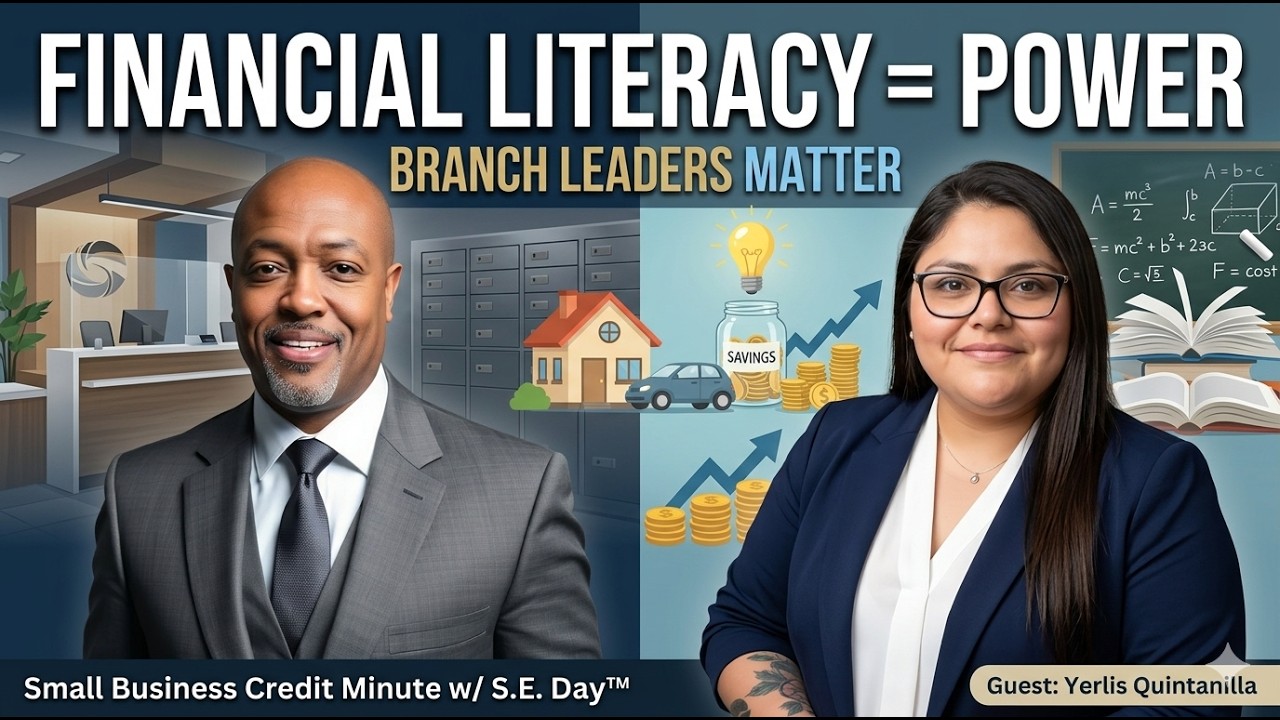
When Members Lack Financial Knowledge, Progress Slows (Why Frontline Leaders Must Teach)
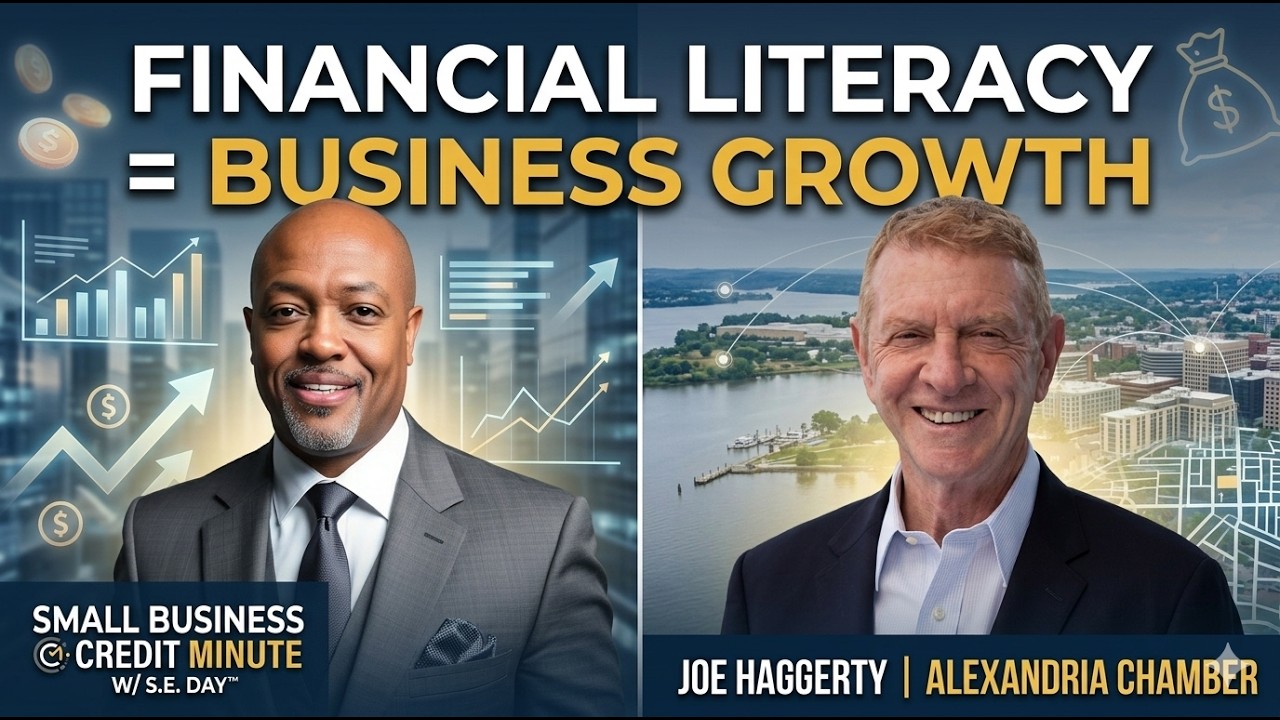
Weak Financial Literacy Slows Business Growth—How Chambers Helps SBOs Make Smarter Money Decisions

Messy Books Kill Profit and Scalability (Fix Your Numbers Before They Cost You)

HR Mistakes Kill Profit and Funding (Use a PEO to Get Compliant and Bankable)
Exit Rich, Not Ripped by Taxes (Use an Employee Stock Ownership Plan to Buy Out Your Shares)

Are Your Communications Costing You Money ~ And Can AI Fix It Without Killing Your Voice?