When Members Lack Financial Knowledge, Progress Slows (Why Frontline Leaders Must Teach)
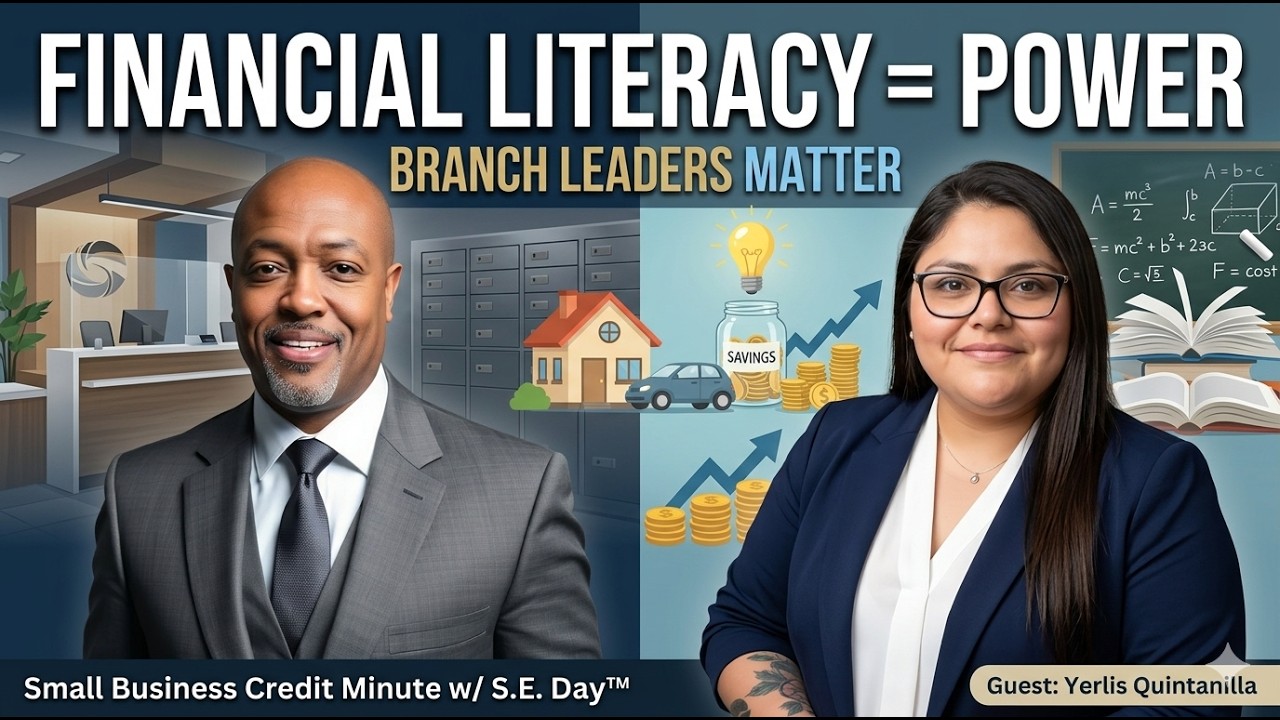
Yerlis Quintanilla, a credit union branch manager, explains why frontline staff must teach financial literacy instead of just selling products. Members stuck in overdraft fees and debt cycles need budgeting help and confidence, not another loan. Credit unions can start by training their own teams and partnering with schools and nonprofits.
Chapters
What do branch leaders see every day that proves financial literacy is still one of the biggest barriers to financial progress? Members do not walk into branches carrying only transactions. They bring fear, confusion, financial stress, and unanswered questions, and that puts branch-level leadership in the perfect position to build trust and change outcomes. Today's conversation is about financial literacy from the front line, not just from the boardroom. Because long before financial problems show up in reports, they show up in real people's lives. They show up at the branch counter, in basic questions about savings, in fear around credit, in stress over debt, and in families trying to make the best decisions they can without enough guidance. My guest today understands that financial literacy is not just education. It's empowerment. Welcome to the Small Business Credit Minute with S.E. Day, the podcast helping business owners build stronger business credit and real profit growth without the confusing finance speak. Qualify first, apply second. Let's get you funded. Stay tuned. I'll be right back. In today's competitive world, your business deserves more than just hard work. It deserves the financial freedom to grow. Building business credit is the key to unlocking opportunities. With strong business With business credit, you can expand faster, invest smarter, and reduce your personal risk. Start building your business credit today because your dreams deserve the chance to grow just like your business. Secure your spot at the next Small Business Credit Survival Bootcamp. Welcome back. Today I'm joined by Yerlis Quintanilla, a credit union branch manager and the managing director of SealRate Services, It's a boutique firm focused on enhancing consumer financial literacy. She brings a rare dual perspective, one from the frontline of member services inside a credit union branch and another from direct financial education work designed to improve real-world outcomes. Today we are discussing why financial literacy builds financial power and why the people closest to the members often have the greatest ability to change their lives. Yulissa, welcome to the show.
Thank you very much, and thank you for the invitation.
Wonderful. So we'll jump right in. From your position as the branch manager, what financial literacy gaps do you see most often when members walk into the branch?
There are many different ones that we experience, but to be very specific, a lot of it has to do with Even from the simple account management aspect of financial literacy, we do see folks having issues with balancing their accounts, keeping expenses organized, really knowing what's going on with their accounts and understanding what is happening with their accounts. I'll give you an example real quick. When you have Insufficient funds fees, for example. That is something that we see very often when it comes to managing regular checking accounts, daily expenses accounts, because folks are not really keeping track of their income and how it's really being spent when it comes into their accounts.
So let me ask, are those gaps more about budgeting Credit, savings, or a simple lack of confidence?
I think it's a combination of all of those together. You know, sometimes folks are not really, like I said, aware of where they are with their finances. So that covers the budgeting piece. Then the savings, right? Because it is highly encouraged for folks to save some of their money whenever they get paid, go ahead and pay themselves first and build that savings. For the rainy day funds that in many cases are not in place, uh, and that could very much help prevent this overdrafts and fees, right? And then confidence, just the lack of knowledge, you know, you're not really, like I said, in control of your finances. So it kind of becomes a cycle where you just go with it, right? You go through this issue of being overdrawn, paying the fees, and then, you know, well, it'll get covered the next time my direct deposit comes in, and it just becomes a cycle over cycle over cycle.
Okay, okay. So how does low financial literacy affect the everyday financial decisions members make?
Well, like I said, it'll cost them money because something so simple as not knowing where your checking account is and how to manage that checking account is costing you fees, which are hefty. I mean, if you think about it, an NSF fee is between $30 and $35 each time your account is negative. So it is going to impact your pocket very, very much. It's a hefty fee.
Okay, so that was actually going to lead me to a follow-up question, but I think you just touched upon it. And the question was, what are some of the patterns you've seen that tell you a member needs education before they need another product?
Well, like I said, those overdraft instances, also lack of savings or minimal savings in their accounts or nonexistent at all. And just questions sometimes that they bring, bring up, right, regarding debt? Or how do I get a credit card? Very simple questions that we are getting, you know, pretty often, especially nowadays that the situation, the economic situation is so dire for people. They are now, you know, if they were not looking into getting a credit card, they are looking into that now. Then you have the folks that were in debt and now are looking to consolidate that debt. And they'll come and ask about certain things and just not really understand what, uh, what could be an option to consolidate debt or minimize debt, right? So we see this on a daily basis. We hear debt consolidations.
Okay.
Literally every day, or refinancing on a daily basis, because this idea of refinancing debt brings that hope that you're gonna get lower payments or lower interest, which will save you money. And, you know, we have the opportunity to really go into more depth with that person about what their real situation is and what really needs to happen in order to get to the other side without necessarily going into a new product.
Okay. So branch managers are often the first people to hear a member's real financial concerns. How does that frontline position create an opportunity for you and other branch-level managers or staff to build trust through that education?
Well, it's a great opportunity because like you said, if that person is comfortable enough to tell you in, you know, in detail what their current economic situation is without you having to put it together looking at what their accounts are telling you, because with time you do get to study their accounts and kind of paint a picture, right? But it is so much better when this person really feels comfortable And talks to you about it from their point of view, how they explain their situation, so that you can go in and really get in their shoes, if you will, really go through that those feelings with them, which will make your recommendations more impactful at that time because you're not just thinking from you know what I'm looking at. Which, you know, you're literally just assuming. The goal is to get this, this person in front of you to open up and share so that you can also have that opportunity to give them a holistic conversation and different options for whatever their problem is at that time.
Okay, so let's shift it a little bit. In your experience, what does financial power actually look like? For an everyday consumer?
I think, uh, to me it means knowledge, right? The actual fact that you know where you really are. Um, I, I know folks that are really well, um, versed with their finances, and they'll come and tell me, hey, listen, I have this credit card, I have this, and I've been, you know, paying down my credit card, and I've done this snowball, um, Payment plan for my debt, things like that. Right? There are some folks that have that already in place. So that is what I want everybody to be able to to to practice. Right? And that is why whenever someone comes in and talks to me and sits down and shares this information with me as of their current financial situation, I share these options. before you think about, let me consolidate my debt, let me pay off this credit card, let me pay off that credit card. We go into different options. You may not want to do it this way. Have you ever thought of this? Have you ever thought of that?
Right? Yeah.
And this will definitely help them save money, build that confidence, and build savings. Because if you're not spending money on fees, interest payments, and things like that, you're definitely going to be able to put some money on the side for savings.
Okay, okay, great, great. Now credit unions talk a lot about helping people. How should that philosophy show up in the way branches educate their members?
Well, you know, like you said before, I have 2 perspectives, right? As a banker, as a manager of a bank, I know that my job and expectation from My superiors is to sell a product and be productive. My passion is financial education. As a financial educator and certified educator, my goal is to teach you how to use these products. So that's how that's how much impact we have as a banker when we have this person in front of us. You know, we take we need to start taking the time to. Listen, look for options other than products for the person in front of us. And then if a product is the best fit to resolve a financial issue, we need to take the time to explain how it works, the good, the good parts and the bad parts, you know, because everything has positive and negatives, right? So we need to make sure that we have that little bit of education factor when we are dealing with our members.
Got it, got it. So what are, what are the most important financial literacy topics branches should be discussing with members right now?
Budgeting. Um, definitely budgeting. Smart lending. And also, 100%, I'm a big, big advocate for savings. So, you know, it goes in part with the whole budgeting and savings kind of marry together because you can, you know, your savings, like I said, can keep your budget in place if anything were to happen.
So, yes.
Right.
Okay. So now you also lead SilverAce Services, which focuses on enhancing consumer financial literacy. What have you learned from that work that credit unions could apply more effectively at the branch level?
Can you repeat the question?
I don't know if we broke up. Can you— okay, yes, yes. I said, so you also lead SailRay Services, which focuses on enhancing consumer financial literacy. What have you learned from that work that credit unions could apply more effectively at the branch level?
Okay. Well, like I said, you know, for me it's pretty easy, but I believe that a lot of bankers still have some growth opportunity when it comes to financial literacy themselves. So I think that leadership at, you know, the highest levels outside of the branch, more like the branch leaders, supervisors, they do definitely need to be trained into this concept.
Mm-hmm.
Like I said, if they're experienced, they do have an idea, but the really concrete training sometimes has not been implemented. So I believe that some training for these folks would be very helpful. So that the branches meet those expectations of people helping people, right? That is the mantra of credit union. They live by these words, people helping people. So the credit card— I'm sorry, the credit union folks, employees need to be properly trained for them to fulfill this goal.
Okay. So now when it comes to financial education or just financial situations in general, a lot of people are intimidated or feel judged. How can branch teams deliver financial education in a way that's supportive instead of intimidating and judgmental towards a member?
Well, to be honest with you, I I feel like a lot of us, independently of what we do, we go through these issues financially, right? I know I have had my my issues throughout my life as an adult where my finances weren't great, right? So you really have to put yourself in these people's shoes. If you haven't had those issues before, that's great, awesome. But think about other things that Bring stress to your life, right? How do you feel? How do you want folks to communicate with you, and how you want folks to emphasize with you when you're having an issue? So we really need to advocate to that human side of people, and not you know talk to people from where you are, right? As a as a financial Expert or a financial, you know, knowledgeable person. No, you got to put yourself into that consumer's, into that customer's shoes where they are not— they do not know what we know, right? They don't know the inside of things, right? So I think it has worked for me personally where I go into that, you know, that mindset. I know the person in front of me is having issues because they don't know any better. Yes.
Got it, got it. Okay, okay. So for families and young members, how early should financial literacy start and what role can a local branch play in that process?
Financial literacy should be implemented to children at the same time they start walking. The reality is that money is a huge factor in everybody's lives, no matter how old you are, right? You teach children the numbers, you teach them letters and all of that, counting and all of that, and you know, you count money. So you definitely need to start children in financial education right there when they're just learning the very basic things like colors, numbers, letters. little songs and things like that. Because what happens is, it is the one of the things that I truly believe parents should be the very first source of information about money. Um, I tell everybody, I'm like, hey, buy a little fake money set, you know, that you can teach your child. This is what a dollar bill looks like. This is what a $100 bill looks like.
Right.
And this is a quarter, and this is a penny, you know, because Nowadays, we are so much into technology that all you need really to do any transactions and manage money is a phone, right? A lot of times you are not carrying cash. You're having your cell phone and you're just tapping, right? That's about it. And the only thing that kids could probably sometimes associate to money is a debit card. So we need to start really making money, cash, a reality, something real, something tangible. That really exists, right? So that, I believe, should be something that parents— I really encourage parents to, to have these conversations with their children.
Well, let me ask you, from a branch leader standpoint, what could be a simple habit or program that you could offer or tell parents, um, and children so they can grow together financially? What would What would you do? I mean, you and I have written a book together. Full disclaimer, folks. Um, Yearless is my co-author, uh, um, The Adventures of Finance and Literacy. And that is a, a, a tool that, uh, institutions, financial institutions could use. But what would be something like that or a habit or something that you could tell parents and, you know, that would make them be able to work and grow with their children together financially?
Well, a lot of parents already do the allowance, right? Weekly allowance for the children. Once you teach them money, you know, you show them how much $5 is worth or an idea, right? What equates to, hey, you know, if you have $5, you can buy a couple of drinks and a stick of gum. Right? You put some information in this child's mind as to what can be done with this, right? So the allowance, um, concept can help them because you're not only giving your child money, your child is doing something to earn this money, right? And then once you have given your child the money, you can go ahead and they can manage it, right? Put some on the side for expenses, immediate expenses, go to 7-Eleven and get a Slurpee.
Right.
Kind of deal. And then some of it, let's go to the bank and we'll open you a savings account. Go to the credit union, we'll open you a savings account so that that pattern of savings starts at a very early age. And that will really, really stick to that child and bring him into a productive adulthood.
Good. Very good. So as we wrap up, if you could challenge every credit union branch leader listening today, What is the one thing that they could do differently starting tomorrow? What would that be?
I think that talk about financial education, financial literacy to your teams, right? Assess as to where your team is in comfortability of them really understanding what it means and how it can be implemented on their daily interactions with members, right? That's at a branch level. I also believe that no matter what your institution is, there is still a lot of our communities that are not knowledgeable enough and that have not had the opportunity to be educated, right? So I know that as a branch manager, Mm-hmm. I have the opportunity to go out in the market, in our communities, And meet with different folks. I would encourage you to go out there and get to know your community organizations, nonprofits, schools, churches, right? And go out there with that in mind. How can we help? How can we make our communities stronger by educating them on financial literacy? And making them more powerful, empower them to be better customers, better consumers, and more productive individuals.
Yep. Eurylice, this has been an important conversation because it brought financial literacy down to where it really lives in the everyday financial decisions, in a branch conversation, and in the trust members' place in the people serving them. Audience, this is Financial— National Financial Literacy Month, and we're celebrating this by being able to bring you topics from trusted members in our community that can actually help you live a better financial life. You're— you've made it clear that financial literacy is not just about information. It's about dignity, confidence, behavior, and the power to make better choices over time. And when we make better choices and branch leaders embrace their responsibilities, they help turn routine member interactions into lasting community impact. Thank you for joining me on the Small Business Credit Minute with S.E.
Day.
I, I really do appreciate your time in helping us get this topic out.
Absolutely. I appreciate the opportunity and I hope to see you soon.
Absolutely. Audience, if you want a simple roadmap to start building business credit the right way, go to my website and grab your free business credit starter kit. It's listed in the show notes. It'll walk you through the first steps to get your business lender ready starting today. And remember, your business credit isn't just a score, it's your company's future. Always qualify first, apply second. Thank you for tuning in Thank you for listening to the Small Business Credit Minute. I hope you enjoyed today's episode on Financial Literacy Builds Financial Power: Why Frontline Credit Union Leadership Matters. If you got value from this Credit Minute, please download it, share it with a fellow business owner or family in this time, and also leave us a review so other business owners can learn how to grow smarter and faster. And remember, your dreams deserve a chance to grow, just like your business. Until next time.
More from S.E.


Compliance Gaps Kill Funding--How tot Fix the Legal Signals Lenders Notice Before You Apply
When History Gets Reduced to a Holiday, We Lose the Lesson - How Juneteenth Turns Fun into Education


Weak Financial Literacy Slows Business Growth—How Chambers Helps SBOs Make Smarter Money Decisions

Messy Books Kill Profit and Scalability (Fix Your Numbers Before They Cost You)

HR Mistakes Kill Profit and Funding (Use a PEO to Get Compliant and Bankable)

Exit Rich, Not Ripped by Taxes (Use an Employee Stock Ownership Plan to Buy Out Your Shares)

Are Your Communications Costing You Money ~ And Can AI Fix It Without Killing Your Voice?