What the One Big Beautiful Bill means for Small Business Taxes
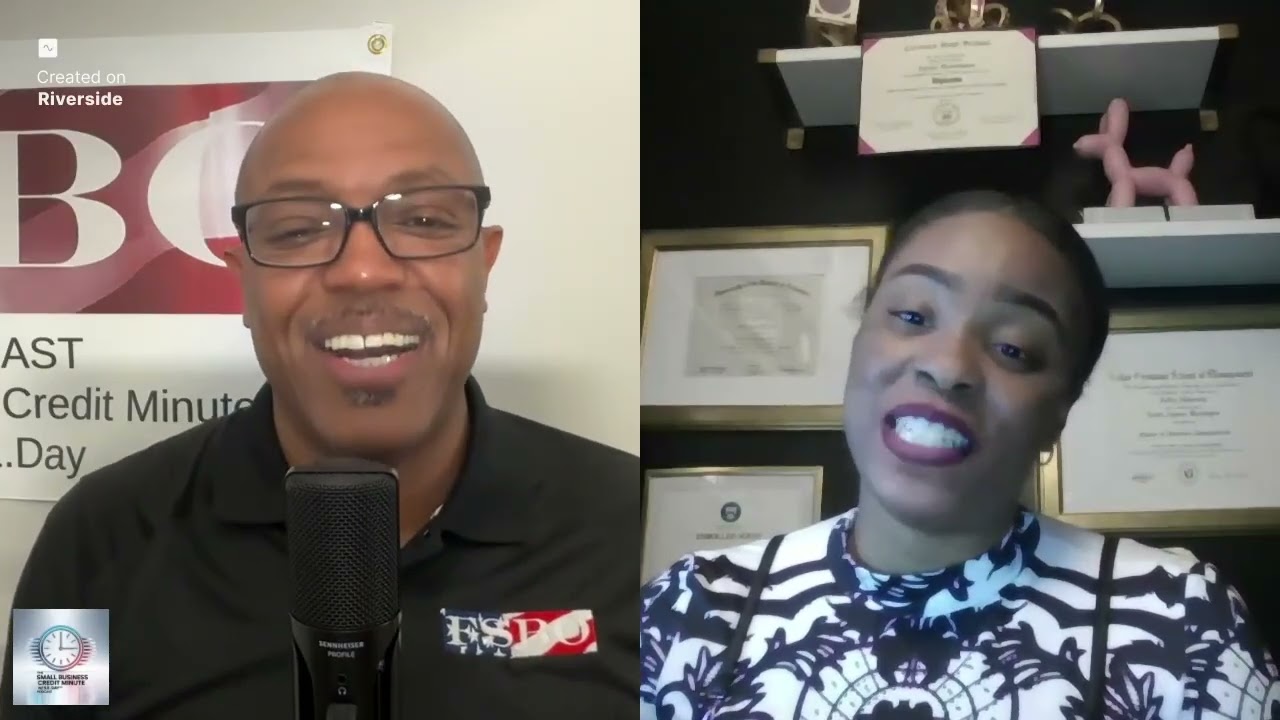
Tax strategist Tanika Washington breaks down the One Big Beautiful Bill's impact on small-business taxes starting in 2026, including a permanent 20% qualified business income deduction for pass-through entities, a $40,000 SALT deduction cap, and expanded depreciation limits. She compares LLC, S-corp, and C-corp structures and warns against common mistakes like claiming QBI with losses or misclassifying entities.
Chapters
Welcome to another episode on the FSBO Podcast. This is the Small Business Credit Minute, and I'm your host and business credit expert, S.E. Day. On weekly episodes, we will bring you, the small business owner, issues that matter most to your business wallet, because in order for you to compete in today's business world, you should know the rules of competition. As we wrap 2025, I wanted to bring you a topic that will affect every small business in America in 2026. Today we're diving into the one big beautiful bill, the recently passed legislation that's reshaping how small business owners manage taxes, structure their companies, and plan for growth. After the break, I'll introduce you to one of the sharpest tax, business tax strategist minds in the country. Stay tuned. I'll be back in 30 seconds. In today's competitive world, your business deserves more than just hard work. It deserves the financial freedom to grow. Building business credit is the key to unlocking opportunities. With strong business credit, you can expand faster, invest smarter, and reduce your personal risk. Start building your business credit today because your dreams deserve the chance to grow, just like your business. Build your business credit. Secure your spot at the next Small Business Credit Survival Bootcamp. Welcome back to the show. To help us cut through the noise, I have Ms. Tanika Washington on the line with me. Tanika is the founder and CEO of Ayana Financial LLC. She specializes in helping entrepreneurs optimize their business financial performance and transfer business equity into personal wealth. in tax-efficient ways. That's very important. Tanika, welcome to the show.
Thank you, Sandy. I'm happy to be here today.
I am excited to have you. Um, as we're wrapping up 2025 and this whole new one big beautiful bill, you know, I, I won't talk into the specifics, but this is something that everybody should know And I wanted to bring this to them, but especially bring in a tax expert that can actually help talk about this. So in plain English, what are the biggest small business benefits inside the one big beautiful bill?
Hey, Sandy. Well, that is a great question, and it's very important for entrepreneurs and small business owners to understand how the big beautiful bill, the one big beautiful bill, will affect their financial strategies for the future. I'm going to refer to it as the bill from this point forward.
Okay.
But the bill, it includes several provisions that are particularly favorable for small businesses, especially S corps and LLCs. And it gives businesses the opportunity to secure significant tax savings and allow small businesses to increase and invest in their profits. Some of the biggest benefits for small businesses included in that legislation, in plain Mm-hmm. Is that 20% deduction for the pass-through income, which is also known as the qualified business income.
Yep.
Many small businesses that are structured as pass-through entities, such as S corporations, LLCs, partnerships, and sole proprietorships, the owners of these businesses can potentially deduct up to 20% of their qualified business income, and that will lower their personal taxes. Uh, the lower corporate tax rate, you know, for small businesses that are C corporations, they would benefit from the permanent reduced corporate tax rate from 35% to 21%. It was set to sunset, but that bill extended it and made it permanent.
Nice.
Exactly. So this—
Because I have a— I also have an S— I mean, a general corp. I have a general corp and, uh, an LLC and an S corp. Jeez.
Okay, so you, you know, you are, uh, working in many different, uh, in many different places and in different spaces. Um, you know, that's, that's for your, um, financial, uh, strategy that you have for yourself. So, um, of course each different, um, business entity have their pros and cons. Um, but for the C-Corp, having that, uh, 21%, uh, uh, maximum, um, or flat corporate tax rate, it will continue to provide small businesses with additional capital for reinvestment and growth.
Okay.
They increased expenses and bonus depreciation for those people who are doing capital purchases and have equipment and property, things like that. It increased the limits for the Section 179 expensing, allowing businesses to immediately expense the cost of qualifying equipment and property You know, rather than depreciating it over time. So that's another—
Oh, that's nice.
Exactly. So you can accelerate that depreciation.
Nice.
Right.
So, so in plain language like this, right? So I purchased a, um, an, an, uh, '26 EV truck for the company.
Mm-hmm.
I like what you just said because that's, that's equipment for the company. That's not my personal, that's for the company.
Absolutely.
So I could— I can write that thing off. Nice.
Absolutely.
Okay.
Up to those limits that they have on that.
Um, right.
So instead of you writing it off over, what, uh, 5 years, you can write it off all up front. But you also got to be careful with that because then you won't have anything to write off in the future, especially if your income— your revenue or profits increase over time. Uh, you will lose out on that future. And if you— and if you sell it then you will have to recapture some of that accelerated depreciation on there.
Well, I'll just buy another one. How about that? Yeah, we go.
Hey, if you have, if you have a business need for it. Now we know we don't want to go buying things just for the tax write-off, but those things come into, um, play and they, they are valuable. Um, so, you know, that bonus depreciation, like, like you said, it'll allow you to deduct a large percentage of it. Um, You know, so that's a good tax strategy there for that. And then also, they simplify some of the accounting rules. So a lot of the small businesses will be able to use the cash method of accounting, which is important because, you know, sometimes that can lead to lower net profits that you're being taxed on.
Okay.
So, uh, yeah, those will be some of the biggest, uh, wins from that bill that I would say. And a lot of these changes were designed to provide relief for small businesses, potentially lowering their tax burden and allowing them to reinvest in the business for growth and development.
So, so just digging a little deeper, how does the QBI deduction really work? I mean, who benefits the most?
I think the QBI deduction is probably the best deduction in the bill because it applies to a broader range of small businesses.
Right.
So basically what it is, if you are a pass-through entity, S corp, LLC, partnership, sole proprietor, pretty much anything but a C corp.
Right.
Because C corps are not eligible because they pay corporate taxes and they do not pay— Right.
That's a double taxation model. Right.
They don't pass through to the their profits or losses to their owners. So basically what it does, it is a 20% deduction off of the business income. So if you are an S corp or a partnership, this would be reported on your K-1. If you're a sole proprietor, this would be your net profits from your Schedule C.
Okay.
The profits are then adjusted for non-qualified income and expenses such as capital gains and losses, interest income, dividends, guaranteed payments to partners, and some other things there to come to the net amount that 20% will be applied to. And once you apply that 20% to your business income as the business owner, that will flow through to your personal tax return and it can reduce and it will reduce your personal taxable income on your 1040.
Okay.
So this is really, this is a great deduction because let's say if your business have $100,000 in qualified business income, you're going to be able to lower your personal taxes if you are 100% owner of that business at $20,000. And it's going to be based off your proportion of your business interest in that business. Um, so, but to emphasize, um, it's only available to businesses if you have net income, because if you have a loss, there's nothing to, um, apply to write off because you got a net operating loss already, right? The name of the, the name of the deduction is qualified business income.
Got it, got it.
And it's important that they, they also made that permanent too. That was set to expire this year.
Nice.
They made that permanent, you know, so, um, you know, it's a good planning tool for, um, small businesses to know that in the future that they'll have that credit available to them for a very long time.
Okay, no, that is nice. I didn't really dig into it, but I wanted I wanted a sharp mind on it, and thank you for coming on this show because I'm already excited, right? Yeah, I'm looking for a good year on the tax return. But now, does this go into effect for '26 or for '25?
It was already there. It was set to expire in 2025, and so the bill made it permanent.
Just made it permanent.
Okay.
Okay. So, for service-based businesses, how big is the pass-through deduction enhancement?
Okay. So, we're still talking about the QBI?
Yeah, yeah, yeah.
Right. So, um, so the QBI for, uh, businesses like, you know, your, your general— like your, your podcaster, your author—
Like a podcaster, right?
You know, your digital service providers, they, of course, like I said, you would benefit a lot from this. Um, it's 25% off of your net profits, and also rental real estate professionals.
Okay.
You know, if you're actively managing that property, you know what those rules are. So you're doing a Schedule C on that, not a Schedule E. So you're contributing to the maintenance, the management, that 250 hours a year, all those things that will qualify you. You also qualify for the QBI deduction. However, The limits have increased.
Okay.
The limits have increased. So that is actually another good thing.
Yes.
An increase, because at one point in time, it will phase out after you've reached a certain threshold and depending on what your filing status is. So the married filing jointly status is always going to have the most, the higher limits. And so with that one, it went from $394,000 to $406,000.
Yeah.
And for all other filers, it went from $394,000 to $406,000.
Okay.
And then the phase-out, so the upper limit for that is the higher limits now going forward. That's what the bill also did.
Right.
But the phase-out also increased by $50,000 for married filing jointly and $25,000 for all other filers. So it gives a lot more business owners the opportunity to benefit from that deduction.
So business owners, if you're listening to this, you really need to talk with your tax professional and see if they are up to par on the changes that the bill has made. And if not, you reach out to Tanika because she is a tax professional. But we'll get into that later. Just calm down, calm down. We'll get into that later. Okay, so what, what small businesses, what might small businesses miss or misunderstand about the bill?
Let's see. Um, I, I think mostly businesses who don't have a, a net income, they may think that they can still qualify for the 20%, um, deduction.
Got it. Okay.
And also just making sure that they, um, are a pass-through entity and understanding that if you're a C corp, you're not going to qualify for the bill because that's the requirement.
Right. Okay. Okay. And I think that, you know, and we'll do a show on that of, you know, like I have the conference coming up in January. And one of the things that we talk about in the conference is what's the best business entity to structure for yourself, right? Because, you know, a lot of people want to go Uh, nonprofit. And I'm like, be careful, be careful with nonprofits because those things are heavily regulated. And the thing that I don't like about nonprofits— I do like them from a, from a, a benefit corporation standpoint, right? But if I don't have a benefit corporation, and yes, I am donating money to a nonprofit, what people have to understand is when you structure a nonprofit You have a board of directors, and that board of— you, you are the executive director, and that board of directors can fire you.
Absolutely. You don't own a nonprofit.
You don't think—
yeah, you can't— you cannot own a nonprofit. You can't sell a nonprofit. The nonprofit belongs to the state.
Yeah, exactly.
And when you dissolve a nonprofit, you have to give those assets to, uh, I believe another nonprofit, or you have to, um, dissolve those assets in a, in a certain manner. You cannot— that's the whole point of a nonprofit. It's not for profit. It's not for anyone's profit. It's for the benefit of the community and the society, um, which is a beautiful thing. I have a nonprofit too. It's called Knowledge is Wealth.
Okay.
But, uh, those nonprofits, you know, nonprofits is definitely a totally, uh, different area, but it is really important for people to understand because I've had people come to me too and ask me about, you know, yeah, I want to start a nonprofit. And I'm like, do you do realize it's a nonprofit, right? You can't do those types of things with a nonprofit. You don't own the nonprofit.
You do not own the nonprofit.
Yeah, that's why you get the— that's why you can get those tax exemptions is because you're doing the work for the government.
Exactly.
They're rewarding you for doing the work for the government, and they're making it easier for you to do that too. But another thing that, um, some small businesses may miss with the QBI that, um, I, I think that is important for them to, um, to know is that certain professionals like an accountant, me, finance, lawyer, healthcare consulting, um, with the QBI, they— it could be reduced To lower than 20%. Um, and that's just, um, you know, the, the way that the, uh, deduction is set up, that, um, you know, certain specified service or trade fields, um, are subject to those income limitations. Um, so that's another thing that they need to, um, be aware of.
So what are, what are some of the biggest mistakes business owners make? Um, or might make after this new tax law is rolled out?
Well, the biggest one is not knowing what, what it— what's in the bill and what you may qualify for. Um, it's definitely not for everyone to know. That's why you have those professionals, so you can leverage their expertise. So make sure that you're speaking with your tax professional, your financial advisor, um, and getting a good understanding of where you're at and how you can use any of those deductions or credits to your benefit for your business.
Right.
Also, like we, we kind of touched on earlier, don't just spend money to reduce taxes. Exactly right. If your cash flow can't support the purchase, don't buy it. Deduction doesn't help.
It will actually hurt people. Don't buy it. Don't buy it.
It's not going to help. And also, you know, there's also other things to deal with. Business expenses too, you know, they need to be reasonable and they need to be necessary, um, because, you know, if you get that right tax, uh, uh, IRS, um, uh, agent who's trying to make a name for themselves, you'll be surprised of how far they can dig. And they can get you on those, uh, minor, minor things. But that's the, that's the game, and you just have to know how the rules are.
Um, Let me tell you, because I've been audited. I've been audited by the IRS, okay? And people, let me tell you, if your digits, your 9 digits, are attached to something, you can't hide. You cannot hide. That guy pulled up the screen on me and showed me where every dollar I had stashed away was put.
Absolutely.
And I was like, Oh my God. So if your numbers are attached to it and the IRS, they will be attached to it. So even if you go and start an LLC, you must attach your Social Security number before you can get your tax ID number.
Yes.
This is the way it works. So having good records, good paperwork will save you a lot of time and headache because at the end of the day, like she said, if you get one of those agents that's trying to make a name for themselves, And I'll tell you, I've worked for the federal government and the IRS is— those agents are some of the most stressed people on the planet. So they don't have time to play games with you. Have your stuff in order, make sure your tax professional is doing it right and you are submitting the right paperwork or it will cost you. It will cost you.
Absolutely. Yeah. And documentation is necessary for anything. If to be audited, you got to provide the documentation to pass an audit. You have to have the documentation.
Right.
So documentation basically is your proof that the transaction happened. It occurred. It occurred the way that you reported it.
Exactly.
So it's really important. I'm a certified fraud examiner also, so I do forensic accounting. So, uh, accounting is probably one of the easiest. It leaves breadcrumbs. It's so easy to, um, identify anomalies and uncover things. But the only— the tricky part is detection. Once it's detected, it's kind of hard to hide from it, like Mr. Day said.
Yes, exactly. So what myths are circulating, uh, that business owners should, should ignore immediately? Yeah, because there are a lot of myths out there.
It is a lot of myths. One of the older myths that I actually was a victim of myself was to register your business in a state that does not levy corporate income tax, um, to avoid state corporate income taxes, right? I learned the hard way that this is only useful if your business is only physically located in one of those states, right? Starting a business in a tax-exempt state, quote unquote, and then conducting business in another state like your home state where you live or where you're probably going to mostly conduct your business.
Yeah.
It requires dual registration. So you will likely register in your home state as a foreign registration. In order to conduct business in that state, you have to be registered and have a business license to do business in the state.
People, I hope you heard what she just said. I hear so many people, well, you know, living in Virginia, well, I have a Delaware corporation, I have, I have a Nevada corporation.
Do you know they probably don't do any business in those states?
No.
But guess what? Although they may not get corporate state taxes on the income that they haven't even earned in that state, because you're not going to be taxed on income that you haven't earned in that state anyway, right? They may not have that traditional corporate income tax, but they have alternative taxes like a franchise tax. So now you got to pay a franchise tax in a state where you don't do any business in, in addition to the sales or the, the franchise tax or state and local taxes in the places where you do the business in, right? So now you're paying taxes in 2 different places. It may not be a corporate tax, but it's still a tax. You're going to, you're going to pay money one way or the other. Right.
Exactly. What's another myth?
And that Delaware tax is $300 a year. So you're just paying $300 a year for what? Nothing.
Exactly. You might as well register.
Yeah.
Register in your home state.
Just register in your home state. Um, only, only benefit in Delaware or Wyoming or in those other states if you're exclusively in those states, right? Or if that's your home states where you do most of your business in.
Exactly. Exactly.
Another myth will be, uh, filing the extension means you have more time to pay. It just means you won't have more time to file.
You have more time to file, not to pay. You have to pay if you owe, and, uh, start paying by April 15th, okay? Otherwise you're late.
Yes, and you will start to accrue interest, and there's this thing called failure to, uh, Failure to pay tax.
Yeah.
Meaning that if you're— if you have a tax liability and you didn't do those estimated taxes throughout the year, that's called the failure to pay tax and you're taxed on that. And some of those penalties could be as much as 25% of the outstanding.
Wow.
That are due.
Okay. Any more?
Yeah, I'll give one more.
Okay.
So one more is having a loss every year. It's a tax— it's a good tax strategy. Um, it's not. Um, we do understand that taxes— I mean, that, uh, businesses do incur losses, and that's understandable, especially when you're a new business. You may be, you know, bootstrapping. You may not have money, um, or capital to expand that much, but, you know, right, you're grinding it out. So losses can happen, but consistent loss year after year is not— it's going to raise a red flag with the IRS.
Right.
They're going to look at your business and see, are you in business just for the losses, or are you in business to really make a profit? Because you got to have that profit motive. Um, and so, um, it has to have economic substance, and they could reclassify your business from a business to a hobby.
Right.
And once they do that, none of your expenses that you have for hobby is allowed to be deducted, but your income has to be reported. You may not pay the self-employment taxes on it.
Right.
But you got to receive that income with no expenses attached to it. So, uh, that's part of not only your tax planning but your financial planning.
Yeah.
To, uh, ensure that maybe certain accounting methods like accrual versus cash may help you, um, with, um, showing a profit in some years. Um, do you know you cannot switch from accrual to cash? You have to get IRS permission to do that. Once you go one method, you have to stay that method.
Exactly.
So, it's a lot of layers to it, but just, um, be aware that you— that the rule is 3 years out of 5. So 3 years out of those 5 years, your first 5 years in business, you have to show a profit. I believe that profit is about $465 a year. Yeah, but about $400, about $400 or $500 a year that you have to show profit for 3 out of 5 years.
Exactly, exactly. Okay, so under the bill, under this new bill, How should business owners think about choosing what type of corporate structure, you know, between an LLC and S corp or C corp, right? How should they, how should they think about that?
Okay, well, I do want to clarify first for once. Okay, LLCs for IRS is a disregarded entity.
Exactly. Explain that. Explain a disregarded entity.
It's disregarded. They don't, they do not recognize the LLC. Only place that recognizes the LLC is the state, meaning that an LLC without a corporate tax election like S corp LLC is a disregarded entity by the IRS, meaning that they do not recognize it for tax purposes. The only thing— the only entities, uh, business entities that are recognized as a— for tax purposes is your S corp and your C corp and your nonprofits and your, um, Trusts and estates. Um, however, um, LLC without a tax election, S corp or C corp, just gives you liability protection. It doesn't provide you with any, um, tax, um, classification. Um, right. So that's just the first thing that we just need to— I just want to make sure that people understand that. But it's, it's a good—
Okay.
It's great to have an LLC to limit your own personal liability, but it's not Right. To help you with taxes.
Got it.
To the extent that an S corp and a C corp will.
Got it.
So, but due to the permanent extension of some of the key tax benefits and some of the enhanced initiatives, it kind of comes down to whether you plan to reinvest your profits or do you plan on to distribute them.
Right.
So, uh, some of the things that you should consider as a business owner when you're looking at what type of business structure you want to have, um, I would say to kind of follow, uh, these 3 primary factors when choosing a new entity under the law and taking the, uh, bill into consideration, um, is first and foremost, like we've already discussed, is the taxability for the pass-throughs. Um, so by making that QBI permanent, And increasing the thresholds, uh, it kind of, like I said, gives long-term certainty for owners of passive entities that— and it could be, um, an incentive to stay, uh, uh, uh, S corp or LLC and don't go C corp. So it could be, I don't want to go C corp because I'm going to lose the QBI.
Right.
Um, another thing to consider is your exit strategy. That would be more advantageous for a C corp. So the bill significantly improved the qualified small business stock exclusion, which now makes the C corp the gold standard for owners planning to sell in the future, right?
Got it. Yeah.
Well, and we'll talk more about the Q— the qualified small business stock QSBS. Um, but basically, uh, and it also raised the thresholds for companies to be able to issue that type of stock, which is a small business stock. Um, and it raised it by $25 million from $50 to $25 million. Um, so it qualifies more medium-sized businesses for the benefit also.
Got it.
Um, right. And then the third thing, uh, you should consider is your investment and growth strategy. Um, if that is centered on utilizing massive immediate tax deductions to lower the after-tax cost of expansion, right? And—
Okay.
Um, what I mean by that is, um, what impact does those, um, types of deductions have on your, uh, net profit? Um, so If you're getting the deduction, then your after-tax cost is lower than it would be, um, if you— if that deduction wasn't, um, if we didn't enhance that deduction. So basically, like, for a C corp, the C corp would still be the best choice for high-growth startups. Yeah, that tends to reinvest all of their earnings into the business rather than paying out dividends, right?
Got it. Yeah.
And then the bonus depreciation, um, which is reinstated at 100% because at first it was phasing out, um, and the immediate expensing of research and developments through that does sunset. It is in 2029, but it also provides that immediate cash flow benefits to capital-intensive C corps.
Yeah.
And then the, um, state and local tax, the SALT relief section. Yeah.
Yeah.
That was also raised from $10,000 to $40,000.
You know what? And I love that because in doing my own taxes, like, I was throwing away— when it was capped at $10,000, I was throwing away $9,000 because I couldn't write it off. I had already maximized my SALT benefit. And that's the people— that's the state and local tax. Uh, that you pay when you're, especially for homeowners, uh, when you're paying property taxes and things like that, uh, it will, it has been raised from $10,000 to $40,000. So that's a good thing.
Yeah. So again, like, you still, you have to understand what your financial strategy is, what your exit plan is, and then, um, implement, um, the best entity based off of, you know, a holistic understanding of where you're trying to go, where you're at, and where you're trying to go. But basically, like, when you reinvest the profits into qualifying assets, you know, businesses can potentially reduce your taxable income to zero while at the same time building your long-term capacity.
So when does, you know, we talked about the QSBS, when does it make sense for forming a C corp? When does that make sense for the QSBS benefit?
Well, when you're creating a business and you want to scale your business, you want to grow your business, it all depends on what your vision is, right?
Right.
So if you want to stay small and you're having really good revenues, then you may not need capital or you may not need to raise capital. But if you're creating a business that may need capital and you need to bring in investors, um, or you plan on selling the company later, then forming a C corp makes better sense for the qualified small business stock, uh, benefits. Um, okay, the bill, you know, it, uh, companies, um, the, uh, enhancement allows, uh, potentially millions in gains to be tax-free. after a proper holding period, you know, and that's not changing if planned early.
Man, you are really telling me some stuff because I am, I am about to jump into a venture, uh, where, uh, definitely setting it up as a C corp because of the bill is going to give me the benefit that we're looking at, uh, because it— we are looking at bringing investors and scaling this thing to a possible sale one day. Okay, so this, this is, this is highly beneficial, you know?
Yeah, yeah. I mean, small business stock, um, it's just like any other stock, you know, um, to the extent of the, uh, benefit that it provides.
Yeah.
Um, so it's a way for you to, uh, get money from people who believe in your business and believe that they can, um, have a return on whatever investment that they put into the business.
Right, right.
It's hard for small businesses to, um, you know, get that type of, uh, raise. That it could be harder for small businesses because, you know, they're not as well known or popular as the ones that are on the stock exchange.
Got it, got it. So before the bill, um, you know what How long must the QSBS be held and who qualifies for it?
You said before the bill or after the bill?
No, no, no. After the bill.
Oh, okay.
Yeah. How long? What's the minimum number of years it can be held?
Okay. So before the bill, it was 5 years.
Okay.
So investors, if I invested in a small business and they had qualifying small business stock, I had to hold that stock for 5 years before I can benefit, and the benefit is capital gains exclusion. So if I get the— if I, if I purchase the stock, I sold the stock, I made a gain on there, you're taxed at a capital gains rate, which is normally— which is lower than a personal income tax rate.
Right.
But to help incentivize investors into investing in small businesses, the bill, uh, provide now a new tiered benefit holding period that will allow shorter holding periods.
Oh, really?
Yes. So the bill will offer a 50% capital gain exclusion after you've held it for the first 3 years, and then 75% after 4 years. And then you get 100% once you get to 5-year.
Right.
Yeah. So it provides more liquidity for the investors, um, than, you know, the previous 5-year requirement. So I don't have to hold it for 5. That's a long holding period, you know. A lot can happen in a company in 5 years. You can, you can go out of business, you can be dissolved, you know. I mean, great things can happen too when you're in your— and you can have great gains on it too, but it's just a, you know, a risk That you having that requirement that you must hold it as an investor, I will, you know, I wouldn't.
So that's an incentive, if you will, because for an investor, for a company to put out, and like I said, what we're looking at doing, uh, my partner and I on this is setting this thing up, and that's a good selling point because I can say what used to be 5 years held, you can now reduce that and still have significant capital gains or reduced capital gains on that from holding that, holding that qualified stock.
Right.
Oh, this is really nice. Yeah, I don't— I, I'm excited. I am really excited by the information you're putting out because it is, it is talking to me. As a small business owner, right? And it's something that I'm really looking forward to. So, um, what should— like me, if someone plans to raise money or exit, exit their business in the next 3 to 7 years, what should they be doing today?
They should be just practicing good, uh, business hygiene, um, financial hygiene, operating hygiene, um, reputation hygiene.
Okay.
I think about it, would you want to put your money into any business that, you know, have questionable practices or cannot provide a financial, uh, uh, uh, reliable financial statement?
Yeah.
Um, that you can rely on. And so it's, it's really important. Like, um, some more specific things I would say.
Yeah.
Is first and foremost, you should, you should definitely form the right entity now, you know. Um, so as your business grows, that it's growing, um, you know, and that's part of financial optimization, right?
Right.
Um, making sure that you are, um, optimizing your business, um, in every aspect so that you are reaping those financial, um, benefits from it, because the financial statements are going to it's a reflection of your business performance. It's a reflection of the decisions that you made within your business.
Right.
Um, and so having that entity assessment and making sure that you are having the right entity so that you can, um, increase your profitability, um, is important. It's a business decision that needs to be made. Um, so, uh, in addition, you know, investors invest in proven businesses that can turn a profit. Um, so that they can receive return on their investment. People don't invest to lose money.
No.
Um, so of course, practicing savvy financial management, um, like I said, optimizing your financial performance, meaning controlling costs, um, looking at your, um, revenues and, you know, adjusting those as necessary. Um, all these things, um, play a part in your financial ratios, uh, that are Um, assess when you are looking to get money from someone.
You know, I know what I'm doing. I, I, I know what I'm doing after, after this call. I gotta, I got a call I gotta make because this is some really good information. So now as we're getting close to wrapping up, right, you got cash flow.
I just wanted to say one more thing. Um, go ahead, go ahead on that. Um, Sandy, um, I would just say most importantly, and most importantly is the governance and compliance. Um, you know, staying compliant with your legal and regulatory requirements to avoid your penalties and other legal issues. You know, that's part of your reputation. You know, once your reputation is gone, it's kind of hard to, um, to, um, fix that. And so that's something that you definitely have to, um, protect. Um, and just knowing that depending on how you, uh, start to raise your capital, uh, yeah, it's going to— it can require, um, a due diligence audit. So people are going to check, like we was talking about the IRS checking. Investors check, especially when they're with a broker-dealer and they want to see if they can bring this to the market. They're going to check and they're going to make sure that the numbers are what they say that they are.
Yeah.
And that is— it's more like an investigation. They're going to look into the financial, the legal, and the operational health of the, uh, business.
You sound like a forensic accountant. Oh my goodness. Okay, very good advice. Thank you. So now, as we're close to wrapping up, right, we got cash flow, we got timing, year-end strategies, this, that. What should business owners be doing now, right now? Because we're late in the season, right? We're late in the season for preparing for our 25 taxes, what should they be doing now to maximize tax benefits in '25 and '26?
Hey, we all know that, you know, the earlier you plan, the bigger the savings, right? Um, I like to say taxes is what you pay when you don't strategize to avoid, defer, or reduce paying taxes. So when you don't have a plan in place, you're going to pay more taxes. That's just the way it is.
Got it.
Tax planning is far more effective than tax preparation. Tax planning is year-round. Tax preparation is once a year.
Yeah.
So, um, some of the tax planning strategies that I would say people, um, business owners should, um, uh, consider Mm-hmm. Um, making sure that your accounting and bookkeeping is up to date and that you are categorizing, um, transactions properly so that you are able to capture all of those deductions that you are entitled to.
Right.
Um, make sure that you are aware of, uh, the current, um, tax laws and regulations, or at least the your tax, uh, preparer is so that you're not having any of those missed credits. But when you have a tax strategist, um, they'll make sure that you are eligible to get those credits. Because if you wait until tax preparation, then the time may have already passed for you to put things in place in order to be qualified for those credits and deductions.
Got it, got it.
Um, Another strategy, um, would be, uh, you know, deferring taxes to a later year.
Yeah.
So, uh, what that means for cash basis is, you know, maybe, uh, sending out your invoice on December 31st instead of like if you have a weekly or, you know, whatever your cadence is when you send out your invoices, maybe send them out, um, a little later so that you don't get the money until the next year. That's one way to defer income.
Okay.
Um, and also, you know, if you're accrual basis, then of course you're going to have to, uh, you know, um, accrue that expense. And so you're going to have to report it in the year, um, that you build. But, you know, just make sure that you are, you know, Categorizing that correctly as far as, um, unearned income.
Um, see, in my business, I've, I've always done the cash method because there are times that I will send out an invoice like now, right? But I don't get the money until, say, February, right? Well, that's, that's '26 tax year. That's not '25, even though I did the invoice in '25. That income didn't come in until '26. But if you are— yeah, but if you are doing the accrual method, yeah, when you send that out.
Yeah. It's also another layer to that though, also is when the— when, when it was— when— if it was— if it's a, um, liability or if you actually did the work for it. So I could, um, you know, yeah, you know, if it's prepaid or if they actually— if you actually did the work for it. So that's another thing to consider.
Okay.
Yeah. So another thing would be, uh, just making sure that you're maxing out your health savings accounts, maxing out your retirement accounts.
Yeah.
Um, things like that. With the retirement, you have until, uh, I believe April 15th to contribute to it. So you still have some time for that. Um, but definitely, um, make sure that you're shielding as much income from, um, taxes as possible. But, you know, we also want to make sure that we understand that taxes are necessary for us to run this economy and for us to run this country.
Absolutely.
So, you know, it helps, it helps with community, um, and it helps with, you know, the hospitals and the roads and things like that. So we all got to play our part.
Yeah.
And so we're not paying the taxes, um, because we are keeping that money in our business. Just make sure that we're doing good with it and that we're using it. You know what?
And that is such a, um, it's a, it's a, it's almost like a known unknown, right? We know we have to pay taxes, but we really don't really break it down into what those taxes are going into. It's like I told my son one day, he was like, well, Dad, you know, I like living in this neighborhood because I don't see cops, the streets are nice. I said, that's because I pay a hell of a lot of taxes, right?
Yeah.
You don't pay a lot of taxes, then you're going to get not a lot of good service. When you pay taxes, I just want to pay my fair share. I don't want to pay more.
Absolutely.
Than I should be paying, but I still want the benefits of those taxes being paid. So I'm with you. I do understand that. Okay. So now I know, and this is really a general question. Should owners today, right now, should they, based on this new bill, should they make those purchases? Should they wait? Should they, you know, it's like you touched on it earlier. Don't make purchases if you don't need them, and don't make purchases if you don't have the cash flow to sustain those purchases. So that's kind of a general question. What would you say to small business owners right now? This— we're getting close to the end of the year. What would you say to them about making those big purchases to gain those benefits, or should they wait?
Yeah, it all depends on what your financial situation is. Um, how are you going to make the purchase? Are you going to purchase it with cash? Are you going to finance it? Um, so those things are important, um, to consider. Um, and like, if you— like you said, if you need it, like, an expense period is for, um, necessary business needs. So if you don't really need it, um, it's probably going to cost you more money to purchase something you don't need to try to save on taxes than it would be to just hold off onto a better time where it would be more appropriate when your cash flows are there for you to do it.
Okay.
Especially if you don't have the money to do it, it's not going to serve you well if you purchase something that you don't need. Um, and again, if it supports your, uh, your, your growth in your company, you know, you know, so, and like I said, you know, like, um, like you don't want to buy a $10,000, uh, equipment just to save on taxes, you know, right? You're still spending $10,000, and if you're financing it, $10,000 plus interest.
Exactly.
To save, you know, a couple thousand dollars, $2,000 or $3,000, it's right. You gotta look at the cost-benefit there, and it's definitely not worth it. You could take that money and you can spend it elsewhere.
True, true. Are there any, uh, bookkeeping changes under the new bill?
There are. We touched on it earlier, um, you know, with the new, um, equipment deduction and accelerated depreciation there, you need to have, um, you have to have, you know, cleaner depreciation schedules.
Yeah.
You got to make sure that you're tracking that asset accurately and just making sure that you have proper documentation, especially about when it was placed into service. Again, if you're trying to buy something And before 12/31, uh, this year, just to, uh, for, for whatever your tax situation, your tax plan situation may be, it may be good for you to do that. But you got to make sure that it's not just about purchasing it, it's about also placing it into service.
Um, so go ahead, go ahead.
Um, yeah, another one will be, uh, it's kind of like more on a payroll side, um, but the fact that now we all know that there's no tax on overtime or tips for right now.
Yeah.
You know, just make sure that you're categorizing, you know, that amount properly within the payroll process. Because, you know, businesses will be required to file information reports to the IRS or the Social Security Administration regarding those employees and the amount of qualified tips and overtime that you paid during the year. So if you categorize it correctly, It would be easier to pull those reports than trying to have to go back through and fish through and try to calculate it when you need to file those, those, that information.
Okay.
Yeah. So it would kind of help you avoid errors that can result in a compliance violation, especially if it's gross negligence.
Yeah.
And also another thing which had given a lot of people heartburn was the, the reasonable salary for S corporations. They kind of— it was kind of, yeah, the IRS and a lot of, um, it was pretty silent on it. It was just like reasonable salary. So it was just kind of a judgment call, you know.
Right.
What is reasonable salary for S corp? And, um, they kind of made it a little bit more clear in there.
Okay.
So, um, now accountants and payroll professionals, when you're looking for a reasonable salary, the bill states that, you know, you just reference industry standards to determine reasonable salary. I think I read somewhere else that it should be like 30%, but don't quote me on that. But next time we talk, I'll have a more accurate number.
Got it. Tanika, listen, you have delivered some really valuable points. I mean, you've talked about this bill intimately like you wrote it. You didn't write it, did you?
No. Okay.
Okay.
I mean, it has some really great things in it.
I hear, I hear. And it creates real opportunities, you know, but only for the owners who plan to track structure correctly and operate with discipline, right?
Absolutely.
Listen, folks, Tanika, I want you to tell folks how to get in touch with you. And I'm going to have it in the write-up, but how do they get in touch with you? I mean, you are a wealth of knowledge and people. She is— this, this lady is busy. She is working on getting her Series 7 broker stockbroker license. So she is somebody to watch out for and get in touch with her if you need to. How do they contact you?
Okay, again, my name is Tanika Washington and I am the CEO and founder of Ayanna Financials, and we specialize in financial optimization, again, helping businesses transfer their business equity into personal wealth. Um, our website is ayannafinancials.com, and please sign up for our newsletter. We have a financial optimization newsletter where we provide a wealth of knowledge and a lot of financial and accounting insights on a monthly basis.
People, I know you have signed up for a bunch of newsletters from a bunch of people. This is one of them. I'm telling you, I signed up for it, and this is one of those newsletters that if you're serious about your business, if you're serious about growing your business and staying within the guidelines you should be in, I suggest subscribing to her newsletter. Again, I'm gonna have it in the write-up. Reach out to this young lady. She is on her game. She has her stuff together. Folks, this is the Small Business Credit Minute, and we have our upcoming event in January, January 27th. If you are serious about growing business, starting business for your company, you need to go to our website and get yourself registered. Registering to qualify is free, and yes, you have to qualify to come to the event. And the reason I say that is because the level that we're playing at, your company has to have all of the— all of its ducks in order for companies to provide you the business credit you're looking Again, Tanika, thank you for coming on, and I'm looking forward to having you again. Girl, get that Series 7s, and then let's start talking some knowledge on some stockbroking stuff, okay?
Absolutely, Sandy. I look forward to it. Thank you so much for having me. It was a pleasure.
Absolutely.
Having this conversation with you, um, and I, I will keep, um, you informed of my progress.
Absolutely. You know I'm gonna stay on top of it. I'm so proud of you.
Thank you so much. I appreciate it. Thank you.
You are more than welcome. Until next time, stay smart and remember, your business deserves— your dreams deserve to grow just like your business. Talk to you soon.
More from S.E.

Compliance Gaps Kill Funding--How tot Fix the Legal Signals Lenders Notice Before You Apply
When History Gets Reduced to a Holiday, We Lose the Lesson - How Juneteenth Turns Fun into Education


When Members Lack Financial Knowledge, Progress Slows (Why Frontline Leaders Must Teach)
Weak Financial Literacy Slows Business Growth—How Chambers Helps SBOs Make Smarter Money Decisions

Messy Books Kill Profit and Scalability (Fix Your Numbers Before They Cost You)

HR Mistakes Kill Profit and Funding (Use a PEO to Get Compliant and Bankable)
Exit Rich, Not Ripped by Taxes (Use an Employee Stock Ownership Plan to Buy Out Your Shares)

Are Your Communications Costing You Money ~ And Can AI Fix It Without Killing Your Voice?