In this personal commentary video, the creator reflects on the animated film K‑Pop Demon Hunters, moving from initial skepticism about its title and animation style to a deep appreciation of its cultural nuance and thematic resonance. He highlights how the film accurately captures Korean drama tropes, Seoul’s blend of historic and modern aesthetics, and a soundtrack that topped charts. The core of his analysis centers on the protagonist Rumi’s struggle with her mixed heritage and her eventual acceptance of her identity, which mirrors the speaker’s own journey. Growing up in Korea (ages 2‑16) and later immigrating to the United States, he recounts experiences of bullying, feelings of alienation, and a deliberate erasure of his Korean roots. Over time, he discovers the concept of “completion vs. incompletion,” learning to separate emotional meaning from events and to embrace his Korean heritage. This self‑acceptance fuels his creative ventures, such as the “Papa Nerd” series where he adopts a thick Korean accent, and informs his broader message that authentic self‑expression—especially for minorities—opens doors to genuine connections and personal “magic.” He urges viewers to watch the film, consider its deeper message of self‑acceptance, and reflect on how embracing one’s roots can transform personal and social dynamics.
Chapters
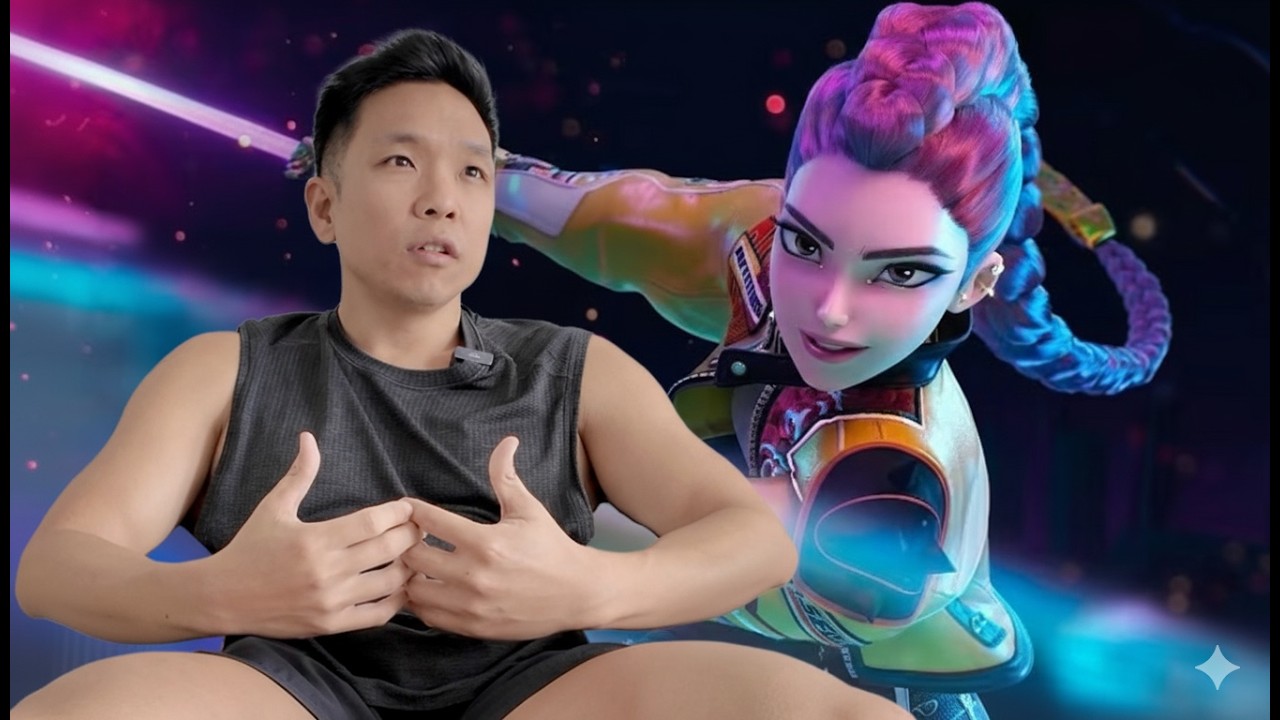
What a crazy movie. Now, before watching this movie, I had my own preconceived notions and stereotypes about what this movie would be like. I mean, just think about the title of the movie, K-pop Demon Hunters. Why would you put K-pop in the movie in the first place? But turns out it might have been their biggest What do you call that? Checkmate move, their king move. And second of all, it's an animation movie. And I'm like, yeah, I mean, it's just an animation, right? Can't be that great. And I was like, okay, let me try to withhold my judgment as much as possible and just watch the movie, right? Because there's a lot of hype. Let's see it. And man, did it hit me. Hardcore crazy. Now, before I get into the meat of it all, like what I really appreciated about the movie without spoiling the vibe here. Yeah. It just, uh, the way it made fun of the whole Korean drama movie and just the whole culture vibe. Right. It's one of those things where if you haven't spent any meaningful time in Korea, like you're not gonna know that much. Or like if you haven't really been deeply entrenched in the whole Korean media vibe, right? Be it K-pop, movies, whatever. Like you're not gonna really catch that. But I actually grew up in Korea, right? Contrary to popular belief. I grew up there from 2 to 16. So, Essentially my formative years, I spent my time there. Right. So like, I do recognize these little things, right? How, you know, in K-drama, like things are like super dramatic and the way they create these cliffhangers, right. It just like, ah, by the end of an episode, you just can't help but watch the next one. Right. They just know how to pull the right strings, pull the right emotional, strings. They know how to trigger you, right? And yeah, just like the music, how everything is so catchy and everything. So like, they got the vibe really on point. And just the way they depicted the whole scene as well. Seoul, right? That's where I grew up. Just like the blend of the old, like, architectural charm of Korea with like the fast expanding modernity. That have shaped Korea as well, right? Like they just kind of— I think they literally pulled out all the stops to make this movie the best banger possible, right? And yeah, like no wonder it's topping all the charts, also musically as well, right? Like Spotify, Billboard, whatever. So that's the first thing. Now, getting into the meat of the thing, it hit me on another level. It hit me on a subconscious, soulful level. And here's the reason. In the movie, I'm not gonna spoil the details, by the way, right? I'm trying. The main character, Rumi, she has her mission of essentially essentially like uniting, uniting the world, right? And she's kind of like the main, main character. And she's got her, her, her girl band Huntrix, right? And she has a mission to kind of essentially sing this song and like essentially vibrate at a certain level. I'm kind of keeping a little bit vague, right? Like on purpose, obviously. Anyway, so she's on a mission. But then there's something she's really ashamed of. It's her roots, right? She's not really like a purebred, right? It harkens back to the whole Harry Potter Muggles vibe in a way, right? It's like she's not purebred. She's got these patterns in her skin, right, that anyone could easily identify her as like she's like part of the evil. And this is something that she's actually really ashamed of. So like she hasn't told anyone that like, you know, she's got these roots, right? And then at the end, she essentially like, she has like a choice, right? She's at a crossroads and she ends up accepting the vine, right? She ends up accepting her identity. And then basically, Like everything happens after, right? Not gonna spoil. And that really hit me so hard because it really, the storyline really runs parallel to my life. Now, growing up in Korea, I moved around a lot. The nomadic runs, the nomadic roots run really deep within me and my family. And, and as I bounced from school to school, like very frequently being this new kid on the block, I used to get bullied a lot. At first I didn't really know why. And yeah, I still don't really know why. Maybe there are some spiritual reasons, maybe there are some, some type of karmic lessons there. But just on the surface level, I come from a family where, yeah, my family, my parents got educated in the US. So I was born in the US actually. And my dad used to always teach me to express myself and speak up in class, for example, if I don't know anything. And I'm this kid that's very expressive, right? And if you've ever been to Korea or you've actually spent any meaningful time there, you can see that Korea is not really about individuality or celebrating your uniqueness. It's more about collectivism. Just see, see, see what you see out there when you go out to the roads, streets. See all the cars, right? There's only 3 colors you see: black, gray, and white. If you see a yellow-red car, that's like, whoa, it's like, first of all, definitely a foreigner, or someone who hasn't really spent any— like a Korean person who's like, you know, like a foreigner, right? This type of vibe. So here, here you see this little kid in this new school environment, right? And he's literally this new kid on the block. And like, he just like raising his hand, like expressing himself and like just not being afraid, right? Yeah, I can see why kids wouldn't really like him, especially in this Korean culture context. So, so that happened, but it didn't just happen once. It happened multiple times. And Because of that experience, I had formed this belief that Korea is a type of society that just doesn't accept me and that I am not welcome there. So starting from middle school, around that age, like my single goal became leaving Korea as much as, as fast as possible. I started asking my parents to send me abroad and they said, okay, we have no money. You have to get a scholarship somewhere. And I'm like, I don't even speak English. Like how can I even get a scholarship anywhere? So then my goal became, okay, I need to get into this foreign language high school in Korea where and they would actually help you prepare to go to college abroad, right? And then I was like, okay, I guess I need to study English really hardcore, right? So then I really like, that became my higher purpose, my North Star vision as a kid. Okay, like I need to learn to speak English like a native speaker somehow, right? Let's make this miracle happen, right? And I just really wanted a chance at reinventing my identity. And that was it. So then I left Korea at the age of 16. Thank God I got this amazing opportunity. And I moved to the States. And then I went to New Hampshire, Virginia, California, and then like, moved around a lot and then left the US almost what, 2002, 2013, almost 13 years later, right? And along the way, yeah, my main vibe became like, okay, I need to erase any trace of my Korean identity. It sounds really strange and weird,, but I was so scarred from my past. It was a huge incompletion. I'm gonna talk about the whole completion, incompletion vibe in a bit, but it was a huge incompletion that I just needed to— it became a survival mechanism in a way. I just needed to make that happen for myself. Like I was deeply ashamed of my Korean identity. And it's funny because when you meet a lot of, when you meet any Korean person, like the vast majority of them are very, very, very, very proud of their identity, right? But I wasn't because of what I've just described there. I was deeply scarred. And the thing is, I really learned about myself a lot and I was able to essentially reinvent a brand new identity and it's become, the vibe has become this level where when people would meet me, Like, look at me, I'm Asian, right? But no one would think that I'm Korean, right? I think I literally shifted my entire vibe because I was so hell-bent on erasing any trace of my Korean identity. I didn't want people to perceive me that way because I was ashamed of that culture. I was ashamed of that vibe. Like, I was fine if I never spoke any Korean. And it's funny, I'm making this video right now about this whole thing. And yeah, because of that, I was able to like essentially create this whole new persona, this whole new identity, right? Whole new mask. And people will be so surprised when they would find out that, whenever they found out that I'm actually Korean, because they would just assume that they would see me, they see the way I move and vibe and speak. And they're like, oh yeah, this kid is like second, third, fourth generation Asian American. I don't know what kind of Asian, but definitely not Korean. All right. Like the vast majority of the time, that's what they would assume about me. And then I would, even Koreans, right? The people who grew up in Korea. And at the moment when I speak Korean to them, they would be so shocked and surprised, right? Where'd you learn Korean? That was crazy, right? Like, I've experienced it so many times. And it was only after I actually really started accepting my— what used to scare me, right? What I was really fearful of. That everything started really changing. And this is why my story, my background really runs parallel to Rumi, the main character in K-pop Demon Hunters, right? Her story. And the thing is, For as long as I, whenever I think about my, you know, the whole Korean identity culture, that world, like if I think about it, I feel very frustrated, stressed out, pissed, angry, sad, mad, lost, all these different negative emotions. That would mean that my experience regarding these things is incomplete. But when I actually feel either neutral or positive about it, well, that's actually complete, right? Incompletion is something like when you think about something and then, yeah, like you still have these pent-up residual negative emotions associated with that experience. And I was able to— thanks to so many different people in my life and my journey— I was able to bring these incomplete experiences into a state of completion. Instead of me attaching meaning to these different events that happened in my life, I got bullied, you know, like all these things, I was able to separate my emotions from these different events and actually take a step back and objectively realize that actually, you know, my experiences, the attribution of my meaning to these different events is actually different from the events themselves, you know, objectively speaking, right? Humans are meaning-making machines. We're always going to attach meaning to an event, right? What we what we experience. But that doesn't mean that we should actually— we always have our choice. We always have a choice when it comes to interpreting an experience. Same thing could happen, right? One person could be like, oh, that's terrible. One person could be like, oh, that's an opportunity, right? So after I learned about this concept of completion, incompletion, right? And I completed everything. And that's when I actually really started accepting myself. And I started really owning who I am. I started telling people, like whenever people would ask me, "Hey, where are you from?" I would never tell them I'm from Korea. I would say stuff like, "Hey, I'm from Virginia, I'm from California." Well, like, what does that even mean? Right? Like I went to high school in Virginia for like a couple of years. Right? I was born in California, but I never really grew up there. Right? So like, what does that even— but then, hey, whatever. Right? I would never say Korea because I was deeply ashamed again. But I started telling people, yeah, I'm Korean. Right? I'm from Seoul. I started really owning that part of myself. And then now, like, when I look back on some of the recent vibes here, You might have noticed with the Papa Nerd videos, right? The Papa Nerd series where I dress up as a super nerd and approach these beautiful women anytime, anywhere. And I literally speak in a super thick Korean accent too. And like, that's like on another level, right? It's something that I rejected, right? Something that I never wanted to do, right? I wanted to like erase any trace of my Korean identity and I wanted to learn essentially perfect English so that no one would bat an eye, right? And now I'm literally walking up to women and I'm teaching them this Korean-accented English. They're saying, man, that's crazy. I'm like, no, no, crazy, crazy. Sexy? No, no, sexy, sexy. And yeah, and I just wanted to really, really express my gratitude because without the people, without the journey that I've been on, like it probably wouldn't have happened. And this is why I really believe that there's some— there's a really deeper message that rings true to people like me and to a lot of people with this movie K-pop Demon Hunters, because I know that I met also so many people where it's almost like living as, um, as an immigrant, as an Asian immigrant in a non-Asian dominated society, like the US or Canada, or like these Anglo-Saxon societies, right? For example, it's not easy, right? You're a minority. And a lot of people are like, carry with them this like a chip on their shoulder, shame sometimes, right? Prejudice. And a lot of these things happen on a very subconscious level, right? And yeah, I briefly spoke about my experience growing up in Korea, right? But yeah, like people who grew up in, actually grew up in the, this Anglo-Saxon society, like also a very, like a similar experience or like even worse, right? Obviously individual experiences vary, right? But you get the vibe. But I think what this movie really, really expresses and teaches us is to really acknowledge where we come from and accept our— the things that we think are almost our defect points, right? Things we think that make us bad or weak or small. And actually, when you start accepting that part of yourself, your entire world opens up. Like, I do a little bit of these accents, right? I just like doing accents sometimes. One time I went to a friend's party, and I literally spoke like this French guy, and I told a friend of a friend that my parents and me, we moved to a super— we were super poor when I was a kid, and we moved to Paris when I was 7 years old from Cambodia. And so like, I kind of invented this whole character, right? And just like, believe me. Or literally, I would, you know, I spent quite a bit of time in the UK, so I can literally come off as a British lad, you know, if I wanted to. Like either that or my crazy Chinese accent, right? But then the moment I actually really started owning my Korean roots, and you know, I started speaking to them in this crazy Korean accent too, like, yeah, people around me, they would like, I never got this type of love that I experienced when I spoke in a crazy cool thick Korean accent to him, right? So that's quite counterintuitive. You'd think that you'd have to, there's a version of you out there that you need to really create in order to be accepted and loved. But then actually, it's when you really own what makes you unique that the vibe starts changing and you can actually, as I always say, qualify for magic. If you're not true to yourself, if you don't really accept yourself, then how can you really, really understand like who really resonates with your vibe down to the deep core. You don't know. But when you've actually accepted yourself and when you actually start expressing that raw, real vibe, right? Even the parts that make you feel afraid, the parts that make you feel fearful, right, of people's judgment or whatever, that's when you actually start understanding that, hey, like, you yourself as a human being is a beautiful soul because this is what makes you unique, right? Like, I wouldn't be able to communicate this type of message as just a white dude. I mean, nothing bad against white dudes. I've got a lot of my white friends, shout out to, but you get me, right? Because I am the way I am, I can express, I can have my unique self-expression. Like when I do this crazy Korean accent too, like, yeah, it's like more real, right? I can have my own vibe dimensions. I thought of this music, Vibe Dimension. Vibe Dimension. I don't know what that music is, but shout out to our sponsor anyway. And yeah, that's, that's really it. So again, I think like just like the timing of this movie and how the deeper messages sends you, like for me that was like the number one takeaway. Your deep self-acceptance. And from that point, actually expressing your deep self-acceptance and qualifying, right? See who actually resonates with you on that level, right? Like not being afraid to be polarizing, not being afraid to show your unique individual individuality and see, like, seeing who really resonates with your vibe. And like, hey, if they don't really resonate with your vibe on that level, they're not your people anyway, to be honest with you, right? People, projects, opportunities, like many things, right? Including like your love life and all these things as well. Yeah. And Yeah, that's the vibe. All right, keep calm and vibe on. And my central message is, um, yeah, watch that movie. Not, not being sponsored yet by the movie, by Netflix, but watch that movie. Let me know how it lands and let me know what else you're taking away from this movie. For me, this is, this is it, and it really hits me like like down at this very cheeky level. And yeah, I hope you have an amazing rest of your day. Keep calm and vibe on. Let the vibe guide you. Let the guy vibe you. Peace.