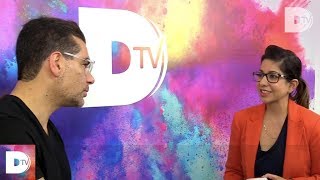
This transcript is from the Lux Exotica pilot episode where host Shahin Farshchi interviews Surush (an Iranian-born, Stanford-trained engineer and former Apple special projects employee) about his personal history, passion for cars, and founding AVA (2016) to help accelerate autonomous vehicle perception. Key points: Surush emigrated from Tehran for college, worked at Apple where long commutes (≈3 hours) motivated him to found AVA, believes autonomous driving will roll out gradually (geofenced/limited services first), and draws inspiration from cultural touchstones (Knight Rider) and everyday cars (a 20-year-old Honda Accord).
Chapters
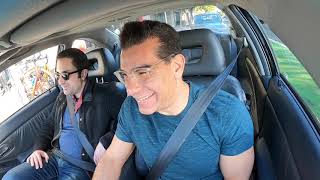
Cars, they thrill us, they move us, they inspire us. On Lux Exotica, we meet the founders building billion dollar businesses with magical technology. We motor around town in the car that inspired them to invent, build and change the world. Today we will meet Surush, an Iranian immigrant and Stanford trained engineer who built and sold his startup before joining Apple's secretive special projects group. In 2016, he founded AVA, accelerating our autonomous future by helping them see the world as well as we do. Hey man.
Hey Shaheen, how are you dude?
How's it going?
Good to see you, man.
Good to see you. Been a while.
Been a while. All right.
I got my coffee.
Good.
What a beautiful day in Palo Alto.
It is nice. Where are we headed?
We are going to go for a trek around the block.
Okay.
So Suraj, tell me a little bit about yourself.
Yeah.
Where did you grow up and where did you develop your passion for cars?
Okay. Yeah. So I grew up in Iran, Tehran, your home country.
I guess I spent some time there.
I came here for school, for college, 2000, 2006 and I went to Stanford. And ever since I was just fascinated with the idea of startups, entrepreneurship and just the energy that fills the space. One of the biggest things for me was just how we come up with better transportation. So one of the biggest actually frustrations that I had, which was one of the reasons to start Ava, was my commute. So when I was at Apple, you would commute, you know, towards the end I had to commute about three hours.
That's good.
We need better systems. One of the reasons actually that I started AVA was because I had to commute three hours every day. You know, I would walk to the shuttle, take the shuttle, go to main campus and then drive to the secret location and it would just absurd. And I was just completely frustrated by the idea of having to still manually drive for hours just for the sake of getting from A to B. But on the other hand, that's always at a conflict with, okay, you like to drive. When you want to drive, you want to be driving, you don't want to be going autonomously. But for commuting A to B, it's been, I think a long time coming.
And what do you think about the future of autonomous to you? Do you expect us to be no longer driving and having to the luxury of shredding our driver's licenses in the next couple years or do you think that it's going to be a slow kind of gradual penetration?
So I actually think it's going to take some time for autonomous to actually become ubiquitous. But we are going to be driving just like today. You have your stick shift car here next to many autonomous, many automatic cars. We're going to have those as well. But over time, majority will become, okay, autonomous. Obviously we're going to start with more type geofence, limited condition services where you are taking from A to B, which is a big pain point.
Right.
But you're not going to see within a couple years now 80% of cars all of a sudden become autonomous. It's definitely going to take time.
Yeah. And if you think about this car that we're driving here, this is a 20 year old Honda Accord. The technology dates back to the time both you and I were in Iran and we're still using it. There's an Upgraded Apple Play CarPlay receiver in here so you can benefit from the more modern technology. But it's evidence that a lot of the old will still continue to thrive.
What's the driving factor or the passion for you coming from? Where is that coming from?
My passion comes from the passion for cars initially. So I watched too much Knight Rider growing up. Knight Rider was the AI and autonomous piece in there together. And in a way we have kind of Knight Rider in this car if we use Siri.
That's actually one of the things that I'm very excited about, which is again, going back to what we're doing has been an elusive goal. Right. So the idea of pulling together both something that's very high performance, but at the same time low cost. Right. And the only way that we have seen that, you know, you can get both of these together, which has been effectively this holy grail in some way is to put all of these kind of key components, big sensors that you see that have been on the cars with big rigs and Frankenstein setups, down to some things that can fit into silicon level process, fits on the silicon that fits on the finger. Bring this conversion point and this merge much faster than expected. My parents had this Mitsubishi, I forget.
What it was called, but I was Lancer Galant.
Yeah, Galant.
There's a lot of those.
There's a lot of those. And this was like, you know, early on I was very young and I remember the biggest thing for me was, you know, getting in the car when I couldn't even reach the ride, the.
Moving the car a few inches, eventually over the years became driving it around town.