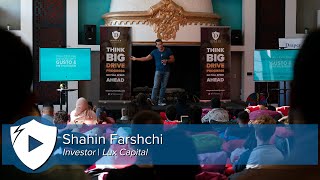
Shahin Farshchi, Partner Lux Capital: Collaborating with your Investors for Success
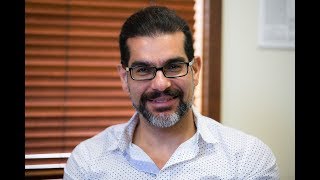
This is a transcript of a recorded interview with Shahin Farshchi (Partner at Lux Capital) about the VC–founder relationship, how VCs partner with founders through success and failure, and practical advice for entrepreneurs pitching VCs. Key themes: treating VC funding as a partnership (not just capital), staying adaptive when assumptions change, supporting founders during downturns to preserve stakeholder interests, criteria Shahin uses to decide to back founders (vision, unfair advantage, founder quality), domains of interest (robotics, IoT, automotive, space), and comments on diversity/women founders (no perceived performance difference at portfolio level; caveat of survivorship bias). The tone is conversational, pragmatic, and supportive.
Chapters
Thanks so much, Sean, for Cheyenne, for letting us use your office. I feel like really, really amazing, particularly with all these products. Obviously are these things that you've invested in.
These are not technologies we've invested in. These are technologies I'm passionate about. So you have a engine from a relatively modern BMW. You have a, that's a jet engine from a Pratt and Whitney based design, and you have a 3D printed rocket engine right behind you that's been developed by a startup called Rocket Lab that unfortunately, we're not investors in.
Okay, fantastic. So as I was saying to you, I'd love to hear a little bit about the dynamic between venture capitalists and founders or the people that actually come to you, the executives that come to you to pitch ideas. And I wondered what your experience has been in the past with the people that you've ended up investing in. How has that been? What do they need to, how do they need to pitch to you to really get you engaged and interested?
So I guess that's two questions. First question, my experience with founders and CEOs that I've backed to date. And I can say that I am extremely fortunate to have partnered with the people that I did. They were all extremely talented people, extremely passionate, big vision. And in the unfortunate cases where things did not go as planned, it was primarily due to the macro environment. And on almost every occasion, the executives whom I've partnered with have done their part of the job and have delivered on great technology, on great products, and again on some unfortunate circumstances when things haven't gone as planned, the macro environment wasn't as open and conducive to the changes that came with disruptive technology. And the companies weren't rewarded for the great things that they did. And I would view it as more of a partnership in terms of that relationship that you were alluding to earlier with these executives and founders more than anything else.
I like that model of having a partnership. And you don't often hear VC speak like that, but idealistically, that's what I would like too. So I wondered if you could elaborate a little bit more, say, looking back at those relationships where the actual startups haven't worked according to plan, how do you work with the company, the startup people, to manage that experience? Because I guess that's really where we. The chips are down.
Sure, sure, sure. So you used the word idealistic. I would respond to that and say that is realistic. It is me being realistic in a sense that that is the practice of venture capital.
Lovely.
As an executive or a founder if you're looking for a source of capital only for the source of capital and nothing else, then, then you're far better off seeking avenues that are far less expensive to you as the founder or as the company. As you know, venture capital is the most expensive form of capital that you can get. And unless you are using all of the other benefits, namely that partner and that firm that partners with you, then you're really not using what you're giving up, what you're getting in exchange for what you're giving up to its fullest. Now to your question on the dynamic under those circumstances. The reality is that, again, my experiences, which were very positive, we were very, very aligned with the leadership teams and we found a path together to maximize what we could salvage from the work that had been done in the past and make sure that those who had stuck with the company and had worked hard would be adequately rewarded the best that we could, while preserving the interests of the stakeholders, which is not only the entrepreneurs, but again, the employees, our vendors, our suppliers, as well as our investors in the fund who originally put up the money that we put to work to invest into these companies.
I know having that hard experience after 5 years I was telling you about of losing a company, even though I didn't raise Venture, it was still incredibly painful and challenging. And I'm a bit of a driver. So I drove myself till I couldn't go any further, really. And I know a lot of CEOs and founders are similar if they're passionate about something. So I'm just wondering what sort of guidance and support can you give as a partner at VC with them when the shit hits the fan, so to speak, and things you can see that the writing's on the wall and it's not going to work as everyone envisioned.
So my advice would be to stay strong. It would be to not be married to the course that you're on. One VC that I sat on a board with, Bill Tye, who at the time was at Charles River Ventures, mentioned in a board meeting that the only thing that we can be certain of is change. And so my advice to entrepreneurs is to expect things to change as they go in. They should expect competitors to come out of nowhere. They should expect technology not to work as planned. They should expect the market dynamics to change. They should expect customers who initially expressed a lot of interest, which may have led you to quitting your day job and starting this company, to later go silent, and other companies or other customers that you may have not even expected to be potential Customers to come out of the woodwork. You should expect challenges when hiring. You should expect your early superstars to not perform and your underdogs to outperform. And so my advice is to be open and embracing of change and find a way to make the best of it. I come from an engineering background. A lot of my peers before I got into venture were scientists. And they were people that had spent many, many years, maybe even a decade, if not more, perfecting a process or observing processes and learning rules that they would apply in the future in their careers. And it was very, very difficult to get them to stray from those rules. Well, guess what? When you go into venture, when you go into business, there are no more rules. There are very, very basic fundamentals, but you're in a very, very dynamic environment. So the question is, how do you balance the rules that have, as a technical, let's say, founder, the rules that you've acquired over the long kind of course of a academic career, and then applying them to a very, very dynamic and changing environment?
That's really interesting. And what have you learned out of that by observing that?
Yeah. So to your earlier question, when things go sl sideways, it's because the changing environment leads to the assumptions that are made early on to no longer being valid. So you make an assumption, you present a thesis, and you raise money in support of that thesis to carry the vision forward and achieve goals. A few things can happen. Either those goals may not be reachable because of some assumptions that were made about engineering and technology, or those goals may no longer be relevant because of the changes that have taken place in the competitive environment. So you may assume that you would be rewarded for presenting a solution to a customer. And you may present that solution, but that customer may no longer be interested in giving you a reward because of some other alternative or because of a lack of motivation on their part, which happens over and over again. So the challenge for the entrepreneur, especially the technical ones, is how can they be dynamic and how can they quickly accommodate these changes to succeed?
And a friend of mine, Jason Mendelsohn, who I know, you know, down in Boulder, said to me many years ago that he taught a law class at a university, and he used to teach that it was like a marriage, the. The founder and the vc. And I'm just wondering, what's it like after the breakup? Like after the company goes down? Like, do you still remain friends? Like, what's your history with that and your observations? Because sometimes in a marriage, you know, it's sort of like you've been through so much pain that you don't want to see that person again because they equal bringing up all that pain. And I know from talking to other founders who have crashed either after Venture or before, that it's extremely painful on a few levels, financially, emotionally, spiritually. So how's it been for you?
So for me, in my experience, some have gone on to run my other companies, others I've worked with in their future endeavors.
Wow.
So the relationship has always been at least I'm nine of one. But for me, at least the relationships have been. Have been great. Primarily because again, we are entering a relationship because of a desire to work together versus a transaction. And like any other relationship that is purely catalyzed and carried forward for transactional purposes. A partnership is one of friendship, is one where you're part companion together and you're working arm in arm towards a common goal. And if that goal isn't reached, that doesn't. Well, let me put it this way. The partnership or the relationship isn't defined by reaching that goal. It's defined by the journey that you go through together towards achieving that goal. And if that goal no longer exists or if the goal posts are changed, then the relationship remains intact and still has great meaning.
That's very inspiring. Thank you so much. And I guess on the other side of the coin, when things work really well, maybe not according to plan, but really well, and end up, everyone wins. Can you tell me a bit about how that changes the relationship for you as the partner vc?
It only changes it for the better. It only changes it. That success obviously attracts many types of other people that are accretive and obviously bring added resources to the company. So it's meant probably having to wait longer between email responses or getting phone calls back, but that's a good thing versus a bad thing. I view that as a.
And I know I've heard you speak before and you're involved in quite some interesting domains. For one, I know about robotics, but also IoT, which we're going to hear you speak about tonight. Can you like briefly cover what domains that fascinate you and that you like to invest in?
Sure. So I grew up actually here in the Bay Area with a fascination for cars, for space and for computers. And so that has kind of led to a few of the areas that you've talked about. And so anything that moves, whether it's a land based vehicle, aircraft, spacecraft, I'm passionate about. As you can see from the art that's around the walls, as far as robotics are Concerned, I'm interested in not only robotics that are used in factories and in manufacturing, but also robots that potentially could interact with people on a regular basis, as well as robots that would be used in healthcare settings and basically take away, I would say, types of tasks or natures, tasks that are of a nature that humans aren't the best fit to do. If we look at, for example, there was a time when human beings used to go down into mines and produce coal and other minerals, but now you have machines doing that. And I don't think anybody is really lamenting the fact that we're not sending people into harm's way anymore. And so I think that robots to date have done a lot to increase the quality of our work. And that my expectation is that my desire is to see and fund more robotic technology that would help enrich our jobs. So our jobs will be more thought driven, more creativity driven, more human driven versus task driven. And we'd assign the tasks to the robots and again, we would further cultivate our creative instincts.
Fabulous. It seems like they're all domains that are really pointing us towards the future, which obviously that's where we are. Silicon Valley, it's meant to be the hub of innovation. And you're right at the forefront of that with those sort of domains. So I'm sure it's going to be exciting for you, as it has in the past. I was really thrilled to hear that you have some women founders or women executives that you've been working with. And as you know, I've got a bit of history about supporting diversity in the Valley and in the world. I'd love to hear a little bit about how that is working with a female entrepreneur, comparatively speaking, with men.
Sure, you may not believe me if I tell you this, but I frankly don't see a difference. I grew up in a neighborhood where a good majority, well, not a majority, but a good portion of the community was visiting scholars and students at Berkeley. So my father was a graduate student at Berkeley, and we lived in a town in the East Bay called Albany, which used to have, which had a little township that used to be army barracks that were now dedicated to students and faculty at Berkeley and researchers who were visiting from abroad. And most of my friends came from many different parts of the world and had mothers and fathers who were scientists and engineers. And so diversity was something that I grew up with. And, you know, having again spent most of my time in California, having worked a lot of companies here, the reality is that even though some disciplines in engineering tend to be very male dominated. There was always, from a management perspective, leadership perspective, There was a good number of women that I would interact with. And here at Lux we have quite a few female founders, executives, technical leadership at our companies. And for me it's really been business as usual. Now there are personalities within the portfolio and those personalities, I wouldn't say those personalities have their roots in gender, but again, everybody's different. Now would I say that a certain founder has a certain personality because of their gender? I wouldn't draw that connection just yet. But just like we have all kinds of personalities amongst our male executives, we have all kinds of personalities amongst our female executives as well. And so I wish I had a better answer for you.
That's sort of nice. Something I discovered from my research years ago was that some of the things I hadn't had problems with were issues for women. And that was one of the reasons why women weren't featuring so strongly as entrepreneurs and getting funded. So I think that really what you're saying is sort of the truth, that we all have different personalities. I was raised to be able to do anything that I wanted to do by my father and some of the women I spoke to felt the same way and others obviously had a different upbringing. So I think you're right. I think we've all bring to the table. I think the great thing about fostering diversity and obviously you do that on all levels, is that that's what the market is. Why would we not include everyone at the table, no matter what the colour of their skin or their sexual preference, you know, so I'm really pleased to hear that.
Now there could be a little bit of my observation, at least at the portfolio level as a VC may very well have an element of survivorship bias where. Well, you have women that have made it here. Are the women that have made it here representative of the broader female aspiring entrepreneur community? I don't know. When I was finishing grad school, I was a. I was a low power analog circuit designer and there was probably one female in my entire program. And is it because females do not have the mental acuity to solve problems associated with low power analog circuit design? Or is it because it just simply isn't something that's attractive, something that's worth pursuing and the people, and the types of people that enjoy doing that kind of stuff with the people that grew up loving Knight Rider and grew up loving Star Trek like myself and I think so I view a lot of this as a matter of preference. And so I think if different types of people have different preferences towards different things. At the end of the day, I don't think gender or age or race really even comes into account. Again, when I was doing this, that one female only happened to be one female, but that one female was treated and was viewed and interacted with everybody else as though they were one of them. Again, because of the common interests.
Yes, yes, of course, of course. And when you're passionate about something, I don't think there's really any, you know, in my mind I don't think, oh, I'm a woman and I can't do that. It's just I'm passionate about what I do. And then I. And then later on I hear that someone might have thought I was a bit weird because I was a woman. But yeah, I agree. Thank you so much. This has been like fascinating. I wondered if you could just briefly, just to finish off, give me an idea of if a founder wanted to come in and pitch you. They realized that you're in the domain, that they've got a product or an idea. What's your advice or suggestions?
Sure, sure. So first is to get to know your vc. Get to know the person you're walking in to meet because it is going to be that person again that you're going to be partnering with. This is not a transaction, this is not a financing that happens. Then you walk away with the money. It's the beginning of a relationship. And just like how you don't walk into any situation where there's going to be a long term relationship, you don't walk in there without any background. So my advice would be to get to know what this person's invested in, what their interests are, what their passions are. Like your friends, for example, At Foundry, most VCs taking a lesson from their playbook, from their success. Most VCs nowadays are prolific writers. So I think it's very easy to Google and get to know that person, whether from their tweets or their blogs, as to what they're passionate about. So a first takeaway. Get to know the person that you're meeting and look at them as a partner, not as a facilitator of a transaction. Because this is certainly not a transaction.
I really like that.
I would say also as it relates to the actual dialogue, expect your counterpart to know. Expect your, well, I wouldn't say counterpart, but your partner to know. Have some sense as to what you're doing. If you view them as completely unprepared, that should tell you something about their interest level and Their ability to really partner with you. So in a sense, kind of test them to see how knowledgeable they are about the general topic and how much they know about you. And if you feel like as if there isn't a lot of interest on their end to get to get to know you as a person, what got you passionate about what you're doing and what it is that you're doing, I would view that as a little bit of a red flag as it relates to actually communicating the opportunity. I would say, first of all, communicate the opportunity, share the opportunity as though they don't know anything, because they'll be gauging you as to how well you present the opportunity to others who do not know anything about the space or about the technology or about the prospects of the business. And when you are presenting, make sure that you present a very, very strong understanding of two things, of the alternatives that exist in the market on the supply side or your competitors, and a very, very solid understanding as to who the customer is and what the customer's motivations are and the dynamics as to how you plan to engage the customer and effectively build your business and the metrics associated with your business and the levers that you plan to push and pull in order to guide or to affect the metrics of your business. So to come in there and just present a view and say, there's this big problem and we have this silver bullet to solve it, and if you give us money, we'll put this thing online and it will sell itself. That is a very, very naive plan, in my opinion. And so get to know your customer, get to know your market, really understand product. And product is not technology. Product is a technology or solution that's packaged that can solve a customer's problem. Be prepared.
And just quickly, when do you know that you really want to invest in someone? At what point have you seen, you know there's no going back for you.
So first of all, I want to get really excited about the opportunity. I want to get really excited about working with that individual. We here at Lux work as a partnership. And so I would very much like also for my partners to get excited about the opportunity. And in the event that they don't get as excited as me, I want to have a very concise thesis that I could effectively communicate with them and get them excited about it. So, A, it's the vision. B, it's the unfair advantage. C, it's the founder that not only myself, but others would want to work with. Keep in mind that the fact that I want to work with that executive is an indication that other superstar, talented people would leave their high paying jobs and abandon their options to come join this company. It means customers will take a risk on them. It means partners who can otherwise sell stuff to Apple, sell stuff to Google, sell stuff to name your blue chip company would be willing to do business with you. Rinky dink company. So all of those factors really come into that entrepreneur for you.
And so it's pretty quickly then I would imagine once you engage with that person that you know that you will run the gauntlet for them until you can't anymore.
Yes.
That's fabulous. Well, good luck to all those entrepreneurs that come to meet you. Thank you so much, Shahin. This has been delightful, I have to say, and I've learned quite, quite a lot. Thank you.
Thanks for having me.
More from Shahin
Library of Minds episode with Shahin Farshchi, General Partner at Lux Capital
Lux Exotica Pilot Episode - Aeva empowering autonomous cars to see the world better than we do.