Celebration, Appreciation, and Love with Sherry Richert Belul | Meaningful Revolution Podcast
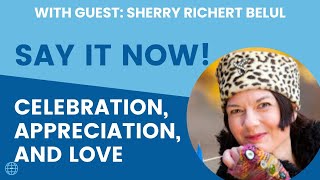
In this episode of the Meaningful Revolution podcast, host Shawn Buttner interviews Sherry Richert Belul, founder of Simply Celebrate, high‑performance coach, and author of Say It Now: 33 Creative Ways to Say I Love You. The conversation explores Sherry’s personal journey from a deep period of depression to a life centered on celebration, appreciation, and love. She describes a pivotal meditation experience that produced a "pinprick of light" which sparked a practice of seeking and creating small moments of joy. Sherry outlines concrete gratitude tools such as love lists, reappreciation, and "positive disappointment," emphasizing that celebration is a birthright, not limited to holidays or milestones. She stresses the importance of presence, mindfulness, and pausing to notice everyday miracles, arguing that celebrating others also amplifies one’s own light. The dialogue also touches on the cultural tendency to focus on material gifts, the need to shift toward emotional acknowledgment, and practical advice for starting love‑list practices, including prompts, jars, and daily habits. Sherry shares stories of how these practices have healed relationships, even with estranged family members, and urges listeners to express love now rather than waiting. The episode concludes with resources for Sherry’s work and a call to integrate celebration into daily life.
Chapters
Do you have a belief about, you know, appreciation, celebration, and love that other people don't or maybe other people get wrong?
Oh, love that. What a great question. Yeah. Well, first of all, I sort of hinted at this, but I'm going to say it explicitly. Celebration is not for holidays only or milestone occasions or when we've accomplished something. Let me say that again. You know, celebration is not only for these big occasions or when we think we've accomplished something that deserves it. Celebration, I believe, is. Is our birthright. As many moments of every day as we can possibly be present to it. And that means, like, catching it when it happens, you know, or creating it. We're a part of life, right? So life is always creating celebration. And I think that's like one of my main. If I could shop from the rooftop. That's a big one.
Okay. Hey, everyone. Welcome to the Meaningful Revolution podcast where we help you live more into a life that you've designed so that you can feel confident, joyful, and have a larger impact in your world today. I am really excited for, for our guest. She is the founder of Simply Celebrate and helps people find creative, intentional, and impactful ways to celebrate life and express their love for their family and friends. She's a fellow certified high performance coach and supports people in living their best lives full of joy, success, engagement, and meaningful relationships. She's also the author of say it now, which I'll bring it up here. 33 creative ways to say I love you to the most important people in your life. And the co founder of the Secret Agents of Change. Her work's been featured in New York Times, Town and Country, and the Wall Street Journal. I'd love to introduce you to my good friend, Sherry Reichert Ballou. Welcome. Sheri.
Sean. It's so wonderful to be here with you. I'm just already grinning just seeing you. So.
Yeah, I'm. I'm so excited that you're here. You all in the social groups that we mingle in together, I guess that we're. We have in common. You're always such a fountain of joy and community. You know, I've often said, you know, when people say you need someone in your community to advocate for you, Sherry's often in that, in the communities that I've seen you in. So I just want to first off appreciate you for that because it's such a. You make a group so much more fun. So.
Oh, Shawn, thank you. Thank you. And just a little bit of mutual appreciation so we can start off on that note right now. And thank You. Right. Like, I know that your listeners know this from you, from listening, but it's like, you have such a generous heart. You're always bringing joy. And something else that I always feel around you is just a sense of warmth and peacefulness, and I love that. So thank you for what you bring.
Thank you. I appreciate that.
Yeah.
So, okay, then. Now that we got the cool appreciation part, that is the topic of today, it's celebration and appreciation. So this is a great way to start. Just kick off that topic. And I'd love to know if you had a time, just because we always start with stories. Tell me a time before you got started in celebration and appreciation and your journey to really embodying this and the energy that we all get to see you in.
And, Sean, thank you for starting with that, because I typically will try to start with my story because I think it's important for people when they hear that the name of my company is Simply Celebrate, and they know me now. Sometimes people think like, oh, you must just be one of those naturally happy people, you know, bounds out of bed and balloons in the closet or whatever. And the truth of it is, everything in my life right now is due to a really intense period of depression. I, for. Actually, for a few years, just really was focused on how to get off this planet, you know, and I'm so grateful that I never did anything in that way. But I really. And, you know, I think you'll. You'll understand this because of our work as coaches, that it's like as I was growing up and into. Into my early 20s, I just had that, like these voices in the head always telling me, you know, I didn't measure up either. I didn't measure up to what I thought I should be from. From the external world or my own feelings about who I wanted to be in the world. And it was this constant living in what was wrong and what was missing about me. And. And by some huge grace, I started a practice, which I know we're going to talk about later on, a little bit more in depth, but I started an appreciation practice of making lists for people of why I love them. And it was something that just kind of came in from wherever these beautiful things are given to us, to Stewart. And I found that when I was immersed in love, I didn't feel depressed. So there would be these moments, right? And in a similar way, and this is also, I think, a really important part of the story, I was led to a meditation class. And in that meditation class, if anybody's meditated you know, you focus on the breath, right? So in breath and out breath. So nice. Well, and when I was in the depths of all of those suicidal feelings, I. I was in this meditation class, and on one of the. In breaths, I literally heard, I don't want to kill myself right now. And that was huge because it had felt to me like the depression and anxiety was like an iron wall, you know, closing in, Closing in. That's really literally what it felt like. But that one breath and that one moment of, wait a minute, I'm okay in this moment was like a little pinprick of light, you know, and when we're in the dark, right, that tiny pinprick of light is everything. And that became, and still is to this day, 30 some years later. It's a guiding principle for me to both look for and create pinpricks of light. And that's really where the journey started with literally that, that. That gift of whatever, you know, brought me not only the iron wall, but the. The moment of relief and the moment which later turned into moments of celebration, of love, of appreciation.
Wow. Thank you for sharing that. I had no idea, you know, about it. So, yeah, it's such a. Making me think of some other folks that I talked with before talking about being the light in your community in really, really dark times. And so I'm trying to think, like, how to. There's like a threat here with folks that, you know, there is light out there and is something worth pursuing. So, okay, so you have this big breakthrough of the love list of this meditation, of. Of kind of piercing through the. This iron wall.
Yeah.
And so what happens next? Like, I'm curious.
Well, yeah, like, again, you know, those of us who. Who are lucky enough to be like, you know, understand growth mindset, like, which I did not at that feel like what was gifted to me was growth mindset in that. In that idea of okay, if I had one little moment of being okay and. And wanting to stay on this planet, surely I can find others. Right. Like, that became, you know, part of my. My journey. And I. At first I was just looking around for myself. Like, I would just look around like, okay, can I find a pinprick of light? You know, oh, holding my cat and she purrs, or, you know, hearing a friend's voice on the phone, you know, the. The sun, you know, a sunset, for instance. I would. I'd be like, okay, you know, pin prick of light. Pin prick of light. And after practicing that for a long time, I. I got it that I could also create them, right. So I started to think like, oh, what. What feels like a pin prick of light? How can I create that for myself? And then after more time passed, and this points to what you were just saying about, like, the darkness is. I. At some point, I became solid enough in myself, in my own life and my own sense of. Of joy that I looked up, you know, out of my own world and realized, like, there are a lot of people in the dark. Right? There are a lot of people. And it may be the dark, like I was, which was a very. Felt like a solid few years, but it might also just, you know, it might be a momentary. Someone's died or they've lost their job, or they're just having a hard day or all the multiple things that. That could cause people to feel depressed or sad. And that's, I think, for me, like, when my work really took off for me was realizing, oh, you know, when I'm creating a pinprick of light for someone else, I'm the first recipient. It's like a twofer, right? It's like it suddenly it just like multiplied all of that light. And so that I think for me is like. And of course, this was years in the making, right? It was. It was a lot of years of really coming to understand that. But now I've been fortunate enough, you know, as I'm heading into 60, to have had, like, a lot of years of practicing creating light and love and appreciation.
Yeah, that's okay. And that it's so cool to just kind of keep working on it. You know, I think the consistency of. Oh, like just a little pin prick. And before you know it, you have like this wall of all these little pins, you know, that kind of light the way and show others that there's. Oh, like this isn't a very thick wall. It's something that you can poke holes in.
Yeah. So thank you for. Yeah. Oh, sorry. Go ahead, Sean.
Oh, no, I was. Go for it.
Well, I just wanted to thank you for pointing that out because I think in my experience, working with a lot of people is that part of what happens is we think that something is never going to change. Right? That's. We think, first of all, what I was. What I was experiencing as a younger person, which was something's wrong with me. And it's not like I literally thought there was something wrong with me. Like, I just thought, I'm not like other people. I don't belong here. You know? And so it's like both that feeling like we're flawed or that there's just something in our lives that is not going to change. I always hope that my story can, you know, can show people like, no, just, just find one moment and then you'll find another. And after a while, just like you just said was so beautifully. I love the way you said that. After a while it's no longer even a solid iron wall. Right. Because it's more holes and light than it is wall. Yeah.
Awesome. So as you've been on this journey, I imagine you've picked up some processes or some constant strategies that help you like kind of ground you maybe when you go a little bit too on the dark. I'm curious, like, how do you give yourself grace? Right. Because if you're coming from a part, a place where for a while you may like you've said you felt like something was wrong with you or you were maybe different and that that was the problem and not a mindset shift. How do you move that, that, that kind of like ship that's floating, right? Like kind of like the Titanic. How do you steer that? You know, I know that it's one pin prick or one little like motion at a time and being consistent at it, but how do you like, sometimes boats try to self correct to go back to the course that they were on. Like how do you fight that?
Yeah.
Or did you fight that? I guess.
Sorry. Yeah. That is a great question. And truthfully the answer is exactly what you just said. For me at least. I. I live my life in moments. Literally. Like ever since 30 some years ago when that experience happened, I do see life in moments. So if, let's just say and I actually had this experience yesterday, like, I don't know why, but I just got like really super crabby, you know, like it just sort of came over me and you know, I did what I always do, right. I looked around for something to love. And you know, sometimes I just walk outside and I'll touch a tree, you know, or butterfly will flit across the path. And I know this sounds kind of cliche, but it's the truth. I think of how life works. What we focus on expands, it does. So I literally will just look for one moment if I ask myself, like, don't be crabby. It would never work, right? That sort of should. That we, we put on ourselves or if I said I should be happy, I'd never be happy ever. Right? To me, joy is a practice and it's one moment at a time and it does always like lead me to a better Feeling place. And from that better feeling place, I'm usually more clear. Right. Like, oh, I'm feeling really crabby. Oh, you know what? I should just allow myself to have an hour and take a walk and not talk to anybody. You know, Like.
I totally relate with the. To not talk to anybody. I'm like admitted introvert, right. So I have a capacity for like doing videos, being out in social things, and then it's, it's okay. I need to like recharge type, type thing. And so I think there's a bunch of ways I could ask questions there, but that might go a little off topic. So I'm curious then, like, having done a lot of this work and appreciation and celebration and you know, focusing on love when you're down, is there a story or time where you being able to kind of get past that for yourself had helped the people around you in a particular way?
Oh, oh, what a beautiful question. Yeah, well, I'm just gonna. The very first thing that comes to my mind is something, you know, you'll understand. Having been there at many. I used to. Well, before COVID we had a lot of big events, right?
Yeah.
And one of the most profound things that happened for me for a long time. I would volunteer at these big events with hundreds of people and a lot of that old anxiety would come up, you know, that, you know, this was years and years ago and while I was still sort of on this path of practicing and I learned that if I walked into that ballroom where I was serving and I kept my attention on be love, like as a verb, you know, be love in action, that what it did was it not only took off that awkward self consciousness that I had going on for me, but that just like your question just asked, that I was really able to support other people. I could. Suddenly when I was sort of like in that place of like, I'm going to like action verb beloved, I felt like I had some superpower to be able to like see people. Like, honest to goodness, it sounds woo woo, but even just how I'm looking at you now, it's like there's just a light around you. Like I can see. I just see the, the goodness in, in people. And it's not me doing that. I really just think it's presence. I think this is what life. It's really my belief that life, life is good and life sees the goodness in everybody. And I feel like that when I was present and out of my own head, ego right then I was able to really be there with people. And I could hear what they were saying. Right. I wasn't, it wasn't all like clouded by my own insecurities or thoughts. And I, to me, I think that's one of the most important things that has come from this work is really being able to truly be present with people.
That's fascinating. I never really thought of in high performance, we talk a lot about, you know, high performance, living as being joyful every day, but how that actually like, relates to being, being present. Because now I'm thinking like every time that I'm not present, it's usually like I'm anxious or worried about the bank account or, you know, relationship or my own stuff. And it's really hard in the absence of joy to be present, I guess.
I love that. Sean. This is the, I think this is part of the nugget of it. Right. And it's why I'm, I am super grateful to my spiritual teacher. I now have a 30 some year meditation practice. And I, I feel like what you're saying is true, that we have to be present in order to really, truly experience what's going on. And, and what's going on is life. And life is joy. It is even. You know, and I've been looking at this a lot. I just went through a really big period of grief and I started some. Wow, thank you. And you know, you, as you might guess where I'm headed with this is that I started a grief group where I was talking to other people, grieving. And the truth of it is, when we were all present to the feelings that were going on, when we were allowing ourselves to be there with them, we were laughing and smiling. I mean, not all the time. We were also crying. But there's, there's a joy. There is a joy to that because we were connected. We were connected to our authentic feelings. We were connected authentically to one another. And to me, this is part of like, you know, I love your revolution in your. Right, right. And to me, like, the big revolution that I would love to, to lead is that, you know, celebration can happen in any moment. Joy can happen in any moment, even when we're grieving, even when we're crabby, even when we're having a hard time that I really want people to redefine the way that we see those words. Like it's a celebration to be in a group of people where we can authentically express our feelings together. Right?
Yeah.
And, and so I forgot where, I forgot why I went off on that whole thing. But.
The, the celebration revolution Right.
Celebration, Revolution. Oh, presence. Because you. So I was right. Because you so beautifully and I think I'm so glad that you picked up on that, Sean, and you were present to catch that because to me, that is what underlies everything. I think we can't. Well, I shouldn't say we can't. I think we love people much better when we're present because we hear, we hear them, we see them, you know, we really get who they are and what's important to them. And then hopefully we give that back to them. Them.
Yeah, 100%. Like I, I, yeah, I love all of that. So I can't approve on it, so I'm not going to try. So, so I, I think. So here's an maybe interesting way to take the. This discussion. So when we think about celebration and appreciation and love, do you have a belief about, you know, appreciation, celebration, and love that other people don't or maybe other people get wrong?
Oh, love that. What a great question. Yeah. Well, first of all, I sort of hinted at this, but I'm going to say it explicitly. Celebration is not for holidays only or milestone occasions or when we've accomplished something. Let me say that again. You know, celebration is not only for these big occasions or when we think we've accomplished something that deserves it. Celebration, I believe, is, is our birthright. As many moments of every day as we can possibly be present to it. And that means, like, catching it when it happens, you know, or creating it. We're a part of life, right? So life is always creating celebration. And I think that's like one of my main, you know, if I could shop from the rooftop. That's a big one.
Okay.
The other thing is, you know, and you know this from my book, it's like, I really honestly believe that we've got to turn our attention from this idea of like, gift giving as material things. There are a thousand ways to give people gifts, and one tiny little percentage of that is material items. I really feel like what people want is what you and I have been talking about. I. People want to be seen, they want to be heard, they want to be understood. They want to know that you're there with them, loving them no matter what. And so this ties in with the celebration piece because, yeah, we want to celebrate people like, you know, you get your coaching certificate, we want to celebrate you, but we want to celebrate you when you're like halfway through a goal. And we want to celebrate you when you don't even have a goal and you don't know what you're doing with your life, but you're 100% lovable. And we're going to find ways to make sure that reflecting back and celebrating you simply for who you are, not for what you do. So those are. They're tied together, but, you know, a couple different things that, like, wow, I. I'd like people to get this.
I think that's so powerful. I'm thinking back to part of the work I've done with my wife. It's been the love languages. Right. I think you mentioned the love languages in your book, so I just got it today. So for the folks at home, yeah, I'm not the worst host. Make a little joke at my own expense. But, you know, the idea that there's different ways to connect with people and, like, you know, part of you're talking about the celebration revolution. I think the meaningful revolution in a lot of ways is doing what we find fulfilling. And I think fulfillment is when we're doing love is a big part of meaning in people's lives and expressing it and doing the things that we love, but we're also not the things that we do. So, yeah, I think, you know, if I'm a teacher, right, it's not the way that English works. And I kind of nerd out about this, you know, on language is like, I'm a teacher means that I was a teacher before right now, that I'm a teacher right now, and I'm a teacher going into the future. And so if you stop becoming a teacher and your identity is so tied into that profession, that comes into a lot of. That causes a lot of stress. And coming out of the moment, I think I'm tying, like, three different ideas together in my head.
But perfect, Sean, it's perfect. And if you don't mind, can I just jump in on that? Because I love. I love where you're going with this. And I've been in a lot of conversations recently, and I think it's because as I'm, you know, I'm hoping to live another 40 years or more. But as I'm heading into a different stage of life, I've been talking to people a lot about, like, there's a great beautiful quote by Ram Dass that he. After he had his stroke, and he talks about this idea of, like, his identity. You know, he was a helper. He was someone who did for others all the time. And it really propelled him into this new, beautiful place in his life of I'm worthy because I'm here and who I am not as you just said, right. It's not about what we do, although they often get tied, especially in the culture. I live in the United States. I think there's a big tie in here. First question people usually ask, what do you do? Right. I try to ask people, you know, like, what do you love? What's, you know, what's juicy in your life? Because it's like, what do you do? It just perpetuates this idea that. That. That doing is what's worthy and going back. Right. It's like, ah, that's what we celebrate. And then what happens when people retire? That's why, you know, there's so much depression in older people if they don't have something else that they. They are excited about or passionate about because they're so used to that identity, just like you said.
Yeah, always. You know, a lot of, you know, in my coaching practice, the last couple of years, it's been a lot of people that lost their jobs and are like, I wake up every day and I'm crying. I did 17 years at this company. And, you know, that hit. I don't think we talk about that hit. That happens to folks enough. And it's something that one. You could be really appreciative of that experience and what it's taught you. But I don't know. I had this thought for a while that focusing on the journey is more worthy a lot of times than the end goal or the results that you're getting. So.
Yes. Yeah. Yes. A hundred times. Where's the, like, button, Sean? I want to. But, yeah. And again, like, we all know, like, that's a little bit of a cliche. We've all heard stop and smell the roses. It's the journey, not the destination. It's the hike up the mountain. But the reason those are cliches is because it's really true. It's really, really true. You know, my son grew up with that. I would always say it's a cliche because. Because it's true. Like, because it happens. But. But I think the thing is, is I'm hoping anyone listening to this will pause even to hit the pause button. And really just think, like, do I live that way? Right? Like, I hear this. I know that I've heard it a million times. As our own mentor, Brendan Burchard, often says, common sense is not often common practice. How much am I really practicing? And for me, this is a question every day. You know, what am I celebrating today? What am, you know, who am I appreciating? And am I Am I appreciating them for who they are? You know, and I really want people to think about that. Like, I invite people all the time. It's just the tiniest of things to do. But if you're by yourself or you're having dinner with friends or family tonight, raise a glass. Raise a glass and, and acknowledge and celebrate like you don't have to. People do it on birthdays or weddings or whatever. Every night. Raise a glass, you know, and train yourself. Right. It's a, it's a practice. You know, what can I celebrate today? You know, oh, I'm looking around. I have this healthy 22 year old son. You know, to your health. I'm so, so grateful. What a celebration, you know, like that.
Yeah.
Yeah.
I just want to hold that space. Yeah. You know, out of the millions of things that we could celebrate. Right. You know, one of my favorite things to do when I'm just to kind of share this when I'm feeling kind of like bummed about the world. I, I think I came from a technology background, so as a software engineer and super into technology. And you have this box in your pocket that talks to satellites in space that then locates you on the planet and gives you information like the wealth of human knowledge and that sense of wonderment of like, you can't think of a time when that, that didn't happen. It's not that long ago. And what a, a marvel of just how life happens. If there's one thing you could be amazed about, it's that, you know, this thing finds you on the planet.
I love that, Sean. Right. And my version of that, I have an outdoor studio, so I always have to walk in between that. I get. Walk between the house and the studio and I marvel. I don't even have to do anything. And my legs move like I'm suddenly transported. It's crazy. And you know, if we really start to think about it, and I know not everybody has that gift of being able to walk, but many of us have the gift of being able to see or to hear or to feel emotion. Like when we pause to think about these things that are just like huge gifts of being a human being in this miracle of a body, you know, or the water comes out of the faucet. I mean, I spent time in Africa where that did not happen. You did not have clean water, you did not have a faucet. Right. And it's like that I just so cavalierly go into the house and turn on the faucet.
Yeah, yeah. I love yeah, all the things we take for granted in life at some fundamental thing is a marvel of ingenuity, of creativity, of making everyone's life easier, you know, So I love that. So I'm curious now. So a lot of people in personal development have, like, the gratitude journal or gratitude practice is yours. Just having these moments while you're going throughout your day and recognizing, like, oh, this is something that is awesome and, you know, something to be celebrated. This person, somebody to be celebrated. I follow you on social media. I sometimes see you interview. Like, I think they're random folks, maybe they're your friends, but it's always such a joy to see these, like a barista talk about their day or. Or whatever. So is. Is that a practice you have or do you do, like the traditional journal? Also, is it a combination of things, like, what's going on?
I love that question, especially because I. I have a draft of a book about gratitude that I don't have a title yet, but it's something like, you know, I. It's something the effect of, like, I really hate those. List three things you feel grateful for. You know, to me, I'm like, we're way beyond that. This is like the 21st century. And I. I have dozens and dozens of gratitude practices that I feel like are. They're. They're beyond that. Like, we've evolved beyond, like just sort of like, what are you grateful for? So, like, I'll just give you an example. One of them is something that I call reappreciation.
Okay.
I will walk around my house at any given moment, and there's, you know, maybe I've got a card on the refrigerator that my mom sent me. And I'll write to my mom. Oh, my gosh, I just read that card again. I love you so much. That card just made my day. Reading it again made my day. You know, people have all sorts of things in their homes that were gifts. And I think, you know, many of us were taught to write a thank you note when you get a gift, which is great. I love that. I'm all for that. But we can reappreciate it over and over again and let that person know. You know, some of my friends have gotten thank yous for the same thing, you know, a dozen times. And that's one example. And the other thing that I love to look at, and it's great that my son just was doing this yesterday, which is, what can we be grateful for when we're having a hard time or. Or we're disappointed by Something, you know, And I think that forces us to look to a different place in us. It might be. I remember once, a long, long time ago, I felt this great envy toward one of my friends. She had something that I really wanted, and I didn't like that feeling of envy because it felt. It just didn't feel good. And instead I looked at, like, oh, wow. I. I see that her having this thing is. Is showing me that it's possible to have. It's possible to get this. And I. I'm seeing my passion for it, and that's a real good thing, you know, and being able to do it. My son also was doing this yesterday. Like, he was really disappointed in something. But he said, you know, he said, I call this positive gr. Grateful disappointment. Because I saw it. I saw that I was disappointed, and I saw that I could have gone down a really hard path of feeling bad, but because I saw it, I decided not to feel bad. And so it was a good thing. So there's these, like, I think a lot of, like, places in our lives that we may not be looking for gratitude, but it's there. And so I'm really excited because it's like, I'm glad you asked that question because it's, like, it's really been fun for me to really think about what are some of the ways that I practice gratitude that maybe aren't as conventional? And I didn't mean to disparage, like, making lists, I think, you know, I always want to say that I kind of make fun a little bit, because I know for a lot of people, that's not actually a hard practice. It's hard just to think of, you know, things, which is why, like, when I talk about Pinpix of Light, it's a little bit easier to say, like, walk outside and make a list of 10 things that made you feel a little bit good inside. Right. It didn't. Because you're looking for. You're looking for something in the moment that is impacting you. And to me, that. That's always a really good road to. To gratitude, as is the love list, which, as you know. You know, I have to say, because I really want to talk about it.
Can we. Yeah, we'll get to it in a second. I wanted to point out that. And maybe talk about this real quick, and we'll definitely get to the love list, like, because, yeah, we cannot not get to the. I think that double negative. Yeah, we will get to it. So I'm curious, do you think a lot of finding that Appreciation, that celebration and that. That gratefulness is really a practice of reframing things as they come up in your life. Because I noticed, like, oh, I feel envy. It's actually reframe a, you know, exciting passion that I didn't know I had yet, and now I know that it's possible. Or like your son said, it's. What was it? The momentary positive.
Like, positive disappointment or. Yeah, yeah, yeah.
Or like, you know, sometimes fear is actually just excitement to get started. If you're, like, starting a race or whatnot. Do you think that part of your superpower or the way that you think of things is that, like, kind of like a keto shifting of energy, you know, into positivity?
I love that, Sean. I think that that's half of it. I do. I do. I think you're really onto something. And I do think half of it is. It isn't a keto move that. That we can all do. It's not my superpower by any means. I think it's there for all of us if we pause. And I think the pause is actually the other half of it. I think it's being willing to pause. Just like we were saying, like, when you. I don't have my phone nearby, or I'd pick it up. But when you talked about the phone, it's a pause. And we're not. We're not just going on to the next thing, but we're pausing enough to really, like, wake up to what is really here in front of us, first and foremost, the people around us, Right? Like, that, to me, is like, if there's only one thing we're going to wake up to. Wake up to the magic of the people that you love. I mean, it's. We all know this, right? Like, again, it's like, we all know this, but are we really practicing it? How many times throughout the week are we, like, pausing to really, like, hold someone close that we love and really be there with them? Not just that. That, you know, other. Going out the door and we peck them on the cheek or whatever, but really, you know, and so I think it's. It's. Again, it was some grace that led me to meditation and mindfulness, but I think that those. Those are the first keys to gratitude. You know, it's like, we've got to stop as a culture, we've. We've got to slow down and just, like, Rhett, you know this. It's like, what's over there? What's over there? What's over there? What's over There. No, what's right here. You know, like, right now I'm. I'm here with my friend Sean. Like, this is. This is crazy magical that we're. That we know each other. We somehow met. You started a podcast. We're talking together. I can see you.
Yeah, it's wild. All of the little decisions, all of the. Like, before we met, there was a bajillion decisions from our parents all the way to that moment, and probably a ballroom in Santa Clara, I would guess for that all to happen, all the. Yeah, the things that allow this interview to take happen, somebody had to invent a camera. Like, somebody had to, like, figure out how to do video on a stream. Like, you know.
And then, like, let's add to that. Like, neither of us woke up sick. We both got out of bed. We were both able to, like, think, like, I love. To me, sometimes I just think about that. Like, I'm super grateful that it's like, ideas come to us. You're asking me questions. I don't. You know, it's not like I've got answers written anywhere. How does that happen? Like, how does the, you know, creativity or the mind and that. That you understand when I say things.
Take that for granted? Yeah.
All of it. It's. It's really fun, isn't it? Like, I mean, when we. When we really stop and people may think like, oh, that's silly, but it's not. It's not. And I think if any of us have ever. Which, you know, I have. I mean, if you talk to people who are in their 80s, 90s, you know, and beyond, people who are on their way to. To transition to some other place, they see all that, I think, so much more clearly. Right? They see the magic of it because. Because we realize at some point in our lives, it's fleeting, you know, it's fleeting. If I don't see it now, if I don't appreciate it now, if I don't feel it now, then it's gone.
Yeah. Yeah. It's. Things happen so quickly in life, you know, and.
Yeah.
So I love. I love that idea of the pause of the. The breath of the Slow it down and understand kind of how everything's connected. It's almost spiritual in a weird way. You know, I'm like, thinking of times where maybe life forces you to be quiet. I think the pandemic was a huge moment. I like to call it the great reflection, because so many people were doing, doing, doing, doing, doing, and then the whole world just was like, whoa, let's Slow down. And however, you know, people feel about that, because there's a lot of feelings around it, I think we can all agree that things changed. Things slowed down. And so many people are like, what am I doing?
Like, yeah, Sean. Right. And. And the other piece of that, that we all. I think I could say most people not. Maybe not, but most people also felt was, oh, my gosh, those Sunday dinners with my aunt. How beautiful are those? Or flying across the country to be with my mother. Like, we suddenly were really shown, like, hey, when we don't have these. How important are these rituals and connections and moments with people we love? And, you know, we could go on and on and on with those because, right. We saw graduations and any of those, like, times we get to share with people that you're right. Like, it was a sadly and I know a hard time, lots of grief over that, but. But it also did point out to us, you know, your relationships are everything.
Yeah, absolutely. So I think that would be a great shift to, you know, we have those people around us that we love. How do we show that appreciation? Maybe this is the edge to get to the love list. So the way in.
I love that. Right, right, right. So obviously. Right. I wrote a whole book about how to appreciate people in these creative ways because I do feel like, first of all, it's the fastest way to change our own lives, you know, And I like to say that to people because it's important. I was incredibly depressed when I started some of these practices, and I truly believe that's part of what saved me. So I just think that's an important aspect because it's like we're. We're never offering love and appreciation to someone else without feeling it. Right. That's an amazing thing that happens. And so I. I guess to go back, you. When you were asking about gratitude practices, I was chomping at the bit to talk about the level, because it is the loveless. To me, the power of it is it's both a meditation and a gratitude practice and a gift. So it's like these three in one that people really. It's like, super effective. Right? You've got. You've got this meditative quality of why do I love them? Why do I love them? Why do I love them? What is it? What is it? Like, you're just. You're just focused on love, love, love. And then I should say, so basically the love list, which I haven't even said, it's just a specific reasons we love someone, you know, Sean. Oh, my Gosh, I love the way that you always greet everybody with such warmth, you know, I love that I've never been with you and you haven't, like, given a big hug and a smile, Right. I love the way that, you know, your face just lights up when you're talking about this podcast and how much it means to me. Right? Like just, you know, whatever, you know, I love that moment we shared, you know, at this event when we were just both laughing, you know, whatever it is. Just. They're just like moments and moments and attributes of the person. You could throw in things that they've accomplished too, of course, celebrate that too. But the thing is, that happens is it's just like we're. We're just immersed and the more that we look, the more that we find, right? And I've had. I've done these, like, I do group workshops where we do them in groups. I do them one on one, live with people. Sometimes I just do them, you know, in other ways, like on the phone or whatever. But always, always people are just amazed. Oh, I forgot. Oh, I forgot. Oh, I forgot. You know, and. And then, of course, there's that other side of it. The reason the book is called say it now is we've all been to funerals and memorials and people say these beautiful stories. They show the photos, they talk about the person and how they meant, how much they impacted their lives. And it's beautiful. I love that. I would never take that away, ever. But I would add, say it now, say it now when they could hear it. Don't wait. You know, it's beautiful to do after someone has passed. But, you know, say it now and then more things will come and say those now and then say the next things, right? And it's like, to me, again, I just want to say, it's like, it's so healing for us to do this practice for ourselves, even if we never gave it to anybody. I've had relationships, you know, and again, that's kind of woo, woo. But you and I are in California, so we can do this. I have had. I have done them sometimes for the hardest people. I mean, I had a father that abandoned us, and it was barely in my life. Making a love list for him was one of the most powerful things I ever did. And it changes, right? It changes the relationship before you even. And I did send it to him, but it changes something in the energy of who we are with people and in the giving of it. What it does is it. You know how. Brendan, I love this, Brendan. Will say, be the one to elevate relationships in your life. I love that expression. And it's like, there's also. To me, it's simultaneously deepening. We're elevating them and we're deepening them at the same time. So the act of being so vulnerable, to give somebody a list like this instantly is changing the nature of the relationship. You're saying, I'm willing to. To be here with you in this, like, really intimate way. I'm really to be here with you and to let you know why you matter to me. And we need that. We really need that.
We do. And something I'm hearing. And I'd love to hear your thoughts on this because I think maybe you found this in your work with and. And saying it now and sharing this love list with fun folks that a lot of people automatically. And I think maybe it's something to do with human nature, but will create a list of everything you've done wrong to me. And so every grievance of, like, oh, you didn't put the dishes away the way that I liked it, or, you know, you put the toilet paper on the, like. I'm talking about a previous relationship that was really traumatic to me. But, you know, all the things, like, all you would hear, all you hear are the things that you do wrong, the things that you don't measure up, the things that are broken or wrong. And I love this idea, and it's such an elegant idea of taking this account of the good of what's going right. What. What's really special about this person to combat that. That, I think, natural inclination, we have to do this other type of list. So it's so. That's so amazing.
Right? Sean, I really want to appreciate you for bringing that up, you know, because it's true. And I think oftentimes many of us, you know, maybe we're ashamed to admit that, but I think you're right, that it is part of that reptile. Reptilian part of the brain, right? So it is an intentional way to combat that. Just like you said, I've worked with. I've worked with people so excited, parents of teenagers, right, who are just, you know, in those places of just like really a lot of times, hatred of each other. You know, my teenager hates me and I hate her back. Of course, it's not, you know, it's not really that way, but that's what it feels like. And going through the process of making a love list for that teenager. Oh, my gosh, like, the tears and the release and the. The self love that comes up from that, because it's also. It's really hard to see ourselves as someone who's so judgmental, even though we all are. But what it does is it also. It helps us see that, you know, we're loving, we're. We're. We're worthy. And this is about. This is about a relationship that we're contributing to the goodness of it. So I love that you brought that up.
Thanks. Yeah, maybe another observation is that we can't give the love we don't. We haven't generated for ourselves. You know, Like, I think that's another kind of weird rule of emotions, at least I found in my life to be true, that when I can see myself as not the, like, shy, socially awkward guy, I can actually go and talk to people. You know, it's like, oh, you know, I give myself that grace, that, like, yeah, maybe I feel that, but that's not how other people see me. And it's actually would be cool to, you know, comment someone on their really cool hat. You know, Know you have. And for the people that are listening to this, Cherry has some of the coolest vintage hats. Right? I think they're vintage.
Yeah.
They're always so super cool. And like, you know, I was talking to my wife about the podcast today, and she's like, you think Sherry's gonna have one of her cool hats? And I'm like, yeah, I definitely do. So.
Well. And, Sean, I thank you for the hat compliment. I love that, by the way. Just. I'm just going to say this because it is an important part of the story. I started wearing hats when I chose to stay on Earth. Right? So for me, just so people know that when I put the hat on in the morning is my way of saying, this is a celebration, this day. Right. I could very well have not been here, and I am. And I also want it to be for other people to be that same feeling. I want people to feel a celebration, you know, So I was gonna say. Oh, but I wanted to speak to what you were saying, which was. I think it works both ways. Sometimes I do do something that I call a loveless selfie, which is where I invite people in the same way to. To make lists of specific things they love about themselves. And I find that sometimes it's easier for people to practice love on someone else first. Especially, like, a dog. I think a dog. A dog might be the very easiest way to make a loveless. Right, Everybody, like. But to practice on someone, you really Love a lot can open the door to. Most people may not see it this way, but a lot of it's projection, right? What we see in other people. And so I'll invite people to make it for someone else and then to make one for themselves, keeping in mind that projection is a thing, you know, and that the things we love about others are often in us. But I think you're also right. But also if we are withholding from ourselves, if we're withholding joy and love, then it can be harder to give to other people. I've seen it work both ways.
Okay, awesome, awesome. So I guess. So there's this love list. It's. Let me backtrack. Brain's going quicker than the math sometimes. So if you were someone that was new to this concept of the love list, do you have like two or three habits or practices or ways to just get started and great. Is it just creating a love list for, you know, something that they really love? Is it 50 people? What's kind of the. How do we get started in this.
Great, great question. And I like to keep it simple because, you know, I live in moments and. And one, like one love list for the person. Maybe that. It's interesting when I do workshops, I'm just going to say this. Often people choose to make it for their spouse, and they will say, I usually leave my spouse last, you know, because they're the person that's right here in my life the most. But it could just be like to think of somebody who particularly needs some love is a great place to start. If you look around, if you know someone who's grieving a loss or divorce or they've had something really hard happen, that's. People often have a hard time knowing, like what to say or what to do. So just start with those things. Start with someone you really love or someone who really needs love. One love list and challenge yourself to 10 things. Right? So I'm going to think of 10 things, and in order to come up with those things, I. If you have photos of the person, that's a really great way. Sometimes when we see a photo, it sparks. You know, I'll. Often when I do workshops, that's the first thing I ask people is just like, when you see this person, what do you love? Like, what is it? What is it that you just love? You know, and usually there'll be one or two in there. You can also think of times that they've been there for you. You know, it's a beautiful thing to put on a Love list. You know, I love that when I was going through that really hard time, you brought me that rhubarb pie and you sat and talked to me and held my hand like that. You know, I invite people to, to just keep a piece of paper out and invite, you know, this is. Again, it's one of those things that when we invite the, the ideas to come to us, they usually do maybe not all at once, but put out a piece of paper. One of the ways that I, that I encourage people if, if you want to present the love list is also one of the ways to make it, which is to get a jar, put some. I, I love fairy lights. You know, those little tiny lights. Yeah. You don't have to, but I like to put the fairy lights in and have a bunch of little pieces of paper. And then over the course of a week or a month, whenever you interact with that person, challenge yourself to remember something and write it on that slip of paper and put it in the jar. And it's a perfect idea if it's somebody who celebrates the winter holidays because we still have a good month and more, you know, by the time it comes for the time that it's, it's whatever you celebrate for the winter time that you've got a jar full of beautiful things that, that has little fun little lights in it. It's a ready made gift for someone and it takes off the pressure, you know, of having to, to do it. I also offer on my website, I've got prompts you'll probably see when you, when you open the book. There's a ton of prompts in the book because it can be really helpful to have prompts. So I try to give people tons of prompts.
Awesome.
Yeah.
So excited to work through this book. I thumped through it and I think I told you before the show and I'll share it with the audience. Spoiler alert. All the chapters are titled I love you and I actually absolutely love that idea. Like it's still that I saw that it brought me a lot of joy just because I thought that's such a cool idea to have 33 chapters of I love you. It's a good remind. Everyone should have a book that has 33 chapters of I love you in it. I will stand by that. So if someone. Well, we already asked that question. Trying to think, is there anything when you talk about celebration appreciation, maybe on other shows or on social media and stuff that you have usually don't share that maybe you could share with the audience today?
Oh, oh, I love that. That's a great one. Let me think. I love your question, Shawn. Something I don't usually share. Well, you know what I don't usually do, and this is funny, but something in you has brought this out. Like, I almost want to beg people. You know, it's funny. It's like I'm always offering, like, encouraging and. But there's a part of me and I could feel like I almost could just cry right now. Like. Like I want to beg people to try this because what is at stake is so important. And I'll just tell you the quickest of stories because it's dropping in right now. And I think it relates to this, that someone once heard this idea of the love list. And she. Her husband was turning 53. Not a big year, not a milestone year. She got her kids to make love lists, and she made him a love list. And she said he cried like, it was so touched. It was so beautiful. She wrote me the story after she did it, and I was like, oh, so beautiful. A month later, she wrote me again. Her husband had died of a heart attack like that, 53 years old, just unexpected. Totally out of the blue, they'd made him those loveless for his last birthday. Not knowing, of course, right. Like, there's no way. We just don't know. And I guess it's like, it's why, like, I wanted to say to people. I know the book is called say it now, but it's like. It's like I really want to beg people not to just like, go, oh, yeah, that's a good idea. Yeah, that's sounds good. But to really practice it and to watch what happens, watch what happens for you. Watch what happens for the person that you give it to. Watch what happens if they don't respond. Even that. Like. And maybe this is an important piece to add in too. It's really hard for people to receive love sometimes. You know, as you really aptly pointed out earlier, sometimes it's hard to love ourselves and sometimes. Sometimes it's hard to receive love. But to tell, you know, to trust that when we're doing something like this, we're shifting. We're shifting a lot of things. It's like the. Those whatever. Those plates. What are those plates called that make earthquakes? The Teutonic.
Yeah, yeah, yeah.
Like, it's like that's happening. And to trust that. That it was. It was the right, perfect, most beautiful, loving thing to do. Even if their face. You're just like, oh, they didn't respond, you know, so all of that, just to know that it's so important. It's so important.
It's the most important. Like having someone. So I lost my mom years ago, the complications of heart surgery. And one of my most thankful moments is being able to interview her while she was in the hospital a couple months before she passed, you know, and so it is such a powerful thing to say, I love you. To find out, like, you know, in that particular, like, she had worries. Like, you know, it struck me, she's like, was I a good mom? And I'm like, how could you not see that? And, you know, you feel a little guilty, like, did I not tell you enough? You know, what happened there? You know, but to be able to then correct it, you know, before things got really bad. You are right. It is such an important thing. We only have moments. And like the story you shared, you don't know if it's the last birthday or meteors could strike, dinosaurs could come back and attack everyone. We don't know what's going. Life is crazy, folks. And so we need to be prepared. So it's definitely worth saying that. So, Sherry, thank you so much for your heart for sharing. Thank you for being here. I know you shared very deeply that that might not have been a chance and what a shame that would have been. So I just want to say from the bottom of my heart, I love the work you're doing. Get her book. Definitely say it now to the people around you. Do your love list, you know, pick, you know, start with one person but do 100 million, you know, as many, as many as you possibly can. Like. I'm excited about this. So thank you for being on the show. If the folks want to pick up your book or follow up with you any attend one of your workshops, when's the best way to connect with you?
Thank you. So I am simply celebrate on most social media that you might be on. The book is at Amazon. My website is simply celebrate.net and so I hope to see people. Yeah and I do have some, some workshops coming up as we approach the holidays where I'm going to do pre workshops walking people through, doing the love list. So I hope to. To hear from people.
Excellent. Excellent. Yeah, I hope hope check her out again. Sherry's the real deal. I absolutely was so excited that you agreed to be on the podcast and we'll get. I will be mushy for the next 10 minutes if we don't try to wrap it up. So.
Sean, thank you. Let me just say really deeply appreciate the work you're doing in the world. I love your podcast. I love your energy. I just love, again, like, how. How you're leaving such a beautiful footprint on this planet. Thank you.
Thank you.
Yeah.
With that, folks. We'll see you in the next episode. Thanks for listening to the Meaningful Revolution podcast.
Sam.










