Dealing With Exhaustion?
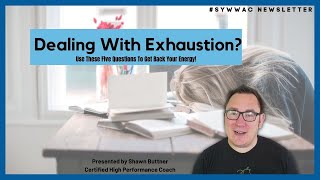
Sean Buttner breaks exhaustion down into five questions: where is your energy draining, how are your sleep and diet, are you asking for help, what distracts you most, and who do you need to reconnect with. He argues that without a plan, exhaustion feeds itself through distraction and poor modeling for the people around you.
Chapters
So we stop thinking. Like, when I yell at that barista and my son watches that it's okay to just scream at people for small things. You know, we forget that if we're so focused on how we're stressed out and exhausted that, you know, we're not role modeling that behavior for the people in our families or friend groups or our coworkers. Like, if you're the boss and you're constantly stressed out about the business, it's gonna rub off on the folks that you work with. Right. If you're worried, then they're gonna get worried. So start your week. Great. Start your week with a coach. I'm your host, certified high performance coach Sean Butner, and we're gonna talk about something that will help you advance in your life this week. So let's go. Do you feel like you're dealing with exhaustion right now? So many people are. And exhaustion is very different from burnout because burnout is doing the same thing, the same rhythm over and over again and to the point where you basically stop doing it effectively or burnout on it. Right. Exhaustion comes at you from so many different angles. It's losing co workers as people move jobs and then needing to cover all their tasks on top of your own as your organization or business struggles to hire new people, or maybe they even don't. You know, it's having your routines constantly interrupted by a very fast changing and uncertain world where we're wearing masks. We're not wearing masks. You know, we're having to deal with zoom school. We're, you know, taking the kids in. We have to go into work. We don't have to go into work. There's so many different things like that. It's the craziness in the news that gets it freaked out that the world's terrible. It's scary, and, you know, there's really not much that you can do about it. And it's the people that lose patience and yell at the barista because they didn't have enough cream in their coffee. You know, these are, you know, the tons of different ways that we can feel wary about the world and what happens when we feel wiped out. And in general, we lose that mindset that we're a role model for good behavior in this world. Right? So we stop thinking, like, when I yell at that barista and my son watches that it's okay to just scream at people for small things. You know, we forget that if we're so focused on how we're stressed out and exhausted that, you know, we're not role modeling that behavior for the people in our families or friend groups or co workers. Like, if you're the boss and you're constantly stressed out about the business, it's gonna rub off on the folks that you work with, right? If you're worried, then they're gonna get worried. So it has a lot of these type of ripple effects that can go out there. You know, we also turn to distractions when we feel completely exhausted. So that's extra Netflix, it's video games. It's, you know, doing everything except the thing that you need to do that will advance your life. And because you are distracted, you're putting off the things you need to do, you're adding stress on, adding that feeling of exhaustion. You're in this self fulfilling, you know, self feedback loop. That's the word I'm looking for. So, you know, or when we feel completely world weary, you know, we also start to compare ourselves to each other or to other people. So, you know, it's, you know, scrolling doom scrolling on social media and being like, oh, that peer, oh that friend, oh that family member is so far ahead of me. And you feel bad about yourself and it's like, well, I got to do more. But I, you know, again, you know, you're not helping yourself get out of that exhaustion. So if any of these types of scenarios sound like you, here's the good news. You can get through and move through exhaustion and malaise and get back into being positive, being energized, you know, directing and controlling your life. And I know this because as a certified high performance coach, this is what I hope you people with all the time, right? It's, you know, when you're feeling exhausted, when you're not sure how to proceed, when you don't have a plan to fix it. You know, that's why a lot of people come and hire me as a coach. So, you know, that said, I just want to start with this question. It's a very simple question for the format of how do you move through or how do you deal with exhaustion? Excuse me. So that question is, what's your plan to feel more energized, more positive and more motivated? And listen, you know, some of you are gonna say, yes, I have a plan. I've been working it. Some of you are gonna be like, I don't have a plan. I've just been in survival mode, just trying to figure out how to, you know, live day to day through this uncertain time. And some of you will be somewhere in between and it's not my job as a coach to judge you about that or to make you feel bad about it, but I also know it's my job as a coach to push you to get that plan and work it and implement it even quicker. And why is that? It's because, you know, my job as a coach is to help you live to your full potential as quick as possible. And if you don't have a plan, then, you know, no wonder you're kind of struggling. You're working your way through. So we just need to get you in the game. Right? And I'll have five questions for you to ask yourself here coming up in a second, that'll help you figure out your plan to help you get back to that positive good energy. If you have that plan already, the question for you is, is it holistic? Is it only work things? Is it only home things? Is it only focused on your health or does it cover all areas of your life? Right. That's a very cool distinction that can really help you accelerate out of exhaustion and into that, you know, just feeling super energized again. So use this checklist to help make sure that you aren't forgetting anything that might help you move forward. So the first question that I ask all my clients, especially when they're in this mode of exhaustion, is, are you clear on where you feel exhausted? Right. Is it in your work? Is it, like I mentioned before, is it that, you know, you've lost team members or people who moved on for whatever reason, and you have more workload, but you're not getting that extra help and you're not getting extra recognition or you're not given the chance to recharge? Right. So is it your health? Is it you're so focused on taking care of the family and your career that you stop taking care of yourself? Right. Is it that your personal relationships are tense because everyone's, you know, stressed out and has lost patience and nobody is trying to create that positive good energy at home and you're just exhausted with always fighting with the kids to pick up after themselves or with your spouse to take the trash out or whatever that is for you, or is it just your general well being? Right, again, like. Like health. Did you stop meditating? You stop doing the things like creating things that made you feel great and lit you up? You know, it's these types of things that if you don't have a clear picture of what's causing the exhaustion, you can't figure it out or you're gonna have a blind Spot, you're not gonna realize it. So it's really good to think through, like in my career, personal life, you know, personal relationships, health, and well being. Like, where are these things that could either help me feel more energized or actually draining me? I need to come up with a way to mitigate each of those points, right? So get clear on what's happening. Second thing is, are you taking care of your energy shed? And what is the energy shed? It's sleep, hydration, exercise, and diet. So, I mean, these are like the basic health things, right? But are you getting seven to nine hours of sleep a night, which is what most adults through the sleep research say you need? Do you have it scheduled? Do you have routines that are helping you sleep through the night? This is something that I struggle with myself, having insomnia. So I tend to go through fits and spurts of solid sleep and not solid sleep. So I'm still working on it, you know, so it's not that I have everything figured out, but I know that sleep impacts how I feel in my productivity the next day. So it's super important. Hydration. Are you drinking like 2 to 4 liters of water a day? You know, sometimes when we feel exhausted, it's just we're dehydrated, and it's really an easy fix as having extra water, you know, during the day. So especially if you drink coffee, you know, stuff that takes water out of your body, you really need to make sure your hydration game's on point. So try up in your water. Exercise. Are you moving around? Getting out in the sun either with a walk, Are you running? Are you doing, you know, weights, that kind of stuff? Lifting. So if that's fallen off the last couple years as the world went kind of crazy and everything got shifted around and you haven't gotten back into those habits, now is the time to get back into those healthy habits, right? Those workouts to make sure that you're taking care of your physical energy and then your diet, right? Are you eating vegetables? Are you eating a balanced diet? Is it all just like Gummy Patch Kids or Sour Patch Kids and candy or just carbs or how could you have a more balanced diet? Just Google if you need help with the diet. There's tons of things out there that could work for you. I like the whole 30. I thought that's been really good for me. And it's really clean recipes. So even if you don't implement the program, the recipes are really good. So check out the whole30.com. I think, but. So that's taking care of your energy shed just the basics of sleep, hydration, exercise, and diet. The third question to ask yourself, and ask about your plan of feeling more energized, of really getting motivated and getting momentum towards the things you're working towards, are, are you boldly asserting yourself and advocating for yourself in life? And do the people around you at work, at home know what you need, know what you're thinking, and know what you're actively doing? Right. And this could be a little counterintuitive, but this is all part of feeling more connected, right? Sometimes when we're exhausted, we also feel like we have the weight of the world on our shoulders and we're doing it alone. And so are you asking for the help that you need? Are you letting people know that you're struggling? Like, sometimes, you know, we struggle in silence. And it doesn't need to be that way. Sometimes just saying, like, hey, I need someone else to help pull some weight around the house, right? Can really help you. One, you know, delegate things that. That you need to delegate, but to just, you know, being in community can really help you feel energized. So I'll offer that point up to you. So who do you need to ask for help? Who do you need to share or say, hey, like, I'm just. I'm really struggling here. Could we brainstorm on how to fix this? And that itself could really shift, you know, your energy, how you feel in your world, Right? Okay, so we have clarity, we have energy. We have, you know, being bold and inserting your ideas and advocating for yourself. And then the fourth question to ask yourself is, what spins you into distractions and pull or pulls you off your focus? Right? And what could you do the next time you lose focus? So if you know that when you get stressed out, you go to Facebook or Twitter or Reddit or social media and you just mindlessly scroll when you get a little overwhelmed, what can you do next time when you feel that? Is it going for a walk? Is it taking a quick meditation? Is it, you know, just doing some jumping jacks to kind of change the energy so that you don't spend, you know, three hours down the rabbit hole figuring out, you know, whatever on YouTube. So what are the things that. It's really good to have a list of things that, you know, get you distracted, because those are then the triggers that you need to do a quick intervention. So do you have that list? And then for each item on that list, what could you do the next time it happens? To get you back into your focus, to get you back on track, to get you back into your forward motive or momentum. And then finally, you know, do you feel connected to your family, friends, co workers and community members? Right? How are you in activating your relationship? So we talked a little bit about, you know, saying what you need, but how are you giving in the close relationships to you? What kind of cool experiences are you doing? How are you surprising people? Are you sending notes of gratitude every day? Just, hey, you know, you know, James, I really, really value our friendship. And this is, you know, again, you know, when you did that thing, it really inspired me, or whatever it is. But reaching out, building relationships again so you can get the support that you need if you're feeling exhausted. But sometimes, you know, it just feels good to, you know, be of service to someone, to really, you know, give something that brightens their day off. And it could be something, like I said, like a quick note of appreciation, a quick high five in the hallway, whatever it is. So is that on your plan? Now, I have to say, too, that as a high performance coach, you know, one. Does your plan cover all of these things? Like, these are the five areas we know that improves people's performance, improves people's energy and how they feel out in the world. But so if your plan covers everything, great, amazing job. If it doesn't, you know, the journaling work that you have to do, and I advise you to do it right after you finish watching this video. But here's the key distinction, right? So you have this plan, and I have another question for you. And that's how would you level up this plan and bring more excellence or speed, right? So you realize the results in a greater way or quicker. And this is the question that separates those highly effective, happy people and the rest, right? And that's my job as a coach. I really want you to be part of that highly effective, happy, fulfilled person out in the world where, you know, you are making a big impact and difference, right? Because I believe if we can take care of how we feel, that will ripple out. So again, like, ask yourself, do you have a plan? You now know the questions to ask yourself. And like, this is like probably a $10,000 distinction. I only asked that last question of my coaching clients, and it's always so profound and people, you know, sometimes struggle with it, but always at the end of the day, they're like, wow, like that. That pushed me, right? That helped me think about my life in a little bit of a. Where I, you know, was able to approach things a little bit more intentful, a little bit more edgy and it changed everything. So I want that for you guys. So if you enjoyed this, please share this video with three friends that might be dealing with exhaustion and might need to have a plan right now. Definitely, definitely do the plan. If you don't have an idea of where you're going, you're not going to be able to change. And so if there is one action item at the end of this video I can't emphasize enough, it's to do the work, make sure you have your plan, refine your plan, push yourself to really make it that much more excellent or to think about how you can implement it even quicker. And I'm sure things, I know things will change. I've seen it in so many of my clients. So that's it, guys. You got this. We'll see you next week. This is Sean Butler signing off. Sam.










