Joyful Living Needs Creativity, with Jim Kawski | Meaningful Revolution Podcast S5E4
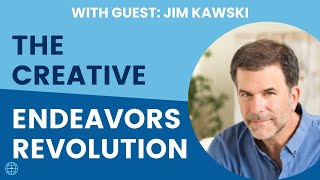
Jim Kawski, a former semiconductor executive turned coach, argues that creative expression is essential to a joyful life. He defines vocation as the intersection of skill, passion, and abundance, and shares how he rediscovered creativity through woodworking, music, and stained glass. Kawski says embrace limitations and learn from failure.
Chapters
Creative expression. Because creative expression, I think, is something that's much more accessible to people. My definition of a vocation, a vocation is the intersection of your. Your skills, you know, what you're good at, what you're passionate about, and what you can find abundance from. And, you know, so when we can find that in our lives, no matter what it is, then, then, then life becomes wonderful and completely fulfilling.
I'm curious, I get to lean into the community aspect. Could you maybe talk a little bit about that in your discovery of this or this pursuit of finding your creative.
Endeavors, you think about creative expression and that it's just one dimensional and that it's just you and there is value to that. So creative expression comes in so many different forms and it can come in the form of simply how you organize your living space and what it is that you bring into your living space that is a part of you. Hey, everyone.
Welcome to the Meaningful Revolution podcast. I'm your host and certified high performance coach, Sean Butner. This is the podcast where we hope to inspire you to lean into what you nerd out about, what you find passionate, what you find fulfilling, to start your fulfilling transformation out in the world. Now, today's guest is on a mission to serve throughout his career in the semiconductor industry, he's discovered the opportunities we have to elevate others to have the most impact. After 35 years operating in various capacities, manufacturing, engineering, to CFO CEO, excuse me. He's learned one thing about or one thing with absolute clarity. Our service to others is our greatest contribution. So today I'd love to introduce to you to my good friend, Jim Kowski. Welcome to the podcast.
Thanks. Thanks, Sean. It's real pleasure to be here. I've been looking forward to this and real excited to talk to you today.
I've been looking forward to this also because we go way back early pandemic, also certified high performance coaches. So let me get this set up. Okay. So, yeah, so it's always a pleasure to get to talk with you and we always have so much to talk about. So today we're talking about the meaningful revolution. I'd love to know, you know, we're going to be talking about art and creativity. If you could start a meaningful revolution for you, that, that fulfilling transformation or that purposeful impact kind of giant umbrella that a lot of people have in life, what would you maybe call it or what would it look like?
That's a great question. And you know, the thing that pops into my mind in particular with regards to the topic at hand, Today is, and I like to call this creative expression, because creative expression, I think, is something that's much more accessible to people. Creative expression is actually an area that we coach our clients in. It's one of the modules that are part of what are known as the charge sessions. And a lot of people have an aversion towards thinking about or talking about what creative expression is to them because, oh, I've never drawn in my life. I don't, I'm not an artist or this and that. And my point here is that if you look at it from that perspective, I think that you're losing out on an important dimension on what creative expression is. Creative expression is really, really can manifest itself in many different ways. And if I were to call it something, I would say that creative expression is the fulcrum to a fulfilling life. And when I talk about fulcrum, I mean, you think about that, you know, the pivot point on a, what we used to call back where I grew up, a teeter, totter or any type of lever, right? Where you've got a point and you're using that point as leverage. That fulcrum of creative expression is something that really gives our lives a kind of meaning that's difficult to access from other places. So, yeah, creative expression, as is a fulcrum to a fulfilling life, I think is a great way to say it in as few words as possible.
Oh, that's amazing. And I think, you know, doing a podcast, doing coaching, I mean, people create things all the time. Every, I mean, at least three times a day, people are creating a meal for themselves or for others. You know, there's so many different areas that this touches in our lives. And, and I completely agree that when you are creating, you tend to be feeling a lot more fulfilled or feeling a lot more on purpose than when you're like consuming or not. So I'm curious, like, could you tell us a time when maybe before you had this realization that, you know, creative expression is the fulcrum of fulfilling life, kind of where you were that decision point or that point of learning or discovery. And then what happened after that?
So, yeah, it's great because I never really thought about it from that perspective, but it happened when I was at, went to the Rochester Institute of Technology for my undergrad degree in electrical engineering. And it was during that, those like say four first four years, a five year program. So the first three and a half or so years I was overwhelmed with the difficulty of the program. It was, and, and I had always had a pretty I had it pretty easy going through grade school and, and high school. Things were, things came easy for me and, and I really enjoyed studying and the work. But when I got to rit, I think part of it was I just didn't have a good sense of what engineering was all about and what I was in store for. I, I was pointed in that direction by my guidance counselor, father Ted Rogue, a very important mentor in my life. Wonderful man. And he, he suggested I go in this direction. Anyways, when I got to rit, I was very one dimensional. It was all just studying and school, it was very, and, and you know, some just social outlets. But I lost connection with, with the creative side of me. And I had had a creative side prior to that in grade school and high school and grade school. Yeah, I had a variety of hobbies, things such as building these model rockets that, you know, manufactured by this company called Estes. You buy these kits and, and you could build these rockets of all different shapes and sizes with, you know, you could put payloads in the rockets, you know, and you know, send, send crickets and ants, whatever you want to put in, you know, and it was really fun and fascinating and, and it was in sixth grade at that same time when I really got into science because my sixth grade science teacher was amazing. And now that I think back of it, Mr. Cur, I'm still in touch with this day, to this day. Mr. Curse was a bit of a Renaissance man. He was, he was a fine artist, but he was also, and he was a teacher and he was a scientist, you know, fascinating, wonderful man. And so, but when I got into rit, I became very one dimensional and I didn't realize it at the time. And only now when you, when you bring this out and it further emphasizes the importance of creative expression. Only now do I, do I do I connect with the fact that that's one of the reasons why I had such difficulty those first couple of years is I didn't, I wasn't, I wasn't fulfilled. I didn't have a, a complete life because I was outside of those. So then when I left rit, one of the first things I did after moving to Cambridge, Massachusetts, one of the first things I did was I enrolled in a class at the Cambridge center for Adult Education on furniture making. Now, RIT interest. One of the interesting things about RIT is it's a great school for engineering, it's a great school for computer science and the sciences. But it also has something known as the School for American Craftsmen. And so you can go to RIT for four year programs in pottery or jewelry and metal work or glass or furniture making, like. And I, I just, I had friends that were furniture makers and I always, always envied what they were there to do, which was to create things with their hands. And that was all about it was combining creative expression with, with the ability to, to obtain, to obtain abundance. And that's, that's my definition of a vocation. A vocation is the intersection of your, your skills, you know, what you're good at, what you're passionate about, and what you can find abundance from. And you know, so when we can find that in our lives, no matter what it is, then, then, then life becomes wonderful and completely fulfilling. Anyway, so after I started taking that course on furniture making, I built my first piece, which I still have in my living room today, which is a awesome coffee table that, that I still use. And so that was kind of the start of my reawakening and reconnecting with creative expression and the importance of it. And as I've progressed through my life, there have been periods, there have been lulls of creative expression and it's been within the last maybe four or five years where I've really hit the gas on it and, and come to realize its importance in, in providing for me a life that's fulfilling and, and much more enjoyable. And when you get to that point, everything else, particularly what you, what you're doing for abundance, for your career, regardless of what it is, everything else just, just benefits greatly when you, when you have that, when you fill in those extra pieces.
Right on. Yeah, I, I know being an engineer too, I definitely relate to feeling like engineering is a creative endeavor in itself because you're creating documents that turn into machines, that turn into software, that turn into microchips and semiconductors and all that kind of stuff. And that can be really fun. And it could also, when it's your job, also be dry. You know, Like, I started in software as a hobby that turned into a career and then, you know, wasn't as awesome in that particular way, but for me it was music. Like, music got me out of my shell in high school so I could make friends in college. Music kept me engaged in community events there. Music, when I moved to Arkansas was a way to connect with the community because, and to meet people. So it's, and it made everything that I was doing better. I was a better engineer because I was happier. I felt sometimes you just need to like break concentration and get away from that analytical brain. Yeah, and so cooking, music was super important. So I'm curious, like, how do you know when it's time to start a new thing or are you still making furniture? Has your path been one of focusing on one or two things or has it been as opportunities have come up or, or could you explain a little bit maybe your thinking on, on that?
No, great question. Yeah, it's, it, it's really about accessibility for me. And I, and I. And the accessibility part is what is what gets, gets you, gets it introduced into your life, whatever, whatever creative endeavor or form of creative expression that you might be pursuing. And I've been, I've been really fortunate to have access to a variety of different opportunities to help propel the different dimensions of my creative expression. Sometimes you make them for yourself though. Like recently one of, one of my outlets for creative expression has been to, to write. And so I made a commitment when I first started this coaching journey. I made the commitment that I was going to write a blog post every week. And for three years I wrote a blog post for, you know, every week with a couple of exceptions due to health related reasons. But for the most part I nailed it. And now I've got, you know, hundreds of thousands of words of content that I can publish in different ways. And I've got really a kind of a, you know, like it's, it's a, it's a online journal. It's a legacy of where my mind was at at the time and the things that I've thought about. But it was an opportunity for me to express who I was, what my philosophies and beliefs were. And that was something that I just created. I didn't need anything to get that started. So there, there are those types of things. There's the furniture making thing, which a lot of times, you know, you don't have a workshop at your disposal. I mean, when I was in Cambridge, we were living in a small, tiny little apartment. Nope. You know, it was a tiny bedroom, one open floor parent, a tiny little bathroom and that was it. You know, it probably, you know, 800 square feet, just teeny, teeny, teeny postage stamp size. But we were living in Cambridge, halfway between Central Square and Harvard square, you know, 10 minute walk from Harvard University. And it's just, it was great, great. But you know, having access to that workshop and the expertise in it, that was the thing that moved me in that direction. And, and I've had, I've had, I've sought out and recognized those opportunities throughout my life. Some of them been Been serendipitous. Some have been things that I just went out and looked for for, you know, my. My opportunities in music came from one of my best friends, Vic Quattrini. And Vic and I are fishing buddies. And Vic started playing the guitar, and he said, hey, Jimbo, I know you. You play the guitar. And I've started in with this Tuesday night workshop with this guy, E.J. willette. And why don't you come and join me one Tuesday night? I think it'd be a lot of fun. And I'd said, all right. So I went there, and it was maybe 20 people sitting in a circle, and. And EJ was. And they all had guitars, and EJ would teach the group something, and we'd all try to. To emulate it. And after the session, EJ pulled me inside and said, yeah, you know, you're probably a little bit more advanced for this. Why don't you come to my Thursday night session where we actually work on song arrangements? And I'm like, oh, that sounds exciting. Let's do that. Because, you know, the thing about playing music, it's. It's fun to develop and do it on your own, but music is a kind of communication. And when you can communicate with other musicians through the music while playing your rel. Your different instruments, it's. There's magic there. And I think it was Phil Lesh from the. The bass player, the Grateful Dead, who said this recently. I saw this in an interview. He said, yeah, when we play music, we're tapping into a higher cosmic level of. Of. Of consciousness. And, you know, it's not that we're good or bad musicians. We're tapping into this consciousness and drawing it down and giving other people access to it all at the end. And we get access to it all at the same time and experience it at the same. Same time. So that kind of communal experience, you can't beat it. And that's. That's why the creative expression dynamic of. Of playing music with groups is just so powerful.
So I'd love to add to that right there, because I can't agree with that even more. Like, that's such an important point where. And I. I think there's a metaphor for life where a lot of times there's a magic working with people towards a common goal. But, you know, some of my favorite times playing music, you know, there's a lot of personal growth that came from it. But there are times with some folk singers from Arkansas sitting around a campfire when I live there that are some of my Most favorite and magical moments because you do feel the sense of connection and community or, you know, the presence of a higher power even. Yeah, it's, it's very. I caught me off guard the first time I experienced it and I'm like, oh, more of this, please. You know that's right.
More of this and maybe this all the time. I wouldn't mind. Yeah, no, it's, it's so true. It's so true. Spot on, Sean. And what ended up happening was this, this, you know, EJ invited me to the Thursday night sessions. We sat around, we started arranging songs. I remember the first song that I brought to this group, a simple little two chord song called Iko, Iko, which is first recorded by the Dixie Cups. It's a New Orleans Mardi Gras parade song. And it's very, very real simple. It's kind of, kind of has a bow diddly beat to it, but really this is a very infectious little tune. And so I introduced that. We go around the horn, everybody would introduce. After doing it for a few months, I said, you know, we should put on it, we should perform somewhere. I think we're that good. This little, you know. Yeah, all right, fine. We've got five guitars, but we can figure that out later. And so this is when I was 40 years old. This is 22 years ago. I was just, it was just my birthday a few days ago and makes me realize.
Happy birthday. Happy birthday.
Thanks. Thank you. So when I was 40 years old, I, I. People were wondering, well, who's gonna want to book us as a band? Well said. Let's put on our own show. So we put on a benefit concert for a cause that I was very close to and at the time and invited a bunch of other musicians and we opened the night and then all the other bands played after us and, and then we had a Beatles dance cover band that was made up of my friends that ended the night. It's just this glorious, wonderful night of celebration and music. And it was my foray into live performance, which I still participate into this day. I mean last, last Friday night there's a local restaurant that sadly they decided to close their doors and we had just started playing gigs there once a month. But they, you know, Covid just had too much of an impact then and now post covet. They couldn't, they couldn't increase their, their bottom line enough so they closed. But we played the last night that they were open and place was packed and sang Christmas, some Christmas songs and a bunch of COVID tunes and it was just, it was great. So, so to this day that, that, that's a side of my creative life that still exists.
Right on. That's so cool. And something I've heard, having a couple other folks on a podcast to talk about creating art, like writers or, you know, getting into whatever type of weird crafting or whatever is, there's this weird sense of humans wanting to show, hey, I created this. Let me show it to you. Like, it's a very, like, you see it in kids all the time. Like, it could be the most gnarly looking picture of the family, but it's cute and endearing. But that sense of pride of like, I created this here world, check it out, I think is so rewarding. But it's, it's also weird because it's also community building. Right? Like, yeah, like you said, like, you played the last restaurant here. I'm sure you still will talk with the, the owners or the people that you knew from that, that place. So I'm curious, I guess, to lean into the community aspect, could you maybe talk a little bit about that in your discovery of this or this pursuit of finding your creative endeavors?
So, yeah, the community aspect, I think is, yeah, you think about creative expression and that it's just one dimensional and that's just you and there, there's, there is value to that. So creative expression comes in so many different forms, and it can come in the form of simply how you organize your living space and what it is that you bring into your living space that is a part of you. Well, how does that help community? Well, By creating spaces that people enjoy and feel comfortable in and then couple that with maybe your desire to enter or your enjoying enjoyment of entertaining and putting on events or parties or even just, you know, a high tea, you know, bringing people into your home. This is. These elements of your creative expression are building your community, your connections with others. My partner Suki is, she, she's an incredible event planner. You know, she can, she can pull off parties in our home that are incredibly complicated with huge menus. And she, you know, she pays attention to every detail in our home in preparation for this event. So when you're involved in something that, that is vocational in nature, that is, that really connects with your skills, your passions and can bring you abundance. And that abundance can be monetary or abundance can be in the form of friends and community coming into your life. When you connect with those types of things, you're all, you're, you, you think about them all the time. You obsess over Them. And when you get into those modes of thinking and obsession, then you really can connect to the. The psychological flow states that people call it the zone, whatever you want. But as. As research by Mihaly Csikszentmihaly, when we get into those states of flow, those autotelic experiences where we enjoy doing what we're doing simply for the act of doing it, when you can make your experience a flow experience, then. Then it, you know, then the way that it makes you feel and your output, you'll get. Get connected in a way that elevates both of them. Anyway, so getting to. Getting back to that whole idea about community. Yeah. So creative expression, I think in. In all dimensions and all forms is a. It's. It's a kind of community building. It's a kind of service to others in providing them with. With your insight, your thoughts, your belief, your sense of style, your art, your philosophy, your words. All these different dimensions tend to bring us all together because we. It. They. These different things generate discussion, they generate interest, they generate a sense of. Of wanting to share. You know, even, you know, something as silly as, you know, getting together with my buddies to. To tie trout flies, you know, sitting around a table drinking whiskey, tying flies, getting ready to go fishing. You know, there. Some things you. Some things you just can't beat that, you know, in terms of their value to how they fulfill your life. And I think you nail it, John, you know. Yeah, it's about community for sure. My man. That's great.
I love the, the idea that building that community, that space to be in service to others and share your humanity is kind of how I'm tying it all up with the, the different ways that you describe it, you know, your values, your philosophy, your sense of style, your, you know, personality, I think is super. Is a super cool way to think about creative endeavors. Right.
Because.
Because, yeah, like, sometimes you create things because it feels good. Sometimes you create it for other people. I think when you can merge all of that together and then create a space that's welcoming and promotes that, I think there is a certain sense of magic to that. Just to kind of sum that up as I'm processing it and trying to take notes.
So. No, it's, it's true. And it can be on a grand level like that, that benefit that I put on, or it can be on. On a much more intimate level. But it, you know, it's all about sharing and all. And sometimes we, we have to overcome our fears, our fear of rejection that, you know, all right, I'm I'm going to do this because I like doing it, but I'm not. But I'm going to withhold it and not show it to anybody because I'm. I have a fear that I'm going to lose my. My sense of pride because I'll. I'll feel ashamed at my output. And so some people go through life like that and, and that in and of itself is a shame because the fact is is that that while other people's opinions shouldn't matter, what you present and how people react to it ultimately changes where you might go go with it and where you might take it and. But it also offers the opportunity to. To really deeply connect with people. One of the things that I did that I've done in recent years that. And. And this is getting back to the community side of it. One of the things that I've done in recent years that, that you know, from a creative standpoint is, is something that I can look back on as a. Is a really A. A culmination of. Of and kind of and confluence of many different things to bring this one piece of art to be. And that was my son and my daughter. And at the time my future son in law, Claire and Dylan were planning on getting married. And so I wanted to. What do you buy your kid for their wedding? Do you just give them cash? You know, I want. I wanted something and so I. Two good friends of mine, David and Michelle Baer, live in Manchester, Mass. And Michelle is a stained glass artist. And whenever I would go over to their home, I was just blown away by both the volume of work of stained glass that. That she had around their home, but also just the beauty and the. The. I mean I've always loved stained glass. I've always looked at it in awe when I've visited churches throughout the world. If you ever go to, to Barcelona, Sagrada Familia, the Sacred Family is. It's actually a cathedral that has been in construction for over 200 years.
Oh yeah. Okay.
And. And you can get access to it, but it's still being finished. I think it's going to be finished sometime in the next couple of years anyway. That has some amazing stained glass. So. Sorry, my. My short stories tend to get long. So I thought, yeah, I thought maybe stained glass. So I had an ambitious project. This was January, they were getting married in June. I had a concept where I wanted to create four. Four plates about. About yay big of stained glass. Each one represented something different. One piece of stained glass would be. Be representative My daughter. Another piece would be representative of where they met on Cape Ann in, in, you know, here, north of Boston. Another one would represent Dylan. And then the fourth side would be, would represent where they live now on Cloudland Road in Woodstock, Vermont. And so for Claire, I created a fiddle because she plays violin. Dylan created a guitar. He plays guitar. And then I created an ocean scene and then I created a pastoral scene in the mountains or in the hills outside Woodstock. And so these are stylized, simple, you know, not too complicated. But it, stained glass being what it is, they, they looked great and. But I had to, I had to figure out what I was going to do with these four plates. I just didn't want to give them four pieces of stained glass. So I enlisted the help of my son who he himself has become a very adept woodworker. And he has a CNC router that allows him to make high precision products using mostly Baltic birch plywood. Anyways, he created a wooden lantern and you know, the stained glass occupy. Each plate occupies one side of the lantern and he put a, a light bulb inside and turned out to just be this incredible piece of art that my son and I collaborated on as a gift to my daughter and my son in law. And so it's just connecting me with him, with them and with the, the workshop with David and, and Michelle and Michelle. Michelle's friend Kai, who runs shards stained glass shop in, in Peabody, Massachusetts. You know, I spent time with Kai. They all thought that I was crazy, that I'm never going to get this done. But when you have, you know, performance necessity being what it is, this particular project, I, you know, it connected with my identity, it connected with my obsession in wood and stained glass. It connected with my, with my sense of social duty to, to provide something that would. May have a legacy. And it, and it, and it aligned with urgency because I had a deadline. So I was. It's one of those things when you get, when you hit all four of those the, the four horsemen of performance necessity and you've got all of them playing, you cannot fail at whatever it is that you're doing. That's the lesson of that, that this particular thing. But anyway, so, so yeah, that it turned out to be a wonderful, wonderful project. It's getting a little bit dark here and I don't have very good lighting, but I can make some adjustments. If, if I start to get too dark for you, just let, you just let me know.
Okay? Yeah, so far it's fine. Like I said, it's a podcast, so most, most People will be hearing your voice.
Yeah, sounds good. Let me, let me just open the shade over here. That'll just shed a little bit of light on it.
Okay. A little bit extra light.
There we go. There, that's.
There you are. I see it. Awesome. So on that topic, I love the idea of this ambitious project. Learning something new, really connecting to it personally and socially, doing it in service for others. Is that a formula you use often? Is that just how that happened to or come about for that particular project and situation, or are there other areas in your life, I guess, where you tend to try to engage the, this performance necessity idea?
No, I didn't really think about it until today.
Yes.
And performance necessity is front of mind because I was actually coaching a client on this today. I think if I look back to all of these, particularly the major projects, but also my entree into them, it is multi dimensional and really appeals to a, a broad range of elements that define performance necessity. So I recently took up printmaking, which is a form of fine art, which I'd never done. You know, I mean, stained glass, I guess, but. And I'm not a, you know, I don't draw. I can't draw worth a lick. But I've, I have a, I think I have, I mean, I have a sense of, of what I like graphically. And so I can pull together pieces and cobble them together to make something that's unique in my own. And so, but when I started printmaking, I had the vision of, all right, this is going to be my Christmas gift for this year. And it was, when I started acting, it was, there was a, you know, an identified, it connected with my identity because of the particular piece that we were working on was really cool and historical and unique. I learned because of the team nature of theater, you tend to obsess over it because you're, you're part of a team and you, you, you want the team to succeed and you also want to succeed. So, you know, I obsessed over it. I studied my lines religiously. You know, there's definitely a social duty associated with that because, because of what you're bringing to the community. And there's obviously a sense of urgency. You got opening night, so you better make sure you're ready to go or, you know, things, you know, the, the wheels are going to fall off the cart pretty fast. So. So yeah, I, I think, I think, yeah, I mean, if you can connect with performance necessity and, and in those four dimensions, with whatever creative endeavor you're pursuing, first of all, you're going to put your best foot forward and, and deliver the best you can. And sometimes it's just a matter of identifying with those things, with those things and, and connecting with them. And the more you think about what it is that you're doing, you know, the more you'll be able to connect with those four dimensions. That classic, a classic video on YouTube by Earl Nightingale called the World's Strangest Secret. Have you ever seen that?
I haven't.
Yeah. Worth, worth 25 minutes of your time. It was a recording that Earl Nightingale made in the 1950s and at the time it was the, the, the highest selling spoken word, long playing record lp. Okay. And, and he talks about the Strangest Secret. And you know, and this is, it's timeless. It's, it's really just about, you know, the people that are the most successful are the ones that think about pursuing a worthy endeavor. Taking specific focused action in the pursuit of a worthy endeavor is the definition, is his definition of success. And a lot of times that's just, they, you know, you're, it's on your mind, you're obsessing, you're thinking about it. And so that becomes the ability to actually put out stuff that you're really proud of, you know, has a lot to do with being able to connect to that dimension. And, and as we've touched upon, I mean, creative expression comes in many forms. Creative expression comes in the, the, the way that you converse with people, you know, what kind of energy you bring to the conversation, what kind of animation, what kind of vocal inflection do you employ, the kind of drama, you know, that you might engage in when you're speaking with someone. You know, all of these things are part and parcel of, of the, the creative elements of who you are and what you bring to the table and professionally and. Prof. And, and professionally as well, you know, I mean, it's, you know, you know, communication is part of, of everyone's profession. And so, you know, that this whole creative expression thing, and with the exception of those poor unfortunate souls who are hermits and do not get out and, and, and, and do not have the ability to interact with other people, God bless them there, that's, those are, that those are terrible situations. But with the exception of those people, we all have the opportunity to express ourselves creatively many times during the day, all the time. So it's really, it's much bigger than just, yeah, I want to go to the local art school and create a painting. Well, no, it's, it's. So you have to Think about it in much broader terms. And when you connect that with what creative expression is, that it is the expression of you, of your beliefs, of who you are, what you love, what you, what you're all about, what you, what you, what you hope for the future, you know, then, then it, as I had said, you know, you're, you're really leveraging that as a fulcrum for a fulfilling life.
Yeah, it's. Yeah, I love all of that. So while you're talking, it reminded me of, you know, my dad is a carpenter, had always worked with his hands and so helping him kind of grow up, this kind of like craftsman belief that you give, you know, whatever you're doing, you give 100 of your attention, you give 100 of your effort. And if you're really bad at it, that's where you're at right now, and that's fine. But something you will not ever do is half ass it for. To use his language, you know. So I think a way of. Another way maybe expanding on the idea of creative expression is this idea of always putting your best foot forward, your best effort forward, and seeing what happens. So, you know, in any of the projects you mentioned before, like creating stained glass, I have no idea how I could do it. And I like, you draw like a three year old. Like I could do stick figures perfectly. And that's fine. Maybe you're more advanced than that. I don't want to. I haven't seen any of your artwork. But when it comes to getting in the game and starting something and trying, like, that's almost as important if you're fully engaged and putting forth that effort. So with all that said, I'm curious, is there a belief you have about creative expression that other people don't or is not popular or is a little contrarian?
And, and anybody who's a promoter of, of, of the arts, well, this is so, it's not, this is not necessarily contrarian for the people that are the promoters of art, but I think that it's that this concept is lost on people and maybe they just kind of, you know, shake their hands and dismiss you when you say this to them. And that is. Yet we all have this capacity to express ourselves creatively. And it's, and, and it, and it's not so much that you can only. You can do anything if you put your mind to it. Well, no, we, you know, I cannot become a starting forward for the Boston Celtics ever, particularly now going forward. But here, here's, here's the contrarian perspective. Okay. We are products of our limitations. So understanding your limitations is. Is where you can find real power because it is in the. It's in how. What you do to get around the limitation. The fact that you're striving to get around the limitation and what you create as a result of taking that different path to get to the end point, that's where you can find real magic. It's not the only place where you can find magic, but it's. It's the place where you can find real magic. Right. So I'll show you. I've got. I'm just gonna to slide over here. I just want to show you something real quick.
Okay, cool.
I can just bounce off camera. I'll keep talking so that, you know, I'm still here, but, you know, so a product. Here's a. Here's an interesting. This is a product of a limitation. And the limitation was, is that. Well, I had a, you know, a. A frame design for a. For a. A stained glass piece that I was giving as a gift to my children. And. And the. And I failed in terms of the design of the frame. It doesn't look like I failed, but trust me, it's a. It's a failure in terms of its integrity and the type of wood that I used. So. So I had this piece. This failure. I said, what can I do with. You know, this is still a triangle. What can I do with this? And I took a. I took some scrap glass that was just going to get discarded, and then I just. You know, I did this right? Just. It's got holes. Cool. Yeah, it's. You know, it's not a proper piece of stained glass, but it's something that I created that is kind of cool. And this never would have happened if. If without my imperfection of designing and creating a frame the first time through. Right. I ended up. I ended up, you know, figuring out what it was I was doing wrong, and I came up with a better design for that triangle. But in the end, you know, I came up with something that I never would have discovered. And because I. I kind of embraced the. The limitations. Here's a great story of a. Of a musician who is one of my idols, and this guy, his name's.
Before we jump. Before we jump in on that story, I just want to highlight the. There's so much gold in what you just shared. I just want to make sure we don't miss it in that. I think in life, there's so many times where we think we didn't get it Right. We failed. And to be able to identify that as like, oh, I just learned something like you said you'd learned that there's a different way to design this to make it stronger in the particular way that you want it to. So there's that sense of forward momentum and growth there. And like, okay, I did this thing. Didn't work out. Time to adjust. Right. So that growth mindset is super important, whether it's crafting something, creating a piece of software, or, you know, trying to have a new conversation with your spouse. Right. But I think there's so much.
Of.
That seed of change and for improvement that was dropped there. I also like want to highlight, like you showed this triangle that looked like a beautiful piece of art that was based on your mistakes. And you know, when you think of music, and I know you have a music story, but like, you think of like jazz, you think of when you're playing with people. If you're playing with good musicians, in my particular opinion, they can help cover or enhance a mistake to make it seem like it never happened. Right. You know, the piece of stage advice, just keep playing because you're the only one that noticed. And you can get away with a lot of little errors or big errors too if you just confidently own it and move on.
Yeah.
Is super, super important. So I know you shared that in like three sentences, but there I thought was a lot to unpack there and just life lessons, you know.
Thank you. Thank you. That, I love that. Yeah. You know, I mean, yeah, it's funny, you know, you, if you, if, when playing music, you know, if you make a, if you make a mistake once, it's called a clam. If you make a mistake a second time, it's called jazz.
That's a funny music joke, which it.
Is a funny music. So this is two little side stories. So I'm, I've been convalescing from an injury and watching some I, I love film noir, you know, old black and you know, black and white TV shows from the late 50s, early 60s. I've been getting into like Alfred Hitchcock and Perry Mason, the Twilight Zone. And I discovered one called Peter Gunn. G U N N Peter Gunn. Have you ever heard of that?
I have not.
Check it out. You'll recognize that Peter Gunn is actually a song that was, I think Dwayne Eddy came out with it. And it's actually the theme music to this really cool half hour long private eye show. The who's the Private eyes name is Peter Gunn. And. And it's centered around this this bar, I think it might be in San Francisco, Cisco, it's called Mothers and it's a jazz club. And so each episode opens with some, you know, really hip jazz and jazz is, is. They have jazz musicians and actual, you know, not lip syncing performances, but real recorded performances of a jazz ensemble. At least one an episode. It's really. Yeah, you can get it on Amazon prime if you, if you have that. It's called Peter Gunn G U N N. So check it out. So the, the inspiration I was going to mention is a, is a, is a musician by the name of Django Reinhardt. Have you ever heard of him? Yeah, yeah. So Django, when he was 18, I believe he's a, he's a proper gypsy, right? So he lived in a caravan in France and he was a musician at the time, but their caravan. I don't know if the caravan or just his tent, but he, he, he was bad, badly burned in a fire and it was his fingering hand, you know, the, the, the hand that, where he fingers on the fretboard, the guitar. And so he, his pinky and his ring finger were badly burned. Couldn't use these anymore. Oh no. This one was terribly scarred and he could use it a little bit. So the, he just had his thumb and his pointer on his fingering hand. And that limitation forced him to create a style of music that is still considered a separate genre to this day, known as gypsy jazz.
Oh, wow.
And there are a number of bands that employ gypsy jazz, a contemporary band based out of Paris who I've seen several times. Their name is Caravan Palace. And you know, they're, all of their videos are really cool. Their live performances are amazing. But you, if you go, if you listen to some Django Reinhardt live recorded, Django Reinhardt, it's deaf, you know, you can tell it was recorded in the 40s. You know, it's like, it's that, it's got, that, it's got that audio patina that you can only get from old recording equipment. But you can. You listen to that style and then if you listen to a little bit of Caravan palace, you'll say, oh yeah, Gypsy jazz, I dig it. I dig it. It's, it's, it's a. Anyway, so that's a. He's, he's, you know, one of my favorite music musical heroes that shows the power of, of overcoming your limitations, that it can actually bring you something beautiful and unique and new and amazing. That, that is totally you. It's, it's you. It, it's it's, you know, so I. I think that everybody, Everyone is. Is a. Is, you know, can certainly lean into that and not only lean into it and create something amazing, but also not allowed to discourage you. Recognize that in the overcoming of those shortcomings, you do something for your whole self that goes well beyond just the art.
That's. Yeah, I absolutely love that. There's a confidence to it. There's a confidence into no matter what life throws at me, I can find the resources, the, you know, the problem solve around anything. So you become unstoppable in a way.
You become unstoppable.
Yeah.
Yeah. That's a great way to put it, dude. I love it.
Heck yeah. So I'm. I'm curious now if you were going to recommend someone that maybe hadn't. Has not tapped into their creative expression as much in their life, whether they're starting, you know, you know, just starting careers or they've been, you know, grinding away for a while without that. That connection to it. Do you have like two or three suggestions or pieces of advice for them to get started?
Yeah, so, Yeah, I think that the. That the most important thing is, is to. Is to connect with a community. But, well, even before you get there, let. First step is, is. Is to connect with. With what interests you. And I mean, we got such amazing research resources to try to understand, hey, this is something that I'm really interested in. And, and, you know, maybe it's the. Maybe it's, you know, it's food, maybe it's people. Maybe. Maybe it's. No, I just want to be by myself in. In this creation. And so maybe it's writing, you know, just taking some time and journaling to. To find out what it is about you that is. That is unique in terms of the medium by which you want to express yourself. And you know, and. And so even before that, know, you can exp. Express yourself creatively. Take the time to create an environment that is uniquely you. Right. A lot of people forget, you know, just blow right past that. But that's. That's a. That's the first thing that you can. That is accessible to everybody as soon as they, you know, leave this podcast. Yeah. Look around your space and is this space a sanctuary for me in my head, in my mind and where I want to be? You know, and so then the next thing is, is to. Is to. To connect with the things that interest you. You know, is it food? Is it wood? The most forgiving medium is wood. Is it blacksmith? Because, you know, your uncle worked on the railroad or, or grandfather worked out. Whatever. You know, it's, it's, it's, it's a, it's a study into your, in your, into yourself. And the third thing is to be opportunistic. Sometimes you just gotta try something and so you want to get involved with something that is going to be easy for you to complete. Right? And easy means convenient. So if you wanted, if you want to take up woodworking, but you know, the only place to go is the Bennett Street School in the North End in Boston. Well, one, it's a, you know, it's a hour drive away from me and two, you know, I don't have the fifteen thousand dollar tuition that you have to pay for the courses down there. Right. So that's not convenient on two dimensions for me. It's not convenient.
Yeah.
But well, wait a minute. I've got Miramar print lab less than a five minute drive from my home. I'm going to go and check those guys out. And because it's convenient and it's accessible and it's in your community too. So you get, you make the connection with, with your community when you. So, so that, that would I guess be the third thing is, is to, is to, you know, stand on the shoulders of others. You know, don't try to reinvent the wheel. You know, that, that's, I'd say 85% of the time that's not a, that's not a good strategy. The other 15%, you know, possibly those are, you know, those are prodigies. You know, people who were completely designed to be a violin player. And that's the only thing that they're going to do for the rest of their lives. The rest of us poor slobs. No, that's not us. We're not prodigies. And that's okay because you don't need to be, to be able to get the fulfillment that you deserve from creative expression.
Fantastic. That is super, super awesome. And wise. So one thing that popped up too, if you're struggling with figuring out what you're interested in, Adam Savage, who's one of the Mythbuster guys, who I'm a big fan of as a giant nerd, I think as watching something he was in or something he had written. And one of his messages, which I really love, is to create the things that you love in the world. So how he approaches making props because he's felt like, you name it in Star wars, like Mandalorian armor, lightsabers, you know, he has the, the, you know, Crafting skills to be able to make replicas that he then showcases in his home. So you know, talking about what you're interested in, sometimes it's like I really love chocolate chip cookies and that's going to be my pandemic project is figuring out how to crack that code, you know, or I really love guitars. I'm going to learn how to craft a guitar from start to finish using like an old oil drum and a broomstick. And you know, like I had some, some friends or knew some people in Arkansas that had these makeshift like instruments that they made themselves and then would go play, which is pretty crazy and, and wild. So I thought I'd offer that extra bit of, of advice after some three solid points of connect with your interest, create your unique environment and see the opportunity.
I love that. And you, you probably heard of these guys. This guy before, I don't know what his name is, but maybe you'll recognize what he's famous for. I think this is maybe the fourth or fifth year that he, he annually creates this product. It's known as the glitter bomb.
Ah yeah.
Mark Roper. Yeah. What's, what is the thing that he connects with? Is it, you know, getting back at points porch pirates? No, I think basically what drives him is just this intense desire to refine a product and just continually add features to it. I mean if you look at, at the, for those of you that don't know, it's this guy that, that creates these, these pranks for porch pirates, people that steal packages off your porch porch. And you know, so that when they open up the box and it's, it looks like a shrink wrapped box of you know, with, with high end headphones in it or something. Whatever. Right. And you know when you take the box off it explodes ultra fine, you know, pound of ultra fine glitter in your home and starts to spray, fart spray in your home at the same time. So that, and, and it's got cameras mounted that, that send off the images of what just transpired so that, so that you've got the benefit of seeing the perpetrators punished. Brilliant stuff that, Brilliant stuff.
But anyway, yeah, he's got that. He's got a whole series on trying to outsmart squirrels in his backyard which is really highly entertaining. Like the guy loves engineering, likes making things. Brings a sense of joy to oh God, yeah. These problems. And yeah, it's fantastic.
If you're, if you're an engineer, he's inspirational in that regard because yes, he connects that, the, the aspect of engineering with perhaps creative expression. Now, I'm not sure what he does in his day job and if he has that same level of passion, but if he does, boy, he's a. He's a hugely successful engineer, that's for sure. Yeah.
I think he actually has a program now where he has a lab where he brings in kids to teach them engineering concepts and stuff.
I can't imagine he's. He's working for the man.
Yeah, not anymore, but that is fantastic. With that said, I'd love to end. Before we get how to follow up and contact you, is there something you haven't shared in a piece of content or in a podcast interview before about creative expression that you could share with us today? Kind of like an exclusive story or insight or thing you'd love to share?
Yeah, I. The thing that I'd like to leave everybody with, that I've never, I've never really said this. I've said a few things out loud that I haven't. Haven't said before today. So you've got, you know, I'm excited to go back through this and pull those out because this conversation helps you to unearth new perspectives and things. And so I find this type of interaction really beneficial, this, this form of creative expression, what we've created today. But I think the thing is, is that no matter who you are, creative expression is accessible to the same level that it is accessible to the world's greatest artists. You know, I guess with the exception of those people that, you know, absolutely obsess over one thing or one thing only. But no, not. That's not my point. My point is, is that, you know, the. What they have created and what you create, that it's. It's no less valuable to you or your community. So if I can, If I can impart upon that concept, upon people that, that, that what they, what they're capable of is far beyond what they currently imagined. And that, that, that living beyond those, those expectations and living outside of your comfort zone of what you think is possible, man, that's where the real action's at. You know, it's. You know, you and I, you'll learn this the last time we were together at the coaching summit that, you know, unless. Unless it's a good thing to have imposter syndrome. If you don't have imposter syndrome, there's something wrong. Having imposter syndrome is, Is important and healthy because it means you're living outside of your comfort zone. You're doing something that you've never done before, and that's A real exciting place to be when you put it into the proper perspective. So, yeah, hopefully, hopefully that works. I, that's, that's the first thing that comes to mind without spending too much time on it.
No, that, that's beautiful. It's a great way to round out this fantastic hour of the podcast. So, Jim, before we sign off, what is the best way for folks to follow up to, you know, follow up with you, get involved in your world?
Absolutely. Well, so if you go to www.hire-arc.com, that's H I G H E R-ARC.com, you can join my community where we publish content regularly. We have programs, we have webinars. We're going to be going live webinars on a bi weekly basis in January. And so, you know, these are going to be relatively short programs. 30 minutes to an hour, you know, we'll see how that transpires. But those are going to be coming up and, and you can connect with me and my community and maybe participate in some of the programs that I offer. So that's, that's the best way. And my email is james.koskey k a w sk I at higher h I g h e r-arc a I arc.com and yeah, you can find me that way. I'm also on LinkedIn. I'm the only James Koski out there, so.
Oh, that's awesome. I will have all those links down in the show notes. So if you didn't catch that while he was talking through, I got you covered.
Awesome.
Yes. So with that, Jim, I'm so thrilled to have had this really fun conversation about authentic expression, creative expression. I hope that you continue on, you know, doing all the crazy things that you do, all the new things. It's always good to hear these stories. Always great to connect and that. We'll see you guys in the next episode of the Meaningful Revolution podcast. Jim, please come back soon. I'd love to do this again.
Let's do this again. Yeah, we've got lots of stuff we can talk about.
Totally, totally. I have to try to get all the, the musicians that come on on one episode, see if we could figure out a way to play together that might be fun.
That would be fun. Yeah. And yeah, it would be fun to do a panel discussion sometime too.
Oh, yeah, totally. So, well, before we get there, folks, we have to sign off. So go out there live with more joy, more growth, more impact in your communities and we'll see you in the next episode of the Meaningful Revolution podcast. I hope you loved this episode of the Meaningful Revolution podcast and if you did, please share this with 3 of your friends to get the word out and direct them to Apple Podcasts to subscribe and leave a comment because that's what really helps us with the show. So you can also direct them to Spotify or Google. So most major podcasting platforms you can find the Meaningful Revolution podcast. So but Apple helps us out the most so please direct your folks to there if you would if you would like to start your personal meaningful revolution, I have some exciting news. This year we're starting the Meaningful Revolution Challenge. First one being the first week in in January. So sign up in the link below in the show notes here to spend three days for free live with me where we'll go over defining and getting clarity on your personal meaningful revolution, that fulfilling transformation, that authentic self to show up in this next year. We'll spend on the second day building your plan so that you know what you need to do to make strides towards that personal meaningful revolution. And then thirdly, we'll talk about tips, tricks and strategies to implement and to commit to your plan next year. So those are the three days we'll have prizes. There'll be a chance to ask questions. There'll be a chance to, you know, get some coaching if you need some to in your particular situation, to get you in the game, to get you moving forward, to get you into that meaningful revolution, that fulfilling transformation. Also, if you'd like some one on one time, there's two options also below here where you can sign up for strategy session and the free strategy session I'll post on YouTube as part of a new series. Full disclosure there. But during that call you will get, you know, you'll fill out an application. It'll help you think about your life in a different way, get you kind of primed for our one hour strategy session. It gives me a chance to identify some areas to focus on so that you get the most bang for your buck. During that call we go, we build you a personalized strategy plan going forward with tools and tricks and habits and all that kind of great stuff. And it's all focused and customized to your life. So definitely click on that if you're like, hey, I don't want this on YouTube. I'd like it a little bit private. It's $200 for that one hour call. Please make sure you sign up today because I only have so many slots each week where I can do these calls and they fill up quick so don't miss your chance to get one on one coaching. Get your strategy plan your strategy session locked in by clicking on those links below.
Sa.










