Lead Your Communities
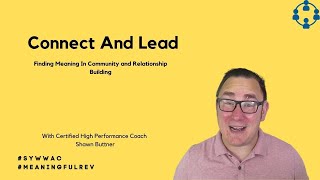
Sean Buttner explains how belonging to a community drives fulfillment and influence. He shares five practices: lead with good intentions, connect people who share interests, ask about others' passions, stay curious without judgment, and offer help before they ask.
Chapters
Oftentimes, the meaning we find in our life is determined by the relationships we have with others and how connected we feel to our communities, organizations, teams, family, friends and so on. Start your week. Great. Start your week with a coach. I'm your host, certified high performance coach Sean Butner, and we're going to talk about something that will help you advance in your life this week. So let's go. Being in community means influencing and being influenced by others, right? The best parts of life are when you can see a group or a team grow together, where you're co creating outcomes together, when you are really focused on a mission that takes an unexpected form because you're working together. And when we feel in community, when we feel like we have influence with others and others have influence with us, we feel really content. We feel really on top of our game, we feel like we're progressing. We find that really deep meaning that a lot of us crave. But when we feel lonely, we're usually not connected to our communities. We're not interested in influencing each other or other people. So you might think that, you know, when you're lonely, part of it is you don't feel like you have influence with others, but another part of it is you stop trying in a lot of ways, right? At least that's been my experience working with clients and myself. You know, out of college I moved to an area where I didn't know anyone, started a new job where I didn't know anyone and moved states. And it was pretty tough because, you know, when you don't have that shared culture or you feel like you're being judged for being yourself because you're the new person on the block. You know, you try to play it small sometimes or you try to hold back when really you need to be more open and share who you are. But when you know, that finally changed for me was going through and really learning about high performance and really, you know, finding my confidence again to really go and feel like no matter what happens, if I show up as my authentic self, things will change. And so that's the belief here when it comes to being in community is how can you be more authentically yourself and find like minded people. So how do you do that? I got five areas for you. First is when you are interacting with people or you're trying to build a new relationship, or you have a relationship that you've had, you know, for a while. The first idea is to lead with the best intentions for others, right? It's really easy when somebody hurts us it's really easy when we feel judged. It's really easy when, you know something, somebody says something and we don't understand, to immediately assume that they're out to get us, that they meant to hurt us, or, you know, our brain is trained to assume the worst so we can prepare and effectively treat it or get after it. Really leading with the best intention is trying to put yourself in somebody else's shoes and really understand how they came to a conclusion, how they, you know, did a certain action and just assuming that, you know, oh, they weren't thinking or hey, they didn't mean it like that, they're actually trying to help. Because often cases, that's the case. But you'll find, if you can find that best intention for others, that you'll judge less, that you'll be able to respond a little bit more with grace, with a little bit more understanding and a lot less emotional charge, right? And so if we're looking at building communities, building connection, building influence with the people around us, you know, leading with the best intentions and talking to it when we speak to them can really help shape stronger relationships. So that's the first point. Second point is to be the connector, right? Wherever you are in your community, you should be leading your community, right? So if you are interested in gardening, if you are interested in music, if you are interested in creating videos online, if you're interested in high performance, like, who are the best people in those interests? Who are the people that are really interested in it also? And, you know, how can you connect those folks together, right? You know, it's such a weird thing, like a lot of networking could be seen really hollow unless you're bringing people together. So. And you know, there's a very unique sense of joy when you say, hey, I think these who cool people can meet or should meet and it would create something, or they enjoy each other's company and help each other out, right? So being that connector, bringing people together is another way we can find meaning. And it's another way to kind of feel that, that sense of community and to lead in that community. Third thing is to ask consistently about other people's passions and dreams, right? So how can you bring people together to be the connector from the last point? Well, you have to know what people are really passionate about. They're really interested in what they really are looking to get out of life. Because when you can pay attention to that and connect those people, or you can, then if you connect those people, you know that you're just kind of accelerating Your level of influence. So, you know, when, when you connect people, they always think of you when they get together, right? So that's, oh, this person, you know, connected me with this other person. But, you know, if I'm like, I'm really passionate about, you know, rock music. This person's really passionate about rock music. We want to start a band, but I can't find people, you know, my friend James introduced us and now it's amazing because I, you know, another person interested in the same thing. And, you know, that's awesome. So. All right, the fourth thing, fourth point to keep in mind here is when you are talking with someone you want to encourage, you want to be curious, but you do not want to judge. And this is such a big point I think so many people miss in today's world where it's, you know, a quick headline, a one sentence blip, and you've judged them, you've identified their politics, you've identified who they are as a person, how they show up in the world, how they've always been. We load so much stuff on to very small blips of communication that if you can be the person that says, let me find out a little bit more, let me understand to make sure this is true, or let me build a case to say that, oh, when this person says this, this and this, it means X about them, right? If you can be the person that suspends and holds judgment, you'll one, be different from so many other people out in the world. And I think you could agree with that. And two, people tend to trust people that aren't going to immediately judge them and make them feel bad about themselves, themselves. You know, if you've ever been judged yourself, you know, that feeling of this person doesn't like me, or this person doesn't get me and doesn't understand me. And so you're doing the opposite of building community, of building relationships, of building your influence when you jump to judgment. So stay curious and encourage people when they share their passions and whatnot. And fifth point, guys, is to proactively help others, right? So if, you know, excuse me, somebody in your community or somebody with your interest or somebody that you've been connected with or have connected with, needs a little bit of help. You know, don't wait to see if they have a problem, like go and say, hey, you should meet this person, or hey, have you heard this? Or hey, like, I'm really into this band right now. I know you like this type of music. Have you heard of that? You know, proactively reach out, proactively, add value proactively, you know, try to connect. Can really switch the quality of a relationship and it doesn't take that much. It could be, you know, a quick note, it could be a quick voicemail or whatever it is that you do to communicate with folks. Because there's so many different choices in today's world. So when we create and find meaning in our relationships by leading with the best intention for others, so people expect that you're trying to understand them. When you are the connector between people, when people, you are constantly asking people about their passions and their dreams and encouraging them. When you are able to be curious and suspend judgment and proactively help others, encourage others and lead them to things that they're interested in, things that help them in their lives, that's when you build influence. That's when you build community. And ultimately that is where we find meaning. Right? So I hope you love this video. This is the fourth, fifth video in the Meaningful Revolution series. Next video we're going to be talking about measuring success and measuring your progress and being progress focused. I know you're going to love it, guys. I can't wait to see you there. So take care and see you next week. It.










