#SYDWAC - Weekly Reflection: Play To Play
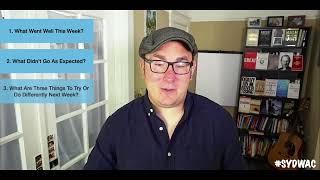
Sean Buttner walks through his three-question weekly reflection: what went well, what didn't go as expected, and what three actions to try next week. He argues that playing without monetizing it first builds expertise you can later sell, and that hobbies boost resilience when things go wrong.
Chapters
Foreign. Hey everyone. Welcome to start your day. Great. Start your day with a coach. I am your host, certified high performance coach Sean Butner. And we got a great show for you today. So, you know, it's Friday, so it's, you know, time to reflect on the week. We ask yourself the same three questions every week. So I'm really stoked to be able to do that again. But before we get into it, I want to talk about this idea and something I've been thinking about and talking about with people this week. And it's really this idea that it's really important to play. Just to play, right. I had an old friend in Arkansas who's a folk singer type guy, has a song called Play to Play and it's really, you know, one of my favorite ones that he's done because it's just so fun and it encapsules this idea that, you know, we should do things just because we enjoy them, right. And so, you know, and in my life I'll share very briefly that my interests are what I built my career on, right? So, you know, in growing up and in high school and junior high and all that stuff, I was super into technology, super into computers. And so I had a couple of programming courses in high school, I think, and kind of did some stuff on the side outside of that myself. Went to college for business, took a couple of semesters of that in grad school, programming and grad school, and then went into a 14 year career as a software engineer. And so how did that happen? Well, it started with just playing the play, right? Just, you know, doing the thing because I loved it, because I was interested in it, because I was trying to make some stuff work. I really liked the problem solving aspect of it. Didn't know what I was doing half the time. Still to this day feel like I don't know what I'm doing. But you get in front of like one of those development environments, you know, and I usually can. You'll figure some stuff out. Not the best engineer, but I can get things to work, I can improve things. I can take a look at code and see what's wrong or see how to improve it, like that kind of stuff. And that all comes from years of just playing in the space, just being interested, just trying to learn a little bit more about it. And then it turned into a career. And the same thing happened with coaching, right? As I was in my tech career. One of the things that I really loved, and I loved this growing up too, is I love having conversations with People that go deep, we talk about dreams, we talk about your life or our life or our dreams and all that kind of stuff and having that really deep conversation, you know, I live for that, right? And then when I got into my career in tech, one of my favorite things to do was to mentor other people on how to be aware of what's going on socially. So how to, you know, bring people out of their shells, facilitate meetings so that people are speaking up and talking, that kind of stuff. And that, you know, so that really helped me just feel fulfilled at a job that sometimes felt kind of monotonous and particularly earlier in my career was the stuff that I enjoyed the most about the job. And so fast forward, working for Apple, I'm thinking, hey, I'm going to management and I have this opportunity to get certified as a high performance coach. And so I take that opportunity again, thinking I'll use this when I, you know, start to get more management opportunities. And I just fall in love with the work, right? And fall in love with having those conversations with people again about how to improve your life, how to get further ahead, how to be aware what's going on around you. And that changed everything, you know, and now I do coaching full time. And so I've had this really kind of weird career path, but I wouldn't change it for the world. It's maybe who I am today. It's. I'm very proud of all the work that I've done and the work that I'm doing now. Excuse me. And it all comes from just having interests, following them and just doing them because you can and because it makes you happy. Right? And that, you know, again, eventually you get good at it enough that you can get paid for it. So that's this idea of playing just to play. It has nothing to do with going out there trying to make a career out of any of it, right? That was never the intention with computers. It was never the intention with just having deep conversations or even with the coaching, right? Maybe a little bit with the coaching, but it was more of, I'm super interested in this. I'm super interested in if there's a process or methodology to facilitate conversations to help people improve their performance. And it turns out there is. And so that's what I do now. So what are the interests in your life? Excuse me, let me get some water here. What are the interests in your life that really help you or, you know, give you fuel for your fire so you can get up every day and crush it or things that you look forward to doing just because you enjoy doing it. And how can you add more of that into your week? Right? I think that's a really important thing to have hobbies, to have these interests, to have these things that you enjoy and add and sprinkle it a little bit more in your week, you know, because that's how when you have, when you're submitting resumes and you've had the 15th rejection that day that you go and you still feel like a human being, like, you still feel buoyant, you still feel energized, you still feel ready to get out after it, trying to change your job, change your career, change that trajectory. You know, it gives you resilience to be building the things that you enjoy into your week. So that's what I'll say about that. So now we're into the three questions. We always ask them the weekly reflection because it's super important to have these weekly habits to think about. You know, what happened? How can we improve? How do we go forward? So get some more water here. Here we go. Question number one. What went well this week for you? So what, you know, things did you strive to do that went really successfully? How could you maybe replicate it? How could you double down and double that goodness next week? Those are kind of the high performance, pushing questions, but I love them because it's all about mastery. It's all about reaching that next level. So really, what went well for you this week and. And incorporate that. Right? Celebrate those successes because so many times too, we're so busy taking care of the kids, running across town, doing all these errands, going to work. Excuse me. That we forget that. Hey, you know, I was able to get that thing done. I was able to accomplish that thing. I was able to get everyone to where they needed to be on time. Right? That is something to celebrate. That's a win. Incorporate that because otherwise you just feel miserable and be highly productive. And we don't want that for you. Okay. Okay. Number two, what? This week did not go as expected. Like, what's something that you set out to do that maybe you didn't meet the number, you didn't meet the measurement? You, you. It didn't go the way that you had planned. Right. And this is more of a kind of debriefing thing. So it's not to beat yourself up. So don't beat yourself up. But it is more of, you know, okay, like did I, you know, take bite off more than I could chew, right? Did I stretch myself and fall short or did I play it small and still fell short? You know, those are some good distinctions to think about because it leads us to our third question we ask every week. You know, what are three things you can do to do or try next week to do differently, to have a different result? So if you fell short on some things, maybe it's trying a different method or changing an expectation or really being like, oh, like, I can't build a rocket ship in a weekend, maybe I should just try to build a little part of it. So those types of tweaks, it could be that, oh, if I hired that person, I could put out twice as many things that I do. I get to coach twice as many people, so I should hire that person because I'm putting the good things that I do out in the world at a higher rate, right? Or, you know, whatever it is for you that comes up for you. But those are a couple of quick examples that I use. And the power of these three questions is that it's helping you incorporate wins, it's helping you figure out where things might have gone sideways and then plan next week to crush it. So I highly encourage you to go through and journal these three questions today and then every week. You can join me here every week if you'd like. I'd love to share that with you. So with that said, guys, this is Sean Butner, you know, signing off. Please, if you think someone needed to hear this today, share this with three friends. Get the word out. You know, help me out. I love doing these videos for you. I'd love to just reach more people. I'd love to build a bigger community. What is something that went really well for you this week? And post that below where you're watching this video so we can cheer you on. I'd love to highlight that again. You know, there's so much good out in the world if we're able to, you know, train our brains to look for it. So please, what's one thing that went well for you this week? Put it down below this video so we can cheer you on. With that said, guys, this is Sean Butler signing off saying, go live with more joy, more personal growth, and more impact in your communities and organizations. We'll see you Monday for Monday. Motivation. Take care, guys.










