The Unexpected Path When You Follow Your Heart and Service
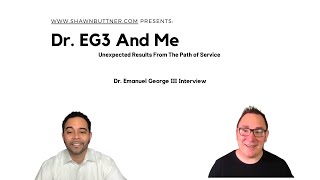
Dr. Emmanuel George, a pharmacist turned associate dean and coach, built his career by following service. He managed 42 pharmacy locations, invested in real estate, and now coaches pharmacy students. His "bookends" routine—planning on Monday, reflecting on Friday—keeps him productive and calm.
Chapters
Foreign.
Welcome to start your week. Great. Start your week with a coach. I'm your host, Shawn Butner, certified high performance coach. And this is the show where we ground you in personal development, high performance and other things that will help you advance in your life, you know, quickly and with more awesomeness. Today I have a really special guest. We have Emmanuel George. Dr. Emmanuel George. And we read his bio here. He's affectionately referred to as Dr. EG3, a high performance coach who helps professionals recognize their full leadership potential by embracing their innate gifts, talents and abilities through authentic coaching and mentorship. Driven by his conviction, Dr. EG3 has dedicated his life to positively contributed and to enhance the world around him. So like the city, he's from New Orleans. New Orleans probably is a better way to say it, but I'm from Chicago. Dr. EG3 has a distinct perspective on hard work, diligence and what it takes to be successful. Having worked in multiple industries and practice settings like health care, real estate, leadership, just to name a few, his primary focus these days is helping individuals like you who are interested in creating the life you want and are destined to live. So thank you for joining us this week, Dr. EG3.
Thank you for having me. Thank you for having me. I really appreciate you.
Oh, thanks. Awesome. So the first question I like to ask everyone is who are you, what do you do and how did you get there? So how did you get to where you're at now?
Wow, man, you said a lot in that bio. Well, basically, currently right now I'm in academia, so I'm gonna teach at a local college of pharmacy by education and training. I'm actually a pharmacist. So when you know from born and raised in New Orleans, Louisiana, worked really hard from kind of impoverished means, made it through pharmacy school. And after pharmacy school, I work for a Fortune 50 company, rose through the ranks through there, you know, there's a local pharmacy manager at a couple of different locations, went through Hurricane Katrina and transplanted to the city of Houston, Texas, managed about four pharmacies in five years there, then got promoted to a regional supervisor here in the Dallas Fort Worth area. Where, you know, I had was over 42 different locations and I was responsible for pharmacy operations at those. And during that time, that's when you started dabbling in other things such as real estate. And during that time, over a couple of million dollars worth of transactions that occurred over a five year span. But then had the opportunity to join back in academia, giving back to the profession that I love, that I've Been part of for now what man, believe it or not, 20 years been in a healthcare profession and I'm able to give back. At the local college of pharmacy. Joined there as just a regional director for clinical rotations. I helped the school to establish several of their clinical rotations for their graduating fourth year clinical students. And from then within two, three year span, I had the privilege now of serving as associate dean. So definitely a lot of ascension and in a short amount of time. So yeah, so that's kind of how I got there.
That's amazing. So if I could ask maybe another question here is what gave you the drive to go from, to get into pharmacy? Because that I know is a very tough field field to study to get in. You put a lot of hours, a lot of grit, probably a lot of tears. I'd imagine knowing some friends that went.
Through it, probably some blood at some time too, right.
Probably to then go into industry, really excel there. I mean, because that's also a shift to be go from kind of like the technical part, which I imagine pharmacy is, to more leadership and operations and then into academia. What do you think was the pulling force or driving force there for you?
Definitely, definitely. Well, being reflective. Right. You know, sometimes there's this dumb ambition that just makes you want to just, you know, and I can be transparent with you and your audience. The drive really started. All I wanted was to have my email address was my name. I remember 18 years old. I remember one of the supervisors came and it was his name, dot, last name at the company I work for. And I was like, wow, I want that as well. So, so that was kind of the carrot that got me going. But thinking back and just being reflective and being able to look through it through a rearview mirror, it was always the passion of just wanting to serve. Because what I can tell you the reason, what made me when I decided in high school that I wanted to be in healthcare and in medicine, what made me lean towards pharmacy was because what I recognized was pharmacists have the opportunity of interacting with patients on a more consistent basis where they weren't always as severe, where I would interact with them in their communities, where they are and just really want to help them live the best healthy lives that they can. Whereas you know, our friends, my friends who are doctors and DOs and MDs, they sometimes see patients at their worst, you know, and it's. Their job is to get them to be settled. Whereas if I. What I learned in pharmacy was I can help you over time, continually, month after month, week after Week to live your best self through healthcare. And that also led me to your point in the pharmacy. Being in those communities, I recognized that I wanted to make a grander, a bigger impact. And when I went from one pharmacy location to the next, to the next to the next, what I recognized I was only able to help those communities and neighborhoods. So the wanting to be the regional supervisor and ascend upwards was, well, if I was a regional supervisor, I'll be able to impact an entire region. And again, it ended up being 42 locations where I was able to help then those pharmacy managers and pharmacy teams impact those communities as well. So that's kind of what caused the ascension upward into the leadership role. And like I mentioned, that desire to serve continued coming back to academia because it was about, I want to teach young healthcare professionals how they can, you know, impact communities and things of that nature as well. And it's obviously through their education. Yeah.
So I love and like being also a certified high performance coach. I feel this call to help people at a greater scale is something that we all have in common. But it's really, like, inspiring to hear your story with that and that as soon as you realize, oh, I'm actually helping the community here and I need to get that bigger reach, like, that's such a great way to have ambition because I know sometimes out there too, you have the people that are just like, I want to make the salary, or, you know, and it's empty. And I could tell, as you're telling your story too, that you're letting up, getting fired up about it. So kudos to your service. So thank you for that. Okay, moving on. As a certified high performance coach, could you maybe tell a little bit about your journey into high performance, how you heard about it? I'm sure looking back, you'll be like, oh, I can identify I was doing this when I was in school or early on in my career, and maybe kind of tell that journey from how it's helped you excel into what you're doing right now.
Yeah, definitely. Well, again, life is much easier when you can play Monday morning quarterback. Look at the threads and the themes that your life has kind of unfolded. And I remember during, even when I was in pharmacy school, I remember several of my friends and people that I would study with, they would always kind of come to me like, hey, can you help me explain this? Or can you help me with this topic? And I remember, like always, I took it always upon myself to make sure I studied. And I was well versed in things because I Knew they were going to be. The eventual question, hey, can you help me understand this organic chemistry, or can you help me with this therapy? And how does this make sense? And I remember that early on in pharmacy school, to even go a little bit further than that, I remember playing football in track in high school, and I remember I was always, like, dubbed the coach because I would be the one helping with technique and footwork and, you know, handoffs and track, you know, making sure that we were practicing. So even kind of like in high school, I remember being dubbed kind of the coach. Now, when I became a leader, like, of the pharmacy teams, I had the blessing of being able to work for the same organization throughout all of pharmacy school. So that when I graduated and became a pharmacist, I had the privilege of mastering the system that I was in, which made it easier to lead others, because I kind of knew exactly what needed to happen to have the processes work. So it always became this kind of mentor, this coach, this individual trainer who would help people do their jobs better. And again, it just got more and more enhanced from when I went from one location to the next to the third to the fourth. And it was just a situation where I kind of knew what needed to get done, and I got more and more efficient as time led on. And when I became that regional supervisor, it was the same thing. I was that mentor, I was that trainer. I was that coach that was helping these pharmacy teams definitely, again, be able to impact those communities. And when I transitioned to academia, obviously, it was a little bit more of a formality of, you know, the teaching style, you know, having to go new concepts, but it's.
I had done it before.
I just may not have known, you know, all the technical terms in terms of academia, you know, in that nature, but it was the same thing that allowed me to do it. And we know how it brings us today. I wanted to formalize the process of that mentorship. I wanted to formalize that teaching, because what I recognized was I was helping and coaching and mentoring beyond health care, beyond, you know, students and just, you know, getting their therapy and their chemistries and things together. It was more so about helping them through their entire life journey, what they were dealing with in the middle of those four years and those long nights, like you mentioned, helping them to get rest and refresh and recharge and renew so they can perform their best on their assessments and exams, but then also getting them through their career journey as well, and helping them to make the best decisions that honor the things that they say are important. So I wanted to really formalize that which kind of has brought me here to now being able to help people beyond the, this construct of professor student relationship. But it's how can I help people on a whole through the journey that they have throughout life and really help them enhance and focus on those innate talent, gifts and abilities that we've all been gifted is just helping them to uncover it.
Awesome. That's amazing.
So.
As you transition into academia, have you been able like, have you brought the coaching aspect in? Is it just like you bring up high performance coaching and like classes you might teach or as students come in to talk to you about certain things, Are you just applying that? Are you doing one on one coaching or group coaching type thing? I'm just curious about that now.
No, no, definitely. So there's a couple of ways that I leverage the concepts of high performance coaching. It's not taught in any formalized class. I teach very specific topics within the classroom. But you know, like you mentioned, through those mentor sessions or times where I'm able to kind of walk students through the concepts of gaining clarity, productivity, helping them to gain courage in situations. They are then obviously several instances where it's about their leadership journey as well as they start to get a part of their student organizations and they have different roles that they play in there. But one of the other ways that I leverage high performance concepts with them is one the of on the fourth year clinical rotation. So as students have transitioned out of the classroom and now they're doing their clinicals, I have the privilege of being able to have some students with me that, you know, my goal is to teach them about leadership and performance and helping them gain that clarity. And I get an opportunity to spend six weeks with them kind of one on one as we work through projects and I weave in these concepts as we're doing other activities as well. Because you know, my goal for them, well, when they're with me, my goal is for them to chase their dreams, you know, pharmacy and might be just one aspect of who they are, but it's not who they are. It's just one caveat or one facet. So again, it's trying to help them explore their whole life journey because they'll be around a lot longer than they will maybe being a pharmacist. So it's again helping them to explore those other interests that they have as well. That pharmacy just might be a means to an end. Gotcha.
Okay, so is there anything in particular for students that are out there that you See, might be like a number one or two thing that is maybe reoccurring or a pattern you've noticed that people struggle with, or that high performance really seems to be like, oh, okay, I get it. I know. Either it's getting clarity on your future. Like, you're talking about where there's more than just pharmacy, which I think is a great call out. But are there other things that you tend to be like, oh, is it as simple as just get enough sleep or something like that?
Well, what I'll tell you is this is that I don't know. And just to expand it a little beyond pharmacy students, because I've also had the privilege and honor of working with doctors of osteopathic medicine, some MD students, ptpa, but then also individuals who are not even in healthcare whatsoever. I have people who are directors and finance individuals who are working for local municipalities and things of that nature and nonprofits and small churches. So I had a privilege of, like, working with a good array of people from, again, multiple industries. But what I oftentimes recognize is that people, sometimes we put ourselves in these lanes, we put ourselves in these silos, because I don't know if it's just American education. I don't know what is. We kind of choose really early, and we kind of usually choose based on not gifts, talents and abilities. Sometimes those decisions about what you pursue are based on perceptions of what you think are going to be a fulfillment of your life's dream. And that's kind of hard to make at 16, 17, 18, 20 years old. But then sometimes it's imprinted on you based on your family's expectations. Oh, you know, hey, you need to be that lawyer. You need to be a doctor. And what I tell everyone that I work with is it's good to have ideas, but there's an exploration that you kind of have to have yourself. Because as you evolve through life, you know, and it's okay that your interests change, but sometimes we believe that, oh, no, no, I went to school for that. I've been this for the last 10, 15 years. This is all I'm ever going to be. But I help people to just try to explore. I'm not saying take a jump. I'm not saying quit your job. I'm not saying quit school. What I'm just saying is this, you know, you were on this path for a reason. The universe. You decided this path for a reason. Let's complete this race. But it's not the only race that you're going to run. You know, so again, it's being able to say, what's that second half? So going back to my track routes, you know, that's probably only one time around the track. And if you've ever watched track, there's relay, these things called relay races, where individuals are passing that baton to others. Sometimes you got to pass that next baton to yourself.
The.
To get around that track for the next loop. Around the track for your next journey.
Right on. I love that analogy of the handoff of priorities or purpose. We're all running the same race. I was a shot putter in high school, so I don't know about relays. I know about throwing things.
But.
One track, yeah, I love that idea of exploration. And I know from my journey. I went to school for business, ended up because computers were a hobby. Getting a whole career in software engineering at companies like Walmart and Apple, which is insane to me, that they would take somebody that didn't really study computer science. And then now to be coaching, you always weave. And I'm not sure if I know that a lot of people reference this, but the Steve Jobs Stanford commencement speech where he says, look, looking back, you can connect the dots, but you can't really figure it out as you're in it. That idea of the more you explore, the more dots you're able to connect, and the more chance you'll have to actually find the thing that you really connect with that really serves, gets things out in the world. I love that message.
Awesome.
Okay, moving on. Curious. Do you. So I asked everyone this question. What's a daily or weekly habit that keeps you happy, healthy, productive, or successful?
Yeah. Well, what I will tell you is this, is that those habits have changed just a little bit because of, you know, this whole global pandemic. Just because, you know, it was interesting. Before the pandemic, I found myself saying this. Everyone, you used to always say, man, I need more time. If I just had more time, man, give me. If I just had more time, I can do more, Right? Well, this global pandemic has kind of shown us, hey, here you go. Here's 24 hours. Now you manage it, because I can tell you what, before the pandemic, I really appreciated having the commute. As much as no one likes to be in traffic, nobody wants to spend that 35, 40 minutes in gridlock, right? What I realized, it set barriers for my day that allowed me to transition, right? So I would get in the car early in the morning, and then it would take me 45 minutes to get to the office. But again, that 45 minutes I was in and out, I was listening to music or just, you know, just getting ready for the day. I would live my day for about eight and a half, eight hours, something like that. But then that commute home allowed me to transition to be back to the house. So that's what I would have said before the believe it or not. I know that sounds crazy. Crazy. Nobody ever says, you know, what I like to do, traffic. But it allowed me to have these bookmarks kind of in my day that helped me to transition from home life to work, from work to home, to be, you know, present where it was needed. But since the pandemic, the habits that I believe it or not, has really helped me to be grounded is working out. You know, I would have never thought that like being, you know, in a routine. And I find myself now those commute times, I kind of use them now to go get sweaty and do something twice a day that I would have never thought before because working out was a challenge pre Covid because again, it was, you know, again, that 45 minutes each way, 90 minutes of the day is kind of hard to then come home and get on a treadmill or whatever. But yeah, like since COVID is that instead of I wake up in the morning, get the kids ready, get them settled, then I go jump on the treadmill, live my day. And believe it or not, it's almost if I skip a day now, I can tell you I feel it. You know, I wane. I don't eat coffee as much anymore or anything like that as a stimulant, but it's that working out and just moving my body and getting it going. And again, I've started to even incorporate like things not even hitting the pavement and weights, but sometimes it's just yoga as well, or stretching and just moving your body has done tremendous things for me as well. So that's kind of the physical part now, the one thing that still helps me out. And I did this pre Covid and it's also gotten worse a little bit since COVID because we our days are longer now, right? I don't just work a straight hour, eight hour day. And again, I was terrible at that before COVID Well, I would sometimes be on a laptop at night, but, you know, I find my days a little longer. They're creeping nine, nine and a half hours because, for example, I will get up in the morning, get the kids ready, do my workout, homeschool, doing something from class, go eat lunch with the kid, come back, do some More work. And it's probably nine hours now, but I'm not getting done until 8 o', clock, 8:30, because my day is expanded, because it's so intertwined with home life now. That's been a blessing in itself. But I still do this is. I call it the bookends. And what I do is on Mondays, I kind of look forward into the week. Like, what do I have to do? What are the things that I need to accomplish? What are the big rocks that are going to come? Are there any meetings or anything that may present me a little more challenge that I'm gonna get? Spend a little more time to what are the classes that I have to teach? And I kind of live my week out with kind of that expectation. I don't get too deep. I'm not really Type A, but as long as I know things are coming, I usually can handle them well. But then on Friday, what I do is I close the bookend and I do two things. One, I look backwards. Okay, how was the week? Did I do well? Did I live out what I wanted to live out? Did I accomplish what I wanted to accomplish? And I'll tell you, 9.5 times out of 10, I've accomplished everything I said I was. And then I do a little peek into the week, like next week. Like, what's coming next week is anything due on Monday. And what that does for me, it kind of shuts it off. Where I can kind of say, once I've kind of completed that loop and I've closed that book in, I can kind of live on Saturday and Sunday without, like this anxiousness of I got something else to do. I kind of know what's coming, so I don't have that anxiousness anymore. So that's what I'll say is kind of the thing that's really kind of been personified is that the book ends. I call it the book ends. I look at the beginning of the week, what I have coming, and on the Friday or Friday afternoon, Friday evening, I look backwards, I reflect, and then I take a sneak peek, sneak peek into the following week.
Oh, I love that.
So I might.
I'm going to borrow that, actually. I'm disciplined. Every day I'm doing my journaling. But to look back or look a little bit forward, to quiet that anxiousness that I know I have, I know so many people probably have to. That's amazing. So, okay, that said, is there any anything else you'd like to share with the audience or how can they follow you or follow up with you if they want to connect that kind of stuff.
Yeah, definitely. Well, Dr. EG3 PharmD, I'm on all social media platforms so you can follow me on Facebook, Instagram. That's where I'm the most heaviest. Just overall, you know, my life journey, who I am there. Also, you know, you can follow find me at www.emanuelgeorge.com there. And again, I would love to work with you, your audience, whomever that you know, if there's a need that's there. And what I just tell everyone is, you know, coaching, whether it's a personal trainer, whether it's a therapist, a healthcare provider or high performance coach, it's about fitness, right? You know, there's just not a one size fits all. There's what, 7.6 billion people on this earth. I guarantee there's about 10% of them that you just may not gel well with when you put it in those numbers. That's a lot of people, right? It's a lot of folks that, you know, you might be bristly with. And definitely there's, there's benefit to learn from anyone and you know, whatever I can do to help serve you, serve folks on this journey, we'll be here together. So we might as well figure out a way of how can we do the best that we can with what we got.
Excellent. Excellent. Okay, I'll put those links below in the blog. So if you didn't catch all that or didn't write it down quick enough, I got you. So Dr. EG3, thank you so much for being here, for sharing your energy, for sharing your story and the tips on the bookend. That is gold. So thank you so much for your time and your presence.
Thank you. Good chatting with you.
All right, well, we'll see you guys next week on start your week. Great. Start your week with the coach. And this is Sean butner signing off.










