Three Things That Trip People's Performance Up, And What To Do About it.
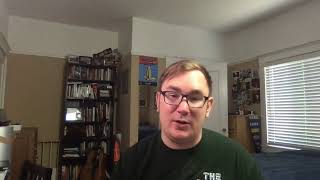
Shawn Buttner identifies three things that block performance: fear (broken into process, outcome, and opportunity-cost fears), doubt (a confidence deficit solved by small wins), and exhaustion (fixed by sleep, hydration, movement, and nutrition). He uses his own burnout and marathon training to show how reframing and the competence-confidence loop work.
Chapters
Foreign. Everyone, this is Sean Butner with start your morning with a high performance coach where we talk to you about high performance, how you can be more successful, more confident, more joyful in your day so that you can get the success that you want. And you know, yesterday we talked a little bit about what high performance was. So, so if you missed that, go check that out yesterday. If you're here, say hi, say where you're from, say what's on your mind. Trying to encourage the community to be a little bit more engaged. So please, you know, ask your questions. I'd love to highlight them on this morning show. So it's not just me talking to the camera. So today I wanted to talk about three things that prevent people from reaching their full performance. You know, their full productivity, their full enjoyment of life in general that I've seen from my clients and a little bit about what to do about that. So with that said, happy Tuesday when we're filming this and let's go. So I. And when I think about high performance, I've been thinking more about stories that, you know, I've had that can help illustrate some of the points. So maybe, you know, you know, you, if you've ever had a big dream and have delayed putting it out there, it's probably because you're not confident. And for me, it was starting my businesses. I've done this twice and each time it was about a year and a half to two years of me trying to convince myself this is really what I wanted to do, really wanted to be sure that I was making the best choice. But it also came from confidence or a lack of confidence of not really wanting to see if I could do it, if I was made of the stuff of an entrepreneur. So, you know, there's a little bit of fear there, a little bit of doubt in my ability to do it, fear that I wouldn't be able to make it. And, you know, also a little bit of exhaustion. You know, having worked in corporate America for quite a bit, my first career out the bat was consistently, you know, 50, 60 hour weeks at least. If we had launches, it was more if I was on call to support the international markets, you know, you weren't getting consistent sleep. And I just remember there were years of my life where I just flew, felt completely wiped. And you know, what helped me a little bit was marathon training. But it also was personal development where I was starting to think, like, what do I really want to do with my life? Is this what I really want? Yes, it's nice to have the comfortable security of having that consistent paycheck. But at the end of the day, like, there's more to life than your work. There's more to life than, you know, paying bills after you can cover them, of course. So for me, like, finding a coach, finding and engaging in this high performance work helped me get clear about what I really wanted to do. Helped me, you know, muster the courage to take that jump and really set me on a path that I feel like I'm living my life a lot more. Like I'm guiding my ship, I'm captaining my ship, being able to direct it where I want to go and being able to do the things that I want to do. And you really help people. That's the best thing about my work as a coach, is I really get to help people figure out how they can upgrade themselves, become that new version of themselves that is better, that's more successful, that's more engaged, that has more energy. So I want to talk about, just like I kind of experienced, maybe you've experienced fear of trying something new, fear of changing your life, fear of changing jobs, fear of moving, fear of getting into that relationship, fear of, you know, changing your health habits so you get into the best health of your life, amongst other things. You know, maybe you've doubted yourself. You know, maybe you've thought, man, like, I don't know if I'm strong enough. I don't know if I'm enough. I don't know if, you know, I'm. I belong here. Maybe I have an imposter syndrome for where I'm at. Or maybe, you know, I just don't feel like I can control things enough. I can't, you know, pull the levers of influence to be able to propose the idea and get it, you know, improved upon and going with a group of folks or, you know, maybe you're like, me too. Where I. My last corporate gig, I was commuting two hours every day. I was out of the house for like 14 hours every day. So basically it was work, go home, see my now wife for a little bit, eat, go to sleep early, wake up super early, do the whole commute thing. And that wears on you, you know, and in high performance, we often say that success without burning out is the goal. So if you can take care of your body and take care of your relationships and support your career, support your work, support your mission, that's when you're going to be able to sustain the success. Because you go for too long and yet you burn out and you Know, life is not fun. You feel like, you know, you're just kind of wandering or going through the motions and that's not cool. So first thing to do, we've talked a lot about fear on this morning show. Again, there's three different types of fear that's good to identify with or good to identify. And then once you know those three fears, you can start to, you know, play with your psychology to help you get moving, overcome it or, you know, make a decision. Ultimately, fear prevents decisions and so which leads into the second point again. But, you know, when you're not being decisive, there might be a fear element, there might be a confidence element that we'll talk about soon. But if you know, there's process fear, the fear that actually doing the thing is going to be painful. So the analogy I like to use is marathon training. If you're like, I want to do a marathon, but I think the training is going to literally kill me, it's going to be tough, I'm not going to be able to do it, then that's fear of the process of running a marathon. The second type of fear is outcome fear, which is, I'm going to do all this work to train for a marathon. I'm going to run the marathon. At the end, I am not going to feel good about it. I don't think my friends will admire me from doing for doing something pretty crazy. And, you know, the, the ending that you think, it's like the grass is greener on the other side type thing like, that's not going to happen. So you're afraid that it's not going to be worthwhile. Third type of fear is lost fear, or as some people call it, opportunity cost. So by training for a marathon, I'm going to lose time with my family. I'm going to lose time eating all the things that I, you know, enjoy but are not going to help me run. I'm going to lose, you know, time doing hobbies or there's a trade off happening and you're afraid that the trade off is not worth happening. So when you have a fear and you identify in one of these buckets, what do you do about it? Well, one general thing to do is to focus on what you gain by doing it. So if you have the outcome fear of training for a marathon, oh, it's not, you know, it's going to be really painful, you know, but you're also going to get in the best shape that you possibly can by doing it. So you're going to be healthier that's something you gain from that process. You're going to. You'll be learning something new. So you're engaging your mind in something. If you've never run a marathon before, of course. Or you're going to be engaging in something that is great. Not a lot of people can run 26.2 miles. So the fact that you're training for it, that you're going to, you know, then do it, you're going to do something that not a lot of people experience. And that's kind of something intrinsically you can gain from that particular example. Or when, you know, you think about the outcome. Pain, like, oh, it's not going to be as great. You just have to remind yourself why you're doing it. It's like, oh, like, I'm doing this to prove to myself that I can do 26.2 miles. Or because my friends will think I'm super cool and nuts and it will surprise them. Or, you know, it's for a cause. You know, you're raising money for a fundraiser and, you know, by completing that race, you're, you know, doing some good there. So. And then lost pain again. It's just rebalancing the equation. Like, I might think that, oh, like, I'm not going to be able to see my family and friends, but you also might inspire them to start running with you. So now you have a healthier group of folks, and you're actually leading people at your work and your family and whatnot. So that's how you can handle fear in those three different zones. So my question for you is, like, do you have one of these types of fears that are coming up for you? And, you know, how are you going to address? How are you going to think? Like, what do you gain? What. What is the reason why you're able to. You should push through and why it would be good for you, and that'll help you get a little momentum there. Second thing is doubt. And I know again, on Instagram, this is flipped. I think it's the way that my camera is. But anyway, doubt. Doubt prevents us from taking action again. It's a sign, you know, if you're indecisive, if you don't feel confident, if you're always making excuses, you're always delaying. You're like, okay, not today. I'll do this tomorrow. You probably lack the confidence to get in and do it. And the thing to do if you have a lot of doubt in yourself or your ability is, you know, I don't like the phrase fake it till you make it. But you have to start taking small steps, you know, so, like, what's the next smallest step you can do with, you know, moving forward on the thing that you're dreading the most? Like, hey, I have to do marketing for my business, and I don't. I always resist it. So what's the smallest action I can start to help gain momentum? Because, you know, we famously know. I think Brendan Burchard talks about the confidence, competence loop that the more that you are able to do, the more you learn, the more competent you become. The more competent become, the more you feel confident. And so the more confident you. The confident you are, the more you try. And then it's this feedback loop that spirals up into you being more confident. But you got to get in the game. You can't sit on the sidelines and push things off until the future when you, you know, you could do it now and get more momentum and get that learning. Like, that's the biggest thing, you know, if you can be learning along the process, it's a lot easier to get momentum. Okay, so we talked about doubt. We talked about fear. Last thing I want to talk to you guys about is exhaustion. If you are constantly just wore out, and this is a weird time with COVID a lot of people are, you know, working from home or you're sticking around at home. So, you know, the commute and the daily, you know, space that work can take up has been kind of skewed for a lot of folks. But if you're always dreading going to work because you're exhausted or you come home and you don't want to talk to people because you're exhausted or, you know, you've spent so many, so much time away from the house that when you get home, you're just tired and you can't show up for your family and friends and your hobbies, you're not a completely balanced person. You know, if you go back to, like, ancient Greece, this classical education of a well balanced and, you know, person who can, you know, be fit and be smart and philosophical and, you know, can be crafty and farm and do, you know, blacksmithing and all the other stuff, getting out in the weeds there. But you get the point that if you're only stuck in one bucket and you don't have the energy to go in others, it. You need to get your energy gain in check, and that's better sleep, which is something I talk about quite a bit. It's hydrating enough. I talk About a lot. You know, a lot of people are tired just because they're thirsty and they have tricked their bodies into thinking that maybe they're hungry or just tired. So drinking water is a huge thing. You know, easy one to is like move every day, stretch and get out in the sun for a half hour as a quick suggestion. But whatever that is for you, you know, focus on your health, focus on your nutrition, focus on your sleep and hydration. Like, those four things will make a huge difference in how you can show up. So those are the three things that generally hold people back. It's fear, it's doubt, and it's exhaustion that I've seen in my coaching client work. So thought I'd share that with you guys. Hope you found it helpful again. At probably begin beginning of July, I'll be launching a group coaching experience because my time is getting a little bit limited with the individual stuff. But there are still a few slots open. If you like this video, you like yesterday's video, and you're curious, like, how can I feel more confident in my life? How can I experience more joy or more impact in what I'm doing, you know, in. In the world? I highly suggest you go to Sean Coach and sign up for a free strategy session where we'll custom tailor some of this stuff to your life. And then afterwards we can talk about coaching if that's something that you're interested in. If not, we just delivered one hour of awesomeness for you, so hope you take me up on that again, like, space is limited. I have a couple more spaces open before I'll be completely booked, so make sure you do that sooner than later so those spots don't fill up. Otherwise you'd have to wait till the group coaching thing in about a month. So again, it's Sean Coach. Coach. S H A W N, C O A C H. I think I spelled that right. You need to write that stuff out, but okay, guys, see you tomorrow. Hope you like this. Take care and I'll talk to you later.










