zarrin:sara
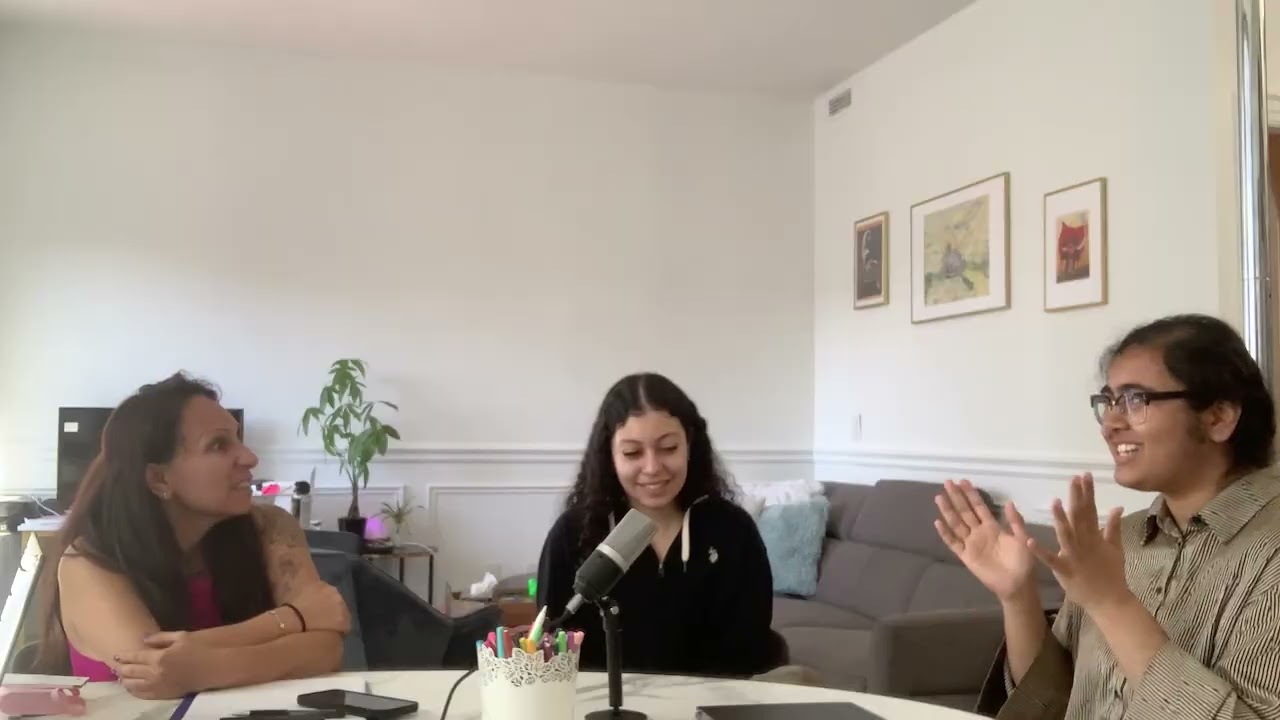
In this episode of Level Up with Shawna, host Shawna Lynne (aka Delulu Today) is joined by two placement students, Sarah and Zarin, to discuss the newly‑drafted "5 Flow" framework she has been developing for youth mental‑health support. The conversation begins with the participants sharing where they are in their personal and professional lives—Sarah, a third‑year psychology student unsure of her career path, and Zarin, a recent graduate navigating early‑career choices and volunteer work. Shawna then outlines the five pillars of the 5 Flow model: self‑care, self‑awareness, self‑maintenance, emotional load, and relationships. She explains how each pillar interrelates, emphasizing the importance of boundaries, people‑pleasing tendencies, over‑thinking, and self‑talk. The group shares personal anecdotes about anxiety, neurodiversity, routine building (e.g., morning stretching), journaling, and the challenge of balancing responsibilities. Shawna presents a series of reflective questions (e.g., “Why do you let yourself down?”; “Is your people‑pleaser the most important part of you?”) as practical tools for participants to explore their own flows. The episode concludes with plans for future workshops, drop‑in group sessions, and a "5 Flow Fact‑Finding Show" where participants can anonymously share and discuss their struggles. Throughout, the dialogue is conversational, supportive, and aimed at equipping young adults with concrete self‑reflection techniques to navigate transitions, career decisions, and mental‑health challenges.
Chapters
Hi, welcome to another episode of Level Up. Oh, let's try again. Hi, my name is Shawna and welcome to— no, we don't want to do that either.
Ready?
One more time. Hi, welcome to Level Up with Shawna. Today I have 2 really cool humans with me. This is Sarah and...
Zarin.
They are doing their placement with me this, uh, for the next 2 months, and we are building some mental health pieces to support youth of today.
Yeah.
So today we're going to explore my 5 Flow program. We're going to talk about some of the questions that come up when we're making decisions in our lives, when we're trying to decide where to go next. Sarah, where are you in your life right now?
Um, I'm in the middle somewhere. I'm going into my 3rd year of university, so I'm still trying to find my way and know what I want to do.
Um, do you have an idea of where— which direction you want to go?
Yeah, like, I'm in psychology, so I know I kind of want to help people out in any way I can— kids, adults. Um, whether that leads to being a counselor or a therapist, I just want to be in the helping field.
Okay, so you have an idea.
Yeah.
But no idea of actually the path to get to any of those?
I kind of figure that out as I go.
Okay.
Um, so no big goal at the top, like, I need to get to these 2 jobs, so I need this stuff to get there? You don't have that yet?
Not yet.
Okay, okay. Have you asked the questions or Not even known to ask the questions yet?
I don't even think I know where to start with the questions, to be honest with you.
Okay, no, that's what I like— full honesty. Sometimes we don't even know what questions to ask to get where we want to go, right? How about you, Zaryn? Why don't you tell us where you are in your life?
Yeah, for sure. So I just transitioned to my first full-time job here, and I'm kind of looking through different experiences to see what I like and what I don't like. This was a great opportunity for me to learn what I like, and I learned so much and I grew so much. And I'm now moving forward in a new opportunity, which is the Youth Summit, to see like whether that can be something that I go into in the future. So I'm kind of trying out my volunteer in the future to see what else, what other fields there are.
Okay, so you have a bachelor already?
Yeah.
Yeah, so you got your BA in?
Psychology.
Also psychology. So there's lots of people go to school for their bachelor's in psychology, but when you're in your bachelor's of psychology, there's really no funnel to where to go next.
Right.
Okay, um, you are learning. What are some of the things you're learning here that are— that already are going ding ding, that will help me in the future?
Um, so definitely before I came, I was super like anxious about everything. I was like, am I doing enough? Am I too slow?
Like, I just So you're anxious about your own ability to show up at work and be, um, a good employee.
Right. I felt like, am I being too slow? Am I not learning fast enough? But then when you helped me and told me to kind of like look back and see what I'm doing, I was able to see like, wait, okay, I don't have to keep— I don't know why I was thinking of it as like levels to a game where you like, you beat level 1, you have to go level 2, level 3, level 4. But I'm like, it's okay, let's take it slow. It's better that I take my time and do something rather than rush it just because of the deadline, which is something that you reassured a lot, and I really appreciate that.
Oh, good. Yeah, being neurodiverse, deadlines are very difficult. They're challenging because I like them, but I get anxious and overwhelmed, and then I don't perform well. And that's the piece— again, leaving high school, you go to college, university, you do all the work with their deadlines, but there's no time to really question where you want to go. Right? You're like running, running, running, and then all of a sudden you're like, uh, what, what now? Right? Like, I, I did my early childhood education because I loved kids, but then I realized that was not a job for me. Like, I could not stay there.
Mm-hmm.
So I did my teaching degree, and then I realized I love the school system. I spent 18 years there, but again, being in a system is very limiting for me. I'm a big thinker. I like lots of space to For ideas. I became a specialist, a teacher of the deaf and hard of hearing, also good. Then I was a fitness instructor for a while, part-time. I love exercise, so might as well make money from it. I did my life coaching, so I was able to coach families and mentoring. And then I became a registered psychotherapist and the camp that I run. So I like— I didn't know I liked all of this stuff. Right? So for me, it's constantly learning and growing. And I don't think— I think with the internet, we have too many choices now. So, but where do you even start? Because you want to do everything and nothing at the same time. Okay, so I started writing out some questions for my 5 Flow. So I'm taking that 5 Flow and I'm about to put it into a program. and make a little book with it. So here's what I came up with last night. So stop me if you want, if something like resonates with you. I'm happy to discuss any of the pieces, and let's see what you think. Okay, so 5 Flow is all about— 5 Flow is all about 5 things, right? Self-care, what we do with ourselves. Self-awareness, how we see ourselves In the past, present, and future. Self-maintenance— how do you put all the things into your life to actually do your life well, right? You watch your parents, and it's hard to clean and cook and parent and have your own time and exercise and do your work and be with your partner. All those things are really hard.
Yeah.
So how do you do it, right? There are skills to do it, but Where do you learn it if your parents or the people around you don't have those skills? Or you don't even know what skills you're looking for. So you've got self-maintenance, self-care, self-awareness. That leads into organization, but I'm changing actually organization, uh, to emotional load, right? Have you ever heard that word before, the emotional load?
Mm-hmm.
Because it's really important, all the things you carry in your life. Actually impact your life. If you're not eating well, your mood isn't good. If you're not exercising, your body's not going to show up. If you're not talking to someone, you'll have loneliness, anxiety. So that emotional load— and then if you partner, who does which chore? Who's in charge? Is it okay if you don't like something that you never do it? Will your partner get mad? Will your friends get mad if they want to go here and you want to do this? Right? So, the emotional load of your life. And the last one is relationships because every relationship in your life can make or break you. Right? If you have a bad boss, like if you came in here and I was very like regimented and like, you need to do this and you don't know that and this. Because as a boss, sometimes you have an agenda in your head, you're not meeting it. That boss could be rude to you without even realizing it. Right? Management skills are really hard to learn. As well. So you've got all those relationships with your family. When you leave, do they give you the opportunity to be who you want to be, or do you need to show up for them? Religion— do you keep the same religion? Do you build your own religious community? Do you let go of religion? All those pieces. So relationships are important. So those are the 5 things that I have noticed in my 30 years of personal development and Trauma timeline. That— those are the 5 things that keep coming back to me that I work on and focus on. Thoughts? What do you think of that?
I like how all the 5 flows help with like balancing with everything. Kind of when you mentioned relationships, and I believe it was emotional load, it's kind of knowing how to set boundaries not only for yourself but for others, which I noticed is a big key component.
Yeah, boundaries is hard, right? People pleaser and boundaries. And boundaries, you can often be a big B. When you set boundaries, people don't like boundaries, especially when they're getting them and they don't want them.
Yeah, also like tying in with that, I feel like a lot of people don't know when to take breaks for themselves, and that's a lot to do with like self-awareness or self-maintenance and also like emotional load. And like I heard a saying, um, and it said that like if you don't take breaks for yourself, your body will take them like at random times and it won't be the most convenient moment. So that's why you should take breaks for yourself. And I think that's important to remember.
Yeah, to actually plan that in. Yeah, right. Well, that's why when we work, 45 minutes we work, and make sure that you, you can sit like you sat in the chair for like 3 hours without moving. It's easy to sit. You're used to it. You've gone to school for most of your life, or during COVID you sat all day, right? Like in your bed, on the couch. So we don't move naturally. Right? It's hard to work standing up. It's hard to do things standing up. So yeah, it's really important. Okay. Okay. So, so far, that's that. Here's what I wrote last night. Level 1, let's get real. Deep dive into your life. Why aren't you doing the simple things that are easy? Are you willing to make the change and try? So in my level up, here's the stages that the 5 Flow will go into. Level 2, personalized macro map. Again, we can change the words. With micro steps to accomplish each, um, each need based on your— in each— I don't know, it says school, but that's not the word I wanted. Micro steps to accomplish each skill.
Skill.
Based on your individual needs, right? Because every single person needs something different to get where they're going. Could be the same thing, but you need it, like you need that tweak. Level 3, get curious. Work through the 5 Flow Program, ask yourself some very deep questions, and get to know exactly what will make you feel the most comfortable. I, I don't know about you, but I'm uncomfortable often when I go places. I'm overthinking. I don't know what people expect of me. I don't— I'm not very good at Following along with people's expectations, right? I'm usually the odd one out, or I've done something that people get offended by and I have no idea. Yeah. How about you? Are you comfortable in places? Uncomfortable?
I feel like sometimes I'm like overly aware, and like, so I kind of just try and blend in with everyone else.
Okay. What does blending in feel like to you? We call that masking. Like, do you know what that word is? Masking? Okay.
Yeah, like maybe I'll just like do what they're doing, like, you know, standing around how they stand, or like maybe like join the conversation with what they're talking about and like, yeah, like their interests.
Yeah.
And how about you?
For me, it super depends. Sometimes I do go through that overthinking phase. So usually when I go to a new event or somewhere I, for some reason, I feel confident, but then the second day I overthink, like, oh my God, I shouldn't have done this, I shouldn't have said this, and then I, like, become a completely different, like, more quiet, more, like, aware of what I'm doing, what I'm saying. But the first time I'm just myself, usually.
Yeah, I'm like that. I have this amazing sense of confidence, and I love being in the middle of things and being loud and boisterous. And being a leader, I love using my voice, but I'm like you. The second day, I'm like, do they like me? Did I talk too much? Should I take the lead? Should I have not said that? Did I share too much?
Yeah.
Yeah. So after 30 years of that, I really stopped putting myself in the forefront. I really kept, like, putting myself back, and now I'm reclaiming that. Like, I'm smart. I know that now. Right? Even if people aren't going to be comfortable with my brain and how it works, it's awesome. It's wild to figure that out. And same with, like, working with people and doing things. I love that first piece of jumping in, and I've worked really, really diligently to let go of that overthinking because judgment is one of those things that, like, I don't want anymore. Everyone's going to judge you for something. Yeah, it's awkward.
Right?
That's really what it is. There's judgy things out there no matter what.
Right?
Okay. So that sounds good so far?
Yeah.
Okay. Okay. So get curious. Okay. The next one— oh, level 3, I said get curious. Work through the 5 Flow Program. Ask yourself some very deep questions and get to know exactly what will make you feel the most comfortable. This can be completely independent. With a partner, in a group, with a therapist, or a mix of both. Feel free to book one of our wonderful teams or check out our in-person 5 Flow Fact-Finding Show to show, share, and shame. Share, show, and shame. Yeah, because I wanted people to show what they're doing, share how these feelings, and then talk about the shame that goes with it. That's that piece that We don't realize that we're all worried about what other people think, and that's where that anxiety comes in and that shame. And can I think and do this, right? Once we open that up and you realize you can do things— like, have you ever met anyone like me before?
No.
No, right? So I hide a lot of that because People get either intimidated or inspired, right? It's one or the other. I didn't know that before, so I'm learning that. So that's my self-awareness. Now that I know that, I'm okay with it. I'm happy that you're inspired, that you want to learn more. I think that's awesome because I didn't have somebody who did that for me, and I'd love to be that for others.
Mm-hmm.
So we create a safe space where you can put your thoughts into the center and see what other people think anonymously or boldly. So I'm going to be doing like, um, like the groups that we talked about. So instead of doing more like the workshops, I think I'm going to do more, um, drop-in to talk about different topics, right? So people can bring their insecurity and anxiety to somewhere.
Yeah.
They'll put the words in either in a jar, like their question, or they can say it, depends where you are, and then we talk about it openly. So it doesn't have to be your problem, it could just be A problem. Yeah, because once you start hearing that, like, someone like me is very anxious and insecure, does it make you feel better about, like, your own stuff?
I feel like it might make someone feel less alone.
Yeah.
Knowing that someone's going through the same thing or feel the same way, right? Or have those feelings just overall.
And you can still build a whole adult life with those feelings. They don't have to limit you. They do need to be looked at.
Mm-hmm.
Right? Here's a sample of a few questions in the 5 Flow. Take a few minutes to find some quiet space and be brave. Get to know yourself a little better. Here's the first question: Why do you let yourself down? That's the first question. You do things, you know, there's things you want to do, you don't do them. Oh, why do we let ourselves down? I want to exercise. Okay, why not? I mean, you can exercise right here, right now on a chair. It's so easy, and yet we don't. I want to eat healthy. Okay, go to the grocery store. There's a million recipes on the internet. There's groceries, there's food in the store. Even if you're on a budget, there are things you can buy that are healthier than the other shit we buy. Right? Anything else there that you think of that goes with that question? Why do you let yourself down?
I want to say like maybe self-esteem. Sometimes maybe someone feels like they won't be able to achieve that, so like why would I even try? Why would I even let myself like be able to like feel that like Like if they fail, they would feel bad, but— and they don't even want to like experience that, so they wouldn't even let themselves get to that point. But it's like—
You won't know until you try.
Yeah, you won't know until you try.
Yeah, it's the try piece, right?
Yeah.
We don't try enough. We really don't try enough. There's something that stops us from trying.
We like give ourselves an end result even though we didn't even take the first step.
Yeah. So I was trying to get my exercise routine back in. So I put exercise stuff all around my condo. I also, for the first month, every morning when I woke up, I put my feet on the ground and just started stretching. Just to get used to getting out of bed because when the alarm goes off or when— well, the alarm, I don't use an alarm. I wake up naturally between 5:30 and 6:00. When my eyes open, my first thought is, no, I want to stay in bed more. I'm not ready.
I know.
But that thought never serves me well. My day is never good when that thought leads, right? Because then I don't have enough time to do all the things I want to do. So instead, I'm like, as soon as my eyes open, feet on the floor. It took me 3 weeks every single morning of doing that before I got to the exercise part. One step at a time. It's just the trying.
Is your—
here's another question: is your people pleaser the most important part of All the things you do for others so people like you, so you're thoughtful, so you're good— that's your people pleaser. When you go along with things, when you don't stand up, when you hide because you don't want conflict, when your parents tell you to do something even though you think it's ridiculous— that's your people pleaser.
I'm a people pleaser.
Do you have a strong people pleaser?
I don't think I do.
Oh, good.
Yeah.
Okay, are you still thoughtful and kind?
Yes.
Okay, but you have good boundaries.
Yeah.
Awesome. I'd like to know next, next one is how you set those. How did you know that? How about you, Zarin?
I, I do have to say I was a people pleaser for most of my life because I did want to avoid drama. Like, I would just go customer service mode with literally everyone and everything.
I like that, customer service mode.
Because I thought like I would be safe that way, if that makes sense.
Yeah.
But then later, especially during university, I realized like it's okay to be yourself. Those who are around you will accept you. You just need to communicate your boundaries. And I went through that with my friends and they were the absolute best, and my family as well. And I reciprocate that too. So I don't know why we are sometimes harsh to ourselves, because if my friends opened up, I would absolutely— like, I love them for who they are, so why am I not doing And then when I came through that, it was very—
Okay, so that's our next one. No, I love that. How did we get— how did we change our people pleaser to a boundary setter? Good. Okay, um, do you owe yourself some valuable time? Do you take time for yourself in your day? Is it too much time? Is it not enough time? Is it a good amount of intentional time? And I don't mean scrolling on social media for hours. What do you think?
I can answer.
Yeah, go!
So I always implement time for myself, whether it's through— just because I'm always on the screen, I need like an off-screen type of movement. So I'm going back into reading, for example, or just a moment to kind of reflect about my day, whether it's through journaling or just thinking by myself. And it's really healing. So yeah, I definitely need my alone time every day.
I love that. That's really healthy. I wasn't taught that in my life, right? Like, that wasn't part of our conversations with our parents.
Yeah.
How about you?
Yeah, I think like when you said journaling, I kind of remembered, and I think like, like there was a time where whenever I needed that time for myself, I would take the time for myself and I would write. Um, but I think like since I am like, um, I think like I've been doing good, I haven't been writing as much, but whenever I do need time or I like to run, so I'll go on a run or like play frisbee. I like to play Ultimate Frisbee. Yeah, so I'll do that. That's like my off-screen time.
Yeah.
But yeah, like when I need it, I'll take time for myself.
Okay, that's awesome. Good. That's pretty healthy for your age. I love it. Okay, here's self— here is— that one was, oh, self-care. Um, have you thought about what you want to look like when you're 80? If not, start there.
Okay.
If you do, make a list of 10 things you're going to do to achieve that goal, right? We don't think about our old age. I, I heard something, um, on one of the podcasts. It's, um, live your life for your future, make the actions mean something in the present. Right? Because I know I want— I'm going to live to 100. I'm, I'm there. I'm trying to do that. So taking out worry out of my life and all those negative feelings, taking the toxic people, stepping away from them, eating healthy, exercising, stretching, sleeping, being joyful, choosing joyful things— that's some of the stuff that gets us to 100. I mean, listen, something could get in the way. Let's hope it doesn't. Self-awareness. Back to the simple. Can you look in the mirror and look at yourself straight in the eye and say, I like you. I like the choices you're making. I'm very proud of, of the way you're living your life. Have you ever looked in the mirror and tried to do that? Have you ever had a conversation looking at yourself in the mirror and being like, took me a long time to say, hey, hey Shawna, I'm really proud of you. I really love who you are right now. Took a long time to say that, to be able to do that without feeling uncomfortable.
I want to say, like, I definitely think— I definitely self-reflect all the time on my own. Like, when the day is over, I'll think about all the things I did, how I reacted, how— what things I said, all just plays back. And I think, like, sometimes I'll think, like, maybe I could have done this better, or maybe, like, or I handled this well, like Good for me, like, you should be proud of yourself. So yeah, like, I think it's like a different kind of self-reflection. I will get to that though.
Okay.
I will, I will try that too, like, why not?
But yeah. Yeah, we have to fall in love with ourselves, right? Like, you spend the most time with yourself, right? 24/7 you're with yourself. And if you don't like you, if you can't look in the mirror and see what other people see, it's really hard to receive From other people. Yeah. How do you feel about that, Saren?
Uh, I wish I can get to that point. I have to work on my self-talk a lot. Um, actually, I've been reflecting a lot lately where I would always make like self-deprecating jokes as humor, and then I would be like, wait, why am I doing this to myself? So I really need to work on that. Um, that kind of mixes in with that overthinking moment where I'm like, oh, I shouldn't have said that. But then when I communicated, they're like, It was absolutely fine. Like, this was amazing. Like, they were laughing and stuff, but I don't know, I think I need to work on that a lot. Yeah.
Self-deprecating is a really interesting one we can talk about because I love humor and I love comedians. But yeah, they make fun of everything. Yeah. And some— and I think there's a difference of doing it if you really do feel it and you're doing it to hurt yourself Versus you're doing it to like be funny, right? Because things are funny when we make mistakes and do things. So I think it's that distinction piece in there. Okay, anything else? You wanted to say something?
Um, like I wanted to just say like a while back about the self-deprecating thing, I'm not sure if like maybe they're a little different, but I like— I used to make jokes about myself before someone else made it.
I just— yeah.
And I think like that was definitely like a shield.
Yeah.
But—
Oh, low battery. Should I—
But yeah, yeah, just click. Yeah, so yeah, I would do that. And I think that kind of falls in the same category a little bit.
Yeah, yeah.
Well, it's when we're uncomfortable, right? We make jokes and the jokes are funny. And sometimes when we get too comfortable, when we get too self-aware, we want to lose some of that, that Joking about ourselves, but then we lose some of our humor, right?
Yeah.
Um, okay, if any of those sentences are uncomfortable, ask yourself, am I going to continue this way, or do I want to try and do something different? Self-maintenance. Now that I know what I want my future to look like, I'm going to make some good plans for my present life. That takes discipline and routine, 2 things that are often challenging. So the question is, do you have a self-talk script to push your present self to live up to the expectations of your future self? So we'll leave these— well, I'm just going to finish because we're pretty on time anyways. Emotional load: can you list all the responsibilities that the space you're living in requires? Can you create a calendar of events to meet the needs of the household with all the essential cleaning, Meal, plan, and exercise, right? So, can you set up a life— like, do you know if you walk in all the things that it takes to actually care for a space, right? We don't always know that because people do it for us. It's not— right? It takes a long time before you live alone, if you ever do live alone. And then there's relationships. How am I— so these questions are just the ones I came up with. I can probably ask you like 40 questions for How many people in your life would you hug with both arms and stand comfortably for more than 30 seconds? Right? Like, how many people are you really comfortable with in your space and touching? Right? Because sometimes, you know, you go somewhere and like you're supposed to kiss all your relatives and you kind of like try and avoid. And I don't know about you, I ghost at the end. Like, I'm out. I'm not saying goodbye to anyone. I cannot do a second round of kisses. Right? So, how many people in your life do you share your brain with? How many people do you actually trust? And, are you happy with these answers? Because sometimes, too, we feel like we have good friends, but those friends aren't really the depth we need. They're not pushing us forward. They're not actually really helping us build who we want to be built. Maybe they're good at sharing space with, but not moving you forward. If you continue with the 5 Flow Method, you will be led through a series of questions to explore your level of spirituality, understanding your human energy, learning to read your own energy, learning to trust your intuition. What are your limiting beliefs? What do you feel about cleaning, parenting, financial literacy? Family mealtime, food beliefs, sleep patterns, religion in Western— oh, belief in Western med, religion, protocol for taking risks, sex and intimacy, relationships, boundaries, respect, education, how to do different degrees, jobs, and judgment. So those are all the things we cover in our questioning. And I probably am missing some because there's always— I love questions. I'm like so curious. That's my favorite word. So, so what do you think so far of all of that? How does that all feel? Does that feel like something that you think would be helpful?
Yeah, I think it all ties in and it all works together. We could work on words, you know, obviously, but like I think the idea and like the topics are good.
Okay, thank you. Yeah, that was my like 12:30. I couldn't sleep. I was like, I had this— like, I was meditating, um, and, uh, I was meditating, I thought I had fallen asleep, and all of a sudden I was like, ding ding ding! My eyes were open and I like wrote all that down. So, okay. So yeah, that's the beginning of Five Flow, and now I'm going to take it all out of my brain and actually put it on paper. I've been doing this in my practice now for 5 years and Um, the people who come to me, especially with ADHD, with neurodiversity, they love those questions because they do a lot of overthinking and they would like some, um, anchors to put those thoughts. As well too, anyone in a transition, if you don't know where you're going or what you want to do, right? Like even employment. Do you want a job where you're on the computer? Do you want a job where you have to go every day? Some people love to go out of their house every day. If you stay home, are you going to get depressed? Do you have good self-maintenance to go out and do things if you work at home? Right? How much money do you want to make to live the life? What life do you really want to live? Do you know how much money you need for that life? Right? As a teacher, teachers make $100,000. That sounds like a lot of money, but after you pay your pension and all the other things, There's not a lot more that lands in your bank account. So, it was really difficult to live with my kids without a partner on that salary. So, I had to make some really strong, some really big decisions that I didn't even know that I want— I needed to make. Right? So, yeah. So, let's explore more questions. We will bring them all back to you in our next segment of Level Up with Shawna.
Bye!
Have a great day and keep watching for more great information from our young minds meeting this mind, and let's see what happens here.
Awesome!
Okay, you want to just go press stop? Oh, I think that was so good!
More from Shawna
The Mental Health Menu serves the Delulu Diet: What Are You Feeding Your Brain Every Day?


The Mental Health Menu - What Are You Feeding Your Brain Every Day? Try the Delulu Diet:
A Spiritual Journey: Finding Myself in 2026. Redesigning my Identity & making Healthy a personality!

Get Off the Couch: Find Purpose, & Explore All the Possibilities of Movement, Fun, and Activities


Raw, real and asking for help. Choose to be healthier. Start making better decisions. Choose Change.