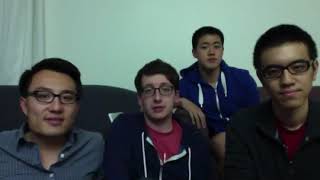
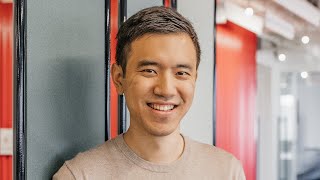
Stanley Tang, Co-Founder of DoorDash, finding great co-founders & making online delivery possible!
In this interview for the Legends and Leaders podcast, Stanley Tang, co‑founder of DoorDash, recounts his journey from a childhood fascination with computers to creating one of the world’s largest on‑demand delivery platforms. He describes his early tech experiments, the first money‑making experience with Google AdSense, and how moving from Hong Kong to Stanford gave him access to a community and project‑based classes that sparked the idea for DoorDash. Together with co‑founders Andy Fang and Tony Xu, Stanley identified a delivery pain point while interviewing local businesses, leading to a rapid‑built prototype, paloaltodelivery.com, that validated consumer demand. He details the scrappy early operations—manual dispatch via Google Voice, Square dongles, and daily purchases of prepaid debit cards—to learn logistics before building software. The trio’s complementary skill sets (logistics/tech, product design, and business development) and their habit of regular, informal founder meetings helped maintain alignment. Stanley explains DoorDash’s product philosophy, emphasizing the “atoms” (physical delivery) over “bits” (UI) and why the dasher and merchant apps were prioritized before the consumer app. He also shares the reasoning behind the DoorDash name and bullet‑train‑inspired logo, reflecting speed and reliability. Finally, he outlines the company’s long‑term vision: expanding beyond restaurant food to a full‑stack local commerce platform, adding categories like groceries, pharmacy, pet supplies, and exploring multimodal delivery such as drones, while building a comprehensive membership ecosystem (DashPass) that adds value across services. The interview offers insights into entrepreneurship, rapid experimentation, operational improvisation, team dynamics, product strategy, branding, and future directions for on‑demand logistics.
Chapters
Okay, so we have a new episode of Legends and Leaders, and today, it's great to have Stanley here. Stanley, you're somebody that's been behind really, an incredible innovation in food space and delivery space in the world with DoorDash. But you've also, like, made a lot of small businesses stay in business and still be successful. I mean, I'm not sure what they would be doing without the creation that you guys have really brought to the world. You know, started on Palo Alto and now has just been blossomed pretty much everywhere. And these small businesses, like, you know, part of the idea you guys had was trying to help these small businesses actually do delivery because they couldn't afford to have their own person, and that's been a huge revenue stream for them. So I'm excited to have you here and to get into your story.
Yeah, thanks for having me, Ben. Awesome.
So just kind of going back to the beginning. Like, how did your passion for technology, for entrepreneurship. I know you wrote, like, I think, a book pretty early on in your journey on this. This was something you were interested in a long time. How did this passion start?
Yeah, I think it goes back all the way to 1995, when I was just three years old. I remember my dad brought home our first ever computer. It was a Windows 95. And I remember just spending hours and hours just fascinated with this computer that I've never experienced before. And from that moment on, I just fell in love with technology. I learned how to build websites. I learned HTML how to code. I remember back in the day, this was when we were still using geocities. I don't know if you remember those days, but I would just spend hours and hours just building websites for fun. And I remember one day, this was 2005, I came across this program called Google Adsense, which is basically this advertising program that Google had where website owners can put ads on their website. If people clicked on it, you would actually get a revenue share or cut of the ad spend. And I decided to give it a shot, put it on my website, and two weeks later, I got my first check in the mail. And this was the first time I even realized that making money online or building businesses on the Internet was even a thing. And I think from that moment forward, I knew I wanted to get into the startup and technology and entrepreneurship world.
And you grew up, like, a lot of it, outside the US Right in Hong Kong. How did that kind of shape your access to building great companies and being around founders and really learning what to do? How did that shape Your overall vision of what you were going to build.
Yeah, honestly I think one of the reasons why I wanted to come to, to the US was because I knew if I wanted to get involved with technology, entrepreneurship had to be in Silicon Valley. And I was very fortunate. I got into my dream school at Stanford and I think really it was at Stanford that it provided me the platform to go on and eventually build DoorDash. And I would say there's really two things I think that Stanford really helped. I think first is it was just that community, people, people in Hong Kong, There wasn't really a people in Hong Kong. Growing up I wasn't really surrounded with tech or entrepreneurship. But at Stanford I was meeting like minded people who are equally passionate about entrepreneurship and technology. Ambitious, smart folks coming from all different backgrounds and disciplines. So it was just that amazing melting pot to, and it was a very fertile environment to meet your future co workers or colleagues, investors, and of course my co founders as well. That's where I met Andy and Tony. So I think that was really, really helpful. And I'll say the second thing about Stanford was that what was great about Stanford is that they had a lot of these classes that weren't just lecture based. Weren't these classes where you show up for an hour, listen to a professor talk and then go back to your dorm room? They had a lot of these project based classes where you would actually get together with a couple of your classmates, work on an idea or project or whatever you wanted for a quarter depending on the class. And that kind of gave you that hands on experience to actually build something and also experience what it was like working with folks. And I think that experience was super valuable. And so in a way like DoorDash actually came out from one of these class dorm room projects as well. So that was really what my life was like just growing up and being able to get to build this at Stanford.
Yeah, it's awesome that you realized this at a young age and then really made the move, came over to the US and got the opportunity. How did you meet your other co founders and what was some of these initial conversations like? Were you thinking about building a business together? Like how did it evolve into hey, we really need to build something.
Yeah, and he's in my freshman dorm, so I met him, met him there. Tony, I met him through, through, through, through class. I mean just at Stanford and we decided to, hey, we want to, let's work on a project together. So we decided I'll take this class together. That allowed us to work On a project. And the original idea was actually not to actually had nothing to do with food or delivery. It wasn't. We weren't even trying to start a company. It was really, we just wanted to get together and work on. And the project was really about, let's come up with some solutions that can help solve problems for small local businesses. So as part of that project, we would go and interview a bunch of small business owners all across the Bay Area. And I remember one day we walked into this macaroon store in Palo Alto called Chantal Guillaume. I sat down with the owner, Chloe. We started talking. And that was when she first brought up this problem around delivery. She was getting all these calls for delivery requests for her macaroons from her customers, but she didn't have any delivery drivers or staff available to fill these orders. And we heard the same thing from a coffee shop in San Mateo. We heard this from flower shops, boutiques, furniture stores, you name it. And of course restaurants too. And that was really the light bulb moment for us. It's like, wow, there's this massive opportunity around that's being unfulfilled, which is businesses are getting all these delivery requests. They see this as a great channel to grow sales beyond just the four walls of their store. But no one's doing this. Perhaps there's an opportunity there. Like, what if we can build a technology, software enabled delivery service that any of these businesses, when they have a request can just call up, we would be the ones to fulfill it. So that was kind of the genesis behind DoorDash. The way we went about and tried to start this was while we were just three college students. It's not like we have delivery drivers on staff either, or trucks or a logistics network or any of that. So instead we decided, okay, let's just run a very simple experiment and try to come up like what is like the most minimal viable version of this business we can build. And so the experiment was basically, okay, let's collect a bunch of restaurants that we liked in Palo Alto that didn't offer delivery, let's just put it on this one single page or the simple landing page, a one pager. And all this website said was if you want to order Delivery from these 10 favorite Palo Alto restaurants, called his phone number. And it was basically a Google voice number that ran the cell phones of all the founders. And that was it. And the intent was to actually see if people called his phone number. And if we got enough phone calls coming in, then perhaps we can. I mean, it wasn't A real service. It was just a data collection exercise to see how many phone calls we would get. And then perhaps if we got enough phone calls, then we'd. We can decide, okay, later on, hey, this is something worth doing. And we called this website paloaltodelivery.com so it wasn't even doordash. And so we built this website in about 45 minutes. And I remember after we put it out there, about an hour later, we got a phone call. Our phone rang. Someone somehow came across palotodelivery.com, no idea how, but he wanted. I remember exact order he wanted shrimp, pad thai, and egg rolls from this restaurant called Bangkok Cuisine. And the original script was we were supposed to tell this person, hey, this is just a research project. It's not a real delivery service. Thanks for calling. But I think in that moment, none of us had the guts to tell this person, this is not a real service. I mean, this guy seemed really, really hungry. So we decided, you know what? We will do the delivery. We can just place a takeout order on our end, get in our cars, drive to the restaurant, pick it up. And that was our first ever Delivery. It was January 12, 2013. And next thing you know, the next day, we got two more phone calls. The day after that, it became three phone calls, then five and 10. And next thing you knew, everyone in Stanford and Palo Alto was using palo alto delivery.com and we were just running around being the delivery drivers. And then that was when we knew we were onto something here, that we have to turn this into a business. And that was kind of how doordash got started.
So were you thinking at the time, Stanley, like, these are a lot of small businesses. Maybe they just don't really have many people interested in delivery. Like, they're small themselves. How much skill, really, even is there at this point? Because it's not like these are huge businesses, even in general. But it was just, I guess, a lot of validation you guys did to figure out that there was a real market here.
Yeah, I mean, that was exactly the idea behind palotodelivery.com was instead of trying to treat this like, okay, we got to. Let's spend six months or a year building this complicated logistics infrastructure and all that. Let's just try to break it down into a series of experiments. And the very first experiment was just, let's just test, is there even consumer demand for this? Let's just run an experiment called palo altodelivery.com, and. And see if people use it that's kind of how we built a lot of doordash. In a way, doordash is just, if you think about it, it's a collection of a ton of these experiments that we're constantly running. And it's all about, let's think through what is the most, again, the most minimal viable version of the product you can build. Let's just be scrappy, be resourceful, hack things together. And then once you learn how to do these things in kind of this, in this, like, hacked, this hacky, operationally heavy manner, then go automate and scale. And so it's really that process of rinse and repeating. I remember in the early days, we didn't have all the dispatch was done manually. We just asked all of our dashers to download. To find my phone or find my friends on their iPhone, we would dispatch by texting them through Google Voice. We would use these square dongles that you can plug into your phone to kind of charge because there's no way to pay for the food online. It was just a phone number. So we would ask our dashes to download square and use these square dongles to charge. And also even things like, well, how do you. How do you pay for the food at the restaurant if you're a dash? And, well, in the beginning, it was the founders, we were just using our personal credit cards. But then once we started onboarding other folks that weren't just us, well, how do you get these folks to pay for the food? We weren't going to ask them to use their credit cards. So we decided, well, you know what, we can go to Walgreens and actually buy kind of these prepaid debit cards, where essentially it's just debit cards you load up with cash, and we'll just buy a bunch of them and then just hand out these prepaid debit cards to our dashers and then pay through that way, and then we'll just give them a new one every week. And the funny thing is, we didn't realize that you actually can't use a credit card to buy one of these debit cards. You actually have to use physical cash to do it. So we would just go to the ATM machine every day, withdraw a bunch of cash, go to Walgreens, buy all the debit cards, and then the next day we did the same thing again. And we would just do that every single day for months and months. And so I'm sure it raised a couple of suspicions among the Walgreens staff to see a bunch of young college Kids just coming in with a bunch of cash buying debit cards. But that's kind of how that's what it took to build DoorDash. And through that process we learned how dispatching works, you know, learn the ins and outs of logistics and then build software and technology automate and scale.
I mean, so you've had like a really great, you could say like a partnership with the other co founders. Like you guys have complemented each other well. How, like how was it from a skill set standpoint initially how you guys complemented each other? And how has that kind of changed, Stanley, as DoorDash has evolved, as you guys have evolved as entrepreneurs, as business leaders, you know, today.
Yeah, I mean, I think it's. I think we were very lucky that the three of us, myself, Andy and Tony, like we worked really well together as a founding team. And the reason is because the three of us had perfectly complementary skill sets that didn't overlap, that kind of perfectly non overlapped in a way. And that was really helpful because it was very natural what our roles and responsibilities were from day one. You know, like for example, Andy, he's like the logistics tech guy that figured out built all the back end for us. I was the consumer product design person that was figuring out what the user experience and the product should look like. And then Tony basically did everything else from selling restaurants to fundraising to business finance strategy. And so it was a very natural fit. And I think, and I think that was really why the three of us worked really well together. Because the thing I see a lot in founding teams is just tension happens when two people both think they have the same job, they both think they own this one area. And I think that's really where tensions happen. So just having that really clear division of roles and responsibility I think was really important. And for us, we were in a very fortunate situation or complimentary situation where that was very natural to us. We almost didn't even have to talk about it because it's just how naturally the three of us fell into our world. So I think that was really helpful. And I'll say that the second thing is really just communication, just like constant open communication. So I think something we did as founders was we would get together every weekend. We called it like founders, kind of our weekly founders meeting. This happened outside of work. It wasn't part of our day to day work meetings. And it was just an opportunity for the three of us to spend time just to talk through all the issues both in our personal lives as well as how we feel the company's doing, the direction of the company, what are all the issues, people, challenges, all that, but just like a kind of the slight opportunity to. There was no particular structure to it, but this opportunity to just talk things, talk things through outside of work, and I think that was really helpful. And we kept that going for a really long time. Even up to this day, we still do that. We don't do on a weekly basis. We do it on a monthly basis, but it's still the same thing. Like, the three of us, we just get together and just talk through all the. All the. Everything that's going on at DoorDash. So I think having that open communication, knowing where each of us stand and are thinking, are feeling, I think that's super, super critical to building a. Having a functioning, healthy founding team.
Yeah, that's. That's really great that you, like, have this time outside of work, too, with, like, without the kind of pressures that you just get together and just go through everything. I mean, it's like a real friendship. Exactly.
Yeah. Yeah, totally. Building the company, like, is what enables, like, the friendship to happen. Right. I think that that's because you just go through so much together. Definitely.
So, I mean, if you had to, like, look, Stanley, at the way your app has evolved because the app is, like, such a central piece of what you guys do, what would you say have been, like, the most important breakthroughs or just innovations you've added to your app that have, like, really pushed DoorDash to a different place and to the scale that it has today?
That's a great question. The most important thing is really to understand what your product is. And what I mean by that is like, for example, like, very early on, we recognized that product for DoorDash means something very different than what product is at Perhaps, like a SaaS company or a social media app. Whereas for those guys, the product is more about the user interface, the pixels on the screen, the buttons, and how easy it is to use things like that product for us is a physical delivery experience. Literally, does the food show up in the real world? So knowing. Are you in the business of. Are you in the bits business or the atoms business? And we're in the. The business of moving atoms around. So I think understanding that is super, super important. And I think that pretty much dictates your product strategy and product approach, because I remember one of the very first decisions from the early days was deciding. So at that point, we had DoorDash.com up and running, but it was just a website. We didn't have a mobile app or anything like that. So one of the key decisions we had to make early on was, well, which mobile app do we build first? Do we build the consumer app, which is the app that allows the ordering, the ability for customers to place orders, or should we build out the Dasher logistics app, which is the ability to dispatch things to our dashers and route more easily? We made the decision that we have to build the Dasher app first because for us it was, you know, very clear that the experience was it doesn't matter how good looking or slick your app is. If the food never shows up, it doesn't really matter. App to make it so that's really easy for dashboard to accept orders and route them and make their job easier. And also the merchant app too. It's like the building up like gray merchant integration so that's easy for them to accept orders so that we minimize that food preparation time to minimize that, you know, the, the, the minimize like mistakes or missing items and things and things like that. So spending. We spent a lot of time just building out kind of the backend, kind of the behind the scenes. Right. Especially with like our dash and merchant side and of course eventually built out the consumer experience too. But I think that was really, that was really like how Doordash is run is really like we spent a lot of time making sure the things like the actual logistics building products improve the actual logistics experience, not just like, hey, we got to make a really slick ordering app.
Yeah, it's amazing that you guys put so much focus on, you know, the people using your platform that you kind of don't think about.
Right.
Like initially, like a lot of people think about Doordash is like from the customer side mostly, you know, but like you're talking like majority of what you talked about was on the opposite of that and that's where you place your energy.
Exactly. This is also what makes Doordash super complicated. We're, we're not, we don't just have one customer or one constituent to serve. We're a three sided marketplace. We have consumers, we have dashers and we have merchants. And you ought to build the products for all three audiences for this to work.
So you have a name that implies speed.
Right.
Doordash, your logo I think was inspired by a bullet train as well. So there's this speed element. I mean a lot of times people talk about brands and they say the logo does matter. Doesn't matter. Give it your own meaning. How important do you think your name and your logo Is to people choosing Doordash is like their option because they think speed right when they choose you guys.
Well, I could tell you how we named the name and then I could talk about the logo. I mean the name. Like, I think we picked DoorDash because we knew we didn't want to just limit this to being a restaurant delivery company. I mean we knew from the beginning, fairly early on that the potential behind this was you can like we start with restaurants, but once you have the fleet and logistics in place and the network in place, well, you should be able to deliver anything right from any local business. So we intentionally picked the name that didn't limit us to just food or restaurants. So that's kind of how DoorDash was like a great. It was a name that was available, the.com was available. So we went ahead and snatched that up. And then the logo was really inspired by me thinking through, okay, like what do we want the DoorDash product? What values do we want the DoorDash product and brand to aspire to become? And so I was actually born in Japan and so one of the things that really inspired me in my early days in Japan was just taking the Japanese bullet train. And when you think about what DoorDash is like, DoorDash is. It's a utility, it's a logistics service. It's about getting your food on time, accurately, efficiently. And what is a utility service that is like when it comes to being like world class. And in terms of accuracy, efficiency, speed, what comes to mind. And for me the thing that came to mind is the Japanese bullet train, the Shinkansen, and it's known to be the most accurate transportation network in the world. It's futuristic, modern, slick, clean. And that's really what we wanted Doordash to aspire to become is to be known as that for logistics. So the D is basically just a. It's basically we look at the bullet train from like a cross sectional view. Like looking at, from the side, it's shaped like the letter D. And so that's kind of what the logo is based out of, is really what do we. What do you want? What do you want? DoorDash, what do we aspire Doordash to become? And. And we were inspired by the bullet train.
Yeah, I definitely like the meaning and I think that it's important to focus on speed in this category through all types of delivery, regardless of restaurant or not. Just the last question I have, Stanley, what's your big picture vision now? I mean delivery? You just recently did a Partnership on multimodal delivery with Wendy's and Wing. And you're trying to really focus on the potential drone delivery and the future of this space. Where do you see this space going? What do you hope to accomplish now, let's say over the next five to ten years?
Yeah, I think, I mean for me it's like it almost feels like we're still very early on in our journey at doordash. It's like building out food delivery is like the way I think about it is almost like it's just a first step, it's just an enabler or like a Trojan horse to allow us to build out our logistics fleet, build out our dasher fleet, build out our platform. But then once that's built out, like, why limit it to just restaurants? You should be able to add many other categories. Customers don't just want if they have the choice. I'm sure they don't want to just have food to be the only thing or restaurant food to be the only thing delivered to their house. What else can we deliver to their homes in a way that could save them time and offer them convenience? So thinking through what are the other categories? So for example, we launched convenience as a category a couple years ago. We launched grocery as a category and then just thinking through like, okay, what else do customers want? We also recently added like retail pharmacy, pet supplies, things like that. So it's really about building the opportunity to build this platform that can connect any local business in your city to any consumer in your city. I think that opportunity is just massive. And I think the other thing is really about adding use cases to doordash delivery. Again, it's just like how customers don't just want restaurant delivery or restaurants to be inactive, just restaurants businesses, but any business. Well, delivery is not the only way to interact with a business either. Like there are opportunities to, you know, sometimes they just want to, they're on their way back from work, they just want to pick up the food along the way. So let's just build pickup. We have a membership program called DashPass. The way we think about it is, well, how do we add more value to this membership program so that you're not just getting discounted or free deliveries on DoorDash. It's all about like, how do you build this kind of membership that brings you more and more value over time? Perhaps you get discounts by dine in at the store. You might even get a discounted Lyft rides. That's one of the partnerships we announced. Or even free streaming on hbo. So really building out this super comprehensive, basically the world's most valuable physical membership program. Like how. And so that it's not just. You don't just think of. When you think of DoorDak, it's not just delivery from restaurants, but you can connect with businesses in all sorts of capacities and you get all sorts of benefits from it. So those are so, so, so that's what's super exciting, right? It's, it's like we have this opportunity to build this. It's almost like this like local commerce platform that one day should connect you customers with any customer of any businesses. And we should be able to interact with these businesses not just through delivery, but through all sorts of channels. And that's really the big vision we're going after.
Well, it's definitely exciting and I see how it can really work out. Stanley, I appreciate you taking the time and doing this. I think what you've done already is pretty impressive and it's changed the entire space. I mean, I'm not sure what food delivery currently, but now all delivery would really look like without the speed, convenience and just the technology you guys have built from both, both sides, which you really talked about here a lot. So I look forward to what's next and the continued success here. And thanks for coming on.
Yeah, thanks for having me, Ben.
More from Stanley
DoorDash Co-Founder Stanley Tang on founding story, lessons + First-time fund manager panel | E1759