Stanley Tang (Founder of DoorDash) - Z Fellows Startup Workshop
In this Z Fellows Startup Workshop, Stanley Tang, co‑founder and CPO of DoorDash, recounts the company’s origin from a dorm‑room experiment called Palo Alto Delivery to a public multi‑billion‑dollar platform. He emphasizes the “do things that don’t scale” philosophy: building ultra‑manual, low‑tech solutions (landing‑page sign‑ups, prepaid driver cards, phone‑order placement, handwritten apology cards) to learn the real problems before automating. Tang shares concrete anecdotes—first order via a Google Voice number, scaling driver dispatch with Find My Friends, buying prepaid cards with cash, a rain‑driven order surge that revealed the need for a kill‑switch and dynamic pricing, and a night of door‑to‑door apologies that cost a large portion of early YC funding. He explains how this manual‑first approach persisted in later products such as DashPass (manual email‑beta, manual Stripe charges) and enterprise dashboards (hand‑crafted PDFs for Taco Bell). The talk also covers how DoorDash balances Wall Street quarterly pressures with long‑term experimentation, the cultural importance of keeping unscalable practices alive even at scale, and advice for founders to treat early projects as experiments rather than full‑scale launches. The session ends with a Q&A covering recent experiments, enterprise applicability, and scaling the “unscalable” mindset.
Chapters
Thank you all for coming. We have Stanley to my right, who will be joining us shortly. He's going to give a quick talk about kind of doing things that don't scale. And then from there we'll make it pretty interactive and we'll have a bunch of time for questions. Stanley and I met a very long time ago. I think I was a senior in high school. Stanley was a freshman here. And through an event very similar to this that Stanley attended, he was part of bases here, graduated nine years ago.
2014.
2014. And so I'm super excited that he is spending time with all of us. I think everyone knows what Doordash is and everyone knows who Stanley is. So with that, Stanley, thank you for spending time with all of us.
Thank you. Awesome. Well, thank you. Thank you for having me. I mean, it's good to be back here on campus. As Corey mentioned, I was here from 2010 to 2014 and I was actually in my junior year when I started Doordash right down the street. And it's just been an incredible journey. And I was asked to come in and share kind of our founding story of how we started from kind of our dorm room project to where it is today. But first, I actually wanted to share with you the story of a slightly different company instead of DoorDash. So 10 years ago, there was a OSO food delivery service that was launched on campus, also started in a dorm room. And that company was called Palo Alto Delivery. And I wanted to share with you that story first and hopefully kind of highlight kind of the entrepreneurship journey of how we eventually got to DoorDash. So the story began actually in the fall of 2012. So I met Mike actually was through one of the classes here at Stanford. It was called Startup Garage, where I actually met my future co founder. So Andy and Tony. And at the time, we actually weren't really looking to do a startup. Actually we weren't even looking even in a project in the food delivery space. I think the three of us, we were actually exploring a very different idea around for a class project around building software for small business. So at the time, Tony just wrapped up his internship at Square. So he had a lot of experience building stuff. That's what these local businesses actually need. And so we went back and I remember going back to we sort of huddled and said, I think there's something here. Except there's one problem. We don't have a delivery service. We're just three college students. Not like we have trucks lying around and this delivery infrastructure. And we didn't even have the technology. We certainly didn't have the technology built. So how can we offer this to these businesses when we don't even have a delivery service ourselves? So what we did was, so instead of trying to think of this as, okay, we got to spend like 6 months, 12 months building this whole infrastructure out, then try to pitch this through businesses and small businesses and restaurants and the macaroon store and so forth on this idea. What if we ran an experiment instead? And the experiment we wanted to validate was, is there consumer demand for delivery? Maybe. It turns out none of these delivery services exist because it's such a niche thing. None of these, maybe customers don't actually want delivery. How can we validate that? And we thought, okay, well, what if we can validate this by just building a landing page? And all this landing page said was, hey, if you're interested in ordering delivery from these places, call this phone number. And the idea behind his landing page was basically to see if people landed on this website, will they call this phone number? And if we got enough people calling in to this phone number, then maybe we can go back to the restaurants or the businesses and kind of see if we can start some sort of deal. And so we decided to start with the landing. Okay, let's start with the landing page. We picked restaurants to begin with because we thought, okay, what's the most obvious thing to deliver that people would use frequently? It's food. Most places in Palota, at least back then, did not offer delivery. So we thought, okay, why don't we go find our 10 favorite restaurants in Palo Alto that don't offer delivery? We'll go find their menus online, we'll put it into these PDFs, put it on this website. And basically they wrote, if you want to order delivery from these 10 restaurants, call this number. And it was basically a Google voice number that ran all three of our cell phones. And the idea is, again, it's like, we'll call in, see how many phone calls we'll get. And if we have enough phone calls, then we can say, hey, this is a success. And honestly, there wasn't any plan beyond that. It was really just to collect data. And we spent an afternoon, I remember, in one of the classrooms here. Took us maybe like an hour to make this website. It was probably one of the ugliest websites I've ever made in my life. And all this. And just to kind of show how little thought we put into it, we didn't even bother coming up with a name. It's like, okay, what's the name for this? Well, why don't we just call it palo alto delivery.com, right? And it happened to be available, so we registered it. We put this website out there and kind of went back to our dorm rooms. Honestly, we kind of forgot about it. It was a Saturday. We kind of went back. And then, I remember an hour and a half in, our phone rang and we picked up, and somehow this person. This person called and said, hey, this is Palatal Delivery. Somehow this person found out about this. No idea how, because we haven't told anyone about it. I remember exactly the exact conversation. He called in and said, hey, is this Palato Delivery? I saw your website. I'm hungry. I want to order Thai food from this place called Bangkok Cuisine. I remember his exact order. He wanted shrimp pad Thai with egg rolls. And he said, can you deliver it for me? And originally, the plan was, like, I said to kind of tell them, oh, this is not a real delivery service. This is just a Stanford class project. We're just gathering data. But it seemed like this person was really, really hungry. And no one really had the guts to say, oh, I certainly wasn't the one that's going to tell them, hey, this is not a real service. And neither did my two co founders. So we decided, you know what? It's just one delivery. We don't have anything better to do. We're just doing our homework. But why don't we just. We can just go do it ourselves, right? We can just place an order with the restaurant, pretend it's like a takeout order, get in our cars and just go do the delivery. And I remember Tony again. He just finished his internship at Square. He had tons of these Square readers lying around where you can just like. And he had a Square account. So we can just easily charge, you know, just have him swipe the credit card and charge for the order. So we thought, okay, why don't we just go do this order? And so we got in our cars, drove to Bangkok Cuisine, picked up the food, and drove it up to. Up on. I think he lived on Alpine Road. We drove up there, and that was our first ever order. This was January 12, 2013, and the crazy thing started. Well, what was crazy was the next day we got two phone calls. So they picked up. Okay, it's just two phone calls, two orders. Why don't we go do it ourselves? Place to take out our garment cars. And then the day after that, it became 3, and then 5, and then 10, and then 15 and next thing you knew, our phones were just blowing up left and right. And again, none of this we were expecting. We were kind of, this was just meant to be a data collection exercise. But as the phone started ringing, we kind of just went with the flow and we kind of figured things out on the fly. So I remember we would, we would, you know, we would be sitting in class, our phones will be ringing, we have to get out of class, you know. You know, and drive to restaurant. And then we started figuring out, okay, like, one of us needs to be like the dispatcher, you know. So we started having a schedule on, like, who's going to take calls and who's going to drive. And then we started recruiting our friends to start driving for us. And in order to coordinate everything, we, we had everyone download Find My Friends on their iPhone. So then we kind of see everyone's location. And everything was manual, like zero software. It was Google voice, find My Friends square to kind of take the payment, Google sheets to kind of track all the orders. And we kind of figured, we kind of figure things out as we went. And it was kind of this idea, and that was kind of really, the big learning we had was really this idea of what one of our mentors, Paul Graham and YC taught us, which is this idea of doing things that don't scale. Don't try to think about building everything out first and then launch. Instead, try to do everything manually first hack together things, because chances are you're not going to know what you need to build unless you do it first. And we had no idea how to take orders through and place the restaurant. We had no idea how to do dispatch or figure out how to coordinate all these drivers and things like that. And when to send the driver to the restaurant. You got to time it when the food's ready. Where are the different parking spots? How do you deal with different. All these things we only knew because we were the ones doing it and we were doing everything manually. And then only once we started figuring out how to actually do it and make it work, then we built the product to automate it. So everything was extremely manual to begin with. I mean, even the name we didn't come up was kind of a quote unquote unscalable name. And I'll kind of give you three examples of doing things that don't scale. So the first thing was, one of the things we started running into was how do you actually. So in the beginning when we were the ones placing a takeout order, we would show up at the restaurant, we would just use our own credit card and pay for the food. And knowing that the customer. We're going to charge the customer later through Square. But once we started recruiting people that weren't us delivering the food, like, how do. We can't just expect these college students to put everything on their credit card and then we'll pay them a week later. So what was kind of the solution? So something we realized was, okay, what if we, you know, instead of. What if we just gave them credit cards instead? Right, but not our credit cards. But we can actually go to Walgreens and CVS and buy, I guess technically they're not credit cards, but buy these kind of debit cards, these prepaid. You can kind of buy these debit cards. I don't know if it's called debit cards, but these prepaid cards where you essentially load them up with money, $1,000, $2,000, and then we'll just hand it out to our drivers. And that ended up being the way, in the early days before we had integrations with all these restaurants, the driver will show up with one of these prepaid cards and actually pay for the food. Then eventually we automated it. Now we have integrations in place with restaurants. We do kind of ach treatment. But in the early days, it's like instead of waiting to build all that out, we can just go to Walgreens and buy a bunch of these prepaid cards and just give it to our driver so then they can just start driving tomorrow from all these before we even had these integrations. So that's what we did, like every night. So you actually can't buy these cards with another credit card. You actually have to show up with cash. So literally every day, we actually would go to our bank account, withdraw thousands of dollars in cash, show up in CVS and just buy a bunch of these cards. And you can imagine, and we're doing this every day. I'm sure it didn't look sketchy at all to see the same group of college students come in with cash and just buying boatloads of prepaid cards every single day. But that's what we did, and that's how we learned how payments worked. The second story is I remember it was a. This was a couple months into our launch, and I remember at that point the website was a little bit more built out. All the payments were done through, through the website, but everything was still hard coded. So it's basically essentially just a form with a credit card link. And then once the order came in everything. Behind the scenes, we were still manually processing it and it was a hard coded. We just told everyone, hey, order, it's 45 minute delivery. Everything was just hard coded. And I remember this is right after when school reopened in the fall. It was the first Stanford home football game of the year. And it was pouring rain that day. And for those of you who don't know when the weather is raining, when the weather is bad, that's when delivery volume spikes. And that was the first time where our delivery volume just kind of spiked through the roof. And I think we were just completely unprepared. We were used to doing maybe at the time like 100 orders, 80 to 100 orders a day. I think that day must have been 3, 4, 500 orders worth of volume. We didn't have the drivers in the system, enough drivers on the road to handle everything. And the problem was because everything was hard coded, we couldn't stop the orders from coming in. So orders kept coming in. And there was actually no way of shutting down the site or killing the site because we haven't built that because that's never happened before. And I remember again, we had these roles where one person, a couple people will be at, you know, quote unquote, like hq, which is basically a house that we rented down the street. And they're supposed to be manning the phones, handling all dispatch. But because we were so short staffed, like I remember at one point there was literally nobody in the house. Like everyone was out doing deliveries. We were completely crushed. And that night just ended up, you know, being a huge disaster. I remember like almost every single order was late by two or three hours. And finally, once everything kind of wrapped up, we kind of gathered and we kind of reflected what just happened, I think. And again, there's two kind of things we ended up doing. First is, well, we realized we have to build a kill switch and we had to have dynamic ETAs and pricing based on how much demand you're getting. We would not have known that if we didn't experience it ourselves. And then I think the second thing is we decided, okay, we're actually going to write handwritten cards to every single person whose order was late by over an hour. And then we also baked cookies ourselves that night. And we actually went and door to door to every single one of our customer and apologize for our order being late with a handwritten card with cookies and chocolates. And we also decided to refund everyone's order for those who were impacted. Everyone's order that night. And that was a substantial. It was a pretty pivotal moment because it was, you know, it was actually a pretty substantial part of our bank account. It was about you know, probably like 30, 40% what we. What we raised for, you know, from our YC money. And. But we decided, hey, this was the right thing to do. And we were just going to go door to door and do this, you know, one on one. And, you know, and, you know, it wasn't like a financial thing that, you know, we didn't have. We weren't, like, thinking about, like, ROI or is this worth it? We just did it because we thought that was the right thing to do. And again, that is something that a big company can't pull off. It's only a startup that can pull this off because they are allowed to do things that don't scale. And that eventually this idea of customer love became ingrained in the. What if we just gave them credit cards instead? But not our credit cards, but we can actually go to Walgreens and CVS and buy. I guess technically they're not credit cards, but buy these kind of debit cards, these prepaid. You can kind of buy these debit cards. I don't know if it's called debit cards, but these prepaid cards where you essentially load them up with money, $1,000, $2,000, and then we'll just hand it out to our drivers. And that ended up being the way, in the early days, before we had integrations with all these restaurants, the driver would show up with one of these prepaid cards and actually pay for the food. Then eventually we automated it. Now we have integrations in place with restaurants. We do ach treatment. But in the early days, it's like, instead of waiting to build all that out, we can just go to Walgreens and buy a bunch of these prepaid cars and just give it to our driver so then we can just. They can just start driving tomorrow. And from all these, before we even had these integrations. And so that's what we did, like, every night. So you actually can't buy these cards with another credit card. You actually have to show up with cash. So literally every day, we actually would go to our bank account, withdraw thousands of dollars in cash, show up in CVS and just buy. Buy a bunch of these cars. And you can imagine. And we're doing this every day so that they. I'm sure it didn't look sketchy at all to see the same group of college students come in with cash and just buying boatloads of Prepaid cards every single day. But that's what we did and that's how we learned how kind of payments worked. The second story is I remember it was a, this was a couple months into our launch and I remember at that point the website was a little bit more built out. All the payments were done through the website, but everything was still hard coded. So. So it's basically, essentially just a form of a credit card link. And then once the order came in, everything behind the scenes, we were still manually processing it and it was a hard coded. We just told everyone, hey, order, it's 45 minute delivery. Everything was just hard coded. And I remember this is right after when school, school reopened in the fall. It was the first Stanford home football game of the year. And it was pouring rain that day. And for those of you who don't know when the weather is raining, when the weather is bad, that's when delivery volume spikes. And that was the first time where we, our delivery volume just kind of spiked through the roof. And I think we were just completely unprepared. We were used to doing maybe at the time like 100 orders, 80 to 100 orders a day. I think that day must have been 3, 4, 500 orders worth of volume. We didn't have the drivers in the system, enough drivers on the road to kind of handle everything. And the problem was we, because everything was hard coded, we couldn't stop the orders from coming in. So the orders kept coming in. And there was actually no way of shutting down the site or killing the site because we haven't built that because that's never happened before. And I remember again, we had these roles where one person, a couple people will be at quote, unquote like hq, which was basically a house that we rented down the street. And they're supposed to be manning the phones, doing, handling all dispatch. But because we were so short staffed, I remember at one point there was literally nobody in the house. Everyone was out doing deliveries. We were completely crushed. And that night it just ended up being a huge disaster. I remember almost every single order was late by two or three hours. And finally once everything kind of wrapped up, we kind of gathered and we kind of reflected what just happened, I think. And again, there's two kind of things we ended up doing. I think first is, well, we realized we have to build a kill switch and we had to have dynamic ETA's and pricing based on how much demand you're getting. We would not have known that if we didn't experience it ourselves. And then I think the second thing is we decided, okay, we're actually going to write handwritten cards to every single person whose order was late by over an hour. And then we also baked cookies ourselves that night. And we actually went and door to door to every single one of our customer and apologize for our order being late with a handwritten card with cookies and chocolates. And we also decided to refund everyone's order for those who were impacted everyone's order that night. And that was a substantial, it was a pretty pivotal moment because it was, you know, it was, it was actually a pretty substantial part of our bank account. It was about you know, probably like 30, 40% what we, what we raised for our, you know, from our YC money. And but we decided, hey, this was the right thing to do. And we were just going to go door to door and do this, you know, one on one. And, you know, and, you know, it wasn't like a financial thing that, you know, we didn't have. We weren't thinking about ROI or is this worth it? We just did it because we thought that was the right thing to do. And again, that is something that a big company can't pull off. It's only a startup that can pull this off because they are allowed to do things that don't scale. And that eventually this idea of customer love became ingrained in the doordash culture, you know, because, you know, that was. And because of that, because of that incident. So the last thing, last story or last example I want to share of doing things I don't scale is this product or this project we worked on where. So in the beginning, the way, I don't know if folks know, but in the beginning we hacked everything together. The way we would place an order with a restaurant. It was literally one of us just making a phone call, pretending to place a takeout order. And again, we're taught to do things that don't scale. And we thought, okay, well, we'll just do this for, I mean, we'll just do this for now. I'm sure down the road we would figure out how to integrate with them. Eventually we'll give them iPads or integrate into their point of sale or whatever it might be, but for now we'll just place phone calls. That should work. It'll probably last maybe six months, 12 months tops. And then eventually we'll build the product and technology for it. And fast forward 10 years later, believe it or not, we still do that to this day. We still have people placing phone calls that never Went away. And what ended up. Basically what ended up happening was it turns out the pace at which DoorDash was growing was just outstripping our ability to integrate with everyone again. But instead of saying, okay, we're just going to slow down and just wait until we built everything out and scaled it out and integrated everything before we grew, we kind of just kept going. We wanted to see how far can you really push this idea of doing things that don't scale. And it turns out you can push it very far. And what ended up happening was we just figured out how to scale the order place. The human order placing system. Initially it was like three of us placing orders and became 5, 10, 20. We built tools around it so that 100 of us can all place orders, 200 of us can all place orders. And I think over time, we built up this network of. I think at our peak, we probably had 8,000 people every day, every night, all they did was just call in and place orders. And we had all the systems and tools built out to handle that. And that has scaled even to this day. And we're public company, we're doing over 2 billion orders a year. And we still do that. We still have these people placing orders over the phone. And it turns out the biggest. The takeaway from there was it turns out doing things that don't scale is actually much more scalable than you think. I would argue even to this day, a lot of the things we do at Doordash are things that, quote unquote, are unscalable. And that ethos never went away. It's not like all of a sudden you're a big company and you have to start doing scalable things. You just keep. If the unskillable things are working, you just keep doing it. And it kind of forces, you know, instead of it kind of forces you to prioritize, like what actually needs to be automated and what doesn't. And sometimes the unscalable solutions are actually more scalable. And that's really how we operate DoorDash. Even to this day. It's very much a culture of experimentation. It's. Whenever we start new things, it's always in the beginning. We kind of go through the same process where people hack together things, maybe someone would, either through our existing systems or through spreadsheets or whatever it might be. And then once you kind of validate it that this thing works, then you kind of start automating and also what to automate. And the only way to know what to automate is because You've done it yourself manually. And that's pretty much how DoorDash works. Even to this day you can think of DoorDash as just this one company, but underneath it's just a thousand little companies or a thousand little experiments. Five or ten person teams all trying to, whenever they start new projects, they're all having, hacking things together, doing these unscalable things and then we'll kind of repeat the process. With all these initiatives, the ones that we see traction, we'll get more funding and we'll provide engineers and product support and automate. And the ones that don't work out, that's fine. We'll just have them move on to the next set of experiments. It's just a very low cost way of trying out many, many ideas at once. Instead of trying to build the perfect thing, trying to build the perfect scalable solution, launch it and only to realize nobody wants it. So that's it, that's my story and I'm happy to take questions.
Yeah, what's a recent experiment you ran.
Started on and now have automated exciting new feature. Feature. Feature. Yeah, there's, there's so many, um, I'm trying to think of it. I mean I, I'm trying to think. I mean there's some very recent ones and then I mean maybe I could give you two examples. Right. I think the first is maybe is a little older example. So it's our Dash Pass subscription product. So it's basically the way you think about DashPass is basically like, it's like Amazon Prime. It's like you pay one. Yep. Thank you for being a DashPass subscriber. But the original version of DashPass was actually not, was actually manual. So we had this idea of like a subscription program but instead of like building everything else, one of our, someone on our team basically said, well, let's try to validate this first. Let's run an experiment. So what they did was they sent out an email blast. We kind of like picked a specific segment, specific geography. We found like 1,000 customers that we think would be eligible. Good. Kind of, I guess beta testers for DashPass email them and basically say, hey, we're launching this new program called DashPass and what do you want to be part of the beta trial? The way it works is you're going to pay a flat fee every month and in exchange you get free deliveries for that month. And we were able to send out different versions. Like some people got like the $10 per month version, other people got the $15 per month you know, like, and it took maybe literally just an afternoon. And then people started emailing back and basically email said, if you, if you're interested, just respond to this email. And it was just an email inbox we set up and people started emailing back and hey, we're interested, I'm interested in programming. They said, okay, no problem, we'll. Basically what we did was we would just manually charged a credit card. We literally just went into Stripe, looked up their account and the person just charged $10. And then we would add them to this white list where they get free deliveries. And then we would just run that for a month and then just see, okay, what is their order and behavior, their retention rate? Does unit economics make sense? It was all manual and, and zero engineers involved. And only once we validated, okay, this thing works. This is the right price to charge it at in order for one of these subscription programs to work. It's kind of delicate. You can't just have. You got to find the right price and the right kind of model where it's not just your power users using it. Because if only your power users are using it, then the economics don't work. You actually have to find the right balance. But because he was doing all this manually, you can just run literally 10 versions of DashPaths at once. And then we figured out what the one that worked, we fine tuned it over the next few months and then we went and said, okay, let's put two engineers on it and build it. So that was kind of the. And actually most of our projects or products, you know, start, start out like that.
Yeah, I guess I have two questions. Like feel free to answer either. The first one was like, when you were building this, was there like any point where you were like, oh shit, like I don't think this is going to work. And then the second question is that like you mentioned things are like that you mentioned like this idea of do things that don't scale. But like let's say you were tackling like something that wasn't like a consumer facing product, where it might have been a little bit harder to like, like let's say you were taking on like an enterprise solution or something which would have been like a little bit harder to like create a solution that was more hacked together, more manual. Like your thoughts on the idea of like applying the same like mindset or philosophy of that.
Yeah, yeah, I answer both questions for a question. First question is was there a point where I felt like this wasn't going to work? Yeah. Literally every Single day. It's like, it's like. Like, here's the thing I learned about startup, the startup journey. Is it only. It's only obvious, looking back that, oh, this was going to succeed. It's never obvious in the moment. And there's never. It's not like a binary thing. It's not like, oh, you reach a point and say, okay, doordash succeeded. It's like every day and succeeded and say, oh, it was so obvious. It was unlike those moments. It's like every day it feels like you're just firefighting. Things are going wrong constantly. Deliveries are late. I gave the example kind of the Stanford football game, but there's probably 100 of these that happened over the. If not thousands of these happen that happen over the course of the years and, you know, different versions of it. So it never feels like this thing is. Was. It always felt like this thing that the wheels were kind of falling off. But then if you. It never feels like this thing is working in the moment. It's only like when you sit down and kind of reflect, it's like, oh, wow. Like, you know, we've come a long way. Like, it's like we, you know, we've like every single time one of these kind of Stanford football game instances happened, we made the product a little bit better, right? And then the next time something goes wrong, we made that a little bit better. And it's like, it's all like, very, very incremental improvements. And then over time, it kind of compounds. Right. And then you look back and it's like, oh, wow, this is like a completely different product. We've kind of built it out. So it's. It doesn't. It's only. You can only. I can only answer that question looking back, but never in the moment. And your second question is like, does this scale to. Does this idea of doing things that don't scale scale to, like, enterprise customers? Yeah. No, I mean, it's. Yeah, I mean, it's similar. Like, because I think in 2015 or like two years in, we started transitioning or I guess started focusing on kind of the bigger restaurants. So before it was mostly mom and pop small businesses. And then we decided, okay, we also have to go after the big guys. You think of it as. So for us, that would be like the national chains like McDonald's, Cheesecake Factory, Chipotle, et cetera. One of our first customers was Taco Bell. And it's kind of similar. It's like in the beginning, I think what they wanted was they were a little more sophisticated. They wanted analytics, they wanted to see on a store level what was going on with the doordash partnership. So then they can figure out, ok, what percentage of my volume was delivery versus non. And you know, they wanted kind of like what the consumer behavior was. They wanted to do all that comparison. And then our head of biz devs, you know, was negotiating, they said yeah, of course we have all that for you. You know, it's part of our enterprise package. And then he came back and then, and then when he came back and said, oh, we just signed up Taco Bell, but I may have accidentally promised them something we didn't have. And we're like. And I was like what the hell? Why did you do that? But, but again instead of like building that out, like building out that whole, like, we didn't have a merchant dashboard, any of that today we have that, we have like a dashboard analytics, all that. But we didn't have it. We didn't like there was literally no way. There's not even a place you can log in. As for the, you know, like, like, like, like, you know, like the way you're like, you sign for like a square account, you can login, right. We didn't have any of that. So we just did it manually. So basically every someone went into I think one of our, what we were using back then, it was not tableau, but like a tableau competitor. And basically they would just manually generate these graphs put into a PDF and then just every week they would kind of just manually crunch numbers and then send it out to Taco Bell as if. So then it kind of, from their perspective, it kind of looked like they were kind of getting what they wanted. And we kind of formatted it in a way where it looked like it was almost like a real dashboard, but not quite. And then again it was through that process we didn't know what anabolics we should be surfacing to them. But because you can just iterate much quicker when you're doing these things manually. And eventually obviously we built everything out. We built point of sale integration, but none of that. Even with Taco Bell, we didn't have any of that in the beginning. We kind of figured it out down the road.
No super cool talk. One question I have is since you mentioned that DoorDash is now a public company, as the chief Product officer, how do you balance Wall Street's more quarterly short term expectations of what DoorDash is as a company versus the more long term strategy that you're Going with your evolution, since that's something I've seen with a lot of companies of that they're doing great private, then public just discouraged them because their perception of, oh, we've always been working long term and kind of a mismatch of expectations. How do you kind of keep those two disparate ideas in there? Since I think we're actually so far doing really well at it.
And I want to know how.
But how does that work?
Yeah, that's a good question. I think I'll answer a little bit differently. I think a common question people ask me is like, oh, now that you're public, like, does it feel any different? And to be honest, like, yeah, maybe like the first day or the first few weeks is like a little bit of a kind of adjustment, but after that it kind of feels the same. It's not like a public company is not that much different than a private company. Because at the end of the day, like, you're still trying to do the same thing, which is you're trying to build a great business, you're trying to build a great product that people want. I don't think the person that's the customer that's getting their Chipotle on time cares whether you're a public company or a private company. They just want their food on time. So at the end of the day, you still have to build a great product. I think being public, it's really only two things that that kind of changes, I think. First is obviously now you have a liquid currency that you can use to, well, mostly paying employees, engineers. Instead of saying, oh, this is equity. That's one day will be worth something. Well, today it's like, well, it is worth something. It's part of your compensation. You can use that to acquire companies. We acquired a European company called Wolt a year and a half ago, and you can't do that if you're private. And I think the second thing is really more internal managing. The stock actually is less about managing to what Wall street is. It's more like managing your internal employees or your internal teams. It's like now every day there's this number that people are going to focus on. And when it goes down by 10%, they're like, oh, my compensation just went down by 10% and vice versa. When it goes up 10%, the same thing happens. And how do you get people to not get fixated on this number because there's just so much variance? Just because DoorDash went up by 10%, it's not like the company got better by 10% that day. Literally it was the same company yesterday than today. So how do you. And vice versa. So how do you manage that? That is probably more challenging than managing the Wall street because it's the same whether you're private or public. You still have to build a great company. That's the way you manage the Wall street is you got to build a great company, build a great product that people want. And that's true, you know, when you're private. You mean you have private investors. They're investors too. And you know, public investors think this the same way here, this side of the room. So I wanted to ask what was your initial reaction when you first heard and then as a result of that, were there some of the initial things you were planning that change or cotton side? Yeah. So Uber Eats kind of came up probably around 2015, 2016. Ish. I mean, I think, I think their thesis was, was really around, okay, I have this ride sharing network. Yeah. That's really popular. That's at scale. Why don't I just use the same driver, same network. Instead of having them kind of carry passengers, they can now carry packages. That was kind of thinking. And that's where they thought their advantage was. But it turns out calling in to this phone number that maybe we can go back to the restaurants or the businesses and, and kind of see if we can start some sort of. The advantage you gained from that wasn't as much as they thought. Right. Because it turns out, I guess carrying people is very different than carrying packages. And I'll give you a couple examples. I think the first is when you're dealing with people. If you think about it from the driver's point of view, it's a very different job. Like when you're doing Uber, you're sitting in your car all day, you're never getting out of your car. Right. You're just. And it's a very different experience. You're interacting with people, you got to talk to them. A lot of it is. Attracts like a very different type of person versus delivery. You're not dealing with people. You're getting in and out of the car all the time. You have to know how to find parking, know how to navigate, deal with the merchants and et cetera. So it's a very different job. And it turns out like there's not the overlap between rideshare and delivery drivers. Not as much as you think. And even Uber eventually found out about realized this too. Right? Like the pool of Uber Eats drivers actually. And the pool of Uber passenger drivers is actually not that, not that much. And so it's. Yeah, I mean like the average Uber driver for example, is a 40 year old male. The average DoorDash driver is a 25 year old female. It's very different kind of profile. I think the other thing is that in Uber, speed is your number one competitive advantage. Like when you, when you're doing ride sharing, like, what is the thing you care about? Like, you know, when you order that car, it's like you want the car to show up as soon as possible. If it says like I'm 15 minutes away, like you're gonna get pretty pissed, right? You want, you know, you're probably gonna switch to, you know, Lyft or something, you know, and vice versa, you know, whichever one that can get you, whichever one has a closer car to you. Well, in delivery it's very different. You're not necessarily ordering from the restaurant that can deliver the fastest. Well, two things. One is most of the time when it comes to delivery, most of the time it's actually not the drive, it's very different. You're not necessarily ordering from the restaurant that can deliver the fastest. Because. Because. Well, two things. One is most of the time when it comes to delivery, most of that time is actually not the driving portion, it's the restaurant making the food. So just even if you're, you know, let's just take a 45 minute delivery, let's call it 25 of that, let's make the masterpiece. 40 minute delivery, 20 minute of that portion, it's the restaurant making the food. So just even if you're, you know, let's just take a 45 minute delivery, is the food, restaurant making the food, 20 minutes driving. So even if you're twice as fast, so the driving is only 10 minutes, the delivery time only goes from 40 to 30. Right. Which is not as big of a, it's not like half, half the time. And, and the other point is that it matters what restaurants you have. You can have five minute delivery, but the only thing you have is McDonald's and that's it. But then you really want Taco Bell. Well then I'm going to pick the 30 minute Taco Bell option. It's like, I don't want McDonald's so it doesn't matter if you're faster. And that's actually the original version of Uber Eats was actually they actually only had two options and they would, you know, and the idea was like, okay, like I'll just have these food loaded in the driver's car. So then it's like 10 minute delivery and that call it 25 of that. Let's make the masterpiece. 40 minute delivery. 20 minute of that model didn't work out because people care a lot more about the selection, the content. Right. It's like, is the food restaurant making the food, 20 minutes driving. So even if you're, it's that matters a lot more. And then the last point about the Uber competitor thing is a lot of ride sharing is actually in urban areas, right? Like think of like downtown San Francisco, Manhattan, you know, things like that are twice as fast. So the driving is only 10 minutes the, the delivery. Whereas delivery is like the almost the opposite. Like most of demand actually happens in the suburbs. It's kind of a counterintuitive thing. Like doordash is actually about, you know, we're like six to 10 times bigger in the suburbs than in the city even. Just take the Bay Area as an example. Like the East Bay alone is like, I think like, you know, six or eight times bigger than all the volume we do in San Francisco. The reverse is with Uber. So all your competitive, all your, like your driver fleet advantage, you know, you'd be built up in San Francisco doesn't apply when you're in, you know, you know, Pleasanton or something, right? Or even Palo Alto. And that was kind of. So it wasn't like, as it turns out, like Uber just have to build everything from scratch anyways. So it wasn't so much. We had to compete. Uber, the rideshare business, like they had to build a new business anyways and we had to compete. We had to just compete based on, just on a much more. It was a much more even playing field, so to speak. Yep. Curious what it was like at the doordash at the beginning of the pandemic and were there any stories of doing this at this scale? Yeah, Doordash and the pandemic, I mean, I think very similar. I remember when the pandemic hit, we were like, we were like, holy crap, what are we going to do about it? There's just so much unknown. It's like that. I remember we gathered like 30 to 50 of our top leaders all on a zoom call and said, hey, we're gonna need a daily kind of working team that just checked in to see what we can do to adapt. We didn't know what was gonna happen, whether this was mean, less people are gonna order or more people are gonna order. What was, you know, like, it's, you know, like, do we have to like change like the delivery process. Like you have to. Now you have to give like masks and things like that to drivers. Like how do you do the, you know, the handoff from the customer? All these things, like very similar, like we kind of just quickly just iterated through all these things. Right? Like okay, we have to do. Well, we needed distribute ppe. Like how to. Okay, let's have a team to get that out. Well, we have to now do contactless delivery. So how do you hack together something real quick? Initially through sms and then we didn't have any of that contactless delivery feature built over time. It's now built into the app. You can take a photo. But in the beginning we didn't have any of that. So we had to. Can we hack it together just through text message or the existing flow or the RE education? There was a lot of things we had to adapt on the fly, but it's kind of the same thing. You figure out what needs to get done. Initially it's all manual and then over time you automate it. All right, you go. So it's a two part question. Okay, number one is that what were the actual timelines on these experiments? From like experiment to engineering and then once you got to engineering integrated, how long did that actually take? There's no timeline. It's not a time based thing, it's a milestone based thing. Some experiments might take a year and a half to work. Others you find product market fit in like a week. And then it's just, it's like I remember there was a project that we tried to do probably as. So we have this feature called double dash. So basically it's this idea, once you order it will ask you, hey, like you know, if you want to order from a second restaurant or nearby, we can just have the same dasher do it and batch it. So then it's like you're saving money on the delivery cost. We try to do that. So we launched that 2022 that probably began in 2016. It took us, I don't know how many iterations we went through to make that work. In the beginning, the first version did not work at all. I remember the first version was like we tried to do it before the checkout. Like we would kind of have this five minute timer and said, hey, order from these five, these 10 restaurants nearby the next five minutes. And then you, you know, and that didn't really, that didn't really work. We didn't have enough like density of volume to pull it off as well at the time, you know, it worked for, like, certain markets, but didn't work for other markets. You know, that probably that project probably has been revived, like, killed and revived, like, 20 different times. And then finally we got to a version where it worked really well. We had the right density. It took many, many iterations. And then only once we got that working, then we decided, okay, let's fund the team. And now there's a Double Dash team. It's not like we didn't try to create a Double Dash team and then tell them, hey, figure it out. It's like we only. That was only created once we saw signals that it was working. What was the thing that made it work after all those tests? I mean, kind of two things, I think. One is, I think we didn't have the scale to pull it off. We underestimated the scale needed to pull off something like Double Dash. It's a lot more than you think. We were just like, you know, we're like, much smaller back then. We're probably like, you know, fifty hundred times smaller. And it just. We just didn't have the volume to pull it off. I think the second thing is, you know, I think it's much harder to pull that off pre checkout. You know, like, when we moved it to kind of the post checkout, that kind of made a lot more sense. And doing it not based, you know, we had different versions where it's based on, like, what other people were ordering. And it turns out that wasn't as relevant when you're trying to batch on, you know, turns out batching you can, like, bashing your own order made a lot more sense versus trying to, like, Double dash someone else's order together and trying to time it, like, you know, and it was just also, like, kind of the right cuisines. Right. It's not like, let's say you double dash. It doesn't really make sense to double dash McDonald's and Taco Bell at the same time. It's like, I already have my fast food or my meal, my dinner. I want to double dash my dinner and ice cream or dessert or alcohol from a different place or two very different places. Maybe 1 4. 1 4. I really like sushi, and then my other friend really likes Indian cuisine. Very different. Then it makes sense to Double Dash. Yeah.
What are some metrics do you look.
For when launching new markets? Like, what do your own metrics see? Yeah, I mean, a lot. I think. I think. I think. I mean, there's. There's. There's probably three. Three Things that matter at the end of the day and, and they're all kind of related. I think the first is just in terms of what makes Swordash successful. I think it's first the selection. Like, do you have the restaurants you want on your platform? I think like that is like, that is what kicks off the flywheel. Like without the selection, like none of the rest matters, right? It's kind of like content streaming. Like if your show that you want to watch is not on Netflix and you're not going to, then you're going to go to like HBO Max or whatever, like whatever. Then similar analogy is for Doordash. So do you have all the selection you need? And the second is, can you deliver it in a high quality manner so the items aren't missing, it's on time. And then the last thing is, is it at an affordable price? And the way it kind of translates is then in terms of financial metrics is like, okay, if you can deliver all three, then are you getting the top line? Are you getting the growth rate that you need? Does the unit economics make sense? And do you have the retention rate? Are people coming back? If you're just getting a one time pop in your growth rate, but then people aren't coming back, then it's like, then you know, okay, there's not really product market fit. I don't really have the, you know, the restaurants I want. Like if you, if you have the growth rate and retention, but if you're just losing money on every order, well, that's no good either because you're just gonna, you know, because you're just gonna become more and more unprofitable as you get big, the bigger you get. So those are kind of like, these are like, kind of like outputs, right? Like if you do, if you get the selection right, the quality right and the price right, then it should translate into like, are you getting the growth you need? And the unit economics make sense for the business and customers are coming back and those are kind of essentially how we run the business. Basically it's like you can think of DoorDash as just like a formula and you're trying to find what that magic formula is. Yep.
So usually if I order from a.
Food delivery app, it's like a total crapshoot whether I choose, you know, DoorDash or Uber Eats or Postmates. Do you like, at the restaurant we'll just use our own credit card and pay for the food. And you know, and knowing that the customer would, we're going to charge the customer later through Square. But once we started recruiting people that weren't us delivering the food, like, how do. How. You know, we can't just expect, you know, these college students to, you know, put everything on their. On their credit card and then we will pay them. See that all of these are like the similar apps as distinctly different products. Like, how would you differentiate DoorDash if you. Yeah, I mean, it goes back to those three things, right? Like, do you have the selection I want. It's the same as comparing between. It's like compare it between different streaming services like a week later. So what was kind of the solution? So something we realized was, okay, what if we. Instead of. What if we just gave them credit cards instead, but not our credit cards. But we can actually go to Walgreens and CVS and buy. I guess technically they're not credit cards, but buy these kind of debit cards, these prepaid. You can. It's like Netflix and Hulu aren't that. They're kind of buy these debit cards. I don't know if it's called debit card, but these prepaid print. But the show I want to watch is on Netflix. Then I'm going to go Netflix. So the strategy has always been first and foremost, do you have the selection? And our strategy from day one is always we're gonna get the most selection possible on our platform and try to essentially lock the cards, where you essentially load them up with money, $1,000, $2,000, and then we'll just hand it out to our drivers. And that ended up being the way in the early days before we had integrations with all these restaurants, the driver will show up with one of these prepaid cards and actually pay for the food. Then those restaurants in to work with us versus a competitor. And that's through. And there's many ways of doing that. That's through. You can have exclusive contracts. You can do it, but mostly through kind of operations. Lock, like, lock in. Like, you're just. We're just, you know, eventually we automated it, right? Like now, you know, we have. It's going to be easier partner to work with. We have more products that the restaurants can use. Integrations in place with restaurants, we do kind of ach treatment. But in the early days, it's like instead of waiting to build all that out, we can just go to Walgreens and buy the, you know, a bunch of these prepaid cards and just give it to our drivers. So then we can just. They can just start driving tomorrow. And from all these, before we even had these integrations and we have better integration. And that's kind of the starting point. Right. And then you kind of layer on, on top of. Okay, we're also going to build a slight, you know, we're also going to get. We're also going to be slightly better than you, than our competitors at logistics. Like we're just going to be slightly faster, slightly more accurate and it's. So that's what we did like every night. So. Yeah. And we're going to beat you on price as well because we have. She can't buy these cards with actually with another credit card. You actually have to show up with cash. So literally like every day we actually would go to our bank account, withdraw like thousands of dollars in cash, show up in CVS and just buy, buy a bunch of these cars. And you can imagine. And we're doing this every. Because through our scale and through things like Dash Pass. It's not like one thing, but I think it's kind of like a flywheel. You start with the selection. You got to deliver at great quality and you're going to be cheaper than your competitors. And it's just like today so that they. I'm sure it didn't look sketchy at all to see the same hundreds and thousands of little things within that, you know, that compound over time. Same group of college students come in with cash and just buying boatloads of prepaid cards every single day. But that's what we did and that's how we learned how kind of payments worked. The second story is I remember to, to execute the red Stanford hoodie. Yeah, like you want to expand on that a little bit more? Yeah, it was a. This was some people, I guess some founders will say from the start a couple months into our launch and I remember at that point the website was a little bit more built out. All the payments were done through the website, but everything was still hard coded X, Y or Z. And yeah, yeah, yeah, I could tell you like we always knew like doordash we wanted to build more than. It's like it's basically essentially just a form of a credit card link and then just a food delivery company. We picked the name DoorDash not food dash because we knew once the order came in, everything behind the scenes we were still manually processing it and it was a hard coded. We just told everyone, hey order, it's 45 minute delivery. Everything was just hard coded. And I remember this was right after when idea was once you get it to work with restaurants, then you can make it work with everything. So in that sense, that long term vision, yes, we always knew that was the general direction we wanted to go. But in terms of how we got there, we had no idea. And anybody who tells you, oh, we figured it out from day one. School reopened in the fall. It was the first Stanford home football game of the year. And it was pouring rain that day. And for those of you who it's probably not true, right. We had no idea what we were doing. We were literally just, we couldn't even, we were literally just focused on what we had to get done. Don't know when the weather is raining, when the weather is bad. That's when delivery volume spikes. And that was the first time the next day, you know, like, let alone like, you know, we couldn't even think like a week out where, you know, we, our delivery volume just kind of spiked through the roof, let alone like month out, a year out, or five years out, 10 years out, right. And in the beginning it's kind of, and I think, you know, we were just completely unprepared. You know, we were used to doing maybe at the time like 100 orders, 80 to 100 orders a day. I think that day must kind of just kind of just have to focus on the task at hand. Like there's just so much stuff going wrong and, you know, the only thing you cared about was did, you know, you know, John's pizza delivery been, you know, three, four, 500 orders worth of volume. We didn't have, we didn't have the drivers in the system, enough drivers on the road to kind of handle everything. Tomorrow is going to get delivered on time. That's in terms of how much vision we could think we were afforded. And the problem was because everything was hard coded, we couldn't stop the orders from coming in, so orders kept coming in. And there was actually no way of shutting down the site or killing the site because we haven't built that early days, so to speak. And over time, as you kind of, as you kind of, things kind of get built out. As you kind of get more scale, then you can start thinking, okay, now we're in like five cities, we're 10 cities. We have scale. What else can we do besides worrying about whether John's Chipotle war never happened before? So, and I remember it gets delivered on time. Now I can start thinking about, okay, what other cities can I go into? Right? It's like, we're like, you know, we, you know, at again we had these roles where like one person A couple people will be kind of at, you know, quote unquote, like hq, which is basically a house that we rented down the street. And it's like, it's not just the Palo Alto thing. I want to make this work in New York and LA and Chicago. And then once you get to like 50, 100 cities now, it's like, okay, now we're at scale and like 100 different cities, like, you know, we can start thinking about maybe instead of just they're supposed to be manning the phones and doing handling on dispatch, but because we were so short staffed, like, I remember John's Chipotle order. I can also deliver his Chipotle and his alcohol. At one point, there was literally nobody in the house. Like, everyone was out doing deliveries. We were completely call order at the same time. Right. All right, now that I've got your alcohol crushed. And that night just ended up being a huge disaster. I remember almost every single order was late by two or three hours. And dinner taken care of. What about your groceries? We can take care of groceries. We can take care of your convenience goods, maybe also pharma and then your medical prescriptions, maybe your pet supplies, these things. And finally, once everything kind of come naturally, the bigger. As you get more and more mature, as you start scaling out more and more, then your fort is wrapped up. We kind of gathered and we kind of reflected like, what just happened. Right. I think. And again, like, well, what? Well, there's two kind of things we ended up doing, I think. First is, well, we realized we have to build a kill switch and we had to have dynamic ETAs and the mind space and permission, I guess, permission quotations to think longer term because you're pricing based on, you know, how much demand you're getting. We would not have known that you can afford to do. To do it now. So it's kind of, you know, it's like. It kind of, you know, it's like you almost have to like, earn if we didn't experience it ourselves. And then I think the second thing is we decided, okay, we're actually going to write handwritten cards to every single person whose order was late by over an hour. And. And then we also baked cookies ourselves that night. And we actually went door to door to every single minute. It's like you kind of have to survive the short term to get to the long term. It's something that Tony used to tell me all the time. Right. It's not. It's no one of our customer and, you know, and apologize for what I ordered. It's like your ambition grows over time as the business grows. It's never like, oh, from day one I knew I was going to being late. You know, we have a handwritten card with cookies and chocolates and we also decided to refund everyone's order, you know, for those who are impact dominate the world. Right. It's like know like, it's like you can't like, you know, when I was in your, when I was in your shoes 10 years ago, like, all I can think of like, was like Palo Alto delivery, not, you know, that's it like at everyone's order that night. And it was, that was a substantial, it was a pretty pivotal moment because, you know, it was, you know, it was actually a pretty substantial part of our bank account. It was about, you know, it's just Palo Alto. Like now I could think of like, you know, now I could think about like, oh, and like a couple more countries. Now I can think about international expansion. Right? But probably like 30, 40% of what we raised for, from our YC money and but we decided, hey, this was the right thing to do and we were just going to go door to door. I wasn't thinking about how to win Europe when I was like 10 years ago and, and do this one on one. And you go, I think we have time for two more questions. All right. A lot of questions here, over there in the back in that phase. And it wasn't like a financial thing we didn't have. We weren't thinking about ROI or is this worth it? We just did it because we thought that was the right thing to do. And again, that is something that.
How did you scale yourself from thinking.
About problems that are on a municipal scale? Like, how would you scale yourself to being effective at running this organization globally? Like a big company can't pull off. It's only a startup that can pull this off, you know, because. Yeah, I'll answer that in two ways. I think the first is you'd never kind of want to lose touch of that like even to this day. I mean one of. They are allowed to do things that don't scale and that eventually, you know, this idea of customer love became, you know, ingrained in kind of the doordash culture, you know, because, you know, that was. And because of that, because of that incident. So one of the things we try to teach people is this idea of getting down to the lowest level of details. Right. Just because you're now operating at a larger scale doesn't mean the last thing out Last story or last example. I all of a sudden, okay, now it can be like high level and I can be abstract and no, like again it's the, the customer whose McDonald's order is late by now or want to share of doing things that don't scale is this product or this project we worked on where. So in the beginning, the way I don't know if folks know, but in the doesn't give a crap that you have 2 billion orders and you're operating at scale. It's like you still have to get the details right. This is like a details driven business. Maybe different for other industries, but at least for logistics. This is not pure software where every single delivery is different. Every single delivery. So many variables that could go wrong. We hacked everything together. Like the way we would place an order with a restaurant was. It was literally one of us just making a phone call pretending to place a takeout order. And again we're taught to do things at own scale and we thought okay, we'll just do this for. I mean we'll just do this for now. I'm sure down the road. Every single delivery where, where. Every single delivery where it's like you have to earn it because guess what? When the clock hits 12am Your counter resets back to zero. We have to earn all 2 billion deliveries every year. I guess we would figure out how to integrate with them. Eventually we'll give them iPads or integrate into their point of sale or whatever it might be. But for now we'll just place phone calls. That should work. It'll probably last maybe six months, 12 months tops. And then eventually we'll build the product and technology for it daily. Whatever that divided by 365 is. I think it's like 5 or 6 million. You have to earn all of that back every single day. So it's a very. That's the kind of the difference between an operations business like ours versus maybe like a SaaS business where it's just like you're locked into this recurring and fast forward 10 years later. Believe it or not, we still do that to this day. We still have people placing phone calls that never went away. And basically what ended up happening was it turns out, you know, we instead of the pace at which doordash was growing was just outstripping or like a recurring model. So yeah, like even to this day, like we in our business or product reviews, like we would look at things on a, you know, typically on a zip code level, you know, if not even on like we would like Literally like pull up specific delivery ID like 2, 5, 4, 6, pull it up. Hey, what went wrong here? Our ability to integrate with everyone again. But instead of saying, okay, we're just going to slow down and just wait till we built everything out and scaled it out and integrated everything before we grew, we kind of just kept going. We wanted to see how far can you really push this idea of doing things that don't scale. And it turns out you can push it very far. And that still happens even to this day. You can't lose touch of that. And I hope it's like there's no rule saying, okay, now that you're a quote unquote big company, now you have to do now I have to act like a big company or do scalable things. Now. Oftentimes that's what kills companies is they try to act like a bigger company than they should. The whole point is you're not. And what ended up happening was we just figured out how to scale the human order placing system. Initially it was like three of us placing orders and became five, 10, 20. We built tools around it so that 100 of us can all place orders, 200 of us. Trying to be a big company, you're trying to preserve all the advantages of a startup. The advantages, the advantages of doing unscalable things. So just try to do that as long as you physically can until you cannot anymore. So that's kind of part one and part two. Maybe this is what you were also asking me is more like, how do I scale the organization? I'll place orders. And I think over time we built up this network of, I think at our peak, we probably had 8,000 people every day, every night. All they did was just call in and place orders. And we had all the systems and tools built out to handle that. And that has scaled even to this day. And we're public company, we're doing in terms of. Or scale myself in terms of. In the beginning you're just dealing with 10 people and today you're dealing with thousands of people. The way you do things when you have to communicate to 10 people is very different. Over 2 billion orders a year. And we still do that. We still have these people placing orders over the phone. And it turns out the biggest, the takeaway from there was it turns out doing things that don't scale is actually much more scalable than you think. And I would argue even to this day with a lot of the things it's when you're initially in 10 people, we do at doordash are things that, quote, unquote, are unscalable. This idea of culture is not a thing in the sense that everything culture happens kind of automatically through osmosis because everyone's in the same room. So you can just shout across the table and things get done. So it's very easy to get people on the same page. And that ethos never went away. It's not like all of a sudden you're a big company and you have to start doing scalable things when you're 1,000 people or 10,000 people. Well, you can't. You just keep. You just keep. You know, if the unskillable things are working, you just keep doing it. And it kind of forces, you know, instead of, you know, it kind of forces you to prioritize, like, should be it worldwide. Well, you can't do that anymore. Like, how is the person in New York still gonna think the same way as you are, you know, as well as the person that's in Germany? And get everyone on the same page, that becomes a lot harder. And, you know, I define culture as what actually needs to be automated and what doesn't. And sometimes the unscalable solutions are actually more scalable. And that's really how we operate doordash. Even to this day, it's very much a culture of, you know, will these people make the same decisions as you would have as if you were in the room? Or maybe, or even take it one step further. They'll make better of experimentation. Whenever we start new things, it's always decisions. And you would have. And every single day, there's probably hundreds and thousands, or if not thousands of meetings that happen at doordash that I'm not in every single one of these meetings. I'm probably in a tiny, tiny fraction of those yet is in the beginning, we kind of go through the same process where people hack together things. Maybe someone would either through our existing systems or through spreadsheets or whatever it might be. All these people need to be making aligned decisions. That's really hard. And there's not really one answer for that. A lot of it is through, you know, communication. A lot of it is through reinforcement. It's through setting the right goals. It's writing down your cultural values and reinforcing it through kind of stories and rewarding the right incentives. Honestly, that's still something I struggle to this day. I don't think I've. I figured that out. And by the time I figured it out, it's not relevant anymore. Because by the end, doordash will be at like by the time you figure it out for a thousand people, then doordash will be like 5,000 people. Right. And then once you kind of validate it that this thing works, then you kind of start automating and also what to automate. And the only way to know what to automate is because you've done it yourself manually. All right. And that's pretty much how doordash works. Even to this day you can think of doordash as just this one company, but underneath it's just one thousand little companies or a thousand little experiments. Five or ten person teams all trying to, whenever they start new projects, they're all hacking things together, doing these unscalable things. And then we'll kind of repeat the process with all these initiatives, the ones that we see traction, we'll get more funding and we'll start, we'll provide engineers and product support and automate. And now you have to do a whole new set of things. So that's kind of the thing with, that's kind of the funny thing with scaling as well. All right, last question. Corey, you pick one. Too much pressure.
I was going to take it for.
Myself but there ones that don't work out, that's, that's fine. We'll just have them move on to the next set of experiments. It's just such, it's just a very low cost way of trying out many, many ideas at once instead. Have you ever found situations where doing things that don't scale, trying to build the perfect thing, trying to build the perfect scalable solution, launch it is actually not the right thing to do.
And like an example that I could.
Think of and only to realize nobody wants it. So that's it, that's my story and I'm happy to take questions is if.
You'Re building financial service where you're pulling.
Customer funds, you obviously want to like you can't hack that situation together, you.
Got to make it really secure, etc.
So do you have examples where doing things that don't scale is actually. Yeah.
What's a recent experiment you ran?
You know, started small and now have automated and there's now like a. I think a lot of these things are always easy to say in hindsight. Yeah, of course we should have done this thing that's more scalable like the system broke. Right. I mean a great example is I guess our site reliability and the eng. How do I describe it? The code base. It was probably one of the, you know, most hacked together thing like Ever. Right. It's like, it's like it was just like, you know, like we didn't. We. No one was worried. Exciting new feature. Feature. Feature. Yeah, there's. There's so many. I'm trying to think of it. I mean, I'm trying to think. I mean there's some very recent ones and then I mean, maybe I could give you two examples. Right. I think the first is maybe a little older example. So it's our DashPass subscription product. So it's basically the way you think about DashPass is basically like, it's like Amazon Prime. It's like you pay one. Yep. Oh, thank you for being a DashPass subscriber. So about like, oh, there's this thing in it, there's this code base going to scale. But the original version of DashPass was actually not. Was actually manual. So we had this idea of a subscription program, just a lot of spaghetti code and the site would literally go down. I remember there was a period where every Friday, instead of building everything else, one of our guaranteed 5pm hits, the site will go down and we would have to run all these scripts to kind of keep it alive. And it kind of went off. Someone on our team basically said, well, let's try to validate this first. Let's run an experiment. By the time we fixed it for one stage of the growth, patch it up. So what they did was they sent out an email blast to. We kind of like picked a specific segment, specific geography, you know, we found like, then like doordash will be like what would have been like three or three times bigger. And then now we're dealing with a different set of issues. And it's always easy to say in hindsight, yeah, you know, 1,000 customers that we think would be eligible or good. Like we probably could have built out our systems in a more scalable way. We beta testers for DashPass emailed them and basically said, hey, we're launching this new program called we focus more on building better testing frame of DashPass. And what do you want to be part of the beta trial? The way it works is you're gonna pay a flat fee every month and works and you know, using like microservices instead of like a monolith. And like, you know, yeah, all that's easy to say in hindsight, but, but. And in exchange you get free deliveries for that month. And we were able to like. But would that have, would we have gone to where we are today if we didn't take the unscalable approach? I Don't know. There are companies that can name a bunch of companies in our space or adjacent space that have much better infrastructure than us and testing tools and technical reliability and things like that. But they, but they never. But it didn't really matter in the end, right? Because if the business, if you spend all this energy building this, but the business didn't get to where you need to get to, does it matter? And so it's kind of like, yeah, it's easy to say these things. I don't know, maybe send out different versions. Some people got the $10 per month version, other people got the $15 per month. You know, like. And it took maybe literally, like we could have scaled out our afternoon. And then people started emailing back and basically email said, if you're interested, just respond to this email. And it was just like an email inbox we set up and people started emailing back and hey, we're interested. I'm interested in programming. He said, okay, no problem. We'll. What we did was we would just manually charge the credit card. We literally just went into Stripe, looked up their account and the person just charged $10. And then we would add them to this white list where they get free those systems and grew the business at the same time and even more deliveries. And then we would just run that for a month and then just see, okay, what was there? Order and behavior, the retention rate. There's a unit economics. But you've also seen examples where they built everything out perfectly. And then it turns out it didn't matter because the business never got make sense. It was all manual and zero engineers involved. And only once we validated, okay, this thing works. This is the right price to charge it at. We need in order for one of these subscription programs. The business never got there. So it's really hard to answer these things beforehand. It's only easy to answer these things after the fact that there was a site outage or a security breach or it's kind of delicate. You can't just have. You got to find the right price and the right. An accounting issue. Right. It's, it's, it's, you know, so I don't, I don't know if that's a good answer because. Partly because. Right kind of model where it's not just your power users using it because if only your power. I don't know what the answer is. Last question. Yeah, last question. And kind of if it's too power users are using it, then the economics don't, don't work like you actually have to refine right back.
Part one. Any closing advice for people that are.
Just like starting out on their startup journey and destroying a company honestly, because he was doing all this manually. Second part of the question is how often do you use DoorDash run literally like 10 versions of Dash Paths at once. And then we figured out what the one that worked, we fine tuned it over the next few months and then we went and said, okay, I probably use DoorDash almost every day. I'm definitely a power user. And yeah, I mean back to your first question, put like two engineers on it and build it. So yeah, my number one advice is when I especially like kind of the and actually most of our product in this audience where it's like college students is it kind of goes back to kind of my story is don't try to start DoorDash. Try to start Palo Alto Delivery. Don't try to think of like don't try to just start a company for the sake of starting a company. Instead if you think of it as like, oh, this is just an experiment, this is just a project, you would actually go a lot farther for a couple reasons I think first is I think as soon as you start thinking about oh I want to start a company, you end up focusing on the wrong things. You end up focusing on things that don't really matter. Well, what do you think of when someone says I'm starting a company? You think about, well, I got start out like that.
Yeah, I guess I have two questions. Feel free to answer either. The first one was when you were building this, was there like any point where you were like, oh, like I don't think this is gonna work. And then the second question is that like you mentioned things are like that you mentioned like this idea of do things that don't scale. But like let's say you were tackling like something that wasn't like a consumer facing product where it might have been a little bit harder to like like let's say you were taking on like an enterprise solution or something which would have been like a little bit harder to of like create a solution that was incorporate.
Right. I got to get office space, I get write a business plan. I got to talk more, hack together.
More manual like your thoughts on the.
Idea of like applying stock to investors and you know, like, like a bunch of stuff that honestly don't matter at all when you're starting out. Right. The most same like mindset. Yeah, yeah, yeah. That's the important thing when you're starting out is Finding, building something people want, validating that and then. And finding both questions for a question. First question is, was there a point where product market fit? Like, that's it. It's not all the other stuff. It's not like raising money. I felt like this wasn't going to work. Yeah. Literally every single day. It's like, here's the thing I learned about startup. The startup journey is like, you don't want to be in a point where you're like two years down the road and turns out like you were just working on something that was like a waste of time because no one wanted it. It's only obvious looking back that, oh, this was going to succeed. I wanted this product. And I've seen so many people, including my friends and my peers, like, where they just come. It's never obvious in the moment and there's never waste. Like the prime years of their lives just working on. It's not like, it's not like a binary thing. It's not like, oh, you reach a point and say, okay, doordash succeeded. Right. It's like every day and succeeded and say, oh, you know, it was so obvious. You know, it wasn't like. It was like something that. That doesn't end up going anywhere because it turns out they were just. They were working on the wrong thing, including people that raised funding. And you don't want to find that answer. Three years into your journey and you've burned through boatloads of money. You want moment. It's like every day it feels like you're just firefighting. Things are going wrong constantly. Deliveries are late. I gave the example kind of the. I know that from the very beginning. And when you think of it more as like a class project, Stanford football game, but there's probably like a hundred of these that happened over the. If not thousands of these happen that happened over the course of the years and, you know, different versions of it. So it never feels like this thing is like all of a sudden that pressure is lifted off your shoulders. It's like, oh, I'm not trying. It's not like you're trying to start a company. I'm just trying to. I'm just trying to see if people want food delivery in politics. That's it. Nothing else. And if it fails, no big deal. It's just a class project. It's just like any other project. It always felt like this thing that the wheels were kind of falling off, but then it never feels like this thing is working in the moment you work on. It's Only like, when you sit down and kind of reflect, it's like, oh, wow, we've come a long way. It's like every single time one of these Stanford football game instances happen, we made the product a little bit better. The quarter ends, and it's like, yeah, you move on to something else. It's not a big deal. And kind of the rate at which you can experiment is just a lot more like, the pressures and the stigmatism that comes with that is a lot lower. Right. And then the next time something goes wrong, we made that a little bit better. And it's like. It's all, like, very, very incremental improvements. And then over time, it kind of compounds, right? And then you look back and it's like, oh, wow. And I just think it's a much healthier mindset, because then you end up focusing on the right thing, which is this is like a completely different product. We've kind of built it out, so it's only. You can only. I can only answer that question looking back, but never in the moment. All you're focusing on is you're building something that people want, and then once you crack that, then turn it into a company. Thank you. Thanks for having me. Thank you, everyone.
Welcome to, like, Stick Around Feed everyone.
And your second question is like, does this scale to. Does this idea of doing anything that don't scale to, like, enterprise? Yeah. Yeah. Thanks for customers. Yeah. No, I mean, it's. Yeah, I mean, it's similar, like, because I think in 2015, we're, like, two years in, we started transitioning or I guess started focusing on kind of the bigger restaurants. So, like, before, it was mostly mom and pop small businesses. And then we decided, okay, we also have to go after, like, the big guys. Like, the. You think of it as, like. So for us, that would be like, the national chains, like, you know, McDonald's, Cheesecake Factory, Chipotle, et cetera. You know, one of our first customers was Taco Bell, and it's kind of similar. It's like, you know, in the beginning, I think what they wanted was, you know, they were, like, a little more sophisticated. They wanted analytics. They wanted to see on a store level what was going on with.
More from Stanley
Stanley Tang, Co-Founder of DoorDash, finding great co-founders & making online delivery possible!
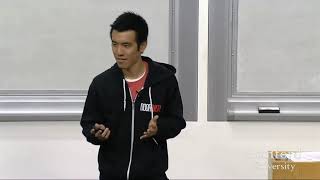
DoorDash Co-Founder Stanley Tang on founding story, lessons + First-time fund manager panel | E1759