Stanley Tang (DoorDash) - Scaling the Unscalable [Entire Talk]
In this Stanford Entrepreneurial Thought Leader Seminar, Stanley Tang, co‑founder and CPO of DoorDash, recounts the company’s evolution from a two‑bedroom, duct‑tape‑held startup to an $80 billion logistics platform. He frames the narrative around a series of pivotal moments that forced hard decisions and forged the company’s culture. He begins with the chaotic launch night in September 2013, illustrating the early “do‑things‑that‑don’t‑scale” mindset, and describes how the founders built the first delivery service by hand‑crafting a static website, answering calls, and buying debit cards at Walgreens to pay dashers. He then details the seed‑round fundraising struggle, the decision to fully refund a disastrous night’s orders, and the resulting customer‑obsession value. The talk moves to the 2015 Series C crisis, where a misreading of cash runway forced an emergency leadership meeting, aggressive cost cuts, and a personal commitment to master finance. Tang explains how competitive pressure from Uber Eats spurred a strategic focus on suburban markets, leveraging data‑driven density insights to achieve unit‑economic efficiency. He recounts the COVID‑19 pandemic response—rapid rollout of contactless delivery, massive PPE procurement, and a $100 million commission cut to support restaurants—framed as a mission‑driven choice. Finally, he looks ahead to the AI and autonomy era, describing DoorDash Labs’ work on robotics and the need for continual “founding moments” to stay ahead of disruptive technology. The talk concludes with advice to his younger self: recognize latent potential, embrace hard work, and learn by doing. The Q&A includes a single question about advice for a 20‑year‑old audience member.
Questions this video answers
Know that you have the potential to step up to the occasion. Even if you’re shy and uncertain, just do the work. By delivering yourself, you’ll become an expert far faster than you expect.
Chapters
Welcome to the Entrepreneurial Thought Leader Seminar, the Stanford Seminar for Aspiring Entrepreneurs, or etl. ETL is brought to you by stvp, the Stanford Engineering Entrepreneurship center and basis, the business association of Stanford entrepreneurial Students. I am Ravi Balani, a lecturer in the Management science and Engineering department and the director of Alchemist and accelerator for Enterprise startups. And I am so excited today to kick off ETL for the spring with one of our own, Stanley Tang. Stanley is the co founder, chief product officer and head of Labs for DoorDash. How many people have used DoorDash? Okay, so it really needs no introduction, but for those who don't know, DoorDash is now, I think, an $80 billion company focused on really revolutionizing last mile delivery. And it's really a phenomenal logistics company that has really transformed how the world thinks about logistics. But what's especially great for me about Stanley is that he's not only becoming an icon of entrepreneurship, but he's also really in his heart, also a student of entrepreneurship. Quite literally. He was in your, literally he was in your seat a decade ago in the same class attending ETL when he was a Stanford undergrad studying computer science. And he started DoorDash after Stanford after he majored in computer science. But even more impressive is before that, when he was a high school student growing up in Hong Kong, he actually authored an anthology of interviews of Internet entrepreneurs when he was in high school. So this is a real full circle moment where the student has become the teacher. And Stanley today is going to share with us some pearls of wisdom and insight from his own entrepreneurial journey. So without further ado, please join me in welcoming Stanley Tang to etl.
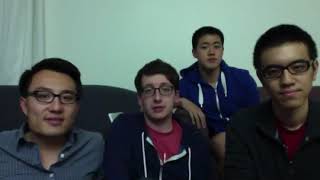
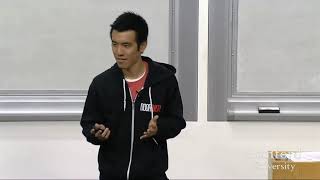
Well, thank you all. I'm super excited to be back here at Stanford. I'm going to start off with a quick story. It's September 2013. It's the first home football game here at Stanford. I'm running a tiny, scrappy food delivery service with a couple of my classmates here. It's only been around for a couple months. The entire thing was run out of a two bedroom house in Palo Alto, held together by duct tape. All of a sudden it starts pouring rain and soon after our phones start exploding. Orders were flooding, were coming in, flooding in nonstop. Everyone wanted to order delivery for game night. We thought, this is it. This is our big moment that we've been waiting for. It's our breakthrough. Finally, people are starting to hear about our food delivery service. This is what product market fit feels like, right? Except it isn't. It was a complete Disaster. We are completely overwhelmed with orders. We didn't have enough drivers. And the worst part of it all is that we didn't actually have the ability to shut down the website. We haven't built the killer switch feature yet. So orders kept flooding in. All of us went out and did deliveries. Whether you were the founder, the engineer, the salesperson, everyone was out doing deliveries. No one was back at the office. But despite that, even all our heroic efforts, there's nothing we could do. Every single order was late, some by an hour, some by two hours. And it was just utter chaos. And by the end of the night, we were just staring at a complete meltdown. And by the way, did I mention we're three weeks away from running out of cash. So in that moment, staring at this disaster, we asked ourselves the question, what do we do? And that question, what do we do? Is really the topic I want to address today. Because it's really in those moments where everything is on the line, your back is against the wall. These are the moments you're going to find yourself facing over and over again during your journey as an entrepreneur. And I feel like it's an especially relevant topic to talk to you all today, because like Robbie said, it wasn't that long ago when I was literally in your shoes in those very seats, in this very auditorium and video auditorium where I was taking this class, Stanford etl. And whenever I came to these classes and these talks where I would hear from these amazing speakers and founders and entrepreneurs, it always felt like they had everything figured out. Everything about them seemed so purposeful, so resilient, so certain. And what I've come to realize as a, from a decade in, having gone through the journey as an entrepreneur myself, is that most people didn't start out that way. That certainty comes much later. For most people, resilience is not something you're born with. Certainly I was not born with that. Resilience is something that's forged in the fire through these pivotal moments. It's built through adversity, it's built through hardship. It's built by staring failure in the face and asking yourself the question, what am I going to do? And it's that decision point, that moment, that's when resilience is born. And today, I want to share some of these pivotal moments from my journey through DoorDash and how it shaped our company, but most importantly, who I am as a founder. So I want to take you back to the fall of 2012. It's my junior year at Stanford. I got together with A few of my classmates, Andy and Tony, because we wanted to work on a class project together, we had no intention of starting a company. And the project the idea we were working on actually had nothing to do with food or delivery. It was actually because we wanted to figure out and build technology solutions for local businesses. And we did it as part of a class here at Stanford. So as part of that exercise, since we were three college students, we knew nothing about local businesses. We did what, we did some research. We went out and interviewed a bunch of local businesses around the area, Palo Alto, San Mateo, Mountain View. And spoke to as many business owners as we can. Just really trying to learn about kind of their day to day lives, what were the struggles they were facing and see if there was anything we can build to help them. And I remember one day we walked in to this macaroon store in Palo Alto called Chantal Guillaume. And I remember Chloe, who was the store manager at the time, greeted me and we started talking about some of her challenges, what it was like to run a macaroon store. And that was really the first time when we came across this idea for delivery. I remember she handed me this really thick booklet and she started showing me pages and pages of orders of delivery requests she got for the past month from a lot of offices, nearby, homes nearby that wanted macaroons delivered for their parties. Except she had to turn away the vast majority of these orders simply because she. Not because she wanted to turn it away, but because she had no capacity to actually fill them. She didn't have any drivers on staff. And we heard the same thing from a coffee shop in San Mateo. We heard the same thing from a flower shop, a furniture store, and of course restaurants too. And keep in mind, back then, food delivery. I know food delivery has been around for over a decade now, so it might seem like an obvious idea, but back then this infrastructure didn't actually exist. If you wanted to offer delivery to your customers, your only choice was to hire a full time delivery driver on staff. Which for most businesses, that just didn't really make economic sense. So the light bulb moment for us really was, well, what if instead of every single one of these business owners having to hire their own delivery driver, what if we pulled together and created a shared network of delivery drivers that any of these businesses can tap into whenever they had a delivery, they'll call us up. And this entire thing can be powered by software and technology. Maybe that's where we should apply the technology towards. Brilliant idea, right? Well, except there's one problem we don't actually own a delivery service. We're three college students. We had no money, we had no delivery drivers, no software, no infrastructure, zero logistics experience. How are we going to get started on this? And this was really our first pivotal moment. How do we get going? So instead of spending time sitting down, writing a 50 page business plan, writing out the software, getting drivers, we thought, you know what, why don't we start with a simple experiment? And the experiment was basically for the experiment, what we did was we built a very simple website. It's a one page static HTML website consisting of eight PDF menus of restaurants in Palo Alto. We liked that, didn't offer delivery. And then we put a Google voice number at the bottom. And, and all the website said was, if you want to order delivery from these eight restaurants, call this phone number. And it was basically a number that ran the cell phones of all the founders. That was it. There was no fancy ordering app, no logistics, nothing. It was just a simple website. And we called it palo altodelivery.com and this is what it looked like. And that was it. The idea behind this website wasn't to actually start a delivery service. It was more of a data collection exercise. We wanted to see, if we put this website out there, got it in front of people, will people start calling this phone number? And if enough people started calling this phone number, then maybe there's consumer demand for delivery. We could take this idea back and figure something out with the restaurant. But honestly, we didn't really think much farther beyond that. We literally just wanted to see how many phone calls we would get. So we put this whole thing together in about maybe. It took me like two hours to make. And this is probably one of the ugliest websites I've ever built in my life. I'm sure you guys can build much better websites, especially with all the AI tools these days. But this is what we built back then, put it out there and we sort of went about our day, kind of forgot about it, went back to our dorm rooms and I think maybe about an hour, an hour and a half later, we got a phone call. We picked up a phone, it was that Google voice number calling in. We picked up the phone and turns out someone came across palo altodelivery.com no idea how they found out, but he called in. I remember his exact order. He wanted shrimp, pad Thai and egg rolls from this restaurant called Bangkok Cuisine in Palo Alto. And keep in mind, this was unexpected. The original script that we were supposed to stick to was to tell People whenever they called in, hey, this is not actually a real delivery service. We're just a bunch of college students doing a data, a research project. Right. Thanks for calling in. But I think in that moment, this person just sounded really, really hungry. And no one really had the guts to tell this person, this is not a real delivery service. I mean, I was not going to be the one to tell this person that. And so I looked at my co founders and said, are you going to do it? And they didn't have the guts to tell this person either. So we decided, you know what, it's a Saturday evening. We don't have much better to do. I don't really want to do homework. Why don't we just go take this delivery and actually just learn about how delivery and logistics work. So we took the order, we immediately called the restaurant, we placed a takeout order, and we drove, got in our cars, drove to the restaurant, picked up the food, and that was our first ever delivery. It was January. I'll never forget the date. It's January 12, 2013. And then the next day we got another phone call. We decided, okay, we'll take that, we'll do the Delivery. Then became two phone calls, and then 3 and 5 and 10 and 20. And next thing you knew, everyone on Stanford campus and Palo Alto was using palo altodelivery.com it started to become a full blown delivery service. And again, this was completely unexpected. This was not the plan. But we decided to go with the flow. We decided to improvise. We decided to keep the momentum going. Which leads me to a crucial lesson I learned early on in my time at Polito Delivery, which is this idea of doing things that don't scale. Like everything in the beginning for palato delivery was unscalable. We hacked things together. We were the, you know, we didn't have any drivers, so we were the initial delivery drivers. We would be taking phone calls. So every, every and doing the deliveries. Every day after class, we'll get in our cars. You know, every single day, 5pm to 9pm we were doing deliveries. Sometimes we'll take calls during lecture. Actually, I remember taking a call in this exact lecture hall right there in the back row over there during a CS class here at this Nvidia auditorium. Got a phone call, someone wanted food. I had to leave halfway through lecture and go do the delivery. But that's what it took to make Paloto delivery happen. I mean, there was zero technology. It was just a simple website and a phone number. The way we took orders and managed orders was through. We used Google sheets for that to track everything. We had everyone download, find my friends on their iPhone, so we can track everyone's location and do dispatching. We'll text each other the order whenever we got a phone call. And the way we did payment processing was we used these square dongles. We had those lying around, and we used that for payment processing. The entire thing was just hacked together. And I think my favorite anecdote when it comes to doing things that don't scale is when it came to the payment issue for the restaurant. So keep in mind, back then, the way it worked was we would place a takeout order, someone show up, pay for the food at the counter as if it's just a takeout order, and then we will do the delivery, which is fine. When initially the founders were doing it would just be using our own credit cards. No one will get paid back later by the customer. But once we started onboarding our friends as dashers, Stanford students, other folks as dashers, you can't expect them to pay for the food out of their own pocket. Especially maybe one order is fine, but once it starts adding up, like 2, 3, 5, 10, 20, 30 orders throughout the week, asking them to pay out their own pockets, it just wasn't a realistic thing. We had to figure out a solution. So the solution we came up with was, well, we found out you can actually buy these debit cards from Walgreens, load it up with money, and essentially it just became a credit card. So that's what we did. We would buy up these debit cards, hand it out to our dashers every week. The next week they come along, we'll give them a new batch of these debit cards. And the funny thing I found out was that you actually can't use a credit card to buy a debit card. You actually have to use cash to do that. So every day, what we would do is we'll go to the ATM machine, withdraw thousands of dollars of cash, roll up to the Walgreens on University Avenue, Palo Alto, and buy up all the debit cards off the shelf. And we did that every single day. So just imagine the Walgreens staff seeing a bunch of college students coming in day in, day out, buying up all the debit cards with cash. Sure, it raised a couple eyebrows, but that's what it took. And honestly, doing things that don't scale is probably one of the most powerful things you can do as a startup. Because by doing everything ourselves, I think we really began to understand every facet of our operations, we became experts in our business. We started to understand how dispatching works. We started to understand kitchen operations when peak demand are where the parking spots. Knowing that people pizza delivers differently than burgers and fries, just really, just the nuances and nitty gritties of how food delivery actually works. And because we experienced those pain points firsthand, that's how we were able to later address them through software and products. You're not going to know what to automate if you don't understand the problem deeply do things that don't scale. Fast forward a few months. We went through Y Combinator. We rebranded as DoorDash. We're no longer Palo Alto Delivery anymore and it was time to raise our seed round. And to be honest, it was a difficult seed round to raise. Keep in mind this was 2013. This whole idea of a company, a tech startup that was doing things in the physical world was a foreign concept to people in Silicon Valley. Everyone back then were used to pure software companies, you know, so I remember I met with a prominent investor who once said to me and by this investor ended up investing DoorDash. I remember he said to me, you guys are a bunch of smart Stanford students. You, you guys could be working on the next Google. Why are you doing food delivery? So just hearing these constant no's, we really started to doubt ourselves. And we're three weeks away from running out of money. Which brings me back to that opening story I mentioned the night of that Stanford football game where everything is a disaster, it's complete chaos. And this was the house we were actually running our operations out of in Palo Alto. A two bedroom house. And I remember when 1am Rolled around it was the, you know, after we'd done our last delivery of the night got back to this house, we regrouped as found as a founding team. We were all exhausted. We're soaking wet and completely devastated. We all looked at each other and went, what the hell just happened? Like every single one of these orders, we're late. It really felt like this was the end. We've completely lost the trust of our customers. We've disappointed our customers, we've disappointed our restaurants partners, and most importantly, we disappoint ourselves. How are we going to recover from this? No one's ever going to use DoorDash ever again. This was another pivotal moment. What are you going to do? I think for most people the smart business decision would have been, well, let's try to. The smart move would have been, well, let's try to conserve as much of the cash as we can. Maybe we send out a generic mass apology email, offer people some credits for future deliveries, but we're about to run out of money. We ought to keep as much of the cash as we can. But for some reason, that just didn't really sit right with us. For us, if we truly wanted to build a company that was about doing the right thing for the customer, the only right decision there was to do was we have to refund everybody's orders, especially those that were impacted and were late from that night. And keep in mind, when we refund a delivery or refund an order, we're refunding the full cost of the meal, whereas DoorDash only keeps the delivery fees. But when we refund, we're not only refunding delivery fees, but the full cost of the meal and the food as well, which we're not getting back from the restaurants. So this was a huge number, huge dollar amount. And when we crunched the numbers and did the math, we realized actually, if we were to refund everyone's order that night, it's going to cost us 40% of our bank account. And for us, like that, that was like a, you know, as a startup that's about to run out of money, that was like a terrifying thought. And we took maybe about 15 seconds to make the decision and hit the refund button. And on top of that, we spent all night baking cookies. We wrote personal, handwritten apology notes to everybody that was impacted, and we spent the entire evening delivering to every single customer who was late personally with those cookies and handwritten note. And it was really our way of saying, we're sorry we let you down. We messed up. We really value your service. We eventually did get the seed round done, but I think that night, as painful as it was, really went on to cement one of our first core values, which is customer love and customer obsession. And for me, what it allowed was it created a shared foundation among everyone at the company. For us, when it came to how we want to run and build DoorDash moving forward. And most importantly, it kind of reinforced what culture meant. For me, culture is not a fancy slogan that's written on a slide deck. Culture is forged through these pivotal moments where you go through these experiences, these failures, and that gets etched into the company DNA forever. And that was a really important moment for us. I'll fast forward two years. It's November 2015. By then, DoorDash was growing rapidly. We just moved into a brand new, slick office in San Francisco. So we just let Me see if this works. All right, so things were going well. We were going fast. We're in a brand new office. Doordash was starting to become a household name. From the outside, everything looked great. And this was also the moment we decided, okay, it was time to kick off our Series C fundraising process. And we were really confident about it. We thought this was going to be a walk in the park. After all, while our C round was difficult, our Series A and Series B, we both got those done in less than a week. So our thinking was, well, the series C is not going to be any different, right? Well, except it was. As we kicked off our fundraise, this happened to be the exact moment the market turned on us when it came to the food delivery industry. All of a sudden the narrative for food delivery became, well, the unit economics are never going to work. You guys aren't profitable. This is Operation Complex. It's low margin and by the way, it's a brutally competitive industry. And it didn't help the fact that Uber Eats just launched a couple weeks prior and they were starting to emerge as a formidable competitor. Little did we know this was going to be the start of three very, very difficult years for Doordash. I remember one night we were, it was after work hours when everyone has left the office. It was just me and one of our lead accountants left. We were just chatting by one of those couches at our office, shooting breeze chit chatting. And I remember in the middle of our conversation, she came, he casually dropped. Hey, Stanley, I'm sure you already know this. You have this taken care of. But just to let you know, we have about two months of Runway left. I'm assuming the series C is almost done. Right. And that was the moment when my jaws dropped. What are you talking about? Two months of Runway? Don't we have $20 million in our bank account? And well, keep in mind, at the time I was a 22. I was 22 years old. I was maybe a year, a year out of school. I was a new grad, I was a software engineer. I didn't know anything about finance or accounting or what a balance sheet was. So our accountant actually had to explain to me how our finances work. Yes, when you log into our bank portal, it says $20 million, but that's actually not how much money we have because, you know, 7 million of that actually was in ours. It was money we were holding on behalf of the restaurant. So we have to pay those out the very next week. Another 4 million was tied up in letter of Credits for real estate leases. So really we only had about 8,9 million left in our bank account that we can actually use. And by the way, in case you didn't know, we're burning about $5 million a month back then. So you can do the Math. We're about 60 days from running out of cash and the Series C was nowhere near complete. This was another pivotal moment. What do you do? Do I try to keep it cool, try to ride it out. You don't want to freak people out that hey, this has to go bankrupt. And by then we had about two. This is a little bit different than the Palo Alto delivery days where. Or that Stanford football night where it was just a scrappy campus food delivery service. By then we had about 250, 300 employees that were all counting on us. We had hundreds of thousands of restaurants, millions of customers. What are we going to do? The last thing we needed to do was freak people out and then cause some mass exodus. And let's just pray we get our Series C done or do we face reality and address it head on. Right after the conversation with our accountant, I immediately texted my co founders Annie and Tony to let them know about the situation. And the very next morning at 8am we called an emergency meeting. Back then we didn't have a management team so we simply just. What we did was we grabbed five of the most senior leaders at the company who we thought were the most competent. We got them in a room at 8am and we told them the cold hard truth. We laid it bare with zero sugar coating. Hey guys, we're about to. Hey, we're about to run out of money. The seriously fundraise is not getting done anytime soon and we need your help now. And over the next 24 hours, you know, we that that small group locked ourselves in that conference room and brainstormed every possible way we can extend Runway and came up with every possible, explored every possible solution. And most importantly, it was solutions that also couldn't hurt our top line growth. We had to keep growing. So we tore through every single line item. We looked at every single expense, every, every single marketing dollar, every single contract, every single hire. There was no stones left unturned. And by the end of the week we were able to slash our burn rate by half. And that bought us two valuable precious months. And eventually we did get our Series C done. But barely. We got our Series C done in March of 2016, exactly four months later. So we needed every single week mattered. And for me that was really a that near Death experience was like a very important moment for me because it was a huge wake up call. It made us realize, holy cow, we need to get our stuff together, get our act together. I made it my personal goal to learn everything I could about finance from that point forward. I learned about how our business model worked, I learned about our unit economics, learned about finance, accounting, how to read a profit and loss statement, cash flow statement, everything. And I, you know, for us, like, I vowed to myself that we were never going to let this happen ever again or ever get this close to a near death experience without knowing. You know, people often ask me like, how did Doordash develop the reputation of being world class operators? World class in execution and operational excellence? Well, I can definitely tell you we weren't born that way. We woke up one day and magically became great operators. It was through these moments. It was through moments like these. I think, because it turns out that serious C crisis was probably one of the best things that could have ever happened to the company because it taught us a super valuable lesson, which is financial discipline. Those cuts we found a couple months prior or those cuts we found during those three C, well, honestly we should have done those months ago. By then there was so much bloat and efficiency that been built up in the company. Honestly, for the first few years we were just flying financially blind. So that was really a wake up moment. And right after that, right after raise our series C, you know, we had more bad news happen. Uber decided to announce their $3 billion funding round, which at the time was the largest funding round ever for a tech startup. And they've also announced they were going to go all in on Uber Eats. And keep in mind for us, we probably had a little over $100 million raised at the time. So we were, how are you going to compete with Uber when they have outgunned you 30 to 1 in capital? We're definitely not going to be able to outspend them and we're certainly not going to out subsidize them or subsidize our way to growth. So we really only had one option, which is we have to build a fundamentally better and more efficient business. As they say, constraints breed creativity. And the next two years, it really tested our resilience. It was a period of resilience. It was a period where because we couldn't outspend our competitors, we had to get smarter. We became maniacally focused on our business, on our unit economics, on our business model and our cost structure. We dove to the lowest level Details. And we understood our business not just at an aggregate level, but down to the zip code level, down to the delivery level. We optimized our dispatch down to every single second. That period really forged our resilience, the lean period really forged our resilience when it came to actually figuring out how to actually build a better business and more efficient business. So when I think the other thing operationally, I think something we did was we made a pretty important strategic bet that was probably against a contrarian bet that was probably against the grain at the time. Back then, we had a lot of competitors in the food delivery space, but they were all going after the sexy urban cities like San Francisco and New York City. But what we found was when we actually looked at our data and actually looked at things from first principles, it wasn't the urban downtown areas where most of the demand was coming from. We noticed that it was actually the suburbs where a lot of the demand came from. It's where the families lived, it's where people were much more reliant on cars. It's where maybe it's where the nearest restaurant is probably a 20 minute drive away. So for them being the suburbs, delivery it wasn't just a convenience, it was a necessity. So while everyone else was battling out in these dense urban cores, we were slowly and quietly building up our position in the suburb. The thinking was like. And I think the other thing we noticed was people thought you had to be in the cities because that's where people are, that's where the restaurants are, that's where you get the density to make the economics work. Well, what we found was that in the suburbs you can actually get pretty much the same density, same efficiency, if not more. Because we actually looked at how, if you actually looked at what a suburb looks like on a map, you would start noticing that, yes, while it's spread out, the suburbs are spread out. The restaurants are actually very concentrated. Just take Palo Alto, for example. All the restaurants are typically located on University Avenue in Mountain View. They're all located on Cachoeira Street. So everything's revolved around these main streets. So in effect, you kind of have these natural delivery densities and you can operate this hub and spoke model where you can actually achieve the same efficiency in suburbs when it comes to delivery as the urban cores. So that was a huge insight for us. So by the time, in a way, the doordash you see today was really built between 2016 to 2018, where we were forced to be disciplined, where we sharpened our strategy, we got our act together. So by the time 2018 rolled around, when we were finally able to raise our Series Z round and actually had the capital to invest, we were ready. And by then we had a more superior product. We had a better customer retention, better customer order frequency. All of our metrics were better. We just had a much better business that was more efficient. So when the money did come and it was time to pour the pile of capital in, every dollar that was invested into our business just went so much further than our competitors. So by then, it was just a matter of time that Doordash reached our market leader position. And so what seemed like a big disadvantage initially, our lack of capital, turns out that's what that actually turned out to be one of our greatest strengths. That's what forced us to build a more efficient business. We didn't let constraints limit us. Instead, those constraints define who we are as a company. The next pivotal moment. Well, yeah, next slide. Yeah. Well, sometimes there are pivotal moments that are so unpredictable that nobody in the world can predict. The entire world flips upside down. And of course, I'm talking about 2020. When Covid happens, it's for a company that's about building technology and connecting people and connecting businesses in the physical world. Covid was honestly scary. It was terrifying. A public health crisis was quickly becoming an economic crisis. Restaurant dining rooms were closing down. Customers stopped ordering delivery as they stocked up on groceries. And the entire economy just felt like it was teetering on a thread. Will people still order delivery? Are restaurants going to survive? Are we going to survive? And then almost overnight, everything flipped. Everyone were stuck at home and realized the only way for restaurants to reach their customers was through delivery. Demand started picking back up, started spiking, and all of a sudden delivery wasn't just a convenience, it was a lifeline to a lot of these restaurants. It was the only way for these restaurants to stay around and reach their customers. And things were changing quickly. And with that, that really came with this huge sense of responsibility that we had for our community. So we had to move quickly. During COVID it was all hands on deck. And in a way, it really felt like it was back to our early startup days again. It was seven days a week, 10am to 2am, multiple all hands company meetings a day. It was total uncertainty. But in a way, it felt like during those times of crisis that I found it's the easiest to operate the business because the company was just so united. It became really clear what needs to get done. So we quickly worked on three things. First, we were able to ship contactless delivery on our app in less than four days. Second, safety. We had to source tens of millions of PPE for all of our dashers during a time when the global supply chain was very scarce. And finally, and most importantly, supporting our partners. Our restaurants were going through a time of existential crisis and it was important that we were there for them. And so we made the decision to actually cut our commission rates by half during COVID And to this day, I think we're the only platform in the world to actually do that. And this costed us $100 million directly to our bottom line. And while this might sound trivial if you're looking at DoorDash today, but back then this was a big deal. DoorDash wasn't profitable back then. And also we were in the middle of going through an ipo. So this is definitely not a decision, the first decision you'll make during that situation. But for me, like what made for me, like what really made this decision easy was really asking myself the question, what's the company that you're trying to build here? Are you just building a company to optimize towards an ipo, or are you actually trying to build something much bigger here, something much longer lasting, Something that hopefully would empower every local business in every local economies around the world. And for me, that's a mission. That's not a one year mission or a two year mission, or a five year mission or ten year mission. That is probably a forever internal mission. And when I thought about it from that perspective, this was really a drop in the bucket in the grand scheme of things. So the takeaway here is sometimes the most difficult decisions are actually the simplest in times of crisis. Lead with your values and focus on the long term. Next slide. So the last pivot moment I want to talk about is actually something that we're going through right now, today, in 2025, the age of AI and autonomy, we're going through one of the biggest technological paradigm shifts of our generation, arguably as profound as the Internet. And what DoorDash is going to do in this very moment to cope and navigate through this change is going to define the next chapter of our company and maybe even our survival. Because if you think about it and actually study history of how disruption works, companies don't get disrupted because someone else comes along, builds the exact same thing as you, but then maybe slightly better, right? For example, like Blockbuster, you know, they didn't get disrupted by Netflix because Netflix built a better Blockbuster. They were disrupted because streaming fundamentally changed the way entertainment is consumed. Sears wasn't disrupted by Amazon because Amazon built a slightly better Sears. E commerce fundamentally change retail. And likewise, DoorDash is not getting disrupted because someone else comes on and builds a slightly slicker delivery app with slightly better dispatch, slightly better delivery times. No, it's because someone's going to come along and things like AI, autonomous deliveries and drones is going to fundamentally rewrite the rules of last mile logistics. And for us, is DoorDash going to wait for this change to happen to us or are we going to embrace the change and lead this disruption and lead this revolution? And that's honestly what I'm spending most of my time these days at DoorDash. And what still keeps me excited is answering this question. So these days I get to lead a team called DoorDash Labs where I get to work with some of the most brilliant minds in robotics, AI, hardware, software, where we're actually thinking about the future of delivery. Because if we're gonna, because if we're gonna get disrupted, we'd rather let us be the ones that disrupt ourselves. And in a way, it feels very much like doing another startup all over again. It very much feels like another founding moment. And here's the thing I've come to realize, is that if you want to build something that's generational, that's long lasting, you're going to go through multiple founding moments. Company building is not just about that one founding moment in politics, delivery. You're going to have multiple of these founding moments. And every one of these founding moments is your opportunity to redefine who you are and reignite that spark. So in conclusion, the journey that I shared with you, DoorDash, is not unique to us. Every company, every leader who is going to build something, who is committed to building something long lasting, is going to go through their own version of this journey. So my takeaway to all of you is this. You will go through. Each of you will go through your own pivotal moments. Whether it's in school and your startup, in your careers and your life. There are going to be moments where your plans fail. There are going to be moments where you're going to feel overwhelmed, where everything is. Where everything is on the line, your back's against the wall and you have to ask yourself the question, what am I going to do? And these are not moments to shy away from. Instead, these are moments that are going to define. These are moments for definition. These are opportunities. It's in those moments where you have to dig deep down where you're gonna Find out what you're truly capable of and what you're made of. These moments, you are forged through these moments. And what I have to say is, you know, don't embrace the challenge. Embrace these moments. And whenever you encounter these moments, just keep in mind this is your opportunity to choose to build resilience one pivotal moment at a time. I can't wait to see what you all are going to build. Thank you so much.
Thank you Stanley. That was fantastic work. We're almost near the end of time and I know there's so we may defer the questions for all those that are in 178 afterwards for interactive Q and A just because I'm cognizant of time. So I'm just going to exercise my prerogative and just ask one question in the final minute that we have, Stanley here, which is the classic ETL question from Tina Selig, which is what advice? I know you've already shared a lot of advice, but is there any piece of advice that you would want to give your 20 year old self that let's say is sitting in the audience right now that you haven't already relayed?
I think just knowing that you have the potential to step up to the occasion and that I was a shy 19, 20 year old entering Stanford, I didn't know anything. I wasn't resilient, I was a very uncertain person. But it's really about knowing that each one of you have that potential within you to step up to the occasion and really just doing the work. I think that's the most important thing. You'll be surprised how quickly you'll become an expert by just doing the work. We weren't experts in logistics, we weren't experts in delivery. We figured it out because we did the work ourselves, we did the deliveries and really just like put in the work and you'll quickly find out that you'll become an expert in a much quicker time frame than you would think.
That's fantastic. That's fantastic. So on that note, we're going to end the inaugural ETL for the spring. So thank you Stanley.
Thank you all. Sa.
More from Stanley
Stanley Tang, Co-Founder of DoorDash, finding great co-founders & making online delivery possible!
DoorDash Co-Founder Stanley Tang on founding story, lessons + First-time fund manager panel | E1759