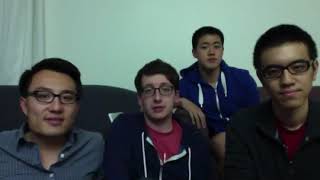
The Road to IPO | Stanley Tang | Imagine Talks 2021
In this Imagine Talks 2021 interview, Gloria Zhu talks with DoorDash co‑founder Stanley Tang about his personal journey, the birth of DoorDash, early experiments, scaling hurdles, and advice for aspiring entrepreneurs. Tang shares his multicultural upbringing, early love of building websites, and how a chance encounter with a macaroon shop’s cancelled delivery orders sparked the idea to create a delivery platform for small businesses. He describes the low‑tech pilot – a simple website (paloaltodelivery.com) and a personal phone line – that quickly generated real orders, leading to the launch of DoorDash. Tang reflects on the difficulties of scaling a logistics‑heavy product, from building software that can handle diverse real‑world conditions to growing a distributed team while preserving culture. Finally, he advises founders to focus on solving a clear, real‑world problem, start small with a minimal viable product, and treat the early venture like a side project to reduce pressure and allow iteration until product‑market fit is achieved.
Chapters
Hi everyone, my name is Gloria Zhu and I'm here with Stanley Tang, who is the co founder of DoorDash. Stanley and I have actually known each other for quite a few years because we invest in social impact documentaries and new media companies together via Bearcat. But of course, we're here to learn a little bit more about Stanley's journey and about Doordash. So just to get started here, can you tell us a little bit more about yourself?
Yes. Thanks for having me, Gloria. So I actually grew up in Asia, so I was born in Japan and then my family moved to Hong Kong when I was 2 years old and that's actually where I. That was actually the city I grew up in. And then 10 years ago I came to America for college when I got into Stanford to study computer science. And that was where I met my future co founders, Andy and Tony, where we went on to start DoorDash together.
Yeah. And did you always know you wanted to be an entrepreneur?
Yeah, I think for me, I've always loved technology. I've always loved building stuff. I mean, when I was growing up, I was always surrounded by computers and I would just make websites for fun on the side. Initially it would just be really simple websites, mostly just content websites like how to. About soccer, about magic tricks. Those are kind of the areas I really enjoy doing. And then, and then one day I realized actually you can actually make money from, from this if you just threw, you know, Google Ads on it. And that's kind of when I started realizing kind of this idea of, you know, combining technology with business and entrepreneurship. So I've always just loved making things, building things, you know, I think I've also built a news aggregator reader, eventually got to more complicated applications like a mobile app, like a mobile social network app. I've also dabbled around with a scheduling tool. And then I think the last thing, I guess we were working together just happened to be DoorDash. And that was the most successful one. So yeah, so for me, I think it was more. I've always loved building things and that just happened to lead me to entrepreneurship.
Yeah, it sounds like you've had quite a few entrepreneurial forays. And of course, with the recent IPO of DoorDash, can you tell us a little bit more about how you met Andy and Tony and that journey?
Yeah, so I met. So Andy was actually in the same freshman dorm as me, so we're good friends. And then we met Tony actually through class. So he was at business school, Stanford business school. Annie and I were undergrads and we actually met through a entrepreneurship kind of design class together. And, and really initially it was kind of just like we got together to kind of just work on a class project together. We didn't know we were trying to start DoorDash or a delivery company. Actually the reason the three of us sort of bonded together initially was because we all had this shared passion around helping small businesses. So the original idea was actually to work on a project around what are software or products we can build to help these local small business owners. So what we did was we just decided to just talk to a bunch of these business owners nearby Stanford and we'll just walk in whether these were not just restaurants, but these were local retailers, flower shops, furniture stores, et cetera. Just trying to understand what are the problems they were facing on a day to day basis to help with our. To kind of learn about challenges we can help solve for them. I remember one day we walked into a macaroon store on University Avenue in Palo Alto and. And we're chatting over her. And then I remember in the middle of our conversation, she took out this really thick booklet and she started turning over the pages. And it turns out this was actually a booklet of all her orders. And something we noticed was all these orders, actually a lot of these orders had the word canceled on it, like just pages and pages, canceled orders. And all these canceled orders had one thing in common. They were actually delivery orders. Like people called in, they heard about kind of their macaroons. They wanted these macaroons delivered to maybe their office or for a party. But the problem was the macaroon store owner didn't have any capacity to actually fulfill these deliveries. She saw delivery as sort of a great way to expand her business, grow her reach. But she didn't have any drivers to actually go fulfill it. And that was kind of the light bulb moment for us. And we talked to more small business owners and this delivery idea kept popping over and over again. People saw delivery as sort of this great potential to help expand their reach beyond just the customers who just happened to walk by their stores. But there just weren't any good solutions. As a small business owner, if you wanted to offer delivery, you really only have one of two choices. The first choice is you can do it yourself. Hire your own delivery drivers, which is oftentimes a route most people take. But the problem there is, then all of a sudden you're managing this delivery fleet. You have to hire drivers. You probably don't have enough orders just as a single business owner to sustain Like a full time delivery person. It's just a lot of headache. So oftentimes most people just don't deal with that at all. Or they do it themselves personally. The owner or the manager will go do these deliveries. It's a huge headache for them. So then the other option is, okay, if you don't want to do the deliveries yourself, why don't you just hire a third party company? Companies like FedEx. UPS exists to help deliver packages across the country. I'm sure there are services out there that can also deliver packages that's maybe just three or four miles away across town. And again, we looked into this and it turns out actually there weren't really any good solutions either. I think the closest thing we found were sort of these courier services that oftentimes basically like bike messengers that are maybe more specialized towards delivering legal documents and medical supplies. That was often the use case. But they definitely weren't designed to handle kind of local commerce. They're not designed to just deliver box of chocolate or your dinner because oftentimes they're really expensive and usually weren't technology companies, they didn't really use a lot of software, so they weren't particularly efficient. So that was sort of where we saw this opportunity where, okay, if we can actually build a more efficient kind of delivery network and we use software and algorithms to kind of power this instead of pen and paper, could we actually build something that was a lot better, a lot more efficient? And it's almost like delivery as a service. If you're a restaurant owner or a small business owner, you need a package delivered to your customers, you can just call us and we'll send a driver over and we'll fulfill it for you. So that was kind of where the idea came from for DoorDash. So the way we then set about kind of tackling this problem was we decided to actually run a very simple experiment. Because we realized, I mean at the time, keep in mind, we were just three college students. You know, it's not like we had delivery drivers ourselves either or like, you know, dispatch software or like trucks or any of that. So, but, so what we did instead was, you know, we decided, you know, instead of building all that stuff out, why don't we just run an experiment first and see if customers actually wanted deliveries in the first place because the customers aren't really requesting deliveries, you know, from these local businesses. And it's, it's probably not really worth our time trying to build out this whole like logistics network. So we decided to run an Experiment. And all the experiment was pretty simple. It was decided to, hey, let's start with restaurants first. Since restaurant is like a, you know, use case that people, you know, restaurant delivery is a use case that people are familiar with. Why don't we find a bunch of restaurants in Palo Alto that didn't offer delivery, which is most restaurants in Palo Alto, by the way. Why don't we go to their websites, find their menus online, aggregate it, put it on this kind of landing page. And all this landing page said was, hey, do you want to have delivery food delivered from these 10 restaurants we found for you? If so, call this phone number. And that phone number was basically our personal cell phone number. It was kind of a Google voice number that rang all of our phones and we put it out there. And the idea was really just to see if we put this website out there, would people start calling this phone number. And if enough people started calling, then maybe we can take this data and go back to whether it's the macaroon store or the restaurant owners and say, hey, look, there's a bunch of people calling. They want delivery. Let's work together and we can figure something out. We weren't exactly sure yet. And it was a really simple website. And we call that website paloaltodelivery.com and we put it out there. And actually, fun fact, if you type palotodelivery.com today, it actually redirects to DoorDash. So this was January 2013. We put this website out there. We went back to our dorm rooms. We honestly weren't really expecting anything. And all of a sudden, a few hours in, maybe it was like an hour, two hours in, or all of a sudden, our phone rang. We picked up the phone and it was someone who came across palotodelivery.com you know, no idea how he discovered it, but he called me and said, hey, I want to order some Thai food from, I think it was Bangkok cuisine. It was shrimp, pad thai and egg rolls. That was the order I remember really clearly. And he said, hey, I came across the website. I'm hungry. Do you actually offer delivery? And originally, the idea behind his website was people called in. We would tell them, oh, this is just a test. It's just an experiment. This is not a real delivery service. We're just gathering data. But I feel like when we got that first phone call, it kind of felt bad just telling him, this is a fake service. We can't deliver your food. So instead we decided, you know what, it's just One delivery. It's not like we're doing anything. I don't think any of us wanted to do our homework that evening. So we decided, you know what, why don't you do this delivery? Why don't we just treat it as a learning experience? So we decided to call in a takeout order to the restaurant ourselves, got in a car, drove to the restaurant, picked up the food, and made our first ever Delivery through Palo Altodelivery.com and then the next day, we got another phone call. And then the day after that, it became like two phone calls, three phone calls, five phone calls. And next thing you knew, everyone in Palo Alto and around Stanford campus started calling this phone number. They'd all heard about this food delivery service from their friends, and it kind of just kind of snowballed from there. And we were sort of the initial delivery drivers ourselves. We would be taking calls during class, and then we had to get out of class and then get in our cars and to do the deliveries. Everything was manual. It was pretty crazy. But I think that was when we knew we were onto something here. And we decided maybe to take this a little more seriously. It's not just a dorm project anymore. So we decided to come up with a new name. DoorDash rebranded, and then launched that summer in Palo Alto. And then sort of. And things just sort of snowball from there.
Yeah, and that's an incredible origin story, and it's really interesting seeing how far you've come when looking back. And so with that, I also want to ask, were there any challenges you faced during the early days or, you know, in the past few years when starting DoorDash?
Yeah, I think. I mean, it was definitely pretty crazy in the early days because everything was just manual. Right. We were like sort of the initial delivery drivers. And I think a lot of it was figuring out how to actually scale this thing. How do you actually handle this? On its volume. We have to kind of build software and product kind of on the fly. And I think for our business, it was especially hard to scale because delivery is such a kind of a. It's different than scaling software. Right. It's not like you can build the software once and then just clone it infinitely. Every incremental delivery you're adding on is a real world delivery, something that's happening in the real world. And it only gets harder and harder because there's just so many scenarios you have to account for, like doing deliveries in Palo Alto. It's very different than doing deliveries in New York. Traffic's different weather's different, you're dealing with different restaurants. So a lot of it is learning how to scale the products in a way that where whether you're doing 10 deliveries a day or a million deliveries a day, ensuring that every single one of those deliveries still goes 100% smoothly. And that's really, really hard because you're dealing with real world product and there's so many things you can't control, things are going to go wrong. There's so many variables, yet you have to ensure you can still pull it off at scale. Like the intend to deliver today, you can probably manually look over every single delivery to make sure that you're right. When you're doing a million deliveries a day, it's a lot harder. So how do you sort of scale your product and your technology as your volume ramps up and is. Was a huge challenge. And I think the other piece, when it comes to scaling is probably scaling team and culture. How do you go from when it's just Tony, Andy and I doing deliveries to then all of a sudden you're building out a team of engineers and salespeople and ops people. You go from 10 employees to 50 to 100, 200 to a thousand. And that becomes also much harder. Right, right. Because when you're, you know, when you're a small team, it's relatively easy to enforce culture because everyone's in the same room, you're always together. You know, you can just, you know, the way you communicate is pretty simple. Right. You just shout across the table. Right. And everyone hears you. But then when you're, you know, 2,000 people distributed across 20 different offices, you know, you don't know everyone personally, how do you ensure the company is still sort of making decisions as if, you know, it's still just the three of us there. Right. You know, there's no way we're going to be able to be in every single conversation, every single meeting. So scaling culture becomes really, really hard. You know, getting 1,000 people all pointing in the same direction is much harder than just getting 10 people pointing in the same direction. I think those are definitely been. Those are, those are definitely kind of the big challenges that come to mind.
Yeah, that definitely makes sense. And that's a really great insight into what it's like to build a company and at scale. So I know at Imagine talks there's a lot of attendees who are extremely creative, extremely ambitious. So do you have any advice for aspiring entrepreneurs?
Yeah, probably. Probably two things come to mind. I think the first thing is when it comes to entrepreneurship and building a company. I think the most important thing is making sure you're solving a real world problem. Startups and companies, it's all about problem solving and addressing a need that hasn't been fulfilled, right? Like you're actually solving a problem or a specific customer pain point, or maybe it's an existing solution that doesn't really work that well. You have to be really, really clear about what's the exact problem you're solving. I mean, that's the only reason why companies exist, is solving a problem. And you have to just know really well what that is. And the best companies can actually articulate the problem is actually in a fairly simple way. It shouldn't be this really complicated. Sometimes when people describe what their company's doing and they explain for five minutes and at the end you still don't really know what exactly it does or the problem it's trying to address. So just being really clear about what you're trying, what you're solving. I mean, when I was in Y Combinator, they would constantly preach this model like, build something or make something people want. And for us it was, you know, our problem was pretty clear, right? It was, you know, we are addressing deliveries for small business owners. Like, small business owners need a way to deliver their products to the customers they don't have. No one can deliver for them. We'll come in and help deliver. That was basically our problem that we were solving. So I think that's probably the most important thing is getting that right. And I think the second thing is probably starting small. I think, like, I think, you know, I mean, obviously like when people start companies or startups, you know, everyone aspires it to be this kind of, you know, huge thing one day. And I think one of the biggest mistakes I see is people trying to, when they're just starting out, treating like their startup as if it was already a big company, right? Whereas I think a much healthier way of thinking about it is treating your startup almost like a side project, right? Like for us, we treat it like it was just like a class project, it wasn't a company. And I think it's kind of, I think it takes a lot of the burden off your shoulder or pressure off your shoulder of like, oh, this is like an actual company. And I think it just ends up distracting, right? Like you end up doing Honda's like, company stuff, right? Like, oh, I need to put together a business plan, a fundraising deck, you know, I need to get office space, hire employees and you know, like, like A lot of stuff that honestly have very little to do with actually build, like actually helping you like start in the first place, right? I mean, you know, it's, it's, you know, whereas if you kind of treat it more like a side project and you know, it's, it's, you know, it's, it's. There's a lot less pressure, right? Like, there's more room for. To fail. Like, oh, if it fails, it's not a, it's not a big deal. I'll just move on to the next thing. And it's only when you know for sure that, okay, you're actually onto something. You actually found a need, a problem that's actually, that's actually worth solving and you actually have a really unique solution that seems like you found a group of customers that really value it. Then you decide, okay, maybe this should be a company and then scale from there versus just trying to force yourself to start a company. Right? And I think because honestly, in the beginning, the only thing that matters is are you building a product that people want none of and none of the other, none of the other stuff like actually matters in the beginning?
Yeah, it sounds like you have to build a MVP or a minimal viable product. And don't go too crazy in terms of hiring people or thinking like you're operating like a big company so you can constantly iterate until you get to product market fit.
Exactly. Exactly. Yeah.
Well, that was really inspirational. Thank you so much, Stanley. Again, Stanley is the co founder of Doordash. And thank you for the wisdom points of advice and hopefully that can help our aspirational entrepreneurs in 2021.
Yeah, thanks for having me and good luck fol.
More from Stanley
Stanley Tang, Co-Founder of DoorDash, finding great co-founders & making online delivery possible!
DoorDash Co-Founder Stanley Tang on founding story, lessons + First-time fund manager panel | E1759