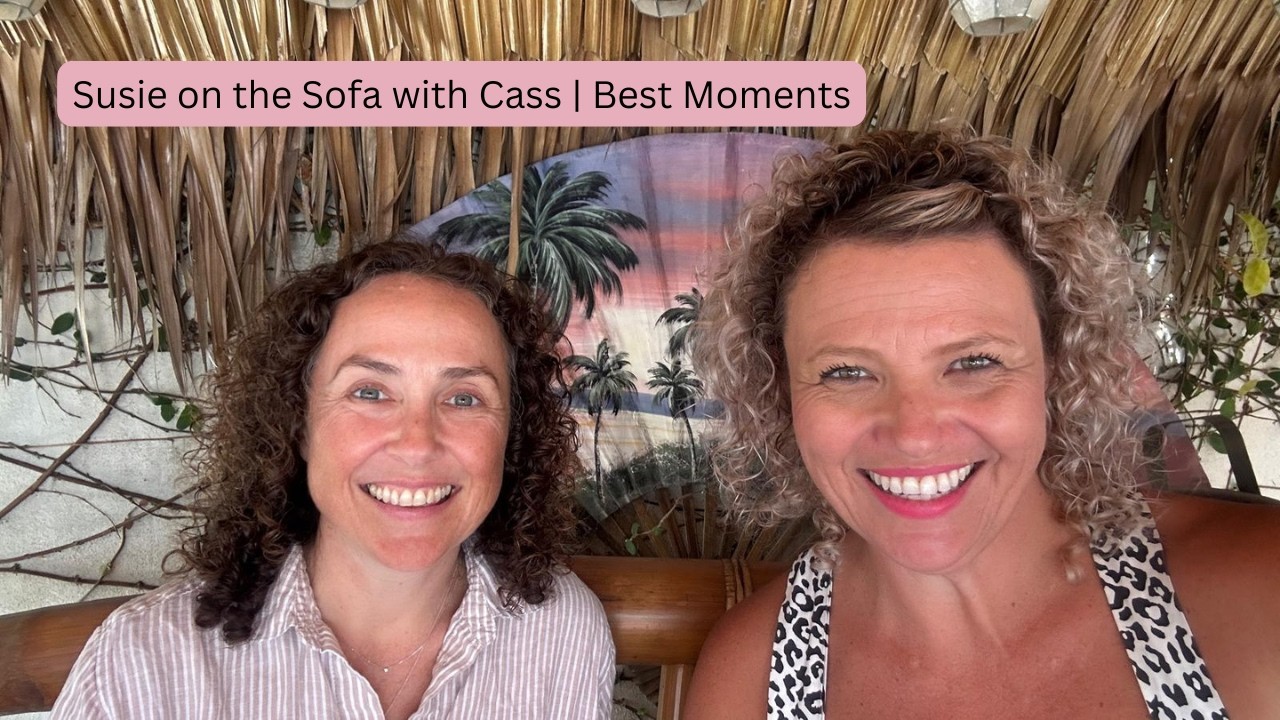
In this interview, host Susie Taaffe asks pilgrim Cass to walk through a typical day on the Camino and the cascade of decisions that fill it. Cass describes how each morning begins with choices about wake‑up time, start time, distance, route, gear, food, water, bathroom stops, and even whether to talk to others or wear headphones. He explains how this constant micro‑decision‑making leads to decision fatigue, turning everyday logistics into life‑like choices within the “Camino bubble.” Cass admits he began the trek with a naïve, overly‑confident mindset— assuming 25 km a day would be easy because he is fit— but quickly learned the physical strain of elevation, weight, and the emotional weight of sustained effort. Within three days the Camino humbled him. He then highlights the unique social fabric of the trail: the “secret club” signaled by shells and arrows, an instant kinship among pilgrims that creates a supportive, almost guardian‑like community. As a solo female traveler, Cass never felt unsafe; the trail’s communal vigilance, the presence of other walkers, and the culture of looking out for one another foster a safe environment. The conversation weaves together practical daily logistics, personal growth, and the collective safety net that defines the Camino experience.
Chapters
So can you just talk about like a day in the life of the pilgrim and the decisions you were making and, and what was consuming your thoughts at that time?
Yeah, yeah, for sure. Yeah. So it, and, and the Camino is, it's a very, once you get into the routine, it is a, it's a very simplified day, but you have, you're constantly making decisions and the decisions start as soon as you wake up. So, um, what time am I waking up? What time do I want to start walking? Is it a hot day? Do I want to walk in the heat? If it's a cool day, maybe I can start a little bit later. And then, um, when you start, how far are you actually going to walk that day? So you have to— so how far are you going to walk that day? When are you going to stop to have a break to eat? When are you going to stop to have some water? Uh, where's the next bathroom? Um, uh, how much stuff are you going to carry? Are you going to carry your bag? Are you not going to carry your bag? And they're just, you're constantly making decisions. So when you actually decide, okay, I'm gonna walk 25 Ks today, sometimes there's deviations. So you can take the normal route or you can take the road less traveled, which is a deviation. Generally it's longer. So do I wanna walk further today? Do I wanna have a different experience to everyone else? Do I wanna walk with people? Do I not wanna walk with people?
Mm-hmm.
Do I wanna stop and look at the cathedral or the church or the historic relic or the Roman bridge or whatever it is? Yeah, do I want to walk with people? Do I want to talk today? Do I not want to talk today? Do I want to have headphones in? Do I not want to have headphones in? Like, it's just, it's constant decision-making all day. Have I eaten enough food? Have I drunk enough water? Um, do I want to stop in this town? When do I want to eat lunch? Do I want to take my shoes off? Do I want to swap my socks? Do I need to put on more anti-friction cream? Um, are my feet, uh, am I getting any hot spots? Like, you, you become— and, and then once you actually get to the destination in the afternoon, it's like, okay, well then I need to make all the decisions for the next day. How far do I want to walk? Where am I going to stop? What route am I going to take? And you do become— you get decision fatigue because it's every day you have to make these decisions, and every day you're walking through different places and you're staying at different places and you're meeting different people. Um, and it's— they're, they're life decisions, but they're just in this microcosm of a Camino bubble. Um, and it's new. Every single day is new. You have— unless you've walked that particular Camino, you don't know what towns you're going to be walking through. You don't know what services are going to be there. Are they going to have a cafe? Is there going to be a bar?
Yeah.
Is it Sunday and then everything's shut? So do you have to actually make sure you have enough food to cover you for a couple of days? And then you get to the end of the day and you fall exhausted into bed and then you wake up and do everything again the next day for 800 kilometers.
So it's actually not really about the walking, but I think probably, did you go into the experience thinking, oh, I can walk 25 kilometers a day? Like, that's not that, like, I can do that. I'm fit. Like, I love moving. I walk a lot at home anyway. Like, you think it's about one thing.
Yeah.
And guess what?
Yeah, it's not. It's absolutely not. And I was very naive and ill-prepared and had a real Aussie spirit. Oh, of course I can do this. This will be easy. She'll be alright, mate. And I'm fit and I'm healthy and I'm young. And I thought, oh yeah, of course I can walk 25 Ks. That's not a problem. Without factoring in that I have to walk 25 Ks every day for 6 weeks, that I'm carrying a backpack, that that's a physical weight, but then there's the emotional weight as well. Um, and the— I didn't really prepare well enough for the elevation, for the uphills, for the downhills. I bought some hiking poles, um, thinking these are— I don't need these. Well, these are, these are for old people.
Yeah.
These are for old people. Um, so I had no idea how to use them. I, I was literally like a deer in headlights. I had no idea what I was doing. Um, and the Camino humbled me within about 3 days.
So that was pretty fast.
It was pretty fast.
As Cass will attest to, I think that's why anyone that's walked a Camino, you say that and it's an instant kindred, like, bond.
Yeah, it is.
Isn't it? Because you're like, I see you. Like, I know where you've been. I know how you felt. Like, within— yeah, a parameter. But yeah, like, it's like, it's like an I see you. Yeah, it is.
Like, it's like a secret club.
I see you.
It is like a secret club. Little shells and arrows, which are the signs that you follow on the Camino to know which way you're supposed to go. Um, but yeah, it is, it's an instant connection, it's an instant bond. And in normal life, you see people and you meet people that have done Camino and you instantly connect with them. But even when you're, you know, some days you're walking through big cities, um, some days you're walking through small towns, some days you're walking along the ocean, some days you're walking along the road and you see someone ahead with a backpack or you see someone with a shell. And you instantly know there's a kindred spirit. There's someone that I— that will help me. There's someone that will help me if I need help. It's, it's a, it's a, um, I mentioned it before, it's a little bubble and it's a really safe little bubble. And, um, yeah, you have an instant connection with people.
Yeah. So let's just talk about that for a second because I haven't actually even spoken to you about this, but the safety aspect of it, like you were in the middle of nowhere.
Yeah.
Walking as a solo female, but I don't remember you ever once saying you didn't feel safe.
I never felt unsafe. Um, I walked, uh, 800 kilometers across the north of Spain and then kind of through the center of Spain. And most days I walked on my own. Uh, I would walk with other people sometimes. Um, and sometimes— and, and the 2 Caminos that I did were, uh, different in volumes of pilgrims.
Okay.
So the first one had fewer pilgrims than the second one. Um, but even, even when I was on days when I was walking alone, I never felt unsafe. I never got that, that spidey feeling, that sense of, oh, this is an unsafe environment. And you always know that there's people ahead or there's people behind. So if you need something, you can stop and someone will eventually come along. Um, even in the towns that I walked through and the places that you stay at night, like, um, in normal life, you would never leave your phone charging on a table in a hostel.
Yeah.
Not in a million years. Or you would never leave your, uh, backpack unattended. You'd always lock it away in a locker. But on the Camino, it is such a safe environment for everyone, for There were lots of solo female travelers. Never ever once did I feel unsafe. Did I? I never felt threatened. I never felt— yeah, it was— it's a wonderfully safe environment.
So there's nearly like a guardianship.
Yeah.
Like a guardianship of the Camino Trail.
Yeah.
Probably both energetically and also within the community and the bubble that everyone is there to support everyone else on their journey.