Day 6 - The Missing Key to Manifestation
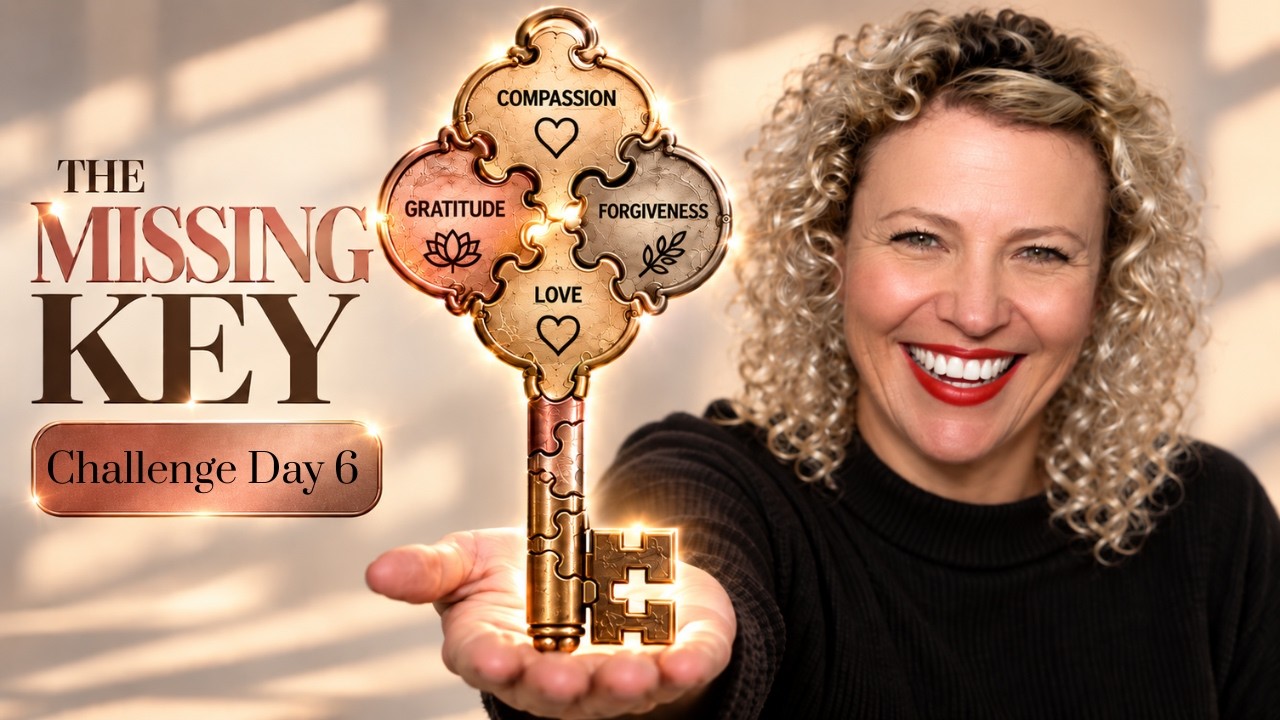
Susie Taaffe explains why manifestation gets stuck: you're rejecting parts of yourself like Selfish Susie or Angry Susie. She calls this emotional shapewear. When you apologize to and integrate these disowned parts instead of suppressing them, you restore worthiness and manifestation actually works.
Chapters
Hello, welcome to day 6 of The Missing Key to Manifestation. I'm Susie and this is Susie Unshaped, where we basically peel off all the junk that's stopping us from living our best lives and remember who we truly are. So I don't normally film in the day because, um, we have construction going, so the trucks are really loud, but I did leave you yesterday on A bit of a cliffhanger. And like, I was perplexed. And I even— I seem to be watching all my videos back. I don't normally do that, so I don't know why that is. But anyway, I was, I was, um, watching it back, and even when I was saying some of the things, I'm like, no, that's not it, that's not it. And I told you that I would be pondering it overnight, and I have. And I know now why I was so confused, because This part is the key, and I was getting it wrong yesterday in the recording. As I said, I'm just figuring this out with you. Like, I am working through it, but I think by me stumbling through the mess, you can see— like, you, you're figuring it out with me. Like, you're like, oh, and I wonder if any of you actually even picked up when I was trying to do the thank you and the I love you Um, part, this section about how I was getting it wrong. And what was making me get it wrong was the emotional shapewear that I've been like taught to conform. And, and so by me saying thank you for sharing your XYZ anyway, even though you didn't want to, that is just like tightening the shapewear a little bit. That's— and I know, like, I get it now. I get what this process actually is. And then I had even more of a clanger, and it dropped in as to like, I know why we're doing it, like, um, what's the word, theoretically I know that it's missing, but I really— the why, the embodiment of the why really hit me as I was figuring this out. So that is the beauty of live recording this process and the figuring out, because I think You know, like if you don't drive somewhere and then you've got to drive there again, like, so you're a passenger in the seat and you don't drive, and then you've got to drive there again and you're like, oh God, I can't remember where I'm going. It's a bit like that. Whereas if you were the driver, you're like, oh yeah, that looks familiar. Oh yep, I, I noticed that. Yep, I know. Like, do you know what I mean? You know a bit more where you're going. So that's why I'm bringing you along this journey with me figuring this out, because It's kind of like I'm putting you in the driver's seat as well. It's, it's not just me stating things at you that you need to comply with. It's figuring out why we're doing this and like what is the core underlying reason and why that will have an effect on our manifestation. Anyway, I probably held you off for too long. Okay, so We're talking about sharing and sharing— I got stuck with what we were saying thank you and I love you for, and now I know what it is. Well, I believe I do. What we are trying to do is integrate the parts of ourselves that we felt bad about E.g., selfish. Selfish Susie is bad Susie. Um, and what— and so that's why I was getting the thank you and I love you wrong. It's, I am so sorry that you had to share that when you didn't want to. And I'm also so sorry that by feeling that selfishness or feeling like I don't— that toddler, I don't want to. I don't want to. Made you feel like you were less than, like you were not worthy. This is the wound we're trying to heal. So I forgive you for not knowing any better, that being selfish made you feel unworthy. I forgive you for not knowing That you can still be selfish, Susie, and be completely worthy and whole. We do not want to forget that part of us. That is the part that we have been forgetting for so long. And look at my conditioning yesterday. I jumped straight into putting her back in the hot seat. It's like, no. Uh-uh. So the thank you is Thank you, Selfish Susie. Thank you for standing up for me and actually saying, oh, hi, um, we're over here, we actually do want that, we don't want to share. Because I know you were doing it to protect me, and I know that that doesn't make me any less than. For you standing up, I'm sorry that I have been pushing you out and rejecting you because I deemed you as not good. And I love you, Selfish Susie. I love you for standing up for me. I love you for being the little voice in the background when People Pleaser Susie was there with her megaphone and trying to take over again. I love that you tried to stand up for us. Like, I love you so much for that. Oh, breathe. Because now it's clicking into place, the key. And what my biggest aha moment— and do you know what, I probably said these words, but I have now, I've now felt them in my body by having to go through that process and figure out what the compassion and forgiveness and thank you, gratitude and love, like how do we shape that in order to heal that wound. And look, yesterday I jumped straight into papering it over. Didn't I? No, you're really great because you did shit. No, thank you, Selfish Susie. Thank you so much for standing up for us, like, and saying no, we want that, for being our voice, even though I haven't been listening to you for so long. And I love you just as you are. You are allowed to be selfish and still be loved and still be whole. And so that brings me to the missing key. And why our gratitude and manifestation is not working is because we can do the gratitude, do the journaling, say the affirmations, all of that, but if these tiny pieces of us feel rejected and not loved, that's creating a tension in, do I actually deserve that? If selfish Susie has been pushed down so much, how can I deserve what I want? Can you see that link there? I was just like, oh my God, I'm so glad I struggled with that process because it made me really realize— really realize, that's a good combo of words— how important this front end of the process is, because I cannot get what I want to manifest if I've got selfish Susie shoved in that closet back there. Because she's going, oh yeah, we do want that, we do want that. But I haven't acknowledged her, and I haven't acknowledged the pain that I've brought her by trying to be good and do the right thing and don't rock the boat. So I'm so excited, like I just have had that aha in the embodiment of how can I get what I want to manifest if I've got parts of me that I've shoved in the closet and have not accepted as being okay and loved and a part of me. Because selfish Susie's saying, yes, we really love those manifestations. Yes, please. But I've told her to be quiet. I've told her her opinion doesn't matter because it's bad to be selfish. And therefore, I still have wounding inside of me that actually makes me feel like I don't deserve it. And this is all hidden. But if you've got wounds inside of you, Like selfish Susie. I've got to stop saying that. I think I like the two S's. Um, I have always liked letter like the double letters. I can't remember their simile. I can't remember what they're called, but well, I remember onomatopoeia. Remember that from primary school? Um, I don't know what that is though. I used to know. Um, but if I am not getting selfish Susie out and saying, I am so sorry, selfish Susie, that they made you do something you didn't want to do, and I forgive you. I forgive you, selfish Susie, for making you feel like you weren't welcome at the table. Like, that's— we're forgiving the part of us. We're forgiving ourselves for making selfish Susie feel like she had to live in the closet and be quiet and couldn't compete with People pleasing Susie and be good girl Susie. So they're the parts that this process is going to give the love to and say, I see you. Like, I am so sorry that I neglected you. Please forgive me for neglecting you because I was taught that including you made me a lesser person. I'm so sorry. Please, like, this is literally, please forgive me, Selfish Susie. But I forgive myself for making Selfish Susie sit in the closet and not be welcome at the party. And thank you, Selfish Susie. Thank you so much for trying to stand up for us, even though I rarely listened because I kept shoving you in the closet. Like, thank you for being a little voice trying to advocate for what we truly wanted. And I love you, Selfish Susie. Like, I love you so much. Thank you for being a part of me and for having my back, even if I didn't listen to you. And it just actually reminded me of Inside Out the movie and Inside Out 2. Well, Inside Out the original and 2 are both really good. Because they really talk about— I think, is it Inside Out, the original— is where Joy is trying to take over the party. Joy, Joy, Joy, Joy, Joy! And I think she keeps pushing Sadness away. No, Sadness, go away, we don't need you, we need more Joy, more Joy, more Joy, more Joy! And eventually everything— like, I can't remember, does Sadness lose it? I think Sadness might lose it and causes like an extreme like system Malfunction and like system breakdown. And that's what I'm talking about. And then they go in Inside Out 2 where they do all the teen emotions and they introduce envy and jealousy and, and they introduce hormones and they introduce all these other factors. But the premise of the movies is these emotions are all welcome. Like, if you have too much of one, it's out of balance. You— it— everything needs to be balanced. Like, yes, there will be sadness, but that doesn't make sadness wrong or make you a bad person to be sad. And sad is probably not the best example, but like envy— like, I think she's the green. She's really sassy and she's all green and she's really sassy, this envy. Um, but Envy is also helpful for us. Like, all of these parts of us are doing their job for us to stand up for us, and we need all of them to balance out so that we can feel whole. And we cannot shove sadness into a closet or envy into a closet or these emotions, because eventually they just lose it and everything— that's, you know how, uh, like when you irrationally React to something, and afterwards you're normally like, hmm, was that reaction commensurate to what actually happened? Let me think. Ha! Quite often no, because anger that you've been shoving in the closet—don't be angry, stay calm, stay cool, keep your cool, don't be mad. You've shoved that into the closet because you're being a good person by keeping your cool. But then something happens, and you probably have reason, let's say, to be a six out of ten angry about it. Like it's a it's like something that you want, like need to feel angry about. But instead, you hit like a twelve out of ten. Like you are just. And that's because you have brought all those instances where you've shoved anger in the closet and haven't listened to Angry Susie. You've made her sit in the closet. Go away. We're not going to be angry. We'll be calm. We're not going to be angry. But all that's doing is shoving those emotions down, down, down, or into the closet, shoving her. Get back in the closet, Angry Susie. No time for you today. We're going to be zen. We're going to be calm. We can't lose our cool. And then that thing happens, and oh my God, she comes out. You let a little bit of her out, and she comes out like kaboom, like whoa. And so when that happens, it's a brilliant time to like look at your reaction and say, okay, if I hit a 12 out of 10. For a 6 out of 10 reaction. What is this showing about me? Where else have I been abandoning Angry Susie and shoving her in the closet and not letting her have her say in order to keep the peace? Be good. Don't rock the boat. Don't say what you want. Like, where have I been doing that? Like, write it down. Think of a situation And it might not be anger, it might be sadness, it might be selfishness, it might be whatever it is. But like, and you know what, maybe when I gave the bottle of wine incident, which was ridiculous, but, and I've actually got a really good friend in mind, it's not actually her that brings the bad wine, she's the one that brings the good wine. And she always whispers to me, she goes, I brought this because I really want to drink it and I don't want to drink her wine that she brought. And she's so funny and I love her so much. But It's actually a story about her because, because she's had to hustle all her life. Like, she has had, she has had no safety net, this darling girl. Like, she has literally been slogging it out her entire life. She had no good family support growing up. She had to always, like, flog herself 10 times harder than those around her just to make it work and to have the same life as everyone else was having. Like, She didn't get any help with a car when she like finished school. She had to buy that herself. She had to do all her own mechanics. She had to do her, her, um, fuel and maintenance and repairs and buy all her textbooks and pay for all her uni. Like, a lot of us paid for a lot of that, but then we also had friends that paid for none of that. And I just always have such a soft spot in my heart for this girl, my darling friend. And so I understand when she says I bought this wine and it's a really nice wine. And she goes, and I just want to drink it for myself. And I'm like, okay, I've got you. I'll shadow you. I'll make sure that we'll, we'll hide it somewhere. I'll do it for you so you don't look like you're the one doing it. Because she's worked so hard for it and she's worked so hard for her whole life and she's just, she's got her selfish trait going. I've worked really hard for this and I just want it for me. And I'm like, good on you, darling. Let's get it for you. Because she's like— and she's not saying it to the whole party, she's just saying it to me. And I love— she was done, but like that, under her breath like that. Like, okay, I got you. I'll, I'll help. I'll help manage this. Um, because she has worked hard for it, and she's just allowing her selfish trait come out, even if just to only one person. Does that make me think any less of her? Absolutely not. Absolutely not. I think, do you know what, darling? Yeah, you do deserve that. I 100% think you deserve that. And you saying that doesn't make me love you any less. In fact, it makes me love you more because you've worked really hard and you do deserve it. And I'm so like proud of you for actually speaking it to someone. And saying it out loud because Selfish Susie could probably have a lesson from that. But we're all going around doing this thing, so we're all hiding the selfish parts and the angry parts and the scared parts. Like, what about Terrified Susie? How often we just plaster her over. Hi, no, everything's fine. Yeah, life's great. Meanwhile, I'm rocking in the corner at home. Like, oh my God, how am I gonna make this work? How am I gonna make this work? How am I gonna make this work? It's like, no, okay, we're gonna put on a brave face, put terrified Susie into the closet, and off we go. But wow, why was my pause there? Maybe poor terrified Susie needs a big hug right now. Yes, I am so sorry, terrified Susie. I have actually been plastering over you with love and joy and gratitude and affirmations. That, like, because I conceptually know that we're worthy of everything, but that doesn't make this process less scary for you. I am so sorry. I kept— I literally even, like, I did start to sort of notice her in the last challenge, and then after that it was like I was doing, like, say I was doing something. And it wasn't even that big, but it was something my brain was saying, hey, we can't do that. Nope, nope, nope, nope, nope. We do not have resources for that. We cannot do that. We cannot do that. And I was like, yes, we can. Terrified Susie, get in the closet. I'm gonna be brave Susie, and I'm gonna jump and do it. Terrified Susie, you get in the closet. But the trick is, like, what I've now learned from this process, it's not— don't put terrified Susie in The closet. We're not sticky taping over her with gratitude and joy and conceptual beliefs of who we are, like spiritual concepts of, no, I don't need you, Terrified Susie. We are one, we are whole, we are Zen, we can do this. This is the part of the process that I have been missing. So we need to bring Terrified Susie with us. We can have Brave Susie and Terrified Susie side by side. We don't need to push her down. We can, we can have 2 traits in symbiosis. Is that the right word for that? Who knows? I seem to make things up. So yes, Brave Susie, we're going to do it. And yes, Terrified Susie, I am so sorry that you feel so scared. I forgive you. As in me. I forgive you. For making, for plastering over terrified Susie with like spiritual bypassing, love and joy and gratitude and oneness and wholeness and spiritual zen, because that didn't give her the compassion that she needed. So now I can say, thank you, terrified Susie. Thank you for having my back. Like, you're right. We don't have all the pieces figured out and You have every right to feel terrified. Thank you for having my back. Thank you for being the, the part of me that's trying to stand up for logic. Thank you, Terrified Susie. You— why don't you and me and Brave Susie, we're all going to do this together. And yes, I can feel terrified and brave at the same time and do the thing anyway, but I was pushing her away. So she's welcome. This is the key. This is the key. Because any part of ourselves that we are pushing away is a part of us we make feel like they're not deserving. And the not deserving is key because how can we manifest our dream reality? If we have parts of our, like, if we have parts of our character that we've told they're not worthy. So if we have a pattern going in the background, in this filing cabinet, no, you're not worthy, shove you in the closet, you're not deserving of being here. Everyone needs a seat at the table. And then Susie can feel like integrated and whole, like in Inside Out. Once all the emotions got in sync with each other and learned how to work with each other and were balanced, that's when things could flow. Like, this is why I had to come on Trucks and All this morning, because I was so excited about understanding this revelation. It's like everyone needs a seat at the table. That is the magic key. And any part of yourself that you have been shoving down or hiding away, They are the magic key to why you don't feel deserving, like, wholly deserving, fully deserving of what you're trying to manifest, because you've got parts of yourself that you've told you don't deserve a seat at the table. Okay. I'm so excited by that. I hope you're excited by that because I'm so excited by that. Like, you cannot believe. So excited I came with Ponytail Susie today, but we love Ponytail Susie just as much as we love regular hair Susie. But I was so excited that you got me as I am this morning, trucks and all. So do we have homework? Yes. We have homework. Homework is just get out a piece of paper or your notes app And just start writing down all the versions of you that you have been putting in the closet or hiding down. Like, when have you said no when you wanted to say yes? Or when have you said, yes, I'll share, when you actually didn't want to? Like, be like my friend. Did you work really hard for whatever it is that you don't want to share? And as I said yesterday, it doesn't mean that all sharing is pushing Selfish Susie into the closet. There's a million times that you want to share, and it's not—it's not making a part of you feel unaligned. Like it's not making you feel—is unaligned the right word there? No, suppressed probably. It's not making a part of you feel suppressed. Like I want to share all the time, and it doesn't push something down on me. But there might be instances where you just don't want to share. Say the armrest on a plane, especially if you're in the middle. It's like I'm not sharing. Arms out, wings out. Like, but you get what I mean. Like, okay, so that's your homework. Just write down all the times when you haven't spoken up for yourself and see if you can find a common thread. Is like, and it will start showing you the parts of yourself you've been taught and conditioned To push down and push away because they are the key. They're the magic key. To bring them out, invite them to the table, to sit at the table with all the good qualities and good characters that are there. We're inviting all the characters to sit at the table. And then we're going to apologize to them to start with. I am so sorry I shoved you in the closet. I forgive you, to me, for shoving parts of yourself in the closet, for suppressing parts of yourself to be amenable and the good girl and nice, and because you thought it made you bad. Thank you to all the parts of me that make me me, and thank you to the parts of me that I have suppressed. Thank you for putting up for me while I figured this out. Like, I literally even needed overnight to figure it out, like what we're actually doing here. And I love you, Susie, every single bit of— like, with every single character. I love greedy Susie. I love selfish Susie. I love proactive Susie. I love planning Susie. I love happy Susie. I love sad Susie. Do you know what? I know this is getting long, I'm sorry, but I nearly think like we have the base formula now. And I really love the analogy of everyone gets a seat at the table, and it's a round table, it's equal, there is no hierarchy. Everyone gets a seat at the table. Every part of your personality, every character trait, every character flaw, all get a seat at the table. So that's your homework. Write them all out and just imagine them all sitting at the table. And then I would say sorry to the ones that you have been neglecting because you've met— because you have been taught. Like, a toddler doesn't know this. That's why I was using the toddler reference. Like, a toddler doesn't know that— well, hasn't been taught. Doesn't know is not right because it's not a thing. Hasn't been taught to conform, that selfish is bad. Like, let's get our learnings from the toddlers. They don't eat what they want to eat. They don't eat what they don't like. They only eat what they want. Like, they go about in their little clunky— their clunky way, and they investigate things, and they look at things, they touch things, and they smoosh things, and they try things on. And like, they haven't got any of the conditioning that we've got. They play and they dance and they sing and Okay, that was a digression. Sorry. We're inviting all of our parts out to sit around the round table. We have the round table of Susie, or whatever your name is. That is your round table. They are your team, and everyone gets a place, and everyone is loved and valued the same, because it's giving yourself that love and value which is going to create the deservingness. Like, I am deserving because I've now loved all parts of me, and there's no part of me saying, no, actually, you told me we're not deserving of that thing we want because that would be bad. See the link? I've told myself that, and it's sitting down here hiding. And then I'm asking for these manifestations. I'm asking for what— but I've got this part of me saying, no, you told us we're actually not deserving. So I've got a program running I don't even know is running. I can be all gratitude and love and joy and da, but if poor selfish Susie is over here saying, actually, you've given us instructions, we're not worthy, we're not deserving, that's the part I need to look at. So homework, go do that. Invite them to the table. Apologize. Forgive yourself for neglecting them. Thank them for always having your back, even if we had turned ours on them. And then love all of them. And that is the whole— loving all of them. And then each situation is just an example of one of these characters saying, hey, this is a situation over here, you might have neglected me a bit. Great, perfect. We can let our 3D reality show us the parts that are still feeling a bit neglected. Because those are the parts that will be triggered and we'll be like, oh my God, I am so sorry, greedy Susie. I did neglect you and I'm sorry. I love you and you're a part of me. And being greedy Susie doesn't make me any less deserving, any less whole, any less worthy, because I am lovable when I'm greedy. I am 100% lovable because unconditional love Which is this source energy, unconditional love. Like it's in the title, it's unconditional. There are no conditionals. There are no conditionals. Okay, probably time to go if I'm making up weird words like that. Can't speak, you know what I mean? There are no conditions to you being 100% worthy and 100% deserving. You can theoretically know that though, and that's what they're trying to teach us with gratitude and for manifestation. They're trying to teach us to be grateful with what you have right now. But 2 things can be true at once. You can be grateful right now, but you can also say sorry to the parts of yourselves. Like, you don't need to— you don't need to sticky tape over them with gratitude. It's like, oh yeah, yeah, yeah, they're there, but no, I'm going to gratitude, gratitude, gratitude, gratitude. It's like, it's not going to work if you've got parts of us Us? Me? You? You know what I mean. Being neglected. Okay, I love you lots. I'll see you tomorrow. Like, bang! Today was a clanger. Bye, love you.
More from Susie



How to run your day from intuition instead of autopilot programming (including FEAR)

Code HEATWAVE for 30% off - my gift for your thighs! #heatwave #chafe #california skanties.co

Heatwave proof 🔥save your thighs - use code HEATWAVE for 30% off! #heatwave #california #thighs


