Day 8 - The Missing Key to Manifestation
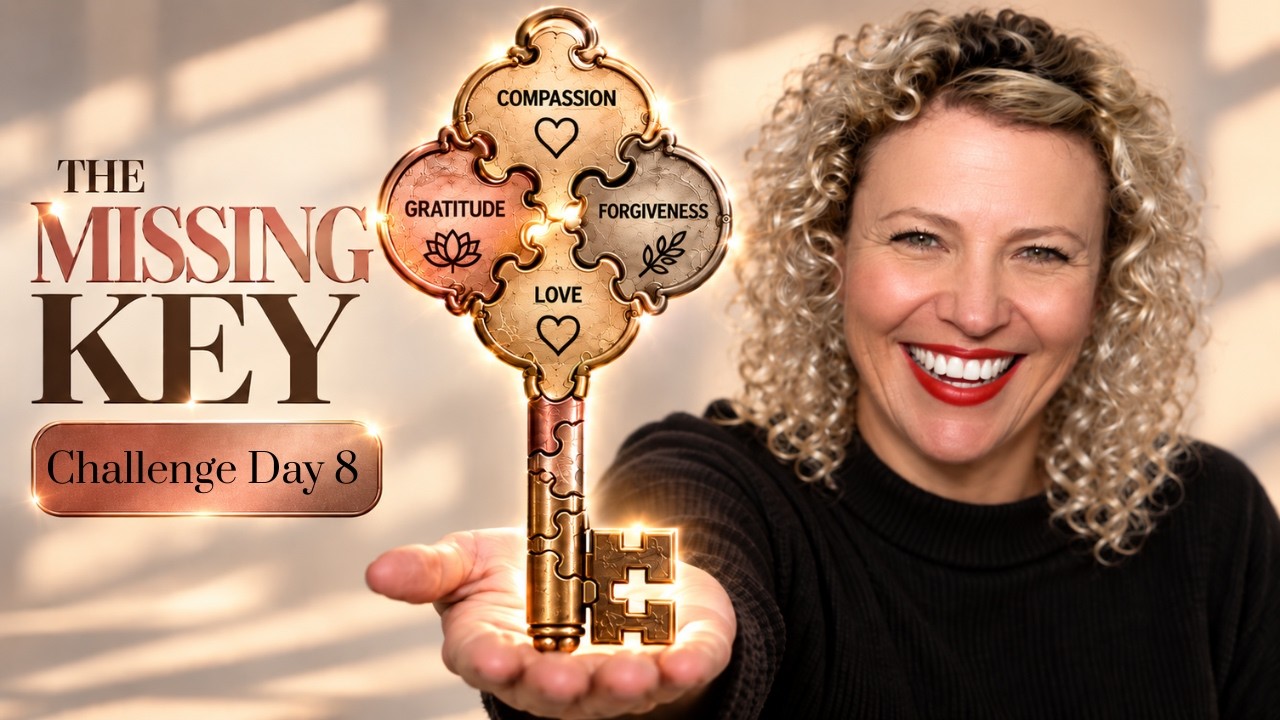
Susie explores why manifestation stalls when you disown parts of yourself. She teaches a dual-forgiveness practice from Ho'oponopono and shows how to detect imbalance by monitoring your nervous system on a 1-12 scale. Integrating neglected parts, not shunting them away, is the missing key to making the law of attraction work.
Chapters
Welcome to day 8 of the Missing Key to Manifestation. I'm Susie. This is Susie Unshaped, where we're unshaping everything that prevents you from living your most amazing, beautiful life. Okay, day 7 hit me again, and I realized on my pondering that it was the same wolf, different clothes, basically we could say, as it was when I got stuck the other time. And I was right. It didn't feel right because we don't need to forgive those traits. Like, we do not need to forgive that part of us. If anything, it is us that needs to be forgiven by them for sticking them in the closet, for disregarding them and hiding them away and not realizing that their voices were worthy of being heard. So, and this is really interesting because it comes back to the, and I still haven't looked it up, the Ho'oponopono prayer. Let's hope we were close. There's lots of N's and lots of O's and a couple of P's, which makes it difficult, but which is, I'm sorry, please forgive me, thank you, I love you. So it's even in the inspiration is please forgive me. And I don't think our process is that simple. I think that we need both, please forgive me and I forgive you. I think we need to use them both and whichever one feels natural. Like I knew it didn't feel natural to forgive Lazy Susie. It's like Lazy Susie didn't do anything wrong. I need forgiveness from Lazy Susie, so please forgive me, Lazy Susie. for making you feel like you as a character trait were not lovable and were not worthy to be here. So breathe. I don't know why I got so stuck on that. Well, it's good. I think that's why I'm recording this live to you, because I want to work through the process. Because when you hear where I get stuck, it will give you some clues. If you get— you may not get stuck, you might be down with this, but it will give you clues as to where does the forgiveness belong. And really, by forgiving Lazy Susie, I am forgiving myself at the same time. But I think the language matters, because if we start forgiving Lazy Susie, well then Where we're sort of like sticky taping over her with gratitude and love. It's like, sorry, Lazy Susie, you didn't know what you were doing. It's like, no, Lazy Susie knew exactly what she was doing. She was trying to speak up for me. So please forgive me, Lazy Susie. Please forgive me for Well, for making you feel like you deserved to live in the cupboard, to make you feel not worthy. Please forgive me. Like, this conditioning came from a very young age. I did not know any better. So actually, I'm gonna forgive myself at the same time. I forgive you to me because this conditioning has been there before you even knew it. Like, Poor lazy Susie's in the cupboard and not invited to a seat at the table, and I'm feeling bad because I put her in the cupboard, but I forgive myself. I forgive you, me, and Dupree. I don't know, that just opened up for that. I had to. Um, funny movie anyway. Um, I am forgiving myself for not knowing that Lazy Susie, Greedy Susie, Angry Susie all didn't belong in the cupboard. And it's really interesting, and I think going forward, to see the parts of our character like pop up to remind us, hello, I'm here, I'm here. And to catch it— like, as I said, there's 2 parts to this. It's like going back and healing and forgiving and giving compassion to all the parts that have been rejected in the past as not worthy and having no seat at the table because we're being a good girl so that people like us and people pleasing and doing what we should. And then there's going to be the present day moments as things pop up. Your biggest job is just to question, like it's the awareness, like hmm, where did that come from? And do you know what? And I don't even know where this come from, but let's work it because it popped into my head and it's about greedy Susie and I don't know where she comes from, but she has been hidden for a really long time. And I am like— I'm going to tell you a story about one of my birthday parties. We used to have these amazing ballet costumes, and we were always allowed to wear them on our birthday for our birthday party. And I remember I was in the blue fairy costume, and we were— we were— we ate very healthily as kids. We didn't get a lot of junk food, and It was my birthday party and we had ice cream or ice cream cake or something. There was ice cream anyway. I got my cone of ice cream or something, and then whoever was dishing it out gave the next person their cone of ice cream. And in my eyes, I thought their cone was bigger. And oh my God, did I lose it! Greedy Susie was like, hang on a second, this is my birthday. I want the biggest cone of ice cream. Like, I want it. There she was. Greedy Susie was loud and proud. I want the biggest cone of ice cream. And I don't know if that's because we weren't used to getting sweets and I just wanted that sugary goodness to myself. I don't know. But Greedy Susie still presents, and this is really bizarre, and I have to catch it now. I don't catch it. It's like when I'm dishing out food, I will sometimes like literally, which one do I want? And my brain goes into which one looks bigger. Like I want the biggest one for myself. And I still like sort of am like, instead of being okay with that, Like, I will be like, well, I will talk myself down. No, you don't. Why do you need more? Like, seriously, it's going to be like 2 mouths. It might not even be more because it could just be a visual illusion. It might be exactly the same amount of food. And it's like, well, greedy Susie might just be really hungry. Do I always need to have the biggest? No. When we're sitting around sharing food, am I like trying to hoard pieces because I want more? No. So Greedy Susie, maybe she knows something that I don't when I sometimes want the bigger bowl and try and talk myself out of it because, oh no, don't be greedy. Sometimes you can just be like, however old I was, I think it was about 6 or 7, 6-year-old Susie, say, I want the biggest ice cream. I want the bigger one. Okay, I don't know where all that came from, it just popped into my head, but I still sort of say to my— no, you don't need the biggest one, it's fine, it's fine. Sometimes you just want it, and I think that's a great example of me telling Greedy Susie to back down when Greedy Susie's only just looking out for me. And like, we're not gonna psychoanalyze here why Greedy Susie feels like she needs more, because we don't need to know. The point is in the validation of her feelings, like of her, of Greedy Susie, like to validate her. It's like, okay, yes, sometimes We might just want more, and that's okay. Greedy Susie, you can sit at the table. You do not need to go in the cupboard anymore. Up to the table you go, Greedy Susie. And I'll be like, I'm so sorry, Greedy Susie. I am so sorry that I made you feel like you didn't deserve to have the bigger serving. I know I'm dramatizing this, but Please forgive me for making you feel bad about yourself because you dared to want the larger serving. Thank you for sticking up for us. Me and you. I don't know why I'm saying us, because me, me and Susie and all her friends. I am Susie. Okay, this is getting weird. Thank you so much for sticking up for us when our— when we really truly want something. And I love you for having— I don't know why I'm looking over here. She's not sitting there. I think I'm visiting my table, going like around here. I'm like, keep looking to her at the table. She's not there. She's in here. Anyway, that's my computer mouse. Thank you. I love you, Greedy Susie, for speaking up when we want something instead of us trying to pretend that we don't. Well, not trying to, we are pretending we don't. And there's times in life where being greedy will protect you and times in life when Being— what's the opposite of greedy? Not greedy. Not greedy will protect you. For example, what— an example of being not greedy, where Greedy Susie and Not Greedy Susie might have to come and sit at the table together and we might have to work it out together. You know, like maybe say you're like buying a house, something big like that, something where there's negotiations. And you're negotiating, and this is an instance where maybe being greedy might not be in your best interests. So you've got greedy going, oh, but I just want— I want them to throw in this, this, this, and this, and I want $5,000 off. And then we've got Susie, not greedy Susie, over here going, oh yes, but We really love the house, and what happens if we don't get it because we wanted XYZ thrown in and the $5,000 off? Like, are we happy to not get the house if we, if we want to stand true on getting all of those other things? Okay, I'm going to end up in a pickle again here because I've just introduced the 2 polar sides of things. And I suppose we've got Not Greedy Susie and we've got Greedy Susie. Now we're both sitting at the table, all of us, trying to work out where is the middle ground, where can the 2 traits coexist together. And I suppose, well, that does bring in that all of our opposite traits do coexist. Do coexist with each other. And I think the trick is to get them in balance. And I feel like when they're not in balance and one side is always winning and one side is always being shoved in the closet, that's when we get kaboom. Like, that's when we— that's when you lose it. Like, you've got to let Susie be greedy some of the time, because if she's never greedy, greedy is going to get really mad and like really like noticing things where everyone has more than us and every— everyone— this is just projection stuff, this isn't real, but do you know what I mean? Like, if you keep giving away bits of what you want, bits of yourself really, by not speaking up and saying, I kind of want that. Greedy Susie is eventually going to burst out of that closet and go, rah, we want that and we want it now. And you know what, it will be over something silly that didn't really matter that much. But you— we can't keep shoving these character traits into the closet because the misalignment that that causes Will present itself. As I, I'm not sure if I used it as the, um, example of when I had the blow-up, the anger blow-up, and it was like years and years and years of being nice and playing nice and doing the right thing, and then I had this one work event and something happened at the end of it with another person, and this person just made me see red. Like I was furious, like steam, like a cartoon character, steam blowing out my ears, angry. And eventually I calmed down. It took me days, like day. I'd always like scream. I'd be driving along just mid, like driving screaming at nothing. Like I really, really blew a fuffle valve, burst a fuffle valve, whatever it is. So that's why we need to invite them all to the table. Everyone needs to come to the table and just see, like, if you're getting triggered by things, it's because you're out of balance. Joy and sadness need to be in balance with each other. Oh, I've got the light hands again. Sorry. Joy and balance need to be in balance with each other. What did I say? Joy and sadness. Greedy Susie and not greedy Susie need to be in balance with each other, and it's going to take a while to get them in balance with each other. And your triggers are going to be the best, like, indicator of where you are out of balance. Like, who needs a seat at the table? And then where have I been abandoning that part of myself? I'm writing a list Can't see it down that low. I need to come up higher. Where have I been abandoning myself? Where have I been abandoning Greedy Susie to be not Greedy Susie? And I've eventually slowly had just a little bit more taken, a little bit more taken, a little bit more taken, and it's thrown me out of balance that Greedy Susie is getting really grumpy. So As these triggers— like, you know what a trigger is? When you start yelling at something for no reason. When you— like, I used to always— I have these— I wear these like shirts to bed, and in the morning I have these round knobs. Well, I used to. No, I don't have them anymore. But the buttons in the shirts used to get caught on the knobs in the kitchen when I would get up in the morning. And I would get like coat hanged. I'd be like, whoa, back, back we go. And I could always tell where I was sitting like trigger-wise by my reaction to something like that. If I was like, oh God, not again, oopsie daisies, I was good. Like I was pretty low, everything was pretty imbalanced. If I started swearing and cursing and rah, then I know that something's out of balance. So that's an indicator. And like, what? I'm not gonna rage at the the buttons and the shirt and the knob. But it's a really good indicator if you are raging about or you spill your coffee or something. You spill something. You drop something on the floor. You smash an egg. Notice how you react, and then that will tell you where. When I say like. I'm really talking about your central nervous system. The central nervous system, if it's like at a 9 out of 10, you do a 1 out of 10 or a 2 out of 10 thing like smashing an egg, and— or you're at 11 out of 10, you're swearing and whatever. Oh, excuse me, I need to sneeze. Excuse me. Oh, sorry. The reason why I'm talking about this is that So as triggers come up, we can grade them on what— where are you out of 10 in your response to that? And where do you think you were before? Like, if you're really losing it, like, you can grade. It might be a doozy, in which case it gets a bigger— it gets a bigger marker. So you might only be at a 7. So a 3 event, you'll just be at a 10. So you're simmering, but you're not blowing it. But if you get a 5 event, then you're gonna blow it. But if you're sitting around a 5, like, that's— I kind of like to sit at a 5 or a 6. Like, we need stresses, and we do— we, we can't just, as I said, just— we can't just float around meditating all day on retreat and, and singing Kumbaya. Like, that's not reality. So I think sitting around a 5 or a 6, I can start telling when I get up to the 7, 8s. 7 and 8s, you're kind of like noticing words coming out of your mouth. You're getting annoyed in traffic. Things are annoying you that they shouldn't be. Someone writes an email, oh my God, you, you, you wrote me an email, like, how dare you? Um, when you're starting to get up at a 9, a 9, you'll also notice that you're physically exhausted. Well, I find that I like, once I start getting up to a 9 out of 10, I actually nearly stop functioning. And that's where my brain stops making just simple decisions like what salad to buy to take to a barbecue. True story, I couldn't figure it out. Like, I had a total meltdown glitch. Like, I actually was past being able to blow because I was nearly catatonic. That's how bad it was. So maybe that was a 12 out of 10, but it was just a very quiet 12 out of 10. Sorry, I digress about the missing key to manifestation. Like, why is this important. I'm trying to work through triggers and what they look like and then pull them out and just— where have I been abandoning myself at the moment? Who have I been shoving in the closet, telling them to stop, go away, we can do this? Is it— has Competent Susie been running the show? I can do this, I can do this by myself. I've got this. I've like, go away, incompetent Susie. You're not welcome. And incompetent Susie is just like, oh, please, can't we just ask for help? Just a little bit of help. Just please, please just ask for help. I'm like, nope, nope. We've got this. We've got this until we don't. Until we don't. So look at the things that are coming up in your life. Like when something comes up, Where are you? Where's your central nervous system sitting? Because we, like, only you are gonna know how you deal with that. You are going to know how you respond when you're at a 9 out of 10, a 12 out of 10. Like, how are we feeling? We feeling pretty good or no? I probably overreacted a little bit there. The coffee machine probably didn't need to be called those words. And just start to notice in those instances what caused it. It's often not related to the thing, but your reaction is going to give you— the reaction is going to give you the notice to write down, okay, I had that reaction, I'm going to look into that. What am I angry about right now? What am I pissed off about right now? Write that list we've been talking about, the list, list, This list, we're writing the list. Where have I been abandoning myself in that area of the list? Like, I'm angry at this person because of XYZ, but I've really been abandoning myself in there because incompetent Susie wasn't being listened to. I'm so sorry, incompetent Susie. And I wasn't asking for help. Competent Susie was running the show, she was doing it. So the person I should— well, we're not going to be angry at Competent Susie, we're going to forgive her for taking over and not letting Incompetent Susie have a say. So now I've got character traits talking to each other. This is getting messy and confusing, and I'm glad this is an experiment because the process at the end of this will be nice and much more clear and clean than this. But maybe Competent Susie is saying, please forgive me, Incompetent Susie, for always taking over. It's, it's all I've really ever known. I'm just trying to keep us safe. And Incompetent Susie says, thank you, Competent Susie. I'm so glad that you can see me. I'm only trying to get us a little bit of help so you don't have to be so strong all the time. And those 2 can then bring themselves back into balance. And when we balance each polarity of each character trait of who we are and the polarity of both sides, that's how we're going to get our cohesive table. And in actual fact, I think the round table just got an upgrade. Now I think I'm gonna have the opposite traits sit across from each other. Mm-hmm. Because they're the ones that need to be in balance. So if our whole table's gonna be in balance, We can't put all the dominant gang in one corner and all the ones that get shoved in the closet in another corner. Now we're really gonna have to make a cartoon movie on this now. Like, I can picture it. I'll have to contact the writers of Inside Out, and we need like the Knights of the Round Table, how to get everyone in balance. But no, Inside Out, I seriously truly recommend you go watch that movie because It's the best depiction of what I'm trying to say. It doesn't use all the emotions, but it's just like the first one is about joy trying to take over and sadness doesn't get a say. The second one, they add in all the teenage hormones, etc. So anyway, the point is, where are you out of balance? I know I spent a long time getting here today, but I really think we've hit a crucial part of this key is that all of our parts need to be in balance. So where are you not in balance? And it will show up because you will become triggered and overwhelmed and just not feel like— just feeling like annoyed. Maybe you can write a list, write a list of areas. Just have a play with this and have a go at writing a list of all the areas where you may be neglecting yourself a little bit. Be really honest and just think about the opposite of that. Like where you're neglecting yourself, think about what's the opposite trait of that. And have you been overplaying that to fit, to fit into your own expectations, societal expectations, all the shoulds that we have on ourselves? I think this is a really good exercise. I'm going to leave you with that homework. I love you lots. Did we even do the process once this time? No, but I'm building it. We know the process. I'm so sorry, please forgive me, or I forgive you, thank you, I love you. But now we're working out which areas and how to identify the areas that still Still have this wounding hidden inside them. Because often competent Susie is not letting incompetent Susie have a turn at the table because she actually doesn't feel worthy herself. So she's trying to do do do do do do do to feel worthy because she feels if she's been seen to be incompetent. That would not make her worthy. That would make her less than. True story. True story. And I still do it today. The thought of asking for help is like, I rarely would. I occasionally do. I remember me and my sister were actually, um, traveling with my cousin and his friend, and we were all trying to move these chairs, these big heavy chairs over to watch. We're at the Redwoods up north of California. and we wanted to watch the sunset over the, the, the creek and the— or the river and the redwoods. It was beautiful. Anyway, Cass and I are hauling these big heavy chairs. My cousin keeps saying, hey, just let us help you. Um, no, sorry, here, we'll get them, don't worry. We're like, no, we got it, we got it. And they're like, no, like, no, just set them down, we'll get them. And we're like, no, it's okay. And my cousin was just like, damn it, women, will you just let us help you? And Cass and I were both like, Oh, yep, guilty. Like, they offered twice before they had to say clearly, would you just let us help you? And we were like, okay, you're right. So how often in life— well, for me, I had a mum help me out a couple of times. Yeah, like twice recently with driving one of my daughters to places and dropping her home and stuff, and I was like, oh no, it's okay, I can do it. She was like, no, it's fine, I got it, I got it. I love the Americans saying, I got you, I got you, I got you. I can't say it. I gotcha, I gotcha. Um, and I let her do it, and it was just amazing. Like, it opened up my whole night. I was able to do some things I wanted to do just by accepting the help. So, okay, this video has gone on long enough, but Where are you abandoning yourself? That's really what we're looking at, cuz they're the parts, like, that's why it's the missing key to manifestation. Because if we don't investigate the areas we're abandoning ourselves in, we can't feel deserving in our entirety. And so manifestation Will not work if we have parts of us that don't feel deserving. They're gonna block us instantly, and this is all happening subconsciously. So you might be going, yeah, where's that car I ordered? Where's that car I ordered? And you've got poor not greedy Susie over here— no, sorry, poor greedy Susie going, but you said we can't have everything we want. You said that's not allowed. You put me in the cupboard, and now you want this really fancy car. But you've told me we're not allowed to have it. Perfect example. You've shoved Greedy Susie into the cupboard and now you want this beautiful, amazing car, but Greedy Susie's still in the cupboard saying, but you told us we can't be greedy and have every— exactly what we want. Sorry, I'm going to leave it on that. That was perfect. Okay, I love you lots. I'll see you tomorrow. I'm excited. Bye.
More from Susie



How to run your day from intuition instead of autopilot programming (including FEAR)

Code HEATWAVE for 30% off - my gift for your thighs! #heatwave #chafe #california skanties.co

Heatwave proof 🔥save your thighs - use code HEATWAVE for 30% off! #heatwave #california #thighs


