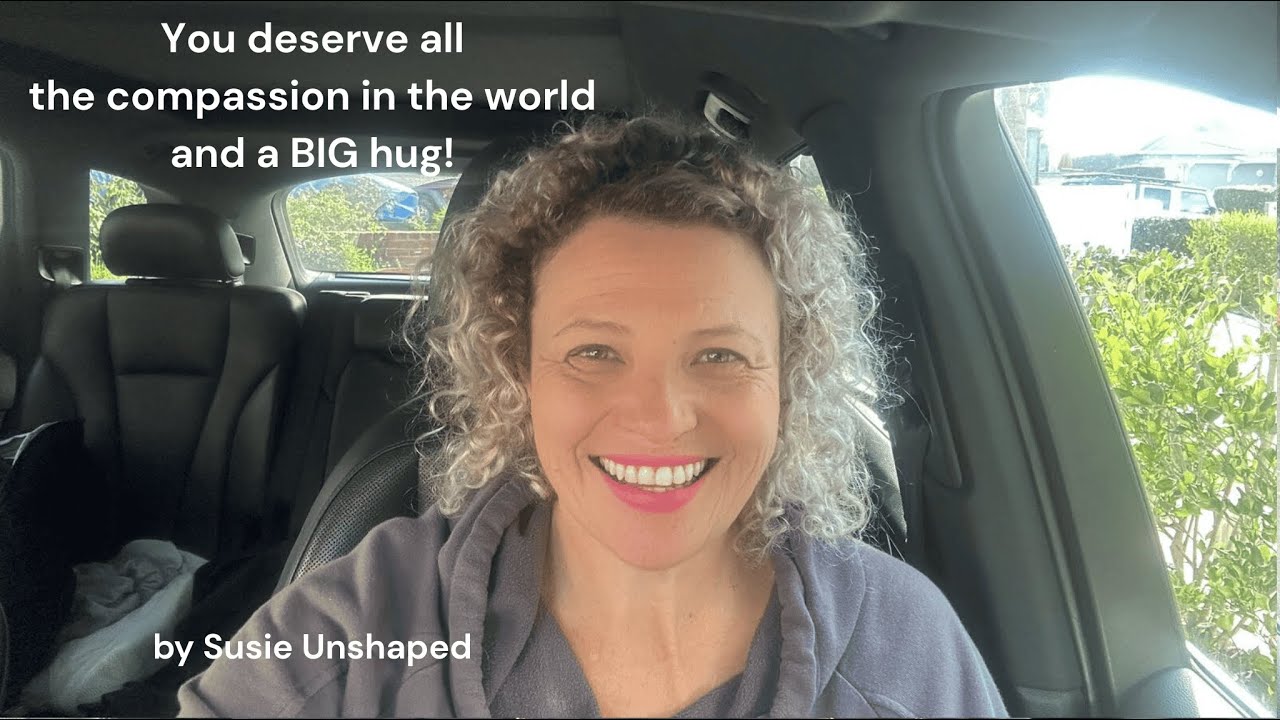
In this single‑speaker guided meditation, the facilitator invites listeners to recall a childhood memory in which they felt "bad" or inadequate—such as stealing a lolly—and to view that moment through a compassionate lens. The speaker questions whether the child is truly bad or simply lacking societal guidance, then encourages the listener to see the inner child as deserving of love, acceptance, and a "big hug." The talk emphasizes that shame and guilt are socially‑imposed beliefs, not inherent truths, and that by visualizing the younger self and offering unconditional compassion, one can peel back layers of emotional pain. The facilitator repeatedly acknowledges their own emotional response, uses metaphors like an onion and the idea that "time is not real," and stresses that present‑moment compassion can heal past wounds. The overall purpose is to guide listeners toward self‑acceptance, emotional release, and a deeper sense of inner wholeness.
Chapters
Go back to a time when maybe you remember getting in trouble, or like a, a core memory where you might have been— like a memory where you can remember feeling not good enough. You did something wrong. You— like, I remember I stole a lolly once. Not good. Bad girl. Like, what have you done? And like, who knows why I even stole it? Like, we're kids, who knows why I stole the lolly? Um, I probably wanted it. Kids don't have that societal filter that you can't just take things. Um, and really, why can't you? But anyway, that's another story. That's a concept of— that's, that's nothing to do with what we're doing here. But I want you to go back to that time and see yourself as that child and like see yourself like Not in the stealing of the thing, but in the, the feeling of being bad afterwards. Like, is that child really bad, or have they just not figured out how society has taught us to function? Like, if we— like, do you know what I mean? Like, is that child deserving of feeling that awful? Oh my God, I'm crying again. Is that child deserving of feeling that awful about themselves? And like, if you can see it through that lens, does that child just deserve to— why am I so emotional? Does that child just deserve, like, to be picked up? And like, we don't want anyone feeling that bad about themselves inside, but yet we have taught ourselves— like, we have been taught by society and by people around us these messages that We're bad and we're not good enough, and we've stored them down deep in our, like, like, belief systems, and they're just not true. Sorry, I'm trying to get myself together, but they just— it's not your truth. Like, think back to when you were a spark of infinite creation, like, growing in the womb. Like, that little child is not bad. That little child does deserve. Oh my God, I'm so emotional. Oh, obviously I've got some feelings down there in the filing cabinet right now that is feeling this love and compassion and how everything about you is amazing and just deserves pure love and compassion, and you are just such a miracle and So think back that you can do this not even when you're a child, like any time that you have felt shame, guilt, that you're not enough. Like practice going and visiting that version of you and offering them your compassion, like offering them compassion and love and Seeing yourself for who you truly are. So I know I've probably been banging on a little bit too much at this, like the absolute, this is who we are, but this little process where we just— where we— where I've just went then by accident is actually the peeling back the layers of the onion. Like, this is going to pop up in so many different ways for you. And in order for us to be so absolute in knowing who we are, we need to revisit all those memories and just see that it is a child or a younger version of you that just deserves compassion and love. And to give them that compassion and love, like, even you give them to it in the now moment, but time is not real. So right now, all moments are at once. So you can love that part of you, that version of you in that time right now, and they will feel it. They will feel your acceptance. It's the self-acceptance and realizing all those stories that we were told and made to believe about us not being good enough and being bad and doing things we should feel shame about and guilt about, that none of that, none of that is real. Oh, sorry about that. I didn't expect that to happen, but there we go.