Dating Apps Are Failing Us Here’s Why | ft. Scot McKay
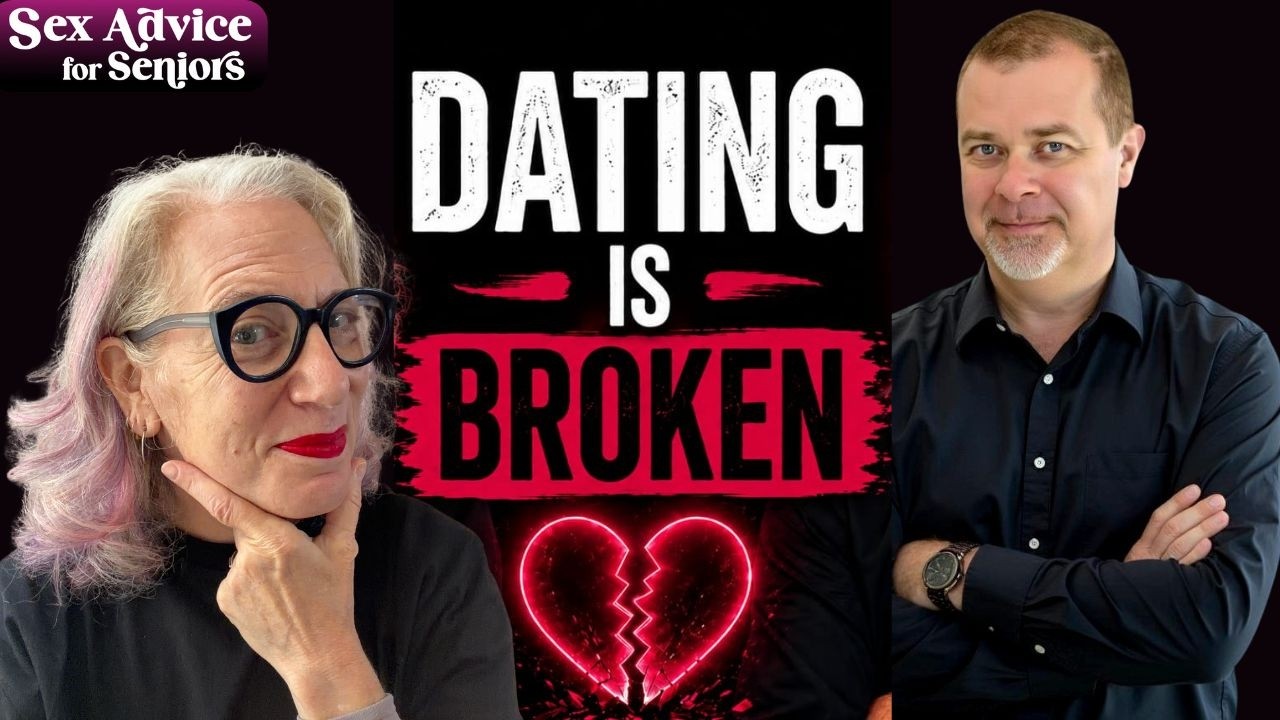
In this episode of Sex Advice for Seniors, host Suzanne Noble interviews relationship coach and author Scot McKay. McKay declares online dating "dead," arguing that the rise of swipe culture, AI‑generated profiles, and pandemic‑driven app addiction have turned modern dating into a transactional marketplace. He contrasts this with the "golden age" of early 2000s online dating, when meeting strangers online felt novel and exciting. Both guests discuss how generational shifts have eroded the sense of partnership, with many people now focused on what they can get from a relationship rather than what they can give. McKay introduces his "Big Four" standard – confidence, good character, authentic masculinity/femininity, and long‑term compatibility – as the traits that still attract quality partners. They explore health and authenticity issues that disproportionately affect older daters, noting that men over 60 often retain authenticity, while many older women struggle to find healthy male partners. Practical alternatives to apps are suggested, such as curated dinner parties (e.g., the "Time Left" concept) and real‑world meet‑ups. The conversation also touches on the rise of "red‑pill" male subcultures, victimhood mentalities, and pervasive cynicism fueled by media and family‑law narratives. Both hosts stress the importance of self‑work, clarity of intent, and a "deserve‑what‑you‑want" mindset rather than a "get‑what‑you‑deserve" attitude. The episode concludes with a reminder that, despite cultural upheavals, the universal drive for sexual connection remains unstoppable.
Chapters
I have absolutely declared online dating dead. I think a lot more people are transactional in terms of their relationships instead of trying to find connection. One of the things I said recently in one of my programs was there used to be a perception that there was a war of the sexes. Nowadays, there's sort of more of a mutual surrender. I don't need women anymore. Women don't need men anymore. Yeah, the men go in their own way, which are a larger faction online than guys actually trying to get better with women. But the good news is whoever is, for lack of a better word, optimistic about this millennia of positive relationships between men and women and still believes that men and women were designed to be literally in partnership with each other, you have lesser competition. You have less competition in general.
Hi, this is Suzanne Noble, and you are listening to Sex Advice for Seniors. And I'm very excited to have with me today Scott McKay because do you know what? I have spoken to so many women dating coaches. I have lost count of the number of women that I've spoken to and I don't think I've spoken to a single guy who's a professional dating and relationship consultant like Scott is. He's also a career coach, an author, an adventurer, a stand-up comedian. We share something there, Scott. And he's originator of the Big Four Standard for being a man who deserves what he wants. And I'd love to hear what that is. And God, you've been podcasting since 2006. Well done. With his show, The Mountaintop. Scott, welcome to Sex Advice for Seniors.
Thank you. As far as podcasting since 2006, I'm indeed well done. You might say crispy around the edges rather than say medium rare. As I like my steaks. But you know what, you and I have something else in common.
What's that?
I too have talked to countless women.
I bet you have.
Yes.
Yeah. And I'm keen to hear, you know, you've been doing this, helping men and women build relationships for two decades. Unbelievable. How have you seen, or have you seen attitudes towards sex and dating evolve over that period of time? How have they, how have they changed? And especially when you think about 50+ people.
Yeah, well, absolutely. Online dating took us all by storm in the early aughts, and then our smartphones came out. Social media revolutionized everything. We got into a swipe right culture, then COVID hit. And we were all locked down and couldn't even go see each other anyway, even if we wanted to. And that's when the dating app companies really put the screws to us and decided, hey, we're going to get you addicted to our app without anybody meeting each other. So now everybody's still trying to play with an online dating app. Everybody's frustrated because nobody can meet anybody from an app. And if they— even if the beautiful people do get connected with each other, they look at each other and go, you're not who I expected you to be because AI drew your picture and AI drew you know, basically wrote your profile for you. So that summarizes basically the electronic changes since I've been on board here. What has that done for us attitudinally? Well, I think a lot more people are transactional in terms of their relationships instead of trying to find connection. They're saying, well, you know what, heck with that. I don't even know what that means anymore. Just tell me what you're going to do for me.
Yeah.
And a lot of, you know, one of the things I said recently in one of my programs was there used to be a perception that there was a war of the sexes. Nowadays, there's sort of more of a mutual surrender. Like, you know, I don't need women anymore. Women don't need men anymore. Yeah, the men go in their own way, which are a larger faction online than guys actually trying to get better with women. So yeah, it's kind of a mess out there. But the good news is whoever is, for lack of a better word, optimistic about this millennia of positive relationships between men and women and still believes that men and women were designed to be literally in partnership with each other, you have lesser competition. You have less competition in general than you used to. Just to go out and find someone good and actually build a good relationship together, it seems like that's almost a unicorn scenario nowadays, you know.
I think it's really interesting what you say about this idea of a partnership. I had this discussion with my mom the other day, actually, because I think, and I'm just writing a piece about this now, it's like when people consider a relationship, often the last thing they're thinking about is a partnership. I think they're thinking about all other kinds of shit. They're thinking about, you know, like, is this person hot enough? Like, is this person gonna like turn my world upside down every single second of the day? You know, like, am I gonna get this intense chemistry when I meet them that's just gonna last forever. Like, we have this— like, I think for me there's been— because a bit like you, I don't know when you started getting— well, you said two decades. So I started online dating in 2000, 2000. So I've been online dating on and off for just over two decades. And two decades ago, online dating was absolutely amazing, I have to say. Like it was full of interesting people who were just astounded that this thing called the internet could actually like provide us with opportunities to meet people that we'd never have met otherwise. And I was just like, I met so many cool people that I'm still friends with because they were all professionals because you had to have, you had to have an internet connection, which wasn't everybody. So We had the little dial-up box, you know, like, and then we'd watch the picture come down. It would take like 20 minutes and we'd be waiting to see what this person looked like because most of the time I had no clue what anybody looked like. No clue at all. Because it was, it was, it was this brave new world. But nowadays, of course, everybody's got an internet connection. Everybody's got access. It has become completely transactional. And I think that as a result of that, some of the early charm that was— that I felt about internet dating is just long gone. Like, I was just happy to meet a person, never mind like have a whole series of tick boxes. So I think, you know, for me, it's like when I look at it now, I think I wish in a way that I could go back to those early days where actually I was just really happy to just meet somebody new without thinking anything other than maybe this could be a new friend, you know, maybe, maybe this could turn into something. Whereas now I think you're right, we— it's transactional. And also we've just got way too many tick boxes, which isn't really what partnership is all about, is it?
You know, well, several things there. First of all, I have absolutely declared online dating dead. Yeah, I don't think it's coming back. I think, uh, I think Pandora's box is opened. The ship has sailed, whatever corny platitude you want to apply to that. Yeah, that's trite by now. I think we— the old school is going to be the new school. It's all about going out there and actually meeting people in real life. But I will echo what you said. I believe there was kind of a golden age of online dating, probably from about 2003 to 2007 or '08 when the iPhone came out. And that was the day the music died with the swipe right culture. So the golden age started with the ubiquity of digital photography.
Yeah.
Because it used to be before that, it was just like going on Craigslist or, you know, yeah, which I loved as well. Right. It was like, it was like a personal ad in your local indie newspaper.
Yeah.
You know, do you like piña coladas and getting caught in the rain? There were no pictures and people would have excuses for not having pictures. You remember that? It's like, no, I don't have a camera. But then when it, then when it started to not be a valid excuse anymore, because there was a camera on your phone, et cetera, then all of a sudden you could actually see who you were dealing with. Uh, the filters weren't nearly as elaborate as they are now. So everybody, you know, if they put their best pictures up there, I mean, some people would kind of fudge it and put old pictures up there or 40 pounds ago pictures and things like that. It was never, never without, you know, its whole fraught set of problems. But however, I met my wife online. And, you know, if you could get pretty good at sussing out who was being fake and who could actually write intelligently rather than having ChatGPT or Claude write it for you, then you could meet a real person and probably not be so disappointed in them when you met them. And I too, I went out with so many wonderful adorable, precious female human beings. And they are, they've always been out there. Some of them had rough times with other guys. I solved that problem for them by not being another in the train of terrible guys. So yeah, but I agree with you. I think, you know, I met my wife online, never would have met her otherwise.
You know, you know, people that do, I mean, I know that online dating is difficult and I agree with you that it that it's hard. I still meet people online, and— but my attitude towards it is totally different than what it used to be.
I'm also probably very good at it.
Yeah, I'm good at it, and I'm also very clear about what I'm looking for. And I still think that being clear about what you're looking for, regardless of whether you're meeting people face to face or meeting them online, is the number one thing you have to be. Like, if you're not clear about what you want, you're not going to find what you want. I just think that's—
a lot of people aren't even clear about who they are, let alone who they want, you know, nowadays.
Yeah.
Another thing you said that was really good, and I thought bears repeating and underscoring, is that online dating did something very important for society. It, it was the closest thing to replicating an entire social milieu of people who were single like you, which after we graduate from college, we generally never saw again up until online dating. So this marketplace, as it were, of people who are single like you, an adult, who are all theoretically available, was a bonanza, especially, especially when it first started and could still be today if we were able to make it work for us.
Yeah, absolutely. And, you know, so you've said that people are now gravitating towards real-world interactions, and I agree with you.
I hope so.
More people. I mean, interestingly enough, just as a little aside, I belong to a sort of— it used to be an exclusive members club in London that's now a global members club. And as over the years, they've started attracting more and more younger people as members. And I wrote them recently after being a member for 25 years and paying my dues every month for 25 years, which is a substantial substantial amount of money to say, I'm really a little bit disappointed that there's not more people my age because I used to go to this club. And part of the reason I used to go to it because I used to meet people my age. And I had a boyfriend that I met there who, okay, turned out to be an alcoholic nut job. But aside from that, it happens. He still, he still was somebody I met in the real world, right? And so they called me up literally just before this conversation to say, we would like to make you happy. How can we do that? And I said, you can do that by having an event monthly for old people like me in your club, in one of your clubs, because meeting people my age in real life is fucking difficult. Like, I don't know how you do it. Like, any ideas? Me? Yeah, you're the, you're the dating expert. Like, people, how do old people like me go and meet people in the real world? Because partly we're drawn to apps because, as you just acknowledged, that's where the single people are. So where are the single old people?
Now, I will acknowledge, typically, now I know a myriad of exceptions, Typically the older generation was raised right, as it were, in terms of valuing authenticity and really actually showing up for each other. So if there is a demographic that's doing particularly well still with online dating, it would be, I would say, people over 60.
Interesting.
I just hit the magical 59 and a half. So I understand this. I'm right on the cusp of that. I, because of what I do for a living, I'm immersed in AI and technological stuff, but I don't think most people are, nor do most people want to be of that age milieu. So I think if there is a group of people who are going to be more authentic with each other, that's them. And I think online dating can indeed still work for them. Notwithstanding that, It would be the meetup groups. A lot of guys are doing Time Left, which is a curated dinner party between 8 strangers that happens on a Wednesday night.
I've seen a bit of this.
Yeah, it's brilliant. It works wonderfully. It's just about everybody who's used it. And of course, they match you up with people who are like-minded and, you know, perhaps of like age bracket. Yeah. A lot of younger A lot of, a lot of older women nowadays.
Yeah.
Say that all the guys my age are sick. They're boring. They're angry. Their T levels are too low. I want a guy 15 years younger. So it used to be the stereotype was the older guys going for the younger chicks. Now I hear more about younger, younger guys being the target, as it were, of older women.
Yeah. Yeah.
So I think a lot of people are going to Well, let's put it this way. Either, Suzanne Noble, people are taking care of themselves or they're not. You know, you see this in your late 30s. You know, there are people who are well kept and people who are not. And some people get into their 60s and 70s and are still quite healthy and active. And other people are basically waiting to die and, you know, are basically on death's door. So you have two different groups of people. I think for that latter group, it's going to be tough to find someone who wants to you know, who wants to take care of them on their deathbed for 8 years, you know, 10 minutes after they met them. I'm just being honest, okay? Versus someone who is, you know, thriving in their mid-60s, early 70s, who, you know, is ready to date and is ready to be active. I mean, I have several folks I coach in their 70s, and they all fit that description, and they're all very sharp people. And indeed, they're not having a big difficult time meeting people online. I mean, even the men and women I coach in their early 70s are having no problem dating people in their late 40s, early 50s. It's kind of a very interesting shift in how we're thinking about things too.
Yeah. I mean, look, I've spoken to women like Cindy Gallop and even myself. I find that when I go on the apps, the people that tend to connect with me are— I'm 65 and they're anywhere from— I mean, I got one guy wrote to me today. He was like, I told him to piss off, basically.
And he just, he just, he just got confidence builder.
Yeah, right. And he just, well, he just messed me around. And he was 39. And he said, are you going to give me another chance? And I was like, babe, you know, like, you're such a kid, you know, it's honestly, if I could date my own age, I would. Because but as you acknowledge, there's far too many men my own age who just have not looked after their health. And health for me is like a numero uno priority. It's just— it— I don't want to be a nurse. I don't want to be a nurse. I don't want to—
that's the thing. Why would you go out and start a relationship with someone who's already sick so that you can have 3 months of putting up with their crankiness before you have to be their nurse? You know, as they go through dementia or some, some lengthy illness that eventually takes them. I don't think people want to sign up for that. No.
And unfortunately, I've already done that twice in my life. So I'm I'm kind of, I'm really, I'm really done with that now. I really, so for me, like, when people don't look after their health, that's an immediate deal-breaker. But, you know, regarding the older woman, younger men thing, it is definitely something that I'm seeing amongst my own age group more and more happening just because of the frustration that many women my age feel at trying to find an age-appropriate, healthy man. Like, it's it actually feels like a legitimate problem.
And it is a legitimate problem.
I really don't know why it's so difficult for older men to, to look after their own health, because older women, you know, we, we have kind of traded on our looks for, like, under the male gaze for so long that we just, we just are used to kind of having to present ourselves looking our best, right? Like, that's just part of being a woman is like, you don't turn up trying to look your worst. But it feels to me like often when I look at men's profiles on dating sites, I'm like, did you deliberately try to make the worst picture humanly possible? Like, what the fuck is that? Like, you look like you shot yourself in the bathroom when you just like taken a poo or something. Like, it's just so bad. And I mean, so for these guys, like, going back to what you do, like What's— how do you deal with these guys?
Well, if I have guys who have sworn off women, these men going their own way, the red-pilled guys, there's a whole group of guys who basically become the male version of the angry feminists. You know, I need a man like a fish needs a bicycle. They're the men's version of that. And it's a group that's just proliferating online.
Well, I think the men don't like me. Not helping things.
Yeah, well, they don't, they don't like me. Those guys need me to go away because I'm happy. My wife loves me. I enjoy the company of women. I, women love me and adore me because I love them. I mean, the magic bullet nowadays is actually like the gender you're trying to attract. I mean, it's just like, hey, this is like what an incredible new breakthrough. If you actually like women, they might like you back. And what happens is guys like to be their own worst enemy and then blame women for it. This is nothing new. This is something women have done. But the problem is because of the nature of masculinity, us being providers and protectors and, you know, of everything feminine, the enablers of everything feminine, you know, we're We're leading in a way that's in the best interest of our families. Then women are going to go, oh, you don't like me? You don't want to take care of yourself? Well, fine. Have it your way. And we've led. And then the guys will go, well, you stupid bitch. You know, you only want a guy who's, you know, they want to have the six, they have the four sixes now. Okay. You know, you have to have six feet tall, six-figure income, you know, a six-pack abs and a six-inch penis. I'm like, six-inch penis? That's all you got? You know, but I mean, whatever, right? And so what guys do is they take that to heart.
Yeah.
Actually manage themselves so they can't meet those standards and blame the women for rejecting them because they had those standards. And I'm like, wait a minute. Isn't this the same group of guys who when they were 38 were like, hey, I think I want a divorce because I want to trade the bitch in on a newer model. I mean, you know, why? This is a human problem.
Yeah.
And it's not a human problem shared by all humans. Some people aren't that shallow. Some people have more depth. Some people are what I call Big Four. You know, they're confident, they're masculine or feminine. Um, they're, they're people who actually like the other gender and they're of, importantly, that fourth one that portends long-term success. They're of good character. A character alone doesn't cut it because you have people of nasty, terrible character who want to make the world a worse place. And you have people of no character who have never figured out what they believe to begin with and have just sort of wallowed their way through life this whole time, which is inherently unattractive and isn't going to help you connect in the best way possible with another human being. These people suffer at work. They suffer in their social lives. They suffer inside their own head because they don't even know who the hell they are.
Yeah, yeah.
And without that identity, without that firmly grounded belief system, it's going to be very difficult to attract anyone else for anything other than a situationship or something that feels very transactional. So wrap all that up and you have this big problem. And in many ways, you're right. It's not new.
Yeah.
You know, when we get jaded and we get angry, what we do is we become our own worst enemy and then blame everybody else for the problems. That victimhood mentality creeps in. It's anti-masculine.
Yeah.
The irony of men who act like victims is it is in many ways that victimhood that is making things worse for themselves at the attraction level.
Yeah.
And, um, you know, nobody likes women who aren't being feminine in the ways that they bring such joy and fun and play and hospitality and comfort to the world. When women are, are the exact opposite of that, you know, it's going to be hard for them to have a guy who wants to sign off on that too. So It's kind of this vortex of doom, isn't it, Suzanne?
It's not sounding terribly positive, Scott. I have to say that.
Well, the positive thing is you have less competition than ever if you're a Big Four person.
Yeah, yeah.
Yeah.
That's true. Look, I think certainly what I've found is that I don't have any problem attracting people because mainly I'm just happy doing my own thing. So I want somebody who's going to come along and enhance my life in some way. Like, he's going to want me to be the best version of myself, and equally, I'm going to want him to be the best version of himself.
How about that?
And if he, you know, and if he's not into that, then I'm, I'm out, you know.
But you say happy and content, those are the key words.
And indeed, you talk about people deserving what you want in a relationship. What does that mean for somebody who's gotten divorced, for example, or, you know, their partners died and are looking for somebody and are rebuilding their confidence?
Well, I think most people are told they deserve it already, whether they do or not. I mean, you know, you're a narcissistic, evil psychopath who's ruined everybody you've ever met, but you deserve a great woman, you know. No, you don't. You know, you have self-work to do. You have to be able to contribute to another person as much as they're going to contribute to you. Now, see, everybody else is out there looking for someone they deserve too. So if we go into the quest for a relationship or even quest for a one-night stand or anything in between, and we're thinking this person owes me something because I already deserve it, well then what's in it for them? No, nothing. And we think like that. Men and women, everybody thinks like that nowadays. Even people in, you know, gay or straight relationships, everybody's like, what's in it for me? This other person is going to be there to meet my needs, give me what I want, but they're a sentient humanoid themselves.
Yeah.
Now, the magic that's lost there is that when we sentient humanoids get together in partnership, the sum of the parts you know, is greater than the sum of us individually. We connect, we have a better life together. It's a wonderful joy to do something for someone you actually love and care for and have positive concern for. But all that seems like something we need to kind of reach back and recover in ourselves. You know, the joy of being a man and having a woman delight in that masculinity. The joy of a woman wanting to be feminine and having a safe space to do that rather than having the guy roll his eyes and ridicule her. All of that seems so basic, but because of how postmodernism has affected us, you know, it seems like the new normal is anything that's not been normal for millennia. You know, everything we've invented in the last 20 years seems to be the new conventional wisdom, and it just doesn't make any sense. It doesn't even pass Occam's razor test of being the simplest explanation. So people are busy trying to do what they, you know, get what they want rather than truly deserving it. You know, when I came up with that line two decades ago, I thought it was kind of trite. I thought maybe I needed something more original. I looked it up on the internet, Suzanne Noble, and there was one instance of it. Ever. And it was in a commencement address by Charlie Munger talking to business graduates. You can't just expect people to give you your success. You have to deserve what it is you want. And he's the only person who had ever coined it before me. Suzanne Noble concept. Who knew?
I mean, I think that for me, part of the challenge with how we've seen relationships evolve between men and women, and we see We see it most clearly in the younger women, especially who are just rejecting all notions of a boyfriend even being cool, right? That New York Times article that came out a few weeks ago about, you know, boyfriends aren't cool anymore. And we see it in older women. I think I see a lot in older women who are saying, look, you know, I'm done, right? I, I brought up the kids. I did the family thing. My kids are good. I'm like, I've got shit I want to get out on with this guy. What is he contributing to our relationship? How is he contributing now? Because if she's been a working woman and she's got the ability to be financially independent, like that husband that she's had for 20 years who may have gone out and done that stuff and all that kind of stuff, what he's contributing now has to look pretty different. And, you know, one of the things my father told me years ago was You need to prioritize your relationship when you have a family because, and your partner, because if you don't, you're going to come to the end of bringing up kids and you're going to look at your partner like a stranger and think, who the hell is this person? And I think for a lot of older women, that's where they've gotten to, which is they no longer really have any relationship with that person anymore. They were out, they were earning, they were doing stuff. They weren't really that involved with child rearing. And so now they're like, you know what, hon, like, I'm going to go off and do my own thing now. You know, I'm going to— I want to do my stuff. I've got a whole bunch of stuff I want to get on with. Whereas for a lot of older men, they're like, hon, you know what? I've been working my ass off for 30, 40 years. I just want to lie down on the sofa and I don't want to ever get up.
Well, you're not wrong. Um, I have people I coach who are in that situation exactly as you described. And in some cases, the guy didn't even do anything particularly heinous. No, he didn't cheat on her. He didn't, you know, no court, no, no hookers and blow, nothing like that. He just perfect, good, good, decent guy. And the crazy part is once he's back out on the market, women are, you know, he's not gonna have any problem getting a date. But, you know, his wife of X many years went through the same process you're describing. And I've seen it more than once. In many cases, men sign off on a life where they're relegated to their paycheck. You know, I'm being a dad means I financially support these children. I work long hours. My family never sees me. They never get to know me, but I come home and I bring home the bacon. And then when the kids are out of the nest and the woman has gotten her own career, what does she need him for? There's no connection. There's no relationship. So again, that's, that's where this magic of connection and of the masculine-feminine dance was never really ignited. It was just kind of a situationship that became a marriage.
Yeah. Yeah.
Yeah. Sad.
It's really sad. And I think it, you know, it's the hardest thing that I see often in speaking to people is like they want to get They want to reignite this relationship, but it's so dead that they don't even really know where to begin. And I think that can be hard. And as you said, oftentimes those guys go back on the market. And because they have looked after themselves and everything and they're a bit refreshed, they're a catch.
Yeah, then they do the self-work, right? Instead of lying on the couch.
Yeah.
I mean, it's amazing how that cycle works. I also think there were a lot of angry voices who were very prominent in social media. You know, we're all doom scrolling. We have all kinds of messages sent to us on the daily, and most of us never get past the headlines. We don't have time to.
Yeah.
And so the messaging is that they're just— it's just not worth it. Men and women aren't worth it. Relationships aren't worth it. There's a lot of cynicism. A lot of men cite the family law system and they're just getting taken.
Yeah. Yeah.
And really what happens in the family law system, at least here in the States, is the lawyers get all the wealth. The lawyers drain everything from, from the man and the woman. Nobody— the woman isn't getting, you know, the long end of the stick here. And I mean, when we hear such negativity, it's hard to remind ourselves that the loudest people are the ones who are the angriest. Everybody's out there happy and enjoying their lives together. They have no need to get online and complain and rant about it. I don't know. That's my two cents on that. I think there were a lot of people who are still very happy out there. I also think there are a lot of women who, who talk about men being worthless and men being awful as kind of a front, as a protection mechanism against bad men, and also to kind of fit in with this yaya sisterhood of women who think it's cool not to have a boyfriend anymore. But as soon as a big 4 man shows up sweeps her off her feet, she's his.
Yeah.
And they're off to the races together. So it is kind of a big front. And I tell guys that. I say, you know, she'll get on a date with you and she'll start talking about how the last 3 guys have been terrible. You go, well, I'm not that guy. And I think it'll go better between me and you. And she'll go, oh, really? Prove it. Then you kind of hold space for that for a little bit, a couple dates, not for years, not in a long-suffering relationship where she's always waiting for the shoe to drop, even though you're being wonderful. And then you're going to see women go, wow, you are different. I mean, even 20 years ago, that's, that's how I represented on dates. And that house of cards fell sometimes within minutes, Suzanne Noble. Yeah, it really was amazing to watch.
Yeah. And I think not, look, not bringing, not trying to bring your whole suitcase full of, you know, shit into a relationship is never, it's never a good thing. You know, like I, I try to avoid really talking about like the people that I've been with, you know, because it's, it's the past is the past. Anyway, I just want to close with your, about your podcast, The Mountaintop, and it explores high-level relationship insights. And I want to know what is the most surprising truth you've discovered about love and attraction across different generations?
Across different generations?
Yep.
Well, other than how we've always done it was the right way to do it. You know, when there's talk about the patriarchy and how men have behaved badly and women have been barefoot and pregnant, it's like, yeah, yeah, there have been some terrible guys, but there's also been some great guys who did some good things for society. And not everybody as an individual represents that difficult, terrible side of things. The word narcissist is bandied about so cheaply nowadays.
Yeah.
And most of the people who I see, you know, accusing someone else of being a gaslighter are the ones doing the gaslighting. It's really twisted. What I think has occurred to me most is that when people are people of good character, and they meet other people of good character. When these optimistic, generous people meet each other, the relationship tends to go well, whereas the same optimistic, generous person is a prime target of the aforementioned narcissist, and they can be used and abused, and, you know, everything they do isn't enough, and the abuser says, try harder. And, you know, in a world where we have this get-what-you-deserve mentality instead of a deserve-what-you-want mentality and the transactional relationship, the rise of all that, this is happening more often. But when people who are optimistic and generous meet each other and they're of good character, I think the sparks fly and that that's built to last. And if I could shout anything from the rooftops, it would be that that's never changed. And that will never change. That's eternal. The other thing I would add to that is there are a lot of people trying to put pressure on the birth rate, put pressure on marriage. There may be various reasons for that that we don't know, but it's uncanny and it's undeniable. But the one thing, the unstoppable force of the universe you will never stop is horniness. You will never stop sex. I'm sorry, dude. It's not going to happen. People are going to get together and they're going to bang each other's brains out. Now you can have that happen for something that's going to benefit society, or you can have it be jacking off into a cup for an AI girlfriend, but you're never going to stem that tide of sex.
Yeah.
And I found that out over the course of many years too.
Very interesting. And I would tend to, I would tend to agree with that as well.
It's hard to argue with if you think about it.
Well, you know, there's a lot of older women that would say that sex is like, yeah, whatever. I'm not one of them. But yeah, there are certainly those that say that. But I think I, you know, if I was to sum up this conversation and what I've gotten from it is that saying that you came up with all those years ago, deserve what you want. I think that makes that, that is the saying that everyone should have invisibly tattooed over their heart. Right, is just keep that in mind when you're going out on a date. Like, you need—
if you want, you know, to attract the partner you, you want, be the partner they want.
Absolutely, 150%. That is so true. Scott, it has been an absolute pleasure to have a chat with you.
Likewise, thank you.
I know that you're far, far away, probably where it's early in the morning, and it is I'm reaching the close of my day and I'm going on a date later. So wish me luck.
Well, wonderful. London is a wonderful place. I've heard it's a difficult place to date. So bravo. But I think it might be a difficult place to date because London has indeed been socio-politically fraught as far as men and women relating have, have, are concerned. There's a lot going on there. So good for you. Good on you, as they say over there.
Have a lovely day. Thank you.
Yes, you too, ma'am.
More from Suzanne









Why Sex Changes After Menopause (And Why That's Not a Bad Thing) | ft. Dr. Kelly Barron

Why Facesitting Is Trending Among Women: Power, Pleasure & Later-Life Intimacy
