Episode 75: How to Spot a Porn Addict
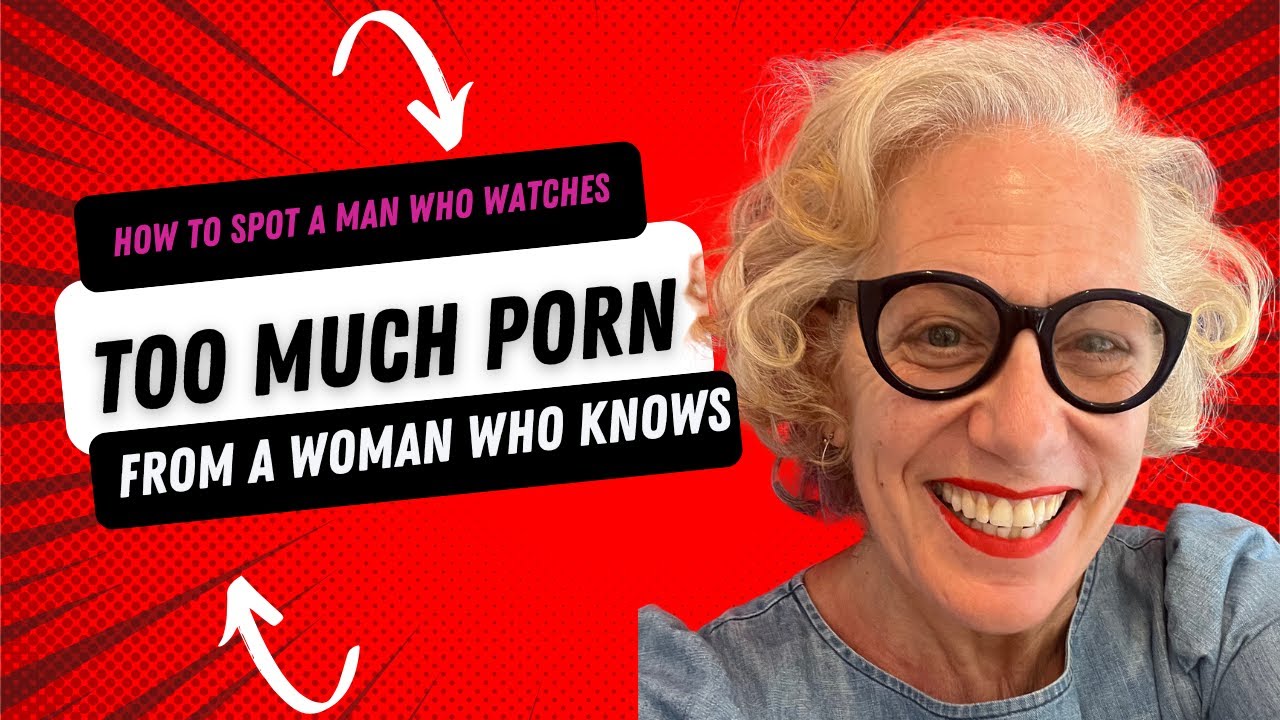
Suzanne Noble discusses how pornography affects sexual response and intimacy. Excessive use can cause erectile dysfunction and difficulty with orgasm, similar to vibrator dependence. Signs include dopamine-driven escalation, and recovery involves cold turkey or tapering, nervous-system work, and practices like Tantra and breathwork.
Chapters
Hello, I'm Suzanne Noble, and I'm Zoe Noble, and you are listening to Sex Advice for Seniors. And we've spoken about it before, about the problem with porn. But yeah, I've had some recent experiences that have made it really apparent to me just how significant a problem it is. And I know that a lot of people think that porn is a problem that is really impacting young people, and that's undoubtedly true, especially very, very young people that are just learning about sex, for whom perhaps their first exposure to it is through pornography. But it's— but my experience is more about the fact that, that when men, especially men, I think, are lonely or are struggling to have intimacy with somebody, it's an easy thing to turn to, right? And the detriment to them when they experience real intimacy with somebody, if they're, if they're spending too long looking at it, can be quite significant. And, and yeah, and I think that's the thing, it's like, it's, it really brought home to me recently that, you know, this is actually, there are certain small things that are, that show up in relationships. If you're wondering, and I'm really speaking to the women out here, but mainly the men too, if you're wondering what are those signs that the person I'm with might be watching a little bit too much, there are certain signs.
Yeah, I think, um, I feel like it's important to just, um, to just sort of validate the, um, how healthy and normal, um, the, the whole idea of voyeurism and exhibitionism is in sexuality. And so, you know, a lot of people, if you know, when we talk about the challenges of pornography and porn use and how, I mean, part of the problem is that it's so readily available. It used to be that, you know, you had to go walk yourself to a theater to see this, or, you know, then, you know, pop something in the VCR and you're sitting here with the TV. But You know, now it's just— it's— it went from computer to handheld device. I mean, it's literally in your hand anytime you want it, 24/7. And that is— has really exacerbated this— the issue. And, you know, so when we talk about porn and porn use, it's not so much that you're watching other people have sex. That's not the problem. That, that is a healthy, normal, and can be really, can do a lot of good for you and, and seeing how other people have sex and maybe, you know, how you might have sex in the future. Like, oh, that's wonderful. What isn't wonderful is the sort of dopamine rabbit hole that you find yourself in looking for the best shot, the next shot, the more extreme, the more, you know, it's that sort of like chasing, chasing the high, chasing the, you know, and the heightening effect.
And I mean, I had heard that, I think there's two things about that. I had heard that when a person watches pornography, their fairly immature brain, human brain, thinks that this is actually they're actually experiencing this for themselves. And so therefore, it's easy to get bored after seeing people having sex in a kind of, you know, just a kind of normal missionary position and think, oh God, I've done that a million times now, because you've watched it a million times and go for your next dopamine hit, right? That's going to give you something new, something fresh. Whereas if you'd never watched any of that stuff and the only, the only time you got those endorphins and everything was when you were actually really physically intimate with somebody, it would take you a lot longer to perhaps get bored of being in the missionary position, for instance. So, so what you're doing is you're kind of escalating your sexual experiences by, you know, by hundreds and thousands, because every time you're watching it, it's like you're really engaging in sex. And that's, you know, that's what a person who wrote a book that we interviewed, you know, about over a year ago said. It's like we don't realize when we're not actually having sex with a human person and when we're just watching other people, as far as our body is concerned, we We are— it goes through all the same stuff. It's, you know, you get excited, you come, you're doing all this stuff, right?
The 4 stages of arousal. Arousal.
Physiological. Except they've been, they've been speeded up. It's like those stages of arousal are now, instead of watching it on 1x, you're watching it on 4x. And it's just like taking you to those points. Really quick, right? And then you get bored, and then you look for your next big hit instead, and so on and so forth. Whereas what, you know, my experience is that— and I've, and I've gotten hooked on porn before, and I don't watch it anymore because I know that it makes it really hard for me to just be present with somebody having sex. And I want to be present. So that's— yes, I want to be there with that person. I don't want to be off somewhere off in my head. Right. But the, you know, the, the problem is that for me, the first signs of maybe there could be a problem in my relationship here, maybe there is something going on, maybe this person is watching too much porn, is, you know, what you called before, unreliable erections.
Right.
And unreliable erections for me have been either you have a heart problem or, or some other health problem, because unreliable erections can be caused by some health condition.
Yeah.
Or it could be other things like porn.
Right, right. Um, yes. And, and I think that's one of the things, you know, when, when someone comes into the practice and says, you know, that they're having, they're having trouble with ED, erectile dysfunction, um, the, the first thing that, that we do is sort of rule out any physiology happening. And, you know, so many times men will come in and say, you know, I've been told that this is psychological, it's not physiological. That's the distinction that the doctor is going to tell you, the urologist is going to tell you. Yeah, yeah. And now what do I do, right? So you're, you're— I love the that sort of description of the, like, instead of 1X, you're now on 4X, and you're— right, exactly. And not only that, but what's happening physically when you are watching porn and masturbating is that you are, um, you are getting your body accustomed to a certain intensity of stimulation by using your hand. For a man, hand. For a woman, I have the same, like, a sort of a counterpart phenomenon, which is women using vibrators and not being able to have an orgasm even with their partner unless they're using the vibrator. The vibrator is fine. It's wonderful to have vibrators. When it's— what— when it's not fine, it's because you've, you've trained your body to respond to the intensity of a vibrator and there's no human contact, either your own hand or your partner's hand, or if you're with a man, a partner's penis, that is going to provide the stimulation of a machine. It just isn't. So then you have to— not permanent damage. There's a lot of people, a lot of vibrator shame out there that you're permanently damaging your nerves. Not the case. It's fine. You can use a vibrator safely. But what you're going to need to do if you want to be able to, if you're experiencing that dependency on it for orgasm, then you need to wean yourself off of it and get your body— and it can take a while, like it can take 6 months, you know, for instance, of gradually decreasing the settings on the vibrator to the point where then— and then using it in a way that you get less and less direct stimulation, and then you can transition slowly into like your hand.
Um, yeah, yeah. With older women, it's— I mean, like, look, I'm speaking personally. I know that for older women, it, you know, it just is harder to come anyway. And like, vibrators are just a part of my life that I have used them. But equally, I just have to take breaks. I have to take vibrator breaks and, and And when I've orgasmed with someone without using one, it's like, yay, I can still do this, you know.
Yay, I'm so happy there. I also, like, I, I'm, I'm in the business of regularly giving people permission to just never have an orgasm without a vibrator, even when you're with your partner. That's okay too. It's not a problem unless it's a problem for you.
Yeah, yeah, yeah.
Yeah, yeah, yeah. But with, with men and porn, or people with penises and porn, um, you are— you're, you're accomplishing that same thing. You, you are, um, putting much more pressure and intensity and speed or whatever it is that you do with that thing.
Yeah, yeah.
And, and then And then in addition to, I mean, that's phys— that's physically, right? And then there's the mental, the psychological piece, the mental piece, the erotic mind, the brain. You're doing the same thing with your brain if you can sort of wrap your head around that. And so what happens with men is that when it comes to real intimacy with a real person. And that it's, you know, it's like you're wanting that hit, you're wanting that. And listen, I'm here to tell you that porn, so much of mainstream porn, of all porn, so much of porn is manufactured. It's a show. Women don't sound like that. They don't look like that. They don't behave like that or respond like that. It's a show. It's fake. So when you get into bed and that isn't happening because actually you're a really good guy and you don't want to ask your partner to behave like inorganically, unauthentically like a porn star.
Yeah.
You then aren't getting aroused.
Yeah, yeah, yeah. I mean, oh, As soon as you started talking though about the intensity at which, you know, women using vibrators and getting used to these really strong sensations, and also let's face it, the new vibrators are using motors and everything that are so much stronger than they used to be back in the days when it was just a little piece of plastic with one battery that you twist at the bottom, right? So, so the they're getting more and more sophisticated, more and more stronger. But I hadn't until this very moment equated that with the same thing happening to a guy's penis, or a person with a penis, and the fact that they were going to have to stroke themselves harder, fuck harder, that sort of whole pounding thing, all of that sort of stuff. I hadn't put the two things together in my head because I noticed just generally that most men that I've been with, you know, recently over the past few years, have wanted that really hard pounding sex, which it's not really like, you know, I especially as an older woman, I have to kind of really build up to that and get super lubricated. So like, you know, it's actually not painful. But it used to be— I've had, I have had people in the past for whom just the pure excitement and just doing it but not pounding was enough to really get them off. And I've noticed that that's not, that doesn't happen so much anymore. And that the pounding thing, and I hadn't until this moment thought Erectile, you know, unreliable erections, pounding sex, obviously not being able to come. That's another one that, you know, I'm— I, I knew about. All of this kind of stuff together often adds up to this person's watching too much porn. Yeah, which is frankly a lot of people I think that I probably know. 'Cause I don't, that's the other thing of course, is I have to be really comfortable with somebody. Either I have to be really comfortable with them or I have to really not know them at all to go, do you watch too much porn? What the fuck's going on? Or that's the person I don't know at all, right? I'm just like, what's happening here? Or on the flip side, I have to be like, can I ask you a question? Right? And it's not, It's not easy sometimes to— firstly, it's not easy to ask it, and I suspect that a lot of men are just not being honest.
I think that's true. I mean, there's a lot of shame around all, all aspects of sexuality, and, um, and, and porn included. And I think that there's a— there's sort of a— oh gosh, you know, I feel like I'm so tired of hearing myself talk about the context that we live in and societal pressures and conditioning and all of that, but You know, here it is. There's a lot of sort of boys will be boys or men will be men. And, and of course they're going to look at porn and of course they're going to masturbate 10 times a day. And of course they're going to. And it's like, that's not fair to anybody, really. It's not like if we could just sort of normalize what actual, actual sexual response is for men and women. Or people, you know, all bodies. Yeah. And, and also start to take care of the mind-body connection as it relates to sex and sexual expression and sexual experience, you know. And hello intimacy, the power of intimacy, you know. And, and porn is like an anti-intimacy machine.
Yeah, yeah, yeah.
And it's really, it's, you know, so I don't know, do we need to talk a little bit about what do you do as a woman if you notice that, like, what are the signs that, that, and how do you have that conversation?
Yeah, definitely. I mean, I think also there's just what, you know, just going back to what you said before about the vibrators. I mean, look, like withdrawing from all this shit, it's not easy. It's not like it doesn't happen overnight. And I think it's fair to say, I know for myself, and I think it's fair to say for other people that if you commit to not watching this stuff, you really have to not watch it. Because like you can't just go, oh, I'm only going to— because people have gone, oh, but I only watch it maybe once a week. For me, it's like I can't look at it. I honestly can't look at it anymore. I can't. It's like the drug that I can dip back into if I want to like come really quickly. And I have to just say to myself, no, no, no, you're just going to focus on your brain. What, you know, just imagine some little fantasy that you have and let's take it from there. Right. Because if you dip back in, you're right back in, in, in that place. And So it's not like, oh, it's okay to just slowly wean myself off it. I think for a lot of people, you just have to go cold turkey.
I completely agree. And listen, I'm in the middle of— I'll share with you that I run a women's program called The Naked Truth. And we cover a lot of— it's a really— there are 12 women in this group and we cover a lot of territory, you know, all kinds of stuff about identity and purpose and all kinds of things. But really, the— it all centers around and builds up to this module in which we take 5 weeks and step away from intimacy with other people and really like climb into a little cocoon with ourselves and in the support, you know, in tandem with, with all of these you know, sisters that have gotten really close. And so it's vulnerable and it's safe. And, and we turn away from all, all exterior, not just pornography, but, um, with our partners, which is a whole other trip about, you know, relational sex and agreements and obligation. And very interesting, but it's, it, you know, what we what the sort of practice is, is to be with yourself and to be with your body and to feel all the sensations. And to, like, it— there's, there's no one, there's no one inserting themselves in that. It really comes down to just you, your hands, your body. Okay, some coconut oil. Um, I have a glass dildo that I send out to everyone. They get a care package in the beginning of this, you know, it's like this box of goodies and a candle and a goddess card and a journal and, you know, all— it's beautiful. And in there is a glass wand, you know, and a speculum. And, and we really get to know our bodies outside of all this external stuff, you know.
Yeah, yeah, yeah.
And it's really beautiful. But you're right, there's value in, in limiting, cutting off all of that and just coming home. To ourselves. Yeah, yeah, yeah.
So let's talk about how we can broach the subject if we think that our partner might have an issue around pornography use. Yeah, to you, Miss Expert.
Yeah, um, it, it— that conversation of course is vastly different if you are having, you know, sort of casual sex or, you know, serial encounters with someone, um, or if you're in like a long-term monogamous relationship, right? Two completely different conversations.
Yeah.
If you are, if it's not a regular partner or it's something that is, you know, that you're sort of maybe getting more and more serious with this person and considering really signing on for long-term monogamy with them. I think that you start by talking about what you are actually experiencing. And that can be like unreliable erections, or that I hear a lot men who want their partners to enjoy it more. So they're there, and the way that they're measuring their partner's enjoyment of the sex that they're having with them is if they are moaning and groaning. Or screaming or acting like a porn star, which is not particularly organic. It's not real. So having that conversation, you know, and really just, just looking at what's actually unfolding and naming it as, you know, a sort of anti-intimacy almost, you know.
Yeah, yeah.
Or like to like like an inability to slow down and be present and savor all of that in the process. I'm going to suggest here, and I don't suggest this often, but like pick up Tantra for Dummies.
Yeah.
Pick up a basic tantra book. There's a book called Tantra Illuminated. Tantra Illuminated by Chris Wallace. Beautiful, beautiful book. Um, Tantra for Dummies. Oh, Urban Tantra by Barbara Carellis. Like, there are some really great, helpful— and, and what that does, I mean, Tantra, sort of, you don't have to, you don't have to sort of adopt the whole yoga, you know, mindset, the whole Eastern thing with a bunch of Sanskrit terms. I mean, that's in there, yes, but really what The power of Tantra is the slow presence, the intimacy. And that, for me, when I introduce that, some of those techniques to couples, it's as diagnostic as it is medicinal.
Yeah, yeah, yeah. I mean, and I think, you know, we've spoken about this previously, is when people think of Tantra, you know, they think of like 10 hours of sex. God, who has time for that? And all that sort of stuff. But for me, most of the techniques that are used are just about how you create a connection, how you, how you stay present, um, how you slow everything down, and how you remove the emphasis on the orgasm. Primarily because, you know, especially as an older person, putting emphasis on orgasming is— can sometimes just put you under so much pressure. And I just think sometimes I'm— I don't want to have an orgasm, or I'm not going to have an orgasm, or I'm too tired, I just want to go to sleep, or whatever, or I don't want the pressure anymore.
Right. Or I just want to— I just want to enjoy the, you know, like Emerson, the journey is the destination. You know, there's plenty of, plenty of women who enjoy having sex that aren't going to have an orgasm, but the pleasure is amazing. And that, you know, I mean, I'm like, I'm, I'm circling the, the Tantra rabbit hole here, and I'm not gonna go down it.
Well, and I also think that the, the thing Because I think the nice thing about introducing Tantra into a relationship, right, is it's, is it's not saying to your partner, I want you to stop watching that shit on, on, you know, on the computer or your phone. Yeah, I want you to stop doing that. It's, why don't we try something where the sex is going to be really juicy and slow and lovely and We're going to get really connected and it's going to be really hot and we're going to go on for a while if we want to. And, you know, and stuff. So it's like it's, it's, it's a, for me, it's like the tantra is a nice carrot. Like it's, this is not going to be bad for you. You're going to love this. This is going to feel really good. You know, it's not going to be that kind of fast. Pounding sex. It's going to be something quite different. But who knows, you might really like this. Yes, let's face it, it's still happening to your dick. It's still— yeah, it's still, it's still something that can be nice. And who knows, you might find a whole bunch of other erogenous zones along the way. Yeah, we could, you know, we could expand the whole vocabulary here of sexual experiences. So make it tantalizing, like you've just gone to McDonald's That was the porn store, right? But now, now we're going to the Michelin restaurant. And I know that you only eat fish and chips, but I'm going to introduce you to some really good food that you're really, really going to love, right?
It's an experiment and it's an adventure. I'm going to, I'm going to drop one tantric technique to play with. And this might actually be a great sort of entry into what what the power of Tantra. So typically, in typical sex that is sort of male-driven, you have— when you, when you think about entering in and out of a vagina, or the sort of the pump.
Yeah, yeah, yeah.
Or typically what a man will do is he will, he will— the entry is fast.
Yeah.
And the exit is slow.
Right.
Reverse that. The entry in— with, with Tantra, the entry is slow and the exit is, is faster, right? And that shifts the entire dynamic, all of the energy and, and the sensations that you feel in your body.
God, that makes me horny just thinking about that.
Okay, we're gonna, we're gonna end there and let you go off.
Oh, you can You can suggest, yeah, that one, that one's got me going. Also, yeah, I mean, I always liked as well the circular breathing. I know it's a bit hippie dippy, but I quite like just sitting cross-legged on top of somebody who's also kind of cross-legged wrapped around me and just, you know, doing the circular breathing technique, which is basically where you just breathe into someone's mouth and they receive your breath and then they you know, they breathe out into your mouth. And I always think that really builds the intimacy as well and the intensity. But yeah, that's my other kind of go-to favorite that I just love.
And Suzanne Noble Noble, I mean, you're describing yab yum, which is a Sanskrit term that means mother father, but it's essentially like the union of the divine masculine and the divine feminine. And you don't even have to do the circular breathing. That, that I love that too. But for some people it feels way too intimate.
Yeah.
You can just eye gaze and breathe and match your breath. Just breathe together, which is a trip trying to negotiate the right cadence of respiration. But, um, but yeah, I mean that it's exactly. And, and so feeling the energy, it's the opposite of the, um, you know, action-based pornography. It's, yeah, it's really the subtlety, the, the getting into the subtleties of our nervous system as it relates to sexuality and nervous system in general.
But then, you know, yeah, yeah, no, it's a— that's— thanks for the practical tips there and for exciting me down. But there's no one here to get excited with, but that's fine. It's fine, Zoe. I don't mind. So yeah, I think, oh, we've got, we've got some guests coming up, I think in not next week. I don't think next week, but perhaps in a couple of weeks, we've got some good guests. And I'm, we're always looking for suggestions of new guests. Actually, we've not put that one out there. I'd love to hear people's suggestions. Somebody told me we should get Esther Perel on, but yeah, I think she's probably very busy or Esther is, she's hard to get ahold of for sure. Or Dr. Jeff or something, but yeah, Jeff the therapist, Jeff therapist, Jeff. We can aim high maybe for 2024, but if anybody else has got suggestions, we'd be really delighted to hear them. But until then, that's all for me.
And that's all for me.
More from Suzanne









Why Sex Changes After Menopause (And Why That's Not a Bad Thing) | ft. Dr. Kelly Barron

Why Facesitting Is Trending Among Women: Power, Pleasure & Later-Life Intimacy
