He Was Married… But Knew Nothing About Sex
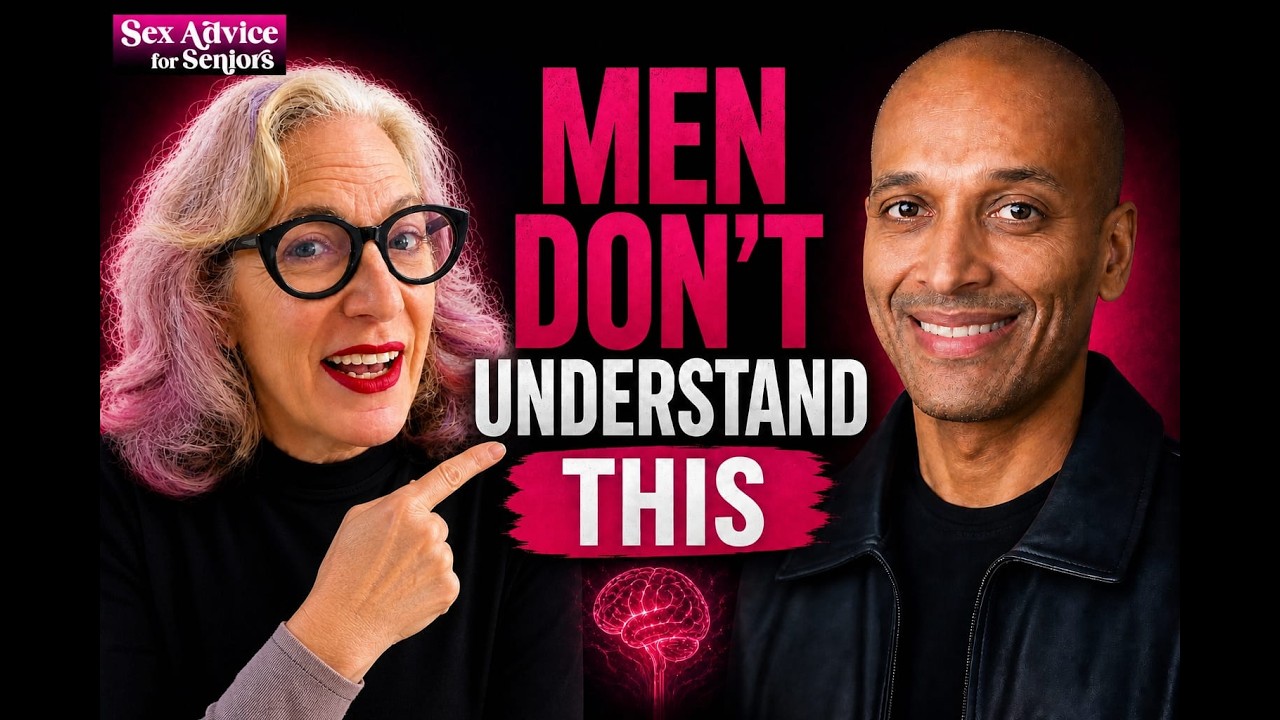
Joe Baines, a London biohacker and tantra practitioner, spent seven years learning internal orgasms through tantra training, a non-ejaculatory practice that can produce dozens of orgasms in one session. He escaped an arranged marriage and insulated Indian community to reinvent himself in the UK, later shifting from sexual optimization to building an AI automation agency.
Chapters
I'm multi-orgasmic. Okay, so I can have 20, 30, 40, 50, as same as my lover, orgasms in one lovemaking session. When I orgasm, nothing comes out.
Yeah, sure.
I've learned to have internal orgasms. In Tantra, we call this the stairway to heaven.
Hi, this is Suzanne Noble, and you are listening to Sex Advice for Seniors. Coming all the way from Da Nang in Vietnam in the lobby of my hotel where hopefully the noise, the background noise will not be heard. It's very rare that I get to speak to somebody who gives me a biography and upon reading it, I honestly don't completely understand what he does. And as a result of that, I had to speak to him because I was so curious about the mixture of experiences and practices that were involved in his profession that I thought, I gotta speak to this guy. So welcome, Joe Baines, to Sex Advice for Seniors. It's so good to have you on your— on the show. You say that you're a London-based biohacker, tantra practitioner, and psychonaut— I don't know what that means— who explores who explores the intersection of nervous system optimization, sexuality, and expanded states of consciousness. And you describe yourself as an ex-introvert nerd. Man, that's a mouthful. What does that mean, Joe?
All right. So, so I'm— so when I left school, I was extremely introverted. I was the shyest guy on the planet. Talking to somebody would just give me a heart attack. I always had to go off and recharge in a corner. Like, every 5, 10 minutes, I'd have to go and find a rock to crawl under just to recharge. Because I found being around people, even family, I found it very draining. Like, extremely draining.. And I left school with nothing. No qualifications, no nothing, nothing at all. Not even friends. Even the bullies abandoned me. It was that bad. I was like this. And my English wasn't good either. I'm an immigrant, so I come from India. So when I left school, my English wasn't that good either. What you're hearing now didn't exist then. And I was like, and my My parents had arranged a marriage for me as well, and they'd found me a job as well, to work in the community. And all I saw was just hell there. I was like, if I go down that route, I'm basically going to be insulated inside that community for the rest of my life and never be able to get out. So I was like, okay, I've got to come out. So I just threw myself into the hardest things possible. I decided all my friends were going to be white English because they would force me to speak English. I decided I was going to get jobs where I had to interact with English, with white people. So I got a job at McDonald's and all kinds of stuff. And working at McDonald's for an introvert is not fun. It was super hard. That's all I can say. And then I tried to start a business, all kinds of— But anyway, so what a biohacker is, a biohacker is, you know, like, so computers, we hack computer systems, hackers. So biohacker hacks biology as in their own biology. Biohacking is, it just means optimizing. So it's a new term. It came about 20, 30 years ago. And what it— it's basically what it means is it's the art and science of peak performance, health, and anti-aging. It's, it's a science because a lot of the— a lot of what we use comes out straight out of universities. So it bypasses— it hasn't even got to the doctors yet. Like, the doctors won't even hear about it for at least 20 years. And it's an— and it's an art. Because even though we're all the same, there's slight differences between us. So I could come out with a coffee formula and I could go, wow, look, I created this coffee formula. It's amazing. It works brilliant. And then you try and you go, it was all right. And then you tweak it. You change the recipe. It's little. And then you find, oh, wow, if I change the recipe this way and this way, I get really good results as well. Do you know? So, and, and that's why even though we are same, like 99%, we're same, there are differences. Do you know? And so biohacking is about tuning whatever it is into you, to your specific lifestyle, whether you are a man or a woman, what your biology is, all that kind of stuff. Whether it fits in with your lifestyle, you know, where you were in the world, all kinds of stuff. Uh, so that's biohacking. It's just, it just means optimizing. It's like a, a mindset.. And so we do a lot of weird stuff, let's put it that way.
So that's— So I've spoken to people before who have, when they've talked about biohacking, they've talked about optimizing and specifically looking at things like hormone replacement, supplements, nutrition, all of the parts of us, if you like, that form who we are as human beings. And then tweaking those to optimize our health, mainly for longevity. The people that I speak to, it's mainly around longevity. Um, sometimes it's also around fitness and, you know, optimizing for specific sports, for example. But a lot of the people that I speak to, especially the people that are concerned more with sexual health, it's about optimizing some of the key hormones that are responsible for our sexual health and our libido and our arousal and making sure that we actually, you know, can feel desire for another person and, and still get it up as well.
Yeah, definitely. Yeah. So everything, the core of it is longevity. The core of it is anti-aging. Because if you fix that, that fixes a lot of other things as well. So if you just focus on that, then other things start to fall into place.
Sure.
Yeah. And health. So I think for me personally, I'm 58, I'm almost going to be 59. And health is the biggest aphrodisiac. Like when you're 30 years old, you're insulated, you're insulated from health problems. And then when you get to about 40, then you start seeing, ah, okay, things aren't working as well as it should do. And then you get to 50 and then it gets harder. And I've noticed, so I've been quite lucky. I don't know how, but I've been very lucky. In that all my life, most of the people around me, they're all young. It's very rare for me to be around people more than 50 years old. It's very rare. And one of the things that keeps me young is because I'm around young people all the time. And I made myself social, so it's very rare for me to live by myself. And I've noticed, like, for example, I've been living by myself now for 4 or 5 or 6 months, and I've noticed a drop in me, you know? And I'm noting this downward slope just because I'm living by myself, not, you know, and that was like quite shocking to me. Like, it's so shocking that in a couple of weeks' time, actually moving out and I'm moving into a house share. With 6 other people. Yeah, yeah, yeah, because I don't think we are— I don't think it's good for us to live alone, you know. I think—
well, to be honest, I'm living in hotels for the past 3 months, and normally I live in a house share, and I can tell you it's really nice to live alone when you are— when you've got a revolving door of guests going in and out of your flat. I think there's something to be said for social connections, but there's also something to be said for having one's own space where you can just shut the door and you don't have to deal with other people. That's my own opinion. But when it comes to sexuality, because that's what we are here, we're Sex Advice for Seniors, you mentioned that you're a tantra practitioner. So how does tantra play a role in— with alongside the biohacking and the other aspects of your work?
So, so, um, Let me see. So I'm Indian, right? So I had practically an arranged marriage. And I've got a daughter. She's 19 now. But for most of my life, and the woman I got married to, she was brought up in— she was Indian, South Indian, and she was brought up in a in a Catholic convent.
Oh, wow.
Run by nuns. You know, like, can you imagine? So she had massive guilt around sex, like massive guilt. For her, sex was something purely for procreation. I think the only time— Yeah. And like, after we got married, I think the only time she was interested in sex is when we were trying to conceive. And then she was on it, you know, like she was like, it was like a mission. Like suddenly she's turned it right. It's this time, the thing says, we're doing it now. And then as soon as, you know, and yeah. And so there was a lot of stuff and also I didn't know what I was doing. You know, like, I mean, I sort of knew what I was doing, but nothing compared to what I know now. You know, it's almost like I was learning to ride a bike. And not being able to ride a bike. And Tantra, Tantra is basically, it's thousands of years old. It's basically yoga, but it's yoga with sexual energy. So in Tantra, the way they look at it, in all the religions and in all the other practices, they removed sex from it completely, or the sexual energy or the erotic energies. But in Tantra, they go, look, Um, this— the most powerful force you have in your body is sexual energy, you know. So you've got to learn to control it, you've got to learn to use it, you've got to learn to direct it on all kinds of stuff. And for a woman, it's a lot easier. A woman is multi-orgasmic. A woman can quite easily become multi-orgasmic, and she knows how to— a woman is more sensitive energies. She's more able to, you know, control energies. Whereas for a guy, especially for me, we don't even know what energy is, you know, never mind the ability to control it. And so it took me— so I was at a tantra school for 7 years, and it took maybe 4 or 5 years to be able to have— get a handle on this. You know, it was hard. It was really hard. You know, like—
And who did you practice with out of interest? Who was your teacher?
So, well, I have a male teacher, but so he runs a class and he would teach us, but we would also have female teachers. But what I had was a tantric lover. So I've been with her for maybe 4 or 5 years, something like that. And because she was in the same school as me, and she also knew about Tantra, and she was also learning Tantra, so she knew. So when it comes to learning, the woman is very important. So in Tantra, the woman is more evolved than a man, way more. Like, we're basically, men are basically chimpanzees, you know, like that's literally it. And woman is a more evolved creature. You know, when it comes to energies and all that kind of stuff. So she had to have a lot of patience with me, and this is what they're taught as well. They're taught to have— so I understand polarity, and I also spent some time in pickup. I don't know if you've heard of pickup. Yeah. No? So have you heard of The Game?
Yes.
Strauss? Yeah. So one of the things that precipitated my Oh, the pickup culture.
Oh, the pickup culture. Oh yeah, yeah, I know about that. Yes.
Yeah. So when I was still married, uh, somebody, I don't know how I got home, I got my hands on this. Somebody gave me the book, The Game. So you gotta read it.
Yeah, yeah.
And I think I finished it either in one weekend or two weekends, you know, like I couldn't put it down and it blew my mind. Like like, it was literally like it was talking about some alien world. Yeah. Like, the idea that you could go up and chat up a woman, all that kind of stuff, it's totally alien in my culture. It just doesn't happen. You get arranged marriage and that's it. And there was this guy chatting up women left, right, and center, just like it's talking about space aliens. And it just blew my mind. And I was like, wow, that is what's possible up there, right?
Um, yeah, I mean, to be honest, I don't feel very positively towards the game because it's a, it's a, it's a way of manipulating women to get them into bed. It's not a, it's not a great thing. It's a, it's, it's pretty, it's pretty horrible actually. I mean, okay, it's a, it's a, it's a form of manipulation and coercion.
Totally agree, totally agree. But it's a stepping stone, it's a stepping stone, you know. Like, if you don't know anything or nothing, you know, like, it's, uh, uh, it's like, uh, yeah, I suppose it's a, it's a stepping stone.
Uh, so can I just stop you there and just ask a question related to your arranged marriage? So you, you were in this arranged marriage and you were with somebody and you both had literally like no sexual education, no experience, no nothing. You had a cultural background that, you know, informed how you approach sex. When you went on this journey of discovery yourself, it appears that you did— you decided not to do that with your wife. It was that— what was the reason for that?
Yeah, uh, so yeah, that's a really good question. Um, So my wife, how do I explain this? Because it could take too long. So basically, as I was growing up, I saw, so what happens in an Indian family, right, is the wife, you get married to the wife and she comes into your side of the family. And she, so then there's a big, she has to integrate into your side of the family. She's living with you, and it causes a lot of stress for the wife, like a massive amount of stress, because she has to go up against the mother-in-law, you know, like, because the mother-in-law is the head of the household. It's a war. And as I was growing up, I was coming across all these women that had arranged marriages. That was hell for them. And I was also reading about this as well. So I was like, wow, you know, like, this is not good, you know. And what I was consciously trying to do was that that wouldn't happen to my wife.
Yeah.
Do you know what I mean? Right. Yeah. And so also by this time, I grew up with my goal. I grew up in a very insulated community, and my goal was not to be in an insulated community. As soon as I could leave, I was gone, you know, I'm not— and I didn't look back. So I left home at the age of 19 or something like that, um, and I just wanted to go out there. The way I looked at it, the world is my oyster, that's where I need to be, not inside here, you know.
I didn't want to do— and at what age were you when you got married then?
I got married when I was like 29, 30. So I resisted.
Yeah.
Yeah. So to my parents, like, all my brothers and sisters got married by the time they were 18. Wow. I'm one of the youngest. Yeah. And so I saw this coming up. And so when I turned 18, my parents are like, we've got this girl lined up for you. It's from our village in India. You're getting married. Yeah. And there was a big fight. There was a massive fight. Like, also in our culture, As when I get a job, like at 16, 17 or whatever, I give all my money in my wage packet unopened to my parents and they use the money and then whatever I need. And this happened to my brothers and sisters as well. And I saw this coming up for me as well. And I was like, this is not a good way to grow up where I give you my wage packet because I don't learn anything from that. How do I exist in the world? How do I learn to handle money? Right. So I saw this coming up and I was like, I'm not doing that. So when I got my first job, I was like, no, I'm not doing that. The wage packet is mine. I'll pay rent, whatever you want, but that is not happening. So there was a big fight with me and my mum and my dad, and they went, okay, you pay £30. I think it was like a week, whatever it is. So I paid rent from the age of 18 or something. And then with the marriage thing, I was like, ah, I'm gonna end up getting a house next to my parents, working in a factory, and all of that I was seeing, and it was not what I wanted. And I was quite lucky. One of my uncles or cousins got me a job in a factory. Right.
Yeah.
Making, um, what the hell was it, um, motors, you know, like motors. And it was horrendous, like it was like it was hell on earth, you know, like it smelled, it was noisy, it was dusty. And I remember by the end of the week going, this is— I'm not doing this, like. And literally by the end of the week I handed my notice and I was like, I'm out of here. Um, and, and I was working at McDonald's as well. And McDonald's was much better. But again, I remember I worked at McDonald's for a couple of years and the store manager, he called me in for a meeting. I was like, okay, why does he call me? He goes, look, you know, you've been here a couple of years and you work hard and we'd like to take you to go through management.
Right.
And it was like a shock to my system. Do you know, like And I remember I was like, yeah, I need to go and think about whatever. And I think I ran for like a mile away from the store because like the idea of being, you know, a store manager or working at McDonald's as a manager scared the shit out of me.
Like, and was this all in India? This was all in India.
This is all in the UK.
Oh, this is in the UK. Oh, right. Because my first job was in McDonald's in, and Yeah, I'll never forget. I was responsible for squeezing the special sauce onto the burger, but— and also moved my way up to the till. And I have to say that it was there in McDonald's that I probably had my first relationship with a guy who was Persian, who was on the till next to me and was very handsome. But anyway, let's— so essentially, what I'm hearing is that you broke free and you decided that all this stuff that you'd been— that was kind of set in stone for you from birth wasn't going to happen. And as a result of that, you just split and decided to go out there on your own and discover what you've, you know, what was out there and which led you to the person that you've now become. So, you know, when we think about going back to all of this biohacking and stuff, what is it that you've seen as a 58-year-old man that's optimized your own sexual health?
Well, the, the most— I think the most important thing is your mindset.
Yeah.
I think the— so I go through a lot of breakthroughs. So what I'm saying to you now is what my level of evolution at the moment is. In 6 months' time, I might be saying something completely different. In fact, I expect to be saying something completely different. So what I'm going to say now is my bullshit at this point in time, which could change. Not could, but will change, you know, because every time I think I figured shit out, I get proven wrong, you know. And it's happened so much that I've just got used to the idea that what I know now, it's gonna get overturned, right? So that's— and so for me, the most important thing is mindset, is also It's like, is the universe working for you or is it working against you? And I think you have very different lives depending which way you think that is. And one of the most important sentences I ever heard was, how you do anything is how you do everything. That took me way too long to figure out, like way, way too long. I was at a seminar called Millionaire Mind Intensive. I don't know if you've heard of it.
Is that the Tony Robbins thing now?
So it's the one below Tony Robbins, T. Harv Eker. So I crew for Tony Robbins. So I've done, I don't know, 7, 8 seminars for Tony Robbins.
I used to work with him and I have a whole very different opinion of him than probably you do.
It changes as you evolve. It changes. So yeah, I did this Tihav Hecker and he talked and he kept saying this sentence during the seminar. Like every 20 minutes he would say, he'd look at all of us and he'd go, how you do anything is how you do everything. And I'm like, this guy just keeps saying it. And I thought I understood it, but I didn't understand. Like not really. It's only when I started doing tantra that I understood. Because in tantra, they say the same thing. In tantra, it's like, so how you brush your teeth is how you make love. How you wash the floor, whatever it is, is how you— everything is interrelated. Everything is connected. So how you do— so if you want to improve your sex life, you brush your teeth better, or you sweep the floor better. Or you know, like whatever you do, it connects with everything. Do you know? Yeah. So, and the other thing I do is I've started doing in the last 10 years is I've started studying philosophy. Yeah. You know, like, and I've, there's a saying, the un, what is it? The, the, I've gotten there. There's a saying about, you know, if you don't, the unexamined, that's it. The unexamined life is not worth living.
That's right.
And I've come to the conclusion, you know, if you're not examining your life, you're basically an animal, you know?
And I think that's, and when it comes to your, all the stuff that you do, how are you measuring what good looks like to you? That's a really difficult question, you know, like, so the way I look at it, because some biohacks literally just monitor every part and they measure, so they take their blood, they take their blood pressure, they take their heart, they take their erections, they take all of it and they put it, they put it through a machine and it says to them, you're doing better today than you did yesterday or last week or last year or whatever. But how are you— what is your— what's your measurement— measuring— way of measuring?
So, so in terms of lovemaking, I measure that in number of orgasms. So, okay, I'm, I'm orgasm— I'm multi-orgasmic. Okay, so I can have 20, 30, 40, 50, as same as my lover, orgasms in one lovemaking session, right? And so tantrum— so I'm tantric. So I'll explain what tantric means. It means that when I, as a man, when I orgasm, nothing comes out.
Yeah, sure.
I've learned to have internal orgasms.
Yeah.
So I'm— so I get— so in Tantra, we call this the stairway to heaven.
Yeah, I call it riding the wave. Sometimes it's called riding the wave as well. So are you a practitioner of Mantak Chia? Is that your— Mantak Chia?
Yeah, I've heard of him. I've seen a lot of videos of him. But no, I actually— I just— I follow Tantra. And so over the last 7 years in our Tantra school, they've taught us very, very slowly, you know, from one step to the next step to the next steps to the next step. And it has been a very hard journey, like extremely hard. I failed a lot, like an insane amount.
Yeah, but you know, when you get to the point where you're having 20 orgasms, it's all worth the pain, isn't it?
Yes, that's right. That's right. I'm also a— so Tantra means that, yeah, so that means, so when I make love, So in Tantra, when we make love, we don't call it, we don't see it as making love. We see it as a yoga practice, as a tantric practice. So what we try to do is we try to turn it into a ritual. So it's a sacred ritual. So it could be eye gazing at the beginning, holding hands, conscious touch. You know, all of these things play a role. Because you're trying to build up the, build it up slowly. Um, and so we saw a tantric lovemaking session could be 5 hours, could be 3 hours, it could be 7 hours, whatever, you know, like, uh, the biggest problem we have is we've got other shit to do, you know, do you know what I mean, right? And it's like, all right, let's call it quits now.
I know it's, it's, it's a terrible problem to have. I mean, I think a lot of people look at all of this stuff and they think, who has the time? That's the one thing I think people often think, who has the time for all of this? And who has the enthusiasm? And I think, as you say, it's the interesting thing about Tantra, for me anyway, is that I've spoken to I probably have spoken to at least probably 10 Tantra professionals during, during the course of recording Sex Advice for Seniors, and the way they articulate what it is for them and how they practice it is so varied. I find it fascinating how every single person that studies Tantra will tell you what it is and it's never the same. Never. It's, or very rarely the same. Some people say it's around boundaries and consent. Some people say it's about the number of orgasms you can have. Some people say it's about never having orgasms. Some people say that it's about the type of orgasms you have and what, and all this kind of thing. And some people just say it's yoga, right? Yeah.
Yeah. I would agree with all of those as well. Because the type of orgasms here changes. Of course, like, it's very different, um, to like, uh, where you come out.
Uh, so for me, it's a, it's a way, it's a deeper form of intimacy with another person without necessarily an orgasm being the goal in the traditional sense. It doesn't necessarily have to lead to that big climax. It can just be a sort of series of nice rolling ones, which is very nice. But yeah, and I think it can, it can improve the intimacy between two people who perhaps have never really explored that kind of touch before, or that kind of extended, you know, lovemaking. So I think You know, I think it is different for everybody, but I do, yeah, I do appreciate what you're saying and where you've gotten to it. And I always think it's interesting when people come from these very strict cultural backgrounds and have then gone on this, you know, journey to get to the place you are now, because I can appreciate how challenging that must be and how much of your family you might have to reject in order to be able to do something like that.
Um, yeah, my family knows nothing about this.
Oh, that's interesting as well. So yeah, I, I, I'm just gonna close by just, you know, but I'm just curious to know, so, you know, where, where are you now? Are you in a situation where you are practicing Tantra with one person? Are you in a, in, in a non-monogamous relationship? Like, where it has 58-year-old man have you gotten to?
So at the moment, I'm practically just one person, uh, because what's happened for me, um, my focus has changed now. So I, I, it feels like I've completed a goal, you know, so I'm very goal-oriented. Um, so about a couple of years ago, I was like, okay, I, I've achieved what I was trying to achieve with Tantra. So my goal now, I've moved to other things. So I retired over 10 years ago. And so I'm now coming out of retirement because of the divorce and losing all the money and all that kind of stuff. And so I'm now heading back into entrepreneurship and AI. And so I'm building an AI automation agency. So I'm a part of an AI accelerator hub in London. And so that's where I'm— so my focus now is that. Because I've achieved what I wanted to achieve in Tantra. And so now it's maintenance, whereas now I'm— and so now my energies are focused more towards building businesses, you know, building automation agencies and all that kind of stuff. So that's where I'm channeling all my energies at the moment. And then Tantra is something we do as a maintenance, you know, because I've achieved that goal. Like, I'll give you one. I wanted to get a black belt in Aikido. So I spent 10 years like hammering away at Aikido until I got my black belt. As soon as I got my black belt, achieved my goal, I moved on to the next goal. So I'm very goal-oriented, right? I've hit the goal. What's the next thing? What's the next thing? What's the next? That's how I'm driven, basically. Cool.
Interesting. Very interesting. Thank you so much. I didn't really know where this conversation was going to lead, to be honest, but it's, it's turned out to be— I don't often do kind of more case studies or then, you know, speaking with professionals, if you like, who are really all about this area. But it's been really fascinating to hear about your journey, to hear about how you escaped, if you like, your, you know, your upbringing, your your very structured upbringing to explore this, this world and where you are now. So really, thank you so much for sharing that with me.
I really appreciate it. Thank you.
Yeah.
Enjoy.
More from Suzanne









Why Sex Changes After Menopause (And Why That's Not a Bad Thing) | ft. Dr. Kelly Barron

Why Facesitting Is Trending Among Women: Power, Pleasure & Later-Life Intimacy
