Live with Lauren Streicher MD
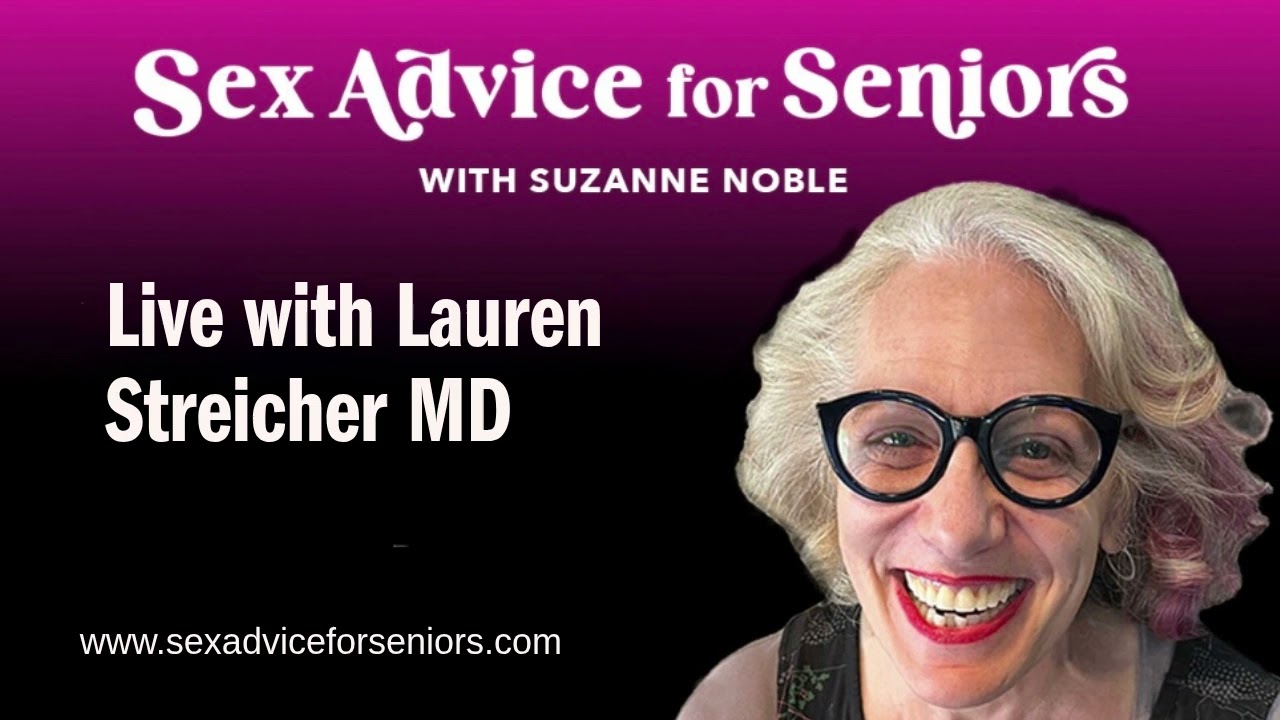
Dr. Lauren Streicher, a gynecologist and sexual medicine specialist, discusses why libido and orgasm decline after menopause and how to fix it. SSRIs and other medications often cause sexual dysfunction. Treatment options include testosterone, vaginal estrogen, and off-label Viagra for orgasm loss.
Chapters
Hi, here I am with Suzanne Noble. We've had a little bit of a tech glitch because we were going to do this on Suzanne's Substack, but it wasn't working. Who knows? The demons were out there, but we are here live. We are going to have a conversation. I hope you can find us here because we had directed everyone to Suzanne's Substack, but that's okay because we're recording. So we will both put that on our, our individual Substacks. Whatever. But it doesn't matter because we're here. We're having a conversation. I'm Dr. Lauren Stryker. For those of you who do not know me, I'm a gynecologist, sexual medicine expert. And Suzanne, take it away.
And I'm Suzanne Noble, and I have a podcast and a Substack and a TikTok channel and all sorts of other social media called Sex Advice for Seniors. And what I do is I speak to experts like Lauren and others people that are much more educated than I am about all things sex, relationship, dating, sexual health after 50, 60-ish. So, Debbie D-80, come on, come on. And beyond and beyond and beyond and beyond.
Very important.
Way, way beyond, way beyond. Because, you know, we don't necessarily ever have to stop doing this if we don't want to.
Right.
Correct.
Correct.
That's the one great thing about sex is that we just can keep on doing it, providing that, you know, sometimes certain health issues and things are, are, you know, dealt with.
And that's where we talk about adapting and being creative. It's amazing, amazing all the different ways that someone can be sexual.
Absolutely. And I think that's certainly something that I've discovered through doing this is that for so many people, sex begins and ends with penetration. And of course, we know that there's a whole big buffet out there of pleasure, of which penetration is just one single thing. But Lauren, I want to ask you, because you had a podcast, it was very successful, and called Dr. Stryker's Inside Information Podcast. But now you've started a new one called Come Again. And I want to know, what's that all about? What Why did you decide that you wanted to create a completely new podcast?
So, so Dr. Streicher's Inside Information: Menopause, Midlife, and More is now in its fourth season, over a million downloads. It's completely free. It's been doing really well. And I address a variety of topics, anything of interest to midlife and beyond women. Yes, some of it is menopause and medical, and some of it is sexual medicine. And some of it's just interesting people who I want to interview that I think would be terrific to have a conversation with. But what I really wanted to do was to have something that was specifically, specifically to address the sexual medicine of the over 40, over 50 crowd. And the reason is, is, I mean, let's face it, there's a lot of stuff out there that talks about sex, but a lot of the stuff that's talking about sex is really talking about relationship, emotional, the psychosocial issues, all important. I'm not minimizing that. But as a sexual medicine physician and a gynecologist, my area of interest and my area of expertise is what are the medical physical, biologic, and hormonal issues that can sabotage your sex life after age 50. And there was really nothing out there about that. So I decided to invent Come Again, which, you know, it says what it is. And essentially what this podcast is, it's a limited series. It's really a course, quite frankly. It's 30 episodes. And the first part of it addresses the background. I always say you can't build a building unless you have your foundation to talk about what is What does it take in order to have a pleasurable sexual experience, which may or may not end in orgasm? You know, what kind of elements need to be there? And then the second half of it is really all about solutions. So 30 episodes total. It is subscription through Substack. And once you subscribe, then you can listen to it on Apple or, you know, whatever, whatever platform you want to. And it's, it's been a really interesting journey so far. I'm up to, I think tomorrow I am posting episode 12. So almost halfway there. And I've been getting wonderful feedback because really what it is, is people who are looking for answers and they haven't been able to find them because it's very specific. You know, what if you have diabetes? What if you have a clitoral neuropathy in addition to your foot neuropathy? What if you're taking an SSRI? Not only why is this impacting your ability to have pleasurable sexual experiences, but more important, what can you do to change it? Because too many women go to their doctors and if they do get up the nerve to say, Hey, I can't have an orgasm anymore. The doctor has nothing to say but, I'm so sorry to hear that. It's very few that actually can give real information. So that's what Come Again is. And it was kind of my brainchild of a couple of years ago. And originally I thought maybe it would be a book. And then I realized, you know, far more people listen to my podcasts than read my books. I have 5 books out there and they do okay, but the podcasts are what, you know, thousands and thousands of people are listening to. So I thought, I'm going to make Come Again a podcast. And it was the right decision.
Well, I mean, you bring up so many important points that I've heard so often in all the interviews that I've done, which is the main one, which is healthcare professionals. Most of them have not been trained in how to talk about intimacy issues with older adults. They just either— I hear so many women that have been dismissed, gaslit, told, sorry, you know, and we know that there are solutions out there. And that's right.
But to your point, Suzanne Noble, the reason that healthcare professionals don't bring it up isn't because they're embarrassed. We hear that sometimes. That's not why. Because they don't have enough time. That's true. But a good person will say, I want to help you with this. I have solutions. We just don't have time today. Let's schedule another appointment. The real reason that healthcare professionals don't bring it up is because they don't have the solutions. They don't know what to tell you. You when you say, I have no libido, sex hurts like hell. I used to be able to have orgasms just fine, and now all my tried and true methods are simply not working. Why is that happening and what can I do about it? And that's what Come Again is, is addressing all of these medical, hormonal, biologic factors. And I'm not ignoring the psychosocial. It's just not my area of expertise, which is why my co-host on some episodes is the amazing, wonderful, talented Dr. Rachel Zarr, who has a PhD in sex therapy and happens to be my daughter. And so we have a lovely mother-daughter conversation about sex, which is kind of unique because not only do we have intergenerational, and obviously her education is different than mine, but how many mothers and daughters get on a podcast and talk about What happens to your clitoris as you age, and how do you have an orgasm? And with her input, it kind of covers the whole psychosocial thing, which is not my thing.
So your family dinners must be such a blast.
My husband says the word vagina gets tossed around more often than the salad, and he has a point.
That's brilliant. So I want to ask you to start with, what are some of those common misconceptions about low libido or difficulty reaching orgasms? Because I hear this from so many of my friends.
Yeah, well, a lot of people blame it on estrogen. They say, if I'm out of estrogen, is it hopeless? Does it mean my sex life is over? And the word on estrogen and sex is it helps. I'm not saying it doesn't help. Hormones are one piece of the cocktail, one ingredient in that hormone cocktail and that libido cocktail. But it's not the only thing. And we know this because when we look at menopausal women, the one thing that is universal is 100% of menopausal women by definition do not make estrogen, yet not all of them have sexual problems. Many women who have zero estrogen are able to have orgasms just fine. Many women who have wonderful libidos have zero estrogen. So while it is absolutely helpful and we can talk about in what ways it helps, in what way it doesn't, it is not essential, which is wonderful news for menopausal women that while estrogen is a, is a great ingredient in the libido and the orgasm cocktail, It is certainly possible without. And that is because there are so many elements. It's multifactorial. You know, we always talk about it starts in the brain and it does start in the brain, those all-important neurotransmitters. But that's not enough. You have to have the neurotransmitters that are firing and then you have to have what in the medical jargon we call end organ capability, meaning the clitoris, the vagina, the vulva has to be able to kick into action. And does estrogen help with that? You bet. Is it absolutely required? No, it's not.
Yeah. And how does— because I've just started going on testosterone and part of the reason for that is it kind of kicks— well, just kind of bumping up my libido and also around strength. I just want a bit more, you know, I'm a weight— I'm a lifter. All right.
So let's talk about that for a little bit because we have a lot of data on testosterone. Testosterone is not a male hormone. It's a human hormone. And it's just as important to women as in men. We make a lot less of it. About 1/10 of what men make. And interestingly, when we go through menopause and our estrogen levels are like in the toilet, your testosterone does not drop at the same time because testosterone is made in the ovaries, but it's a different part of the ovary than makes estrogen. So when your estrogen levels go down, your testosterone levels may still be okay. And then just like in the men with aging, they gradually decline. Now, we also make testosterone in the adrenal glands, which is important because for women who've had ovary removal, surgically, their testosterone levels are gonna drop. So we bring it back to your initial thing. What is going to happen if we supplement women with testosterone?
Mm-hmm.
What we know is that about 50% of women who get appropriate testosterone supplementation do get a bump in their libido.
Mm.
And the question, of course, is, well, why only 50%? Because that's only one part of the libido cocktail. You know, we are looking at neurotransmitters. We're looking at, are you having painful sexual activity? Are you— do you have good blood flow? All of these things. So it's just one piece of it. So whenever I start a woman on testosterone, the things that she needs to know is number one, it has to be done correctly. Stay away from pellets, stay away from injections, stay away from the high-dose stuff. Go with someone who knows what they're doing. And then we have to kind of manage expectations. Is it going to help? Maybe about a 50% chance, but 50% of the time it's not. Now, you also mentioned muscle strength. We have a lot of data on that. Doesn't do a thing.
Really?
Because this is— I mean, and this, in fact, this has been studied even with doing muscle biopsies in women on and off testosterone. Do we have estrogen and testosterone receptors in our muscles? You bet. In someone who's making testosterone, does it— does it help? You bet. But that's not the same as giving someone supplemental testosterone. Example I always give to explain that is we know that hair is loaded with collagen, loaded with biotin. You could drink a bathtub full of collagen and biotin and take all those supplements, and we know it's not going to do a thing for your hair. So just because something is in something or useful for something doesn't mean that taking it is going to make a difference. So we have to be careful with testosterone and with what it is going to do for you and what it's not going to do for you. So we know libido data we have, we have a lot of muscle data that's emerging. And then there's a lot of stuff we just don't know. When we hear testosterone is going to help with cognitive function and it's going to decrease Alzheimer's and it's, you know, the list goes on and on and on. We don't have the data. So my approach is if you want to take testosterone, make sure that you're taking it with someone who knows what they're doing. Make sure you're not taking too much. Otherwise, you're going to be, you know, borrowing your husband's razor and dealing with pimples, and you're going to have clitoral enlargement and a big clitoris. It's not a better clitoris or a more sensitive clitoris. And you're going to have voice lowering, which can be catastrophic for some people. So don't mess around with testosterone. Get it from someone who knows what they're doing.
Yeah, very useful. And so we've talked about the fact that testosterone may or may not impact on libido. We talked about the role of estrogen may or may not impact on libido and the stuff that goes on in your brain, of course, and how that goes. Is there anything that definitely does help improve one's libido if they are experiencing low libido?
Well, my approach to low libido is first, let's start off with just asking a lot of questions. When did this start? When was the last time you had sex? How did it go? Oh, it hurt like hell. Well, you know, your brain's not stupid. If your vagina is saying to your brain, that hurt like hell, I don't want to do that again, your libido is going to die. And, you know, I ran the Sexual Medicine Center at Northwestern University for a very long time, and libido is the number one thing that women would come in and talk about. I have no libido. And once we establish that they actually maybe like their partner, we— that's— there's that part of it, too. But they just don't have any interest in having sex. You know, the difference between— let me just be clear— the difference between libido and arousal, because it's a little confusing. Libido is I'm thinking about sex. I'm wanting to have sex. I'm hoping to have sex. Arousal is your body physically getting ready to have sex, lubricating, heart speeding up, all that kind of stuff. So libido is that I'm thinking about sex. I want to have sex. And the first thing to ask is, well, how was sex last time? Is this sex worth having? Was it pleasurable? Did you have pain? Did you have an orgasm? So, so we look at all of that. The other thing we have to take a very careful look at, which is huge in this age group, is Medication. 1 out of 4 women over the age of 50 are taking an SSRI. Some of it's legitimate. They need to be on that SSRI, and sometimes they were prescribed it to help with hot flashes or other menopause symptoms, when in fact that is not generally the way to go. And what we know is that roughly 50% of women who are taking an SSRI have libido issues and have issues with orgasm. So that's another question. So, you know, there's— when I say— and that's when people say, why did you need 30 episodes of Come Again to address all this stuff? Stuff. It's because it's not one size fits all. It's not one quick fix. Are you having problems with libido because of partner relationship stress? What's going on in the world? You know, don't turn on the news maybe for a couple of hours. That would help. Are you taking medications? Do you have chronic pain for another reason? We know that people that don't sleep, that have general aches and pains, their libido's in the toilet. We know that people that are drinking too much— there's a lot of reasons for that. Little alcohol is a disinhibitor. It increases your libido. Too much alcohol, it takes a dive. The same with cannabis. I mean, The list of libido killers is really about 30 to 40 things long. So the— so when someone comes in and says, I have no libido, I'm the last person to say, well, just want to take some testosterone. Let's see how that goes. Because I really need to have more information. You know why? Why are you having difficulty with libido? When did it start? Is it the monotony of monogamy? If it has been because you've been with the same partner for 40 years and a new partner, all of a sudden you've got a libido, you know, off the roof. There's just so many questions to ask, which also brings me back to the first thing. When you talk to your doctor and your doctor, you know, either doesn't know the answer or can't help, but even if they do, if they say, hey, look, we've got 15 minutes for this appointment, you've got to make another appointment. They're not just brushing you off. That's the truth of it. A sexual medicine consult that's done right, that I do the right way, is going to take a minimum, a minimum of 60 minutes. Yeah, I can spend 90 minutes on a sexual medicine consult because for every single factor I uncover— medications, pain, sleep, partner, all of that— each of those needs to be addressed because it is rarely just one thing. Now, I will tell you, if I was going to name one thing, though, let's just take SSRIs off the table and say, what is the, you know, the kind of the number one thing other than Pain. Okay. Pain's off the table. Sleep. Sleep. You have to sleep. Otherwise you see that pillow and you're not thinking about sex. You're thinking about, God help me, I hope I get decent night's sleep tonight. So it's very, very important to address sleep because we also know that midlife women and beyond have a very, very difficult time getting a decent night's sleep. And it's not just those nasty hot flashes. I mean, they only last 10 years, so they'll go away eventually, right? But it's also the aches and pains. It's the snorer in the bed next to you. It's sleep apnea, which increases post-menopause. So many other things. So when we talk about libido in the Sexual Medicine Center and we talk about, you know, painful sex and all of that, it really does take a team. It's me, it's the sex therapist, it's the pelvic floor physical therapist. If it's someone that's having pain or discomfort, it's so important for for all of us, for all of us to work together and communicate with each other. That so rarely happens. You know, someone goes off to see the pelvic floor physical therapist or maybe the sex therapist or their general therapist, and they're not talking to the sexual medicine doctor. I'm not talking to them. We all have to collaborate in order to figure what, you know, what's going on. And then come up with a plan. And I will tell you that if you do that, you know, people feel so hopeless about this because they go to see someone who's not helpful and they think like, okay, well, I guess there is no solution for me. And I will tell you that, that, that generally there is. And, you know, just as an example, my, you know, I mentioned my daughter who's a PhD sex therapist and she worked in the Sexual Medicine Center for a long time and she's an outstanding therapist. And I'm not just saying this because I'm her mother. She's very well regarded all over the world and gives lectures lectures, and in fact is lecturing at the big sex therapist conference in a couple of months in Vegas. And, and the thing when I asked her, the thing that I— that she learned the most about when she worked in the sexual medicine center is so many women would come to her and say, I have pain with sex. And then the appropriate, you know, response is, well, have you seen a doctor about this? Oh, yes. And they said there's nothing wrong with me. And then she would have them go see one of the experts in the sexual medicine center. And guess what? We would find something physically wrong and we would fix it. And then suddenly the sex therapist is able to do their work. And so, you know, that's, you know, again, I'm emphasizing how important it is to have a team of experts who can address what's going on in relationship, what's going on in your life, what are your stressors, what's going on in your brain, what's going on in your vagina, what's going on in your vulva, what's going on with your clitoris. So we can put this all together and get the work done.
Yeah. And see, you're in the States, right? So when I hear you talk about this, and this connectivity, which I suspect is something that we really have to advocate for ourselves sometimes in understanding how all of those team of people work together. I'm in the UK. Can I just tell you that it took me 6 months to get from my general practitioner to a specialist who gave me 3 minutes before issuing me with some testosterone gel, and he's gonna check on my levels in 6 months' time. And that's as much of a conversation as I get in this country. So different countries and how they approach it—
it's not any better in the United States.
Okay.
Because while we might, you know, first of all, we don't have specialists who do this. A lot of women think that their OB-GYN is a specialist, and we know that's not the case. Only about 20% of them get any training at all in menopause. And of that, you know, single digits know anything about postmenopause sexuality, which again is why I started this new podcast, Come Again, because no one was addressing addressing specifically the sexual issues of women over the age of 40, 40 to 100. And there's so little. And I am very active in the Menopause Society. And in fact, I just wrote the chapter in the new Menopause Society's manual that's coming out in a year. I just sent it on to my editor and I wrote the section on post-menopause orgasm. And part of what you do when you write an academic work like that, of course, is you're looking at every single thing that's been published. And I will tell you that the amount of of scientific literature on post-menopause difficulty with orgasm specifically is pretty much nonexistent. And what is there only goes up to about age 55 because of course women over the age of 60, you know, don't do that. And these women are not getting studied.
I don't know if you know that.
Or orgasms. And the truth is most women don't. I mean, when you look and it mirrors the statistics on no shock, erectile dysfunction because the penis is just a big clitoris, right? So when we're looking at the vascular supply, when we're looking at neurologic sensitivity for all of the same reasons that men have difficulty maintaining an erection and having sensitivity as they age, well, for women it's the same. So when we, you know, we talked about the impact of SSRIs and then we look at the impact of no longer making hormones and then we look at the impact of just the changes with aging, but then You can't ignore the fact that 50% of women over the age of 50 have some medical issue, whether it's cardiovascular problems or diabetes or multiple sclerosis. And all of these things have an impact on clitoral sensitivity, on pelvic blood supply. We have to look at pelvic floor incontinence and all of this have a very strong association. So So is it complicated? You bet. Is it solvable? You bet. You just need to get in the hands of someone who knows what they're doing. But again, so Come Again is about the idea of women have to be their own best advocate sometimes. And so my approach is Come Again is intended for both healthcare practitioners. I have tons and tons of therapists who subscribe and gynecologists and internists and nurse practitioners and all that. And then just for regular people. People who at a high level want to understand this stuff. And interestingly, my Substack subscribers are invited to my once a month Ask Me Anything webinar, which is just a Q&A. I just stand there for an hour and just people fire off questions and I answer questions. And it's about 50% healthcare practitioners and 50% just people who are smart and educated and have great questions. And that's the kind of thing that we need because at least what I can say to someone is, look, I can't tell you what to do because I haven't examined you. I'm not your doctor. But what I can tell you is that many women in your situation, XYZ is going on. So now you take that information, you go to your gynecologist and you say, do I have clitoral atrophy in addition to my vaginal and vulvar atrophy? You know, do I have diabetes that maybe hasn't been diagnosed? So these are the kinds of information that people need. Is it my SSRI? Could maybe we, you know, use a different prescription to see if that makes a difference? So that's the information I'm giving people so that they are able to advocate for themselves.
Yeah, absolutely. And often, you know, I do, as you know, very similar work, speaking to lots of experts and hearing very similar stories of, you know, that there is help out there. I think that for me is the really key message is that there is a solution. There is always going to be a solution, but you need to know how to be able to advocate for your own health and also to be aware of some of the options that are available to you. And as you discussed with SSRIs, I know I had a partner that took them and it did impact on their erectile function. And when you switch prescription, often that can be solved because that's right, that's right, that's right. SSRIs do different things in different ways. So it's understanding all of this and being able to say, you know, maybe I need to check this out and look at a different SSRI.
So, and, and to your point, in, in Come Again, I have an entire episode about what to do if you're on an SSRI and you have low libido and you're not able to have an orgasm. And, and that episode hasn't been posted yet. That's coming probably in about 8 or 9 weeks. So if you subscribe, you will get that episode. But just as a little preview, What we know is that women who take oral Viagra, which is off-label, it's not FDA-approved for that, and you have to get a prescription. But the group that is most likely to respond if they're having difficulty with orgasm are women who their orgasm disappeared specifically because of their SSRI. So in the Sexual Medicine Center, when a woman would come in and say, I'm no longer able to orgasm, and of course we had this whole protocol that we went through in order to help her. And the group that we went right to giving them a prescription for oral Viagra were women that said, this started the same time as my SSRI. Wow. You know, we look at the timing and, and if it was very clearly a result of the SSRI and there's no other reason, they don't have diabetes, they don't have vascular problems, they don't have other reasons that they might have difficulty, we're just gonna go right to giving them a prescription for Viagra. Now, before you all start, you know, stealing your husband's Viagra. First of all, the dose we use is a little bit different. And you do want to do this under the direction of a doctor. And it is a little bit different with women. So again, this isn't necessarily a do-it-yourself project. My point is, is that there are solutions. We have things you can try. We do have answers. And that's what Come Again is all about.
Brilliant. So I've got a couple of reader questions for you.
Okay. I'm ready.
Okay. So number one is, can a PCP prescribe systemic estrogen patches and progesterone for hot flashes and other well-known benefits, or is it something that only a gynecologist can prescribe?
Yeah, any licensed healthcare professional who prescribes anything can prescribe it. It's not can they, it's should they be, and do they know what they're doing. And this is one of the problems. And, and I have a subset, 'cause one of my earlier ones, I need to repost it because it was very popular about how do you know if your doctor knows what they're doing? And I gave, you know, like these 10 red flags. And one One of them is, is if you say, I want to go on hormone therapy, and hopefully they will say, sure, great, no problem. But if they say, and I'm going to write you a prescription for X and don't give you any options, that's a little bit of a red flag because this is not— it's not one size fits all. Some people are best with a patch. Some people are better with a spray. Some people are looking at an oral option. And so can they prescribe? Absolutely. But then if you're having issues, if it's not doing what you want it to do or you're having bleeding or you're still flashing, is that person person going to be able to help you and look at some of the nuances. So I guess my bottom line is, is if you are seeing someone who's willing to write a prescription and if it's helping you and you're— it's going well, great, terrific. You need not go any further. But if it's not doing for you what you were hoping, sometimes you do need to see an expert. You know, I always say if it was your kid and your kid had cancer, you would go to the ends of the earth to find the person. Who's going to help your kid, right? But women never do that for themselves. So you might have to go a little further.
Good answer. And the next one, I really don't understand this, if I'm really honest. It says if rugge appeared flattened, missing on a post-menopause exam, and then estradiol— I know what that is— vagina cream was used for 4 months and beyond permanently, would you expect them to reform?
Okay, so this is the answer to that. I have an episode on Come Again called The View from My Side of the Stirrups, and I go through all of this, including pictures. What she is talking about is rugae, R-U-G-A-E. And these are the accordion-like folds in the vagina. The vagina is inside, the vulva is outside. You cannot see your vagina. No one can see their vagina. If someone says I have a sore in their vagina, they do not. It's on their vulva. Right. So inside, and unless you own a speculum, you cannot look, but inside the vagina, the walls of the vagina have these accordion-like folds. And the purpose is, is to accommodate a penis so that it will be elastic and stretch, or baby going the other way, you know, back in the past. And so what happens post-menopause is you've heard the term vaginal atrophy.
Yeah.
And what vaginal atrophy is, is that is because of a lack of estrogen, about 70% of women, that the vaginal tissue becomes very, very thin. Very, very dry, loses the ability to lubricate, loses the ability to have elasticity, and loses its rugae, loses its rugae. So the answer to this question is, is if someone is using vaginal estrogen, which may be a cream, a tablet, an insert, a ring, there's all kinds of different vaginal estrogens. Will rugae develop again? And the answer is yes.
Yes.
And in fact, when a gynecologist healthcare clinician looks inside the vagina, we can tell if someone is using estrogen, if it is doing what it's supposed to do. We look at the vaginal pH, we look at lubrication, we look to see if there's elasticity, we look to see if rugae forms. So that is one of the things that's reversible. Some things aren't reversible. So as an example, if someone loses their labia minora post-menopause, which we also see, we see that from lack of estrogen, we see it from aging, we see it from a condition called lichen sclerosus. It's It doesn't matter how much estrogen you use, you're never going to grow new labia. That's just the way it is. But rugae, yes. But the other thing that this listener needs to know is you can't stop your vaginal estrogen. You have to continue to use it until you die. Otherwise you're going to lose that elasticity and lubrication. People always say, I'm done with menopause. You're not done with menopause until you die, because unless you have magic ovaries that start making estrogen again, menopause is I'm no longer making estrogen.
Yeah. And I love my vaginal estrogen. I have to say I couldn't live without it. But a question about that, actually, on behalf of a friend of mine, is a friend of mine who was really struggling with vaginal tears said, went and got some vaginal pessaries, estrogen pessaries, and she developed an allergic reaction, had to be, you know, the ambulance came and got her. That's how bad it was. Is really just, you know, a severe reaction to the estrogen.
It probably wasn't to the estrogen. It was probably to what we call the vehicle, which is what the estrogen was in. A true estrogen allergy is extraordinarily unlikely. But what can happen is what the estrogen is suspended in. So I don't know what happened to your friend, but I'm just telling you, whenever we've had someone with an allergic reaction, it's never the estrogen, it's the stuff that it's in. And especially if you're, you know, some people get it compounded, which is generally not a good idea because you don't always know what you're getting or if there's contaminants. But yeah, you— it might be.
That was going to lead to my next question, which was that I said, knowing a bit about this, but obviously not nearly as much as you, that I've read that sometimes using a different form of vaginal estrogen can sometimes help that because it's carried in it. It's just transmitted in a different way. Is that true or not?
It's not that it's transmitted. It's just you're getting rid of the substance that was the allergen.
Yeah.
But the other thing also that I think is an important point is, is some people have been told they can't use estrogen because they have breast cancer, which is absolutely not true. I want to be clear about that. But, but if someone feels that they cannot use estrogen for some reason, there are non-estrogen alternatives that work very well. One of them is, is DHEA, the trade— and I don't have any financial relationships. I want to be clear whenever I talk about trade names. The trade name for that is Intrarosa. And DHEA is a building block for both estrogen and testosterone. And your own body essentially kicks in and makes it in vulvar and vaginal cells. And it works very well because we talked before about how it's not just about estrogen, it's testosterone. And you also have testosterone receptors in the vagina and the vulva. So DHEA is, is another Excellent, excellent option. And I do have an episode on Come Again on that. I think it's called DHEA. Hey, hey. And then there's an oral drug. I don't know if you have it in the UK. Espemifene, Espena is the trade name, and this is a selective estrogen receptor modulator. I don't think you do because I just did a podcast with Louise Newson and I, and I asked her about that and I don't— she said you did not have it in the UK. But so that's a US prescription option, which is also terrific for people who either for whatever reason, choose not to take vaginal estrogen. Or there are people who just don't want to have to put something in their vagina. They just rather put something in their mouth. And which also brings me to the question of if you are taking systemic estrogen for hot flashes, is that also going to help your vagina? And the answer is about 70% of the time. Sometimes it's adequate to help vaginal, vulvar tissues, and sometimes it's not. You also have to add a local vaginal or vulvar estrogen.
Yeah. Um, uh, just another aside, one of the readers said that your book, um, saved his sex life with his wife. So as much as I love your podcast, just know that your books are also delivering goodness throughout the world.
Oh, thank you. So exciting way. Turning Back the Clock on Your Vagina is one of them. One of them is Hot Flash Hell, uh, Sex Rx. And then I have something new on the horizon that I can't talk about yet, but I'm very excited about.
That is very exciting. And then finally, I want to ask about how, you know, one of the big challenges I think that we all face is, is around talking with our partner about some of these health issues, right?
Yeah.
Is feeling ashamed. I hear a lot of people feel ashamed that they're not able to have comfortable sex because it's painful or that they're, you know, when it comes to men, sometimes they're having unreliable erections and they feel bad about that. What are some of the ways that couples can bring up this topic and feel and, and start to open up the conversations about some of these health challenges that, let's face it, affect lots of people in at this stage of life?
Absolutely. You know, and we started this conversation, I mentioned that as a gynecologist who does sexual medicine and the psychosocial aspects of it, which is why I brought I brought Dr. Rachel Zarr, my daughter, into it because this is exactly what she does, is she really talks to people about how to have this conversation. And it is something that we address a lot when we do our podcasts together and do our conversations together. And essentially what it is, is number one, you mentioned at the beginning that there's this expectation of intercourse, that there's this expectation of if you do not have the grand finale of intercourse and an orgasm, then somehow it wasn't really sex. And that's the first thing that has to happen is a conversation that says, I am wildly attracted to you. I really want to be with you. I want to be sexual with you. And I don't really care if I have intercourse with you or if you have an erection or if we don't have an orgasm, you know, it's just fine. So it's like setting up that expectation. And then the other thing I learned from my very wise daughter is when you talk about it, it's never in a negative way of how come you never touch me down there? You know, you expect me to have an orgasm during intercourse? Are you crazy? That doesn't work. What does work is to say things like, you know what would feel really good? And then it's kind of, you know, and then you actually can use my podcast or my book as a let's start the conversation. Hey, I read this. What do you think about this? Or I found that there's these sex toys that you can use together. Wouldn't that be fun to try? So it's the idea of how can we meet in the middle? You know, one of the biggest issues that we see in any age group, in any age group, but more so in older folks, is desire discrepancy. You know, one person wants sex more than the other person. You know, how are you going to reconcile that? And again, this is all about communication, working with a certified sex therapist, someone who really understands and can look at things like, well, is it— is this sex worth having? Is it pleasurable? Is it painful? You know, how can you facilitate having an orgasm when someone's older. You know, I talked about how the clitoris changes because the nerve endings are desensitive. The blood supply isn't the same. That's just the way it is as people age. If they have cardiovascular disease, if they have diabetes, if they're taking a medication, how do you wake up those nerve endings? How do you increase blood supply? That's what Come Again is about. Every single episode is What can you do to facilitate thinking about sex, having more arousal, and then waking up those nerve endings so that they're going to say, oh, okay, here I am, I'm at the party and I'm going to respond because that's the kind of information that even your very good doctor is not likely to be able to give you.
Yeah, absolutely. And people always joke about my, my Sunday afternoon sex sessions because they think that scheduling it in is kind of takes the romance out of it. But I say to them, no, scheduling it in prepares my brain for the act, which is going to be fun. So I get into the mood and I'm ready for the, you know, you know what, it's so important.
And the sex therapists, the way they discuss that is spontaneous desire versus reactive desire, meaning that this idea that like when you're 19 and you know, the person walks in the room and it's like all of a sudden you want to have sex. That doesn't happen after you've been in a relationship for a long time. That doesn't necessarily happen when you're older. So you do have to prepare for sex, whether it's I'm going to put on the, the lace underwear and wear my sexy bra and make sure that I've got my lubricant at the ready, my nice silicone lubricant, and it's nice and warm. Nobody wants to slap cold lubricant on, and I don't want to go searching for it in the moment. And all of that is saying I'm getting my body ready for sex and I'm getting my brain ready for sex. And that's a good thing. There's nothing wrong. That's why people have date night. You know, it's saying, not necessarily that they're going to have sex, but this is going to be us time. This is going to be us time. And that's really, really important.
Yeah. And I think, you know, all of that is about, you know, as we said before, it's about— and everything that I've learned through doing this for the past few years is it all starts with good communication. It all starts with the ability to be able to express what we're feeling, when we're feeling it and feel comfortable enough, whether it's about our health challenges or otherwise.
Exactly. And to that point, it's not just about emotionally getting ready with older folks or folks that have specific medical problems. It's about taking steps to be physically ready. I mean, my section on people that have multiple sclerosis, they know the time of day when their muscles are not going to be so tight. Those pelvic floor muscles are really, really important, not just in terms of having pain-free sex, but in terms of having a orgasm response because you need that rhythmic contraction. You know, it's about saying, all right, maybe I haven't been keeping up with my vaginal estrogen. What can I do to get ready? You know, am I putting my estrogen on my clitoris or just putting it in my vagina? One of my episodes of Come Again, which I think is going live next week, is I'm using vaginal estrogen, but sex still hurts like hell. All the ways that people use vaginal estrogen products products wrong so that they're not getting what they should out of it. And people think that, okay, if I'm using it and it's not working, that means A, it's hopeless, and B, the estrogen isn't working. And it's like, no, you might, you know, your doctor may not have given you all the helpful hints I'm going to give you. So yes, to your point, it's about being psychologically ready. It's about thinking about sex. It's being in the moment, but it's also taking steps to make sure that your body is ready to have pain-free sex and that those little teeny nerve endings in the clitoris are actually going to pay attention. You know, remember a couple of years ago it came out that new research that said, well, we only thought that there were 7,000 nerve endings in the clitoris, but now we know there's 10,000. Everyone's celebrating. And I'm thinking, no, this is not cause for celebration. You know, this is a teeny, teeny, teeny little organ and you should have 10,000 nerve endings in there. What that means is they're really small and small nerve endings are much more vulnerable to medical problems like vascular problems, diabetes, and aging. I'd be much happier if we had less nerve endings and they were bigger. So it's not just about number, it's about quality and sensitivity.
Yeah, absolutely. Lauren, it has been an absolute pleasure now that we finally got this thing working, and I've so enjoyed talking to you.
I'm so enjoying talking to you. And since we are on my subset, we were started out, we were supposed supposed to be on your Substack, but tech issues, we ended up on my Substack. So everyone knows how to find me on Substack, but they may not know how to find you. So please tell people how they can find you.
Yeah. So my Substack is called Sex Advice for Seniors, and I do a weekly podcast with a different expert. And Lauren's been on my program earlier talking about her report that she was involved in for the Kinsey Institute. All the research that came out of that report looking at sex over 60, which was fascinating. And I have lots of other experts of all kinds— dating, relationships, sex, urologists, all tantra people, all sorts of people, all interested in how we can experience sexual pleasure in— at this stage of life without pain, in whatever way that looks. So I love it.
I love it. We have the same mission and we are going there from different directions. So for my followers, Follow Suzanne for Suzanne's followers. I'm glad you found me here. And episodes 1 and 2 of Come Again are free. After that, you do need to be a subscriber, but it is 30 episodes and it is basically a course and it will be a standalone available course even after all of the episodes have gone live.
So it's so worth it. It's so worth it because what you're doing is absolutely so valuable and so necessary. And yeah, it's been—
I'm so glad we did this, and I look forward to more collaborations like this.
Absolutely.
And I will, uh, I think we're both going to put this on our Substack as a recording so that people can, if they came in late and they want to miss the beginning, they will be able to start from the very first moment of us saying, wow, how come technically what's going on? There's that. I know.
All right.
Wonderful talking.
More from Suzanne









Why Sex Changes After Menopause (And Why That's Not a Bad Thing) | ft. Dr. Kelly Barron

Why Facesitting Is Trending Among Women: Power, Pleasure & Later-Life Intimacy
