The Best Sex of My Life Happened After Grief, Aging, and Letting Go
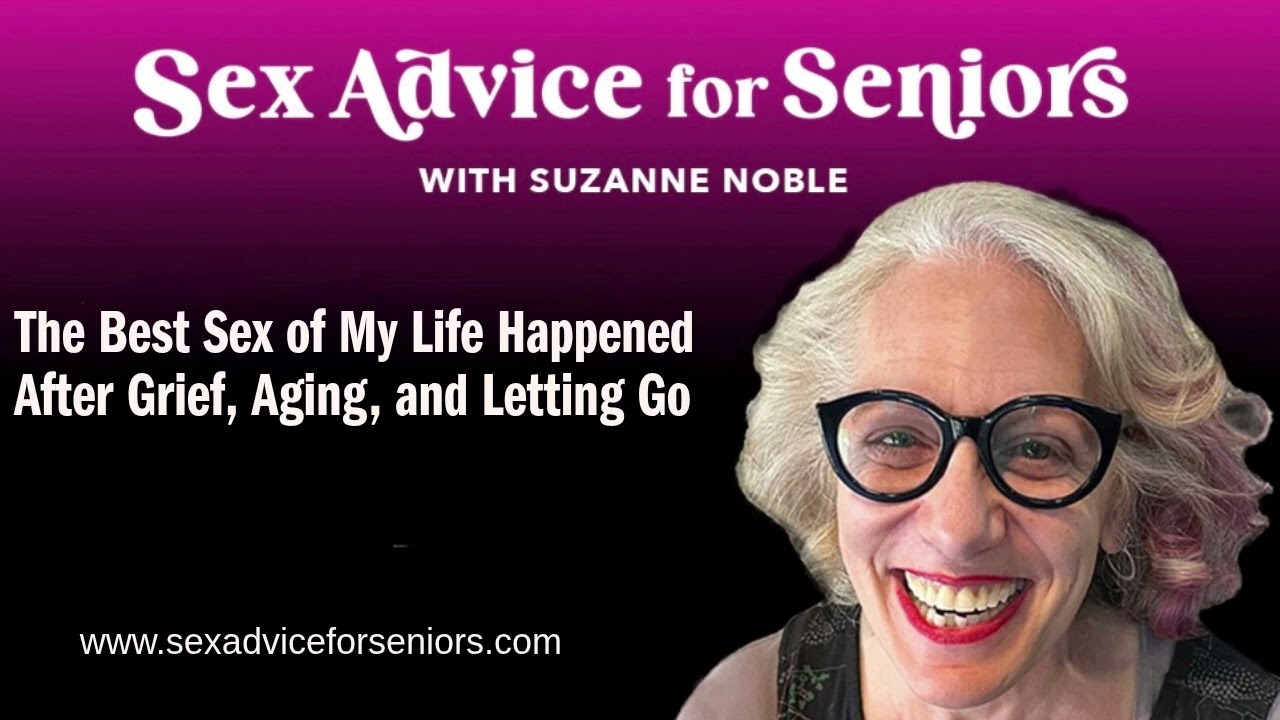
In this holiday‑season episode of Suzanne Noble’s "Sex Advice for Seniors" (branded as "Sex and Spices and Scares"), host Suzanne Noble welcomes psychotherapist and thought‑healer Dr. Nikki Monte. The conversation moves from light‑hearted banter and sponsor plug to a deep, candid exploration of Nikki’s personal sexual history, including three marriages, alcoholism recovery, and the violent, "Virginia Woolf"‑style dynamics of her early unions. Nikki describes how grief after the death of her third husband (a 33‑year marriage) became a catalyst for profound self‑discovery, emotional honesty, and a renewed capacity for love. She recounts meeting her current partner—a divorce‑attorney who had undergone a prostatectomy—and how they navigated the physical and psychological challenges of post‑prostate surgery intimacy, redefining sex beyond penetration. The dialogue covers themes of desire that never retires, the importance of mindset, shadow work (Jungian inner work), and the role of emotional honesty in resolving conflict. Nikki critiques common gendered expectations, shares how she broke out of “type” in partner selection, and reflects on how early family trauma and past abusive relationships inform present sexual dynamics. The episode concludes with a shared belief that sexuality is a gateway to broader healing, that health challenges can be met with intentional mindset shifts, and that desire remains a vital, lifelong force.
Chapters
This week's episode has been sponsored by Oh My Bod, shifting the evolution of pleasure. Hi, this is Suzanne Noble, and you're listening to Sex Advice for Seniors. And as we're in the holiday season, I'm feeling very seasonal. I've just actually— I've just come back from having an early Christmas dinner with my colleague, I'm like, I've had one glass of wine and a very nice cocktail. So this is going to be a very, it's going to be a nice kind of loose, free-flowing conversation. Might get a bit naughty.
Who knows?
My guest is, I just feel she's a woman after my own heart. Her name is Dr. Nikki Monte. She's a psychotherapist and thought healer. Those of you in the States might've seen her on Keeping Up with the Kardashians on Bravo. She's been on loads of television shows. She's written a very engaging book that I've just been listening to her talk about on other podcasts called The Divine Tromedy of Nikki Joy. I love that. And her website has got an even better name, which is Stuck No More. I love that. Welcome, Nikki, to Sex and Spices and Scares. Thank you.
And just, just to speak to the, speak to the naughtiness of it all, the, this continuing title of the book is, it's The Divine Tromedy of Nikki Joy. A true grime tale. So that just, we're right in the Suzanne category here.
Love that. I love that. My books, my, I wrote a couple of memoirs back in my 40s that were just me having sex with lots of people. I know it was, and they were very popular. And subsequent to that, that doesn't matter whether you're in your 40s or your 60s. If you write about your own sex life, people will pay you to read that.
Yes.
It's incredible.
That's right. Yes. Anyway, there's a lot. I was having a conversation with a client yesterday and he was explaining men to me, which was fascinating.
Okay.
He's, he's, you know, he's, he's, you know, got a high sexual vibration. Let's say he thinks of himself as highly sexual and does these sort of semi-interesting things. He was explaining to me that men just can't be aggressive in the way— just can't be aggressive with women in the way that women with women can be aggressive. And I said, yeah, not so much. You would be incorrect about that. No, I mean, that's the way it is. I said, you know, read my book, get back to me on that. Yeah, I mean, explaining sex to me by someone, you know, kind of been there.
Only like what, like a few decades of experience with this. I love when mansplain stuff like that, don't you? Yeah, I was— I had a roommate once. Well, he was like a flatmate, and he, he tried to explain how women like sex to, to me and another woman in a car once on our way to a Halloween party. I'll never forget, because she's got a business called The Pleasure Project, which is all about eroticizing safe sex. It's an NGO. It's been running for like over 2 decades. She's like the world leading authority on, you know, on sexual pleasure and all sorts of things. And I obviously do this. And he was trying to explain to us, you know, how women experience sexual pleasure. She just kept looking at me in the car like, is this guy serious? What is he talking about? Like, why is he, why is he talking about this with us?
Anyway, yeah, by the by.
But yeah, I mean, obviously you're a woman with lots of experience from what I can tell. And we were talking just before we started recording about the fact that you've, you've been married 3 times. Um, and you know, now you're in a very happy relationship and I'm curious about that whole journey that you've went on, you know, from marriage 1 to not to marry.
Yeah. Well, Yeah, my first two marriages were— I was under, you know, I was under 29 when that, you know, came and went. So, you know, that was— and then I— and people said, why do you keep getting married? And I said, because they keep asking me. I don't know. No was not in my vocabulary. And, you know, the marriages, those two marriages were brief, one with my college boyfriend and the second— and I think of him as my drug marriage. And then my second marriage was my alcoholism marriage. So I'm a recovered person. I've been recovered for many, many years. And but, but that was a drunken debacle, brief. And what I discovered about that was it was very violent and was a very— it was sort of— I think of it as it is. Who's Afraid of Virginia Woolf? In the living day-by-day version, and very much so. And in that marriage, there was a lot of dramatic, very brutal sex and violence and, and all of these things, you know, and it was going so well for the first, you know, month or two that we decided to get married. And it was, you know, again, very brief, but very violent. And what I, and the point you ask about what did you learn, because That is the thing about relationships or anything in life. If we don't learn anything from them, then, you know, it's same old, same old. We will stay in the old pattern. What I learned in that marriage was, and what I say about that is, that man beat me in all the places I hadn't learned yet to beat myself. And so, you know, the idea was that I, we make choices and a lot of, I'm not, I have no victim mentality or even, you patience for victim mentality at all. There are victimizers, but there are no victims. We sign up what we sign up for, unless you're a child and you're, you know, Epstein, right? So besides that, but as an, as adults, we really make all our choices. And the only freedom we have is to take responsibility for those choices. What I, I learned in terms of sexuality in those, by the time I met my third husband, which was 33 and a half, it was a 33 and a half year marriage that ended with 18 months of his illness. And so he was older than I was. And we had a lot, lot of interesting and potent sex. He was also a compulsive, you know, and so we compulsed together. We were sober, you know, and, and what happened was that somewhere along the line, not ruining the book because hearing it from me in the book. I also read it, but whether you read it or you listen to me read it, he had a prosthetic and he decided that he was done with sex. And he decided that I was done with sex. And then he decided, as he said one day, that, well, you never were very sexual anyway, which was hysterically funny and just, you know, convenient for him to think and just absolutely not. And so I did You know, I, I tried all sorts of ways to convince him sex is not just about putting the member in the member and that there's a lot of other things and we had done those other things. So why now are you? Well, he just had no desire and I think he was embarrassed. He felt impotent, which he was in some ways, but he felt powerless as he was aging and all of these things. So I did all the things that we try to do to take care of ourselves. And that involved a lot of different kinds of things, but it, none of them were satisfying because desire is my fire. Yeah. And, uh, so, you know, hiring somebody or the different things that we can do, it just doesn't, for me, it doesn't work. It works for some people and they should do that then. Then I, and I write about this in the book that I, after Conrad died and again, it was a brilliant, that 18 months was brilliant. For me because I learned so much about myself and being in service to love in a whole new way. And it was really good. And I had really kept one foot out the door that whole relationship because I was really not taught anything about love. And I tried, I tried to teach other people, you know, we teach what we need to learn, right? So I, after about, you know, I had done a lot, a lot, a lot of work. As he was dying with myself. And I have all my life, I've been a seeker, you know, I have all sorts of different, I tried everything I'm sure there is to try and did a lot of healing along the way and, you know, really beautiful. That drop into pure vulnerability really didn't happen until he was, until I was in service to his, his dying. And he was a very hugely vivacious life force, you know, so it was interesting and heartbreaking. Of course, to watch him be so diminished. That being said, he died and I immediately, I was writing during 6 months of him dying and keeping track of what was going on. Somebody had suggested that I keep an online journal. He said, 'Cause you'll need it later.' I had no idea what that meant, but I've always been a writer. I've had, I have 3 books. So, uh, so I started writing this book and it was really defensive. I mean, I needed to work through the material, do all that stuff, and it took many shapes. And finally this year it was, um, it was published in this fall, a few months ago, a couple months ago. And, but, so 10 months or so after Conrad died, I said, oh, it's time to date again. And I thought some people are going to think this is too soon. People might think, what? How old are you? You know, whatever, like as if libidinous life flow suddenly should stop at a certain age, which is nonsense. You know, and, and, and talk about advice, sex advice to seniors. Sex advice to seniors is the same for me as sex advice to everybody. It's get the hell in your body and stop running from yourself. Feel the vivacious, extraordinary life that lives in your body. Be juicy from top to bottom, in and out and all the time. Obviously not all the time because we have to walk. But, you know, be, address that. So I, I met this man, um, you know, I, I mean, I dated a few people, they're pretty not interesting, but dating had not changed at all. And I did a lot of dating. Dating had not changed at all. Everybody was insecure to some degree, a little more secure because they were at a different point of their life. And, uh, everybody wanted to get laid. This was across the board. It was actually the same.
No, nothing has changed. I don't think women realize that everybody wants to get laid because sometimes they, sometimes they don't. Right.
And well, I, you know, when I find that women are, are women who have always been enthusiastic, remain enthusiastic, you know, generally speaking. Yes. We have to deal with menopause and all those things. You know, it doesn't, it's, you know, you know, absolutely Suzanne Noble Noble, the most important organ we have is our brain.
Yeah. 100%.
And we can turn ourself off and we can turn ourself on.
Yeah.
And you know, and then if we have somebody there who's also very sensual, and I find sensuality the most important part of sexuality. And, you know, so that we're in this weaving together. It's energetic, if I can be, you know, airy-fairy about it, but it is true and energetic. It's the thing people take drugs for, Molly and whatever everybody's doing now. You know, they do all that to get that. You can get that without substances. You can get that through your intention and, you know, the way you're thinking about it and how you're approaching it. So I meet this man and he is splendid. He's not at all my type. I'm not at all his type. I'm way out of his box from a place in California called Orange County, which I always think of as just a little too white. Anyway, so, so it's, you know, I'm from New York originally. Once a New Yorker, always a New Yorker, even though I've been in California since '79. But we still talk about it.
So here I am. I've been in London since '74, right? And I'm originally from New York and I went back, right? You know what I mean? Like, there's something about New York. Well, also, just, yeah, it's just a thing, isn't it? Yeah.
So, um, okay, I'm flying over tomorrow to see you. I want to see you in London. Okay. All right. Next. So the, so, uh, so I met this guy and he, I mean, right away we have this amazing conversation on the phone. He's, uh, he's, he has never done therapy, which was crazy to me. But, but he, but he had, he was a divorce attorney and then he was a mediation attorney for divorcing people. So we had a similar language. His wife had died 6 months before my husband had died. He'd had a, you know, a 40-year marriage. He was very family-oriented. I have zero family. He's like a thousand people in his family, you know, Catholics. And, uh, so they just, and, uh, but so smart and witty and playful and, and very sensual. And to use a silly reference, but some people might appreciate it's a triple Scorpio. I mean, you know, it doesn't get better. Yeah. So, so, and he's just so sensual and so sexual and And I talk about this in the book, so it's okay for me to talk about it here. He tells me as we're talking, first of all, the first hour he says to me, listen, I don't know where this is going. I don't know what's going to happen if we'll, if this is a one and done, if we're going to keep going, whatever, whatever. But we had so much of a pull. And he said, I'd like us to make a promise to each other though. And I said, what's that? And he said, no pretense, no pretending we're people who we're not, no putting on false face, none of that. No matter what. I said, I am in. This is extraordinary. I mean, you know, this is what I teach in here. I mean, fantastic. And then the next thing he says, uh, in that opening, uh, sequence together, he said, uh, I want to be value added to your life every day. I'm like, okay, I just don't even know what this means. You're amazing. You know, I was like, and he was, he was so great. And then he says, uh, before we're, uh, about to get more intimate, uh, that we were already very connected, which is what real intimacy is. Um, he said, you know, I want to tell you that I've had a prostatectomy. And I'm like, okay, this could be a deal breaker. I don't know. He feels really different, you know?
Yeah.
And I want to tell you. Suzanne Noble, it is my, my clients already know this, but the broad public does not yet unless they've read the whole book.
Yeah.
Best sex of my life. His daughters, clearly younger than his daughters, go, yes, we know, Dad, you're having more sex than anyone in the family, all the people put together. I know, because there's a freedom that we have. We don't have all the the concerns, the, I, oh, I have to do this to get this to happen, and the family has to have that. I have to, oh my God. We just have this love, this intensity of connection. And when, when it, when we have these moments, of course, and we have, we, we practice something called emotional honesty, which is like, you know, when you, I felt really forgotten. I felt scared. I felt whatever. And, uh, And so the arguments or the tiffs or whatever over immediately because I, you know, he says that and I say, I don't go, well, you know, because you were, and then I, I say, wow, I'm really sorry you feel that way. I could see why you would feel that way because it's my truth. And he does the same. So the arguments, and that leaves room for love and it leaves room for zestiness. And, you know, we're very affectionate, you know, every— we're just affectionate and open and adventuresome and, you know, all those things. And it is what makes it the best is that I have finally, finally, finally vulnerably surrendered to love. And I mean, I, I always used to think love and I thought, I don't feel love the way other people. I feel it for my clients in a moment of brilliance, you know, where they're making some discovery that is just opening my heart, my eyes are welling up, and, uh, and I do some very intense and difficult work with people's original wounds and all of that. But for myself, I was up all up in here, and that's not where that, that can send you diving into sex, but it can't keep you in this abundant experience of, uh, passionate, loving, raw, intense, nice, not nice, nasty, whatever, all the things. It can't keep you there. Right?
No.
It has to be hard.
That's what I ask you, because you said that he lives in Orange County. Do you still live apart? Oh no.
Oh no. He lived immediately. He came here every day. After the first day, we've never been apart.
Oh, okay.
He came here every day. 3 years ago, he sold his house, or 3 and a half years ago, almost immediately he sold his house in Orange County and he moved in here because because I do my, you know, I have a sacred space that I do my workshops in and things like that. He's also joined work. So he, he, he, I invited, I was doing this kind of upper level workshop with people I had done a lot of work with. And I said, hey, do you want to come in? Because he'd never seen anything. He said, well, what would I do? I said, well, you know, it's a pretty sophisticated group. I said, you'll just hold the masculine. And he said, yeah, I have no idea what that means. I'm going to have my hand on my groin. I'm not sure what you're saying.
I like this guy because I'm so not woo woo. And if anyone says shit like that to me, I'm like, I don't know what the hell you just said.
It's like, I have no idea. So he calls my best friend, who is a sensuality coach, by the way. And he put— she gets people into their sexual body in just beautiful ways. She's been my best friend for a long time before she was a sensuality coach, but now she— and she, uh, and she'd already met him and loved him and all the things. And so he calls her because she's on all the workshops like a co-person. And she said, Nikki's invited me to come into the workshop. He said, great. You know, she said, great. Oh, that'll be great. And she said, she said I would hold the masculine. What does that mean? And she says, you'll be fine. And hangs up. It's the same thing. So he starts Googling, oh, mass Jung, Carl Jung, because I'm very Jungian, right? So he starts Googling and reading all the things about Jung and he's a researcher. Anyway, he carries this masculine and the feminine as well in terms of he's emotional when it's right dead on the money to be emotional. You know, it's not like he's crying every day, but he had, you know, he has this deep relationship with his feeling center. He's loving. He's the good father for everybody who meets him. You know, a lot of people I work with didn't have that. I certainly didn't have that. So, uh, but, and we are partners and I never had, I always ran everything. And, uh, uh, uh, this is, he's a real partner. So it has been unpredictable. And unpredicted this time of my life and this final chapter of my life. And, uh, you know, we say we have much more behind us than in front of us. This is, we're on a short runway and we live life with, uh, with that in mind in a good way, you know?
Yeah. God, I have so much to untake of this conversation. I don't even know where to start. It's like, What I think is so interesting about so much of what you said and is so heartwarming to hear is especially in light of the fact that you're, you know, you're the man with whom you were married for decades and, and had a similar, you know, experience to your current partner having had a prostatectomy. And yet their attitude towards that could not have been more different. And I hear that so often from men who have experienced that procedure. And then, you know, the loss of being able to have an erection completely decimates their libido, their sex life, and they seem to just accept that in a way that is not beneficial for them or for their relationship or for anybody, frankly. But it seems a really common experience.
So yeah, talk about erections. You just have to, you know, you have to take the little pills, you know, it's not like it was, and it's shorter than it was. I mean, the, the, the actual penis is shorter than it was because they take whatever.
But, but, you know, the point is that, you know, I've, I spoke to a man months ago called Bob Mizek, who's got a Substack newsletter about having that experience himself and then making a really intentional decision that this was not going to prevent him from being intimate with his wife. And he was going to seek out as much help and as much information and as much as he could to be able to continue to have a relation, a sexual and intimate relationship with his wife. And that journey that he went on, and it was a journey because he got he found a lot of bad advice from healthcare professionals and all sorts of people that just said, hey, it's over. Don't, you know, live with it. But he wasn't willing to accept that.
Let's find all of them and put them in some special little dark room where they must live with themselves.
You know, there's a lot of them. Sadly, there's a lot of those people out there. And his and Bob's experience was that actually, and it sounds similar to your current partner, is that what it led him to discover is a different type of intimacy that was deeper, that was more creative, that was more kind of all-encompassing, you know, like just the way that we can experience sexual pleasure in all its forms. And when you meet somebody who's done, gone on that, God, it's so much more invigorating, isn't it?
So much more invigorating.
And it's also so sexy when somebody sort of says, so fucking what, my dick doesn't go up and down the way it used to, like, okay, you know, I'll try something else, I'll do something else. And I think, yeah, you know, there's not enough said about that. So to hear those two experiences that you had, that one so different than the other, I think is such a great indication that, you know, you don't have to put up with bad advice, nor do you have to put up with, you know, what goes on, you know.
And nor do you have to have— so you're fighting with contempt prior to investigation, we call it, right? So I could have made the assumption that, okay, well, there's a deal breaker. Exactly. Right. And I would've missed out on this, but I had already been hanging out with him for enough hours and felt into his energy. And I read people pretty well after all these years of doing this. And I've worked— I was gonna be a sex therapist when I first started being a therapist because, you know, hey, teach what you know. So I was gonna be a sex therapist, but, uh, I found it boring because sex is the repository for all the other feelings. Sex and money are the two things that people fight about, right? Because it's quantifiable. We have sex once this month, we have $112 in the bank, right? It's, it can be, I can't say you gave me 33% of your respect this month. You know, it's just not quantifiable. So it becomes the, the basket that all the other crap falls into.
Yeah. Good point.
And, um, uh, and so it, it, it becomes the resentment basket. Never. You don't respect me basket and all the other things.
And it's not fair.
It's putting too much on it.
Yeah. And the other thing that you said, which really I took to heart and I think so many people struggle with was at the very beginning when you met this guy, he didn't fall into your type. Right.
Right.
You said he did, he was from this place that you didn't regard very highly. He, he didn't look like your type. He didn't do this. He didn't do that.
Yeah. I mean, he wasn't, I, I, I've always been attracted to ethnic looking people. He's, you know, you know, super, he's Irish of Irish descent, you know what I'm saying? And he wore button-down shirts and, you know, just, yeah. Yeah.
So he was, you know, he was, but. I think again, especially, you know, later on in life for so many of us, we have a history of just going after type. My type is generally the bad boy and I'm still with one.
How's it going?
He's bad and he's good.
Yeah.
But you know, he is what he is.
Yeah.
It's just You know, when I, so many of us just fall into these predictable patterns and then we go, why isn't it working? Like, what's not working? Well, because it never worked before. Right. And so you took that leap of faith, which I admire so much because it's fucking tough sometimes to step out of our little prescribed, you know, little box.
Yeah.
Upsticking that we all do, right? And I think that also was just so encouraging that you went, fuck it. You know what? The guy lives in Orange County, doesn't fit my type, but there's something going on here. It's interesting. I'm going to see where this goes. And I think that was also important.
I think it's important. And in general, women are more flexible in those ways than men, you know, generally. She has to have big tits, whatever it is. But we, we will tend to give certain things a shot. I mean, I ha— you know, I have my limits, but I went for something that was totally different. So again, desire's my fire. So my husband loved me. I'm pretty much sure more than anybody who's ever loved anybody in the universe, but that didn't make him a great partner. We were so different, sort of politically and psychologically. He was all interested in the exterior landscape. He was a historian. Historian. He would read 2, 3 novels a week, which he had time to do because he didn't have a job, you know, and he would do all these things. I'm interested in the inner landscape and the outer landscape's okay.
It's fine.
You know, but the inner landscape is what really floats my boat. But the love he was offering me was a healing property for me. And I knew what I was doing. I chose that. Over other things because I had felt I'd been so basically, as we say, an interruption in my mother's life. You know, I was like, oh yeah, you're supposed to have children. I got one now. Now on with my actual life. And so, and she was, you know, she was an entrepreneur. Listen, I learned a lot from my mother, but she was also a malignant narcissist. And I use, I don't label people much, but my mother was that. She was a very dangerous and dark person in the way that she operated in her life. And of course the great thing about that is I went the other way. I was, I mean, I did dark things to myself, you know, like marry men who beat me, but just tiny little things and made terrible, terrible choices. But I didn't, didn't do it to other people, you know? Yeah. So the idea of allowing myself to really, I had a, I used to work with an astrologer who used to say, it's not falling into love, it's rising into love. And I love that term. And I I didn't let myself rise into love. It just felt too damn dangerous, you know? And so we, we get what we expect in life, as it turns out. We get what we expect. If we expect to be abandoned, we're going to find people to abandon us. If we expect to be mistreated, it's easy. They're, you know, all over the place. If we accept that we do, if we deserve love and we deserve kindness and we deserve generosity, then that's what we will get.
Yeah.
Yeah. And it's not so simple as, okay, I deserve it. And there, see, it comes. You know, we have to deeply believe it in our bodies. And I always say, I bet you would agree with this, uh, Suzanne, I always say until I feel something, until I know something in my body, I don't really know it. I have a lot of smart thoughts, but until I feel it in my body, I don't know it for sure. I just don't. Yeah.
And Suzanne Noble: And also, you know, people are generally very dissociated from their bodies. So dissociated. So when you say that, it sounds kind of like easy, but it's not actually easy because it means you actually have to listen to all the parts of your body, not just your brain maybe going red flag, red flag, but something deep in your body that's maybe cramping or uncomfortable or something just doesn't feel right or You know, and that for, for lots of people who are so disassociated from their body, that's not an easy thing to do. So, you know, that's also—
well, yes, it's a wonderful defense is a dissociation defense, which happens for a lot of people. I'm from an alcoholic family, for instance, the battle that, that's a, that's a savior for us. Defenses aren't bad. Everyone has defenses and they're not bad. They're just good if we're in charge of them rather than they being in charge of us. But dissociation, I renamed as emotional blackouts because when I'm dissociated, I don't remember those parts of my life. So big chunks of my life have fallen into the ocean, you know?
Yeah. That's my marriage. Yeah.
Yeah. Because we don't want to be there. We don't— there's a part of us that isn't going to be there, but we can't take the body out for some reason, whatever our choices around that. And, uh, and then the other thing that I think a lot of us have, we know about body dysmorphia, right? I look at my body, I think I'm fat as a horse or cow or whoever is fat. And that's one kind, but I also think we have emotional dysmorphia. We look at ourselves. I certainly thought I was a disgusting, unlovable, ugly piece of crap for a lot of my life. And I was going to, you know, but one thing I knew how to do is have sex. I mean, it's not rocket science. It's, you know what I mean? It's not that hard. Women will come into me and they go, oh, someone, you know, I had sex with someone. He really wanted me. I'm like, baby, I don't mean to give this. I don't want to rain on your parade, but men aren't that difficult when it comes to—
sorry, I mean, you had a pussy, honey. That's it.
You know, I mean, there are people who are more selective and they have self-esteem. You know, but chances are that guy you picked up in the bar on the corner is not got the self-esteem you're looking for or that you should have.
Yeah.
So we become more selective, I think, about everything when we have something that you said that was great.
And I think it, again, you know, we talk about tick boxes when we're looking for a partner. Often the things that I hear people talk about for me are quite superficial things, you know, like they must be tall or, you know, or, or they must work in finance or whatever.
Yeah.
But what I heard you say was husband had, was focused on an external, the external world. He was curious and interested in the stuff that was outside of him. And your current partner is really interested in the internal world. And I thought, what an interesting and much more, um, Yeah, just a much more, you know, interesting way to describe the kind of person that you're attracted to, which is, oh, he's kind.
He's the kindest, most generous, like really generous, not just generous where he'll get credit for it, but generous and stable and, but also fun. But we went traveling the first year we were together. We went, or maybe it was the second. Anyway, we went to this I, we had a wedding to perform in Tuscany, so we made a whole trip of it and did a whole bunch of other things. But we were going to go to one place and he said, and he had had this dream all his life, this repetitive dream that was, that he knew and other experiences was about Auschwitz and much more about Judaism than I was, right? Knew much more. It was the same thing with Conrad. That was another thing about that was interesting. But anyway, he, uh, We went to Auschwitz together and it was, it was so beautiful to do that with him and moving because his compassion. So I'll give you an example, another example of who this man is, just because I feel like talking about it. It's the holidays. Um, uh, my, my Conrad was a warrior. He had been in 3 wars. He, it turned out in the long run to be a soldier. A spy as well, which was kind of fun, but I knew the whole time, but he would never admit it. But I found his papers in the last month of his life. But anyway, he, um, so he, he had all these guns. I walked in one day to the library that I created for him and there was a lazy Susan of rifles. I was like, I started hyperventilating, you know, I said, I'm not a gun person. And he said, isn't it cool? No, not cool. Not cool. Well, most of them don't work. I said, some of them do. What is it? Anyway, so we had, I had all these rifles when he died. I had all these things. And so Tom was, who is a minimalist, he comes into this house of a hoarder. And he, and so he, he opens this thing and there's all these rifles here. And his first thing was, wow, imagine how much blood these rifles have shed. I, who are you? Who are you? And it wasn't airy fairy and it wasn't icky wicky. It was just a, it was just a ref— he, it was a true heartful reference for him.
Yeah.
Yeah. Yeah. And that, that is the thing that is, that has got that where I've fallen so deeply in love with his inner landscape and we'll lie in bed like, like college students and talk about The universe and what is soul and how, what is love and how, what happens? Is there anything? Maybe there is. We don't know. You know, cuz we've both been seekers all our life in very different ways.
Yeah. And he's, he doesn't sound woo woo either.
He's not. He's not. And I, although I've gotten him to do a few things cuz I do shadow work, which is a Jungian process.
Oh yeah.
Yeah.
I know about that.
Yeah. And I teach shadow work and I do it and I find it to be, I just think it is, it is a pivotal healing point when you can do shadow work. So if people—
anyway, Nikki, you know what? We have gone way beyond the time that I normally allocate for this kind of thing, but only cuz babe, it's the holidays. I've had a couple of drinks and I'm like, she's so fun. Let her just carry on. Let her just carry on. I don't really need to say very much to her.
I know we're like girlfriends, you know, you can cut it up into two pieces or you can, you know, we can do a sandwich.
I think you misunderstand what this is all about. That's far too difficult for me.
I know. I wouldn't be for me too.
Take this, this wonderful piece of conversation in its entirety. And we just, and we just top and tail it with my wonderful sponsors and stuff. And, and then everyone loves it and it becomes a big hit and you get more people out of it. And hopefully I get a few more listeners. It's all good. Anyway. It has been so awesome to talk to you. We have to have another— I have to put you down as must organize another conversation because I did have 10 questions on a piece of paper and I haven't asked a single one of them.
I know I'm very chatty.
No, that's okay.
They can't rein me in. It's terrible. But we did talk a lot about sex.
We did, which is the point. And also we talked about some of the stuff that I think is important to talk about, which is that desire never retires, as I like to say, desire never retires.
I love that.
Yeah. And that, you know, we can overcome some of the health challenges that we often face at this time of life. It's all to do with our mindset.
It is all to do with our mindset.
And so I think that's a great place to end.
I love it. What a joy. Thank you so much across the Suzanne Noble.
I know, I, I'll come and visit you one day.
Or me, you.
Yeah, nice.
Yeah.
More from Suzanne









Why Sex Changes After Menopause (And Why That's Not a Bad Thing) | ft. Dr. Kelly Barron

Why Facesitting Is Trending Among Women: Power, Pleasure & Later-Life Intimacy
