The Real Cause of Erectile Dysfunction Nobody Talks About | ft. Tom Jenkins
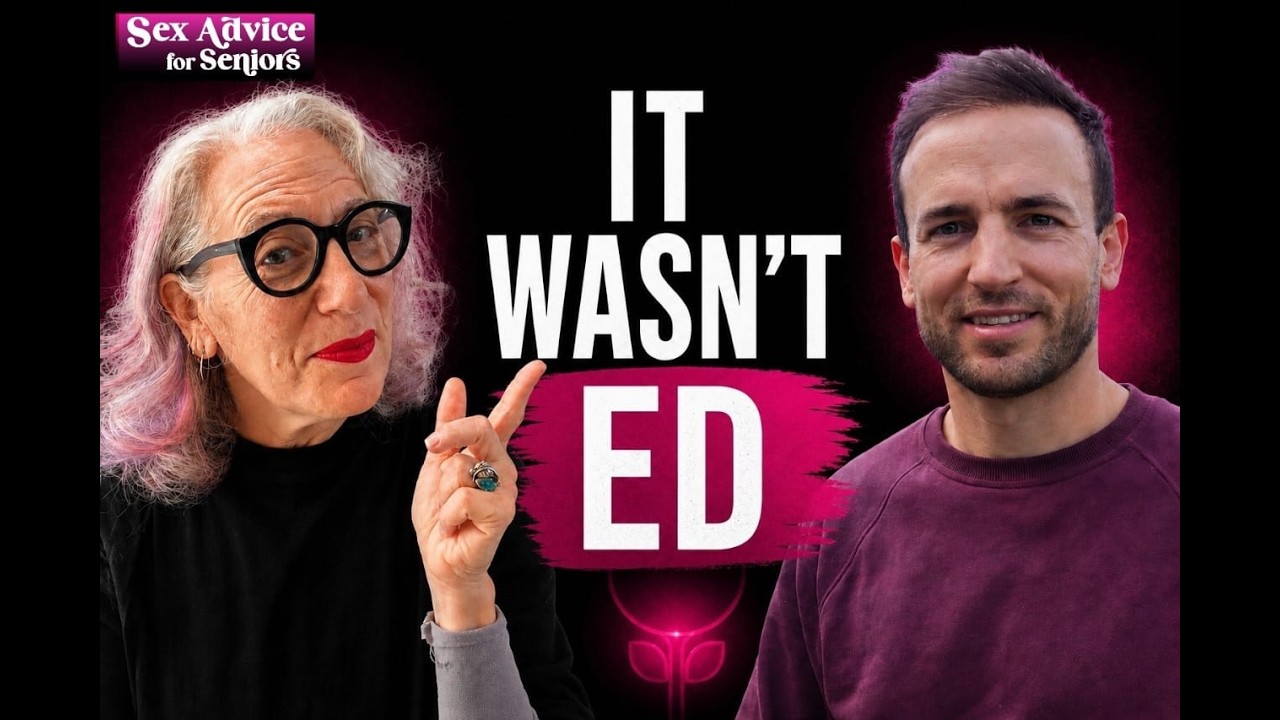
In this episode of Sex Advice for Seniors, host Suzanne Noble discusses erectile dysfunction (ED) as a warning sign of deeper health and lifestyle problems, drawing on her own experience with a partner whose ED preceded liver cancer. She introduces her new program, Stay Firm, aimed at helping men address ED early. The guest, Tom Jenkins, author of The Drunk Gambler With Erectile Dysfunction, shares his personal journey: early sexual insecurity, heavy drinking and gambling, and how these habits eroded confidence and caused psychogenic ED. He recounts using Cialis for years, recognizing it only treated symptoms, and ultimately seeking a root‑cause solution. A six‑day ayahuasca retreat in Colombia acted as a turning point, prompting deep emotional work, a shift to a healthier diet (more protein, organic foods), regular exercise, meditation, and the elimination of alcohol, gambling, and drugs. Relocating to Colombia provided a supportive environment and new social circles focused on natural healing. Tom emphasizes the critical role of honest communication with a supportive partner, describing how openness with his wife restored confidence and sustained improvement. Throughout, Suzanne highlights the complexity of ED for older men, stressing lifestyle change, stress reduction, and partnership as essential, and she ties the discussion back to her Stay Firm program. The conversation also touches on the broader challenges of changing social habits, the stigma around ED, and the potential of psychedelics as one of many possible healing pathways.
Chapters
realized that actually erectile dysfunction is often a signifier of a much more serious condition.
I had no idea really what I was doing, no confidence. And you know, when you've got all of that going on in the mind, plus I was drunk, how's anything going to work? A big part was changing the environment. A big part was just shifting those negative habits. And then a big part was getting to the root of the problem. Now, it's not for everyone, I know. But yeah, the ayahuasca, the psychedelic medicine certainly helped me a lot with that.
Hi, this is Suzanne Noble and you're listening to Sex Advice for Seniors. And today I'm going to talk about a subject with somebody that is incredibly close to my heart because I think I may have shared with people previously that I had two partners 20 years apart, one of whom was an alcoholic, and he had eventually died from liver cancer, which was not really very surprising. But one of the first things that he noticed when he became really ill was he started having erectile dysfunction. And later, when I started talking with urologists and doctors and all sorts of people, I realized that actually erectile dysfunction is often a signifier of a much more serious condition. And that's why recently I launched a program called Stay Firm, which is now available. So it's a subject that I really feel very strongly about, that men really understand what erectile dysfunction is all about and, and why it's so important to deal with when it first occurs. And my guest today is a much younger person that I'm used to speaking to usually called Tom Jenkins but he wrote this book that intrigued me called The Drunk Gambler With Erectile Dysfunction and with a title like that how could I not interview this lovely young man who is all the way in Colombia so welcome Tom to Sex Advice for Seniors thanks so much Suzanne really looking forward to being here and sharing whatever your listeners can benefit from.
And yeah, let's get cracking.
Yeah. So, you know, obviously the title of the book kind of says quite a bit, but I'm really curious to know, when did you first notice erectile dysfunction creeping in? And what did you, you know, what emotions really hit you the hardest in those early years?
Yeah, I mean, sort of from my very first sexual experience with a female, I was very late. I think it was 22 when I was first going back with a female partner to the bedroom, so to speak, and being so late, being so short of confidence, worrying so much. I was also drunk at the time, but I thought, well, I've got to get this sort of virginity monkey off my back to put it in inverted commas. And, you know, I was drinking, gambling to sort of COVID that complete lack of self-confidence and security that I was missing. Anyway, when we got back to the bedroom, I was just, I mean, I was just a mess. I was trying to make it look like I knew what I was doing. My sexual education mostly had come through pornography. But as I'm sure many have discovered, that doesn't really help at all in the bedroom. If anything, it makes things infinitely worse because you have this high expectation. And yeah, really, I mean, firstly, it was— I think it was clear to her I had no idea really what I was doing, no confidence. And you know, when you've got all of that going on in the mind, plus I was drunk, how's anything going to work? I mean, and you just feel like I just, you feel like climbing into a hole, but you can't because the person's right in front of you and it's clear what's going on. So that was the first experience. And, you know, I could build on more, much more past that if you'd like.
Yeah, yeah. Was the person that you were with when you lost your virginity, was she more experienced than you?
Yeah, for sure. She was, as I said, 22 or 23. I can't remember exactly. She was 33. She was significantly more experienced. That was for sure. And to be fair, I don't even think I could count it as losing my virginity because I didn't get to get to that point.
Wow. Well, I mean, you set yourself a high goal there by trying to lose your virginity to somebody who was a decade older than you, I think, which is always risky in the first place. But yeah, combined with alcohol, probably not such a great idea.
Yeah, for sure.
So, you know, you mentioned in your— you, I, you know, I read a bit about your book, um, that one of your big issues was around the various addictions that you had. And you mentioned that you were addicted to alcohol, that you were addicted to gambling. I think there was some drug use as well, some cocaine and stuff that you were addicted to.
So the drug use was more, I would say that was more on a handful of occasions. But yeah, the alcohol and the gambling were the big ones. And to be fair, I was more, it wasn't, I was more sort of a British-style binge drinker. I was functional. I could not drink. So if I didn't go out, I could force myself and have discipline to not drink for extended periods of time. Now, for me, it was more if I did drink, if I had one, if I went one inch out of my comfort zone, which was really in a bar, in any place where I wasn't with the very small handful of people or situations I was comfortable, then there was no stop, and I'd just go deeper and deeper and deeper to cover that incredible insecurity that I developed inside of me. Gambling, exactly the same. In fact, it was almost a harder pull, you know, towards gambling, and it was harder to leave that than the alcohol. But there was that little escape, you know, of just a few hours, a few minutes when you're in the zone, you just, you forget about life. And then when you come back, you're probably in an even worse position than before.
Yeah. And having had that first experience and struggling with getting an erection. I did that— the experience then sort of follow you around? Because am I right in assuming that sex was always something that was accompanied by being drunk?
I mean, it definitely followed me around because I think it was more the alcohol, the gambling, that those things and the substances certainly weren't helping with anything. But I think even if I was living a sober life, I don't think they weren't the root cause for sure. The root cause came from just that lack of confidence and lack of security. And especially when you're 22, 23, and you know, there's this sort of inner pressure where everyone else has lost their virginity much younger. They know what they're doing. I'm useless at sex. I don't know what I'm doing. I'm scared of telling the truth, forming this deeper connection, this intimacy. So it was sort of that fear was the root cause. And every situation passed then. As I say, the second time I sort of managed to, my second sexual experience, I managed to sort of make things work. I still don't really know how because then with that same person, the third time it just didn't work at all. Then I came, I ended up in Colombia and sort of had my first proper girlfriend. I don't know, we were together for 3 months and she was a really good person. And I opened up with her about my problems. And then things began to work, erectile, without, you know, because I was open, because I was honest, because we had a bit of, and I was gaining confidence. I wasn't drinking, I was living better. Wasn't always perfect, but more often than not, things worked. And yeah, yeah, it sort of continued on and off like that till I got to a point where in the future with another girl it didn't work. And then I met somebody I really liked. It didn't last long, but with her I just thought, I like this girl so much, I can't bear to have this happen again. So I'm going to turn to medication. So for a while, for quite a while, a few years, I turned to Cialis. And, you know, I don't want to knock it because it's helped a lot of people. And, you know, it helped me through some hard times and it did help solve the problem. But I don't like personally sort of cut— you're not treating the root cause, you're treating the symptom. I knew, I knew at some stage I don't want to be reliant on Cialis, Viagra or whatever else as well.
Yeah, especially because you were, I mean, you know, like for often, as we know, when that's prescribed in some circumstances, it's because, you know, in your case, it was, it seemed like it was like a psychogenic problem. It was mainly in your head, right? And your body was fully functioning, you didn't have any cardiovascular issues or anything. Um, so it was something that was just going to help you to get the blood flow going down there and work. And yeah, I think, you know, there's certainly a lot of young people, more young people who are using that recreationally now, sometimes just because they want to have a hard-on for like hours. Um, and over, and over time, it's not really a healthy thing to do to be a young person taking that. But I guess in your experience, it was just about building up that confidence and giving you that confidence to know that you could do that? And then what was the turning point that got you to realize that actually, you know, there were bigger problems that were going on here? What was that?
So I always knew there were bigger problems going on, but it was sort of coming to face up to those problems. I have to say for me that the big turning point and a big change in my life came through an ayahuasca retreat. So a psychedelic plant medicine that's very much the basis of Amazonian traditions. I went to a 6-day retreat, incredibly difficult, incredibly tough, had to face up to a lot of things. I mean, it's very difficult to describe these experiences with with human words, I guess. Um, but it just sort of helped me to start seeing things from a different perspective and getting to the root of the problem. Um, and as I saw that, as it is very much focused on natural healing, not just in terms of the erectile dysfunction but in every aspect of life, you know, healing the spiritual side, the emotional side, the physical side of everything that's going on in different aspects of my life. And from then on, I made a clear decision. I'm not going back to Cialis, Viagra. I'm not doing that. I always wanted to find a partner. I always wanted to find the person I'm going to spend the rest of my life with. That's something that's always been important to me. Yeah, and when I came out that experience, the first thing I did was not focus on that because I was very aware that if I just kept on looking for that without actually learning to sort of find and love myself, to quote kind of some buzzwords, I knew I was going to end up in the same problems again. So I really went deep looking at my diet, how I was living, how I was feeling within myself, to know that when I found that person, I was going to be ready. And 10 months after that, I found my wife, with who 5, 5 and a half years on, we've never been happier. And I mean, that's when really the natural erectile transformation then began to happen with her.
Amazing. And so in terms of the self-development work and the health, because this is something that, you know, we, me and Ken, who developed the program that we've been working on, talk a lot about. Did you, what kind of diet did you adopt? What, how did you change your lifestyle? What, what significant changes did you make?
Yeah, so it was more, I've been quite a hectic person, quite an extreme person, as you can kind of see. I mean, moving around the world, world living, going from bouncing from one diet and way to another. And a lot of it was just slowing down and starting to be with myself, to take more time to sit down and not rush things, start meditating more, start having more honest conversations with people rather than ignoring the hard things that aren't always easy to talk about. I mean, exercise has always been a part of my life and I kind of let it tail off a little. So I worked out, well, if I started exercising more, I was feeling better. I was actually vegan at the time of this change. Haven't always been and I'm not now, but I wasn't eating right. I was eating very unhealthily. And I think you can be vegan and very healthy, but you just have to plan it and do it right.
Yeah. And I wasn't doing that.
I mean, after the retreat and the experience, I could kind of see my diet wasn't right. I began eating more eggs, more protein, trying to eat more organic, get cleaner. I wasn't drinking, I wasn't gambling. And it's sort of the snowball effect. The snowball effect goes down. I gamble, so I drink, so I gamble. And it was sort of the reverse snowball. And you begin to build little pieces of confidence that The little by little go transforming that, how you feel inside every day as well.
And what about like your social connections? Were a lot of those people that were in your life at that period of time when you were, you know, drinking and gambling, were they people that were also drinking and gambling? So yeah, especially to clean out your social circle too.
Yeah, for sure. I mean, I don't want to, you know, say a lot of people I am great people and still in touch with, others less so. Moving, as I say, I was in the UK, I'm now in Colombia. I mean, that was a massive change for me because I knew I had to escape that environment. And that happened a few years before where we're talking about. So I left a lot of the negative habits behind, but still that deep inner feeling and lack of insecurity was there. That maintained. And I also find, well, it's all great cleaning out, clearing out the negative influences, but if you don't replace it with something positive or other passions, I sort of ended up in a situation where on a Friday night I didn't want to go out because I knew where it would end up to, but I also didn't want to stay in because I'd be lonely. And it was like, where do I go? A big part was changing the environment. A big part was just shifting those negative habits. And then a big part was getting to the roots of the problem. Now, it's not for everyone, I know. But yeah, the ayahuasca, the psychedelic medicine certainly helped me a lot with that.
Yeah. And you know what? I've got a friend at the moment who's trying to clean up from some drug issues. And what you've just described about that Friday night is very familiar to me because he has a Friday night, he had a Friday night crowd of people and it was all tied up with that. And as you said, the thing about, and it doesn't really matter what age you are, when you want to make significant changes in your life, especially if they rely on familiar, ditching like really familiar social situations. That can be so difficult, can't it? I mean, you know, you know, England is a pub culture, right? I mean, going to the pub on Friday in England is just like, it's a thing. And when you say to people, I don't drink in a pub, they're like, What do you mean? What do you mean you don't drink? Like, why are you even here if you don't drink? So, you know, often having to like leave, you know, leave places where you might have been going for months, years, for virtually a lifetime can be really difficult. And I, you know, you're young, but I suspect just talking to, you know, my older audience that these are all really familiar scenarios is Oftentimes erectile dysfunction is caused by things like alcohol abuse. I mean, it's, it's, it's one of the consequences of drinking too much is having ED. And if not having ED means giving up drinking, it also might mean giving up your social life, which may mean then again having to find a new social life that doesn't rely on drinking, which, which can be difficult. Right. I mean, it's hard.
100%. I mean, it really did help me with me being on the other side of the world and having a different environment. And I found people who were much into, much more into natural ways of healing and into medicine, into hiking, into exercise, and started spending a lot more time in those groups rather than, rather than, yeah, in the pub. Forcing myself not to drink, being pressurized to drink.
And yeah, yeah, it's really difficult. And I think, you know, I suspect there are people— it's funny, there are people that I met when I was traveling recently, and I could definitely tell that they were escaping something, right? Like leaving a place that you've been, that you've grown up in, that you've been your whole life. Just going to some different place. It's not just the change of environment, but it's also an opportunity to have a reset. And I suspect that Colombia was a bit of a reset for you in being able to just go, okay, this is my opportunity to start all over again. Is that how you felt?
100%. And it's funny when, because a lot of people have this image of Colombia Pablo Escobar, cocaine, and Narcos, which I get, which is, you know, those eras are in the '90s, '80s, '90s, and it's changed a lot. Now, don't get me wrong, there are still things the country has to overcome massively, but people don't believe the amount of people who have come to Colombia to actually get away. Well, my best friend here used to be massively into cocaine. And he came to Colombia and healed and stopped that here. And it's sort of like the reverse of many people's images. There are so many stories I know that are like that here.
That is mad. And, you know, for men going on to, you know, my audience, which is men over 50 who are facing erectile dysfunction, what's the one mindset change you wish you'd made sooner to avoid those years of struggle?
It's the confidence in myself and in my partner. When I found my wife and I kind of found— I began to get to the root cause of that lack of self-confidence, I had the confidence within myself to speak very open— before we had even had any sexual experience, I was completely honest and open about sort of my past and my struggles and how I'd gone about it. Yeah, that just takes such a weight off the shoulder if you're not having to worry, well, what's she going to think? What happens if I don't work? Well, if you're going into the bedroom with that noise in your mind, it's, it's almost like, how is something going to work? It's almost you have to rely on luck and it being a good day. Whereas it didn't have to be like that. It just had to be— now, if you're just on a— maybe people are just with different women here or there and it's a one-night stand, maybe it's more hard, you know, talking in the bar beforehand. To be this honest, for me, I had to find the partner I could be truly honest with. To find her, she's truly incredible. I had to find within myself the incredible person I was and believe in myself. And to do that, I first had to get rid of the alcohol, the gambling, the drugs. I then had to spend more time meditating. I had to have a better diet. I had to exercise more. I changed how I was working. I changed how I was living. My stress reduced. The cortisol reduced. And, you know, you add all of that up, and now I'm feeling much better. Now I'm capable of finding and being with a woman this incredible and knowing that I deserve her and she deserves me and that we're perfect together. Whenever I found somebody like that in the past, I was always below them. How are they? Why are they with me?
Yeah, yeah, yeah.
It's all of that adding up and just when I can have that conversation and when I just had that complete trust in her, knowing, knowing that, I mean, nobody's going to turn around and say, oh, you had problems with erectile dysfunction, I'm leaving you. But almost in our mind, we sort of imagine that that's a scenario that can happen. I mean, if it's, if it's the wrong partner, maybe it could happen. But for 99% of people, If it's the right person, they're going to understand. Things weren't always perfect, again, with my wife. It took time. There were some early occasions where if I'd had a bad day, if I was stressed, if we weren't fully connected, again, things wouldn't work properly, but it wasn't like the end of the world. Again, there was that trust there to talk about it. Every time we got through it, it just builds that confidence more. Well, I've done it in the past, I know I can do it now. And, you know, now it's, say, 99.9% of the time things work perfectly. And the 0.1% is typically stress, too much work, my mind's not there, my mind's not in the bedroom. And then, well, maybe now's not the time to have sex.
Yeah, yeah. And I think, God, you brought up so many points during that, uh, talking about that, which, you know, just reminds me that, hey, you made some— this is, you know, one of the things that I'm keen to point out to people about that are really serious about trying to overcome erectile dysfunction, especially doing it naturally as opposed to just relying on, on blue pills, is that It's complex. I mean, it's, it's a, it's a lifestyle change. You made a lifestyle change. You, you know, you got rid of the alcohol, you got rid of the gambling, you talked about stress and the impact stress has had on, you know, and reducing cortisol levels. Like, the whole thing is all wrapped up together. And if one part of that goes, you know, a little bit off, then that can mean that you're, you know, for that moment in time, you might have trouble getting an erection. If everything's working perfectly, then, you know, good to go. And you had a sympathetic partner, most importantly, whom you felt confident enough and able to talk to about something that a lot of men, I suspect, feel very ashamed about. And I think that is also so important, is because often women I hear from men go, is there something wrong with me? Is this my, you know, am, do you not find me attractive? Is this something that, you know, I've done that's provoked this, right? And they don't realize, no, this guy wants it to work. Like, you know, you're looking awesome. You're there on the bed looking amazing. Like, he's like going, yep. This is good. This is all going to go off and something doesn't go right. You know, something interrupts that flow of blood to make the whole system go, not this time, babes. So, you know, I think for a lot of women, I hope that you're hearing like it's— this is a two-way conversation that needs to go on. This isn't like around blame or shame or making your partner feel bad about not achieving something that he really wants to achieve. This is about working collectively. Way to try to get to the point where both of you are happy and able to have, you know, sexual intercourse. That's, that's the way it goes. And I heard, you know, and I think it's interesting as well that psychedelics played a part in your recovery because I think, yes, it's alternative, but, you know, whatever gets you there, right? And in your case, it seemed like that was the trigger. To create that change?
Yeah, it helped me massively. And, you know, one of the things I really emphasize in the book is everyone has their own path. And, you know, for me, psychedelics helped massively. But I very much know that for other people, it could be painting, it could be yoga, it could be walking in a forest. And it's about trying your own things, experimenting and going in different routes. And often it's a combination of lots of things. As well as how can I sleep better, drink better, exercise better? And what are those hobbies or what are those natural paths I can put on top? And yeah, I think there is a lot of positive research around psychedelics. I think they have to be done responsibly in a secure and authorized space. I'm very much not advocating you know, off the street corner. Everything I've ever done, done, done with this has always been done by certified ancestral, um, literally doctors in ancestral medicine certified by the indigenous communities of Colombia. So it's, it's very much to point out that responsible use too.
Yeah, well, Tom, it's been absolutely lovely having you on Sex Advice for Seniors, and I will post a link to your book, The Drunk Gambler with Erectile Dysfunction by Tom Jenkins. And have a wonderful, wonderful day in Colombia.
Thank you so much. It's, uh, it's been fantastic being on, and I love the work you're doing, Suzanne Noble, helping so many seniors out there living to help them live a magical sex life. So looking forward to seeing the continued success.
Thank you.
More from Suzanne









Why Sex Changes After Menopause (And Why That's Not a Bad Thing) | ft. Dr. Kelly Barron

Why Facesitting Is Trending Among Women: Power, Pleasure & Later-Life Intimacy
