Why So Many Women Never Experience Real Pleasure | ft. Aine Rock
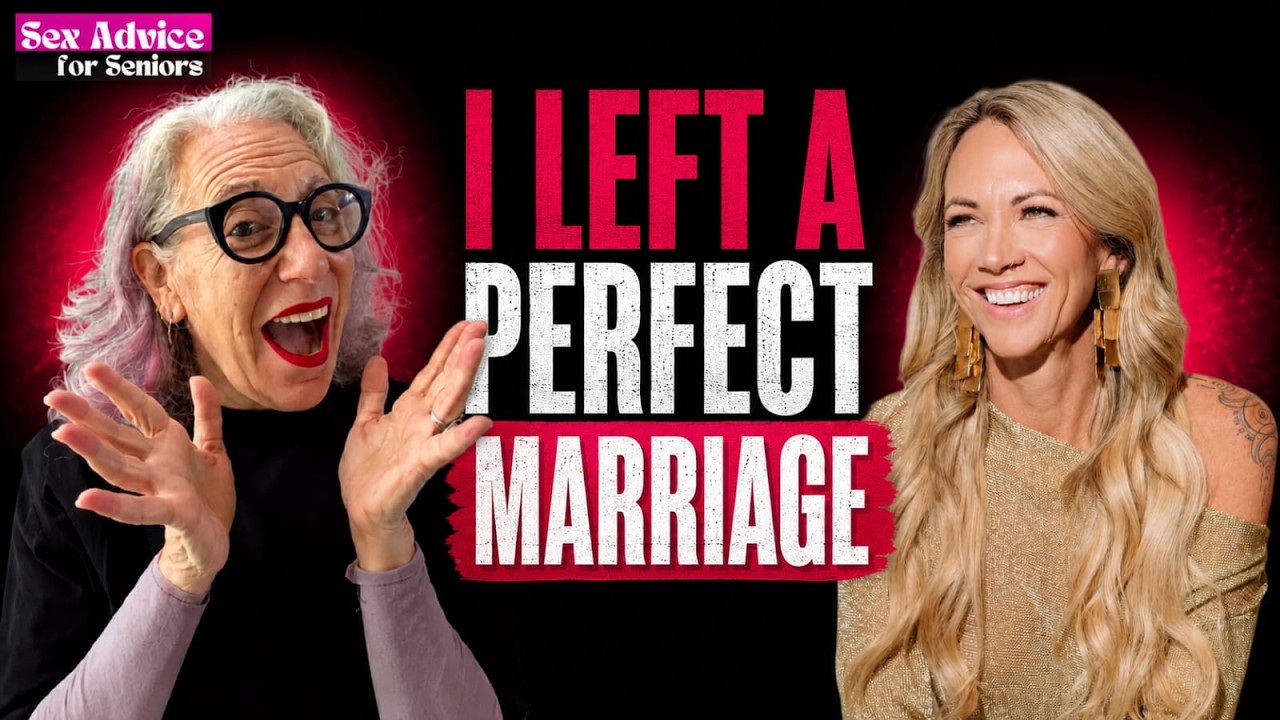
Anja Rock left her 15-year marriage to reconnect with pleasure and desire in midlife. She shares practical practices like yoni mapping and scheduled self-pleasure rituals, and argues that women need to treat pleasure like work to experience real joy. Rock also acknowledges that privilege matters: many women lack the safety or money to make these changes.
Chapters
I decided to stop drinking, and he wasn't interested in going on that path with me. And it just— we just sort of looked, you know, I looked at it, I think this is going to be— it's going to make things more complicated because now we're going to add in other people. So even though we talked about it and we did open up our marriage for maybe 6 or 8 weeks, ultimately I came to the decision that I wanted to leave.
Then, for example, when they get older like my children and then they return back home after they've left university, when I thought all of those days were behind me and I was just starting to have some genuine fun because I was like, now I've got nobody and I'm just like totally on my own. And then they're like, oh, can I move back home? And I thought, because now you've got— mom can't even have sex with her You know, we can't— she can't even have sex in the room that's next to her son's bedroom anymore because he's having sex there.
And I would propose that that energy that you're sitting in, you create a magnet. You then, if you decided, well, I do want to do something about it, the energy that you're going to go out in the world with is so different than I don't feel anything but I'm going to try to find connection. You then become this energetic magnet for whatever it is you desire. And we spend so much time in mental output and, you know, performance and, you know, showing the best of us to the world. And if we can just carve out a little bit of time for these pleasure practices, and they are practices, they really do take, you know, I'm in the work and I'm like, oh, I forget, you know, I get so busy and I'm in the grind and I'm launching a book and I'm on podcasts and I'm like, but put it on the calendar. Make time for the pleasure because from that so much more happens.
Hi, this is Suzanne Noble and you're listening to Sex Advice for Seniors. How many times have you thought to yourself, and I'm probably speaking more to the ladies, although not necessarily, have you thought to yourself, God, I could really blow my life up right now and just get the fuck out of Dodge and just start all over again with something new. But something has stopped you. Perhaps responsibilities, perhaps a job, perhaps you have kids at home. Perhaps you had parents you had to care for, and all the other things that normally can stop us from sometimes just doing the stuff that we actually really, really want to do. Well, my guest today is a woman called Anja Rock. She calls herself the modern priestess of pleasure. I love that. And she has literally just published a book that I received this what great timing is that, called Blow Your Life Up: The Wild Art of Wanting More. And we are going to talk about that today and possibly some of the ways that you can blow your life up without necessarily screwing it up for good. So, Anya, welcome to Sex Advice for Seniors. It is really great to have you on the show.
Thank you. It's a pleasure to be here.
And tell me what— when you say blowing your life up, what is that? What does that mean to you?
Well, it can mean a lot of things. For me, it meant blowing up a marriage, leaving a 15-year marriage. I have 2 kids, and it just meant I really had to blow it up in order to figure out what I really wanted and what I knew I didn't want was what I was living. I had kind of the perfect life from the outside, beautiful home, you know, great marriage, two kids. We were happy. Nothing was terribly wrong, but I had this deep restlessness, this kind of ache of like, is this it? Is this— we have everything we're supposed to want. Um, and I did a lot of work to tune back into like, what do I really want? What is pleasure? What is desire? And for me, and I say this in the beginning of the book, it's not everyone needs to blow it up. Some people, you might be able to dismantle parts of it. I needed to blow it all up and start and kind of really look at how did I get here? What were the agreements I made and why? And at this moment in life, when I'm maybe looking at the last chapter, what do I really want?
And so you say that you were happy which doesn't normally come before what one expects to hear, which is, "And then I thought, I'm gonna blow this up." 'Cause I know when I blew up my marriage, I wasn't happy. And I suspect that for a lot of people, they reach a point where they're just really discontented and they just think, "I can't stand being, doing all the emotional labor," or, "I can't stand doing all the domestic work," or, "I can't stand," I can't stand the fact that I'm not heard, or I can't stand the fact that I'm not getting any sense of sexual satisfaction, or whatever it might look like to the person who's in that situation. But you say that you were happy. So what— that doesn't kind of compute.
I get it.
It doesn't really compute. I get the fact that perhaps the way that you were happy in this kind of Stepford Wife kind of way might not have been the way that you thought that you were going to end up. Am I right?
Yeah. So, you know, I think where I landed and where a lot of my clients land is this, you know, it wasn't an extreme. I wasn't being abused. It wasn't, you know, fighting and toxic. It was fine. And I thought I was happy. On the other side of this, I realized the true level of joy that comes from a different connection to my desire, to my sexuality, to my ability to navigate my life without everyone else's needs at the helm.
Yeah.
And so when I say I was happy, it was like things were— it was like everything I was supposed to want, I had it. And I had to do a lot of work on understanding. And I don't necessarily think happy is the gauge. It's like, where is my joy? Where is my sexual aliveness? And I didn't have any. I was, you know, we had lost intimacy long, you know, many, many years prior. And I, we'd gotten kind of into a solid pattern of just, you know, sometimes it was me withholding, sometimes it was just like roommates. And, and I take full responsibility for the fact that I wasn't connected to my desire and my ability to articulate what I want. And we had found ourselves in these really unhealthy patterns and we couldn't break out of them. So for me, it was like, blow it up, start again, start with you, figure out what you want. And really, I have found there was a particular loneliness I couldn't name at the time, but that I was really feeling in my marriage because I had a person sleeping next to me but no intimacy.
Yeah, yeah. And I completely can relate to that. And I think that often in long-term relationships, especially when there's children involved, it can be very difficult to separate the sexual side of your relationship from the mother side and the caregiver side and the person who takes responsibility perhaps for all the planning that goes on. And I think sometimes You know, on reflection, we expect a lot of these relationships, right? We expect— I mean, Esther Perel talks about this around distance and desire, right? We expect them to give us this erotic framework when we're stuck in this very domesticated existence. So did you attempt within your marriage to try to bring that eroticism back? Or did you just think, I'm not— I don't think it's going to happen?
Yes, we tried. And, you know, uh, in fact, as we were in the process of blowing up, we talked about opening our marriage. Um, I read The Ethical Slut. I was like, mind blown, whoa, a whole other way of thinking. I remember listening to Esther Perel, to the podcast, and ultimately I came to the conclusion that that was going to be a Band-Aid for something much deeper. That my intuitive sense was that that was going to be a temporary distraction from what was ultimately lacking, which was true intimacy outside of even the sexual and the erotic, is that we had grown apart. We had— I had been on a, on a, you know, sort of spiritual awakening, doing a lot of personal growth and healing, somatic therapy, plant medicine, I decided to stop drinking, and he wasn't interested in going on that path with me. And it just— we just sort of looked, you know, I looked at it, said, I think this is going to be— it's going to make things more complicated because now we're going to add in other people. So even though we talked about it and we did open up our marriage for maybe 6 or 8 weeks, ultimately I came to the decision that I wanted to leave and really be able to move outside of a place. You mentioned like the domestic and the caregiving and the, the ways that I had made myself feel capable and needed, you know. And so to bring my erotic energy back in, I really had to kind of go way outside of what I had been conditioned for most of my life to find.
Yeah, and that was gonna be my next question is how many of us have just not ever been educated around any of this so that when we go into relationships, often when we're young in our 20s and we're full of hope, it's in dreams and romance and pictures of Cinderella and Prince Charming and all of this kind of stuff. But we never saw Prince Charming and Cinderella in the bedroom, did we? Never. You know, he put a slipper on her foot and then she was like, yeah, I'm good to go, right? And that was basically as far as it got. So we never saw, like, whether there was anything that was really happening there other than the most superficial kind of rom-com. And how much of that do you think informed your decision to eventually go, "I don't think I can do this except if I start over again"?
Yeah, a lot of it. And a lot of the repatterning of— You know, most of us figure out what we want in relation to someone else. To your point about Cinderella, it was kind of like, oh, I'm saved by Prince Charming. She never said, you know, Prince Charming, I really like this, this, and this.
Do you? That's right.
Do you like to spend 5 hours in bed and have a long morning of, you know, slow, sensual connection? Or do you like to get up and go make breakfast? Like, are we compatible beyond the early romance? I had never asked myself those questions. I didn't know what I wanted. I had no fantasies. I had no connection to my erotic desire because it was always in relation to satisfying my partner and then moving on with the to-do list. And that doesn't It was my desire to explore my own sexuality, my own current of desire, that ultimately said, okay, I've got to move outside of this container of the marriage and go on a self-discovery journey.
And when you did that, were you sharing the parental load?
Oh, yes. Yeah. And I still am now. At the time, for the first 2 years, we did a one week on and one week off. So we would— the kids stayed in one place and we would move. We did what's called nesting, which was fantastic because it also gave me a chance to decalcify from the mother role. Yeah, I went into West Hollywood here in LA on the weeks I wouldn't have my children, and I lived in the same building as my best friend, and I got to kind of explore dating and apps. And I remember her walking me through the app for the first time, and I was like, okay, then what? And then what? And what do I even write on my profile? Like, what do I want? Like, it was just this whole process, um, comical and, and really healthy, right? I think it's one of the— it's heartbreaking because we're not with our kids, and also like, okay, I have this opportunity to go out and be a full human without the, you know, the mother parameters. I am now— 2, 3 years later, I'm full-time parent, single, um, and sole caregiver. So that's, you know, been a whole other journey of figuring it out as I do that, but one that I'm committed actually even more because many parents, you know, women who leave marriages don't always have the choice of having a cooperative co-parent. So how can we find this inner current and be, you know, mothers? I don't use the word good mothering because I feel like it's such a trap. But how can I be a sovereign and dedicated mother and also be dedicated to my life force?
Yeah, that's really difficult. I mean, I had the weekends, every other weekend scenario, which actually led to me, um, probably not dissimilar to you, I wrote a very steamy erotic memoir that became a bestseller during that period of time because those weekends off were my opportunity to reclaim my body and myself and my desires. And, and it was— and I did have a lot of fantasies, so I went off and went off and just like went crazy, you know. But often when you have been sort of in that, uh, scenario where you've had quite a traditional marriage and everything, and then you get suddenly get a week off when you're living in the same building as your best mate as we say in the UK, and you're young and attractive. And it's like that week off is, is quite potent. I think it's like people underestimate how just having some time on your own can just be so incredibly liberating. So, and of course, often it's when our children are in those kind of situations where they're going back and forth or whatever, that you don't realize that actually those are the times where you have more free time than you have, than for example, when they get older, like my children, and then they return back home after they've left university, when I thought all of those days were behind me, and I was just starting to have some genuine fun because I was like, now I've got nobody, and I'm just like totally on my— and then they're like, oh, can I move back home? And I thought, because now you've got— mom can't even have sex with her You know, we can't— she can't even have sex in the room that's next to her son's bedroom anymore, because he's having sex there. And you're not, and you're not allowed, right? Like, like, he's allowed, because he's in his 20s. I mean, now they're, they're way gone. But I remember thinking, there were moments in my life where I really got the opportunity to completely seize the day, and completely do what I wanted to do. And then there were moments where I thought I was going to get that opportunity. And it all just fell away. So don't think it ever ends.
The lesson is seize the moment when you have it. You never, you never know. Yeah, no, you don't.
So especially now that you've gone from that week off, week on to being a full-time mom, that's quite a big transition. I'm assuming your kids are still kind of need you.
Yeah, they're, um, now 13, almost 13, and almost 16. So we're in a different phase. We're in a kind of, um, yeah, but a beautiful one. And one that I've actually— I'm so grateful that I got to go through this revolution and awakening at the perfect moment as my kids enter their own journey of, you know, finding boys and girls that they want to date and learning to navigate, like, well, am I into it? Am I not into it? How do I just— can I disappoint this person in, you know, because it's not serving me? All those little lessons that we didn't talk about in my house when I was having them. And so I have them now with my daughter, and I'm so grateful that I, I sat down with her one night and I said, you know, I'm learning at 47 what you're learning at 14. And I'm so glad that I can have this conversation with you and nothing's embarrassing. And you might know, you know, I'm embarrassing to you, fine. But I'm also here and I'm willing and you can ask me things and we can talk about it. And I think a big part of that is my willingness to go on the journey and figure out You know, why? Where does it— where does it come from that I'm ashamed to talk about this, or that I have a desire, or, you know, this seems outside of the norm? Where did that come from? Is it okay?
Yeah, absolutely. And I think it's when, especially in your 40s— I mean, I went on my journey in my 40s. And honestly, if you're going to break up from your partner, I hate to say it, ladies, but generally, like, your 40s are the best time to do it because you're still smoking hot usually, or, you know, you can be smoking hot. You've still got pheromones which are sort of blasting out everywhere and telling the world that you're still open for business. And, um, yeah, and people still respond to you. I mean, that's what I discovered in my 40s. I was like, wow, this is awesome. I love this. I love this decade. Yeah, not so great in our 50s, but, you know, That's— it's much better in my 60s.
Again, nowadays I'm hoping, you know, with HRT and everything we have going on to optimize that. I'm about— I'm 49, so I'm looking forward to my 50s of continued exploration. And I just think there's so much power in a woman that knows what she wants and can articulate it. And that was a big process for me, learning how to in the moment, when the stakes are highest, when we're in intimacy, we're with someone, to be able to say yes or no or maybe or do this or, you know, actually, I'd prefer if you did it this way.
Yeah, for sure. And was that something— because that was something that I learned when I started dating again in my 40s is just how responsive men were to me being clear about my needs. You know, like, they just were so happy that I just was telling them what I liked, which I never did in my own marriage. You know, they were, they were like, this is great. She just, she just tells me what she wants me to do, and I just do it, and everybody's good. So just going back to some of the questions that are on the very handy sheet that you gave me that you've realized that I've just ignored, but I'm happy to just talk.
I love it.
It doesn't matter. You talked about something here called erotic alchemy, and what does that actually mean?
So erotic alchemy is how I talk about kind of our the way that we reconnect to our erotic aliveness. It's this magic that happens when we— it's almost like we come back online and we come back into our creativity. You know, the erotic is very energetically tonight tied to creativity. I call it aliveness or turn-on. When it's like when you're walking through your life and it's like everything is working and everything is— there's, you know, it's like you get all the green lights and it's those moments of life where it's like, well, when we're connected into our erotic energy, I believe that overflows into everything else. Um, and so it's, it's the principles of guiding women kind of back to that, out of the head, into the mind, and even back into their eroticism and their own blueprint, their own intimacy recipe. Like you said, it's so nice when men, they respond so well. But a lot of women freeze. They freeze. They're like, I don't even know what I want. I've never asked myself. I never thought about how do I want to be touched, at what pace, and in what order, you know? Yeah, yeah, yeah. And so to be able to direct someone, we have to know the map of our own body.
And do you do this Generally one-on-one or like in a group setting?
Both. Yeah, both. I, I— there's so much power in doing it in groups because we do witness each other and we see so much. The alchemy, the magic happens of like, oh, if she wants that, maybe I want it too. There's a lot of permission giving, you know, of like, oh, okay. In fact, I think of it like You know, if I've lived in a vanilla marriage, and I finally got out into the world, and I was like, oh, there's like 85 other flavors I could have been asking for. But I don't know, until I go out and open it up. So I love— there's a magic in a group of being able to be like, oh, you tried that? That's cool.
Like, I want to try that.
And it doesn't always have to be sexual. It's really about our eroticism. Of desire, of receiving pleasure, of pleasure as something that builds our capacity for life, for more money, more friendship, more adventure, more connection. It's that actually our erotic alchemy is the core of who we are in our full expression.
Yeah. And I think that you're right, that when women get together, they probably more so than men, they almost feel liberated when, especially in a group of similar-minded women. I find sometimes my friends fall into very different camps. There's people who do not want to know anything about what I get up to at all, and there's people who we swap stories and it's super fun. And sometimes those worlds collide, and that's even funnier when I talk with somebody and someone else is saying, can you just— guys, can you just please shut up? Because I don't want to hear this. How do you think women can— because often it is, you know, it is older women, women beyond their 40s who find themselves, especially after their kids have left home, that find themselves at this point where they're at this junction right now. We have to acknowledge, and I think it would be unfair, and I know that you acknowledge this in the notes as well, that being able to do the kind of things that you've done has a certain amount of privilege attached to it, that not everybody is able to do that. And often women are trapped financially in very, you know, in terrible circumstances, or just generally unhappy, frankly. Like, it doesn't even have to be, as you said, it doesn't have to be around abuse. It could just be, I'm generally just not feeling it. You know, and I want to do something different and I don't know how to do that.
I mean, yeah.
And I think that— so there is, you know, we have to say, just put our hands up and say that we are— both of us are very lucky. I was very lucky. I was in a financial situation where I was able to give my husband a significant amount of money to be able to keep my home. And that was just because of the work and all of that kind of stuff. But not everybody's doing that. But, you know, it does take— it does take a certain amount of courage to do it. And I wonder if you see that there are certain points that people get to where typically either I'm gonna or I'm not gonna do it.
Yeah, yeah, yeah. I think acknowledging the privilege is vital. And one of the things that is so important, no matter what situation, you know, if you're in an unsafe situation find help, right? I always say like, find— and you don't have to do it alone. We, we bear the burden of figuring these things out alone so often, and it takes real vulnerability and courage to find someone and say, I'm trying to find my way out of something. Can you help? Or can you just listen? Can I— you know, whether that's a friend or therapist, but wherever you find yourself You can reclaim pleasure for you.
Yeah, true.
And let it guide you to the next step.
Yeah.
I blew up my life, found, you know, rewrote, reclaimed pleasure. But now I realize actually it was the pleasure that was the magic. It was saying, I am feeling something in my body for the first time, and I'm never going back. And that is for me, by me, through me. And when I invite someone into intimacy, it is their pleasure to be invited in.
Yeah, good. It's a great point.
And so wherever I am, wherever the woman is who's in the— you know, there's many seasons of pre-blowing up to post-blowing up. You can always use pleasure for you as a way to reconnect to your feminine capacity, creative life force.
Yeah, I think it's such a good point. And when we think about pleasure, as you said before, you know, yes, sometimes we talk about in terms of sexual pleasure, in terms of being in touch with our body, in terms of just giving ourselves permission to just like spend the evening having a bath And then just, you know, chilling out and just lighting the candles and just making our room really nice and just spending an hour or two with ourselves, doing nice things for ourselves. And often with, you know, my girlfriends, sometimes we just go, like, on a little spa day, right? Just especially one of my friends who's very stressed out over caregiving for her mother, which is, you know, really, really stressful. Really stressful. And I just have to take her away, right? And just— and I think sometimes we forget that that is essential as part of being a human being and as a woman, is giving ourselves permission to just be nice to ourselves, to our bodies, to ourselves. And as you said, when we learn how to pleasure ourselves, then we invite others in to be, to pleasure us. And I think that's such a revolutionary statement, frankly, because we have been brought up, going back to Prince Charming, to believe that our whole sole purpose in life was pleasuring Prince Charming, right? And that we had no, we had no agency in that regard. It's all about that person. And we don't So actually, just learning how to do that in itself is, is revolutionary for a lot of women, and especially a lot of people my age who frankly, especially when it comes to self-pleasuring in a sexual way, sometimes have never done this.
Yeah, I have in my book, at the end of each chapter, I have a ritual. And many of those rituals are about creating a space that feels like one you would invite a lover into, right? Being your own best lover, creating a space and nurturing yourself and, and having a self-pleasure practice.
Yeah.
That you are willing to be in presence with everything that comes up, because a lot can come up too, right? Am I willing to notice that when I I touch my body, I feel shame, or I feel embarrassment, or I feel discomfort. Okay, can I feel that, allow that, and then move through it and go, right? And so creating those spaces for yourself, um, is, is part of it. It's like we, we avoid it. We're like, oh, I don't want to, or I don't know. And so that's why I put into the book, um, rituals to practice and to ground into the body, because so much of my work and any work around, you know, embodied sexuality with agency is about connection to the body, to saying what's real, what do I feel. I spent a long time— there's a chapter in there where I talk about, you know, exploring and doing yoni mapping and working on the discovery of my yes versus my no.? Because that's also a very blurry area for a lot of women.
Yeah, completely.
And so to, to practice the no and trust to wait for the yes.
Yeah, absolutely. It's a vital part of a lot of Tantra practice as well, getting into that whole boundary setting and consent. And, and a few days ago, I, I interviewed— you probably know— Rebel DiLorenzo, who does this method called the Goddess Method. Which is Pompois training, which is vaginal gymnastics, which is 30, 36 vaginal exercises that you can do to increase your orgasmic capacity, pleasure your partner beyond his wildest beliefs, give yourself better orgasms and everything. Anyway, I've had this, I've had this program sitting on my computer, like this website that she gave me access to for about a year now and thought after I spoke to her, I was like, you know what, I'm gonna, I'm gonna start doing this. And I started like 2 nights ago and honestly just spent— and it's just like contracting, pulsing. I mean, it gets very, very sophisticated, I have to say, to the point of twisting, wringing, whipping. Like, it's, it's all very— it's like one vaginal— it's, it's very sophisticated. Anyway, I'm just at the— I'm just in the nursery school of vaginal gymnastics. I'm like in kindergarten at the moment. And already I can feel like last night I was doing my 50 contract short contractions, then like long contractions. I can tell you after like 20 minutes of this, you get incredibly horny because you're just spending the entire time literally energy to there. And it's like, and it takes a lot of mental energy. I'm not having orgasms or anything, but it's just the practice itself. And she did say, you're gonna start to feel really horny. And I was like, God, this is— I don't even have anyone here. Like, what am I gonna do? I'm not gonna do anything for now. I'm just gonna, just gonna, just gonna sit in the energy. But it is incredible that when you just chill out and just do that work, like really getting deep, deep, deep into your body, which this was. I was like, whoa, this is like— it's pretty intense.
Yeah. And I would propose that that energy that you're sitting in, you create a magnet. You then, if you decided, well, I do want to do something about it, the energy that you're going to go out in the world with is so different than I don't feel anything, but I'm going to try to find connection. You then become this energetic magnet for whatever it is you desire. And we spend so much time in mental output and, you know, performance and, you know, showing the best of us to the world. And if we can just carve out a little bit of time for these pleasure practices— and they are practices, they really do take, you know, I'm in the work and I'm like, oh, I forget. I get so busy and I'm in the grind and I'm launching a book and I'm on podcasts and I'm like, but put it on the calendar. Make time for the pleasure because from that so much more happens.
Yeah, completely. I mean, look, this particular program, it's like a workout. It's a proper workout. I've got a calendar set out the days. I've got certain things I've got to do. It's, it's, you know, it's quite a dedicated practice. But there's a part of me that thinks, well, because I can be quite competitive, if I just have this, like, gymnastic vagina, I'm just gonna be— just gonna be really— there's some people that are gonna really, really like that, right? Yeah. Like someone I'm gonna see in half an hour. Anyway. Great.
I love it.
Anyway, Anya, it's been lovely to talk with you. And for everybody, Anya's book, which calls Blow Up Your Life: The Wild Art of Wanting More, is out on the 7th of July. And I have got a preview copy, so I'm very excited to read this. And it sounds like it's going to be a really great read. And God, and it sounds like you're going to give me yet more exercises to do. So yeah, I'm going to be a self-pleasure superstar.
Good. I trust that you will enjoy it all and that you will, you know, pace yourself at the goddess's pleasure.
I will, I will, I will certainly try. It's been lovely to talk to you. Same.
Thank you for having me.
More from Suzanne









Why Sex Changes After Menopause (And Why That's Not a Bad Thing) | ft. Dr. Kelly Barron

Why Facesitting Is Trending Among Women: Power, Pleasure & Later-Life Intimacy
