Genetics Call--Body Composition, Adipogenesis, Walking
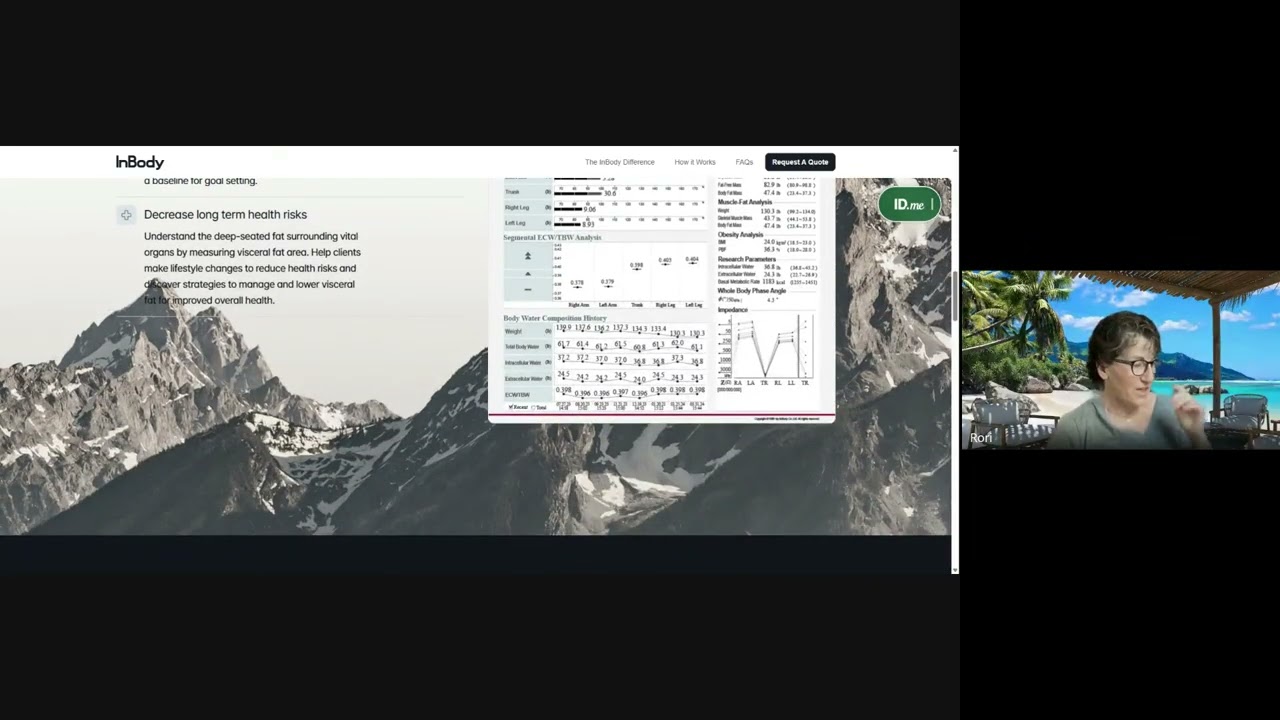
Chris Newport walks through body composition testing, genetic fat-storage reports, and practical interventions. The ACSM skinfold test runs 4% off DEXA but costs far less. Rory's genetics show high fat storage and lower resting metabolic rate; Chris recommends a walking pad, fiber before carbs, and cold exposure to shift toward fat oxidation.
Chapters
Go. Okay, excellent. All right, so here we are for our monthly call talking about body composition, one of my favorite topics. Um, so can certainly relate to your genetics, uh, as it relates to adipogenesis, as it relates to strength and power. So we'll kind of dig into those things. But the main question was, how do I measure it, and is there a particular way that, um, is more effective than others? And am I understanding that right, Rory, for your question?
Yes.
Yeah, okay. Um, as you guys know, we do skinfold testing in our office. Anytime you want to come in and do a skinfold test, just let me know. I will do a skinfold test. It literally takes 5 minutes. So I'm here for it. Um, so that is when you take a piece of caliper— calipers, and they literally look like these little chompers— and then you, um, peel your skin away just like that, and it's measuring subcutaneous fat. Some people, their skin just doesn't pull away. Their subcutaneous fat is not quite as Flex. Yours, yours pull. Most of the time this population is pretty easy to pinch, right?
Yeah.
Um, so that's a 7, the ACSM 7-Site Skinfold Test, and then it measures you in millimeters. And then we take your age and your gender and the total of those skinfolds. I can show you the whole calculation behind the scenes. The total of that, and then that relates to what's called your body density, which in turn translates to what your body composition is.
Okay.
And then we have norm charts based on your gender and your age. So what I love doing with people is I make them 17 again, and we take the same skinfolds and we make them 17, and they're like magically skinnier. So some of these methodologies have a, uh, built in to the formula is there is an assumption that there will be some degree of sarcopenia. So you will be losing some degree of muscle mass. We can obviously mitigate that through strength training. Um, and look out Rory, because Sue might come pick you up. This is her, this is her tendency. Anyway, uh, I'm here for it. So all of that to say, that is an easy, quick method that I find that works really well with endurance athletes or folks who are generally not obese.
You're on mute, Sue.
Oh yeah. I don't know if Sue, you are on mute if you wanted to say something, but she also might be on a work call anyway.
Okay.
So there's, there's that method. I've done thousands of these tests. And anyway, it's because a lot of it is, um, related to the capability of the, of the person who's doing it. Typically, skinfold measurements are within 4% of DEXA. DEXA is the gold standard. DEXA at home, yeah, it is a very expensive piece of equipment. Um, the guy who we mostly send people to, he's a little quirky. That's okay.
Um, Porky's fine.
Yeah, Porky is fine. Uh, Dexa in— here he is. I'll share screen so that you guys can see him. I don't have any— again, no like connection with this guy. I really need to connect with him because I've sent so many people to him. Um, but this is his business Uh, I think he's a physician because in North Carolina to do DEXA you have to have a connection with a physician to be able to do it. Um, so it gives you this cool report. There he is. Uh, there's the little thing that you lay on. Um, it's really quick and easy and So there you go, you lay there with your feet tied together. Uh, that's what it looks like. You can contact him, it really is super quick. Trying to find the reports for you guys so that you can see. It doesn't look like that. Uh, this is— here we are, this is the gold standard. Hopefully you guys can still see that. Okay, so, um, I like to, you know, just certainly if people want to do the skinfold testing, you're welcome to do the skinfold testing. It's super quick and easy and there's no radiation There is a low-level radiation that's associated with this, but no more than what you would get on a plane flight. And then you get things broken down into all of these different things. So looking at your total fat, so 30.9%, we're looking at gynoid versus android versus trunk. So we want to try to avoid the fat in your midsection.
Okay.
But if you— but not— there is some degree of— there's some degree of control that you have over that, obviously, with, you know, diet and exercise. Um, so it's interesting to see whether you have more fat on your right or your left. There's not a lot that you can do about that. It's more just like metrics. But what's cool is that you then you start to see like your body composition trend. Whether you stay stable, and then you'll have like, you know, what's your bone mineral density. That's another really great thing to see and understand. And then how you— here's another picture of like, here you are with your bones, here you are with high-fat areas, low-fat areas, medium-fat areas, and then how you compare to others. I think that's further on down.
Um, I mean, this is more in-depth than an in-body scan.
This is way more in-depth than an in-body scan. The reason why I would prefer this over any other methodology is both bone and muscle density. So yes, we want to see like, okay, you know, the scale's not— what I typically end up hearing from people is I'm really trying to lose weight. The scale's not moving, but my clothes are fitting a little bit better and I'm getting stronger in the gym, which clearly to me says you have gained lean mass and probably lost some fat mass, but you've been at a net zero.
Yeah.
But that's not necessarily a bad thing.
No. Okay.
Right. So, um, and then they just do like an RMR, like a— this is the Mifflin-St. Jeor equation. Um, this is something that we do in our office is doing an actual resting metabolic rate, but Most people are within normal limits with their RMRs. Some people have really slow metabolisms, some people have faster metabolisms, but honestly most people fall mostly into the norm. And they might be anywhere from 50 to 100 or 120 calories off from the expected RMR. And then we can dig into what of that should be protein, what of that should be carbs, fat, both related to, uh, um, your goals and then getting more into your genetics. So you were also asking— see, Rory, you, you prepared an entire presentation that you did.
It was just like a random question.
Just a random question. Yes, I personally have the Garmin scale. I don't think it is special in any way, shape, or form, not gonna lie about that. I just like everything being in the Garmin, like Yeah, yeah, um, I think it probably reads a little high for body composition, and it's— and every time I get on it, it is bioelectrical impedance. So, um, uh, you were asking about— okay, so I'm gonna share this tab instead. The Garmin scale is bioelectrical impedance, so— or BIA. And you can see there's your in-body Yep. Um, which I don't know, like, do you have like a gym or—
Yeah, I mean, I've been on them several times.
Yeah. Okay, so, and let's just see what we got. All right, so a, um, a device like this will give you better data than one like a Garmin.
Yeah.
Or I just put my feet on it, right? And that's your— there's your scale. Yeah, it's cheaper than DEXA. There's no electric, there's no, um, you know, uh, radiation. Um, and then you can, as long as you're do— if you're doing something like InBody, which I don't think there's necessarily anything wrong with InBody, but, um, I would be curious to see how close is InBody to something like DEXA. Typically, so skinfold calipers, if it's somebody who's pretty easy to pinch, usually is within 4% of DEXA. I found that bioelectrical impedance, at least in the data, is up to 10% off. So like if you're 25% body fat but it's telling you you're 35% body fat, that to me is kind of a big discrepancy.
Yeah, I used— I mean, way back when I lived up in New York, when I worked up in New York City, I used to go to a nutritionist and he had an impedance scale And that thing was great with the— you had to put it like— it was like you had to put it on your hand and somewhere else.
Yeah.
The more contact points there are— and I just clicked on this because although I think consumerreports.blog is probably fake news, for some reason I thought it was like the actual Consumer Reports. I got sucked into that. So as I'm scrolling down here, the more contact points you have, the more accurate or potential for accuracy you're going to have.
So say that Hume scale there. Yeah, that's the hand thing.
Yeah, let's, let's— so yeah, so if you have hands and feet versus like the Garmin one is feet only, you should in theory be, be getting a bigger, a better, um uh, read. So let's, let's see what we got over here. I'm going to share this tab instead.
So Rory, before you order that one, make sure you check the reviews because I did not see a lot of positive feedback. Oh yeah, no, no, no.
Do you end up getting something too? Do you have one? And now I don't know.
I have my same, my same Withings one that I've had forever. It's like the Garmin one, only Yeah, um, oh yeah, okay.
Withing Scale. I have heard, um, really good things about the Withing Scale.
Yeah, I've seen, I've seen, I was looking that in.
Yeah, so, and you guys still see that, right?
Yes.
Yep.
Yeah, okay. Um, so, and there's two, looks like two points, right? So you got hands and feet. Um, I don't know about like— I don't know if you need the full body scan thing, but let's see. Standing heart rate, probably don't need that. 2 frequencies, okay. Vascularly standing heart rate, body comp, yeah, okay. Body Smart plus body comp, okay. Um, compare all scales, let's see what we got. I don't know how advanced that is, but what I'm looking at is like 2 frequencies versus 2 frequencies— fat, muscle, and bone— in theory. And that's, and that's what Garmin tells me, but I'm like, um, hey, if it goes in the right way, then it works. Yeah, right? Then you're like, I believe you, scale.
Yeah.
Vascular age, arterial age— I don't know how they're actually measuring that. Um, so based on what I'm seeing here, HSA/FSA eligible, which is nice. If it were me, I would probably order the cheap one because I'm not sold on the other metrics.
Yeah.
Um, it looks like the one I have.
Yeah, yeah.
I mean, I always just hop on. I mean, I could make an appointment with that Dexa Dexascan. Yeah, that's enough.
Yeah, I think it's nice to do, yeah, I think it's nice to do a Dexascan, like I said, like an annual thing. But if you're wanting to see more day-to-day fluctuations, I think having a home scale is an option, you know. So we can rewind 15 minutes and just get to the too long, didn't read version of this. Uh, but this looks— Withings, I've heard good things about it. And Sue, you say you have one and it, and it seems like it works well.
Yeah, as long as I don't have socks on my feet.
Well, yes, that is the point. Yep. Okay, you got to be bare there because it sends that low-level electrical current and it has to do that with actual, you know, hands or feet. Um, so Withings, Huami, what, like, I don't, I'm not attached to any particular brand. Um, I was on the FSA store the other day. You know, you at least have brands that have been cleared for FSA or HSA purchases. Um, although this very, you know, Withing says something about an FDA cleared, so I would have to look more into that to see. Yeah, but I, I would go over something like that versus like, I'm just going to go on Amazon and see what happens. Like, good luck with that. Yeah, um, trying to see if there's— there's one that we have in the lab which I just use it for weight. I don't use it for bioelectrical impedance, but man, that thing is— it's a beast. It's been around for literally decades. Yeah, and it's, it's awesome. So anyway, um, so yeah, let's do it, you know. And then if that is something that you can connect your data to, so FYI, all of you have the ability to connect your data to Practice Better. That way, if any of the calls we come on or any of our private calls after your labs, then we can go in and actually look at that. You know, I can see your trends. I'm sorry, connect Garmin to Practice Better. You can connect, I think, Apple to Practice Better. So that's an option you have. Um, so if you guys do not see your journals, let me know in Practice Better because I can make sure that those are activated for you. Um, but interestingly, to tie that into— well, any, any follow-up questions? Because then we can tie that into, um—
no, I mean, you definitely answered my question.
Thank you, Rory.
Um, and I am looking at you, just I have my laptop is the—
oh yeah, yeah, you're all good. I have you guys all in the like the bottom corner right now, so if it looks like I'm turning to the side, that's what's going on with that. But, um, let's tie that into genetics. So I'm going to share this tab instead. So if you guys pull up your genetic report Um, and before I go too deeply into that, Sue or Nat, do you guys have any questions or things to get into?
Nothing specific for me yet.
Yet. Okay. Yes. Um, and Nat, you know you always have permission to do any sort of channel change, so yes, yes.
Thank you.
Yeah, of course. So if you guys go to your PDF— did everybody find their PDF?
Yep.
Okay, and then you search for adipogenesis. And remember, at the bottom it gives you a list of these 1, 2, 3, 4, 5, 6, 7, 8 genes in the energy category. And you might have some that are purple, you might have some that are gray, and they're listed in the, in the back in like pages like 30 to 35, they're listed from the highest impact to the lowest impact. So if you have any high impact related genes in this category, you'll see those first at the top, and then you'll see the other colors. So anybody super purple, purple, blue?
I'm second purple.
You're second purple.
Okay. And I'm trying to get caught up. I was trying to do a search for it. Oh, I see it now. Is it under— oh, y'all, excuse my— please forgive my ignorance here. Mine shows up under energy.
Yes.
And it shows as low.
Okay.
Where is this?
I'm trying to— energy. Yep.
So in the PDF, you'll see. And Nat, are you okay if I share your PDF?
Yeah, no, feel free to share it.
Okay, cool. Um, I'm going to share this tab instead so that you guys can see what his report looks like, so that you, going from the PDF to the interactive version, you can see the difference. So I'm just going to Ctrl+F it, and, um, that sounded funny. You're welcome.
That sounded like my day is going.
Yeah, no, I'm trying to like move it over to the page and to the screen and it's not working. Okay, I'll just have to—
this. All right, notice how there's several, like, let's go— I'm gonna go actually in the opposite direction. 17. Okay, so it looks like his are on page 28.
Yep.
Uh, nope.
Yes.
So do you see how yours is too, Sue? Yeah, so there's the— oh, I couldn't highlight it, but you see how they're listed out right here? Says adipogenesis, and then his is color-coded low. And then you can see there's those top 3 genes that are kind of yellowish, and then the other 1, 2, 3, 4, 5 are gray. It's like, meh, it doesn't really— no impact, right? So do we see that on page 28?
Uh, what is the, the call letters? Oh, oh, how do you—
A-D-I-P-O-O.
Yeah, got it.
A-D-I-P-O-S-I-S. Yep. So adipose— any guesses? What do you guys think that is?
Fat?
Yes, adipose tissue. So fat tissue. And then Genesis, how good are you at making fat?
I'm not good at making that.
What color should it be?
That is— so, um, what color should it be? It would be nice if it were Nat's color.
And is it?
I know you're—
Arctic or something and I need to help keep me warm. I'm in trouble.
Yes, you do need fat.
Man, are you moving to the Arctic?
Uh, TBD.
TBD. What was your question, Sue?
I asked if he was moving to the Arctic.
Oh, because I would not be worried about you. Bad idea for him. He doesn't make fat very well. Very warm.
No, I think I'm gonna stay here for now.
Now, do you know your, um, do you know anything about your like ancestral lineage at all?
Yes, I do. I know, yeah, quite a bit. I did the ancestry, I did the DNA, the ancestry, uh-huh, ancestry.com.
Okay, yeah. And, and which, which continents or countries are you?
I am the mutt of all mutts. I'm 26%. Yeah, I'm 26%. You want— y'all want to hear a crazy story? You said derail, so sorry. I'll try to make this real quick.
It all connects though, it all connects.
Yeah, both my grandmoms, they both passed away, but both my grandmoms were half white. So I kind of, back in college, I was like, wait a minute, if just a quick Punnett square myself without having too much, you know, deep dive into it, I was like, if my grandmom on my dad's side gave him half of that, he would have a quarter, and then he would give me an eighth. And then my mom's side, she would get a quarter, and then she would give me an eighth. If I add my two eighths together, I got a quarter again. I got the same as my parents. And guess what? Ancestry came up with 26% of European and 74% African.
Okay.
Yep.
Fascinating.
So, and I can tell you countries it came from, if you want that too.
Wow.
Okay.
Yeah.
Um, you might not need all that, but I have never been to Africa, but I'm going to need to leap and say that it's not cold there.
Not, not where the folks that I came from came from.
So what— so if you think about it ancestrally, like, why would there have to be a need for Uh, lots of fat, you know what I'm saying? Yeah, like if I was caveman, pretty much, right?
So that works for me too because I grew up in Minnesota and it's really getting cold there in the wintertime. Yes.
Oh gosh.
Yeah, I mean, look at the Inuit population, like they are not small people.
Oh, I got the breakdown now if you want it, but—
Oh yeah, sure. Yeah, tell us what you got.
23% Mali.
Okay.
20% Nigeria. And then it drops down to everything else is less than 10% from there. So it's like—
yeah, so you do have a nice collection of— you are a mutt. That's awesome.
Oh yeah. Oh, I got all— and then I got 9% Western Bantu peoples, whatever that is. Then it goes 9% England and Northwestern European— Europe. 8% Germanic Europe, uh-huh, 6% Ivory Coast and Ghana, 6% Ireland, 4% Senegal, 4% Benin and Tobago, uh, 3% Cameroon, 2% Central West Africa, 2% Scotland, 1% Yoruba land, 1% TWA, and 1% Denmark, and 1% Wales. That makes 100%.
Family definitely got around.
Oh good Lord, it was a bunch of—
yeah, in more ways than one.
I just stay confused, you know, like Yeah.
Yeah.
Yeah. There's no one thing.
So I did— I just find that— yeah, go ahead, Rory.
You don't have any, like, no surprises popped up, did they? Or nobody?
No. I wanted— I wanted some Kenyan blood for, like, the running aspirations, but I gave up because it was zero from Kenya.
Well, because a friend of mine did it. She and her husband did it. They just did it or whatever they had. They were like, oh, let's just do it. So 2 years later, my friend got an email from somebody saying that, hi, I'm your cousin.
Cousin. I'm a—
I'm your maternal cousin. I'm, you know.
Wow.
And she's like, what? Like, her 2 aunts and her uncle never had kids. Like, she and her brother were the only kids.
Wow.
So she was like this.
Scam.
Scam. So she sat on it, whatever. Fast forward. She said something to her one aunt that doesn't have any kids. And her Auntie Rose was like, well, your Aunt Anne, when she was 18, had a child. And she—
Yeah.
Christian, da da da. And my friend Jen was like, and I thought I was the oldest grandchild and da da da. And sure enough, she has a cousin.
How about that? Wow.
And I, and her dad has the biggest mouth. He never said anything through all these years. Never said a word.
Hmm.
Yeah.
Interesting.
Yeah. So things happen.
Yes. And I think that's a great tie-in to like thinking about ancestrally.
Yeah.
Let's go back over here, sharing this tab, going back into adipogenesis genes. You know, again, um, Nat, are you obese?
Me?
Uh-huh.
No.
No. Okay. Oh wait, that's right.
That's a very— that just sent me down a rabbit hole on my own. I am not, but I have two sisters that are.
Interesting.
Okay. Yeah.
And it makes me wonder now, some of that could be lifestyle, like, sure, absolutely. Yeah.
But dig into that.
But out of my whole— you know what's very odd that you mentioned that too? Out of my entire family, extended family, my— they told me that my— so my dad's father passed away before I was born, but apparently, apparently everybody has told me since the time I was a little kid that I resemble him so much. He was also very, very thin and lean. Yeah, but there's so many people on my— in my family that are not Hmm, okay, interesting. So I wonder if it like came through him. All right, got to me.
Is there a correlation between male and female, or is it just, uh, it's kind of like—
yeah, I think— I don't know, it's male and female. There's a couple of males, a couple male cousins that I would say are lean. Okay, the majority are probably not. Okay, um, and the majority of female cousins there's a few that are lean, but probably most are not.
Yeah, interesting.
Um, yeah, go back to that joke. My mom told my mom the joke one time. She thought it was so funny where the person went to the doctor, you know, like, man, I don't know about that, but, you know, they're like, whatever test they were running, they're like, that, you know, whatever, diabetes or something, that just runs in my family. And the doctor says, no, it's kind of the fact that nobody runs in your family.
So interesting.
Yeah, yeah. So I think the fact that people in my family don't really do as much— there was a lot of activity within the younger years, but then older years you kind of let all the activity go.
Let's see, I'm just looking at your—
like a prime example of if you don't do stuff in your older years, you will— yeah, you will not reap any— you, you'll reap what you sow.
Yeah, for sure.
Absolutely.
So it makes me wonder about the genetics part because I don't know, but I've always— but to that same point, I've always been really lean.
Always been really lean.
Okay.
Yeah. AKA skinny as hell in high school. Like really, really, really skinny.
Yeah.
Turned out to be lean now.
Yeah. So, and looking at y'all's energy overview pages, so if you go to this in your PDF, I think that this is a good sort of like— and, and this is Nat's. So, um, adipogenesis, your potential to readily store fat is not elevated. And that's what we were just looking at in terms of those, those collections of genes proteins. Oh, um, so, uh, yeah, you're just not as good at making fat. Some other people are real good at making fat, and it doesn't make them bad people. It just is like, okay, well, if I don't want to be over fat, then there's some things to dig into there.
Can I ask a question about that?
Absolutely.
How does that tie into your brain? Because your brain— oh, it needs fat, right?
So yes, for sure.
When I first think of fat, I'm thinking, oh, belly fat, or, oh, fat here, fat there.
Well, I mean, based on the picture that shows, basically, yes, that's, that's what we're—
so less of like quote-unquote brain fuel, more of literally, um, creating questions. Yes, like, uh, I remember when, when I was in, I don't know, probably in nutrition school at some point, they would pass around like, here's 5 pounds of muscle and here's 5 pounds of fat. Passing that around in the 5-pound muscle was like, really was like I mean, it was a small— it, you know, it was maybe like this big, but the 5-pound fat was like this big. And what's fascinating about your fat cells, or maybe not so fascinating, they can grow to infinite proportions. Isn't that bonkers to anyone? Like, they, they can, they can get as big as you want them to get.
So why would it be— why would that be a thing from a genetic standpoint? Like, why would that be allowed?
I mean, it is kind of—
is that because like the food we have now versus—
I mean, there's so many different factors, sure. But, um, but our, you know, certainly we're not nearly as active as we were as like cavemen. Um, we also went with longer, you know, more, um, unintended fasting, and you didn't know where your next meal was going to go. So the people who actually were really good at storing fat were the ones who stuck around, you know. Um, so considering that, and then I'm also looking at like, you know, weight gain and weight loss. Like, that's not really probably gonna have that hard of a time to lose weight if he wanted to lose weight. I know he doesn't want to lose weight. Um, and then also looking at like his energy expenditure— I don't like that they call it energy expenditure, but if you're looking at that page RMR, your resting metabolic rate. And that's again that we were talking about that was tying into the DEXA scan and where that calculation was in there and where we measure it in the lab, um, where you let, you know, just lie on a, lie on a mat and put the mask on and then literally like zen out for 20 or 30 minutes and just lay there and breathe. That is more accurate, um RMR, um, because it's obviously measuring your oxygen consumption at rest, but most people fall into that normal limits of what that calculation was, was estimating. But then this is also like genetically your resting metabolic rate may be moderate. You're probably like right in the middle.
Mine is zero.
Like all the way, all the way to the left.
Mine's low.
Mine's like nil.
Well, I mean, I'm just looking at the app. I mean, my potential to readily store fat is highly elevated. Your fat's energy response, exercise response, your fat cells likely release fuel inefficiently when exercising. Yep.
Yep.
My resting metabolism Um, lower.
Yeah, so do you guys see— do you see the picture that's just coming up? So, so Nat was this medium one, and it sounds like Rory is this one on the left.
Yeah, it seems like—
yep.
So, and these little— these little green things that come out, you're like, what is this? Releasing energy. So, um, perhaps could be leaning to a slower metabolism if it is quote unquote very high, and to a quote unquote faster metabolism, although I don't really love those terms. I know so many people are like, I just have fast metabolism all my life and I could eat whatever I want.
Yeah, I got proof that that doesn't always work.
Yeah, that's why I'm like, I don't Skinny fat.
Yeah, yeah.
Um, which again, why it even says up here, the more commonly used term is when we say a fast or slow metabolism. But again, don't love that terminology. But, um, this, this is an interesting way of saying it: the rate at which we use and manage calories for energy. So calories, quote unquote, in, that is energy for your body to use. Which that energy is again largely determined by our genetics, by our activity, how and what we eat, and then how we— our individual differences in how we quote unquote use or burn energy. So in this way, and you, and you might notice that some of these genes up here that are relating to your energy expenditure are also tied into adipogenesis. So anything that says ADR, right, that, that is related to adipogenesis. So let's plunk over here. What do we have here? This is related to the protein that is a lipolytic receptor in fat cells. Um, and notice how it's really related to glucose, adipogenesis, your ability to use fat when you're exercising, your ability to use fat when you're resting, um, your endurance, your weight gain, and you know, all that kind of stuff. So let me pop back over here, go back into here. Okay. So it is not the end of the world if you're all the way to the left, it is okay. Managing, um, appropriate protein is going to be really important for that, for the folks on the left. Um, and not overeating, you know. So managing like what, you know, what's your energy balance. So are we making sure that we're getting enough movement, not only activities of daily living? I just had a client like literally 2 hours ago who was like, I just lost 5 pounds. Now granted, it was over the course of like 4 weeks. Um, she's like, I just get on my walking pad and I watch movies. So she ends up, you know, walking somewhere around 2 to 4 miles a day on her walking pad. She doesn't even sweat. And she's like, it's magical. I'm like, I know. And you watch all these movies.
Um, recommendation on a walking pad?
I don't, you know what? I wish I did. I need a walking pad sponsor, but it's, that is such like, like looking for those ways that you can integrate movement into your day is going to be really important for this like lower level category. Um, because that low, slow energy, quote unquote, burn where you're not even sweating is an opportunity to use fat as an energy source so much more effectively, uh, um, than doing really any other activity. This is like low, slow, do the things.
Walking pad.
Walking pad. Yeah, better than the scale, right?
Yeah, I think I'm going to do that.
Yeah, it's so like if you walked at— and I could, I could pull up somebody's like metabolic data, but I would have to actually remove their name from our lab and just having them walk. I mean, it would be more like a 4-mile-per-hour walk or some people like a 3 or 2-mile-per-hour walk. Let's say they're burning 4 to 5 calories a minute walking at like 2 miles per hour. I mean, do the math on that, right? So let's say it's 5 calories times an hour, that's 300 calories.
That's a lot.
And it's mostly going to come from fat. And you don't even have to wash your hair afterwards. You don't even have to put on a sports bra. Like, amen to that. Um, all right, so lifestyle stuff. Let's see, uh, supporting energy expenditure, improving mitochondrial functions. Again, movement, that's so massive. Time-restricted eating, um, you know, having that window of time so you're not eating at like 6 o'clock in the morning and at 10 o'clock at night. So just allowing the body that kind of rest period, um, I like to start with the simpler thing, like cold exposure in general, you know, I don't know, I can, I'm this group. I could probably convince you guys, but like it for your first line of defense, it's not fun, but I, you know, but standing on a walking pad, I can do that. You know, like I could work a little bit while, while standing on a walking pad. And then not to say that high-intensity exercise is bad. It's, it's great. Some of that can relate to like, when do you put it, where do you put it in your day so that you're optimizing your, again, mitochondrial function. Sleep, obviously super huge there. Making sure, you know, what's checking in our, on our status of B vitamins. And I I think all of you guys are gonna have labs this month. I get like a little task alert on a calendar day when you guys are due for them, and then you'll get them in Fullscript. So that will be great to check in on that. I don't necessarily go to adaptogens as my first line of defense. Again, rhodiola is generally researched for fat loss, but it, again, First line of defense, no. L-carnitine, we can, you know, again, can go there. Um, and then what does it say for, for more like NAD+ kind of stuff? Uh, make sure you're getting good sleep, similar things. Um, what questions are coming up for anybody?
What, um, how do we get the labs? I think I missed that.
So, um, you'll get them, uh, you'll get an alert through Fullscript that's like, you've got labs, and then you go in there and basically pick your Quest location, schedule your time, and go.
Okay. Yep.
Um, so we're doing that. Um, at the 2-month mark and the 8-month mark. That's when I get the alerts to order them for you guys. And then once those come in, then they're gonna all be in Fullscript as what's called a journey. So then we'll start to— and you can feed it your past labs 'cause it's all HIPAA compliant. Some of these people are like, I've made myself a dashboard on ChatGPT. I'm like, you realize that like anybody who wanted to—
The world can see that.
Yeah, so, but anyway, Um, you can load previous labs into Fullscript and then it will give you the trends over time, which is going to be really cool. But with the labs that we'll be getting through Fullscript, you'll again have those trends and we'll be able to see that kind of stuff, which will be fun.
So will my, will my last ones be in there, Chris Newport Newport?
Um, good question.
I don't know the answer to that. Um, upload them to make sure that they are reflected as a journey. As a journey. Fullscript calls them journeys. Um, what else do I want to say here? I like this: begin all meals with a vegetable-dense starter. So for, uh, like Rory, for you, that very high— if you can start with your protein or vegetables and I know Nat has a good story about this, like a soup, a salad, or protein, um, you will have less of an impact on your blood sugar response, um, and should hopefully also keep you fuller faster. Now, did you want to share your awesome story from that?
I was trying to think of which one, because I've— are we talking— so you're talking about the fiber first?
Yeah, I mean, I remember you just talking about like eating your fiber first and when you had your CGM on.
Yeah, yeah. So I had the CGM for— I had it on for 11 or 12 months, almost. Yeah, pretty much a year I wore it, more for just an experiment. And I, I did try the fiber first, and I noticed it made it— it was a world of difference. Like, that was my biggest takeaway from the CGM altogether. And I keep giving people that same info. Like, if you want to— if blood sugar is— pretty much anybody can use this, but when I ate the fiber first, where like the greens and all that kind of stuff, everything that had the fiber first, and then ate everything else in the meal, my blood sugar, it barely had a spike at all. And almost like to the T every time I did it. It's almost like I was like, wait, it's like this coating, something's getting coated in the intestines where the other stuff, the carbs, aren't getting absorbed as fast. Yes. When I did it the opposite, opposite way Oh my gosh, you would see the spike. And now you— there's always a delay and a lag in the CGM. You don't see it, but you can go back to when you ate. And so if you're sort of paying attention, I could tell that when I— when I, as an example, like tried to try to eat opposite direction, you would see a huge spike and it would come back down. But it was just odd to see I was eating the exact same foods. Um, but another— so the funny part of that, I think I might have mentioned to you, I was like, that goes back to the whole like even when your grandparents are like saying eat the salad first and you save the dessert for last, like, that's probably why. Like, somebody had that figured out way back.
Yeah, right? Yeah, eat your veggies first. Yes, Mom.
That's the one thing I try to do now. Like, even if I'm eating something that's not going to be as healthy, air quote, I'm like, well, eat something with some fiber first.
Yeah, and then protein. Fiber, protein.
Got it.
Okay, so it's kind of— so your stomach is an interesting holding tank. And, uh, you know, it's got, it's got two holes. Um, we need a visual, we need a visual. Um, uh, we need a visual. God bless Google.
Um, not a straw, I see.
Uh, okay, oh, good old Wikipedia. Let's see.
Uh, okay.
No, I don't, I don't like that picture. Okay, we'll go with this, we'll go with it. All right, so when was the last time you guys looked at the digestive diagram? Although this is, you know, we got lungs too.
Oh, this morning.
This morning? Yeah. I mean, you know, and then of course, of course they have to show the abdomen. I mean, come on. All right, so here's your stomach, there's your liver tucked over on the right, There's your stomach, and when your, um, food comes in— so let's go down here— food comes in and it goes through this little, uh, there's a little— there's a sphincter at the top of your stomach, and then there's a sphincter at the bottom of your stomach. We need a better picture. I'm not loving this one.
Is one of them the pyloric sphincter? Yes, back in school, from like way back in the days.
Yep. Okay, let's do this one. Let's do this one instead.
Like heartburn?
Yes.
Mm-hmm. All right.
Aha, here we go. Yay! Um, so when you eat, your food comes down from your esophagus. They're not showing it necessarily, but there's a little— there's a sphincter right here, um, that is like the gateway to letting everything in. And then so if you literally are pouring something into this pot, and then it comes out this next sphincter. There's your pyloric sphincter going into your duodenum, which is your small intestines, and that's where you're going to start to absorb nutrients and feel the fastest impact on, um, your blood sugar. So usually this is about the 20-minute mark after you start eating food. So I mean, look at the— just look at the shape of the stomach. If you start pouring carbs in there first, they're going to get to the bottom of the canal first. Oh, does that make sense?
It does now.
Okay.
Oh, I love diagrams. I thought I had to do like the intestines, but it's the stomach.
Yep, so it's got to get through the stomach first.
Oh, so you need to put the compost in first. Put the compost in.
Yeah, so, um, and then if you have a big meal, obviously your stomach is, is quite impressive. It can stretch a lot, and then it's just a big muscle. I mean, look at all— like, look at— it's muscular. It's strong because it literally takes your food and it squishes it and it twists it like a rag with the assistance of hydrochloric acid. So hydrochloric acid gets in there, that's your stomach acid. It's the same acidity as vinegar, and it, um, what that does is rips off the nitrogen from the protein and unravels your, uh, unravels everything. And turns it into that lovely stuff that I'm sure you have seen come up at some point in your life, unfortunately. Um, but anyway, uh, so yeah, that's the sort of premise behind eating your protein or your fiber first, so that you're kind of like plugging this hole a little bit and slowing that release of, um, especially like quick-acting carbohydrates on the impact of your blood sugar. Did I— was there a question?
That—
yeah, it's just a quick— it's random, but why is it that we can't feel the stomach doing that twisting?
Isn't that wild?
You know, you never even think— y'all, I am so fascinated by the things that I kind of want to call it like the intelligence, like the intelligence the body has that's disconnected from our little brain. Like our brain wants to control everything and do this, do that, do this, do that. But there's things that our body does on its own that you don't even tell it to do. No, we don't.
What I mean, that's, you know, that's the beauty of smooth muscle. It's, it's, um, uh, less innervated. I mean, it's innervated, obviously. We can, we can, uh, but it, it's not to the point where you're like, I literally feel all those things. Because I mean, could you imagine if we felt all the things that we—
and maybe we don't. Yeah, maybe it's by design, right? Maybe there's a reason. I'm just curious, right?
Yeah. Now I'm sure everyone in here has experienced some degree of perhaps constipation or maybe this. So when things get a little, shall we say, stopped up, um, I don't know if there's a good, uh, picture of— I don't know, but that, that has some great stuff in here. Oh, there's your gastric secretion. Oh, you guys, Science, it's so good. Okay, sorry, um, just seeing if I can find a good picture of the lower intestines, and I cannot. Um, but if you're— if the— if the lower intestines is getting like more distended, then it's gonna hurt. Does that make sense? So your body has very smart, like, you know, at what point are we going to send the signal that like this is not normal? That like, oh, you know, that pain in your belly. And then of course, and then some people experience it up in their stomach and they're like, uh, you know, I have heartburn, I have heartburn, or they think they're having chest pains, but it's really your stomach is so close. Like, let's go back up here. I mean, look at where your stomach is in relationship to your heart.
Oh, you know what? That kind of makes sense because if I eat, like, I don't know, some— if I eat crap or something, say, and then I go to sleep, it's like when I'm down there, like, I feel like my— not that I'm having a heart attack, but it's like I call it.
Yeah. It's just weird.
That's Yeah, yeah, ding ding ding. Okay, right?
Yes, yes, anatomy is so amazing, isn't it? Yeah, which is— and then same thing with, um, you know, uh, gas kind of pains. And now you can see a better picture of your, um, so that, that middle section, that's all your small intestines, and it's long. This is like 25 feet, you guys. Isn't that wild? 25 feet.
So what is 25 feet?
Your small intestines.
Mm-hmm.
And then you make it up to you. This is your ascending colon. So if gas gets like trapped up here or gets trapped over here, you know, this is a— so in the medical world, we divide this into quadrants. So like lower left quadrant, lower right quadrant, upper left quadrant, upper right quadrant. So, you know, if gas gets stuck in one of these, you know, hitches or anywhere in here, then It kind of helps to divert the attention, like what's happening. Like your appendix is down here, um, there's your gallbladder. She seems to be very problematic, as I feel like I've seen a lot of people who have lost their— who have, you know, gallbladder issues. And there's your— generally where your pain is going to be. Um, so anyway, sometimes it's nice to just revisit the good old anatomy and be like, huh. What's happening there? Um, but yes, a high carb meal, a large meal, can lead to, um, increased HRV and more— and thing— and then therefore things like heart palpitations. And then, you know, and then we're all freaking out because we're like, oh my God, am I having a heart attack? And then I always think of The Simpsons when, uh, they get on the airplane and, um, what was the wife's name with the blue hair? Marge starts basically having like an anxiety attack, and he looks at her and he's like, is it gas? It's gas. Is it gas? It's gas. He was just like trying to convince her, like, maybe it's just— maybe it's just gas. Uh, anyway, it was very much not gas in, in the cartoon world. It was definitely— anyway, um, okay, that was fun. Any questions about digestion? Any questions about I know we were talking about like fat storage and metabolism and body composition. Man, we got so much accomplished today, didn't we?
Yes.
Walking pad.
Walking pad.
Okay.
That's what you're talking about. Yes.
Okay.
Stu, what's your takeaway today?
I don't know. Rory's walking pad.
Okay.
I think my takeaway is gonna be this weekend we're going to the beach, and so I'm just going to have to bring a lot of salad because I suspect nobody else in my family anywhere will be bringing any kind of vegetable. Okay, so that's what I'm gonna start with.
That's what you're gonna do. Okay, I like that.
That's fun though, at the beach.
It is, yeah. I mean, you can go for those early morning walks.
Yeah.
Yeah. Because I'll be the only one awake.
Yeah.
Yeah. That sounds like my family. Or there's somebody awake, and then my mother comes down, and she was like GPS. We call her GPS because she knew that we were chit-chatting downstairs. She's like, oh, they're up. Let me go. They're up.
I can get up now.
Get out the door. I just looked up Consumer Reports for walking pad. And this is what I came up with. So, um, if you guys want any of these or like copy-paste, uh, kind of deal— I don't know if we want to go on rating here. We'll click on this one. So there you go, Best Buy, Amazon. It's got a little incline to it if you want. I know, something like that. Um, That's usually— I read, like, you know, sometimes when you go down the Amazon rabbit hole, you just never know what you're gonna get.
I think I ended up on Runner's World.
Oh, there you go.
The best of 2026.
Do you have it?
It really is.
I do not have one, Rory.
Yeah, so, um, it really— next month I might, especially considering, like, adipogenesis blood sugar regulation, um, you know, weight loss.
I would not like to be sitting at my desk all the time.
Yes, it's—
standing is also hard. Yeah, so maybe if I'm moving it would be good.
We have standing desks, but most of the time it's like, you know, everybody's sitting, so you're like, okay, let's stand up.
Yeah, you know. Oh yeah, yeah, yeah. But even like, even if you got 10 minutes here, 10 minutes there, I mean, remember we did the math it adds up. And it's one of those, like, it's a slow burn, you know. You don't necessarily think you're— when you're sitting a lot, you don't necessarily think you're sitting a lot, but you are sitting a lot.
Yeah.
And then it's like, but I'm exercising, but I'm not losing any weight. It's like, that's why. Yeah. So, um, Nat, I think I missed you. What was your takeaway for today?
And it was a reminder from you of fiber first. And yes, just fiber first. I had to remember just a couple things eating-wise. Just make sure I get fiber first.
Cool.
All right.
Um, and then quick reminder, you guys do have access if you in Practice Better don't see that your food logs are there or your like activity connections there. If there's any, any time that you guys want me to, um, review any food logs in alignment with your genetics and whatnot, I'm here to do it. So, um, if you don't see that, that's a thing for you, just make sure, just shoot me a message. I just have to like release it to you if you don't have it. I'm pretty sure you guys have access to it. 4:30 tomorrow if you guys want to check in. Otherwise, this recording will go into the modules. And then, you know, use the community if you have any questions. Otherwise, I will see you guys soon. Thanks for coming, y'all.
Thank you.
Rory, when you come into strengths.
Okay, gotta go. Awesome. I should really come one day.
I'll come and get you. Yeah.
Yeah. All right.
Bye, guys.
See you.
Bye.
Bye.
More from Chris

Afraid of Open Water Swimming? How to Go From Panic to Confident with Author Hilary Topper

Carb Loading for Female Endurance Athletes: What New Ironman Research Reveals Ep 163
What Are We Training For? Performance, Longevity & Finding Joy in the Process Ep 162

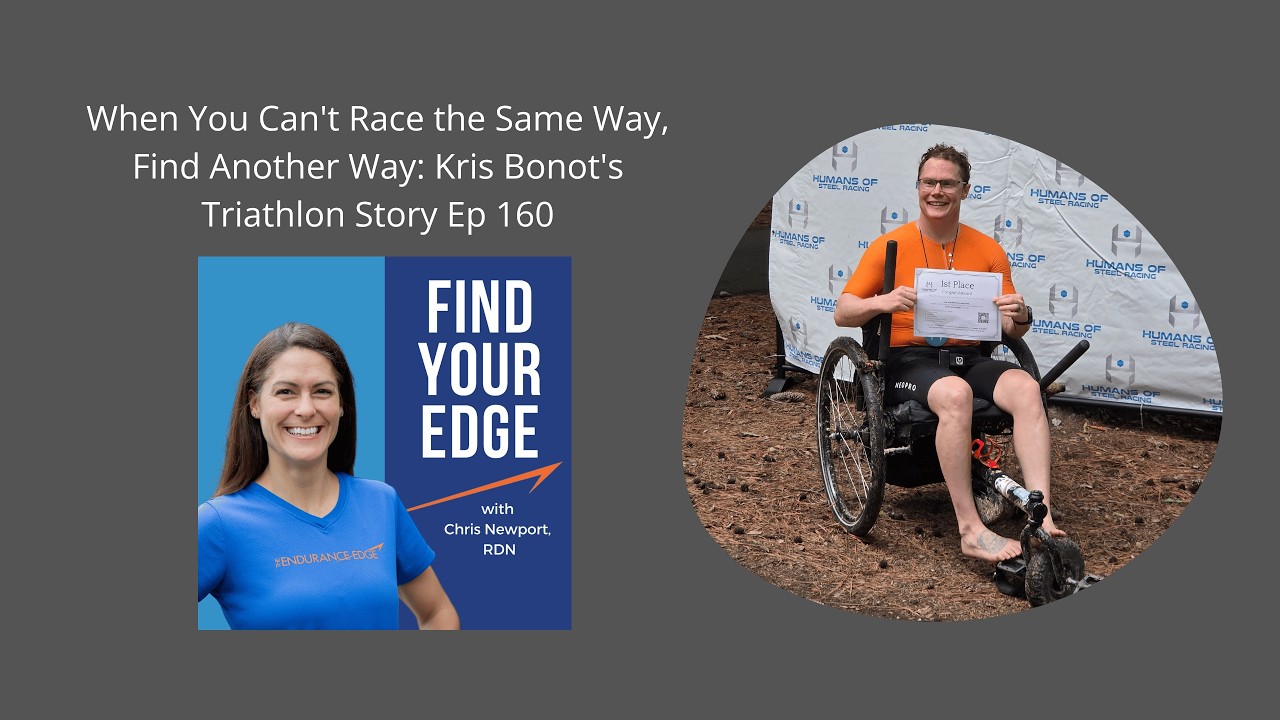
When You Can't Race the Same Way, Find Another Way: Kris Bonot's Triathlon Story Ep 160

Le Tour de Femme: Women, Cycling, Community & Supporting Women With Cancer Ep 158