What Are We Training For? Performance, Longevity & Finding Joy in the Process Ep 162
Chris Newport, an endurance coach and exercise physiologist, explains why training should balance performance with longevity and joy. He uses self-determination theory to build sustainable programs, runs the Longevity Lab for metabolic testing, and coaches athletes from beginners to octogenarians like Natalie Grabeau.
Chapters
Welcome to the Find Your Edge podcast. I'm your host, Chris Newport, founder, head coach, sports nutritionist, and exercise physiologist at the Endurance Edge. Our mission is to empower people to reach and sustain peak performance and health. So get ready to dive into all things training, nutrition, recovery, and more. We hope to give you detailed information and inspiring stories to help you be your best.
Let's do it.
Friends, Coach Chris here. This episode is a little different because instead of me being the interviewer, I'm on the other side of the mic, and it was so fun. Dr. Sarah Gordon invited me onto her PhD Journey Unplugged podcast for a conversation that started with coaching and endurance sports, because that's how we originally met after all, but quickly became something much bigger. What are we actually training for? We talked about performance, longevity, finding joy in the process, and why your training needs to work for you and the life you want to live. I'm sharing our conversation with you, and when you're finished, be sure to head over to The PhD Journey Unplugged. It is an amazing podcast. She has really done a phenomenal job, and she has awesome guests, so you'll have to check them out. And then also listen to the episode that Sarah did on our show, episode number 155, The Science of Lasting Motivation. All right, here's my conversation with Dr. Sarah Corden.
Hey everybody, welcome to the PhD Journey Unplugged podcast. We are at episode 74 today, and as you can see, I'm not by myself today. I have a guest. Okay, so I have with me Chris Newport. Welcome, Chris.
Hi.
Chris, thank you. Chris is the founder of The Endurance Edge, and we're going to talk about what that means.
Oh, yeah.
And get to know you on the show today. And we're going to focus on this question of what are we training for?
Totally. I love that.
Training to flourish, the journey of healthy aging. So we're going to dive into what that all means. I always find when I introduce my guests, you know, you're very humble in the accomplishments that you've achieved in your life. I—
Thank you.
Yeah, I intentionally love to invite people on the show who demonstrate just really living our best lives and helping other people achieve that as well. And so, and that's why I have you on the show today. So thank you for joining me.
Yeah, excited to be here. Thanks for having me.
Okay. So Chris is located in North Carolina and you're a registered dietitian nutritionist, exercise physiologist, endurance coach, certified sports nutritionist. And he spent more than 25 years helping athletes and active adults better understand the relationship between nutrition, recovery, performance, and long-term health. And I don't even remember how we originally connected, but—
I think you were emailing because you were, maybe you were looking for female Ironman athletes or something like that. I think it was maybe to the USA Triathlon coaches. I remember it being somewhere in there.
Yeah.
Dissertation research. Could have been. And I'm just going to say this right now because I was a little bit intimidated by you.
Really?
A little bit. Because let me tell you why. Yeah, please. I just launched my podcast and a lot of people were responding. And when you responded, at first I was thinking, oh, a coach, endurance athlete yourself and performance coach. And then I started to kind of— I always like to research my guests a bit. And I was like, wow, you have an established podcast. You have a successful established podcast and I'm a newbie. And I thought, oh gosh. And I think our first conversation, you were telling me all kinds of stuff and—
Yeah, I think I overwhelmed you a little bit. Oh, you know, host on this thing and do that. And you were like, oh my gosh, I think I had to quit. But you know what? It's like the— It's no different than if I were getting into iron— if I were getting into triathlon and you're like, oh yeah, I've done 13 Ironmans. I would be like, oh my gosh, you're like my idol.
I know. Let me learn from you.
But bridging that gap, like, it's totally possible, but it's so hard to, um, it's so hard to like make that leap.
Yeah.
And sometimes it just takes little by little by little, and then suddenly you're, you're kind of like there and you're like, wait, I did that and sort of looking back and enjoying the view a little bit, which we kind of suck at.
Do you know I just said that in episode 73? I came back.
Really?
I did. I came back from overseas. I went to this conference over there and everything's always, it's been about achievement. It's been about achievement for a very long time for me. And I really came back and said, okay, how do you appreciate the view?
Totally.
Right. So it's interesting that you just said that. It's exactly the space I'm in right now.
Yeah. It's so, uh, and you know, as you were kind of saying some of those things and like, oh, you're, you know, so accomplished or whatever. And part of me, um, I pushed hard. For a long time. And then sometimes I had to be like, to what end? You know, like, do I need another certification to prove myself? And, you know, we could go down many a rabbit hole as it relates to that. But like, what's wrong with just being a dietitian? Or what's wrong with just being a coach? Or what's, you know, like, we can own our space no matter what we are labeled as or what degrees we have, you can still, you have, you still have something to give.
And so you did not listen to episode 73.
I clearly need to listen to episode 73.
So I don't even know how this happens. It's like you just said exactly what I just said I learned.
Okay.
We're linking to episode 73 then for me.
And that's not even really what we're going to talk about today, but in a way, I think it all relates.
It all relates. Like, my view on health is so different now than it was when I knew that I wanted to become a coach at age 15, or when I did my first triathlon at age 22, maybe. My headspace was very different. Life was very different. We obviously didn't have the advancements that we have in AI and some of these other technologies and whatnot. But, um, I'm finding more and more that, man, take your freaking foot off the gas pedal, like, and just like roll the window down. And, you know, you can still do hard things and you can still, uh, but, you know, relishing it in a little bit. And I don't know whether that tends to be, and you would probably know more than I would, tends to be more of a— female thing, especially in this sport, or, you know, certainly as a female entrepreneur. I have used for many years my name is Chris to my advantage because via email, people don't know whether I'm a male or female. And oftentimes the assumption is I'm a male.
Interesting.
And then when they get me on the phone, they're like, oh, I didn't— you know, it's almost like, you know, my perception of you is now instantly changing because anyway, All that to say is that, um, you know, we're all in the right place at the right time, giving, getting the right lessons. And it's nice to enjoy the view.
That's amazing to start this way. And as you, you know, when, as you're, if you're listening, when you listen to this episode, you'll notice I was a bit nervous. And now I just feel like you just brought this like calming presence. and authenticity to this conversation.
Oh, thanks.
So thank you for that.
Thank you.
I want to ask you, and let me say, I think this crosses male, female, however you identify. It's a human experience. I think David Brooks wrote a really good book several years ago. I can't remember the exact name of it, but basically the concept is that There's these different mountains that you climb. We climb the achievement mountain, the more degrees, more certifications, more this, more that. And then we do, we get to those summits and we realize the view doesn't necessarily look the way we anticipated it to look. And then we start to climb these different mountains that just have a little bit more depth, a little bit more meaning, a little bit more, how do we give back to other people? How do we cultivate communities that help each other thrive? And it's a different way to live life, like you're saying. And that episode 73 was all about me coming back from Switzerland and watching people. Now remember, I'm observing it as a tourist basically. So who really knows the conditions in people's stories of their lives? But what I saw was a lot of people Enjoying the day, not necessarily the weekend. I was walking, you know, during the week too and reading a book and laughing and taking time out. And it was really nice. It was really nice to see. And I, I, I think that as a performance coach and training, we all train, like to train hard for, for goals.
Mm-hmm.
This is an important conversation to have about how to also give yourself the grace of time to breathe and to reflect. And to grow that way too.
Yeah, definitely. And it's, uh, it's not easy to be looking at others and assuming that you're not good enough because they're doing more, but that's not always the case, you know? And, um, you know, we'd get this, we get more glimpses with like social media, I feel like, but only like a part of the glimpse. As to what is truly going on with them. Um, and then reflecting back on our own experiences of like, oh, I'm not doing enough, or I could just be better. Or my least favorite is when somebody comes up, like in a race situation, let's say somebody passes me and they're like, oh, you know, the, uh, on your left. And they combine— Great day. And, you know, I'm not here to race. I'm just here to have fun. I'm like, you can keep your mouth shut now. You know, like, it's almost like they give themselves this excuse to be like, well, I'm, I'm just not, if I just in my head don't think that I'm trying hard, then maybe it's going to be okay. But at the end of the day, we're all different.
Yes.
And that is really a space that I have truly, um, stepped into is helping people understand their fabulous uniqueness. And what that means for their training, for their nutrition, for their recovery, and helping them get out of this, I'm not doing enough, or I'm not doing it right, to I'm doing it the way my body needs. And that's a very different story or mindset, however you want to spin that. So that's my space at the moment.
I think that's fantastic. I think that we, I always say we're more alike than we're different, but even in that statement, there's a lot of individuality physiologically. You're an exercise physiologist, just physiologically. I just read something on social media this morning that says, you know, let's be honest, the people who are the champions in the world, they had some genetic predisposition to get there.
They absolutely did.
Right. They have some physiology that You know, they were gifted to have. Now, it takes a lot of hard work, and it takes a lot of other things. But, you know, I think recognizing that, you know, we all have that individuality and then capitalizing on that in different ways.
Yeah.
So I love that we just jumped right into kind of like— we're in like the same space. Always. Yes. Okay. Let's back up just a little bit. I want our audience to know really who you are, right? And how you got here today. So let's start. You said at 15, you knew you wanted to be a coach.
Yeah.
So what did that look like? Were you an athlete then?
Oh yeah, I was. I was like, bless her heart, my poor sister who's 4 years older than I am. Remember my dad was teaching her how to swing a bat and she was probably 8 and she was getting real frustrated. She's throwing the thing down. She's sitting on the curb like, ah, I can't do it. And I'm like, hand me the bat. Let's So, uh, it was a great picture of me just, you know, standing there in my little goofy, you know, shorts and like, let's go. Um, so I, and I, you know, also like skiing, they would, I mean, like the kid that like makes your heart skip a beat because you're like, oh my God, they're going to die.
That was you?
That was me. Like, just like, you know, just like down there. I'm not anymore. But, um, I think just from the get-go, it was just like, let's hang from a tree. Let's go down this mountain. Like, there wasn't, uh, as much fear as certainly as there is now. But, um, you know, I was just kind of willing to jump in and willing to do it and very active and love sports. And by the time I got to high school, I had this coach who was, um, very stoic. She would just have this straight face on all the time, and it was so hard to read her. And she would always play favorites, and she would always just destroy her starters. She would put her starters in, and then she would just leave them in, and nobody off the bench got to play. And I remember being— so I guess 15 would've made me probably 9th or 10th grade. And I remember being like, put me in. I just want to play. Let's go. And, um, and that's when I had this sort of like aha moment of like, everybody deserves to play.
Yeah.
Everybody. That wasn't a good coach, I don't think.
Yeah. Oh, no. But—
Good role model of what not to be like.
But certainly, uh, having that experience, I, I wouldn't, I wouldn't be here having, not having that experience, you know? Yeah.
I get that.
Um, you know, of like, okay, um, if I, if in practice I just do a little bit better, maybe she'll play me. No, she wouldn't. Like it had nothing, you know, you just kind of like keep like, well, maybe if I do this, they'll see me more. And so having that experience young enough to be like, um, to just know that it was— it wasn't me, you know, it was the— her being set in her ways and, you know, not being open to different, um, different opportunities to coach people in a different way or teaching to the— just giving people a chance.
Can I interject one quick thought before we move on from that?
Yeah, of course.
Please.
Yeah.
So self-determination theory has this continuum of like from amotivation to extrinsic motivation to intrinsic motivation. So the goal is to move to more intrinsic motivation. where we take autonomous actions in our life to move our life in the directions that is the most deeply fulfilling and meaningful. So here's— this is a great example. And I'm calling this now— I've come home from my trip. I had this opportunity to learn from researchers and practitioners across the globe. I am now calling this my living laboratory.
Yes. OK. So good. Yes.
What you just said is proof that Here's this example that you're sitting there, you want to do this, right? And something external to you is telling you you can't do it, or they're, they're thwarting that opportunity for you.
Yep.
Right? They're shutting it down. And here you are sitting there in your mind thinking, but I want to do this. And that's where it started. And you took all these actions, and I'm so excited to hear where it came, where it went from that. You took all these actions to then put in life a path that is deeply fulfilling to you because I know you love your work. I know where you're at now.
Yeah.
And I think that's such a beautiful example of what this whole theoretical framework about human flourishing, about thriving is all about, is taking yourself out of these external situations And taking the actions to move your life forward, to find purpose and meaning in your life. So, so I love that. So thank you for starting there.
Okay. You're welcome.
Yeah. Let's move on. Yeah. Yeah.
I mean, that, that just, that I just knew that I, I have a, I can say this now without feeling like, you know, egotistical or anything, but I have a gift of seeing something that people don't see in themselves.
Okay.
And trying to help them bridge the gap from part A to part B. And if they come even, if they come to me with even this iota of like, this is really scary and I think I can, then I'm like, I know you can. And I'll, I'll bring you there. Like if you trust the process and you trust yourself, trust yourself, then it can happen.
Mm-hmm.
So I think that that is what I learned through that 15-year-old brain. And then that turned into, you know, what do I want this to look like? So, you know, it was a, it was a struggle going to college because I was like, OK, well, maybe it's athletic training. So I started at Purdue University. And the great part about that program, great athletic training program, they literally put you in the training room from day 1. And I was like, oh, no, this isn't it.
Okay.
You know, I was like, I don't want to be taping people's ankles and, you know, making ice bags and, um, and giving them ice baths and all that kind of stuff. I was like, hmm, maybe I want to, uh, become a physician. Um, you know, of course, then that's the get a good job, Christina, you gotta, you know, make good money, you know. So like, you know, you have all those competing voices in your head. So that I thought maybe that's what I want to do. So I ended up transferring to University of Virginia And luckily, I got there, and they had this great combination of a personal training program. So I was like, yes, fitness! I love fitness and, you know, helping people develop their bodies and minds in a different way. In conjunction with, I was a peer health educator. So I was like, ooh, I also like teaching people about stuff. So that ended up becoming You know, turning into a job in the fitness industry, and then eventually going back to school for nutrition. So that was a great way. And nutrition, exercise, phys, kind of that, that combo of how can we put all the pieces together? Because fitness in its silo is, it's just really hard to be in a silo. Like there's so many other pieces, you know, there's mental performance, there's nutrition, there's recovery, there's like so many other pieces.
Motivation. Just motivation.
Yes, motivation for sure. Um, so putting it in, and, you know, uh, again, being the person who's like, I'll just get another certification. I'm like, no, at some point you, uh, collaboration is one of our core values in the, in the company. And, uh, at some point I figured out like, oh, I can't do it all. I need other people to help me. Um, So that's kind of part of what we do as the company is sort of we're the team behind you of doing all these amazing things. And collaboration is key because, um, we are— so many different brains can help somebody move forward so much more, like, like quantum leap than just, you know, Hey, Google, how do I do a transition faster? Or what should I eat to lower my cholesterol? Oh, gosh. Both of those questions make my skin crawl.
So the name of your business is the Performance Edge. The Endurance Edge. Sorry. The Endurance Edge.
Yep.
When did that When did you find— when did that— when did you create that?
Yes, that was 2015.
Okay.
Um, so, and the tagline is, you are edged to better performance and health. And that was, uh, me finally getting out of my living in a silo of being— of doing my coaching on my own and doing nutrition on my own and being like, I need a team. I want to have other people who are smarter than I am and are more skilled in various areas that I'm not skilled in and put all of our brains together.
How many people are on your team?
We have 8.
8. Okay.
I hope I got that headcount right. Yes.
And how many individuals do you think you have trained over the years?
Oh, gosh. I mean, between— we've had several groups come in. If you combine it with nutrition, I mean, we're probably getting up into the— I was just opening our sweat testing app. We've got 500 people there. I mean, probably 1,000 at least.
Thousands. So your reach is very wide and you've been involved for a long time. I'm just trying to demonstrate to our audience that you really know what you're talking about.
Oh, thanks.
Yeah.
I mean, it's all a process. I mean, sometimes you're like, oh, that was wrong, and I wish I did that differently.
But, like, well, open to learning.
Can't put it back for sure.
So the people that you've trained over the years, and I'll tell you where I'm kind of taking this, but I just want to ask you the questions to learn more about you. How many showed up trained and ready, and how many started as beginners? Or you've seen it all, I bet.
Oh yeah, uh, both. I mean, yeah, like, um, like today, you know, the guy who I had a swim lesson with, he, he's like, you know, I learned how to swim when I was like probably 5, but, you know, like I never lap swam until April. And so then I'm going, oh gosh, what's this gonna look like? And he's just one of those super fast learners. who has just great kinesthetic awareness and responds to feedback very easily. Now, I've had people in similar situations. It's always interesting where they come from, like how they get into it. We've had people who are like, oh yeah, you know, I heard David Goggins' podcast and I'm gonna do Ironman. Like, OK, have you ever done a triathlon? They're like, no. Like, OK, we're going— you're shooting for the stars. Cool. And then they get in the pool and show up with like their kids' goggles and like, you know, a pair of just like lounge board shorts. And which is fine, wear what you want to wear. It's all good. Start where you got to start. But like made it halfway down the pool and stood up and was like, that's all I got. I was like, okay, we have a little bit to go for 2.4 miles. So, um, so yeah, but I, I've Seen quite a vast array of, um, you know, gosh, we had one woman, I love her story. She came in and, uh, I mean, we literally had on, had her on the edge of the pool and all she did was just blow bubbles, come up, blow bubbles, come up, blow bubbles, come up. And, you know, we got her through a triathlon, but that's how she started. So everyone comes from a different place. Um, some super new and some who have gone down the road a little bit, maybe they fail a little bit and they're like, I know I got more in the tank than train me. So it's a really cool combination of a little bit of everything except pros. We don't work with pros. So.
So here's my question with all of that. And I'm just curious because I'm all about exercise motivation and obviously now self-determination theory. At what point when you train something, and can you see it, it becomes their own? Because you're the guide.
Yeah.
But ultimately, and I always love to say, the coach can give you the structure, but the discipline has to come from within. And then the desire and the purpose still has to come from within. So do you see that kind of transform in that process?
Yes, and everybody is so unique. Um, I saw that in a swimmer yesterday, and swimming is just fresh on my brain because we did—
we—
it's so much easier to have— you're like contained in the pool, you know, or even in the open water. Like, it's just so much easier to have eyes on, on someone versus like, you know, Yeah. If you go out for a ride, people just, you know, they scatter based on, you know, how fast they're going, et cetera. But, yeah, just watching people who are like, man, I remember when you started. And, I oftentimes, even though if they're not coming in for a specific swim analysis, I will videotape them the very first time I see them because then I save that for 3, 4, 6, 12, 18 months down the road when they're like, here I am doing a half Ironman, or here I am swimming 1,500 meters. And like, they're— they just transform. They're just different athletes. And they do eventually start to take it on themselves.
And— Cool, right?
Yeah, it's so cool. And that— I mean, that's why I do it, for all the athletes that you study.
Yeah, I mean, it's ultimately the goal. It's like, It's like when you learn to ride a bike and somebody's holding on that bike, but eventually you're riding the bike, you know, as a kid, you're learning the confidence to do it on your own.
And that's the cool part about coaching is that it's an evolution. It may be more teaching or guiding or instructional or skill-based at the front end, but then it transitions. to something totally different. And I love that evolution of, you know, from start through the whole process of what they accomplish next and where they go next and how your role changes. In fact, I just finished working with— it's probably been maybe 6 or 8 months— with an athlete who You know, it was like time for— he's just really struggling with a particular injury that he couldn't quite get over. And when I could tell it was like time to break up, and I'm like, listen, we're not really— and we haven't really gotten anywhere in so long. We have to address this. And that does not mean you are hurting my feelings. That's just part of the journey.
Mm-hmm.
Is that for now we separate and maybe we end up coming together again and maybe we don't. And that's okay. And I, I think that's just such a great evolution of somebody's journey in their sport or sports and the, and the coaching process and how that brings us to like a next level.
It's so cool.
I think that's a really healthy perspective. You know, I haven't really done a podcast episode on like coaching per se. It's usually the perspectives of coaches to teach us and educate us on how to live our best lives. But as my perception of a good coach, and if you go back to your 15-year-old experience as a coach, I think you have a really beautiful perspective on coaching. Because it's like you, you're not holding onto somebody for your own personal satisfaction. You're giving them the skillset to then go out and grow.
Yeah.
However they choose. And I think that's really great. And I've heard many times from people who have used triathlon and the triathlon experience, especially the Ironman experience, and most people Don't get to an Ironman without a coach. I've learned that too. Most people have a coach to get them to the Ironman because they understand it, they understand the science, and they're there to support you. But I've heard so many times how much it changes people. Yeah. It changes their life completely.
Yeah. Yeah.
That's cool.
It's such a leap. And I see it with nutrition too. At the front end, it might be like, okay, well, we got to work on this much protein and we got to work on changing this habit.
We got to do this.
And then Over time, it turns into more accountability. And sometimes, sometimes I have some clients, we don't even talk about food. You know, it's just, it's just something about like, I just need to know that you're there. And I just need to be reminded, like, I have a client that I've had for probably 3 years now. And we met yesterday, her mother just passed away. And that's a, that's a lot. It's a lot to take on. And we just had to be reminded about like, have you hydrated today?
Right. Something just simple.
Yeah.
Yeah.
So, um, basic. Yeah. It's, you know, we, and nutrition, we call it nutrition through the life cycle. I mean, it's no different than your nutrition's gonna be different if you're training for Ironman versus if you're injured or if you're menopausal or if you, you know, like, and that's okay. It also doesn't have to be, Drastic and crazy. Like you can keep it simple, but sometimes you just need somebody to remind you or somebody to be there like, "Oh right, right. I don't have to overcomplicate this. I don't need to trust what social media is saying." I mean, the things that I get from people of what social media says, I'm just—it's like giant face palm. I'm like, ah! It's just so terrible. Some of the messages that we're getting—it's. Just all these scare tactics. And I know I listened to—
this will totally derail our conversation, so I just want to say this, but then open it as a— consider it as a door to maybe another conversation we can have. But the whole— I listened to this physician talk about GLP-1s, and it was a fabulous conversation. And it's kind of what you're saying. Like, for a lot of people, the GLP-1 is a tool. It's a bridge from very deconditioned body, poor nutrition, to a healthier weight, to then put in habits and behaviors that support that new— the weight loss and that new kind of healthy way of living your life. So you—
Yes.
So it's the bridge to get you there. And I'm not going to say whether I think that's the right approach or not, because there's lots of tools out there. Whatever tool you need to get you there. But the key is, like you're saying, is once you get there, is put in place and change the behaviors to live a healthy life, to thrive from many different angles, not just being thin, but mental health, physical health, relationships in your lives, all that kind of stuff.
Yes.
So I think that's interesting that you mentioned about giving yourself some grace because understanding that Things happen.
Yeah, things happen. Life happens. Yeah, I did a somewhat recent episode just on GLP-1s, but, um, the beauty of the profession that I'm in with nutrition at least is that we have the time. The physician does not have the time that we can really dig into the habits and like Right. The nuances of what they're eating, when they're eating, um, what's their motivation, how that waxes and wanes, um, in terms of, you know, like hunger versus, you know, obviously you're not hungry after you eat, um, and various behavior changes. And I mean, there's, there's solid research that shows that folks who are specifically on a GLP-1, if they work with a dietitian, they overall have better outcomes.
What do they do with their outcomes?
That just overall better outcomes, like they're losing more weight, losing more weight, um, getting better, you know, better, um, numbers. And then once they come off of it, they're better able to maintain it. Yeah, so, um, I am not anti-GLP-1. I know that this population tends to be very generally anti-medication, but Um, you know, it's kind of like using fins when you're learning how to swim.
Yeah, it's a tool.
We could look at it as a tool. Yeah. And I see, you know, where our office is located within an aquatic center and the team that's in there. I mean, they have so many swimmers. Um, and they're what— they're either the first or second team in the nation. They use fins all the freaking time. So, you know, it's like the right tool for the right job. At the right time. Absolutely.
And I think that, and I would love to have another conversation about it because it's interesting. I think anytime you're considering a tool, you need to think about why you're using it, right? And so if you're an ultra-endurance athlete trying to shed a few pounds, that might not be the best tool to use.
Yeah.
But if you have diabetes and you really feel like you can't get to even wanting to go to a gym or go to a pool to exercise, maybe it is a good tool to use. So I think, and you've said this throughout our conversation, everything's very highly individualized.
It's totally individualized.
So I think that's the key. It's just very individualized, whatever journey you're on. Okay. So I love our conversation. We just literally just jumped in. But I wanted to tell you that when I You know, I was looking at your website and I always try to think about, you know, what can my guests bring a little bit different to the conversation beyond just talking about performance and nutrition. And, and I love that you have something that you created called the Longevity Lab.
Yeah.
And that really piqued my interest.
Yeah.
Okay. And I would love for you to share with our audience, what is the Longevity Lab? What's the philosophy behind it? And let's talk about that a bit.
Yeah. So we have really, really smart and driven clients, and they always want the best and latest and greatest. And let me try this and let me do this. And the latest supplement on the market, or are they tracking the right data trends? And let's track that number because I saw that number on social media, or on Strava or whatever. Um, so I saw the Longevity Lab. It originally started as more of like a nutrition coaching program of like, how much protein do we need and how much hydration, like some of those types of things. But it has since evolved because we have the resources for it. You know, we've got a metabolic testing facility and we've got sports psychology and we've got, um, access to biomarkers and It's like, why not put all these pieces together to hone somebody's path in that's more specific to them, that they're not managing in 10 different places of like, um, you know, I get my labs done at Whoop, or I— and then I also do this other testing over here, and then I track my sleep here. And it's just such a great way to Pull everything together, optimize specifically for the endurance or for the, for the individual that also includes genetic testing as one of the tools so that they specifically see what is necessary for them and their goals.
Absolutely.
And what are the things that they need to track so that they can sit back And enjoy life, and not feel like. I mean, I get so many people who they get the direct-to-consumer labs, and they're like, "What does all this mean? This number's off. Like, am I gonna die?" I'm like, "First of all, yes. Secondly, how can yes?
Like we're all gonna die. We're all gonna die.
Okay. Like that is very true, right?
So okay, let's take that off the table.
Take that off the table. Usually that like pops their eyes out. They're like, "Wait, I am gonna die." Yes.
News flash. You're gonna die.
But my goal, and I know that it's part of their intention too, is like, we love this sport, or we love being active. I don't care whether it's doing triathlon until you're 95 years old, or running or swimming or playing shuffleboard or pickleball or tennis or walking or whatever it is that keeps you active. Mm-hmm. We want to keep life in our years. So why does all this have to be so complicated? You know, of like, well, I'm trying this new supplement and that new supplement, and you know, I keep my labs over here, and I don't know, you know, this number's off, but like, should I care about it? And it's an opportunity to have a healthcare provider actually disseminate it down to information that's relevant to you so that you know what to execute on. And can again just go enjoy life and all that good stuff is running in the background. And then we run things again and see, okay, have things changed? So it's an opportunity to keep track, to track trends without getting overly obsessed with only caring about the right things that we need to care about. And then go have some fun. Like, it's all information that helps us. Know what is the best path for ourselves. Like, do you need to be recovering more? Do you need to be eating more cruciferous vegetables? Do you need to be taking extra vitamin D? So many of those things were just like, well, I take this thing because I heard it on social media, or I take this thing because I think I'm supposed to take it. And you know, this other book says I should, you know, it's like, no, none of that. No, no, no, no. Let's filter it down so that you know what you need to do for yourself. So that you can live a long and healthy life without overthinking it.
I feel like everybody should have access to the Longevity Lab.
We've made it— I think we've made it very accessible and very affordable because I have seen some other programs that are like $25,000 a year. It's almost like concierge medicine on steroids. And I just don't think we necessarily need someone Something like that. No, no shame on them if that's the route you want to go. But in my mind, nutritionists are the heroes of the healthcare world that we're cheaper and we're also so much deeper into behaviors so that if and when you go to the doctor, the doctor's like, yeah, you're good. Have a nice day. You know, or oh, you broke your leg. We can fix that. Cool. You know, so the the model of medicine is. more reactive and more disease-based, and we can be more proactive using metabolic testing, using these very specific biomarkers, understanding your genetics such that you, again, you can just sit back and do your thing.
It feels like the future. It's amazing. Let me ask you right now, And I'll ask again at the end. If somebody's interested in reaching out to you to find out more about just everything that you're about, the, you know, your platform and the Longevity Lab, how do they do that?
Yeah, I mean, the Endurance Edge is the best place to go, and that's where they can find out about our triathlon coaching, our nutrition programs. And somebody might be like, okay, Longevity Lab sounds like kind of a lot. The way that we have mitigated that process is we do a 30-minute quick start nutrition consult. I'm licensed in a ton of different states. So able to support people in, and I'm also very thorough. So they're like, you ask me a lot of questions. I'm like, I mean, you and I could sit together and I could ask you those questions, or you could answer them beforehand, pay me less, and get right to the point. And that's a great, like, you know, jumping point of, okay, is Longevity Lab for me, or do I just need to, like, Clean some stuff up over here, um, or get some tests. Or, you know, I get a lot of gut health stuff. I mean, there's a lot of different things that— and again, we need our own unique path. Um, and then we have metabolic and sweat testing. And so, uh, lots of different avenues to work with us. Oh, we put on a triathlon. You know, sometimes I'm—
I was gonna ask you about that too, the triathlon. Yeah, say that. Yeah. But Real quick, so it's theenduranceedge.com.
Enduranceedge.com. And if they want to learn more about longevity specifically, it's enduranceedge.com/longevity. So we keep it simple.
Yeah. Chris Newport, just to say your name again. If they want to Google Chris Newport, The Endurance Edge. Yeah, it should come up. Yeah. Okay, go ahead. Let's just talk about this right now. And I hope I'm not— are you still good? Yeah, yeah, yeah. I have a book. Lead the way. Okay. Yeah. Okay. Um, tell us about the— we talked about it before we started to record this, um, race that you're the Endurance Edge and that you hold every year.
Yeah, yeah, yeah. Um, yeah, after saying all those things related to the Endurance Edge, I'm kind of like, you know, we, we kind of have like 5 businesses in one. It's kind of insane, but, um, I wouldn't have it any other way. In COVID, we had so many people who were training for Ironman. They're like, I just can't, I can't, I can't keep this up. I don't want to keep this up. So, we decided that we were going to put on an Ironman race. And, for 6 or 7 athletes, we had a couple of them do what was our full and a couple did halves and a couple did a choose-your-own-adventure. They did a 2.4-mile swim and then they did a mile bike, and then they did a 10K run. Um, you know, so, uh, and we had one of our guys who was in construction, and he was like, well, steel is stronger than iron, so why don't we just call ourselves Humans of Steel? I was like, that sounds great. And, you know, we sort of joked around about that.
There you go.
And a couple of years later, we noticed that this time of the year is sort of a, um, a sparse time for races. I mean, obviously it's hot, but, uh, we decided that we were gonna make ourselves official. And so we got the name for Humans of Steel Racing. And to make it unique, because that's what we do, we have a reverse format. So it's run, bike, swim.
That's awesome.
Um, partly to be different and partly because I think way more people should be doing Aqua Bike, you know, which is just swim— swim— I shouldn't say just, it is swim bike, which is still a big deal. Uh, but you know, they've had knee replacements, they've had hip replacements, they don't want to run, they can't run, whatever. Like, fine, you, you should still be able to play, right? So with Aqua Bike, it's so anticlimactic that you swim and bike and then you just roll yourself right into transition and ain't nobody there with a medal. You know, you're just like, and I'm done. And that was it. Um, so this gives that population an opportunity to share in the glory of the finish line with everybody else. So albeit, you know, you're like dragging yourself up out of the water and like, get me to the end, but still somebody's standing there to put a, put a medal on your neck. And, uh, it doesn't matter whether you did the sprint or the Olympic triathlon or whether you did the sprint or Olympic aquabike. We don't know the difference. We put a medal on you.
So when, when is that? When do you do that?
So we, uh, this year is August 2nd. So we've historically, we've historically done it, um, the first year I think we did end of August, and then I don't remember why we moved up to early August, uh, but here we are. So it's hot, but, uh, it's a lot of fun and it's different.
How do you sign up if somebody's listening and they want to do this race?
This year? Yeah, humansofsteelracing.com, and that should bring them to the— humansofsteelracing.com, and that should bring them. It's in— it's located in Harris Lake, at Harris Lake County Park, which is just south of Raleigh.
Okay.
So pretty easy to get to whether you're flying in or whether you're driving. And, um, it's a fun little area to have a little excursion And then do a little fun reverse weird crazy race. And, you know, we're USA Triathlon certified, so, um, you get points for it.
That's cool. Yeah, I know you've had the opportunity to, um, on your podcast to interview some really interesting, remarkable athletes and human beings. And I just wanted to say that, um, We both know Natalie Grabeau. Is that her last name?
Yeah. Yeah.
You had the opportunity to interview her. Not many people did. And I mean, I don't know that many people, how many podcasts she did, but I mean, she's been in the media a lot. But here's somebody that last year at age 80 competed at Kona World Championship.
Yeah.
And at age 80.
That's a world record for the oldest The oldest person to complete the World Championship Ironman Triathlon.
Well, first, congratulations on, you know, having her on your show and giving her that opportunity. Yeah. You're the perfect host to have, you know, given her that platform. And because I think you understand, like, you know, how people get to those moments in their lives. I'm curious though, like with the Humans of Steel and all the athletes that you've coached over the years and having the opportunity to interview Natalie, Is there some kind of silver lining or, or some thread that you see across people?
Across all the athletes?
Right. Is it so— is it enjoyment? Is it, is it having fun? You know, I don't wanna lead you in that, but I like from beginners to then somebody like Natalie, like in your experience. Yeah. Because you have a lot of experience more than me.
Yeah. I mean, she, She didn't start until her 50s.
It's incredible.
It really is incredible. I think those are some— I mean, no offense to all of the athletes out there who get into the sport, but I find that to be the most inspiring when people are like, you know what? I just hit menopause. Let's do a triathlon. I'm like, great. We had a guy 2 years ago who was turning 70, and he was like, I want to do my first triathlon. And we're like, okay, let's go. So I think there is a degree of curiosity when people start like, oh my gosh, this seems really scary, but I think I have it in me to do this hard thing. And then once they get into it, and then if they stay into it, it becomes more of a lifestyle. It becomes like, um, training is just part of what I do. Where I see it as the challenge is that training is what I'm supposed to do, where people get in trouble and then they want to quit.
That's an interesting distinction.
Yes. So they want to train and they enjoy it. Yeah. But when it becomes a job, And, when they become more isolated, because we talk about that in our— we've got accountability calls as part of our Longevity Lab. And, we've had athletes who come on there and they're like, oh, I just feel like training is— I'm just on the trainer. I have this long run and my friends are going out for this shorter run. I'm like, no, no, no, no, no. You need to have a conversation with your coach of, if I'm going to stick with this, And I want to stick with it. How can I have this beautiful combination of I'm doing this because I want to get better at it, but also I need the social aspect? I have to be with people. I can't, I can't be isolated. And if you're isolated, if you're just like, if all you're doing is training by swimming on your own and sitting in your quote unquote pain cave, which is like the worst name for a place to train in. Then I just, I find that they don't get joy out of it at all. And then they're more likely to stop.
So, you know, you're the perfect guest for me to have on the show coming back from my conference.
Yeah. Sort of, is it giving you validation to all the things that you were—
I mean, it's like I couldn't have planned it. Like, We've never really talked before. We've had like one phone conversation. We've had, you know, just our lives have been kind of, you know, missing each other here and there. Okay, let me tell you what you just said. Okay?
Yes. Okay.
So, and, and, and here's a little teaser. I'm going to be on Chris's podcast and we're going to dive more into self-determination theory. Yes. But I think in August, I'm going to If we can make it work.
Yeah.
What you just said. So self-determination theory says that we have 3 basic psychological needs that we all need to flourish and to thrive: autonomy, competence, and relatedness. So what you just said about social isolation, right? When you're working towards something and you lose that sense of connection and you lose joy in it. And you're most likely not going to stick with it long term. So that sense of social connection is important. It's called relatedness.
OK, relatedness.
Relatedness. Competence is where you acquire the skills. You gave us so many examples of people getting into the pool, starting at the edge, blowing bubbles, doing half Ironman, taking them on that journey where they gain confidence and become much more internally regulated, intrinsically motivated.
Yeah.
And feel joy in that process. And again, when you feel joy, the research shows most likely more long-term adherence to what you're doing. We talked about somebody like Natalie at age 80. I mean, she still started at 50. That's still 30 years. That's a long time.
It was like 56 or something like that too. Yeah. I mean, she was, yeah, well into her 50s, I think. So she's almost embarrassed that she couldn't swim. And then she was like, okay, maybe I need to figure this out. And she experienced joy in that process.
And I want to come back to that with her one second. I just want to say the last one, autonomy. And that's— you discussed it in terms of your journey to getting here. Yeah. So it's really fascinating. I love it. I feel like this really is Putting, understanding this in practice. And for our listeners to learn, to learn for yourself, because I don't know what— there's no way Chris and I can know what you might be struggling with today. Maybe there's a goal that you've been thinking about forever and you haven't taken your step. Maybe you feel more— your health is just not where you want it to be. So that's the whole point of this conversation. We are health coaches and leaders. We want you to live your best life.
Totally.
From the inside out. So that's really the point. One more quick thing with Natalie, and I've shared this story with her and with you. At Eagleman, June 2024, I was standing next to her before we were getting ready to swim. And I knew I was kind of standing next to this amazing human being. And at the time, I was trying to recruit for my dissertation research. And I was like, Sarah, she fit the inclusion criteria perfectly. I knew she was in the water. She's a triathlete. And I was like, Sarah, this is not the right time. Hey, you want to be in my research study? Jumping into the water. Right? Right. Yeah. I tried for a long time to connect with her. I just recently connected with her and had a wonderful email exchange. And she's just a remarkable person. So I wanted to—
She really is. Yeah.
Give her a shout out on this episode.
Yeah, definitely. I was so impressed by how Like, chill she is.
Yeah.
You know, I, I feel like so many people are intimidated by triathlon because it's such a hard driving, or has the potential to be such a hard driving sport. Um, and, uh, she, she was just like, yeah, I just get up every morning and I eat my bowl of Cheerios with blueberries on it. And that's it. 'Cause I like it. I was like, can I call Cheerios and get you on the box? I was like, you need to be like— I was like, I don't really take any vitamins. I don't, you know, whatever. Yeah, maybe some glucosamine. And, you know, just like— and, oh, I have these vegan friends who come over and it's just so annoying to cook for them. I thought it was like the funniest thing. And that's not a dig on vegans. If you are like All honors for whatever path you go down nutrition-wise. But I just thought she just tickled me so shut. So I mean, she's comfortable. She's just so, uh, committed to like, I get up, I do my movement, I do my mobility, and I go on with my day. I take care of my husband, and then I get a good night's rest, and I get up and do it all over again.
Yeah.
And she's just so committed to that, and she enjoys it.
Yeah, a lot of lessons there for all of us to learn.
Yeah, totally.
Okay, this— I feel like we could talk for, you know, we have so many, um, common interests, and— but yeah, for the sake of our listeners, okay?
Yeah, yeah.
I'm gonna leave you with this question that we talked about when we started. I'm gonna let you have the final word on all of this, and then we can continue this conversation Perhaps when I join you on your show. Yeah. And then, you know, and if you want to continue to listen to Chris and I converse, yeah, we'll carry it on on that episode. Okay. Yeah. You ready for it? Yeah, I'm ready.
You know what it is, right? I hope so. But, you know, I'm not— I, you know, listen, let's go. Let's go. Okay. Flexible kind of gal. Let's go. Okay. Chris Newport.
What are we training for?
Oh, you have to answer that question for yourself. I think we really need to dig deep into, you know, it's like me when I was 15. I knew that that was my calling. I knew that that was my purpose. And now being in it, it brings me so much joy. Like, I just absolutely Love it. And I think that I like to say, be the match. Like, strike the match, you light the fire, and then put it to something and it will just go wild. Like, you can share your journey, you can share that process with so many different people that you just don't even have any idea who you're impacting. And I just— and we are such powerful entities in that respect that if you— whatever it is you're doing, if you are training for triathlon or you're, you know, you're momming hard or whatever it is that brings you joy and that has brought you here for that purpose, You know, charge on, like, that's it. Just live into it and, uh, and keep going because the waves that you are making, like the fires you are lighting under people, you just, you just, you just don't even know the impact. Which is so cool.
I guess I should have said, you know, literally and metaphorically, but yeah, answered it that way.
So yes, that was great.
Well, there you have it. So much wisdom. I love to have guests on such as yourself. I go back and I listen to these episodes often to learn.
Yeah, that's really cool.
I do. And I encourage our audience to do the same. I guess for my final thought in terms of wrapping this all up, I think you said it so beautifully right in the beginning, and we didn't even And I love when that kind of magic happens. Like, like sometimes the view, like sometimes you have to spend a little time either on the top of the mountain or after you've climbed the mountain and just give yourself some time to reflect.
Mm-hmm.
Make sure you're doing these things because they are things that you enjoy. You're doing them for yourself. You're not doing them to please other people.
Yeah.
And, and have fun. Go out there and live your best life.
Yeah. And whether that's sometimes a coach or a friend or a family member who is that person to like tap you on the shoulder and be like, check the view out.
Yeah. Don't do it. We're so much stronger together. I know that's not my original statement. I, you know, I get it all the time on the Ironman platform, but it is true. We are stronger together when we— and you just said it, you know, when you Like when you light that, like match.
Yeah. Be the match.
That energy, you know, you just don't know, um, how you're going to impact others in the world. Okay. Before we sign off, it's theenduranceedge.com. If you want the Longevity Lab, it's theenduranceedge.com/longevity. Yeah. Longevity. Are you on social?
You'll find it once you head to our homepage. You'll find it in there.
How about social media? People want to follow you on social media?
Yeah. Social media @TheEnduranceEdge. And, um, our podcast is called Find Your Edge. So, um, which you should be able to, hopefully you should be able to find it if you search for The Endurance Edge too. Um, but yeah, we're, we're, we're here. You have a very successful podcast.
I've seen it on YouTube. Um, and you put out great content. And so it was an honor to have you on and In a way, you're a mentor, so I appreciate that.
Yeah, of course.
Listen, everybody, thank you for joining us and tuning in to the PhD Journey Unplugged podcast. And thank you, Chris Newport, for being here today.
Yeah, thank you. Appreciate you. Thanks for listening to the Find Your Edge podcast. If you like what you heard, don't forget to subscribe on your favorite podcast platform so you never miss an episode. And if you're interested in learning more about our endurance coaching, sports and wellness nutrition, metabolic and sweat testing, triathlon training team, or our triathlon training library, be sure to check us out at theenduranceedge.com. And don't forget to follow us on social media at The Endurance Edge. Thanks again. And we'll catch you next time.
Bye.
More from Chris
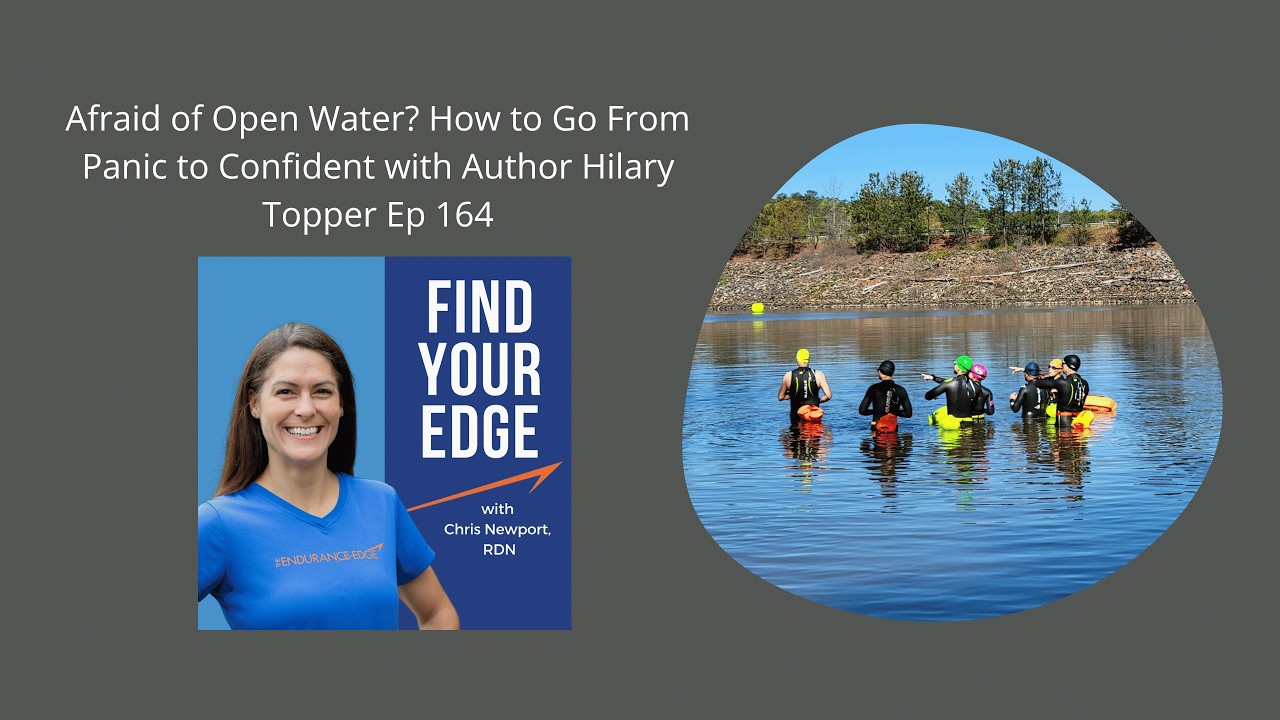
Afraid of Open Water Swimming? How to Go From Panic to Confident with Author Hilary Topper
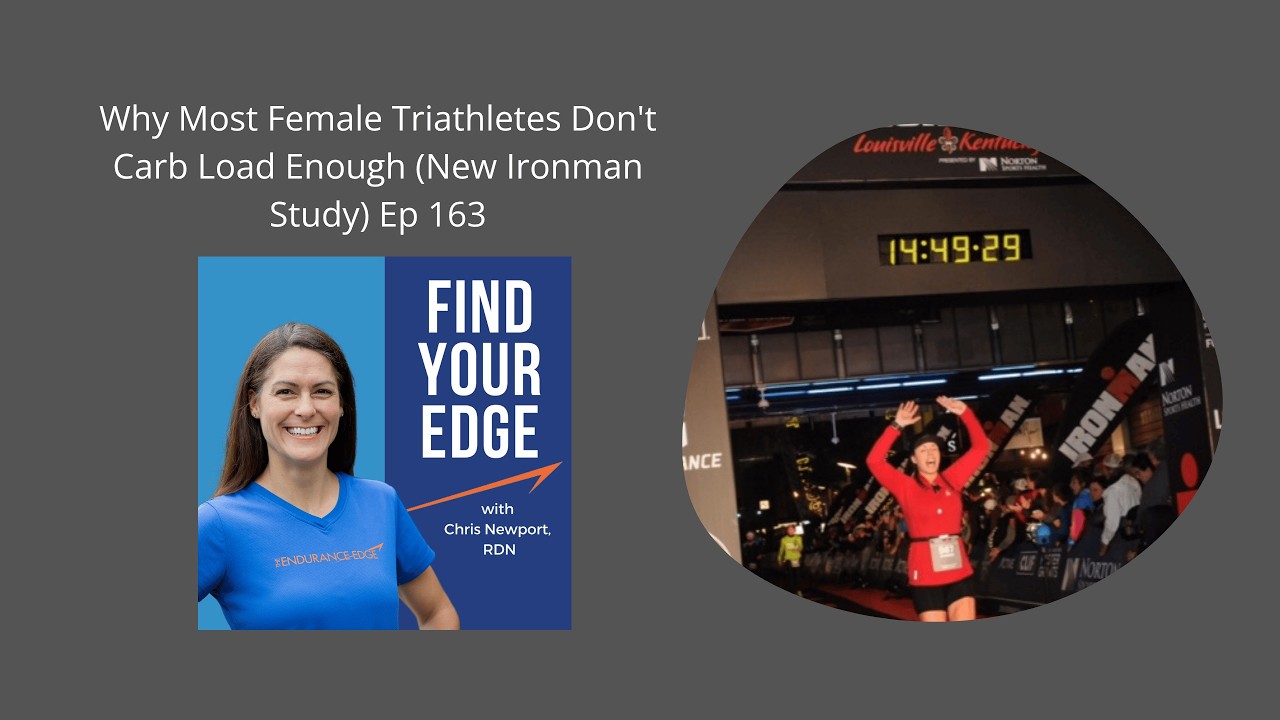

Carb Loading for Female Endurance Athletes: What New Ironman Research Reveals Ep 163

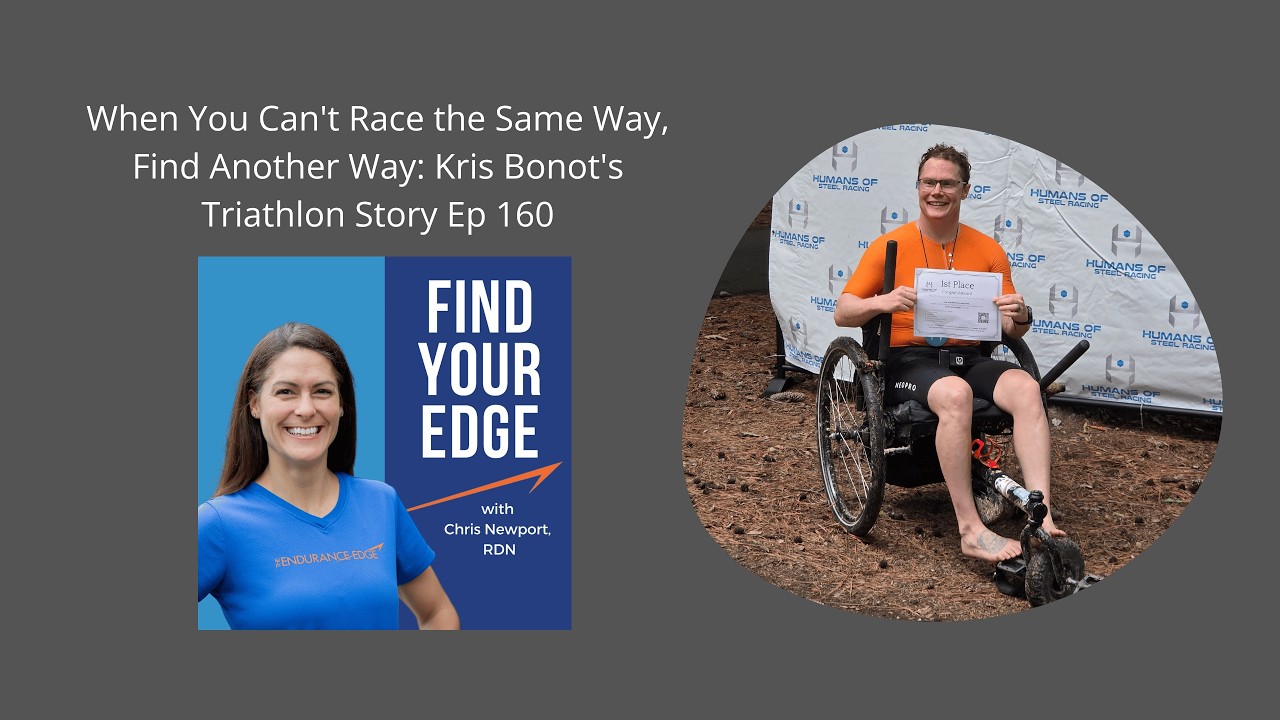
When You Can't Race the Same Way, Find Another Way: Kris Bonot's Triathlon Story Ep 160

Le Tour de Femme: Women, Cycling, Community & Supporting Women With Cancer Ep 158
How Roadless Races Creates Trail Events Built Around Adventure & Community Ep 157