When You Can't Race the Same Way, Find Another Way: Kris Bonot's Triathlon Story Ep 160
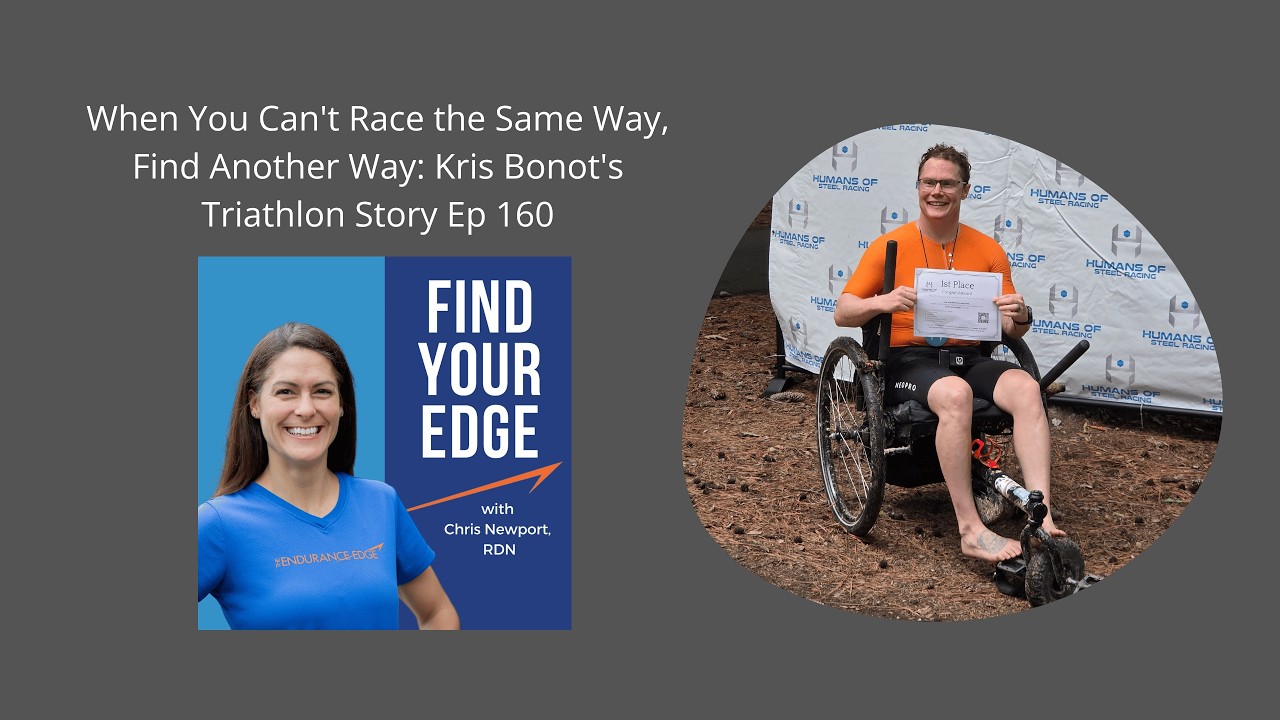
Kris Bonot, a non-binary triathlete, was diagnosed with ankylosing spondylitis and bilateral femoral condyle fractures, forcing him to switch from running to racing in a specialized wheelchair. He advocates for open adaptive divisions in triathlon that let athletes compete however their bodies allow, and pushes the sport to become more accessible and inclusive for everyone.
Chapters
All right, friends, welcome back to the Find Your Edge podcast. I am your host, Coach Chris Newport, and I have a super cool guest. I cannot wait for this conversation, and I know you guys are gonna love it too. This is one of our athletes who came to, who has been to Humans of Steel literally every single time, right? Am I, am I?
I think I may have missed one year, maybe.
Okay, I'm gonna, we're gonna get evidence on that. But, uh, Chris Bonatz.
Yes.
Okay. You've been to Humans of Steel several times. And after that, I was like, can I please interview you? Because you bring such an amazing energy to our events. So I can only imagine what you bring to any other event that you attend or to your career and to your friends and family. So because you have such a unique story. So I'm gonna start with the fact that the first time that you came to one of our races, you were just like everybody else in the crowd, right? But the more recent years, you have been in— I don't even— I don't know if I want to call it a wheelchair. What do you call your super cool thing?
I think it's classified as an all-terrain wheelchair.
So Chris He does our trail race, you guys, on an all-terrain wheelchair. He's a freaking badass. And also, you are so jacked, like so jacked. So I was like, how are you? And you're just like, yeah, here, here I am. Like, okay, the trail is wet, I'm still doing my thing. I'm like, oh my God, this is so crazy and so good. So anyway, I'm going to kick us off there. So start where you'd like, Chris. Walk us through what's happened over the years.
Yeah, well, I started triathlon as a very stressed out parent of 2 toddlers in 2013 as a way to, well, cope with the stress. And interestingly, I had been running too much, running way too much, and had ended up with pretty horrible shin splints and found myself in PT. And my physical therapist said, you should really try swimming. And I said, I can stay alive, but I can't really swim. But I learned. And then I started swimming and I was like, hmm, I just need a bike. And then I could do triathlon. Because when one has an addictive personality, this is what happens.
Nobody knows what you're talking about who's listening.
So I had grown up mountain biking, um, and I bought a road bike off of Craigslist at the time and started to— did my first, um, sprint tri in 2013, and then I was hooked and competed as an able-bodied athlete. Had A lot of success in the age group circuit, doing as many North Carolina races as I could. Had another kid, made some career changes. Training got more difficult because now I work 12-hour shifts in an urgent care setting as a physician assistant.
Hmm.
So I really have to, I can't get really any training gone— done on the days I work. I'm gone 15 hours a day on my workday, so I Got really good at stacking my workouts on my days off, and then COVID happened. 2020 happened, and on top of being on the front lines of COVID with my job, my body started to fall apart, and ways that I didn't exactly understand, despite all of my medical knowledge. And I just thought, you know, I'm stressed. We're homeschooling these kids now. I am training too hard because I'm so stressed, and I just took. Maybe a month off of training and things just kept getting worse. I was having horrible back pain. I was still trying to train for Augusta 70.3 in 2021. So I was registered in 2020, they canceled it, everybody deferred to 2021. So I'm trying to 70.3 train, but I can't get out of bed most days.
Hmm.
I was in so much pain. My back was swollen, my Achilles tendons were swollen, and I had dealt with Achilles tendonitis, plantar fasciitis, you know, all of the normal runner stuff. But this didn't, it didn't feel like that because nothing I did made it any better. No amount of rest, no amount of stretching, nothing made it any better. But I was committed. You know, it's, it's a lot of money to invest in a 70.3. So I said, I, I'm just gonna figure this out. So I kept trying, kept trying, kept trying, somehow finished that race.
Wow.
And then essentially collapsed at the finish line and told my wife, something's really wrong with my body. And if by divine intervention or by coincidence, my wife, who's also a PA, had just switched careers and gone to a rheumatology office. And a couple of weeks after Augusta, so that was You know, late September. A couple of weeks after that, she looked at me and she said, I know what's wrong with you. And I said, okay, well, great. Can you tell me?
Wave your magic wand, honey. Let's go.
And she said, you have ankylosing spondylitis, which is an autoimmune form of arthritis that's mainly focused in the SI joints, the sacroiliac joints. That's kind of the hallmark. But it also has a lot of effect on your tendons. So that's why I was having so much Achilles tendonitis. Also having tendonitis in both of my wrists, my elbows, my shoulder, but really can affect any joint in your body. And so fortunately, I was able to go in the back door of the rheumatology clinic where she works and get seen instead of having to wait however long for a new patient appointment. And then started a journey of getting on the right meds. And that was a process. You start a med, you have to wait 3 months to know if that med's going to help. If it doesn't help, then you got to switch. You got to wait another 3 months. It's really frustrating. And then there's insurance obstacles. That's a whole nother podcast. But finally ended up on a combination that was working and I was able to start training again. As I always had. And I actually then went on and a year later, so in September of 2022 at the Outer Banks Tri, I won my age group and I was totally surprised by that. In fact, almost didn't stick around for the award ceremony until my son, who's obsessed with data, was checking the results and said, I think you won your age group, we should stay. And he was right. And so then I qualified for nationals. So in August of 2023, I went to Milwaukee and I competed in nationals in their non-binary division, which was fantastic. It was the second year that they had a non-binary division and there were only 5 of us. So out of all the athletes across nationals, there were 5 of us in the non-binary division.
And we have a picture of you at nationals.
Yes. Yes. Crossing the finish line.
Mm-hmm.
And that was so fun. It was really challenging to get all the tri gear and 4 kids to Milwaukee.
Oh my God.
That was like the first race.
I think you just gave me an anxiety attack just then.
And one of them, the youngest, was an infant at the time.
Oh my gosh.
Really challenging. Had a great time. Really felt validated. I think all 5 of us did. We had our own podium ceremony.
Oh, that's great.
So they take the top 5. And so because there are only 5 of us, we all got to go to the podium ceremony. And, you know, being able to race authentically and then be acknowledged for it, especially in our larger environment that just continues to focus heavily on transgender athletes. It was a really life-affirming moment. And your race has continued to be life-affirming as well.
Thank you.
You're welcome. Well, thank you.
Yeah.
And then shortly after that race, really, I think I felt it coming home, coming on, on the way home. The thing about having an autoimmune disease is you can be on the right combination of meds, but any degree of stress, Stress or psychological stress, physiologic stress can trigger a flare. So I think traveling and racing triggered what was a really, really horrible flare. And I came back and then started using a cane just to make it through my workdays, made some medication changes, got back to baseline by say Thanksgiving. And then I took my boys. I have three sons who are all teens now, and then a toddler daughter. But my sons and I ran a Thanksgiving race that year, and through Umstead, so on the gravel. Had a great race. Won my age group. Felt fantastic. All my boys podium too. But on the drive home, I said something's really wrong with both of my knees. I didn't fall. I didn't step wrong. Nothing happened. Just something's really wrong with my knees. And by the time I drove. Drove us home. We live in Clayton, so it's about a 45-minute drive home from Umstead. I said, "I can't. I can't get out of the car. I can't stand up. I don't know what's wrong." So manage with help to get in the house. Ice my knees. They're so swollen. Nothing's getting any better. Go to ortho. I waited out two weeks or so. Go to orthopedics. Get MRIs, and then by by New Year's. find out that I have fractures in both of my medial femoral condyles in my knees.
Holy smokes.
And the thought— yeah. And the hypothesis as to how this happened is the disease causes bone marrow edema. It causes your bone marrow to swell. And when your bone marrow swells, it decreases the blood flow to the outer surface of the bone. And so the bone weakens and it can break somewhat spontaneously. I do think that that run on gravel, especially the downhill sections on gravel, is probably what triggered it. But still, I didn't fall, I didn't step in a hole.
Yeah.
It still didn't make a lot of sense to me.
Yeah.
So then I was told that I needed to be non-weight-bearing on both legs. for an indeterminate amount of time till they healed. And that was very heartbreaking.
Hmm.
So did that, bought my first wheelchair in order to be able to be somewhat present for my kids and still go to work and still be non-weight-bearing on both legs. And went in for follow-up January, February, and then found out the expected consequence of this type of fracture is that the cartilage that's attached to the inflamed or broken part of the bone also dies. So that had happened.
Yeah.
So I'm sitting in the ortho office and he was very compassionate and understanding and had knew all about my prior triathlon accomplishments. And he said, I'm really, really sorry, but I think you're gonna have to find another way. And I was so grateful that that's how he said it instead of saying you have to stop or never again. He just said, I think you're going to have to find another way. Yeah.
So he gave you hope in that moment.
He did. He gave me hope.
Yeah.
And I left. And my wife had actually dropped me off at that appointment. She was planning on coming in with me, but our toddler was not having it. So she drove and got coffee with the toddler. And while I was at the appointment, she swung back around and picked me up. And I'm just sobbing when I get in the car. And she says, what do you need? And I said, I need French toast.
So, well, eat my feelings right now.
So over some first watch French toast, I just started researching other, other— I mean, it was immediate because again, addictive personalities don't go away.
Yeah.
So I started, so many of the races that I do with my kids involve trail sections like yours, like races through Umstead. We also really enjoy hiking and it's like a standard racing chair is not gonna work. And I also have mobility limitations in my spine. I have a really hard time even staying in aero on the tri bike for very long becomes a problem. So I knew I probably could not put myself in a, in a racing chair position like you see on the Olympics. So I had to get a little more creative, and I, um, probably spent more money in the moment than I should have buying my—
Nonsense.
It's more expensive than my bicycle, um, which is saying something.
Yeah. Wow.
Um, so I Bought my— it's called a Grit Freedom Chair is the brand, and it was created for Spartan races.
Oh, interesting.
By some MIT engineers who were also veterans, and they had friends who were disabled veterans whom they wanted to participate in Spartan races with, but there was nothing existed on the market to make that race environment possible for someone that was either paralyzed or amputee or otherwise could not use their legs. So they just created it and it works by a lever push system. So it has bicycle chains connected to levers that spin the axles independently. So while they say that it does require less force to move the wheels than my standard wheelchair that I use day to day, it's still really hard. It also weighs 40 pounds. So—
Yeah.
It's— and then you add gravel and mud to the mix and it's very challenging, but I really enjoy it. Then the issue became it is not technically a USAT-certified device. So I don't know how much you've looked into the rules around adaptive triathlon and para triathlon. As the years go on, things are becoming more open and more accessible to everyone. But for a long time, and technically still, to compete in a para triathlon division, you have to have a classification. So you have to submit documentation, submit to a medical exam, and get a classification. Like when you watch the Paralympics, you'll see like T53, those are classifications. And then you can only use approved devices. And it's kind of rigid. So if you compete in a racing chair for the run portion, then you also have to use a hand cycle for the bike portion.
Interesting. Okay.
So it doesn't fit a lot of athletes like me who have both spinal issues and decreased spinal mobility and obviously lower extremity issues. I do have upper extremity issues too. It affects every joint in my body, but I can still ride a bike for now, Lord willing. So this division wasn't— it's not really accessible for someone like me. You know, my kids and I have jokes like, you're disabled, but you're not disabled enough.
Yes.
Yeah. Yeah.
So, um, I mean, you exceed in every other place. Why not?
Right. But I think it was, uh, 2024, 2025, and then this year, USAT for Nationals actually created an open adaptive division.
Oh, okay.
Which essentially means show up and race however you race.
Yeah.
Which is fantastic. I think that opens the doors to a lot more of us who want to continue doing what we do in ways that we have found make that possible.
Yeah.
But I did do a race this year at White Lake, and I actually, they have a ref on, a USAT referee on site. So when I reached out and asked if I could race in my chair, they were like, Well, we don't care, but we actually have a ref, so we should probably ask the ref.
Yeah.
And so then what happened is about a month of emails back and forth with the USAT ref, and she actually went to the higher-ups and they never got back to her. So finally she came back to me and she's like, you're the only one in the physically challenged division. I mean, you're just going to be competing against yourself. I don't really care what you do. Just come and have fun and be safe. Which was exactly what I wanted to hear. That was fantastic. But I do think we still have a ways to go as far as truly making people feel welcome.
And what ways do you see that there are opportunities?
I think just making people know it's possible. You can show up and you can do the run on crutches if you want. I did a sprint at Harris Lake that isn't yours, but Triangle Tri.
Yeah.
Yeah, there was another athlete there and she did the whole 5K on forearm crutches.
Wow.
Yeah, which is more badass, I think, than what I do. Because forearm crutches are exhausting. I think we could change our marketing materials. You know, when people think triathlon, especially people that maybe haven't done it before, who aren't immersed in this world, When you think triathlon, everyone thinks these you know GI Joes, you know, in tri suits. Yeah.
And first you're aging yourself.
So, you know, I think you have they think you have to be super duper fit to do triathlon.
Yeah.
And to a certain extent that's true. But also what is fitness? Fitness is. Fitness is subjective. You know, fitness for you and me are different things as they are for everyone. And I think maybe if we changed our marketing about triathlon in, in general, I think more people would be less intimidated and maybe more willing to try. Yeah.
Wow. Also, can I just say that you On the trail using your chair, which maybe I'll say, I think I took a video of you. I might have to attach that too. Yeah, it was. And I mean, you are like working your butt slash arms off. And then, oh, by the way, the swim is at the end, you guys.
Yes.
So it's like, that is, uh, it. Yeah. It's, it's intense. So—
I trained for your race by doing like a high intensity lift. So like doing rows and chest presses and then going and getting in the pool because we actually have a swim spa at our house, which was a huge life goal realized. So people ask me sometimes, how do you train for this? And I actually, I do spend a lot of time out running in the chair, but my life is kind of crazy. So it's hard for me to go out and spend a lot of time like Like actually using the chair. So I, a lot of it's just weight training, high intensity weight training. Because it is, it essentially is a cardio chest press.
It is.
That's what you're doing.
Yes, 100%. Yeah. And every time I watch you, I'm like, good God, that is so hard.
But that's how I trained for your race. Pushups, rows, chest presses till breathless, and then went and got into the pool.
Yeah. Wow. That is awesome. So cool. So you've made it possible. You've totally made it possible. Yeah.
I mean, the other motivator for making it possible ultimately is my kids, because when I told them, they have been, for better or worse, running around with me their whole lives, whether that was, they used to follow me on their bicycles when I was out doing training runs. I've drug them out of bed at 5 o'clock in the morning for races their whole lives. And now they run track and cross-country and play football and play soccer. But when I told them I can't run anymore, my middle son, who's a little fiery, he said, oh, okay, well, we'll just get your legs amputated and then you'll run on blades. And he was dead serious because in his mind there was, there is no way, like, no, like there's no way that mom is never going to run again. Like that is absurd. It is much less absurd if we cut the legs off and we run on blades. Like, that's more reasonable than your mom never running again.
What? I mean, it seems deeply ingrained. I mean, would you dare to say as part of your identity?
Yes. Yes, it is. And I think that was something I had to navigate. That was something that I grieved and actually had to address in therapy when I realized I wasn't going to be a runner on my legs again. It was really shattering. I mean, to the point that I—
Like, how, how, what did that grief process look like? Because you're not the only one, right, who's, who's going through this.
And right.
So I'm so curious.
Well, I was pretty depressed for a bit. I decided that I would let myself be sad for how many ever days. I would let myself be sad. I ate a lot of chocolate. And I did a lot of scrolling and finding all of the pictures of all of the races. I did have a moment. I have a lot of, a lot of medals. And some of them, of course, mean more to me than others. And there was this moment where I thought, I'm going to put them all away. I don't want to look at them. I don't— because they're displayed in the gym room we have in our house. And I— it's like, I can't look at them. I can't do this. And so it was a matter of being like, nothing that happens from here on changes any of that. You know, you will always be a runner. It's it's not no one took anything from you, and the bigger part of that was learning to still have respect for my body. And I think that's where being a transgender person comes into the relationship that I have with my body is very complicated. I know I've dealt with gender dysphoria, and then. Being able to acclimate to a variable degree of progressive disability and still being able to say, I'm grateful for this body and for everything that my body has done and can continue to do, even though it looks different and it behaves differently and I have to treat it differently, which was the most important piece. Long gone are the days that I could go run 30 miles in a week and never stretch one time. That I had to learn that was no longer going to be part of my life.
Yes.
Which is for the better. But having to just very radical acceptance. These are the cards that I have been dealt and I can either sit around and be angry and frustrated and there is time for that. And I gave myself time for that. And sometimes I still feel that. And understanding that it's okay to still feel the grief, it's okay to still feel the anger and the frustration, but know that you still have power over your situation. Wow.
That's so— I don't even have words for that. That's like, to me right now, Chris, you are speaking to so many people right now. I hope so. Yeah. Of who, you know, whether they lost the ability to run or that is part of their identity or something else, going through this process of, you know, I'm going to let myself be sad. And now what a gift I've been given and let's keep going. Right.
Wow.
Yeah, I mean, I knew you were inspiring, Chris, but this is amazing. Talk a little bit more about the, about the gender dysmorphia part of being part of this sport. Do you, where do you feel like you're at with that? And how has this been part of your journey? Was that Sort of pre getting into triathlon, or how did that all come together?
Yeah, well, my life story is complicated. If you want my, my life story in a, uh, I joke sometimes cuz our, my family presents, we're a biracial family, but we're also a, a same-sex couple. People tend to be very confused about how my family happened. So we joke that we need a little card to hand out that just Explain. So I was in a heterosexual marriage for 10 years. And then after a lot of religious trauma in my early years led to that decision being made and had 3 beautiful children. And I regret nothing and I would not change anything. But at some point around 30 years old, I had to be honest with myself and then ultimately honest with my husband at the time. And that led to a divorce, which was challenging, and this could be a whole nother podcast. And then several years of single parenthood, which was also very challenging. Did some of my best training as a single parent though, because you have to be really, really creative and really, really committed when you are a single parent, but also you have to do something or you will go crazy. And through those years, I realized, you know, I think I've always had some feelings that my gender wasn't quite right ever since I was a little child. And there was no words for that. I didn't have the vocabulary. I certainly didn't have any transgender role models growing up in the mountains of South Carolina in the '80s and '90s. It just was not a thing. So I was finding those words in my mid to late 30s. And then I met my now wife at work, and she's fantastic and actually started helping me find the language for the things that I was feeling before I felt secure in them myself. I think that I was afraid that if I told anyone that I actually felt more non-binary and I thought I was transgender, that there would be— I would lose more people. I'd already lost a lot of people coming out You know, as as a gay person, I lost friends. I lost family. I lost a lot of stability in my life, and I I did not want to rock the boat any further. But at some point, I realized I had to. So I did, and it went better than I expected. I think that's the thing about anxiety and fear is yes, sometimes really bad things do happen, but also. The scenario that our brain creates around those things is often worse than what actually happened.
100%. Yeah.
So then I started— I went on to have top surgery, which was a very life-affirming decision in 2022. And then my wife and I had another baby. Using IVF, my wife carried her. My wife is Filipino, so that is how I have a very beautiful Asian daughter whom you see at races sometimes running around. Yeah, yeah, for snacks.
She's adorable.
So, um, I think I was also afraid, and I still get afraid. You know, I show up to races and a lot of times I, I don't really know How to introduce myself to other athletes or how I'm going to be perceived. There's a funny story. I did a race. My wife and I did a bike ride, the Tour de Blueberry in Bergau last summer, and we had a great time. We stayed in this Airbnb in the middle of a field in the middle of nowhere. It was fantastic. And we did this race, and she chose a shorter distance, and I chose a longer distance. And I was riding a group of people, and I told them my name. We talked a little bit, but. I, you know, there is this fear that creeps in. It's like, well, how— what are they perceiving my gender to be? And so I noticed that they were using he/him pronouns for me, which is fine. I will use any and all pronouns. But I had this moment where the lady that was riding in front of me had fantastic calf muscles and we're riding in a pace line. And I was like, wow, I really want to tell her, like, she's got really, really great legs. But then I thought, well, If she perceives me as a man, will she like feel threatened by that? I don't, I don't, I don't know. Does she perceive me as a woman? Would this be weird? And so this scenario is running through my head all the time. And I think as a cisgender person or when I was cisgender presenting, I never really thought about these things. I felt much more comfortable in my feeling like I fit into a space. And I still think that I do feel more comfortable in female environments than I do in male environments. Although I live with 3 teenagers and all of their friends, so 3 teenage boys, so I feel very comfortable in that space. But I, I think there's always this— I feel like I don't fit in.
Yeah.
And I feel like the other part of that is, well, if they really knew, would I be welcomed here? And I think by and large, yes.
So really knew what? Like, really knew—
They really knew that I maybe wasn't— because typically people will automatically use he/him pronouns when they interact with me. And so if they knew that I was actually, you know, assigned female at birth and am now a non-binary transgender person, would this interaction continue as friendly as it is right now? And that's always in the back of your mind, especially as the overall conversation becomes more heated. I think living in an environment where some people have decided that transgender people are political scapegoats certainly doesn't make our lives any easier.
No, I'm sorry that that has to be a thing in this Yeah. Political environment. Yeah.
But I will say, by and large, I honestly have never had a negative interaction. And that's what I have to continue to remind myself of when I show up to— whether that's races or it's work or my kids' school events— is just constantly feeling comfortable reminding myself That I deserve to exist in these places authentically as much as everyone else does.
Yeah, absolutely. Yeah.
And then racing as a non-binary athlete is, is great because it's fantastic when you get the opportunity to show up and race authentically. And some people may say, well, it's just a box, you're just checking a box, what difference does it make? But it really, really does make a difference. And I've had this conversation with people and said, well, what if, you know, you went to a race and the race was only for men or only for women and you were forced to check a box that you didn't associate with? How would that make you feel? And most people say, well, that would feel really weird. That wouldn't feel uncomfortable. And I said, well, yeah, that's our experience as well.
Yeah.
You know, we feel uncomfortable when we're forced to put ourselves into a box that doesn't necessarily fit. And so it's very freeing when we get to check the right box. It's a very simple thing, but oftentimes we're the only ones. At your race, I consistently have been the only one, and I really advocate for that to change. I have reached out to all of my non-binary friends and really tried to tell them the good news of triathlon in an attempt to convert them. I've yet to be successful, but I'm still trying.
Keep trying, please. And you know— It's really where you're coming from is like triathlon should be for everyone.
Yes, I think triathlon could be for everybody.
Yeah. Regardless of gender, regardless of, to your point, able-bodiedness. Am I saying, am I saying that right? Do you think? Okay.
Yeah, I think. Yeah.
Yeah. Because it's, I mean, when I got into the sports, when I, when, when I finished my first race, I remember just sitting down and being like, holy Moses, I just did that thing. Like everyone needs to feel this.
Yes.
Yes.
There is no sense of accomplishment in my life quite like triathlon has given me.
Mm-hmm. Yeah. So how fascinating that you have come at it from such two so unique angles to say exactly that, that triathlon is for everybody.
Mm-hmm.
Yeah.
I had a conversation with a friend's teenager who went to a race, um, actually the same day as Humans of Steel this year, and they Were the only non-binary youth athlete that showed up. And so they won. And their mom had them reach out to me because they were kind of having an emotional spiral after the race because they did not meet their goal, their time goal. And they felt that they were a fraud on the podium because of how, quote unquote, slow they had been. And what I said to them was, it takes a lot of courage to show up authentically anywhere, to a race, to school, to work. It takes a lot of courage to show up authentically. So if you are the only person who was brave enough to show up, then you are the only person that had the courage to win. And I think that's what I say to everyone, even my wife, who hesitates sometimes to sign up for the Athena division because she says, I'm not, I'm not fast. And there's so few athletes and I get on the podium and I don't feel like I need to be there. And I say the same thing. No, if you had the courage to show up to the start line, it doesn't matter. Then you had the courage to win. And it doesn't matter. The timeship doesn't own you. The timeship doesn't know you.
That gave me chills. Not only do we all belong, but we're all worthy.
Right. Right. That's my whole mission. That is the evangelism of my—
Have you named it yet?
No, because then I might start to sound like a cult leader. And that's, you know—
Chris, have you met Triathlon? We say we're doing a sport, but really, Yeah, it's— oh goodness, I— it's not often that I'm left speechless, Chris. I just think that this is such a motivating message to get anyone out there, no matter their situation, that if you, like you said, if you are committed, kind of like the time-crunched, you know, you were— you are a time-crunched parent and have been even more so of a time-crunched parent and still made it happen. And then we layer in like challenges with health and non-binary athlete and like, holy smokes. Um, that's super inspiring.
Thanks.
Yeah. Chris, do you want people to follow you? Like, do you have like an Instagram account or something like that? Or—
I do have an Instagram account. My Instagram account is private.
Um, okay.
What if people want to see me?
That's okay. You, you need like a social media manager so that we can all follow you. Yeah.
So my, my oldest son, um, does a lot of social media marketing and he has told me before, like, you could have a great TikTok, but I just haven't, I haven't felt committed to that. There's too many other things I'm committed to.
Uh, listen. Yes. I'm, I'm, I'm okay with that. Hopefully we can at least from our platform share your message with as many people as we possibly can. Because again, triathlon is for everyone. And thank you for this life journey that you literally have been on to share that message.
Oh, thanks for listening.
Yeah, that is so inspiring. Okay, so To tie everything together, the way that I like to end our podcast is, is there one or maybe two things that you want people to walk away with?
I think the most important one is that we are all just one accident, one injury, one illness away from disability. And I don't say that to generate some sort of pessimistic mindset. I say that to generate a transformative mindset. What changes about how grateful you are for your body and your athletic performance or the ease at which you move through your life if we all have that thought in mind. And what changes about how we visualize accessibility, whether that's at races or at the grocery store or our kids' schools, if we change our mindset and realize we could all at some point need access to ramps and handicapped parking spaces and bigger gates to get in transition. If we all just realized that life is so fragile and approached each other and ourselves with so much more grace with that in mind.
And you do it with so much joy, I will have to say. Like, I don't think there's ever a time that I've seen you where you're frowning.
Like, it's just like not It's because you don't have a camera on me halfway through the swim.
Okay. Fair point. Fair point. Or like last year when the wind kicked up towards the end and— Yes.
And I had to swim 2,700 yards in an Olympic swim. Yes. I was frowning then.
Yeah, that was— yeah. And you— and I remember when you came, you got to the finish line and you weren't like mad about it. You were just like, That was really hard and it was really long. And I remember standing there and being like, I'm so sorry. And you were like, it's all good.
Well, it was a distance PR on my swim. So I guess you're just a really good coach encouraging those PRs.
Oh my goodness. So, I mean, no matter what life has dealt you, you have risen to the challenge and I commend you for that, Chris, because you are Uh, such an inspiration and have been certainly in our race, uh, for the last 4 years. And, and I'm sure we'll continue to do so, both for your family and for the triathlon community and for the transgender community, non-binary community, like all of it. I just, you are a champion.
Oh, thanks.
Yeah. All right, Chris, thank you for being on the Find Your Edge podcast and keep us posted on your journey. Well, yeah.
More from Chris
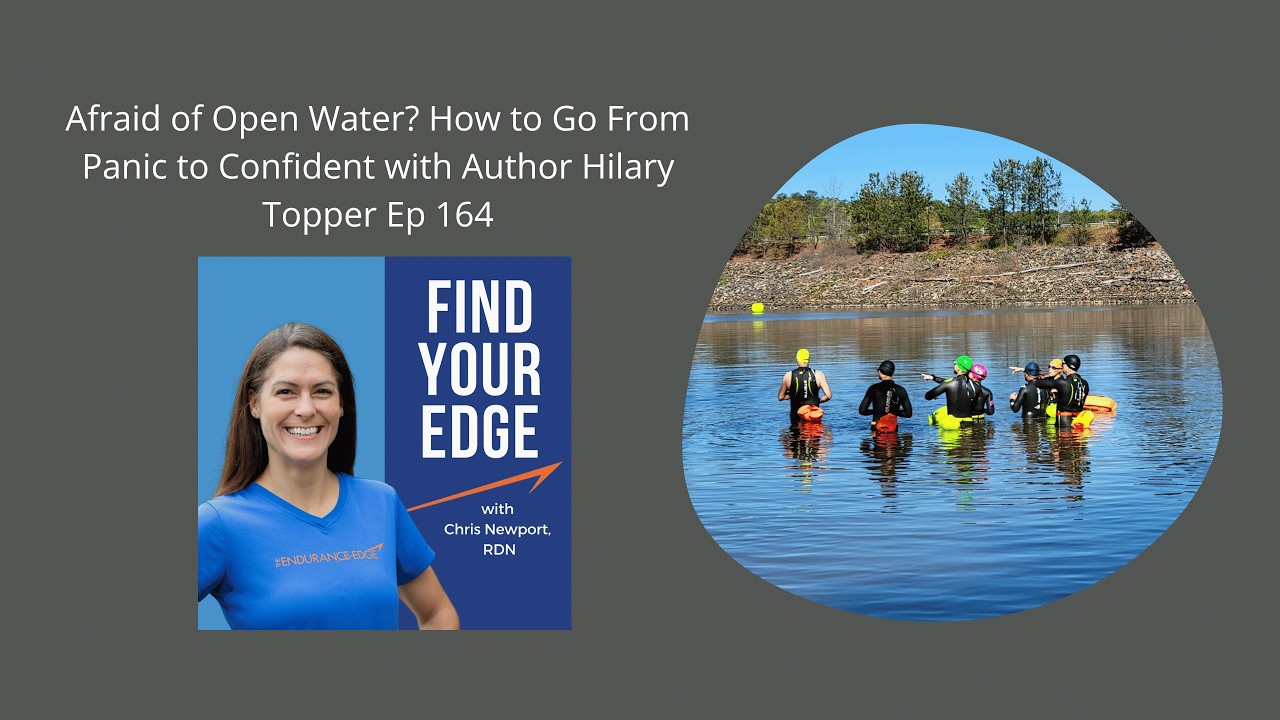
Afraid of Open Water Swimming? How to Go From Panic to Confident with Author Hilary Topper
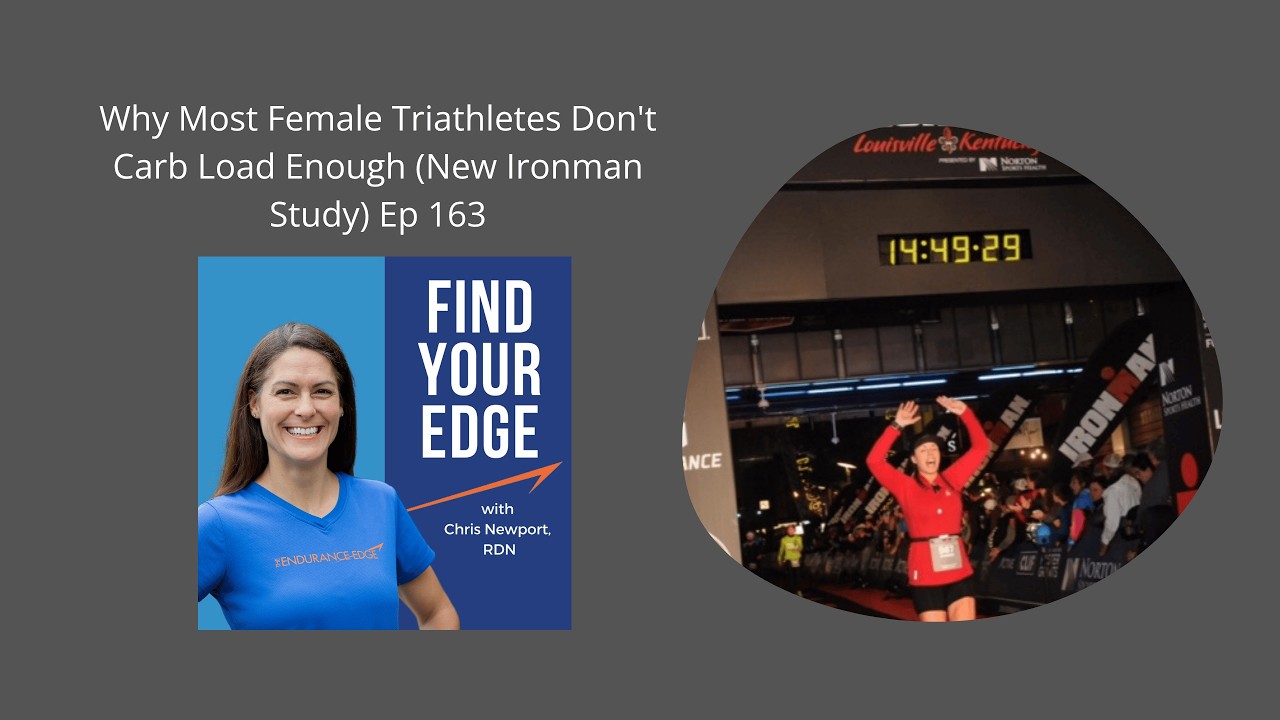

Carb Loading for Female Endurance Athletes: What New Ironman Research Reveals Ep 163
What Are We Training For? Performance, Longevity & Finding Joy in the Process Ep 162


Le Tour de Femme: Women, Cycling, Community & Supporting Women With Cancer Ep 158
How Roadless Races Creates Trail Events Built Around Adventure & Community Ep 157