Your Sweat Rate Isn't One Number | Personalized Hydration for Athletes

Coach Chris Newport explains that sweat rate changes with sport, intensity, temperature, and individual physiology, not a fixed number. A 2026 study found dehydrated cyclists delivered 16% less carbohydrate to muscles. The new Hydration Edge app uses your sweat-test data and conditions to generate personalized hourly fluid and sodium targets.
Chapters
Hello and welcome back to the Find Your Edge podcast. I am your host, Coach Chris Newport, and today's episode will be a short one, but also I've got a treat for you guys and I'm super excited to announce it, and it relates to sweat rate. So one of the questions I get all the time is, why should I do a sweat test when I already know my sweat rate? Well, Your sweat rate isn't a number, it's a pattern. So for example, you could lose a third of a liter on an easy cool run, you could lose over a liter on a moderate bike ride, and you could lose far over a liter and a half during a hot race. Same athlete, different sport, intensity, and environment. And that doesn't mean it's bad data. That's your data. Your body is responding predictably to what you're asking it to do. So what actually creates this pattern? And I have this conversation so many times over and over again with athletes, so I want to make sure that this is clear. Well, number one, it could be sport. Just like I was telling you, you are more likely to have a higher sweat rate running than you are for biking, for example, or swimming, for example. Intensity. That's a clear one. The harder you go, the higher your core temperature and the higher your sweat rate. So an easy run for the same amount of time will be a lower sweat rate than a fast, hard run. Same thing with temperature. And of course, we're all experiencing this, these higher temperatures. But if you go out for a run when it's 30 degrees Fahrenheit versus 80 degrees Fahrenheit, obviously your sweat rate is going to be different. Which relates to the humidity, which in turn is the dew point. So in other words, the lower the dew point, the lower the sweat rate. The higher the dew point, the higher the sweat rate. The lower the intensity, the lower the sweat rate. The higher the intensity, the higher the sweat rate. And even there's some individuality within sports. So for example, I had an athlete who his sweat rate was much higher inside on his indoor bike trainer versus cycling Outside. He added a fan, so increased the convection in his indoor trainer, and his sweat rate went down. So that is going to make a difference. And then also just general individual physiology. You know that you have been on a bike ride or on a run with friends of yours, and, um, one person is literally just absolutely drenched and the other person looks like they barely did any work. So there is individual physiology and individual variation. For sweat rate, just like there is for eye color and skin color. So this isn't just about your Ironman. It could also be like, I challenge you, go out and mow your lawn for 90 degrees for 90 minutes in Raleigh in July. And of course you're going to be sweating. And in fact, you can add that in as your quote unquote sport. Your body doesn't say, oh, this isn't, you know, a scheduled workout in TrainingPeaks, so it doesn't count. It absolutely counts. So the question becomes, what does my body tend to do under these conditions? And once you accumulate enough of your own observations, enough of your own data, hydration becomes way less mysterious and so, so, so predictable, you guys. So let me give you an example of a really cool research study that just came out, 2026, Journal of Applied Physiology. And what it said, it took So they took 9 trained— now granted, this is a small, small study, but hang with me here— 9 trained male cyclists and triathletes. They did 160 minutes of cycling at 50% of their peak power in, in sort of moderate conditions. So not hot, probably just indoor conditions. They consumed the same amount of carbohydrates, so 60 grams per hour of glucose in both trials, but they changed up their fluid availability. So for the first time that they did the study, they intentionally dehydrated them. And then the second time they did it, they made sure that they were what's called euhydrated. So not losing an excessive amount, basically staying hydrated. So an interesting takeaway that they found is that the dehydrated condition resulted in a 2.8% body mass loss. And typically in the research, we see that about 2% is where performance losses start to occur, compared with they only lost 0.2% when they were trying to keep them euhydrated or, or sort of neutral from a hydration perspective. However, so again, carbohydrate intake did not change, fluid did change. The amount that they were able to Send to their working muscles of those carbohydrates was 16% lower in the dehydrated trial. Like, that's, that's kind of like mind-blowing. So think about that. We spend so much time arguing over whether this athlete needs 60 or 75 or 90 grams of carbs or 100 grams or 120. But fueling, which I think of as carbohydrates, So those getting to the muscles and hydration, which I think of as fluid and electrolytes. Are they different processes? Yes, slightly. But do they go together? Absolutely. And this was such an interesting study to confirm that, is that yes, you can get all the gels you need and all the carbohydrates that you need or are quote unquote prescribed. But if you're getting your fluid and hydration wrong, Then what does it matter, right? So again, we can't necessarily apply that principle to everyone, but in that study, it's such an interesting way of looking at things to say, oh, these are— these do go together. And again, just to piggyback on that, that 16% in that very specific study has to be further researched. For females, for different populations, for different intensities, for different sports. This was very specific, looking at male set of a small cohort. Regardless, knowing your sweat rate as a pattern is going to give us incredibly valuable information, and even more importantly, knowing the sweat test or your sweat content gives us even More data to understand you and your body. So I want to tie this all together into this central concept of it's important to measure, log, understand your pattern to be able to predict your hydration and then actually execute on it. So doing one hot run in the summertime is not enough to tell you what's going to happen In December. One cool ride doesn't necessarily— in October, it doesn't necessarily predict what you're going to move, what you're going to lose in July. So it's important to collect your data, and you don't necessarily see a lot of data. Again, once you start to collect at least, let's say, 3 to 5 data points per sport, especially for triathletes, we got a lot of sports going on, and that's fine. But understand your patterns. And you don't have to necessarily do this all the time, but just enough to understand how your body performs across different sports, across different intensities, and across different conditions and even durations. So instead of asking, how much should I drink? The better question is to say, what does my body typically require? When I do a certain sport for a certain amount of time at a certain intensity in certain conditions. So that's a completely different level of decision-making. And if your head just exploded just a little bit, that's literally why we built a brand new app, and it is out and on the market. I cannot believe it. I feel like I just birthed a new baby, you guys. It's crazy. So I had been operating for so long in spreadsheets, and for every person who came through the door who did a home sweat testing kit, who did a sweat test in our office, was always— and still do— do a one-on-one session with them to actually translate that information and help them build their fueling and hydration plan based on their unique GI conditions, based on their unique races, etc. But part of that was showing them this massive spreadsheet that just literally grew legs and had all these different— it was just overwhelming. So that's when I finally said it's time that we turn this into an app. So it's super easy. In fact, I'm going to show you what it looks like if you are watching on YouTube so that you can actually see it. Here it is. It's called the Hydration Edge Personalized Hydration Plans. Right now it is available exclusively for Apple devices. So hang tight, all you Android users, because yes, I am also an Android user. So it feels a little weird that I can only use this right now on my iPad. But as you can see here, this is how you find it. So you know exactly how much you sweat. You can predict your needs before you train, before you race. You can dial in your fluid and sodium needs. And it's super easy, built exactly for endurance athletes. So that is officially on the market to help you simplify your hydration needs by simplifying your sweat rate and understanding it as a pattern. Okay, so it's just gonna make things so much Easier because once you unlock your own data, you have this amazing framework for hydration no matter what you're doing. Let's say you do an Ironman and then you're like, heck no, I never want to do that again. Now I want to do ultra runs. Okay, you're going to have that information. Or maybe you want that information for going out and mowing the lawn. However it is that you're going to be doing your sport, whether it be running, soccer, swimming, cycling, Training in the heat, playing basketball, again, even mowing the lawn. No matter what it is, then you will have your data unlocked so that you can see your patterns beautifully and make it so much easier without making yourself go crazy of, okay, well, now I'm going to be doing this marathon in Chicago in the middle of October, but then I'm also going to do a sprint triathlon in the middle of summer. In North Carolina or Florida, you're gonna have all that. You're gonna have all that data all ready and unlocked for you. So you simply say, "This is what I'm doing, where I'm doing it, how hard I'm gonna go," and boom! It's gonna appear right there. It's gonna be awesome. So your hydration strategy shouldn't come from what your training partner drinks because you guys, we've talked about this before on another podcast that I've done. Is it's oftentimes not the product. But in our heads, we're like, well, this doesn't seem to be working for me as optimally as that person seems to be operating, so maybe it's their product. And sure, maybe it is partly the product that they are doing, but again, it's so individual. So your hydration strategy shouldn't come from what your training partner drinks, or what's even printed on the side of a bottle, Or generic ounces per hour recommendation. I get that question so much, and I've gotten to the point where I do not feel comfortable recommending general sports drinks or general amount to consume per hour because we are all so vastly different. We have had people who have sweat— their sweat content is as low as 8 to 10 milligrams per ounce of sweat. Versus somebody who's 80 plus milligrams per ounce. Like that, that's just such a massive gap that it becomes hard for me to say, oh, everybody should drink X product. Do we all need to stay hydrated? Yes, but we all need to understand, especially if you're an endurance athlete, your sweat rate pattern and your sweat rate content. So your body is already giving you this data. You just need to capture it. In order for the pattern to become clear, and once you know that pattern again, Hydration Edge app will give it to it, give it to you. You can literally stop guessing, and you can start that planning process. So you don't have to stress over spreadsheets anymore. You can enter in here's where I'm racing, here's what I'm doing, and then the app will say this is how much you need per hour. So Hydration Edge is officially live, and I could not be more excited to finally get this tool in your hands. So if you head on over to the Apple Store and search for Hydration Edge. We will also link to it below so that you can get your hands on it as well. For those of you who have had a sweat test done with us, you will get a special gift by email. And if you don't hear from me, you can always message me in the portal. You can reach out to us on our website or via socials at The Endurance Edge and make sure that you get your prize as well, because I want this in your hands. I want you to be able to make this So easy that hydration and fueling is no longer even a question. You know your data, the app knows your patterns, and can literally tell you exactly what you need no matter what training event you're doing, no matter what racing you're doing, and no matter if you're mowing the lawn, y'all. So I hope this episode was helpful. I'm so excited for you to get your hands on the Hydration Edge app, and I'm listening to all of your feedback. So Send me, send me, send me as much feedback as possible. I'm gonna get me and my new intern on this to continually add more and more products. It already has over 200 different fueling and hydration products in it. Doesn't mean that one is superior than the other. It just means that there is one or two or several. There's even recipes in there, you guys, on how to make your own gels, how to make your own sports drinks, and how to make it all work for you. But we are doing our best to give you the right products for the right sport in the right intensity. So excited for you guys to try this out. Let me know what you think of it. And thanks again for listening to the Find Your Edge podcast, and I will catch you next time. Thanks.
More from Chris

Afraid of Open Water Swimming? How to Go From Panic to Confident with Author Hilary Topper
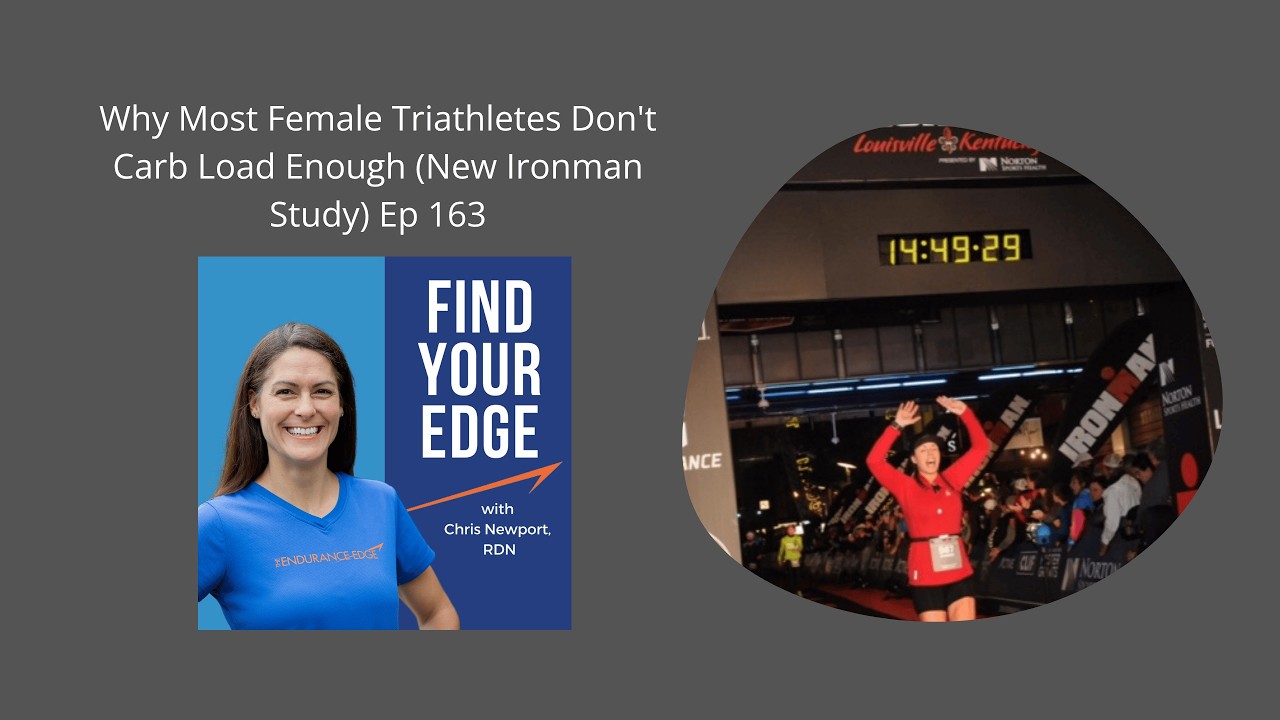

Carb Loading for Female Endurance Athletes: What New Ironman Research Reveals Ep 163

What Are We Training For? Performance, Longevity & Finding Joy in the Process Ep 162

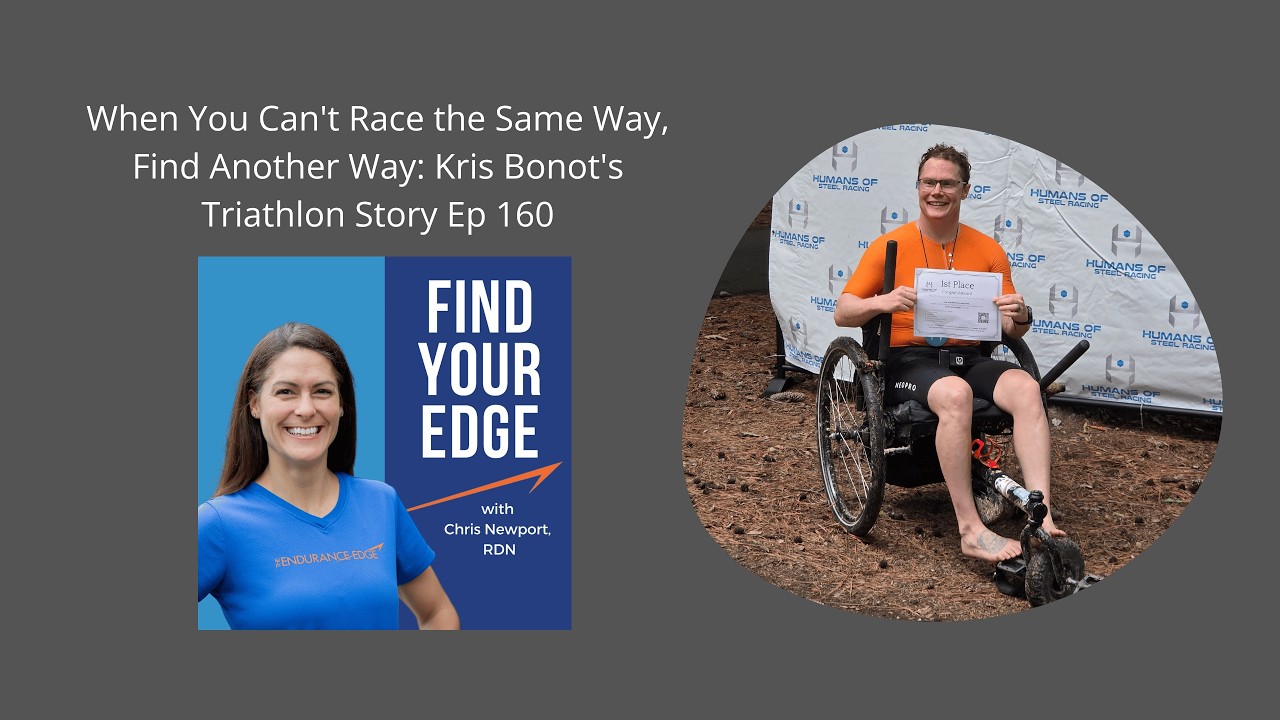
When You Can't Race the Same Way, Find Another Way: Kris Bonot's Triathlon Story Ep 160


Le Tour de Femme: Women, Cycling, Community & Supporting Women With Cancer Ep 158

How Roadless Races Creates Trail Events Built Around Adventure & Community Ep 157