GLP-1 Nutrition for Weight Loss in Athletes & Active Adults: How to Protect Muscle Ep 138
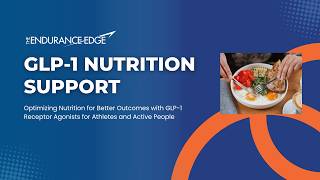
In this episode of the Find Your Edge podcast, Coach Chris Newport explains how glucagon‑like peptide‑1 (GLP‑1) receptor agonists work and offers practical nutrition strategies to maximize fat loss while preserving lean body mass, especially for athletes and active adults. He outlines the drug’s mechanisms—glucose‑dependent insulin release, glucagon suppression, and slowed gastric emptying—then addresses the emotional stigma surrounding GLP‑1 use and urges a shame‑free approach. Newport stresses the importance of a registered (sports) dietitian for better outcomes, and provides detailed guidance on protein timing and quality, healthy fats, low‑glycemic high‑fiber foods, hydration, and managing common GI side effects. He discusses nutrient density when calories are reduced, the role of supplements, labs, and genetic testing, and highlights athlete‑specific considerations such as pre‑, during‑, and post‑exercise carbohydrate fueling, continuous glucose monitoring, and the need for periodic DEXA scans to track body composition. Throughout, he advocates for informed, individualized care, reduced decision fatigue, and ongoing collaboration with healthcare professionals.
Chapters
Hey y'all, and welcome back to the Find Your Edge podcast. I am your host, Coach Chris Newport, and I figured this would be an interesting topic, especially if weight loss is on your mind, whether you are an athlete or not, because I have been seeing so many patients on GLP-1s lately that I wanted to get into some of the more nitty-gritty of what I'm seeing on the nutrition care or the nutrition support of things and how we can optimize nutrition for better outcomes, whether you're on a GLP-1 receptor agonist or you're somebody who wants to lose fat and do so the healthy way. So I want to first and foremost mention that this presentation is for informational purposes only and does not constitute medical advice. Be sure to consult your healthcare provider about what is the right path for you. All right, so let's first start off and kind of back up. What is the actual mechanism of this glucagon-like peptide-1 agonist? So how they work is they operate through several key pathways. They enhance insulin secretion in a glucose-dependent manner. So in other words, not as much glucose, not as much insulin. More glucose, more insulin. And they suppress glucagon, which is kind of the opposite of the hormone— that's the opposite of insulin. They suppress glucagon secretion under high blood sugar or hyperglycemic or euglycemic, normal blood sugar conditions. They also slow gastric emptying, so the contents of your stomach get all mushed up, squished up, and then sent into your small intestines. That's where the magic happens, that's where all the absorption of nutrients happens. So that process goes slower from your stomach into your small intestines, and that prevents an after-meal or a postprandial glucose spike when your blood sugar rises after a meal. So that process just happens that much slower, thereby your appetite is decreased, and hopefully the intention is that with less food, then that collectively contributes to weight loss. So I also want to mention that this seems, or at least feels like on my end, a very emotional topic. Anybody who I talk about GLP-1 agonists to, the folks who are on it are looking for the information and they want to take care of themselves as best as possible. The folks who are not on it and maybe are somebody who wants to lose weight almost feel like, is this a cheater kind of thing? So first of all, I want to encourage everybody to remove the shame that could be associated with this drug, or really honestly any type of drug, that we're all in this to feel our best and do the best that we possibly can, and hopefully have a good relationship with your care team of various healthcare providers so that you can do the best for what is necessary for your health. So I at least just wanted to just kind of lay that out there. I do honestly think that they are a fantastic drug for the right person in particular at the right time. And I'm here from a nutrition perspective. So I'm helping folks regulate their blood sugar, support their weight management efforts, and reduce the side effects as best as possible so that they can have better outcomes. And in fact, there is substantial research that points to GLP-1 alongside nutrition care with a registered dietitian has better outcomes. So if you are a healthcare provider and you're listening to this, or you know a healthcare provider, send it to them. Make sure that everybody who goes on a GLP-1 should automatically be referred to a dietitian. You're just gonna have better outcomes when it comes to that Because again, better weight management, better blood sugar regulation, and more guidance on just not saying, okay, well, I'm just gonna stop eating, or, you know, because I'm eating less, you know, I'm losing the weight. The concern is, especially for me, especially from a sports dietitian perspective and from a longevity perspective, is how can we lose fat and not just weight. And that's the kind of scarier thing. So if you're watching this on YouTube, got a little slide deck that goes along with this. And of course, I love pretty pictures, and this is a wonderful picture of various protein sources. Protein, protein, protein, protein, protein, protein for lean body mass preservation and satiety. So in other words, feeling full. So in order to prevent muscle loss, we need essential amino acids, and we need them at a relatively frequent time frame throughout the day. So let's call it an 8-hour eating window, 10-hour, maybe even 12-hour eating window with which you are able to get in those essential amino acids, which contributes to keeping that lean body mass, that skeletal mass. Also contributes to everything from creating antibodies to regulating your pH in your body. Protein has so many different things that it needs to do that if you are prioritizing that, then your body can say, oh, now I can start to use this stored fat that I have as an energy source. So think of things like fish, poultry, legumes, egg whites, all all great high-quality protein with lower amounts of things like saturated fat. And of course helps with that fullness and preserves that muscle during fat loss, especially on GLP-1 therapy. So that is one of the biggest things, especially for folks who really lose quite a bit of their appetite. We really almost have to, um, be very intentional about protein. Healthy fats are also important, albeit protein definitely is, is up there, but not at the cost of leaving fat out. So things like olive oil, nuts, seeds, things like that are going to help with appropriate cognitive function. That's one of the main things that dietary sources of fat helps with. Hormone production and nutrient absorption. So we don't want to leave out the fat. But yes, that does help make you fuller faster. So So it's all about a balance. So after our good quality sources of protein and making sure we've got that little bit of balance of healthy fat in there, another thing we really need to focus on is your lower glycemic, high fiber foods, especially things like soluble fiber. So consider this, if you have, if you started GLP-1 and your eating frequency goes down and the amount that you're eating goes down, that means your motility of your gut could potentially slow. It's kind of like what goes in then goes out. So if anybody has experienced a longer time period of fasting, maybe a day or two or even 3 days of fasting— that does not mean I'm recommending that— but you have likely experienced this. Your bowel movements are going to go down drastically. We need to detox, y'all. We need to get rid of the stuff, if you know what I'm saying. It is no different when you're on an appetite suppressant like a GLP-1. So making sure that you are really prioritizing good, high-quality fiber foods. I cannot tell you how many times every day I talk about beans. I freaking love them, and I am pushing them on everyone. We need our beans, y'all. And good quality soluble fiber sources like oat bran, which I did a whole podcast that really focused more on oprahns. So go back, listen to that. I'll make sure to link to that below because it is magical. So definitely wanting to make sure that you get all those high fiber foods so that we've got good detoxification, good bowel movements, and regulated blood sugar. So another thing I want to mention is that there might be some side effects. The most common one that I have seen is just feeling a little bit nauseous. So some things that you can do to manage those GI side effects are reducing things like chocolate, mint, and spicy foods. These, of course, are very similar to what you would do if you had something like GERD or reflux. They can reduce the lower esophageal sphincter tone, causing a little bit of mucosal irritation, and they can increase those gastric secretions. So sometimes those foods might be good to sort of back off a little bit. If you are having some sort of GERD or nauseous side effects. Consider smaller, maybe more frequent protein-rich snacks because nausea is kind of a catch-22, right? The nausea might be caused by the medication and then you continue to skip meals and then of course the nausea may be worsened because you've been skipping meals and now your blood sugar is really tanking. So consider smaller, more frequent protein-rich snacks. And especially ensure that you've got adequate hydration. So there have been so many numbers that people come to me with, and they're like, oh, I know you're supposed to drink your body weight in ounces, or you're supposed to— I don't know, compared to all these crazy things. None of that has any research backing, but we know that at least we need 64 ounces for women and at least 100 ounces for men. You may be a little bit more. Make sure that you are checking your urine color. Hopefully Urinating frequently throughout the day so that you know that you are well hydrated. And then we really have to think about what is your nutrient density. So I want to back up just a little bit because when it comes to nutrient density, I'm thinking overall caloric load and what is the nutrition that you are getting from those calories. So when you reduce your calories so drastically Now we have like no wiggle room. We have to get so much nutrition out of the food that we're eating and potentially even supplement a little bit to ensure that we're getting all the necessary vitamins and minerals that we need to not only just live in life, but hopefully to do some of your sport, to do some of the things that you enjoy with exercise. So I also want to mention that if you were someone who came in to work with me and one of your diagnoses would be excessive caloric consumption, that you are overall eating too many calories for what your activity and needs are because your appetite is ravenous, and we see a lot of that is genetically related. Some of us have different leptin receptors that make us hungrier. And then, then there's those folks who literally just forget to eat. This is really great for somebody who is likely overeating and likely has really high appetite genetics. If you're somebody who's not eating a lot but you still need to lose weight, we've got other things in the mix. So that needs to be deeper investigated. But I wanted to mention that as it relates to nutrient density And when we cut our calories quite significantly, it's harder to get all the nutrition that you need through food. And there may need to be some additional considerations for supplements. And that's where labs come in. That's where genetic testing comes in. That's where other things that can help monitor what you actually need rather than just guessing. I'm a test, don't guess kind of gal and making very informed both food and supplement choices to make sure that you're managing whatever it is that you need managed that align with your goals. All right, so now let's get into some more unique considerations for athletes. So remember how we were talking about that glucagon suppression? So that is key when it comes to athletes, especially when you're going long course, guys. And when I say long course, this is like 3 or 4+ hours. This is where you are probably going to feel— if you are on a GLP-1 as an athlete— where you're going to feel the struggle, the potential struggle. So it is really important that you are fueling appropriately pre-, during, and post-exercise nutrition, both getting your protein, especially for higher intensity workouts or strength training workouts. That's really key to, again, preserve that lean body mass. But because the body is being regulated in the way it releases your glycogen, breaks down that glycogen for exercise with glucagon, and increases or gives you more blood sugar so that you can do work, because it's affected on that level, you may feel almost like you're going to hit the wall. Sooner. So really being diligent about getting your carbs in during exercise, especially long-course exercise— really want to emphasize that. If you're going to the gym for, say, an hour, 45 minutes, this is likely not going to affect you. But if you are doing marathons, if you're doing Ironmans, if you're doing ultra runs— which, you know, probably a smaller percentage of folks who are on GLP-1s and doing exercise like that— but these are the things that I've seen. So really being good about monitoring your blood sugar. Huge fan of continuous glucose monitor if it is used in with the right intentions and with the right support. So somebody like a good dietitian who can understand and can relay that information of, okay, this is what this means, and therefore we need to add in, say, more carbs or whatever. So definitely get some help from a sports-informed dietitian. Of course, we can help, but if you are not in a place that you want to work with us, just work with a good, knowledgeable sports-informed dietitian who also knows how GLP-1s work and can give you that necessary nutrition monitoring. This is not something a nutrition coach— nutrition coaches and registered dietitians or licensed dietitians are different. Dietitians have a healthcare background and understand your labs, understand all of those things so that they can put together a nutrition support plan for where you're at. So at least wanted to give a little bit of background to that. The other thing I want to mention is if I made the rules and if I were able to change the rule books, if you will, and talk to all the physicians out there that are prescribing these, which again I think is a fantastic tool for the right person at the right time, I think it should be required that they get a referral to a dietitian. If they're an athlete, then they're certainly being referred to a sports dietitian who understands GLP-1s. And then on top of that, I would love to see periodic DEXA scans. So dual X-ray absorptiometry is a body composition test, and it should be done in my mind when you start the drug, and then approximately every 6 to 12 months afterwards so that we can monitor, are they keeping— are you keeping your lean body mass and just losing body fat? And then also having a conversation with your prescribing physician of what is your intended amount of time that you're on this drug. So this shouldn't necessarily be a lifelong drug. Maybe it will be depending on the situation, but giving yourself the opportunity to learn the tools while you are on the drug of understanding how to navigate social situations, understanding how to meal plan as best as possible. Because yes, one of the things that folks really like about these GLP-1s is that it reduces what they like to call food noise. Because your appetite drives you to want food, then you have to start making decisions, and then we get decision fatigue. Y'all, we make over 200 decisions about food every single day. By reducing your overall appetite, you are making fewer decisions because you're overall having to eat a little bit less and you're just generally not thinking about it as much, which for a lot of people is a blessing because again, like I was telling you about, those appetite genes are really, can be very loud. So in the care of your dietitian, talk through some of those food awareness tools and what is happening in a social situation, what would have happened had you not been on the drug, what is happening when you are on the drug, to help you overall reduce your caloric load and ensure that you're getting enough protein. So at least wanted to give you a little taste of what's going on on my side of things. What are the patients I'm seeing? What are their experiences? And what are some of the things that are helping them get through this process of managing their weight, helping themselves get healthier. And if you guys have questions, I want to hear them. Thank you so much for listening. I really appreciate it. And send me ideas when you have new podcast ideas. And again, thanks for listening, and we'll catch you the next time on the Find Your Edge podcast.
More from Chris


Afraid of Open Water Swimming? How to Go From Panic to Confident with Author Hilary Topper

Carb Loading for Female Endurance Athletes: What New Ironman Research Reveals Ep 163
What Are We Training For? Performance, Longevity & Finding Joy in the Process Ep 162

When You Can't Race the Same Way, Find Another Way: Kris Bonot's Triathlon Story Ep 160