The Future of Email Newsletters: Next-Gen Email for a Chaotic World
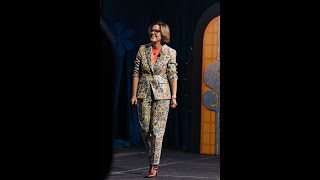
Anne Handley (recorded talk) uses a playful anecdote about a rabbit named Bun to argue that email newsletters should prioritize earning trust and personal connection over volume or attention-harvesting tactics. She offers five practical recommendations for next‑gen newsletters: assign a recognizable emcee/from-line, cultivate a warm relatable voice (write to one reader), create “Netflix‑like” momentum (open loops, pattern breaks, scroll magnets), invest in onboarding/welcome emails, and integrate the newsletter with other channels (build bridges). The talk includes multiple real examples and some concrete metrics about onboarding and subscriber behavior.
Questions this video answers
June 17, 11am (a Tuesday).
60% of organizations globally send welcome emails.
Welcome emails generate 4 times more opens and 3 times more transactions (as stated).
67% open rate, 43% click-through rate, 31% reply rate for her welcome email.
Chapters
She collects typewriters and works out of a tiny house in her backyard. She's a Swifty and Tina Fey superfan. She rescues Cavalier King Charles spaniels. Ladies and gentlemen, introducing Anne Handley. Come on down.
Yeah. I was expecting that game show music to play a little longer.
One summer day, I noticed a small baby rabbit in my yard. Now, I've had wild animals in my yard before, but this was the first boy who wasn't completely terrified of me. So because I am in marketing, I gave him a name. I named him Bun. And I thought, could I actually.
Make friends with Bun? Could he and I have a relationship of sorts?
Could I get him to maybe take something from my hand? Now, I've been in marketing long enough to see this as a classic marketing challenge.
Bun is already aware of me. He's already on my site.
He's on my site.
There we go. Now I thought, can I actually move him through my marketing funnel? Can I get him to the consideration stage? Could I maybe convert him and then maybe that would reward me with long term loyalty and maybe even he'd bring some friends.
And so I thought I got this. So I approached Bun the very next day. I kind of went up to him like a chatbot, you know, like on a website. And I was like, hey, Bun, welcome to my site. Can I maybe interest you in something today? Perhaps a downloadable piece of content or you know what, can I get your email address if we get disconnected?
I guess he unsubscribed. I was like, that's okay. First touch is often not a success. Right? We know that as marketers. And so I thought approaching him rushing Bun was maybe not the right approach. Maybe instead what I need to do is relaunch my campaign, offer him something, and let him come to me. And so June 17, 11am I am being very specific with this time and with this date. It was a Tuesday because everybody knows that earlier in the week, mid morning is the best time to launch a marketing campaign.
And so that's me right there. That's my hand. I have the food of Bun. It's a carrot. Because everybody knows that that is the traditional food of the rabbit, aside from Nestle's Quick, which is the other food of the rabbit. I'm holding the carrot bun. As you see, completely ignoring me, completely ignoring me. I was like, that's okay. We, we'll try this again. The next day, I'm holding out celery. Maybe he's not in the mood for carrots. Eventually I started to notice that Bun Would spend warm summer afternoons, kind of secluded here. He would lounge in there all throughout the afternoon, Kind of like a royal. Just kind of like riding sidesaddle, just kind of hanging out there. And I thought, all right, carrots didn't work. Celery didn't work. Maybe I just need to offer him a lot.
And so I spammed him.
I was like, just take something, Bun. Something's got to be of interest.
This massive amount of content terrified Bun. Basically, he unsubscribed. I didn't see him for a couple days. He's like, I don't know what game you're playing at, lady.
So why am I sharing this story with you? What does Bun have to do with all of our goals and aspirations here? Why am I sharing the story with you at all? It's because I think Bun has everything to do with our email newsletter programs. See, the thing is, I was thinking about Bun from my objective, what I wanted from him, what I needed him to do, when the reality was maybe I just needed to slow down, step back, and think about how might I optimize Bun's buyer journey on his term? Now, you can substitute donors, volunteers, employees, almost anything for buyer in there. It's the same kind of strategy. I think in marketing. We spend a lot of time thinking, how can I get your attention? Can I break through on social media? Can I just keep emailing you? Can I just keep offering you something? Is there a way I can get you to pay attention to me?
And maybe it's not about, can I have your attention? Maybe instead it's, can I earn your trust? Can I actually maybe take a slower approach to nurturing our relationships instead of just emailing and sending as much collateral through direct mail as we can? Instead, maybe we can step back a little bit, because this is exactly what's in the heads of your donors, employees, volunteers, when they come to your website, to your social channels, how well do they address what I care about? Are you building trust with them? And secondly, do I like them? Now, it might seem weird to talk about, like, in the context of marketing and reaching prospects and donors and volunteers and all of it, but I think it's vastly undervalued in newsletters and email and marketing in general. Because here's the thing, friends. This is not an optimized marketing program. I think that our email newsletters offer us a unique opportunity to actually slow down, to take a slower approach to nurturing. And why am I focusing on email here? And why do I love email newsletters? So Much is because email is the only place where people and not algorithms are in control. And what I mean by that is when someone signs up for your email newsletter, for your email program, they're raising their hand and they're saying, yes, I want to hear from you. And that to me is a, it's a special place to be. It's the holy grail for all of us in marketing. And so the question for all of us here is, how are we using that email newsletter? I think when we think about our email newsletter, we focus so much on the first part of that word. We think about what we want to say, we want to think about what we want to share, what we want people to download and engage with. We think about the news. But the opportunity with an email newsletter is the second half of that word, which is the letter. The most important part of the email newsletter is the letter and not the news.
Now, I am obsessed with email newsletters and I've subscribed to a lot of your email newsletters to try to decide what I might offer to be of value to you. And so I know that I only have a 30 minute slot here, but you know what? We're going to reset this.
I hope your bladders are empty. Are they empty?
Yeah. Okay. Empty bladder. It's a four hour masterclass. Buckle up. I'm kidding. I'm going to give you five major points in about 22ish minutes or so. At the end, I'm going to give you a link to download a full PDF where you can see the context for a lot of this and also get some other ideas and insights. I'll share that at the very end. All you'll have to do is give me your email address, your social, your mother's maiden name, the name of your first pet. Okay, that's all? That's all. Swear. So the first thing that I want you to think about when you think about the evolution and the future of your own email newsletter is to think about assigning an emcee hosting your email newsletter. Not just a writer writing your email newsletter, but think about an mc. Now, I subscribe every morning to the New York Times, and every morning the New York Times sends me an email from this guy, David Leonhardt. Now think about this for a second. The New York Times, a major brand, major name recognition. Why do they have David writing me every single morning? Because now I rely on David to tell me what's what. David is the guy who tells me what I need to be thinking about that day. He sets the stage for my day. And in a way, like when David doesn't show up for a day, I'm like, where's David? Where'd he go? What happened?
CB Insights is a market research company. They do the very same thing. Every weekday, I get an email from Anand Sanwal. He sends me an email from CB Insights, and every morning, he starts with, hey, there.
And then at the very bottom of his email newsletter, give me lots of insights and data research that I need to run my business. He says.
He loves me.
He loves me.
Every single day.
And there's something else that I want to share with you about this. And in part, his approach, I think, is what has led to the success of the email newsletter for a market research company. Because it comes from a single guy who. Who's telling me about what he's thinking about that day. It's allowed them to grow the email newsletter exponentially. But there's another thing that I want to point out to you is that this email newsletter comes from Anand Sanwal. Anand is the CEO of CB Insights. It doesn't come from newsletter. It doesn't come from data or the one I really, really hate, which is do not reply.
No, no, that's. No, we don't do that. I love the fact that it comes from Anand, and it feels like it actually comes from him. There are a million ways that you can look to optimize your subject line. There is no hack to optimizing that from line. And I believe that the from line matters way more than your subject line does, especially in our business, because it's the relationships that we have with our donors and our prospects and our employees and our volunteers that ultimately is what fuels our business. All right? The second thing that I think will absolutely fuel the future of your email newsletter is a warm, relatable voice. We need to just put a pillow over the face of anything with a whiff of Dear Valued Donor. We've got to just get rid of that totally.
Warren Buffett is an icon of industry, right? He's the chairman of Berkshire Hathaway. He's well regarded in the business world. In the world, period. Every year, Warren Buffett writes a letter to shareholders, and every year, that letter to shareholders gets distributed to the tens of thousands of Berkshire Hathaway shareholders, but also gets written up from news outlets, right? It gets lots and lots of news coverage. I think part of the reason why we are so anxious to hear what Warren Buffett feels about the state of the world, the state of the economy, the state of business is in part because of who he is, but also because of the way it is written. This letter to shareholders is written in very simple, accessible, and also playful terms. If you read it, you get it, even if you don't have the sort of degree in economics. Right. He breaks things down into a very simple, accessible way. And he has a little fun. You can feel it. Now, as I said, this goes out to tens of thousands of shareholders. It gets written up in lots of different news outlets. But when Warren sits down to write that email newsletter, he doesn't think about the tens of thousands of shareholders. He thinks about this gal. This is Warren's sister. Her name is Doris. And he says, doris is smart. She reads a lot. She doesn't know all that financial jargon, but she doesn't want to be treated like a child either. He says, I would try to say on paper what I'd tell her about the business if we sat down for an afternoon. And I think about writing to Doris almost obsessively. I think it's a nonprofit superpower. I think it's a writing superpower. I think it's a marketing superpower. If we think about who is our Doris, who are we trying to attract? It's not readers. It's not a community. It's one reader. The experience that your email newsletter delivers is one reader at one time, right? There's not an entire community opening up your email newsletter like this as a group. And they're cheer. Although would that be fantastic? I feel like maybe we should try to make that happen. Now that I think about this, it's one reader at one time, right? One reader, one way of communicating, Just talking to somebody like they're right there in the room with you. Best Buddies is a global volunteer program based in New Jersey. They do a fantastic job with their email newsletter. This particular one was written by this gal. This is Michaela Holmgren. She is out of St. Paul, Minnesota, and she shares her experience with working with Best Buddies. She says, hey, Anne, I'm Michaela. I'm a dancer, a speaker, a model, a daughter and a friend. I also have down syndrome. She tells you a little bit about her life and her experience. When I was younger, I was bullied and left out. Students called me names and tried to put me in a locker. Look at the specificity of this. She's not just saying I was bullied, she's saying how she was bullied. I couldn't participate in the school talent show or be on the gymnastics team. Again, very specific. You can see it Like, I'm starting to imagine a little bit more. I'm starting to get vested in Michaela's story. But I'm here to tell you that I can do so many things. She made history by becoming the first woman with down syndrome to compete in the Miss USA pageant. So fantastic because it's a story that's involving me. And it's not just because she's saying, hey, Anne. It's because it feels personal. She may be writing to thousands of people on this email list, but it feels like she's speaking just to me. She closes with saying, thank you for choosing to support inclusion. Thank you for making a difference in my world. It just feels different. No ridiculously good writing or marketing or newsletter ever starts with dear segments. But yet when I read a lot of newsletters, it feels like you're writing to the segment. Write to me. Tell me what's going on. All right, my third point here today is Netflix like momentum. How do we actually build some momentum with our email newsletters? I'm going to share a few quick ways. I could talk about this again for 3 hours and 50 minutes easily. But we're going to keep it to just a few quick slides. One way to build momentum is to build open loops into your email newsletter. Jax Today is a community nonprofit news site out of Jacksonville, Florida. They share news every single day as relates to the Jacksonville community. But look at this coming up. One less taco spot. The world needs more taco spots, not less. Now, if you are part of the Jacksonville community, wouldn't you scroll down to find out where is who's closing, who's abandoning us?
How do we not support many more taco spots?
Think about how can you actually build that relationship with your reader even within the email itself, even within the individual email. Second way is through pattern breaks again. Jacksonville Today does this incredibly well. Ironically, we are all looking for a reason not to read when we open an email newsletter. We open any email at all. It's like, I'm sure we could all relate to that, right? You're like just you're processing email. Like the way that we are when we're interacting with our email inbox is very much like we're in that kind of processing mode. We just want to get through it. But ironically, the more skimmable you make your email newsletter, the more it will be read. The more skimmable you make it, the more people will interact with it and read it. Now, there's a whole lot of ways that we can talk about building momentum just through your words alone and what you're writing. But just a few quick ways to do that. Think about sharp headlines. Right? How do we actually create bold, sharp headlines that pull people in compelling images? Ideally not stock photos, but actual images of what you do within your communities. Structure, clear copy, hierarchy. I know Joanna Wiebe tomorrow is going to talk a lot more about that, but also maybe there's an opportunity to pull in some reader cameos. One of the things that Jax Today does super well is they have an Ask Jax Today hashtag and they're pulling in questions from social and they're covering it in their email newsletter. So it becomes this sort of ecosystem between social media and the newsletter itself.
Scroll magnets. What I mean by a scroll magnet is what. What will get your reader to scroll to the very bottom? What can you deliver on a weekly, monthly, whenever you publish your email newsletter basis so that your reader will start to anticipate that magnet pulling them toward the bottom. I love the way that the Animal Refugee League of Greater Portland does this. At the bottom of every email newsletter, they have what they call the photo of the week. It was National Bow Tie Day, so of course, that's worth celebrating in their community. You know what I really love about what they're doing? Yeah.
They'Re excited. Big bow tie people back there.
I see you. I feel you. Another thing I really love, though, about this is, see that photo of the week at the top? I was wondering, why did they misspell that? But you notice, like, who's saying it, right? It's. It's.
It's a guinea pig.
Right? Like.
Get it? It's like a photo of the.
So good.
You'll never unhear that. Never.
All right.
I thought I was going to choke a little bit on it, but I got through that, didn't I? I did.
Think about your onboarding experience. Experience that you're offering. And for this we have to turn to the Greek philosophers who remind us that you'll never get a second chance to make a first impression. The Greek philosopher Pinterest told me this. You can buy it on a plaque in his online shop. It's called Pinterest.com.
Thought that'd get a bigger laugh.
Yeah. Anyway, make sure you're sending a welcome email. It is so critical. Only 60% of organizations globally send welcome emails welcoming someone to your site, to your newsletter, that key moment, because they generate all of this great stuff. 4 times more opens, 3 times more transactions. There is no one way to do an onboarding email email in the Downloadable I'll give you at the end. I offer a couple of different ways. A one torch orientation, a link to external housekeeping notes, Multi Touch welcome series. But I want to share with you what I do on my own email newsletter to give you a sense of the power of a nurturing opportunity. So this is the when you sign up for my own email newsletter, I invite you immediately. Like, tell me a little bit more about you. 67% of the folks who sign up for for my email newsletter open it. 43% of them click through 31% of my subscribers hit reply and what are they replying to? Very, very simple execution here. The subject line is hey, I have a question for you. I'm establishing the tone right away, which is why I'm using an emoji there. I'm also saying, hi friend, I'm not saying Dear Valued Subscribers Subscriber, I'm saying hey friend, I'm establishing the tone. What they can expect from me right away. Number two, I'm setting expectations every other Sunday, every two weeks, just in case. That was confusing. Now that I think about that, that doesn't really need to be there. Anyway, this is what it says right now.
I don't know.
I'm setting expectations every other Sunday. You get new writing, useful ideas, fresh links, and high spirited shenanigans direct from me to you. In the meantime though, I ask something very simple. Tell me about you. What did you hope to learn here? Why did you subscribe? It just gives me a lot of intelligence that is specific to me. How do people find me? What do they hope to learn from me? What do they think of me as an expert in? It's just very helpful in terms of me building that relationship with my subscriber. And by the way, when they respond to me and tell me, I always write back and people say to me like, doesn't that take a lot of time? Yeah, it kind of does. It's like an hour a week. But do I have an hour a week to build on subscriber relationships for the most key opportunity that I have to connect with my audience? Heck yes, I do. I absolutely do. All right, my fifth point today is to build a bridge to other assets, not a tower. Kath Pay talked about this a little while ago, but I think it's so key when we think about our email newsletter. Don't let it be in a little silo over here. Integrate it into everything that you're doing. Just like Jax Today does with its social and its email program. When you go to the home page of think Currituck county, which is the economic development agency for Kertuk County, North Carolina. Look at the buttons that you see on that. Page one is find property, which makes sense. You're going to go to the economic development agency because you want to start a business there. Maybe you want to lease some office space. But look at the other one here. Call Larry. Who's Larry?
What would you do? Heck, yes. Of course you're going to click that button. So I did. I clicked the button and I called Larry. This is Larry. Larry, it turns out, is Larry Lombardi. He's the executive director of the Curritude County Economic Development Agency. And he picked up the phone. He's like, hello. And I'm like, hey, Larry, what's going on here?
I don't know. It gave me this invitation to call you, so I'm calling you.
Turns out that everything Currituck County Economic Development Agency does throughout everything is featuring Larry. Now, why did they do this? It's because Currituck county itself is kind of folksy. It's kind of homespun. It's a very community led community. So they want you to have a relationship with Larry. But especially what I love from a newsletter standpoint is like, guess who writes the email newsletter? Larry. Larry. It's not boring either. It's folksy, it's accessible, it's playful. It's so much fun. Just like Currituck county itself. But what I also love about it is that some people are gonna not like Larry.
You might not like Larry. That's okay. He just owns it right there. So when I was on the phone with Larry, I was trying to make conversation because I didn't know any of this stuff at the point. I was like, larry, what's going on here? And he said, the reason why they do this at the Kerrichett County Economic Development Agency is because people know what you do when they come to your website. They know what you do. You have to sell them on who you are. So powerful. All right, I have one more thing that I wanted to share with you, and I wasn't sure where to put this, so I just kind of stuck it at the end. It is absolutely the most absurd landing page of all time, yet it converts like gangbusters. Now, I'm not saying you should do this, but I'm here to just give you some thoughts. So here we go. This comes from Orca. Orca is a brand new energy drink. And when you go to the Orca website, There's just a single link landing page on the website. This is what it says. If you sign up for our email list, we will send you a picture of our belly buttons.
Oh, yeah, and they're going to try to sell you their beverage when it's ready. It's not even in production yet.
Would you do this? Raise your hand if you would do this. I mean.
I mean, I'm not saying that you should do it.
But.
I would never do it. All right. I just want to say that because I'm a very serious marketer, and I would never. I don't know how I got that even.
Is that insane?
It works, though.
All right, so wrapping up real quick. The most important part of your newsletter is the letter, not the news. Make sure you have an mc. Don't let it come from some nameless, faceless person within your organization. Make sure you develop a relatable voice. You want to make sure that they have a warm relationship. Your subscriber has a warm relationship with you. Netflix Momentum story. Open loop. Scroll magnets. Guinea pig squeaks. You might as well set expectations. And belonging. Build a bridge, not a tower. Belly buttons optional.
Thank you so much. Wait a minute. Wait, wait, wait, wait, wait. What happened? Aren't you wondering?
This took up my entire summer. What happened? I had to think about this like a marketer again, on Bun's terms, not my terms. Does Bun trust me? I had to ask myself. But more than that, does he like me? Are we.
Having a relationship? Or is it all just kind of one way? I did a lot of research on Bun, not only through my observation of him, but also I went deep into. Into research. You might say I went down a rabbit hole.
I'm sorry.
I started also spending time with Bun, just kind of observing what was going on, seeing what I could do to entice him. Now, remember, my goal is to get him to take something from me. So, yeah, I have a pile right there of some grasses that I picked, and that's some arugula that I read is a preferred.
BUN choice.
So I spent some time, July and August, figuring this out. He does like lettuce, I found out. Much more than carrots. Much more than celery. And look at how close Bun is to me at this point. He is definitely here.
He's here, right? He's, like, giving it some serious consideration. He's right there with me. And then three months in.
Are you ready?
This is. Here we go.
Look at him.
Yeah.
All right. Thank you. For real this time. You guys are awesome.
Thank you so much. I promised you a PDF at the end. You can go here. Can I get the PDF? Can I get that PDF? Use all lowercase, no uppercase. I'm just kidding about the email address. Nothing. It's just there for the taking. Because I care more about my relationship with you right now than I do about trying to just give you a giant platter of vegetables. So thank you so much. Oh, my God. I didn't know you were right there. You been there the whole time? Was he there the whole time?
All right, thank you so much.
More from Tiago





How To Build Momentum With Content: Social Media & AI Best Practices | Tea With GaryVee ep 78
If You’re Serious About Winning, Watch This: The Business Playbook For 2025 | GaryVee w Leap Academy